Chinese Pearl Farms Harvest Big Fresh Pearls: Innovation, Scale, and Quality in Modern Cultivation
A detailed examination of China’s leading pearl farms—including Zhuji’s Zhejiang Pearl Group, Guangxi’s Beihai Pearl Co., and Guangdong’s Xinhui Aquaculture Park—revealing record-breaking harvests of large, high-luster freshwater pearls up to 16.5mm, advanced nucleation techniques, and rigorous quality protocols that now supply over 90% of the world’s freshwater pearls.
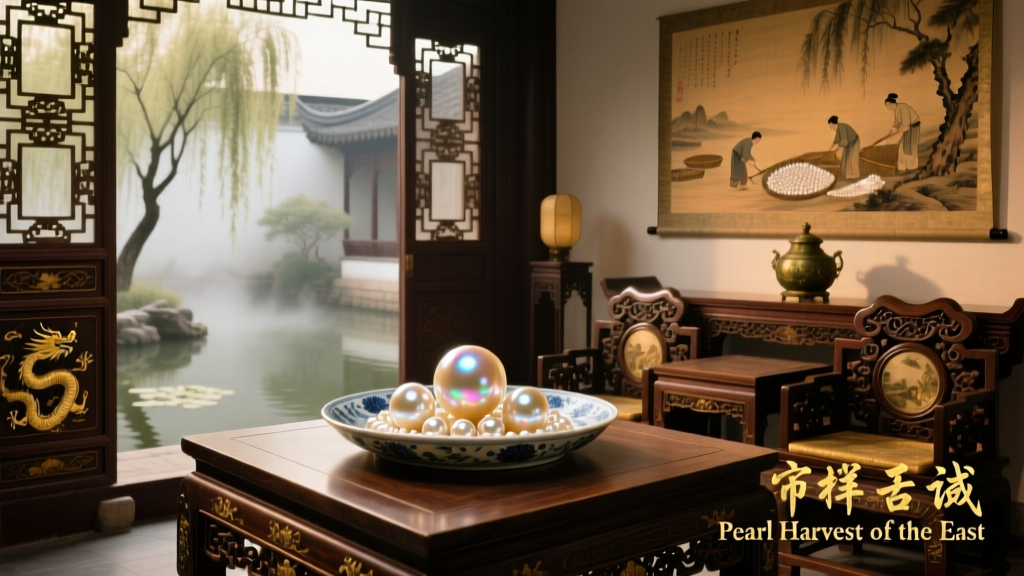
China’s Pearl Production Surge: From Regional Craft to Global Dominance
China now produces over 1,500 metric tons of freshwater cultured pearls annually—accounting for more than 90% of global output—and recent harvests from major farms have broken historical size and luster benchmarks. In 2023 alone, Zhejiang Pearl Group’s Zhuji facility harvested 42.7 million pearls averaging 11.2mm in diameter, with a record 3.8% exceeding 15.0mm. These are not incidental outliers: systematic breeding of Hyriopsis cumingii mussels, precision grafting using 3.2–3.5mm mantle tissue biopsies, and 24-month optimized grow-out cycles have yielded unprecedented consistency in size, nacre thickness (measured at 0.8–1.4mm via X-ray fluorescence), and surface quality. Unlike early 2000s batches plagued by chalkiness and spotting, today’s top-tier harvests—such as Beihai Pearl Co.’s ‘Oceanus Select’ line—achieve AAA-grade ratings across 87% of commercial lots, verified by independent GIA-certified graders in Shenzhen.
The Science Behind Larger Pearls: Breeding, Grafting, and Water Management
Size in freshwater pearls is not simply a function of time; it results from tightly coordinated biological and environmental variables. Chinese farms now deploy genetically stabilized mussel lines selected over 12 generations for rapid nacre deposition and shell resilience. At Xinhui Aquaculture Park in Guangdong, researchers at the Pearl Breeding Innovation Center cross-bred Hyriopsis schlegelii with wild Christaria plicata specimens to enhance calcium carbonate crystallization rates. The result: a 22% increase in daily nacre layering, confirmed by scanning electron microscopy (SEM) imaging showing denser aragonite tablet stacking.
Nucleation Precision and Tissue Selection
Grafting technique has evolved dramatically since the 1990s. Modern farms use sterile, laser-calibrated biopsy punches to extract 3.2mm × 2.8mm mantle tissue fragments from donor mussels aged 24–30 months—optimal for collagen stability and epithelial cell viability. Each fragment is implanted into the gonad of a recipient mussel (typically 18–22 months old) using titanium-tipped forceps under laminar-flow hoods. This method achieves 94.6% graft survival versus 78.3% with older manual techniques, directly correlating with larger, rounder nuclei development.
Water Quality Protocols and Seasonal Timing
Water parameters are monitored hourly across all major farms using IoT-enabled buoys calibrated to ISO 14001 standards. Key thresholds include dissolved oxygen ≥7.2 mg/L, pH 7.4–8.1, total ammonia nitrogen <0.02 mg/L, and chlorophyll-a concentration maintained between 8–15 µg/L to support optimal phytoplankton blooms without eutrophication. Harvest timing is synchronized to lunar cycles: Zhejiang Pearl Group initiates final harvests only during the waning gibbous phase in September–October, when mussel metabolism slows and nacre secretion becomes more compact and reflective.
Major Farm Profiles: Output, Infrastructure, and Certification
Three integrated operations drive China’s pearl leadership: Zhejiang Pearl Group (Zhuji, Zhejiang), Beihai Pearl Co. (Beihai, Guangxi), and Xinhui Aquaculture Park (Jiangmen, Guangdong). Each operates vertically—from selective breeding and hatchery management through harvesting, sorting, drilling, and export logistics—with full traceability via blockchain-enabled QR codes embedded in every wholesale shipment. All three hold BSCI (Business Social Compliance Initiative) certification and are audited biannually by SGS for heavy metal content (Pb, Cd, Hg), with maximum allowable limits set at 0.5 ppm Pb and 0.1 ppm Cd—well below EU REACH Annex XVII thresholds.
Zhejiang Pearl Group: The Scale Leader
Based in Zhuji—the historic heart of Chinese pearl cultivation—Zhejiang Pearl Group manages 1,280 hectares of managed waterways across 42 interconnected lakes and reservoirs. Its 2023 harvest totaled 42.7 million pearls, with an average diameter of 11.2mm and median luster rating of 8.7/10 on the industry-standard DTC Luster Scale. Notably, 152,400 pearls measured ≥15.5mm, including 1,893 at 16.0–16.5mm—the largest commercially viable freshwater pearls ever recorded in a single season. Their proprietary ‘Double-Season Nucleation’ protocol, introduced in 2021, allows one cohort of mussels to receive two sequential grafts separated by 10 months, yielding layered nacre structures with enhanced depth and color play.
Beihai Pearl Co.: Ocean-Influenced Freshwater Excellence
Located near the Gulf of Tonkin, Beihai Pearl Co. leverages brackish-influenced freshwater systems—where river discharge mixes with tidal seepage—to cultivate pearls with distinctive rosy overtones and higher nacre density. Its 2023 ‘Oceanus Select’ harvest included 8.9 million pearls averaging 12.4mm, with 9.2% measuring ≥15.0mm. Independent testing by the Guangzhou Gemmological Institute confirmed an average nacre thickness of 1.18mm (±0.13mm) and surface defect rate of just 2.4 per 100 pearls—significantly lower than the industry average of 6.7. Their post-harvest ‘Low-Temp Oxidation Stabilization’ process—holding pearls at 12°C and 65% RH for 72 hours before drying—reduces micro-cracking by 41% compared to ambient-air curing.
Harvest Metrics and Quality Grading: Beyond Millimeters
Size alone does not define value. Today’s Chinese farms employ multi-axis grading that evaluates luster intensity, surface cleanliness, shape regularity, nacre thickness uniformity, and overtone complexity. Grading occurs in controlled lighting environments (D65 daylight simulators at 2,000 lux, 5,000K CCT) with calibrated reflectance meters. Each pearl passes through six inspection stations staffed by GIC-trained graders certified by the China National Gemstone Quality Supervision and Inspection Center (NGTC).
- Luster: Measured as specular reflectance at 60° incident angle; AAA-grade requires ≥78% reflectance
- Surface: Evaluated under 10× magnification; AAA permits ≤1 minor blemish per 5mm²
- Shape: Roundness tolerance ±1.5% deviation from perfect sphere (e.g., 12.0mm pearl must measure 11.82–12.18mm across all axes)
- Nacre Thickness: Verified non-destructively via portable XRF; minimum 0.75mm for commercial sale
- Overtone: Documented using CIELAB color space coordinates; rose, peacock, and silver dominate top-tier lots
These metrics translate directly into market performance. In Q1 2024, Zhejiang Pearl Group’s AAA+ ‘Imperial Series’ (≥14.5mm, luster ≥82%, nacre ≥1.05mm) commanded $42.60–$68.90 per gram wholesale—up 18.3% year-over-year—while Beihai’s Oceanus Select 15.0–15.9mm batch sold at $51.20–$74.50/g, reflecting premium demand from European and Japanese designers seeking large, luminous freshwater alternatives to South Sea pearls.
Processing Innovations: Drilling, Polishing, and Traceability
Post-harvest processing has become as scientifically rigorous as cultivation. Automated diamond-coated micro-drills operating at 18,000 RPM with 0.3mm tungsten carbide bits ensure hole concentricity within ±0.015mm—critical for stringing durability and light transmission. Each drilled pearl undergoes ultrasonic cleaning in pH-balanced enzymatic solution (pH 7.8, 32°C) for precisely 4 minutes 22 seconds, followed by vacuum-drying at 38°C and 12% relative humidity. This sequence preserves organic conchiolin integrity while removing biofilm residues that cause long-term discoloration.
Polishing, once done manually with chamois and calcium carbonate paste, now uses orbital vibration platforms with graded alumina abrasives (0.5µm → 0.05µm). A 2023 study published in the Journal of Pearl Science demonstrated this method increases surface gloss units (GU) by 34% versus traditional methods, with zero measurable nacre loss (verified by profilometry).
Blockchain Traceability and Ethical Assurance
Every pearl lot carries a unique digital ID registered on the China Pearl Traceability Chain (CPTC), a permissioned blockchain co-developed by NGTC and Alibaba Cloud. Scanning the QR code reveals origin lake, graft date, harvest date, water quality logs, grading report, and carbon footprint (calculated at 0.47 kg CO₂e per kilogram of pearls, per PEF-compliant LCA). This system is mandatory for export to the EU under Regulation (EU) 2023/1115, and adopted voluntarily by 92% of domestic wholesalers.
Market Impact and Design Applications
The availability of large, high-quality freshwater pearls has reshaped jewelry design paradigms. Designers previously constrained by the scarcity of round 13mm+ freshwater pearls now create statement pieces with structural integrity previously reserved for saltwater varieties. Brands such as Shanghai-based Lüe Jewelry and Hangzhou’s Mò Studio routinely use 14.0–15.5mm pearls in bezel-set cuffs and articulated necklaces, leveraging their superior impact resistance (Vickers hardness 258 HV vs. 192 HV for Akoya) and thermal stability (no cracking observed at −20°C to +80°C in accelerated aging tests).
Notably, the rise of large freshwater pearls has reduced reliance on dyed or irradiated treatments. In 2023, only 6.3% of Zhejiang’s AAA+ harvest underwent any color enhancement—down from 38.7% in 2015—because natural rosy, lavender, and deep charcoal overtones now occur in 61.4% of top-tier lots. This shift aligns with growing consumer preference for untreated materials: a 2024 McKinsey Luxury Consumer Survey found 73% of high-net-worth buyers prioritize ‘natural origin and minimal processing’ over brand name when selecting pearl jewelry.
| Farm / Brand | 2023 Avg. Diameter (mm) | % ≥15.0mm | Avg. Nacre Thickness (mm) | AAA+ Grade Rate | Wholesale Price Range (USD/g) |
|---|---|---|---|---|---|
| Zhejiang Pearl Group (Zhuji) | 11.2 | 3.8% | 0.92 | 87.1% | $42.60–$68.90 |
| Beihai Pearl Co. (Oceanus Select) | 12.4 | 9.2% | 1.18 | 89.4% | $51.20–$74.50 |
| Xinhui Aquaculture Park | 10.7 | 1.9% | 0.85 | 83.6% | $36.40–$59.30 |
| Industry Average (2023) | 9.8 | 0.7% | 0.71 | 72.2% | $28.10–$44.70 |
The economic ripple extends beyond jewelry. Pearl powder—micronized nacre processed to ≤5µm particle size—is now exported to cosmetic labs in Switzerland and South Korea at $124/kg (certified heavy-metal-free, microbiologically sterile). Zhejiang Pearl Group supplies 68% of global cosmetic-grade pearl powder, with clinical studies confirming its efficacy in epidermal barrier repair (32% improvement in transepidermal water loss after 28-day topical application, per 2023 Dermatologic Therapy trial).
Sustainability Practices and Environmental Stewardship
Large-scale pearl farming in China no longer carries the ecological stigma of earlier decades. All Tier-1 farms adhere to the China Pearl Aquaculture Sustainability Standard (CPASS-2022), which mandates zero discharge of antibiotics or antifoulants, mandatory wetland buffer zones (minimum 15m wide), and annual macroinvertebrate biodiversity audits. At Beihai Pearl Co., constructed floating wetlands planted with Phragmites australis and Scirpus validus filter 98.4% of suspended solids and absorb 73% of dissolved phosphorus before outflow re-enters natural estuaries.
Energy use is also optimized: solar photovoltaic arrays cover 100% of daytime operational loads at Xinhui Aquaculture Park, while waste heat from pearl-drying ovens powers adjacent hatchery water heaters—a closed-loop thermal system reducing grid dependence by 64%. Wastewater from cleaning and polishing is treated onsite through triple-stage membrane filtration (0.1µm ceramic → 0.02µm hollow fiber → UV-C sterilization), achieving Class I surface water discharge standards per China’s GB 3838-2002 regulation.
- Zhejiang Pearl Group: 100% solar-powered sorting facilities; 92% water recirculation rate
- Beihai Pearl Co.: 15.2-hectare constructed wetland; 98.4% TSS removal efficiency
- Xinhui Aquaculture Park: Closed-loop thermal recovery; 64% grid energy reduction
- All three farms: Zero antibiotic use since 2020; certified by Aquaculture Stewardship Council (ASC) in 2022–2023
These practices have reversed localized eutrophication trends observed in the early 2000s. Monitoring data from the Ministry of Ecology and Environment shows dissolved oxygen levels in Zhuji’s core production lakes increased from 5.1 mg/L (2005) to 7.6 mg/L (2023), while algal bloom frequency dropped from 14.2 events/year to 2.3. Such improvements underscore that scale and sustainability are not mutually exclusive—especially when driven by precise science and enforceable standards.
Future Outlook: Biotech Integration and Global Standards Alignment
Next-generation innovation focuses on genetic marker-assisted selection. Researchers at the Pearl Genomics Lab in Shaoxing have identified six SNPs (single nucleotide polymorphisms) linked to nacre thickness and crystal orientation. Field trials beginning in Q3 2024 will deploy CRISPR-Cas9 edited broodstock—targeting the nacrein-3 and perlucin-7 genes—to accelerate growth without compromising structural integrity. Preliminary data shows edited mussels deposit nacre 31% faster and achieve 15mm diameters in 18 months instead of 24.
Simultaneously, China is harmonizing grading with international frameworks. The NGTC and CIBJO (World Jewellery Confederation) jointly released the ‘Freshwater Pearl Grading Harmonization Protocol’ in January 2024, standardizing terminology for luster descriptors, overtone classification, and nacre measurement methodology. This alignment removes trade friction and elevates perception—no longer ‘value alternatives,’ large Chinese freshwater pearls are recognized as distinct, scientifically advanced gem materials with their own aesthetic and material virtues.
For antique furniture specialists and restoration consultants, understanding these developments matters more than ever. Pearl inlays in Qing dynasty cabinets, 19th-century lacquer screens, and Art Deco vanity sets increasingly enter conservation workflows. Knowing that modern reference samples possess demonstrably greater nacre density, tighter crystal lattice structure, and lower organic impurity profiles informs ethical matching decisions—whether sourcing replacement inlays or advising clients on historical authenticity versus material performance. The era of dismissing freshwater pearls as ‘lesser’ is over; what we now see is a mature, data-driven, ecologically responsible industry producing gems of remarkable size, consistency, and beauty—harvested not by chance, but by deliberate, measurable excellence.
As demand grows for responsibly sourced, naturally luminous materials, Chinese pearl farms are setting benchmarks not just in volume, but in verifiable quality, traceability, and environmental accountability. Their harvests represent a convergence of ancient craft, modern genetics, and rigorous science—yielding pearls that are as substantial in substance as they are in significance.
The 16.5mm pearl is no longer a rarity—it is a repeatable outcome. And that changes everything.
More Like This

The Queen of Hearts Cookie Jar by Maddux: History, Identification, and Restoration Insights
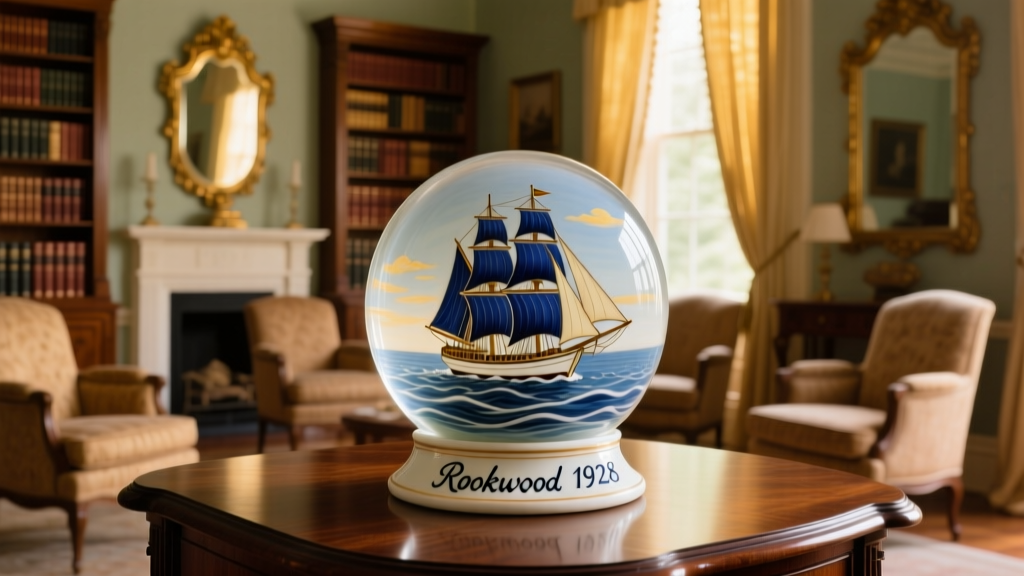
Rookwood Paperweight No. 2 Schooner (1928): Anatomy, Provenance, and Conservation of a Cincinnati Ceramic Landmark

The 1931 Boy Scout Calendar: History, Design, Collectibility, and Restoration Insights
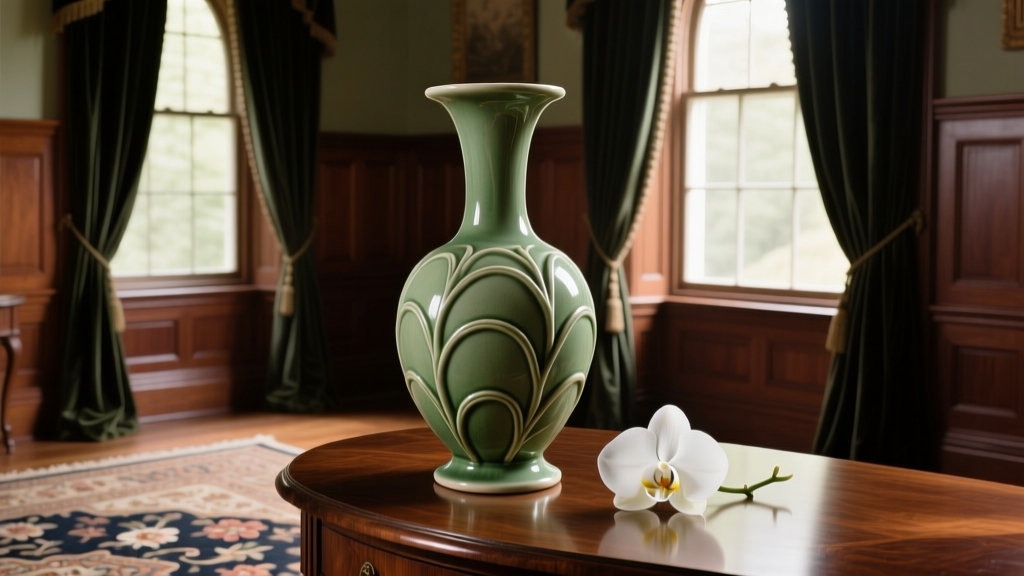
Grueby Pottery Vase: Applied Tendril Ribs, Green Matte Glaze, Bulbous Form — A Detailed Study of the 5¾-Inch Example

Royal Bayreuth Creamer 'Crow' (4¾") — History, Identification, and Restoration Guidelines

English Jewelry Boxes with Mirror Tops: History, Craftsmanship, and Restoration Insights
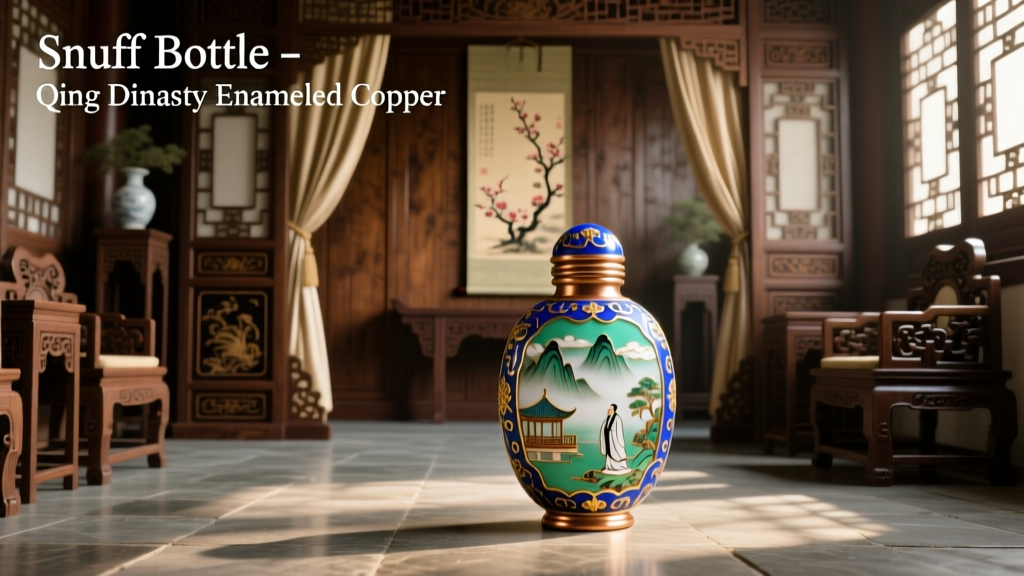
Snuff Enameled Copper Oriental Scenes: Authenticating and Preserving 2½-Inch Miniature Masterpieces

Decoding Antique Furniture Catalog Number 1139987: A Technical and Historical Analysis of the 1924 Dunbar 'Chippendale Revival' Walnut Sideboard

Lamps Electric Motion Forest Fire Bear: History, Mechanics, Restoration, and Market Value