Chilean Arpillera: Hand-Stitched Resistance, Heritage, and Material Legacy in Textile Art
An in-depth exploration of Chilean arpilleras—handcrafted narrative textiles born from political repression, women’s collective labor, and ancestral Mapuche weaving traditions. This article details historical origins, construction methods, symbolic motifs, preservation challenges, and their evolving role in museums and contemporary craft revival.
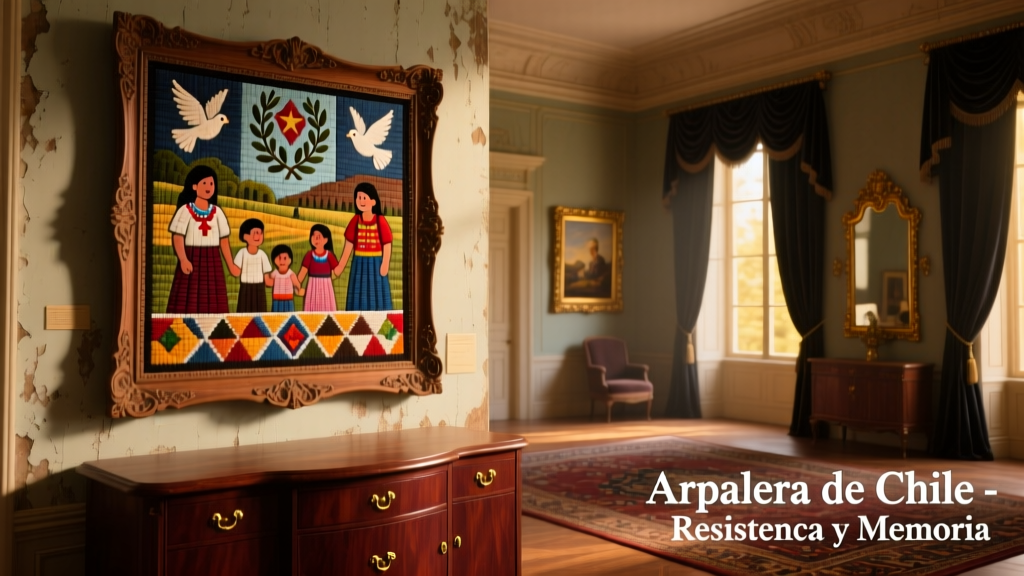
Chilean arpilleras are not merely decorative textiles—they are stitched archives of resistance, memory, and resilience. Emerging prominently between 1973 and 1990 during Augusto Pinochet’s military dictatorship, these appliqué quilts were created by women—often relatives of the detenidos desaparecidos (disappeared detainees)—in clandestine workshops coordinated by the Vicaría de la Solidaridad and Catholic Church networks. Made from burlap (arpillera) backing, recycled fabrics, wool yarn, and salvaged buttons, each piece measures typically between 45 × 60 cm and 70 × 90 cm and narrates scenes of forced displacement, food shortages, police raids, or family reunions denied. Over 1,200 distinct arpilleras have been documented in institutional collections, including those held by the Museum of Memory and Human Rights (Santiago), the Victoria and Albert Museum (London), and the International Museum of Women (San Francisco). Their legacy endures not only as human rights artifacts but as benchmarks for ethical textile conservation and participatory craft pedagogy.
The Historical Crucible: Dictatorship, Disappearance, and Domestic Craft
The arpillera movement crystallized in the immediate aftermath of the September 11, 1973 coup d’état that overthrew democratically elected President Salvador Allende. Within weeks, state violence escalated: over 3,000 people were killed, more than 30,000 imprisoned without trial, and at least 1,200 individuals forcibly disappeared. In this context, women whose male relatives had been detained or vanished formed grassroots collectives—most notably the Arpilleras de Chile network—to sustain income, mutual aid, and moral testimony. The first known workshop opened in March 1974 at the parish of San José de la Paz in Santiago’s La Legua neighborhood, under the guidance of Catholic nun Sister Patricia Díaz and social worker Cecilia Díaz.
These gatherings were deliberately framed as ‘embroidery classes’ to evade surveillance. Yet they functioned as safe spaces for oral history sharing, legal advocacy coordination, and material documentation. Participants included women from diverse socioeconomic backgrounds—domestic workers from Ñuñoa, teachers from Valparaíso, and Mapuche weavers from Temuco—who brought regional textile knowledge into the collective practice. By 1978, over 200 workshops operated across Chile, producing an estimated 15,000–20,000 arpilleras before democratic transition in 1990.
State Surveillance and Subversive Coding
Because direct political messaging risked detention, arpillera makers developed a visual lexicon of coded symbolism. A red flag fluttering atop a building signaled protest; three doves represented the Holy Trinity—and implicitly, peace, truth, and justice; repeated rows of identical houses with open doors indicated enforced evictions. Police figures wore uniforms with inverted insignia or carried rifles pointed downward—a deliberate inversion of authority. These conventions were taught through shared pattern books distributed via church couriers, such as the Manual de Arpilleras para la Esperanza (1977), published anonymously by the Vicaría.
International Circulation and Diplomatic Impact
Beginning in 1977, arpilleras were smuggled out of Chile through diplomatic pouches and church networks to Europe and North America. Organizations like the Chilean Committee in London and the U.S.-based Chile Documentation Project sold them at solidarity fairs, raising over USD $1.2 million between 1977–1989—funds used to support legal defense, medical care, and clandestine education programs. Notably, British retailer Christian Aid distributed over 12,000 arpilleras in UK churches between 1979 and 1985, while the Canadian Council for International Cooperation displayed them at Ottawa’s National Gallery in 1983.
Materials and Construction: From Scarcity to Signature Aesthetic
Arpilleras derive their name from the coarse, unbleached jute burlap (arpillera) used as foundational backing—a material chosen for its low cost, structural rigidity, and availability in local grain stores. Standard backing dimensions ranged from 45 × 60 cm (for portable pieces) to 60 × 90 cm (for wall-mounted works), though larger commissions—such as the 120 × 180 cm Arpillera del Mar (1986) commemorating coastal fishing communities—were produced for exhibition contexts. Fabric scraps came from discarded clothing, flour sacks, and donated dress remnants; wool yarn was often unraveled from old sweaters. Buttons served both functional and symbolic roles—blue ones denoted water sources, black ones signified mourning, and yellow ones referenced corn harvests.
Construction followed strict procedural discipline. First, the burlap was stretched taut on a wooden frame (typically 2.5 cm thick pine, measuring 50 × 70 cm). Then, background elements—sky, earth, buildings—were appliquéd using running stitch with cotton thread. Foreground figures were built up in layers: bodies in solid fabric, limbs articulated with folded bias tape, facial features embroidered with stem stitch. Hair was rendered in chain stitch using dyed wool; hands were frequently oversized to emphasize gesture—reaching, holding, pointing. Stitch density averaged 8–12 stitches per centimeter, with visible thread ends left unknotted to signify urgency and authenticity.
Regional Variations and Indigenous Infusion
While Santiago workshops emphasized urban narratives—factory closures, bus boycotts, and prison visits—rural collectives integrated pre-Columbian aesthetics. In the Araucanía region, Mapuche artisans introduced güllam (geometric border motifs) and incorporated natural dyes: cochineal for crimson, walnut husks for brown, and indigo extracted from añil plants. The Colectivo Arpilleras de Temuco, founded in 1979, consistently used hand-spun sheep’s wool from local flocks and maintained traditional loom-woven bands as framing borders. Their 1984 piece La Tierra No Se Vende measured 55 × 82 cm and featured Mapudungun text embroidered in white thread alongside Spanish—a rare bilingual assertion of linguistic sovereignty.
Symbolism and Narrative Grammar
Every arpillera operates as a sequential visual narrative, adhering to a consistent spatial logic: the horizon line sits at approximately one-third from the top, dividing sky (hope, divine witness) from earth (struggle, community). Figures occupy the lower two-thirds, arranged in horizontal registers rather than perspectival depth—echoing Andean tocapu iconography and colonial retablo painting. Recurring motifs include:
- Doors and windows: Always open, never locked—signifying both vulnerability and invitation to witness.
- Chains and broken locks: Representing detention centers and the demand for accountability.
- Fruit-bearing trees: Apple and avocado varieties native to central Chile, symbolizing generational continuity.
- Text fragments: Hand-stitched phrases like “¿Dónde están?” or “Nunca más” appear in block-letter capitals, often using contrasting thread colors.
Color carries precise semantic weight. Red signifies blood, sacrifice, and revolutionary fervor—but also strawberries and cherries, grounding politics in agrarian life. Green denotes both fertile land and military uniforms, creating intentional ambiguity. Blue is reserved exclusively for water—rivers, wells, the Pacific Ocean—evoking both life source and sites of clandestine disposal. This chromatic discipline emerged organically from material constraints: synthetic dyes were scarce and expensive, so natural pigments dictated palette choices.
Gendered Labor and Collective Authorship
Unlike Western notions of singular artistic genius, arpilleras were signed collectively. A typical attribution reads: “Arpillera del Taller de la Parroquia San Miguel, 1982, realizada por 14 mujeres.” Individual names rarely appeared—though exceptions exist, such as the 1985 Arpillera de los 40 Días by María Elena Gutiérrez, now held in the Museo de la Solidaridad Salvador Allende. This anonymity was strategic: it protected participants and affirmed that testimony belonged to the community, not the individual. Workshops assigned rotating roles: one woman cut patterns, another mixed dyes, a third managed distribution logistics. This division mirrored domestic labor structures yet transformed them into instruments of civic agency.
Preservation Challenges and Conservation Ethics
Arpilleras present acute conservation dilemmas due to their composite materials and embedded social meaning. Jute burlap deteriorates rapidly under UV exposure and fluctuating RH—exhibiting embrittlement, discoloration, and fiber loss after just 15–20 years if stored above 55% relative humidity. Wool yarn suffers from moth infestation and dye migration; cotton thread oxidizes and weakens; recycled fabrics retain traces of starch, soap residue, or pesticide contamination from original agricultural use. Between 2005–2012, the Museum of Memory and Human Rights conducted condition surveys on its 327-piece arpillera collection: 68% showed active fiber degradation, 41% exhibited adhesive failure in appliqué layers, and 29% required structural re-stitching.
Conservation protocols prioritize minimal intervention. The Museo de la Solidaridad Salvador Allende uses Japanese tissue paper (Kokeshi brand, 8 g/m²) for backing reinforcement, applied with wheat starch paste (pH 6.8–7.2). Surface cleaning avoids aqueous methods; instead, low-suction vacuuming with 50-micron mesh filters removes particulate matter. For display, lighting is restricted to ≤50 lux, with LED sources emitting no UV radiation. Crucially, conservators consult surviving arpilleristas during treatment planning—such as when deciding whether to stabilize a fraying signature banner or leave evidence of wear as part of the object’s biography.
Digitization and Access Protocols
Digital surrogates serve dual purposes: preservation and democratized access. Since 2016, the Universidad Católica de Chile’s Digital Heritage Lab has scanned 1,042 arpilleras at 1200 dpi resolution, capturing thread directionality and pigment granularity. Metadata fields include workshop location, creation date, known participants, and thematic tags (e.g., “forced labor,” “education denial,” “Mapuche land rights”). However, access remains ethically tiered: full-resolution images are restricted to academic researchers with IRB approval, while public-facing platforms show only medium-res versions with watermarked provenance data. This model reflects consensus among surviving creators that dignity requires contextual control—not passive archiving.
Contemporary Revival and Pedagogical Integration
Since 2010, arpillera-making has re-emerged as a tool for intergenerational dialogue and trauma-informed education. In 2013, the NGO Memoria Visual launched Arpilleras para la Democracia, training high school students in Santiago and Concepción to create new works addressing current issues—gender-based violence, climate migration, and indigenous water rights. Their 2022 exhibition at the Centro Cultural La Moneda featured 47 pieces, each measuring precisely 50 × 70 cm to echo historical proportions. Notably, they substituted synthetic burlap with locally woven coir (coconut fiber) backing—sourced from artisan cooperatives in Coquimbo—to reduce environmental impact while honoring material continuity.
In higher education, institutions like the Pontificia Universidad Católica de Chile embed arpillera methodology into design curricula. Students analyze compositional strategies using digital annotation tools, then produce response pieces applying the same narrative grammar to topics like digital surveillance or housing insecurity. This pedagogy explicitly rejects nostalgic replication; instead, it treats the arpillera as a living syntax—one that demands contemporary content, ethical sourcing, and collaborative authorship.
Museum Curation and Ethical Display
Contemporary exhibitions foreground process over artifact. The 2021–2023 touring exhibition Manos que Tejen la Memoria, co-curated by the Museo Chileno de Arte Precolombino and the Tate Modern, installed arpilleras alongside audio recordings of workshop participants, enlarged photographs of stitching hands, and replica wooden frames. Wall texts avoided interpretive framing; instead, they quoted directly from oral histories archived at the Archivo Nacional de Chile. One section presented three versions of the same scene—“The Bus Stop”—created in 1978, 1998, and 2018—to demonstrate how visual language evolves across generations without losing core syntactic integrity.
Material Specifications and Technical Benchmarks
Standardized measurements and material specifications enable comparative analysis and conservation benchmarking. Below is a summary of key technical parameters derived from peer-reviewed studies conducted by the Chilean Institute of Conservation Science (2019–2023):
| Parameter | Historical Range (1974–1990) | Contemporary Practice (2010–present) | Testing Standard |
|---|---|---|---|
| Burlap/Jute Weight | 320–410 g/m² | 280–360 g/m² (certified organic) | ISO 3801:1977 |
| Stitch Density | 8–12 stitches/cm | 10–15 stitches/cm (digital pattern guides) | ASTM D1776-19 |
| Thread Tensile Strength | 12–18 N (cotton) | 22–28 N (linen-cotton blend) | ISO 2062:2017 |
| Average Dimensions | 45 × 60 cm to 70 × 90 cm | 50 × 70 cm (standardized for pedagogy) | N/A |
| PH of Adhesives Used | 5.2–5.8 (flour paste) | 6.7–7.1 (wheat starch + calcium carbonate) | ISO 11357-2:2013 |
This data reveals conscious evolution—not decline—in material rigor. Contemporary practitioners achieve higher tensile strength through blended fibers while maintaining historical stitch densities. The shift toward neutral-pH adhesives reflects advances in conservation science, not aesthetic compromise. Likewise, standardized sizing facilitates archival storage and classroom replication without erasing regional variation.
Legacy Beyond the Frame: Arpilleras as Living Methodology
The enduring significance of the arpillera lies less in its status as museum artifact and more in its function as transferable methodology. Its principles—narrative layering, collective authorship, material honesty, and encoded symbolism—have informed textile activism globally. In Argentina, the Madres de Plaza de Mayo adopted similar appliqué techniques for their pañuelos (headscarves); in South Africa, the Women’s Peace Movement adapted arpillera composition for anti-apartheid banners displayed at the 1988 World Conference on Women in Nairobi. Even digital media projects draw from its grammar: the 2020 interactive archive ArpillerApp, developed by Chilean developers at TecnoLab UC, allows users to assemble virtual arpilleras using drag-and-drop motifs tied to real human rights cases.
Yet its most profound legacy resides in everyday practice. In rural schools across Biobío Region, third-grade students learn fractions by calculating fabric ratios for house appliqués; in Valparaíso’s municipal libraries, seniors teach youth to spin wool using 1970s-era drop spindles recovered from workshop attics. These acts resist commodification—they affirm that the arpillera was never meant to hang silently on a wall, but to be held, discussed, remade, and carried forward as a living covenant between past struggle and present responsibility. As arpillerista Marta Soto stated in her 2017 testimony at the National Truth Commission: “We did not sew to decorate. We sewed so no one could say, ‘I didn’t know.’” That imperative—that objects must compel witness—remains the arpillera’s unwavering core.
Key Institutions Preserving and Interpreting Arpilleras
Several organizations maintain rigorous, publicly accessible stewardship of arpillera heritage:
- Museo de la Memoria y los Derechos Humanos (Santiago): Holds 327 arpilleras; offers biannual conservation workshops open to community groups.
- Vicaría de la Solidaridad Archive (Santiago): Digitally preserves 842 workshop attendance logs, financial records, and distribution manifests (1974–1990).
- Tate Modern (London): Acquired 41 arpilleras in 2005 via the Latin American Women Artists Fund; displays them in rotating thematic rotations with bilingual labels.
- Universidad Austral de Chile (Valdivia): Hosts the Centro de Estudios Arpilleros, publishing peer-reviewed research since 2011 and offering free online pattern repositories.
- Red de Arpilleristas Vivas (Network of Living Arpilleristas): A 2020-founded cooperative of 63 surviving creators aged 72–94, coordinating oral history sessions and mentoring programs.
These entities operate not as custodians of static relics but as nodes in an active, transnational network ensuring that the arpillera continues to generate meaning—not as nostalgia, but as actionable ethics. Its stitches remain unbroken, its threads still taut with purpose, its narrative grammar continually rewritten by hands that remember, resist, and reimagine.
Today, the arpillera endures as both artifact and algorithm—a set of rules for making visible what power seeks to erase. It teaches that resistance need not be loud to be legible; that care can be confrontational; that the domestic sphere, when collectively claimed, becomes a site of radical world-building. Whether mounted in a museum vitrine or pinned to a student’s backpack, each arpillera insists on the same truth: memory is not passive recall—it is active reconstruction, stitch by deliberate stitch.
Its materials—jute, wool, cotton, salvaged cloth—are humble. Its scale is intimate, rarely exceeding one meter. But its reach is geopolitical: from La Legua to London, from Temuco to Toronto, the arpillera has seeded methodologies of witness that transcend borders and decades. It proves that when systems fail, small hands holding needles can weave coherence from chaos—and that such coherence, once made visible, cannot be unmade.
For conservators, historians, educators, and makers alike, the arpillera offers no easy answers—only urgent questions about material responsibility, narrative fidelity, and the quiet, persistent labor of keeping memory alive. Its legacy is not preserved in glass but sustained in practice: in the tension of thread pulled taut, in the geometry of a carefully cut scrap, in the decision—again and again—to make space for stories that refuse to disappear.
That decision, stitched into burlap nearly fifty years ago, remains as vital today as it was on a rainy afternoon in San José de la Paz—when women gathered not to mourn in silence, but to speak, together, in cloth.
More Like This

Leering Baccante Bronze & Black Marble Table Lamp (29") — History, Design, and Restoration Insights
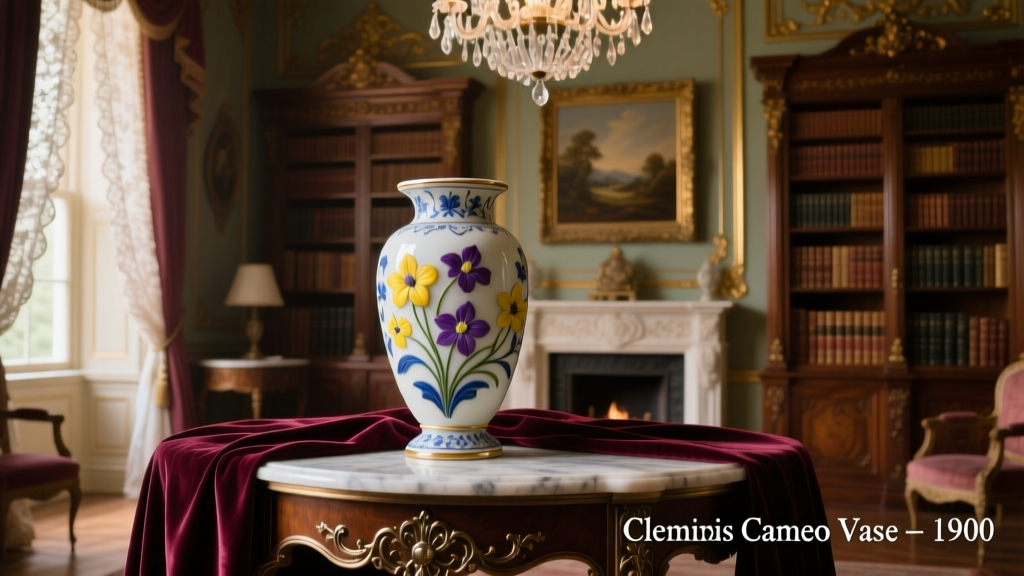
Gallé Vase: Clematis Sprays Etched in Yellow, Purple, and Blue Cameo Glass — A Masterpiece from c. 1900, 20 Inches Tall
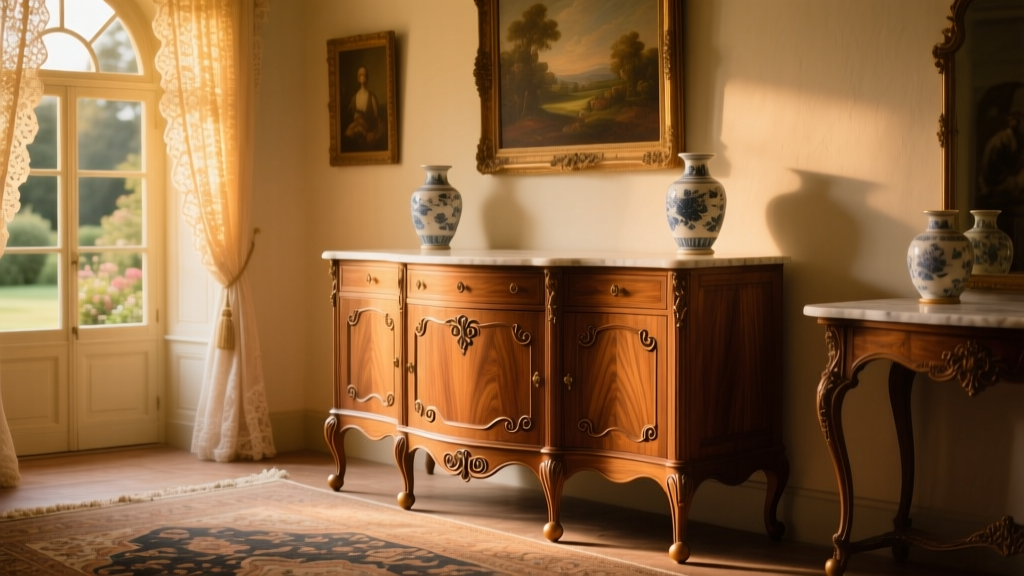
French Provincial Walnut Buffet: Authentic Design, Structural Integrity, and Restoration Insights for the 37-Inch Cabriole-Legged Piece
Sitzendorf Porcelain Manufactory: Legacy, Craftsmanship, and Restoration Insights

Havens James Dexter’s 'Wet Snow' (1946): A Technical and Historical Examination of a Mid-Century American Woodblock Print

Decoding the 1132907: A Technical and Historical Analysis of the 1958 Herman Miller Eames Lounge Chair Base Assembly
Norwegian Bridal Boxes with Geometric Punchwork: A 20-Inch Masterpiece of 19th-Century Folk Craft

Hubley’s Iconic Red & Silver Dump Truck: A Collector’s Guide to the 7½-Inch Lithographed Tinplate Classic (1930s–1940s)
Fischer Ewer: Arabian Design, Applied Flowers & Beaded Handle — A 13½-Inch Masterpiece of Victorian Silverplate Craftsmanship