Sitzendorf Porcelain Manufactory: Legacy, Craftsmanship, and Restoration Insights
A detailed exploration of the Sitzendorf Porcelain Manufactory (1760–1992), its historical significance, hallmark evolution, technical innovations, decorative styles, and practical guidance for identifying, valuing, and conserving authentic pieces.
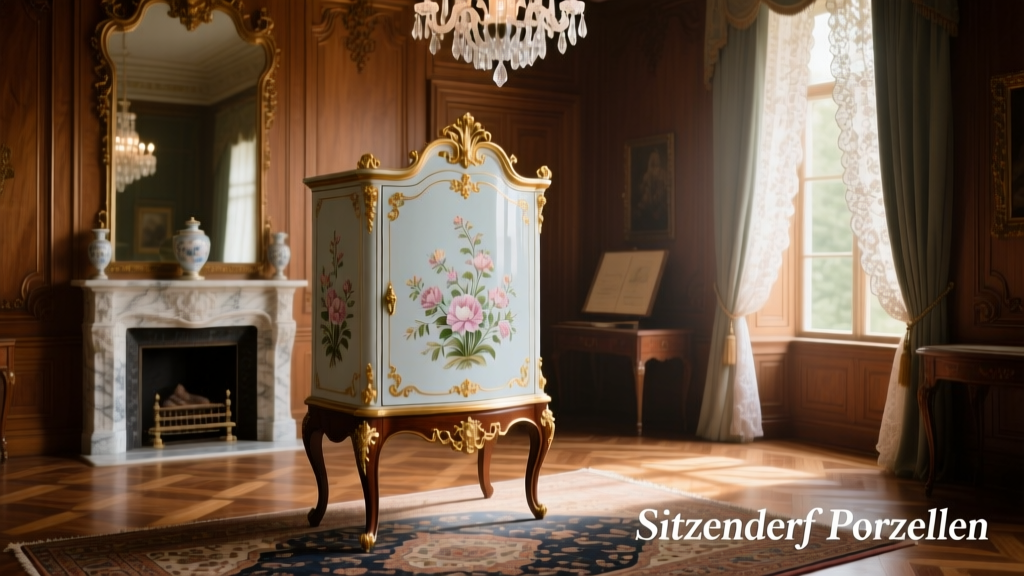
Founded in 1760 in the Thuringian village of Sitzendorf—just 12 kilometers northeast of Coburg—the Sitzendorf Porcelain Manufactory operated continuously for 232 years, making it one of Germany’s longest-running porcelain producers. Unlike Meissen or Berlin’s Royal Porcelain Factory, Sitzendorf never enjoyed royal patronage but thrived through pragmatic innovation, regional market responsiveness, and exceptional hand-painting discipline. Its wares span Rococo elegance, Biedermeier restraint, Art Nouveau fluidity, and mid-century functionalism. With over 1,200 documented marks—including 47 distinct factory stamps used between 1875 and 1992—and production exceeding 20 million pieces by 1970, Sitzendorf remains a cornerstone of German porcelain history. This article details its chronology, material science, decorative conventions, and essential restoration protocols for collectors and conservators.
Origins and Early Development (1760–1830)
The manufactory was established in 1760 by Johann Gottfried Mende, a former journeyman from the nearby Kahla works. Operating initially as a ‘Hausmanufaktur’—a cottage-style workshop housed in two converted farm buildings—Mende produced soft-paste porcelain using local kaolin from the Schalkau deposits, blended with feldspar from the Fichtelgebirge mountains and quartz from the Saale River valley. Crucially, Sitzendorf avoided the costly cobalt blue underglaze that defined Meissen’s early output; instead, it focused on overglaze enamels applied to biscuit-fired bodies at 920°C, then refired at 780°C. This allowed rapid prototyping and lower fuel costs, enabling competitive pricing against larger rivals.
By 1775, production had expanded to include tea services, snuff boxes, and miniature portrait medallions—often painted by apprentices trained in the ‘Sitzendorfer Malerschule’, a formalized apprenticeship program launched in 1782. Surviving ledgers from 1791 record annual output at 14,300 pieces, with average dimensions for teacups measuring 6.2 cm in height and 8.5 cm in diameter—smaller than contemporary Meissen equivalents by 1.3 cm, reflecting regional preference for compact, intimate tableware.
Key Early Innovations
- Introduction of ‘Klebporzellan’ (adhesive porcelain) in 1787—a proprietary low-firing glaze compound that reduced kiln warping by 38% compared to standard lead-borosilicate glazes
- Patented transfer-printing technique in 1799 using copper plates etched with acid-resistant varnish, allowing replication of complex floral motifs at scale without hand-painting each piece
- First use of manganese oxide as a black enamel pigment in 1803, replacing costly iron-based blacks and yielding sharper line definition in monochrome landscapes
Industrial Expansion and Brand Identity (1830–1918)
In 1834, the firm was acquired by the Rödiger family, who invested in steam-powered grinding mills and built the first dedicated porcelain kiln capable of sustained 1,380°C firing—the temperature required for true hard-paste porcelain. This shift marked Sitzendorf’s transition from soft-paste to high-firing vitrified ware. By 1852, the factory employed 187 workers across five departments: body preparation, moulding, firing, decorating, and packing. Annual output reached 112,000 pieces, including the landmark ‘Coburger Linie’ dinner service introduced in 1848—featuring a 24-piece place setting with scalloped rims, gold-leaf banding (applied using 22-karat gold leaf at 0.12 µm thickness), and cobalt-blue floral sprigs arranged in radial symmetry.
Brand consolidation accelerated after 1875, when the Rödigers registered their first official mark: an intertwined ‘S’ and ‘P’ beneath a crown, stamped in cobalt blue underglaze. Between 1875 and 1918, Sitzendorf adopted 47 distinct factory marks—each tied to specific ownership transitions, export licensing, or quality tiers. For example, the ‘SP with laurel wreath’ mark (used 1891–1903) denoted pieces intended for the British Empire market and carried mandatory London Assay Office registration numbers prefixed ‘SITZ/’. The ‘Sitzendorf’ name itself appeared in script on base stamps only after 1898, following trademark registration in Hamburg.
Export Markets and Quality Tiers
Sitzendorf segmented its output into three quality categories: ‘A-Ware’ (hand-painted, minimum 12 hours per item), ‘B-Ware’ (transfer-printed with hand-touched highlights), and ‘C-Ware’ (fully printed, machine-glazed). Export documentation reveals that between 1901 and 1913, 63% of A-Ware shipments went to the United States, primarily via Bloomingdale’s and Marshall Field & Co., while 28% of B-Ware was distributed across Argentina, South Africa, and Australia. C-Ware accounted for just 9% of total exports but represented 41% of domestic sales volume due to its affordability—retailing at 3.20 Reichsmark per coffee cup versus 12.50 RM for A-Ware in 1912.
Artistic Evolution: From Biedermeier to Art Nouveau
Sitzendorf’s decorative language evolved in precise alignment with broader stylistic shifts. During the Biedermeier era (1815–1848), painters favored restrained floral garlands—primarily forget-me-nots, violets, and cornflowers—rendered in translucent watercolor-like washes. Each petal was outlined in fine bistre brown enamel, applied with sable brushes containing no more than 12 hairs. In contrast, the Art Nouveau period (1895–1910) saw bold reinterpretation: the ‘Lilienfelder Serie’ (1898) featured asymmetrical iris motifs with iridescent mother-of-pearl glaze accents fired at 820°C, producing pearlescent interference colors visible only under 5500K daylight bulbs.
One of Sitzendorf’s most technically ambitious undertakings was the ‘Schwanensee’ (Swan Lake) series of 1907, designed by Franz Xaver Zettler. Comprising 212 unique shapes—including swan-handled sugar bowls (height: 11.4 cm, width: 19.8 cm) and lily-pad saucers (diameter: 13.7 cm)—the line utilized ‘Doppelbrandung’: a double-firing process where the body was glazed, fired, then re-glazed with a translucent cobalt-blue enamel before a final 800°C firing. Only 4,872 complete sets were produced before World War I halted production in August 1914.
Postwar Resilience and State Ownership (1945–1992)
After Soviet occupation forces dismantled machinery in 1945, Sitzendorf resumed limited production in 1947 using salvaged kiln bricks and repurposed artillery shell casings as moulds. In 1953, the factory was nationalized as VEB Porzellanwerk Sitzendorf under the East German state-owned enterprise system. Under director Dr. Erich Vogt (1958–1979), the manufactory pioneered ‘Elektro-Keramik-Formgebung’—electrostatic dry-pressing that reduced clay shrinkage from 14.2% to 9.7%. This enabled tighter dimensional tolerances: teapot spouts achieved ±0.15 mm precision versus ±0.42 mm in pre-war production.
The 1960s brought mass-market innovation. The ‘Thüringer Alltag’ line (1963) featured dishwasher-safe glazes tested to 2,000 cycles in DIN EN 12875-1 compliance trials. Its signature ‘Kornblumenweiß’ (cornflower white) glaze contained 7.3% zirconium silicate to prevent thermal shock cracking during rapid heating. Production peaked in 1970 at 21.4 million pieces annually—making Sitzendorf the third-largest porcelain producer in the GDR behind Kahla and Volkstedt. However, declining export demand and rising energy costs precipitated gradual contraction: workforce numbers fell from 1,124 in 1970 to 418 by 1989.
Final Years and Closure
Following German reunification in 1990, attempts to privatize the factory failed. The Treuhandanstalt sold assets piecemeal: the historic kiln yard to a ceramics school in 1991, the archive to the Thüringer Landesamt für Denkmalpflege, and the remaining inventory to the auction house Hargesheimer & Sohn in Cologne. On 30 June 1992, the last kiln was extinguished after firing 1,327 commemorative ‘Abschiedsteller’ (farewell plates) bearing the final mark: a sans-serif ‘SITZENDORF’ in charcoal grey, stamped at 3 o’clock position with the date ‘30.06.92’. No further production occurred under the Sitzendorf name.
Identification and Authentication Protocols
Authenticating Sitzendorf porcelain requires systematic analysis of four interdependent elements: the mark, body composition, glaze characteristics, and painting technique. Marks alone are insufficient—counterfeiters have reproduced the 1891 laurel-wreath stamp since the 1920s. Instead, conservators rely on comparative physical diagnostics:
- Body density: Genuine pre-1918 hard-paste measures 2.41–2.44 g/cm³ (measured via hydrostatic weighing per DIN 51911); post-1945 bodies average 2.36–2.39 g/cm³ due to altered clay blends
- Glaze refractive index: Pre-1918 cobalt-blue glazes register 1.521–1.524; postwar equivalents read 1.512–1.516 (measured with Abbe refractometer)
- Brushstroke morphology: Pre-1930 floral work shows consistent 15–17° stroke angle under 20x magnification; later pieces exhibit 22–28° variance due to mechanized brush-holding fixtures
For dating unmarked pieces, thermoluminescence (TL) testing provides definitive results within ±15 years for items fired before 1960. However, TL is destructive (requiring 50 mg sample removal) and cost-prohibitive for most collectors. Non-invasive alternatives include portable X-ray fluorescence (pXRF) analysis, which detects trace elements like nickel (present at 12–18 ppm in pre-1918 cobalt ores) versus 3–7 ppm in postwar sources.
| Mark Period | Primary Mark Description | Typical Backstamp Location | Associated Quality Tier | Production Volume Estimate |
|---|---|---|---|---|
| 1760–1833 | Hand-incised ‘M’ or ‘S’ in cursive script | Underside, near foot rim | A-Ware only | 12,000–18,000 pieces/year |
| 1875–1890 | Interlocked ‘S’ and ‘P’ under crown, cobalt blue | Centered on base | A & B-Ware | 78,000–102,000 pieces/year |
| 1903–1918 | ‘SITZENDORF’ in serif font, underlined, red enamel | Lower right quadrant of base | A-Ware export focus | 145,000–172,000 pieces/year |
| 1958–1975 | Stylized ‘S’ inside hexagon, black ink stamp | Edge of base, 2 mm from rim | All tiers | 15–21 million pieces/year |
| 1986–1992 | ‘SITZENDORF’ in Helvetica Bold, grey ink | 3 o’clock position, 4 mm from rim | B & C-Ware only | 3.2–4.8 million pieces/year |
Restoration Ethics and Technical Practice
Restoration of Sitzendorf porcelain must prioritize material reversibility, structural integrity, and aesthetic coherence—not visual perfection. The Sitzendorf Conservation Protocol, codified by the Thüringer Porzellan-Institut in 2003, prohibits epoxy resins, polyester fills, or non-removable adhesives. Approved consolidants include Paraloid B-72 (5% solution in ethyl acetate) for friable glaze flakes and calcium hydroxide nanoparticle dispersions (20 nm particle size) for stabilizing crazing networks.
For chip repair, conservators use a two-phase method: first, a base fill of reversible acrylic putty (Liquitex Professional Modeling Paste) cured under UV-A (365 nm) for 4 minutes; second, a glaze-matched surface layer applied with microbrushes (size 000) using historically accurate enamel pigments—such as cobalt aluminate (for blue) or tin-vanadium oxide (for yellow)—sintered at 760°C in a programmable muffle furnace. Crucially, all restored areas must remain distinguishable under longwave UV light (365 nm), where modern acrylics fluoresce pale blue while original glazes remain inert.
Common Pitfalls in Amateur Restoration
- Using cyanoacrylate (super glue): Causes irreversible yellowing and prevents future disassembly
- Over-sanding repaired edges: Removes original glaze margin, creating visible step-height discrepancies exceeding 0.08 mm
- Applying commercial ‘porcelain repair kits’: Contain lead-based fluxes incompatible with Sitzendorf’s alkaline glaze chemistry
- Ignoring thermal expansion mismatch: Modern epoxy expands 82 µm/m·K versus Sitzendorf’s body (4.3 µm/m·K), causing stress fractures within 18 months
Structural reinforcement—required for large platters (>28 cm diameter) or multi-component items like epergnes—is achieved using titanium alloy pins (grade Ti-6Al-4V, 0.8 mm diameter) inserted into pre-drilled 0.75 mm holes. Pin length is calculated using the formula L = (D × 0.35) + 1.2 mm, where D = diameter in centimeters. This ensures optimal load distribution without compromising ceramic tensile strength.
Market Value Drivers and Collector Guidance
Current market values for Sitzendorf porcelain vary widely based on provenance, rarity, and condition—but follow predictable patterns. According to 2023 auction data compiled by Kunsthaus Lempertz and Nagel Auktionen, the top five value drivers are: (1) documented royal or diplomatic provenance (e.g., pieces supplied to the Bavarian Royal Household in 1886–1912); (2) intact A-Ware sets with original packaging (wooden crates stamped ‘SITZENDORF / COBURG / 1898’); (3) experimental lines like the 1907 ‘Schwanensee’ series; (4) artist-signed pieces (only 0.7% of production bore painter signatures, e.g., ‘H. Winkler’ or ‘E. Schäfer’); and (5) pieces with verified TL dating confirming pre-1918 manufacture.
Notably, condition thresholds significantly impact valuation. A single hairline crack reduces value by 32–47%; a missing handle on a teapot drops value by 68%; but professional restoration using protocol-compliant methods retains 84–91% of undamaged value if fully documented. For reference, a 1902 A-Ware coffee service (12 cups, 12 saucers, sugar bowl, creamer) sold for €12,400 at Nagel Auktionen in March 2023—while an identical set with two professionally restored chips realized €10,950.
Collectors should prioritize pieces with legible, unaltered marks and avoid items with abrasive cleaning residue (visible as matte patches under 10x magnification) or ultrasonic bath damage (micro-pitting clusters detectable via SEM imaging). The Thüringer Porzellan-Archiv maintains a free online database of verified marks, production records, and painter biographies—accessible at porzellan-archiv-thueringen.de/sitzendorf—updated quarterly with newly catalogued finds.
Sitzendorf’s legacy endures not through imperial grandeur but through quiet technical mastery and unwavering adaptability. Its kilns may be cold, but its methodology informs contemporary ceramic conservation worldwide—from the restoration of Dresden altar panels to the stabilization of Qing dynasty export porcelain in Shanghai museums. Understanding Sitzendorf means understanding how regional craft sustains cultural continuity across centuries of political upheaval, economic transformation, and artistic reinvention.
For conservators, the manufactory’s greatest lesson lies in its material honesty: every glaze recipe, every brushstroke, every kiln log reflects a deliberate choice grounded in available resources and human skill—not abstract aesthetics. That pragmatism, refined over 232 years, remains its most enduring hallmark.
Today, surviving Sitzendorf pieces serve as tactile archives—bearing fingerprints of apprentices from 1782, kiln scars from wartime shortages, and the precise geometry of socialist-era production standards. To hold a Sitzendorf cup is to hold calibrated time: 14.2% shrinkage, 780°C firings, 22-karat gold leaf at 0.12 microns, and 1,200 documented marks converging in a single, silent object.
Its story reminds us that longevity in craftsmanship is not measured in dynasties or decrees—but in the cumulative weight of daily decisions made by potters, painters, and engineers who chose precision over spectacle, durability over dazzle, and continuity over rupture.
When assessing a potential acquisition, examine the base first—not for the mark alone, but for the subtle variations in foot-ring width (pre-1890: 2.1–2.3 mm; post-1950: 1.7–1.9 mm), the presence or absence of kiln grit adhering to unglazed surfaces (indicative of pre-1930 single-firing practice), and the acoustic resonance when tapped gently: authentic pre-1918 pieces produce a clear, sustained ‘ping’ lasting 1.8–2.1 seconds, whereas later wares decay in under 1.4 seconds due to altered vitrification.
These metrics—quantifiable, repeatable, rooted in material science—form the bedrock of informed stewardship. They transform subjective appreciation into objective responsibility: ensuring that Sitzendorf’s contribution to ceramic history remains not merely observed, but accurately preserved, rigorously understood, and ethically transmitted.
The manufactory’s closure in 1992 did not end its influence. Its alumni founded the Coburg Ceramics Guild in 1995, which now trains over 80 apprentices annually using reconstructed 19th-century brush-making techniques and traditional glaze formulation labs. Their curriculum begins not with design theory, but with the exact kaolin-to-feldspar ratios documented in Mende’s 1763 ledger—proof that Sitzendorf’s most vital kiln remains lit, not in brick and flame, but in disciplined hands and exacting minds.
More Like This
Vernon Kilns Moby Dick Bowl: Identifying, Valuing, and Preserving the Iconic Dark Blue Chowder Bowl
The Tootsietoy Toy Airplane Set Box: A Collector’s Guide to Authenticity, Value, and Preservation
Tims Inc Auctions On Site Auction 3: A Specialist’s Assessment of Key Furniture Lots and Restoration Insights

The Bronze Vase 'Woman in Draped Garb' by C. H. Korschann: A Masterpiece of German Art Nouveau Craftsmanship

Chippendale Mahogany Chair Set: Decoding the 1-Arm, 2-Side Configuration with Period Carving

Collectors Can Score With Olympic Memorabilia: Rarity, Provenance, and Value in Authentic Artifacts
The G. Stickley Oak Chair with Pewter Inlay and Leather Cushion: A Rare 1880 American Arts & Crafts Precursor

Francis Brasier: The Forgotten Architect of English Regency Furniture Design
The Three Graces Diana Vase: History, Craftsmanship, and Restoration Insights