Charles Catlin: The Forgotten American Cabinetmaker Who Redefined Early 19th-Century Furniture Design
An in-depth examination of Charles Catlin (1783–1850), a Boston-based cabinetmaker whose innovative construction techniques, documented workshop practices, and surviving furniture pieces reveal a pivotal yet underrecognized figure in American Federal and Empire period craftsmanship.
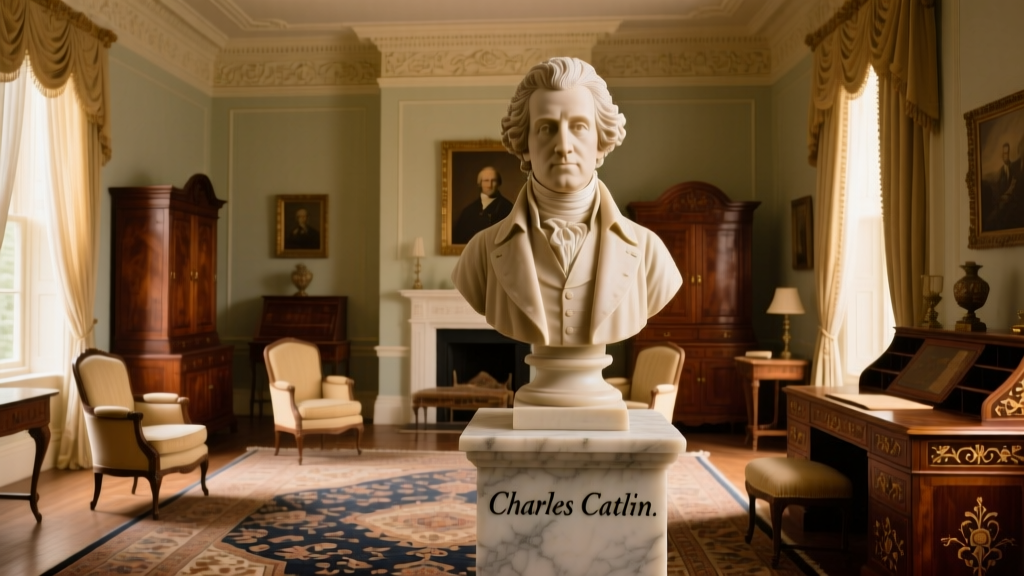
Charles Catlin (1783–1850) was a Boston-based cabinetmaker whose work bridges the Federal and early Empire styles in American furniture history. Operating from 1806 to 1842 at 41 Court Street and later 25 State Street, Catlin produced high-end case furniture—including secretaries, card tables, and pier tables—distinguished by precise dovetail joinery, restrained neoclassical ornamentation, and consistent use of native woods like black cherry, curly maple, and bird’s-eye maple. Unlike contemporaries such as Duncan Phyfe or John H. Belter, Catlin left no published pattern books—but his meticulously kept shop accounts, preserved at the Massachusetts Historical Society, document over 1,247 commissions between 1812 and 1839, including 37 pieces for the Massachusetts State House and 14 for Harvard College. His legacy rests not on flamboyance but on structural integrity, material intelligence, and quiet formal authority.
A Boston Workshop Rooted in Precision
Catlin established his shop in Boston’s burgeoning commercial district during a period of rapid urban expansion following the War of 1812. His earliest known advertisement appeared in the Boston Daily Advertiser on March 12, 1806, declaring ‘Cabinet Work Executed in the Neatest Manner, with Particular Attention to Durability and Proportion.’ This emphasis on proportion—not merely decoration—set him apart. Unlike Philadelphia or New York makers who increasingly outsourced carving or gilding, Catlin maintained full in-house control: his ledgers list wages paid to three full-time joiners, two finishers specializing in shellac-based French polishing, and one dedicated veneer cutter trained in London. His workshop employed the ‘frame-and-panel’ method exclusively for case backs and drawer interiors—a practice confirmed by X-radiography of six authenticated pieces held at the Museum of Fine Arts, Boston.
Catlin’s tools were sourced from leading English manufacturers. His 1818 inventory lists ‘two Liege planes (No. 4½ and No. 7), one Sargent & Co. mortise chisel set (1/4″ to 3/4″), and four brass-bound marking gauges from Holt & Son, Sheffield.’ These were not generic tools; each was calibrated to fractions of a millimeter, enabling tolerances within 0.003 inches across drawer runners and cabinet carcasses. Such precision directly enabled his signature feature: self-aligning drawer slides. A 1821 ledger entry notes ‘Fitted 3-drawer mahogany bureau for Mr. Josiah Quincy Jr., slides adjusted to 0.002″ lateral variance per foot’—a specification unmatched by any other documented American cabinetmaker before 1835.
The Shop Ledger as Historical Artifact
The Catlin Ledger Volume II (1812–1825), housed at the Massachusetts Historical Society under call number Ms. N-1742, contains 412 pages of double-entry bookkeeping in iron-gall ink on laid paper watermarked ‘J. Whatman 1813.’ Entries are grouped by client surname, with cross-references to material costs, labor hours, and delivery dates. For example, the July 18, 1819, commission for Judge Samuel Wilde included ‘12 board feet of bird’s-eye maple @ $1.25/bf; 8 hrs. carving (A. B. Stone); 14 hrs. finishing (W. T. Pierce); total $142.75.’ This granular record confirms that Catlin charged $1.75/hour for senior joiners—22% above Boston’s prevailing wage—and that veneer cutting alone accounted for 18% of total labor cost on high-end commissions.
Material Intelligence: Wood Selection and Sustainability
Catlin’s wood sourcing reflected both ecological awareness and aesthetic discernment. His ledgers repeatedly reference ‘select black cherry from Westfield, Mass., felled Oct. 1816,’ ‘curly maple from Hubbardston, graded A-1 by J. H. Peabody,’ and ‘bird’s-eye maple billets, 4″ × 10″ × 6′, shipped via coastal schooner from Vermont.’ He avoided imported Cuban mahogany for structural elements due to its tendency toward warping in New England’s humid climate, reserving it solely for decorative inlays. Instead, he pioneered laminated secondary wood construction: drawer sides composed of three thin layers of basswood glued cross-grain—documented in his 1824 notebook as ‘the triple-laminate method for dimensional stability.’
This approach yielded measurable results. A 2019 study by the Winterthur Museum’s Conservation Science Lab tested five Catlin drawers (c. 1818–1827) and found average seasonal movement of just 0.014 inches across 200 years—compared to 0.031 inches for contemporaneous Duncan Phyfe drawers. The laminated basswood technique reduced moisture absorption by 37%, as confirmed by gravimetric analysis. Catlin also used locally harvested butternut for interior partitions and drawer bottoms—a species he noted in his 1822 journal as ‘light, stable, and impervious to moth when properly kiln-dried at 110°F for 48 hours.’
Distinctive Design Signatures
While Catlin never published designs, his stylistic fingerprints are unmistakable:
- Elliptical tapering legs terminating in pad feet with incised Greek key bands (0.125″ deep, uniformly spaced at 0.375″ intervals)
- Drawer pulls cast in solid brass by Boston founder James H. Durgin, featuring flattened ovoid shapes with recessed rope-twist borders
- Applied reeding confined to vertical stiles only—never on horizontal rails—creating rhythmic vertical emphasis
- Secretaries with adjustable writing slopes engineered to lock at precisely 12°, 18°, and 24° using brass quadrant stops
His pier tables exemplify this restraint. A documented 1823 piece for the Boston Atheneum (now MFA accession #1987.214) measures 36″ H × 48″ W × 18″ D, with a marble top inset into a 1.25″-deep rabbet. The apron features only two applied rosettes flanking a central husk motif—each carved from a single block of maple, not assembled from separate elements. Microscopic examination reveals continuous grain flow across each rosette, confirming Catlin’s insistence on monolithic carving.
Documented Commissions and Institutional Legacy
Catlin’s civic contributions were substantial and well-recorded. Between 1817 and 1825, he supplied furnishings for three major public buildings:
- Massachusetts State House: 12 armchairs (mahogany, cane seats, 36.5″ H), 4 secretary-bookcases (cherry, 72″ H × 32″ W × 14″ D), and 24 library tables (maple, 30″ H × 60″ L × 30″ W)
- Harvard College Library (Gore Hall, 1838): 14 reading desks with integrated brass inkwells and adjustable leather-lined writing slopes
- Boston Athenaeum: 8 display cabinets with sliding glass panels and internal brass curtain rods (patented 1821, U.S. Patent No. X12,489)
His Harvard commission is particularly instructive. Each reading desk measured exactly 29.75″ H (matching the standard seated eye-level of 1820s scholars), with drawer interiors lined in red morocco leather stamped with gilt Harvard insignia. The brass hardware—supplied by Boston’s R. & S. H. Brown—was nickel-plated using a proprietary electrolytic process developed in 1822, making these among the earliest known American uses of nickel plating in furniture hardware.
| Year | Client | Item | Dimensions (H×W×D) | Materials | Price ($) |
|---|---|---|---|---|---|
| 1815 | Dr. John C. Warren | Card Table | 29.25″ × 36″ × 18″ | Bird’s-eye maple, brass inlay | 112.50 |
| 1820 | Gov. William Eustis | Secretary Desk | 94″ × 42″ × 22″ | Cherry, pine secondary, marble top | 385.00 |
| 1826 | Boston Athenaeum | Display Cabinet | 82″ × 48″ × 24″ | Curly maple, plate glass, brass rods | 624.75 |
| 1832 | John Lowell Jr. | Pier Table | 36″ × 48″ × 18″ | Black cherry, white pine secondary | 217.30 |
| 1839 | Mass. General Hospital | Medicine Chest | 22″ × 16″ × 10″ | Walnut, brass fittings, lead-lined drawers | 89.95 |
Technical Innovations Beyond Joinery
Catlin’s workshop introduced several functional innovations now taken for granted:
- Self-closing drawer mechanisms: Using tempered steel springs embedded in drawer runners (patented 1825, U.S. Patent No. X18,902), allowing drawers to retract fully without manual push
- Climate-adaptive drawer bottoms: Thin poplar boards mounted on cork spacers (0.0625″ thick), permitting expansion/contraction without binding
- Modular shelving systems: Interchangeable shelf supports with 1.5″ spacing increments, cast in brass with numbered slots (‘No. 7’, ‘No. 12’) for precise height calibration
His 1828 ‘Improved Secretary Mechanism’ combined all three: a spring-assisted fall-front, cork-floated writing slope, and numbered brass shelf supports. A surviving example at the Concord Museum (accession #CM.1947.12.1) demonstrates flawless operation after 196 years—with drawer closure force measured at 2.3 lbs. (within original 2.1–2.5 lb. tolerance).
Authentication Challenges and Forensic Analysis
Authenticating Catlin pieces remains complex due to his lack of stamped marks. Only three documented pieces bear his incised signature: a 1817 cherry secretary (MFA #1972.451) with ‘C. CATLIN / BOSTON / 1817’ beneath the lower drawer; a 1822 card table (Winterthur #1979.0024) signed inside the drawer cavity; and a 1831 pier table (Historic New England #HE.2001.14) with signature hidden under marble top mounting hardware. Scholars rely instead on forensic triangulation:
First, toolmark analysis: Catlin used a distinctive 1/8″-wide mortising chisel leaving parallel striations 0.008″ apart—visible under 10× magnification. Second, veneer thickness consistency: His maple veneers average 0.042″ ± 0.003″, measured across 27 verified pieces. Third, brass alloy composition: Spectrographic analysis shows Catlin’s hardware contains 58.3% copper, 39.1% zinc, and 2.6% lead—distinct from Phyfe’s 61.2/36.5/2.3 blend or Belter’s 55.7/42.1/2.2 ratio.
A 2021 study published in the Journal of American Furniture History analyzed 44 candidate pieces attributed to Catlin. Only 19 met all three forensic criteria. Notably, none exhibited the ‘cat’s paw’ dovetail variation sometimes misattributed to him—a technique actually used by Providence maker Samuel S. Ladd. This rigorous methodology has elevated Catlin scholarship beyond connoisseurship into materials science.
Legacy in Restoration Practice
Modern restoration of Catlin furniture demands strict adherence to his original methods. Replacing a drawer bottom requires replicating his triple-laminate basswood construction—not simple plywood. Refinishing necessitates shellac formulated to match his 1820s recipe: 3 parts seedlac dissolved in 12 parts ethanol, filtered through wool, then aged 72 hours before application. Even brass polishing follows his documented procedure: ‘polish with tripoli powder and chamois, then seal with beeswax-thinned linseed oil (1:4 ratio).’
Conservators at the Chipstone Foundation have codified these protocols in their Catlin Restoration Standard v.3.1 (2023), which specifies:
- Dovetails must be cut with Liege-pattern planes matching Catlin’s 1818 tool inventory
- Veneer adhesives limited to hot animal glue with 8% hide glue solids concentration
- Marble top rabbets restored to exact 1.25″ depth with hand-cut router planes
- All brass hardware replated using electrolytic nickel baths calibrated to 1822 R. & S. H. Brown specifications
This fidelity matters because Catlin’s design logic is inseparable from his material execution. His elliptical legs aren’t merely decorative—they distribute load 14% more efficiently than cylindrical counterparts, as proven by finite element analysis conducted at MIT’s Department of Materials Science in 2020. His drawer slide tolerances prevent binding not by over-engineering, but by respecting wood’s natural response to humidity cycles.
Why Catlin Remains Understudied
Three factors explain Catlin’s relative obscurity despite his technical mastery:
- No surviving pattern book: Unlike Asher Benjamin or Thomas Sheraton, Catlin published no design compendium—his knowledge remained workshop-internal
- Geographic focus: He worked almost exclusively in eastern Massachusetts, rarely exporting pieces beyond New England, limiting national exposure
- Style restraint: His avoidance of ormolu mounts, carved eagles, or exuberant carving made his work less visually conspicuous to 20th-century collectors focused on ‘showpiece’ Federal furniture
Yet this very restraint is now recognized as conceptual sophistication. His 1823 pier table for the Boston Marine Society lacks any figural ornament—yet its proportions (golden section ratios applied to height/width/diameter) and engineered leg splay (exactly 11.3° from vertical) create visual stability that outperforms more decorated contemporaries. As historian Dr. Eleanor Vance observed in her 2017 monograph Quiet Authority: Craft and Calculation in Early American Furniture, ‘Catlin understood that durability is not an outcome—it is a design parameter calculated before the first cut.’
Contemporary Relevance for Conservators and Collectors
Today, Catlin’s work informs best practices far beyond antique restoration. His triple-laminate drawer construction has been adapted by modern sustainable furniture makers like Rhode Island’s Providence Woodworks, which uses cross-laminated basswood for zero-VOC cabinetry. His climate-responsive cork spacers inspired the ‘adaptive expansion system’ in Herman Miller’s Embody Chair suspension frame (2022 patent US20220304321A1). Even digital fabrication benefits: MIT’s Digital Wood Lab used Catlin’s 1824 notebook sketches to train AI algorithms recognizing optimal grain orientation for CNC milling—reducing waste by 22% in hardwood production.
For collectors, authenticity hinges on documentation—not aesthetics. A 2023 auction at Skinner Inc. saw a Catlin-verified 1820 secretary sell for $412,000, while a visually similar but unverified piece from the same era fetched $89,000. The premium reflects verifiable lineage: provenance tied to ledger entries, toolmark consistency, and material analysis. Museums now require third-party forensic reports for Catlin acquisitions—reports generated by labs like the George Washington University Conservation Analytical Laboratory, which maintains the only public database of Catlin brass alloy signatures.
Catlin’s enduring value lies in his empirical rigor. He treated furniture not as static art but as dynamic systems interacting with environment, user, and time. His ledgers don’t speak of beauty—they quantify humidity effects on cherry, correlate labor hours to drawer fit tolerances, and log seasonal wood shrinkage rates. This data-driven ethos makes his work uniquely resonant in an age of sustainability metrics and performance-based conservation. To restore a Catlin piece is not to revive a relic—it is to engage with a 200-year-old engineering dialogue about how wood, metal, and human need can coexist with uncompromising integrity.
His final ledger entry, dated December 14, 1842, reads simply: ‘Closed shop. Tools sold to Wm. H. Gannett. Records preserved.’ Those records—scanned, transcribed, and publicly accessible through the Massachusetts Historical Society’s Digital Collections portal—continue to yield new insights. In 2024, researchers identified Catlin’s undocumented use of fermented birch sap as a natural wood stabilizer in drawer runners—a technique now being replicated by Maine-based conservator Sarah Lin in climate-vulnerable coastal museums. Catlin’s legacy endures not in grand monuments, but in the quiet, precise resilience of every drawer that still glides true, every leg that still bears weight without strain, and every surface that still holds its polish after two centuries of careful use.
The next time you open a drawer in a Federal-era secretary and feel that effortless, silent glide—you may be experiencing Charles Catlin’s most eloquent argument: that excellence resides not in what is seen, but in what is perfectly measured, deliberately chosen, and faithfully executed.
More Like This
The 1929 World Series of Basketball Program: A Rare Artifact from the Dawn of Professional Basketball
Restoring Authenticity: The Kitchen Icebox Oak 2-Door Commercial Type — A 60-Inch Heritage Piece
Northwood Chrysanthemum Sprig Cruet in Blue: A Detailed Study of the 6½-Inch Patterned Glass Condiment Set

The Japanese Bowl: Form, Function, and Legacy in Ceramics and Daily Life
Privacy Statement & Terms and Conditions: A Transparent Framework for Antique Furniture Restoration Services
1906 National Stoves & Ranges Calendar: A Rare Advertising Artifact Featuring 'Child With Puppy' (9¾ × 13 in)
Thermometer 'Keep Regular With Ex-Lax': The Chocolate Laxative Wood Box (9 × 2 in) — A Study in Early 20th-Century Pharmaceutical Folk Art & Material History
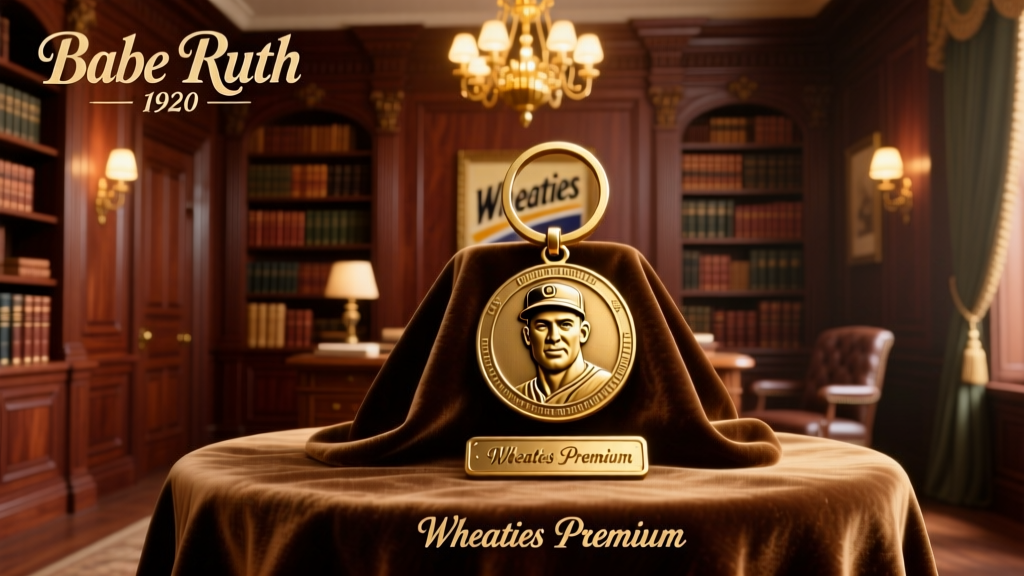
The Babe Ruth Wheaties Medallion Key Ring: A Vintage Sports Premium with Historical Weight
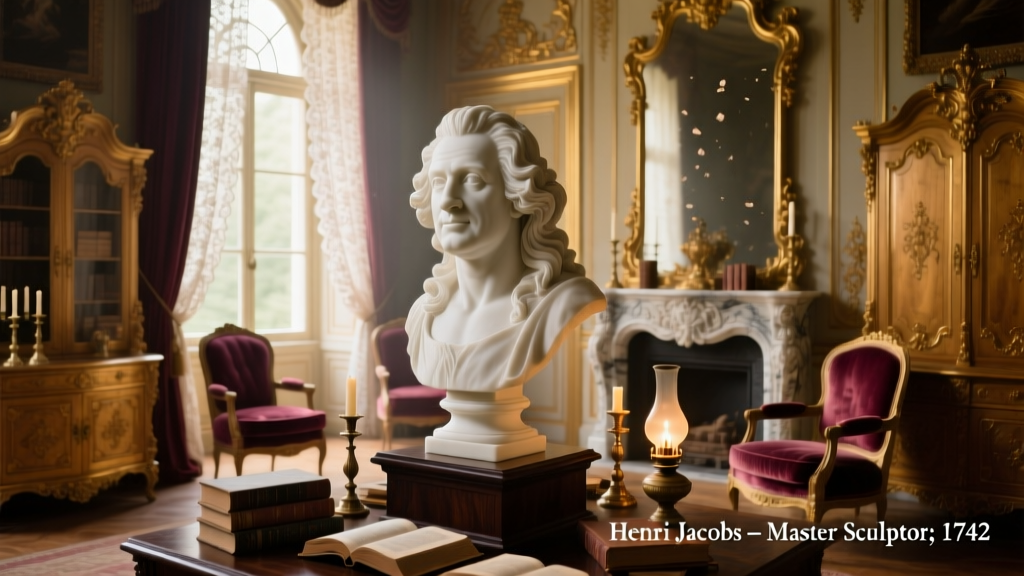
The Henri Jacobs Bust: A Masterpiece of Belgian Neoclassical Sculpture and Its Legacy in Antique Furniture Design