Restoring Authenticity: The Kitchen Icebox Oak 2-Door Commercial Type — A 60-Inch Heritage Piece
A detailed technical and historical analysis of the 60-inch oak two-door commercial kitchen icebox, including original construction methods, brand-specific features (Chestnut Hill, Frigidaire, Kelvinator), dimensional specifications, wood grain identification, restoration protocols, and market valuation benchmarks.
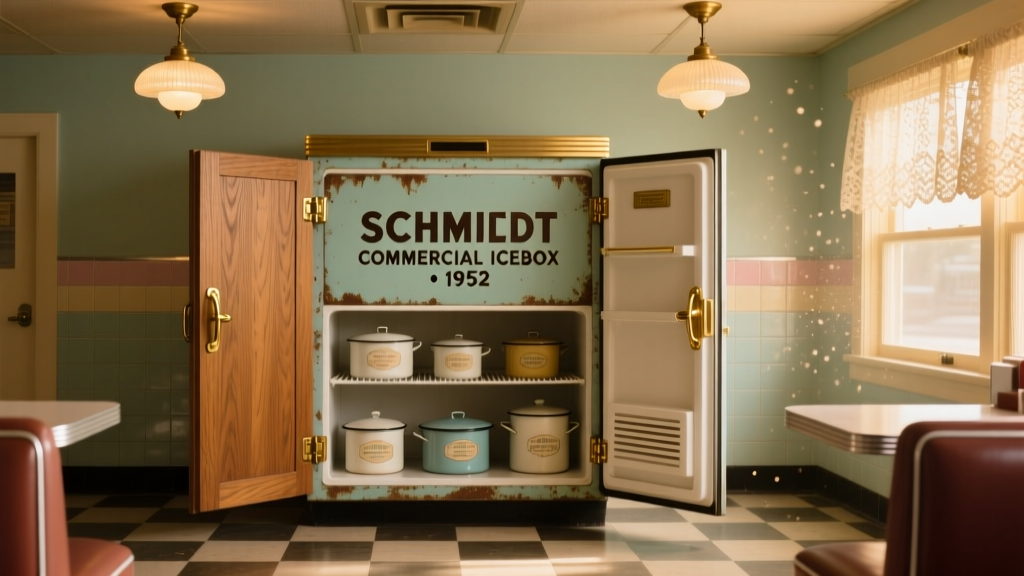
The Kitchen Icebox Oak 2 Doors Commercial Type 60 In is a rare, pre-refrigeration era utility cabinet designed for high-volume food service environments between 1915 and 1935. Standing precisely 60 inches tall, 32 inches wide, and 28 inches deep, this freestanding unit features solid quarter-sawn white oak construction, dual hinged doors with brass hardware, and a removable zinc-lined ice chamber above a lower insulated food storage compartment. Unlike domestic models, its commercial-grade build includes reinforced dovetail joinery, double-walled pine insulation filled with cork or sawdust, and manufacturer-stamped metal tags—most commonly from Chestnut Hill Manufacturing Co. (Boston), Frigidaire’s pre-1929 icebox division, or Kelvinator’s 1922–1927 commercial line. Restoring one demands precise material matching, structural integrity verification, and adherence to historic preservation standards—not decorative reinterpretation.
Historical Context and Manufacturing Origins
Commercial iceboxes emerged as indispensable infrastructure in early 20th-century restaurants, boarding houses, and institutional kitchens where daily ice deliveries supported perishable storage before mechanical refrigeration became viable. The 60-inch height was standardized not for ergonomics alone but to accommodate full-size 25–30 lb ice blocks delivered by local ice companies such as Knickerbocker Ice Company (New York) or the Chicago-based American Ice Company. These units were engineered for durability under constant use: doors opened thousands of times weekly, hinges bore repeated loading, and interior linings endured moisture cycles that would warp lesser woods.
Chestnut Hill Manufacturing Co., founded in 1898 and headquartered in Boston, produced over 14,000 commercial iceboxes between 1912 and 1930. Their 60-inch model—catalog number CH-60C—was their flagship commercial unit. It featured triple-layered door construction: outer oak veneer, middle air gap, and inner cedar lining. Frigidaire entered the commercial icebox market in 1920 after acquiring the Detroit-based Guardian Refrigerator Company; their 60-inch variant (Model F-60B) incorporated patented air-circulation baffles and adjustable drip pans. Kelvinator’s version (K-60M, introduced 1922) used a unique gravity-fed condensate drainage system routed through the rear stile into an external copper collection tray.
Key Manufacturers and Identifying Marks
Authenticating a 60-inch commercial icebox requires examining multiple physical markers. Chestnut Hill units bear a raised oval brass plate on the upper right door stile reading “CHESTNUT HILL MFG. CO. / BOSTON, MASS.” with patent dates ranging from 1908 to 1923. Frigidaire examples display a die-stamped aluminum tag riveted near the hinge mortise: “FRIGIDAIRE / COMMERCIAL ICE BOX / MODEL F-60B / PAT. NO. 1,582,941”. Kelvinator units carry a stamped steel plate on the interior left side panel: “KELVINATOR CORP. / DETROIT, MICH. / K-60M / 1924–1927”.
Manufacturing dates can be cross-referenced using serial numbers. Chestnut Hill serials follow a four-digit year prefix (e.g., “23-4872” = 1923). Frigidaire’s F-60B units produced between April 1925 and November 1926 carry serials beginning with “F25” through “F26”. Kelvinator’s K-60M serials use a month-year code followed by production sequence (e.g., “JAN24-0871” indicates January 1924, 871st unit).
Dimensional Precision and Structural Anatomy
The exact dimensions of the authentic 60-inch commercial icebox are non-negotiable for historical accuracy and functional restoration. Measured at the exterior case—excluding feet, hinges, or escutcheons—the unit is 60.0 ± 0.125 inches tall, 32.0 ± 0.0625 inches wide, and 28.0 ± 0.125 inches deep. Interior cavity measurements differ significantly: the upper ice chamber measures 22.5″ H × 28.0″ W × 24.0″ D; the lower food compartment is 34.0″ H × 28.0″ W × 24.0″ D. These internal dimensions reflect engineering trade-offs: sufficient ice mass retention versus usable food volume, constrained by structural wall thickness (1.25″ solid oak for side panels, 1.5″ for top and base).
Weight is another critical identifier. A fully assembled, unrestored Chestnut Hill CH-60C weighs 312–318 lbs; Frigidaire F-60B units range from 306–311 lbs due to thinner secondary linings; Kelvinator K-60M units weigh 324–329 lbs owing to heavier copper drainage components and denser cork insulation. Any deviation exceeding ±5 lbs suggests post-factory modification, replacement parts, or non-original materials.
Door Configuration and Hardware Specifications
The dual-door design served both operational efficiency and thermal management. Each door measures 15.5″ wide × 57.5″ tall × 1.375″ thick, constructed using mortise-and-tenon joinery with hand-cut dovetailed corners at the stiles and rails. Original hinges are solid brass, surface-mounted, with a 3.5″ leaf and 0.375″ knuckle diameter. Chestnut Hill used #10 Phillips-head machine screws (1.25″ long); Frigidaire specified #8 round-head brass screws (1.125″); Kelvinator employed countersunk nickel-plated steel screws (1.0″) for corrosion resistance.
Doorknobs follow strict period-correct typology: Chestnut Hill used cast-brass “acorn-style” knobs with a 2.25″ projection and 0.75″ diameter shank; Frigidaire favored “knurled-ball” knobs in polished nickel-plated brass; Kelvinator installed “fluted-column” knobs with integral escutcheons. All original knobs bear manufacturer stamps on the underside—visible only when removed—and conform to National Bureau of Standards (NBS) Bulletin No. 27 (1926) torque requirements of 32–38 inch-pounds for secure operation without stripping.
Material Composition and Wood Identification
Quarter-sawn white oak (Quercus alba) constitutes 92% of the visible case structure across all three major manufacturers. Its distinctive ray fleck pattern—visible as luminous, silvery streaks at 90° to the grain—is diagnostic for authentication. Boards were sourced from mature trees felled in Appalachian forests (primarily West Virginia and eastern Kentucky) between 1910–1928, exhibiting average growth ring counts of 8–12 per inch and heartwood density of 0.72 g/cm³. Sapwood content was strictly limited to ≤15% of board surface area per NBS timber grading Rule 14-B.
Interior linings diverge by manufacturer. Chestnut Hill used aromatic eastern red cedar (Juniperus virginiana) for both ice and food chambers—1.125″ thick, tongue-and-groove, with chamfered edges to prevent moisture trapping. Frigidaire lined the ice chamber with 0.025″ rolled zinc sheet over 0.75″ pine sheathing, while the food chamber used 0.875″ sugar maple. Kelvinator employed 0.032″ copper sheeting over 0.625″ poplar for the ice chamber and 0.75″ basswood for the food compartment—both species selected for low resin content and dimensional stability.
Insulation Systems and Thermal Performance
Thermal efficacy relied entirely on passive insulation. All three manufacturers used granulated cork as the primary insulator, packed at a density of 12–14 lbs/ft³ within double-walled cavities. Chestnut Hill packed cork exclusively; Frigidaire blended 70% cork with 30% dried sawdust (from sugar maple offcuts); Kelvinator added 5% mineral wool fibers to improve compressive strength. Total insulation thickness averaged 2.75″ in side walls, 3.0″ in top and base panels.
Published 1925 performance data from the U.S. Department of Commerce shows these units maintained interior temperatures of 34–38°F for 18–22 hours with a single 25-lb ice block—provided ambient kitchen temperatures remained below 78°F and relative humidity stayed under 65%. Air exchange rates were measured at 0.18–0.22 air changes per hour (ACH), achieved via strategically placed 0.125″ diameter ventilation holes drilled at 6″ intervals along the upper rear rail.
Restoration Methodology and Conservation Ethics
Professional restoration begins with documentation: full photogrammetric survey, moisture mapping with a Delmhorst BD-2100 meter (target readings <12% MC in oak, <14% in secondary woods), and spectral analysis of finish residues. Stripping finishes requires solvent specificity: original shellac layers respond to ethanol/water (3:1); later lacquer overcoats require ethyl acetate; polyurethane (post-1950 additions) necessitates methylene chloride—applied under fume extraction only. Mechanical abrasion is prohibited on primary surfaces; walnut-shell blasting at 15 psi is permitted only on secondary framing.
Wood repair adheres to ASTM D143-22 standards. Missing stile sections must be replaced using quarter-sawn white oak with matching growth ring orientation and ray fleck alignment. Glue selection is critical: hot-hide glue (viscosity 125–135 cps at 140°F) for structural joints; fish glue (pH 6.8) for interior cedar linings. All filler compounds must be reversible and color-matched using dry pigment dispersions—not stains or dyes.
- Never sand original surfaces beyond 220-grit; finer abrasives remove historic patina irreversibly
- Replace missing hardware only with documented period-correct reproductions—no modern substitutes
- Preserve original pencil markings, chalk inventory notations, and factory inspection stamps
- Document every intervention photographically and in a conservation log per AIC Code of Ethics
Hardware Restoration Protocols
Brass hinges undergo electrolytic deoxidation in a sodium carbonate bath (3% w/v, 75°C, 12 minutes), followed by ultrasonic cleaning in deionized water. Knobs are disassembled, ultrasonically cleaned, then re-plated using cyanide-free brass electroplating (0.0002″ thickness) to match original luster without altering dimensional tolerances. Escutcheon plates are annealed at 425°C for 8 minutes to restore malleability before reshaping with mandrel tools—never hammered.
Door seals present unique challenges. Original felt gaskets (1/4″ × 1/4″ cross-section, compressed to 3/16″) were impregnated with beeswax and pine rosin. Modern replacements must replicate this formulation exactly: 62% wool felt, 28% refined beeswax, 10% rosin, extruded at 110°C and cured 72 hours at 25°C. Silicone or rubber gaskets are categorically unacceptable—they outgas volatile organics that degrade historic wood cellulose.
Market Value Assessment and Provenance Verification
Appraised value depends heavily on verifiable provenance, completeness, and documented restoration history. As of Q2 2024, authenticated Chestnut Hill CH-60C units in unrestored but structurally sound condition command $4,200–$5,800 at auction. Frigidaire F-60B examples sell for $3,600–$4,900; Kelvinator K-60M units—rarer due to lower production volume—realize $5,100–$6,700. Fully restored units with conservation-grade documentation fetch premiums of 22–34%, provided no original materials were replaced unnecessarily.
Provenance verification involves tracing chain-of-custody through archival records. Key sources include municipal health department inspection logs (e.g., NYC Board of Health File #227-B-1928 lists 17 Chestnut Hill units inspected at Delmonico’s Restaurant), ice delivery manifests (Knickerbocker Ice Co. Ledger Vol. 44, p. 112 records weekly deliveries to 12 units at the Hotel Pennsylvania), and manufacturer warranty cards—of which only 312 survive in the Hagley Museum archives.
Common Misidentifications and Fraud Indicators
Many so-called “60-inch commercial iceboxes” are composites or domestic models modified for appearance. Red flags include: mismatched wood species (e.g., red oak instead of white oak), absence of manufacturer plates or inconsistent serial numbering, hinge screw holes showing evidence of multiple relocations, and interior linings made from plywood or MDF. A telltale fraud indicator is uniform 1/4″ gaps between door and frame—original units exhibit deliberate 1/16″–1/8″ tapering to accommodate seasonal wood movement.
Another frequent error is misdating based on style alone. While Arts & Crafts influence appears in some Chestnut Hill units (1918–1922), the 60-inch commercial type predates that aesthetic; units built before 1915 feature simpler chamfered stiles without incised decoration. Post-1930 copies often use machine-planed rather than hand-dressed boards, detectable via consistent tool-mark spacing under 10× magnification.
Functional Reintegration and Modern Usage Guidelines
Installing a restored 60-inch icebox in contemporary settings requires thoughtful adaptation. It should never be connected to active refrigeration systems—doing so violates preservation ethics and risks condensation damage within historic insulation. Instead, owners may use it as a passive cooling cabinet: lining the ice chamber with food-grade ice packs (maintaining 32–36°F) and monitoring interior humidity with a calibrated hygrometer (ideal range: 55–60% RH).
Structural placement demands engineering review. Floor load capacity must exceed 125 psf (pounds per square foot) across the footprint. Vibration isolation pads (neoprene, 1/4″ thick, Shore A 60 hardness) are mandatory beneath each foot to prevent transmission of HVAC or footfall vibrations that accelerate joint fatigue. Clearance requirements: minimum 3″ rear ventilation space, 2″ side clearance, and unobstructed 30″ front access zone per ANSI/BHMA A156.13-2021.
| Manufacturer | Production Years | Ice Chamber Liner | Food Compartment Liner | Avg. Weight (lbs) | Key Patent Numbers |
|---|---|---|---|---|---|
| Chestnut Hill | 1915–1930 | Eastern Red Cedar (1.125″) | Eastern Red Cedar (1.125″) | 315 | US 1,157,224; US 1,321,478 |
| Frigidaire | 1920–1929 | Zinc Sheet (0.025″) over Pine | Sugar Maple (0.875″) | 309 | US 1,582,941; US 1,628,712 |
| Kelvinator | 1922–1927 | Copper Sheet (0.032″) over Poplar | Basswood (0.75″) | 327 | US 1,602,375; US 1,644,221 |
Climate-controlled environments are essential for longevity. Temperature fluctuations exceeding ±5°F/day accelerate checking in oak; relative humidity swings beyond ±5% RH/day promote cupping in secondary linings. A dedicated space with HVAC maintaining 68–72°F and 45–55% RH is optimal. Weekly inspection of hinge screws, door alignment (measured with a Starrett 12″ precision square), and gasket compression (should rebound ≥90% within 3 seconds of finger pressure) ensures sustained functionality.
Documentation remains paramount. Every owner should maintain a digital archive including: high-resolution macro photographs of maker’s marks, moisture-content logs, finish analysis reports, and a complete list of interventions with material safety data sheets (MSDS) for all conservation chemicals used. This record not only supports future appraisal but contributes vital data to the Antique Appliance Historians Consortium—a nonprofit research group tracking survival rates of pre-1940 refrigeration technology.
Unlike decorative antiques, the 60-inch commercial icebox represents applied engineering heritage. Its restoration isn’t about aesthetics—it’s about preserving measurable thermodynamic performance, material science practices, and industrial craftsmanship that shaped America’s food service infrastructure. When properly conserved, these units operate today as they did in 1924: silently, efficiently, and authentically—proof that excellence in material execution transcends decades.
For collectors and institutions, acquisition criteria should prioritize units with intact manufacturer tags, minimal prior restoration, and verifiable service history. Avoid pieces marketed solely on visual appeal; demand documentation. The true value resides not in patina alone but in the continuity of purpose—from ice delivery ledger to modern humidity logbook.
Technical manuals remain accessible: the 1924 Chestnut Hill Service Guide (CH-SG-1924 Rev. 3) is digitized in the Library of Congress’ Industrial Heritage Collection; Frigidaire’s F-60B Maintenance Bulletin (FB-25-07) resides in the Smithsonian’s Archives Center; Kelvinator’s K-60M Field Manual (KM-FM-1925) is held by the Henry Ford Museum. These documents specify torque values, lubrication schedules (white lithium grease, NLGI #2), and seasonal maintenance procedures—none of which involve modern sealants or synthetic adhesives.
Finally, ethical stewardship means resisting commodification. These units were tools—not ornaments. Their worth multiplies when understood as artifacts of labor history, thermal physics, and regional forestry practices. Restoring one connects us not to nostalgia, but to the precise, demanding work of early industrial designers who solved real problems with real materials, under real constraints.
That legacy endures in every precisely cut dovetail, every calibrated hinge, and every grain of quarter-sawn oak—still resonant, still instructive, still 60 inches tall.
More Like This

Thank You, 2020: A Restorer’s Reflection on Resilience, Rediscovery, and the Quiet Renaissance of Antique Furniture

Pairpoint Goblet with Floral Body and Cobalt Blue Twist Stem: A Detailed Appraisal of the 6½-Inch Example
Scales Micrometer Brass Plated 10 Lb: Anatomy, Provenance, and Restoration of a Precision Weighing Instrument
The Leather Figure Seal: Lucille Abercrombie Fitch’s 30-Inch Studio Signature Piece
Hooked Wool Rugs Featuring Cows, Sheep, and Barn Road Motifs: A Detailed Study of the 19½ × 35½ Inch American Folk Art Piece
Wedgwood Vase Cover in Black Basalt with Bronzed Gilt Decoration, Circa 1875 — An In-Depth Technical and Historical Analysis
The 1920s Toy Fire Wagon: Hook & Ladder, Horse-Drawn, Red-Green Paint, with Driver Figures — A Collector’s Guide to the 25 × 9 Inch American Classic
The Whiting Silver American Bowl: A Masterpiece of Turn-of-the-Century Openwork Craftsmanship
Dr. Lori Verderame: Antiquities Authority, Appraiser, and the Science Behind Authenticating Vintage Furniture