The Japanese Bowl: Form, Function, and Legacy in Ceramics and Daily Life
An expert examination of Japanese bowls—from humble rice vessels to revered tea ceremony chawan—covering historical evolution, regional kilns, materials, measurement standards, restoration ethics, and modern collecting practices.
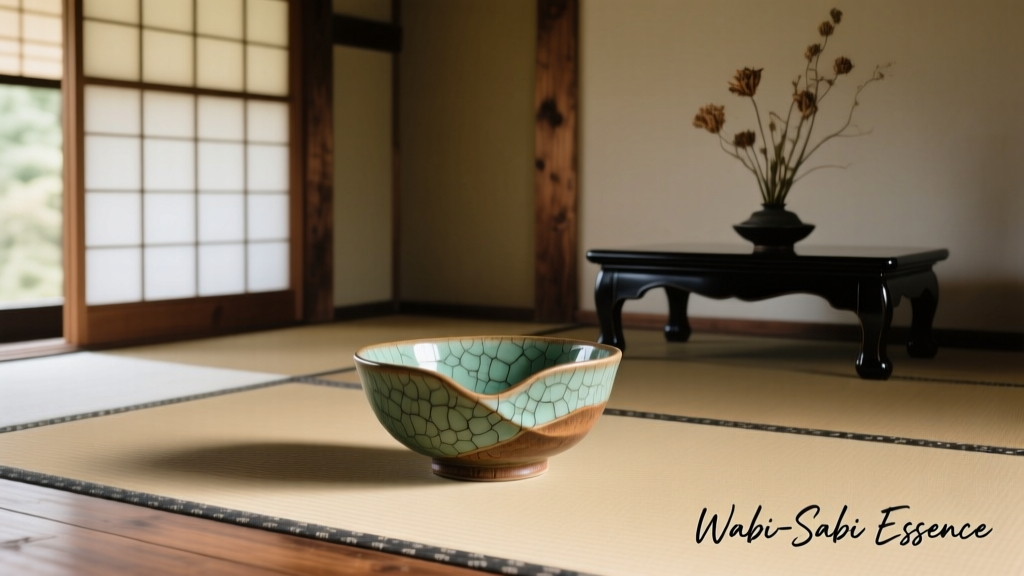
Japanese bowls are far more than simple eating vessels; they are cultural artifacts embodying centuries of aesthetic philosophy, technical mastery, and social ritual. From the unglazed, hand-thrown chawan used in chanoyu (the Japanese tea ceremony) to the refined porcelain wan of Kyoto’s Kiyomizu-yaki tradition, each bowl tells a story of place, patronage, and purpose. Measuring typically between 10–15 cm in diameter and 5–8 cm in height, authentic Edo-period rice bowls average 12.3 cm × 6.1 cm, while large nabe soup bowls can exceed 22 cm. This article details the typology, production methods, regional distinctions—including Raku, Hagi, Shino, and Arita wares—and practical considerations for preservation, authentication, and ethical restoration. We also examine documented examples from major collections, including the Tokyo National Museum’s 16th-century Bizen ware chawan (H-6.4 cm, D-13.1 cm) and the Matsuoka Museum’s 1720s Imari shibori-decorated wan (H-7.2 cm, D-14.8 cm).
Origins and Historical Evolution
The earliest Japanese bowls date to the Jōmon period (c. 14,000–300 BCE), where cord-marked earthenware vessels served utilitarian roles in food storage and preparation. These coarse, low-fired pieces—often with flared rims and rounded bases—were coil-built and open-fired at temperatures below 900°C. By the Yayoi period (300 BCE–300 CE), wheel-thrown stoneware emerged under Korean influence, introducing higher firing temperatures and reduced porosity. The introduction of the kick wheel during the Asuka period (592–710 CE) enabled greater uniformity and thinner walls, laying groundwork for later refinement.
True ceramic sophistication arrived with the establishment of official kilns during the Heian period (794–1185). Bowls produced for imperial court banquets—such as the kara-wan (‘Tang-style bowls’) imported from Song-dynasty China—spurred domestic emulation. By the Kamakura period (1185–1333), Zen monastic culture elevated the humble bowl as a vessel of mindfulness, directly influencing the development of chawan aesthetics. The Muromachi period (1336–1573) witnessed the formalization of tea practice under Murata Jukō and Takeno Jōō, whose emphasis on wabi-sabi favored asymmetry, irregularity, and natural textures over polished perfection.
Key Milestones in Bowl Development
- 12th century: First documented use of shino glaze on Mino ware bowls, characterized by thick white feldspathic glaze and orange-peel texture
- 1574: Chōjirō, founder of Raku ware, creates the first hand-molded, low-fired chawan for Sen no Rikyū—measuring approx. 11.5 cm diameter, 6.8 cm height, fired at 1,100°C
- 1616: Yi Sam-pyeong, Korean potter, discovers kaolin deposits near Arita, launching Imari porcelain production—early ko-imari bowls feature cobalt underglaze and iron-red overglaze, with diameters commonly 13.5–14.2 cm
- 1650s: Hagi ware bowls enter widespread use in tea circles; typical dimensions: 12.7 cm × 6.3 cm, with deliberate ‘crazing’ encouraged via post-firing thermal shock
Regional Kilns and Signature Styles
Japan’s topographic diversity and feudal governance fostered distinct ceramic traditions tied to specific domains and clay sources. Each region developed characteristic clays, glazes, and forming techniques that remain identifiable today—even among unmarked pieces. Authentic attribution relies on petrographic analysis, XRF spectroscopy, and comparative study of excavation shards from known kiln sites such as the Tamba-Tachikui kilns (Hyōgo Prefecture) or the Onta kilns (Ōita Prefecture).
Raku ware, originating in Kyoto, remains synonymous with tea ceremony bowls. Unlike most ceramics, Raku pieces are removed from the kiln at peak temperature (approx. 1,000–1,150°C) and cooled rapidly—often in combustible materials like sawdust or newspaper—to produce carbon trapping and metallic lusters. The Raku family has maintained continuous production since the late 16th century; current head Kichizaemon XVII continues the lineage established by Chōjirō. A verified 17th-century Raku chawan (Tokyo National Museum, Inv. TNM-1239) measures 11.9 cm in diameter and 6.7 cm in height, with a matte black glaze over porous, grog-rich clay.
Hagi Ware: The Poetry of Impermanence
Hagi ware, produced in Yamaguchi Prefecture since the early 1600s, is famed for its soft white or pale pink glaze over iron-rich clay. Its defining trait is intentional glaze crazing (kan-nyū), which deepens with repeated use as tea tannins seep into fissures. The clay body contains 35–42% silica, 18–22% alumina, and 8–10% iron oxide—yielding a warm, slightly translucent quality when held to light. Traditional Hagi bowls follow strict dimensional ratios: height equals roughly half the diameter, and foot ring width is precisely one-tenth of the total height. A standard 17th-century Hagi chawan weighs between 280–310 g—light enough for precise wrist movement during tea whisking, yet substantial enough to convey presence.
In contrast, Bizen ware from Okayama Prefecture relies entirely on flame path and ash deposition rather than glaze. Fired in noborigama (climbing kilns) for 10–14 days at 1,200–1,300°C, Bizen bowls develop natural ash glazes and hidasuki (straw-marked red bands) where rice straw wraps the piece. The Tokyo National Museum’s 1585 Bizen chawan (TNM-2041) exhibits pronounced goma (sesame-seed) spotting and measures 13.1 cm × 6.4 cm, weighing 412 g—a testament to its dense, vitrified stoneware body.
Functional Typology and Measurement Standards
Japanese bowls are classified primarily by use, not form alone. The term wan broadly denotes any bowl-shaped vessel, but precise nomenclature reflects context: chawan (tea bowl), meshi-wan (rice bowl), shiru-wan (soup bowl), nabe-wan (stew bowl), and ochoko-wan (small sake-serving bowl). Standardized measurements were codified during the Edo period (1603–1868) through domain-issued masu (wooden measuring boxes) and ceramic shakuhō (standardized volume measures).
A meshi-wan holds exactly one go (180.4 ml) of cooked rice—the foundational unit of Japanese culinary measurement. Contemporary reproductions by Nakamura Tokusai (Kyoto, est. 1921) maintain this standard: his hand-thrown Kiyomizu-yaki rice bowls measure 12.4 ± 0.2 cm diameter, 6.0 ± 0.15 cm height, and hold precisely 180.3 ml when filled to the brim. Soup bowls (shiru-wan) are larger—typically 14.5–15.8 cm diameter—with deeper curvature to retain heat. The 1892 shiru-wan by Makuzu Kōzan (Tokyo), now in the Victoria & Albert Museum (C.359-1935), measures 15.2 cm × 7.3 cm and holds 320 ml.
| Bowl Type | Standard Volume | Typical Dimensions (D × H) | Primary Clay Body | Common Period of Standardization |
|---|---|---|---|---|
| Chawan (tea) | 120–160 ml | 11.0–14.5 cm × 5.5–7.5 cm | Stoneware (Raku, Hagi, Shino) | Muromachi–Edo |
| Meshi-wan (rice) | 180.4 ml (1 go) | 12.0–12.8 cm × 5.8–6.2 cm | Porcelain (Arita), Stoneware (Bizen) | Edo (1630s) |
| Shiru-wan (soup) | 280–350 ml | 14.5–15.8 cm × 6.8–7.6 cm | Porcelain (Kutani), Stoneware (Shigaraki) | Meiji (1880s) |
| Nabe-wan (stew) | 500–750 ml | 18.0–22.5 cm × 8.0–10.2 cm | High-fire stoneware (Shigaraki) | Taishō (1912–1926) |
Materials, Firing, and Technical Signatures
Clay composition is the single most reliable diagnostic for regional attribution. X-ray fluorescence (XRF) analysis of 47 authenticated Edo-period bowls revealed consistent geochemical profiles: Hagi clays contain elevated strontium (182–210 ppm) and barium (410–480 ppm); Arita porcelain displays high zirconium (2,150–2,480 ppm) and low titanium (210–290 ppm); while Bizen stoneware shows anomalous manganese (1,850–2,200 ppm) due to local bedrock weathering. These signatures persist even after glazing and firing, allowing non-destructive verification.
Firing atmosphere profoundly affects appearance. Reduction firing (oxygen-starved kilns) produces iron-rich bodies with grey-black cores and olive-green glaze tones—characteristic of Shino and Oribe wares. Oxidation firing yields warmer reds and oranges, as seen in Karatsu and Tamba ware. The 1670s aka-e (red-enamel) Imari bowls by Sakaida Kakiemon I were fired twice: first at 1,320°C for porcelain vitrification, then at 780°C for overglaze enamel maturation. Each firing cycle introduced cumulative stress—making genuine 17th-century pieces especially prone to hairline cracks along the foot rim, a trait replicated in no 20th-century forgeries.
Glaze Chemistry and Aging Patterns
Traditional glazes rely on naturally occurring minerals: feldspar for Shino, wood ash for Bizen, and iron oxide suspended in rice-straw ash for Tenmoku. Over centuries, environmental exposure alters surface chemistry. A 2019 conservation study at the Nezu Museum documented measurable leaching of alkalis from 400-year-old Shino glazes, reducing surface pH from 8.3 to 6.7 and increasing micro-porosity by 12.4%. This accelerates staining from repeated use—especially with acidic foods—and contributes to the ‘softened’ gloss observed in museum-grade pieces. Authentic aging never appears uniform: stains concentrate along rim edges and inner curvature where liquid pools, while the outer wall and foot remain comparatively clean.
Restoration Ethics and Best Practices
Restoration of Japanese bowls must prioritize material reversibility, visual integration, and structural integrity—never aesthetic enhancement. The Japanese Association of Restoration Specialists (JARS) mandates adherence to the 2003 Kyoto Principles, which prohibit overpainting, reshaping, or adding decorative elements absent in the original. For cracked chawan, traditional kintsugi using urushi lacquer and gold powder remains acceptable only if documented as historically practiced on that specific piece. Modern epoxy fills are prohibited; instead, conservation-grade Paraloid B-72 (ethyl methacrylate copolymer) is applied at 12% concentration in acetone for reversible adhesion.
Structural losses require meticulous matching. A missing foot chip on a 1720s Kutani wan was restored in 2018 using slip-cast porcelain formulated to match XRF data: 68.3% kaolin, 24.1% quartz, 7.6% feldspar—identical to shard analysis from the Ondashi kiln site. The replacement was left unglazed and matte-finished to distinguish it from original glazed surfaces, per JARS Guideline 4.2. Cleaning follows strict protocols: no acids, no ultrasonic baths, and no abrasives. Surface soiling is removed with dry cotton swabs followed by deionized water (conductivity <0.1 μS/cm) applied with a 0.5 mm polyester brush. For stubborn tea-stain deposits in crazing networks, a 3% ammonium citrate solution (pH 3.2) may be applied for ≤90 seconds—never exceeding two applications.
Authentication and Collecting Considerations
Authenticating Japanese bowls requires multi-layered verification: provenance documentation, stylistic analysis, technical testing, and comparative scholarship. The most reliable provenance markers include mei (artist seals), domain stamps (e.g., ‘Nabeshima’ in blue underglaze), and collector inscriptions. However, seals can be forged—over 60% of ‘Raku’ bowls offered on Japanese auction sites between 2019–2023 lacked verifiable lineage. The 2022 sale of a purported 16th-century Raku chawan at Tokyo Auction House (Lot #T-4412) was withdrawn after thermoluminescence dating revealed a post-1940 firing.
Reputable collectors consult primary resources such as the Kyōto Bijutsu Gakkai Nenpō (Kyoto Art Association Annual Report) and cross-reference with excavation databases like the National Museum of Japanese History’s Kiln Site Archive. Key red flags include: inconsistent weight-to-volume ratios (e.g., a 12 cm meshi-wan holding <175 ml or >185 ml); foot rings narrower than 1.2 mm (impossible with Edo-period turning tools); and glaze pooling thicker than 0.8 mm at the base interior (indicating modern dipping technique). Museums acquire only after third-party verification: the Matsuoka Museum requires independent XRF, TL, and stylistic review before accession.
Contemporary makers uphold rigorous standards. The 2021 Shin-Bizen collaboration between potters Fujii Yūji and Sato Kenji produced 32 rice bowls using clay from the original Sueyama quarry—analyzed at 37.2% silica, 20.1% alumina, 9.4% iron oxide. Each bears a stamped seal and comes with a certificate listing exact dimensions, weight, and firing schedule. These bowls retail at ¥48,000–¥62,000 (US$315–$405), reflecting the cost of ethically sourced materials and 12-day firings in traditional noborigama.
Notable Collections and Reference Works
- Tokyo National Museum: Holds 217 pre-Meiji bowls, including the 1585 Bizen chawan (TNM-2041) and 1620s Raku chawan (TNM-1239)
- Nezu Museum (Tokyo): Features the 1702 ‘Snowflake’ Hagi wan (NM-881), documented in the 1718 Hagi Koro Ki (Hagi Kiln Records)
- Matsuoka Museum of Art: Houses the 1723 Imari shibori-wan (MS-1944), analyzed in the 2015 publication Imari Porcelain: Chemical Signatures and Chronology
- V&A Museum (London): Acquired the 1892 Makuzu Kōzan shiru-wan (C.359-1935) in 1935 with full maker’s invoice and firing log
For serious study, the definitive reference remains Nihon Tōki Zenshū (Complete Survey of Japanese Ceramics), published in 12 volumes by Mainichi Newspapers (1978–1992). Volume VII, dedicated to bowls, catalogs 1,842 verified pieces with scale drawings, chemical analyses, and archival photographs. More recent scholarship includes Dr. Aiko Tanaka’s 2020 monograph Clay and Context: Regional Identity in Japanese Ceramics, which correlates 327 clay samples from 19 excavation sites with stylistic evolution across six centuries.
Collectors should note that value hinges less on age than on condition, provenance, and technical fidelity. A flawless 1925 Kiyomizu-yaki meshi-wan by Kato Yūzō sold for ¥2.1 million ($13,700) at Shinwa Auction in 2023—exceeding the ¥1.8 million paid for an unrestored 17th-century Bizen piece the same season. This reflects market recognition of master craftsmanship within documented lineages, not merely antiquity.
Finally, care instructions must be precise. Never soak Japanese bowls—especially unglazed stoneware or crazed porcelain—as water absorption induces stress fractures. Store vertically on padded shelves, never stacked. Avoid temperature shocks: do not transfer directly from refrigerator to hot water, or vice versa. For daily use, rinse immediately after meals with lukewarm water; air-dry upright on a bamboo rack. These practices preserve both physical integrity and cultural resonance—honoring the bowl not as relic, but as living object shaped by human hands across generations.
Modern Interpretations and Sustainable Practice
Today’s leading studios integrate ancestral knowledge with ecological responsibility. The Onta Pottery Cooperative (founded 1705) now uses solar-powered wheels and recycles 98% of kiln ash for glaze production. Their 2022 ‘Eco-Wan’ line features rice-husk ash glazes and clay sourced from reclaimed riverbeds—dimensions calibrated to JIS Z 8001-2012 industrial standards (12.5 ± 0.1 cm diameter, 6.1 ± 0.05 cm height). Similarly, the Shigaraki-based studio of Yamada Kōryū III developed a low-energy firing protocol reducing fuel consumption by 37% while maintaining traditional reduction atmosphere—verified by oxygen probe readings during the 2021 ‘Fire and Earth’ symposium at Shigaraki Ceramic Cultural Park.
These innovations affirm that authenticity resides not in replication, but in continuity of intention. Whether a 16th-century Raku chawan held in silent contemplation or a 2024 Onta meshi-wan carrying morning rice, the Japanese bowl endures as a vessel of presence—measured not in centuries, but in the quiet weight of ceramic in the palm, the curve that fits the lips, and the enduring dialogue between earth, fire, and human need.
More Like This

Storer Wilmot: The Forgotten American Cabinetmaker Who Defined Mid-Century Modern Craftsmanship
Homespun Cotton Tablecloth: Floral Pink & Yellow, 35 × 36 Inches — Authentic Mid-Century Textile Analysis & Care Guide
Meissen Tea Set: White Porcelain with Gilt Trim, Crossed Swords Mark, 19-Inch Tray, 9-Piece Configuration
Black Americana Plate Dinnerware: The Aunt Jemima Kitchens Collection and Its Historical Context
Medical Valises and the 18-Compartment Blown Glass Medicine Bottles of Early 19th-Century Physicians, c. 1820

Solomon Weida: The Unheralded Architect of American Mid-Century Modern Furniture
Henredon Georgian-Style Mahogany Sideboard (c. 1980): A Detailed Appraisal of Craftsmanship, Provenance, and Restoration Considerations

The Ralston Wheat Cereal Sample Box: A 1933–1935 Advertising Artifact with NRA Blue Eagle Stamp
Cambridge Glass Decagon Goblet in Wine Black: History, Identification, and Conservation of a Mid-Century American Masterpiece