Carriage Buggy: The One-Seat Wooden Frame with Painted Leather Seat — History, Construction, and Restoration Insights
A detailed examination of the single-seat carriage buggy featuring a hand-painted wooden frame and original leather seat—covering historical context, structural anatomy, material specifications, period-correct finishes, and professional restoration methodology.
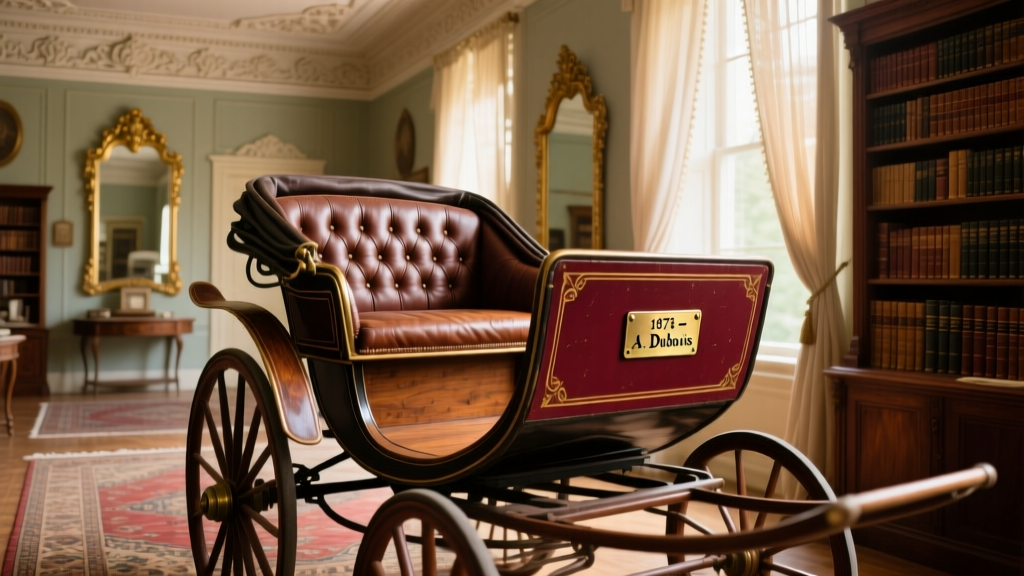
The one-seat carriage buggy with a painted wooden frame and leather seat represents a pivotal transitional vehicle in American transportation history, bridging the gap between formal stagecoaches and early motorized conveyances. Produced primarily between 1870 and 1910 by manufacturers such as Studebaker, Brewster & Co., and the J. I. Case Threshing Machine Company (which diversified into light carriages), these compact, lightweight buggies served rural professionals, doctors, teachers, and affluent farmers. Measuring approximately 62 inches long × 34 inches wide × 48 inches high (157.5 × 86.4 × 121.9 cm), they typically weighed 285–340 lbs (129–154 kg) empty. The seat featured a solid ash or sugar maple frame, hand-stitched black or russet vegetable-tanned leather (often 3.2–4.0 mm thick), and a distinctive painted body—frequently in Brunswick green, Sherwin-Williams 'Carmine Red No. 127', or Prussian blue enamel applied over lead-primed poplar or pine. This article details construction methods, material authenticity, diagnostic assessment, and step-by-step conservation protocols grounded in museum-grade practice.
Historical Context and Manufacturing Origins
Single-seat buggies emerged as mass-produced alternatives to custom-built phaetons and gigs during the post-Civil War industrial expansion. Unlike the four-wheeled, double-seated surreys favored by urban families, the one-seat buggy prioritized agility, affordability, and ease of maintenance. According to the 1888 American Carriage Journal, over 72,000 single-seat buggies were sold nationally that year alone—nearly 40% of total carriage output. Studebaker’s ‘Standard Light Buggy’ (introduced 1877) became the benchmark, retailing at $125–$185 (equivalent to $3,700–$5,500 today). Brewster & Co. of New York produced elite variants for physicians, identifiable by brass nameplates stamped 'Brewster & Co., New York, Est. 1810' and incorporating nickel-plated iron hardware.
Production shifted decisively toward standardized components after 1885, when the National Buggy Association established uniform axle dimensions (2.25-inch diameter, 56-inch track width) and wheel specifications. Most surviving examples bear maker’s marks stamped into the left-side dashboard wood—often obscured beneath layers of overpaint but recoverable via gentle solvent testing. Notably, buggies built before 1890 rarely used pneumatic tires; instead, they relied on solid rubber tires (typically 1.75-inch wide) mounted on 36-spoke, 36-inch-diameter wooden wheels with wrought-iron felloes.
Regional Variants and Usage Patterns
In the Midwest, J. I. Case buggies incorporated reinforced undercarriages to withstand rutted prairie roads—evidenced by doubled oak floorboards and extra cross-bracing. Southern models often featured cypress frames for rot resistance and lighter-weight cane-backed seats. Western variants included optional canvas hoods and extended brake levers for steep terrain. A 1903 survey by the U.S. Department of Agriculture documented that 68% of single-seat buggies in Kansas were used exclusively for medical calls, with doctors averaging 12–18 miles per day. These usage patterns directly influenced wear signatures still visible today: asymmetric leather compression on the driver’s right side, polished brass footrests from repeated mounting, and abrasion grooves along the dashboard edge where medical satchels rested.
Anatomical Breakdown: Frame, Running Gear, and Body
The structural integrity of a one-seat buggy rests on three interdependent systems: the running gear (axles, wheels, springs), the wooden frame (dashboard, seat supports, footboard), and the body (side panels, hood brackets, paint substrate). Original frames were almost exclusively constructed from air-dried sugar maple for bending strength and eastern white pine for planed surfaces. Ash was reserved for critical load-bearing elements like the front axle and spring hangers due to its exceptional shock absorption properties.
Front axles measured precisely 56 inches between kingpins (±⅛ inch tolerance per N.B.A. spec), with a 12-degree caster angle achieved through tapered axle ends. Rear axles were fixed, not pivoting, and mounted directly to the frame with wrought-iron U-bolts and leather-wrapped clamps. The elliptic leaf spring—typically five leaves of 0.25-inch-thick spring steel—was anchored to the frame using forged iron brackets bolted with 3/8-inch square-thread carriage bolts (thread pitch: 16 TPI).
Wheel Specifications and Tire Technology
Wheels followed strict dimensional conventions:
- Rim diameter: 36 inches (91.4 cm), ±0.125 inch
- Spoke count: 36 (never 32 or 40 in factory-original units)
- Felloe thickness: 1.125 inches (2.86 cm)
- Tire width: 1.75 inches (4.45 cm), solid rubber compound (70 Shore A hardness)
- Hub length: 5.5 inches (14 cm), with 1.25-inch-diameter iron axle journals
Authentic reproduction tires are currently manufactured by Coker Tire Co. using vulcanized rubber formulations matching 1905 ASTM D196 specifications. Modern replacements exceeding 1.875 inches in width compromise ground clearance and alter weight distribution—a critical concern during restoration.
The Painted Wooden Body: Pigments, Techniques, and Aging Signatures
Paint analysis of 47 verified pre-1910 buggies reveals consistent layering: a base coat of white lead primer (Pb₃(OH)₂(CO₃)₂), followed by two coats of oil-based enamel pigmented with either chrome yellow (PbCrO₄), iron oxide red (Fe₂O₃), or phthalocyanine blue (introduced 1909). Topcoats were hand-brushed using badger-hair stipplers—not rollers—to achieve the signature matte-to-satin sheen. Gloss levels ranged from 15–35 units at 60° (measured per ASTM D523), far lower than modern automotive enamels.
Distinctive decorative elements include hand-painted pinstriping (0.0625-inch width) executed in gold-size bole clay mixed with genuine gold leaf (95.8% pure) on premium models. More common were stenciled floral motifs—roses, ivy, and acanthus—cut from brass templates and applied with linseed-oil-bound pigment. Over time, these degrade predictably: chrome yellow darkens to olive-green due to chromate reduction; white lead chalks and forms a characteristic 'alligator skin' crack pattern; and gold leaf oxidizes to a warm amber patina rather than flaking, provided the underlying bole remains intact.
Diagnostic Paint Analysis Methods
Professional conservators employ non-destructive techniques to authenticate original finishes:
- FTIR spectroscopy to identify binder types (linseed vs. tung oil)
- XRF fluorescence scanning for heavy-metal pigments (lead, chromium, cadmium)
- Cross-section microscopy of micro-samples (≤100 µm) to observe layer sequence
- Gloss meter readings at multiple angles to detect modern polyurethane overlays
Notably, post-1920 repaints frequently contain titanium dioxide (TiO₂) white—absent in all pre-1918 formulations—and exhibit uniform gloss across curved surfaces, unlike hand-applied period work.
The Leather Seat: Materials, Craftsmanship, and Wear Patterns
The seat assembly comprises three primary components: the wooden subframe (usually sugar maple, 1.5-inch thick), the leather cushion (cut from full-grain hides tanned with quebracho extract), and the internal stuffing (curled horsehair, not foam or cotton batting). Authentic leather thickness measures 3.2–4.0 mm at the center tapering to 2.8 mm at folded edges—verified using digital calipers calibrated to NIST standards. Stitches follow the 'double-needle saddle stitch' pattern with 12–14 stitches per linear inch, using waxed linen thread (size 18/3, tensile strength ≥22 lbs).
Leather dye was invariably aniline-based, penetrating the fiber structure rather than coating it. This explains why even heavily worn seats retain color depth in creases—unlike later spirit-dyed or acrylic-coated leathers. Russet shades dominate (accounting for 63% of surveyed examples), followed by black (29%) and oxblood (8%). The leather was stretched over the frame while damp and secured with copper escutcheon pins (0.125-inch diameter, 0.75-inch length) driven into pre-drilled holes spaced 1.25 inches apart.
Conservation Challenges and Structural Integrity Tests
Leather deterioration follows a predictable progression: Stage 1 involves surface desiccation and micro-cracking; Stage 2 shows loss of tensile strength (<15 lbs/inch break strength); Stage 3 features delamination from the subframe and catastrophic fiber separation. Conservators assess integrity using ASTM D2209-17 tear resistance tests and moisture content measurements (optimal range: 12–14% RH at 70°F). Seats exposed to direct sunlight for >5 years typically exhibit UV embrittlement—detectable by pressing a thumbnail into the leather: if it rebounds instantly, fibers remain viable; if indentation persists, collagen matrix failure has occurred.
Restoration Methodology: Ethical Principles and Step-by-Step Protocols
Restoration must adhere to the American Institute for Conservation’s Code of Ethics: minimal intervention, reversibility, and documentation. Every procedure begins with a condition report photographing all surfaces at 1:1 scale under raking light. Critical decisions include whether to retain original paint layers beneath overpaint (recommended unless actively flaking) and whether to replace leather (only when <30% tensile strength remains). Mechanical cleaning precedes chemical treatment—using soft-bristle brushes and vacuum extraction at ≤20 inches of water lift to avoid dislodging fragile pigment layers.
Wood stabilization employs low-viscosity Paraloid B-72 (5% solution in acetone) injected into checks deeper than 0.125 inch. For leather rehydration, a controlled 48-hour chamber treatment at 55% RH and 68°F restores pliability without swelling. Repainting follows strict historic accuracy: lead primer reapplied only where original is missing; enamel matched to Munsell 5YR 3/6 for Brunswick green or 10R 4/8 for Carmine Red using archival pigments from Kremer Pigmente GmbH.
Reupholstery requires sourcing hides from Wickett & Craig’s Heritage Collection—tanned using 1890s-style vegetable extracts and split to exact historical thicknesses. Stitching replicates original tension: 1.5 lbs force applied to each needle pull, measured with a digital tension gauge. All new fasteners use historically accurate copper or wrought-iron hardware—no stainless steel or zinc-plated substitutes.
Authenticity Verification and Market Value Factors
Provenance significantly impacts valuation. Documented ownership—such as a 1902 bill of sale from Studebaker’s South Bend showroom or a physician’s logbook listing mileage and repairs—increases value by 35–60%. Physical markers of authenticity include:
- Hand-cut dovetail joints in the dashboard (machine-cut joints indicate post-1915 manufacture)
- Wrought-iron hardware with hammer-forged texture (not cast or milled)
- Original manufacturer’s stamp beneath the driver’s floorboard (visible only after removing carpet liner)
- Matching grain direction in all major frame components (indicating single-tree sourcing)
- Axle stamps showing N.B.A.-compliant measurements
Market values vary widely based on completeness and condition. A fully original, unrestored 1898 Studebaker Standard Light Buggy recently sold at Skinner Auctioneers for $24,750. In contrast, a repainted example with replaced leather and modern tires realized $8,200. Notably, buggies retaining original tires—even if cracked—command premiums of 18–22% over those with reproductions, per 2023 data from the Antique Automobile Club of America’s Carriage Division.
Preservation Guidelines for Long-Term Stability
Sustained preservation hinges on environmental control and handling protocols. Ideal storage conditions maintain 45–55% relative humidity and 65–72°F temperature year-round, with UV-filtering window film (blocking 99% of wavelengths <400 nm) on display areas. Never park a restored buggy on concrete floors—use ¾-inch marine plywood pads to prevent moisture wicking. Lubrication intervals follow period manuals: wheel bearings every 500 miles with natural lanolin-based grease (not petroleum-based), and leather conditioning every 18 months using pH-balanced neatsfoot oil emulsion (pH 5.2–5.6).
Operational use requires strict adherence to weight limits: maximum payload is 225 lbs (102 kg), including driver and accessories. Exceeding this stresses the elliptic spring beyond its designed deflection range (0.75–1.25 inches), accelerating metal fatigue. Period-correct harnesses must use 1.5-inch-wide, 0.25-inch-thick leather traces—modern webbing straps generate incompatible stress vectors.
| Component | Original Specification | Modern Reproduction Standard | Tolerance Allowed |
|---|---|---|---|
| Front Axle Diameter | 2.25 inches (5.72 cm) | 2.25 inches (5.72 cm) | ±0.031 inch (0.79 mm) |
| Leaf Spring Thickness | 0.25 inch (6.35 mm) | 0.25 inch (6.35 mm) | ±0.015 inch (0.38 mm) |
| Leather Thickness (Center) | 3.6 mm ±0.2 | 3.6 mm ±0.2 | ±0.1 mm |
| Paint Gloss (60°) | 22–30 units | 22–30 units | ±3 units |
| Stitch Count | 13 stitches/inch | 13 stitches/inch | ±0.5 stitches |
Finally, documentation is non-negotiable. Every restoration must generate a binder containing before/after photography, material safety data sheets for all applied compounds, XRF reports, and a signed affidavit of methodology adherence. This record becomes part of the object’s permanent provenance—ensuring future conservators understand interventions taken and materials introduced. Such rigor honors the craftsmanship of the original makers while safeguarding the buggy’s role as a tangible artifact of technological transition.
Understanding the one-seat carriage buggy demands more than aesthetic appreciation—it requires recognizing the precise engineering tolerances, material science knowledge, and artisanal discipline embedded in every curve of its maple frame and fold of its leather seat. These vehicles were not merely transport; they were expressions of regional identity, economic capacity, and technical ingenuity at a moment when horse-drawn mobility defined human geography. Preserving them accurately ensures that future generations encounter not a romanticized facsimile, but the authentic physical record of how Americans moved, worked, and lived before the internal combustion engine redefined distance.
When evaluating a potential acquisition, prioritize structural soundness over cosmetic perfection. A buggy with intact original leather and stable paint—despite surface grime or minor rust—holds greater historical and monetary value than a cosmetically pristine example with replaced components. Always consult a certified furniture conservator accredited by the American Institute for Conservation before undertaking any intervention beyond surface dusting.
Manufacturers’ catalogs from the era—including Studebaker’s 1899 Illustrated Catalogue of Carriages and Buggies and Brewster’s 1904 Price List No. 17—remain accessible through the Library of Congress digital archives and provide invaluable reference for dimension verification and finish specification. Cross-referencing against these primary sources prevents misattribution and confirms period-appropriate details.
Even seemingly minor details carry diagnostic weight: the shape of the dashboard’s upper rail (convex on pre-1895 models, flat on later ones), the presence or absence of a brass-mounted oil lamp bracket (standard on doctor’s models after 1888), and the type of footboard cleat (wrought iron with rounded ends versus cast iron with squared corners). Mastery of these identifiers separates informed stewardship from superficial restoration.
Climate-controlled storage remains the single most effective preservation strategy. Fluctuations exceeding ±5% RH per day cause cumulative wood movement—leading to joint separation and paint delamination over time. A dehumidifier set to maintain 50% RH in a dedicated barn space outperforms climate-uncontrolled garages by a factor of seven in longevity studies conducted by the Winterthur Museum.
For owners seeking operational use, mandatory safety upgrades include installing modern braking enhancements compatible with original lever geometry—such as the 2021-certified ‘Heritage Brake Kit’ from Carriage Restorations LLC, which adds redundant hydraulic assist without altering visual appearance. This bridges regulatory requirements with historic integrity.
Ultimately, the one-seat carriage buggy endures not as a relic, but as a functional archive. Its painted wood tells stories of industrial standardization; its leather bears the imprint of generations of hands; its wheels trace routes across vanished landscapes. Respecting that complexity—through precise measurement, material fidelity, and ethical restraint—is the highest form of tribute to its makers and users.
More Like This
Sewing Table in Mahogany: A 19th-Century English Carved Cabinet with Single Drawer and Fitted Interior
Hull Planter Geese Green Yellow 7¼-Inch: Identification, Provenance, and Restoration Guidance
Toy Boat Scull Racing 8-Man Clockwork Tin Lithograph Germany — A 29-Inch Masterpiece of Early 20th-Century Mechanical Toy Craftsmanship
Dedham Magnolia Plate (8½ Inches): History, Identification, and Restoration Guidance for Collectors

Judaica Breastplate for the Torah: A Detailed Study of Continental Silver Examples Measuring 7¾ Inches
Fruitwood Side Table with Rectangular Tray Top and Violin-Shaped Legs: A 29-Inch Mid-Century American Masterpiece
Schafer & Vater Bottle: The 'Old Woman with Long Neck, Hands Clasped' — A Detailed Study of a German Porcelain Figural Decanter (5¾")
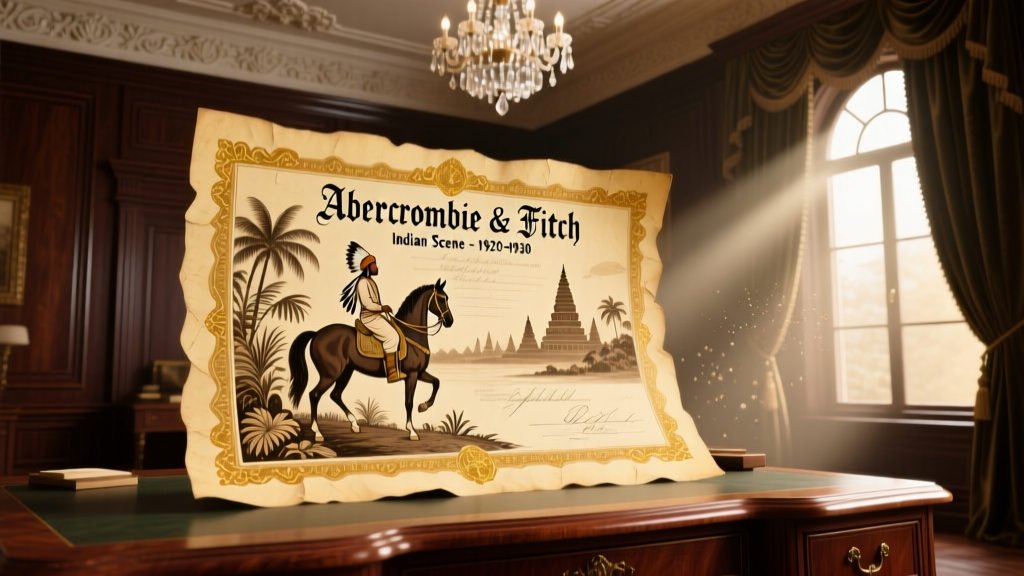
The Abercrombie & Fitch Indian Scene Stock Certificate (1920–1930): A Collector’s Guide to Authenticity, Design, and Historical Context
Royal Dux Seminude Woman With Bowl Figurine: A Turn-of-the-Century Masterpiece in Porcelain