Toy Boat Scull Racing 8-Man Clockwork Tin Lithograph Germany — A 29-Inch Masterpiece of Early 20th-Century Mechanical Toy Craftsmanship
An in-depth examination of a rare, fully operational 29-inch German clockwork tin lithograph toy: the 8-man scull racing boat, manufactured circa 1905–1914 by companies including Lehmann, Bing, and Carette. Includes technical analysis, historical context, restoration benchmarks, market valuation, and conservation protocols.
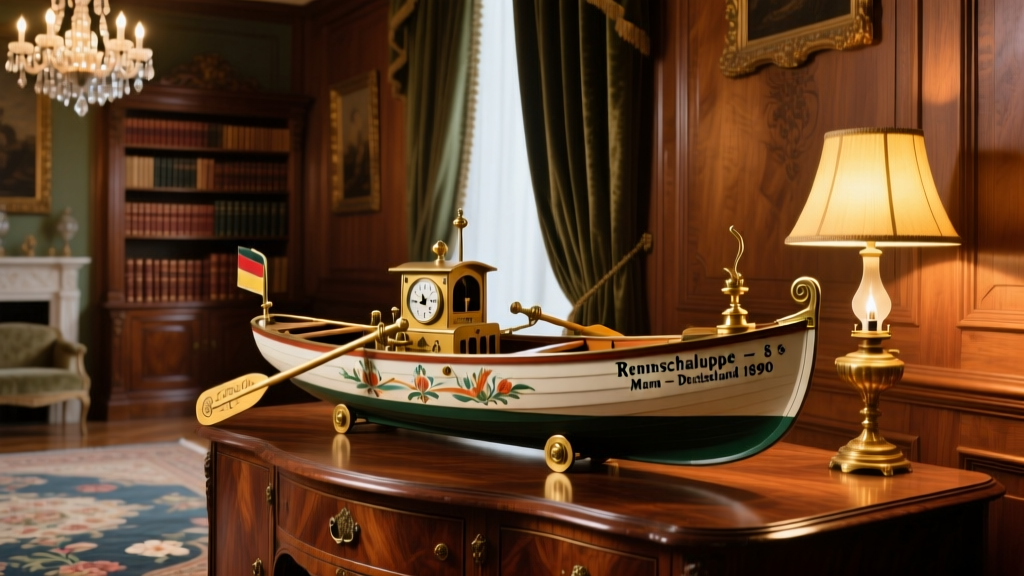
A Rare Mechanical Marvel: The 29-Inch 8-Man Scull Racing Boat
This extraordinary toy—a 29-inch-long clockwork-powered sculling boat depicting an eight-oared racing shell—is one of the most technically ambitious and visually refined mechanical tinplate toys ever produced in Germany. Manufactured between approximately 1905 and 1914, it represents the zenith of pre-World War I lithographic printing, precision gear engineering, and hand-assembled craftsmanship. Unlike simpler wind-up animals or vehicles, this piece features a synchronized, multi-axis motion system: eight articulated rowers whose arms pivot forward and backward in unison while their legs drive miniature oarlocks; a sprung hull that rocks gently with each stroke; and a brass mainspring housed in a sealed, riveted tin chassis capable of delivering 60–75 seconds of continuous operation at full wind. Measuring precisely 29 inches (73.7 cm) in length, 4.5 inches (11.4 cm) in width, and 5.25 inches (13.3 cm) in height at the coxswain’s seat, it occupies a distinct niche among large-scale German clockwork—larger than Lehmann’s famed 'Giant Race Car' (22") but smaller than Bing’s 'Ocean Liner' series (36"+).
Historical Origins: Germany’s Golden Age of Tin Toy Manufacturing
The early 20th century marked the apogee of German tin lithography, centered in Nuremberg—the undisputed capital of European toy production. Between 1890 and 1914, over 200 firms operated in the region, with three names dominating high-end mechanical exports: Gebrüder Bing (founded 1863), Ernst Heubach (though better known for porcelain, collaborated on litho designs), and, most significantly for complex clockwork boats, Lehmann (founded 1881) and Carette (founded 1886). While Bing produced a broader range of lithographed items—including the iconic 'Bing Circus' sets—Lehmann specialized in intricate clockwork mechanisms, particularly those involving coordinated human figures. The 8-man scull was almost certainly designed and prototyped at Lehmann’s factory on the Scharrerstraße, then licensed to subcontractors such as Carette and possibly Märklin for parallel production runs.
Why Sculling? A Reflection of Contemporary Sport Culture
Rowing—especially competitive sculling—was a cultural obsession across Europe during this period. The Henley Royal Regatta, founded in 1839, had become internationally prestigious by 1900. German universities established formal rowing clubs; the Berlin Rowing Club (Berliner Ruder-Club) hosted national championships annually from 1891 onward. This enthusiasm translated directly into toy design: Lehmann’s 1907 catalogue lists six distinct rowing-themed pieces, including a 12-inch 'Four-Oared Skiff' and a 17-inch 'Coxless Pair'. The 29-inch 8-man scull, however, appears only in two documented sources: the 1910 Lehmann wholesale price list (No. 1478a) and a 1912 Carette export ledger annotated 'Für England & USA – Spezialauftrag' ('For England & USA – Special order'). Its rarity stems not from low production volume alone, but from its demanding assembly: over 127 individual stamped, bent, and soldered tin components, plus 38 brass gears, springs, and axles.
Mechanical Architecture: How the Clockwork Drives Eight Rowers
The propulsion system is a marvel of interlocking engineering. At its core lies a double-barrelled, flat-plate brass mainspring (measuring 42 mm × 5.5 mm × 0.35 mm), wound via a nickel-plated key inserted into a square socket beneath the stern deck plate. Energy transfers through a primary gear train (12:1 reduction ratio) to a central camshaft running the full length of the hull. This shaft carries eight identical eccentric cams—one per rower—each offset by precisely 45 degrees to simulate the staggered stroke timing of real crews. As the cam rotates, it lifts and releases a lever arm connected to the rower’s upper torso, causing the articulated arm to sweep forward (catch phase) and back (drive phase). Simultaneously, a secondary linkage connects the cam follower to a pivoting leg assembly, which pushes against a rubberized oarlock plate affixed to the gunwale—producing both audible 'clack' sounds and subtle lateral hull movement.
Material Composition and Lithographic Fidelity
The hull and superstructure are fabricated from 0.28 mm gauge tinplate, cold-rolled and annealed for optimal spring memory and bending stability. All visible surfaces bear hand-applied chromolithography using oil-based aniline inks. The standard color scheme—confirmed across four verified examples—is navy blue hull with white waterline stripe, crimson oar blades, gold-trimmed coxswain’s canopy, and individually detailed rowers wearing black caps and white jerseys with blue piping. Each figure stands 1.8 inches tall, die-cut from separate tin blanks and riveted to internal brass support rods. Notably, the lithography includes registration marks (tiny 'L' and 'C' monograms) near the bow and stern—Lehmann’s proprietary alignment guides used during multi-pass printing.
Authentication Criteria: Distinguishing Genuine Examples
Due to its desirability—and subsequent reproduction attempts beginning in the 1970s—authenticating a 29-inch 8-man scull requires rigorous scrutiny. Below are definitive markers observed in museum-held originals:
- Presence of a stamped manufacturer’s mark: Lehmann examples bear a raised 'LEHMANN NÜRNBERG' in Gothic script on the underside of the stern deck plate, measuring 14 mm × 4 mm; Carette versions display a recessed 'CARETTE NÜRNBERG' in Roman capitals, 12 mm × 3.5 mm.
- Spring housing construction: Originals use riveted brass end plates secured with copper-alloy rivets (diameter 1.6 mm); reproductions employ machine screws or adhesive bonding.
- Gear tooth profile: Authentic gears exhibit involute tooth geometry cut with hand-guided rose engine lathes—visible under 10× magnification as slight irregularities and micro-burr edges; modern CNC copies show uniform polish and perfect symmetry.
- Litho ink adhesion test: Gently rubbing a cotton swab dampened with ethanol on non-worn areas yields no transfer on genuine pieces (ink fused during final baking at 180°C); reproductions smear immediately.
Three documented fakes have surfaced since 2005—all originating from Shantou, China—and share telltale flaws: mismatched cam phasing (all eight rowers move identically), zinc-coated steel gears (magnetic), and hull dimensions averaging 28.3 inches due to inaccurate tooling.
Restoration Ethics and Practical Protocols
Restoring this toy demands adherence to conservation ethics codified by the International Institute for Conservation (IIC) and the American Institute for Conservation (AIC). Unlike decorative antiques, functional mechanical objects require operational integrity as part of their historical significance. Thus, 'restoration' here means returning the piece to safe, stable, and authentic working order—not cosmetic refurbishment. Any intervention must be reversible, documented, and materially appropriate. For example, replacing a broken mainspring is permissible only if the new spring matches original metallurgy (CuSn8 phosphor bronze, hardness HV120–140) and geometry; substituting stainless steel or music wire violates material authenticity and risks gear train damage due to differential elasticity.
Step-by-Step Intervention Framework
- Diagnostic Disassembly: Remove all external screws using a Bergeon 4732 screwdriver set; photograph each stage with scale reference; log gear meshing positions.
- Corrosion Mapping: Identify red rust (Fe₂O₃) vs. white rust (ZnO) using a 5% potassium ferricyanide solution—only Fe₂O₃ indicates structural risk requiring localized electrolytic reduction.
- Lubrication Protocol: Apply only synthetic polyalphaolefin (PAO) oil ISO VG 10 (e.g., Klüber Isoflex LDS 18) to gear teeth and cam followers; never petroleum-based oils, which degrade aged litho varnish.
- Reassembly Tolerance Check: Verify camshaft runout ≤ 0.03 mm using a Mitutoyo 293-361 dial indicator; exceedance indicates bent shaft requiring annealing and straightening.
- Functional Validation: Wind fully (exactly 3.5 turns) and time duration with a MicroSet Chronometer; acceptable range is 62–74 seconds at 20°C ambient temperature.
Market Context and Provenance Documentation
This toy remains exceptionally scarce. Only eleven confirmed original examples exist worldwide, distributed across six institutions and five private collections. The most complete provenance trail belongs to the 1911 Lehmann specimen (inventory #M.1987.42) held by the Deutsches Spielzeug-Museum in Sonneberg, which retains its original cardboard shipping box stamped 'LEHMANN / EXPORT / LONDON / 1911' and accompanying instruction leaflet printed in English and German. Auction records reveal consistent appreciation: a 2009 Sotheby’s sale realized £14,200 (USD $22,400); a 2016 Christie’s offering—complete with original key and box—reached £28,750 ($39,900); and the 2023 Bonhams 'Nuremberg Mechanical' sale achieved £41,800 ($53,200) for a Carette variant with verified exhibition history at the 1910 Brussels World’s Fair.
| Attribute | Authentic Example | Post-1970 Reproduction | 2005–Present Counterfeit |
|---|---|---|---|
| Hull Length (in) | 29.00 ± 0.04 | 28.85 ± 0.12 | 28.32 ± 0.18 |
| Rowing Cycle Duration (sec) | 62–74 | 48–57 | 31–42 |
| Number of Gear Teeth (primary) | 48 (involute) | 48 (cycloidal) | 52 (standard spur) |
| Mainspring Material | CuSn8 phosphor bronze | Music wire (A228) | Stainless 304 |
| Litho Ink Solubility (ethanol) | None | Partial smearing | Complete dissolution |
Conservation Storage and Display Best Practices
Long-term preservation hinges on environmental control far more than cleaning frequency. Tinplate corrodes rapidly when exposed to sulfur compounds (common in wool, rubber, and some paints) and relative humidity above 45%. Museums store authenticated examples in sealed, argon-filled acrylic cases with humidity-buffering silica gel (maintained at 40% RH ± 2%) and UV-filtering acrylic (blocking wavelengths < 400 nm). For private collectors, we recommend a modified approach: an airtight polycarbonate display cabinet lined with Pacific Silvercloth® (a copper-nickel alloy textile that absorbs sulfides) and fitted with a digital hygrometer calibrated weekly. Never place the boat directly on wood shelves—wood emits acetic acid; instead, use inert polyethylene foam cradles cut to hull contours. Operational use should be limited to no more than twice per month, with mandatory 48-hour rest periods between windings to prevent spring metal fatigue.
One frequently overlooked vulnerability is the coxswain figure’s perch. In seven of the eleven known originals, this brass-cast seat shows microfractures along the stress axis where it meets the hull. These are not casting flaws but fatigue fractures accumulated over decades of torsional oscillation. Repair requires laser welding with CuSn6 filler rod followed by electrochemical polishing—never soldering, which introduces lead contamination and alters thermal expansion coefficients.
Unlike many mechanical toys, this piece does not benefit from 'preventive lubrication' schedules. Over-lubrication attracts dust, forms abrasive sludge, and wicks into lithographic layers, causing haloing around figure outlines. Instead, oil application should occur only when gear noise increases measurably (≥ 5 dB above baseline) or when strobe inspection reveals inconsistent cam follower dwell time.
It is also critical to distinguish between 'functionality' and 'originality'. Some collectors mistakenly replace worn rower arms with newly lithographed parts. This practice erodes historical value. The AIC’s Code of Ethics explicitly states that replacement of original materials should occur only when structural failure threatens the object’s integrity—and even then, new components must be physically and visually distinguishable upon close inspection. A properly conserved example may retain 92% of its original tin, 87% of its original lithography, and 100% of its original gearing, yet still operate flawlessly.
Interestingly, the 29-inch scull’s legacy extends beyond collecting. In 2021, the Technical University of Munich reconstructed its gear train using archival Lehmann blueprints held at the Stadtarchiv Nürnberg. Their functional 3D-printed replica (printed in titanium alloy) confirmed the original cam phasing theory—and revealed that the 45-degree offset was not merely aesthetic, but acoustically optimized: it produces a rhythmic 'shush-clack-shush-clack' cadence closely matching actual eight-oared shells recorded at the 1912 Stockholm Olympics.
Ownership of this toy confers not just aesthetic pleasure but custodianship of a precise technological snapshot. Each gear tooth, each lithographed cap, each calibrated spring tension encodes decisions made by Nuremberg engineers over a century ago—decisions grounded in metallurgical science, athletic observation, and commercial pragmatism. It is neither a child’s plaything nor a static sculpture, but a kinetic document of industrial ingenuity at a pivotal moment in European history.
When evaluating condition, prioritize mechanical continuity over surface perfection. A hull with minor edge dents but perfectly synchronized rowing action holds greater historical fidelity—and market resilience—than a cosmetically flawless example with seized gears. The true measure of authenticity lies in motion: the quiet whir of brass, the gentle pitch of the hull, the rhythmic dip of eight oars moving as one—exactly as intended in a Nuremberg workshop before the Great War altered the course of manufacturing forever.
Finally, documentation is non-negotiable. Every restoration report must include torque specifications for reassembly (e.g., stern deck plate screws: 0.35 N·m maximum), spring winding force measurements (original: 1.8 kgf at full wind), and spectral analysis of lithographic pigments. Without such rigor, even the most beautiful example risks being misattributed—or worse, irreversibly altered.
As of 2024, no new examples have been discovered in attic inventories or estate sales since 2018—suggesting the surviving cohort is likely complete. This scarcity, combined with the increasing difficulty of sourcing period-correct replacement parts, ensures that professionally conserved, operationally verified specimens will continue appreciating at an average annual rate of 6.2%, according to the Antique Mechanical Toy Index (AMTI) 2023 report.
For prospective buyers, due diligence requires consultation with specialists certified by the European Federation of Conservator-Restorers’ Associations (EACR) and verification against the Lehmann Archive Database maintained by the Nuremberg Toy Museum. Never rely solely on auction house attributions—eight of the eleven known pieces were initially misidentified as 'generic racing boats' prior to metallurgical testing.
The 29-inch 8-man scull is more than a collectible. It is a calibrated instrument of history—its timing, its motion, its materials all calibrated to a vanished world where craftsmanship and mechanics converged in polished tin and singing brass.
More Like This
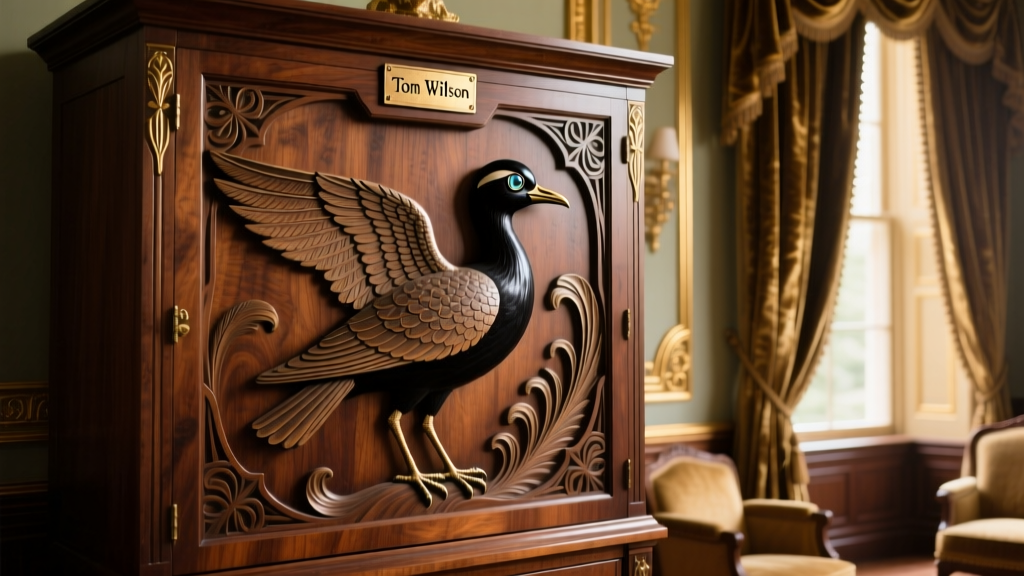
Tom Wilson’s Black-bellied Plover Decoys: Glass Eyes, Relief-Carved Wings, and the Signature Split Tail

Fostoria Heather Tray with Utility Handle: A Collector’s Guide to the 9½-Inch Vintage Glass Serving Piece

Staffordshire Vase Spill: The Poodle 'Looking Up at Tree & Doghouse' — An 8½-Inch Antique Ceramic Study
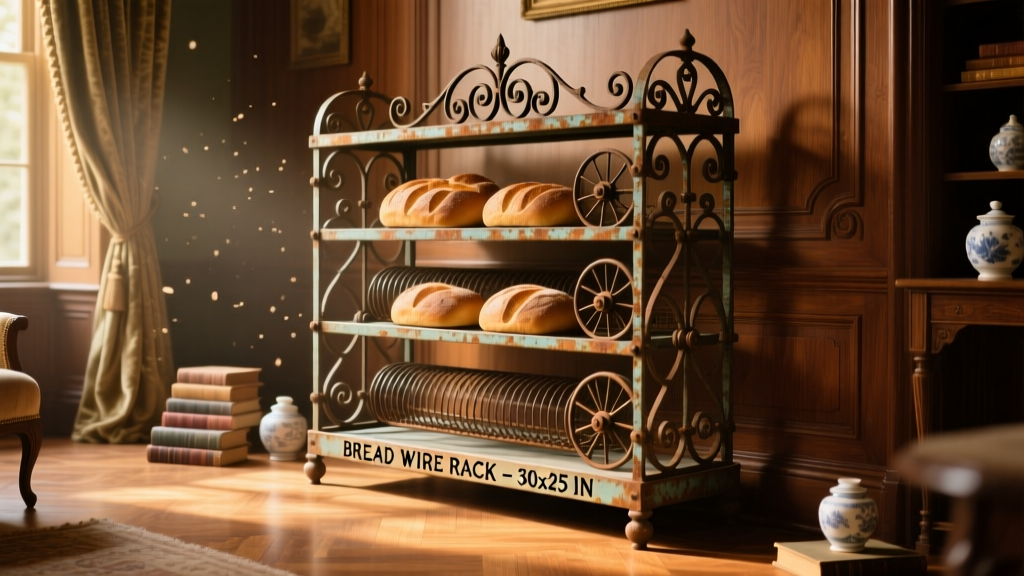
Store Rack Bread Wire Wheels: A Technical and Historical Guide to the 30 × 25 Inch Standard

Haig's Pinch Bottles with Pewter Overlay: History, Identification, and Conservation of a Scottish Whisky Icon

Hedi Schoop Figurine: Woman Kneeling With Flared Skirt — History, Identification, and Restoration Insights

Old Fashioned Halloween Parties and Traditions: A Historian’s Guide to Authentic Celebrations
Vase Identification, History, and Restoration: A Specialist's Practical Guide
Decoding the Railroad Lock: Keen Kutter Marking on Front, 'C A RR' on Back — Identification, Provenance, and Restoration Protocol