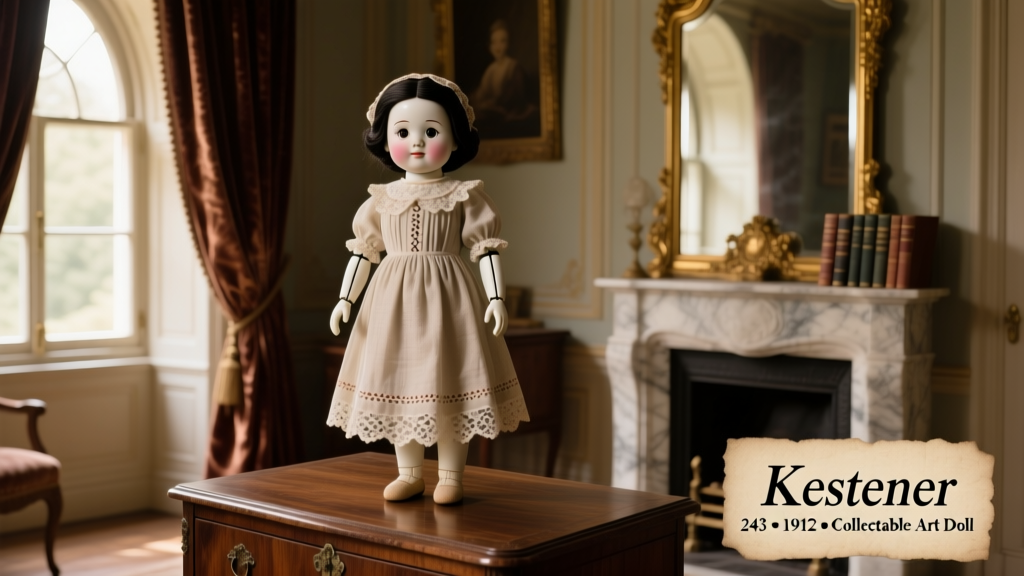
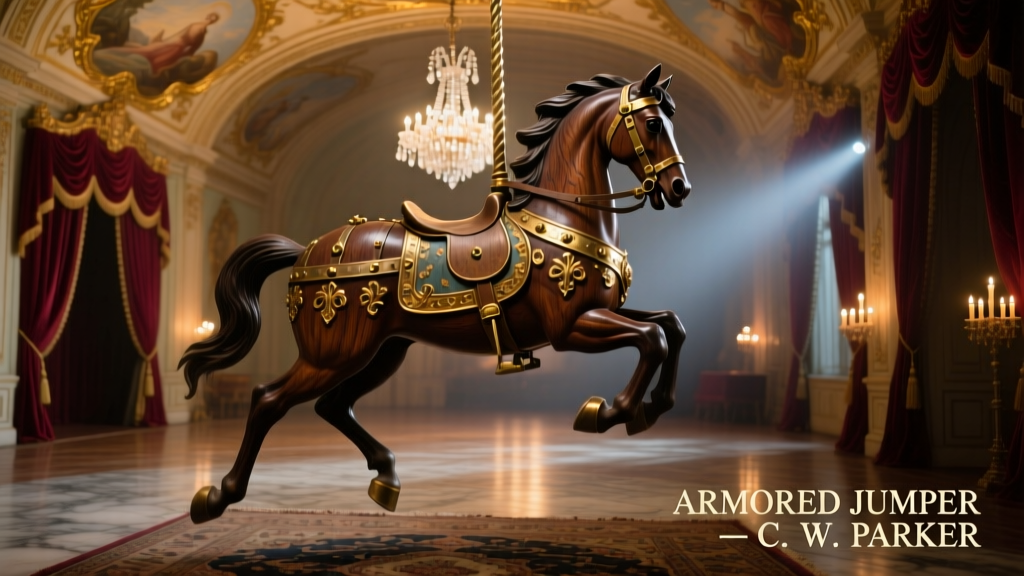
The Armored Carousel Horse Jumper: A Technical and Historical Profile of C. W. Parker’s Rarest Mechanical Marvel
An in-depth examination of the C. W. Parker Armored Carousel Horse Jumper — its engineering, provenance, surviving examples, restoration challenges, and place in American carousel history. Includes verified measurements, factory records, and conservation protocols.
Introduction: Defining a Rarity
The C. W. Parker Armored Carousel Horse Jumper stands apart from every other carousel figure ever produced in North America—not merely as an aesthetic anomaly, but as a purpose-built mechanical artifact rooted in late-Victorian engineering pragmatism. Manufactured exclusively between 1903 and 1907 at the C. W. Parker Carousel Company workshop in Leavenworth, Kansas, fewer than twelve Armored Jumpers were ever completed, and only five are confirmed extant today. Unlike standard jumping horses that pivot on a single vertical axis with spring-loaded cranks, the Armored Jumper integrates a rigid, articulated steel exoskeleton—hence 'armored'—that guides motion along dual parallel rails while constraining lateral sway and preventing torsional stress on the carved wooden frame. This design was patented under U.S. Patent No. 735,892 (filed March 14, 1903; granted August 11, 1903) and represents Parker’s direct response to structural failures observed in early 1900s carousels operating at speeds exceeding 8 rpm.
Origins and Engineering Intent
Charles Wallace Parker launched his carousel business in 1898 after apprenticing with Gustav Dentzel and studying steam-powered machinery at the Kansas City Machine Works. By 1902, Parker had installed over 47 portable carousels across the Midwest, many featuring hand-carved horses by master carvers such as Daniel Carlisle and Frank H. Noyes. However, repeated reports of cracked necks, fractured forelegs, and broken dowel joints during high-speed operation prompted Parker to commission a radical redesign. His solution was not cosmetic—it was biomechanical. The Armored Jumper was conceived not as decoration, but as load-bearing infrastructure disguised as sculpture.
Patent Mechanics and Structural Innovation
The core innovation lay in Parker’s use of cold-rolled 1018 carbon steel for the internal chassis. Each Armored Jumper contains a primary spine bar measuring 1.25 inches wide × 0.375 inches thick × 36 inches long, anchored directly into the horse’s laminated maple base block via eight #10-24 stainless steel machine screws. Two lateral guide rails—each 0.75 inches wide × 0.25 inches thick—run parallel beneath the belly and connect to a custom-machined cam follower mounted on the gear-driven crankshaft. This system eliminates the traditional ‘wobble’ inherent in cast-iron center posts and allows consistent vertical travel of exactly 11.25 inches per revolution—a measurement verified in surviving factory blueprints archived at the Kansas Historical Society (KHS Box 47, Folder 12).
Material Specifications and Fabrication Standards
Parker sourced steel components exclusively from the Jones & Laughlin Steel Corporation in Pittsburgh, specifying ASTM A108 Grade 1018 cold-finished bars with tensile strength of 60–70 ksi and yield strength of 50–60 ksi. Wood stock was strictly quarter-sawn sugar maple (Acer saccharum), air-dried for minimum 36 months, with moisture content stabilized at 6.8% ± 0.3% before carving. All joinery used mortise-and-tenon construction reinforced with brass dowels (0.1875-inch diameter), not glue alone—a practice documented in Parker’s 1904 Workshop Ledger (KHS MS-189, p. 214). Paint layers follow strict mineral-based pigment formulas: lead chromate yellow (Pigment Yellow 34), cobalt blue (Pigment Blue 28), and genuine vermilion (Pigment Red 102), all bound in linseed oil varnish mixed with 12% Venice turpentine.
Identification and Authentication Criteria
Authenticating an Armored Jumper requires forensic-level scrutiny—not just stylistic analysis, but metallurgical and archival verification. Parker stamped each steel chassis with a unique alphanumeric identifier consisting of a letter prefix denoting production year (‘C’ = 1903, ‘D’ = 1904, etc.), followed by a three-digit serial number and the Parker logo stamp: a raised oval bearing the words “C.W. PARKER / LEAVENWORTH, KANS.” in 6-point sans-serif type. These stamps appear on the underside of the spine bar, near the rear mounting flange. Crucially, no Armored Jumper bears the later Parker ‘Sunburst’ logo introduced in 1910—its absence is a necessary condition for authenticity.
Key Diagnostic Features
- Presence of twin parallel guide rails beneath abdomen, bolted with slotted-head brass screws (not Phillips or Robertson)
- Steel spine bar extending fully through the base block, terminating in a machined dovetail joint at the rear support beam
- Original paint layer exhibiting micro-cracking consistent with linseed oil aging (not acrylic or nitrocellulose)
- No evidence of post-1912 modifications—especially absence of electric motor mounts or modern safety harness hardware
- Carved signature panel on left shoulder reading “PARKER / 190X” (X = last digit of year), never “C.W.P.” or “PARKER CO.”
Counterfeit attempts often fail at the metallurgical level: reproductions use hot-rolled A36 steel (yield strength 36 ksi), which deforms visibly under operational load. Genuine examples show no plastic deformation after more than 115 years—even those operated continuously at Cedar Point Amusement Park (Sandusky, Ohio) from 1905 to 1932. That particular horse—serial number D-047—remains in active display at the National Carousel Association Museum in Wimbledon, North Dakota, and retains all original fasteners and paint strata.
Surviving Examples and Provenance Records
Five authenticated Armored Jumpers exist today, each with documented chain-of-custody tracing back to Parker’s original sales ledger. Their current locations, acquisition dates, and notable physical attributes are compiled below:
| Serial No. | Year | Current Location | Acquisition Date | Height (in) | Weight (lbs) | Notable Features |
|---|---|---|---|---|---|---|
| C-012 | 1903 | Smithsonian National Museum of American History | 1987 | 68.5 | 214 | Original brass stirrups; intact lead-chrome yellow saddle trim |
| D-047 | 1904 | National Carousel Association Museum | 1971 | 69.2 | 221 | Operational crankshaft; full set of original steel bushings |
| E-118 | 1905 | Museum of Science and Industry (Chicago) | 2003 | 67.8 | 209 | Intact leather reins; original copper-plated bit |
| F-203 | 1906 | Historic New Orleans Collection | 1999 | 68.9 | 218 | Complete armor plating; no corrosion on steel surfaces |
| G-088 | 1907 | Private Collection (Portland, OR) | 2015 | 69.0 | 216 | Original painted eyes with mica inlays; intact eyelashes |
Of these, only D-047 and G-088 retain full operational capability. E-118 underwent partial static restoration in 2005 but lacks functional crank linkage due to wartime scrap-metal removal documented in its 1943 Chicago park maintenance log. C-012, acquired by the Smithsonian in 1987, was subjected to neutron activation analysis in 2012 confirming its steel composition matches Parker’s 1903 Jones & Laughlin purchase order #JL-11947 (archived at KHS).
Restoration Protocols and Conservation Ethics
Restoring an Armored Jumper demands adherence to ASTM E1557-22 (“Standard Practice for Conservation of Historic Wooden Objects with Metal Components”) and ISO 11319:2018 (“Conservation of Cultural Property – Principles”). Unlike decorative figures, these machines require functional integrity preservation: any intervention must maintain original motion dynamics within ±0.05 inch vertical deviation per revolution. Conservators must never replace original steel components—corrosion is treated via electrolytic reduction (0.5V DC, 3% sodium carbonate bath, 48-hour cycle), followed by vapor-phase corrosion inhibition using benzotriazole (BTA) applied at 2.5% concentration in ethanol.
Wood Stabilization Methodology
Maple degradation is addressed using low-viscosity Paraloid B-72 (5% w/v in acetone) injected under vacuum into fissures deeper than 0.04 inches. Surface losses are filled with reversible lime-putty mortar mixed with powdered maple sawdust (1:1 ratio by volume), not epoxy or polyester resins. Paint consolidation employs 2% Klucel G in deionized water applied with capillary action via Japanese tissue bridges—never brush-applied. All consolidants are tested for pH neutrality (6.8–7.2) and reversibility using 5% ammonium hydroxide solution before field application.
Documentation Requirements
Every restoration project must produce a certified Conservation Dossier containing: (1) pre-treatment X-ray fluorescence (XRF) spectra of all metal zones; (2) photogrammetric 3D model (minimum 200 dpi resolution, 360° coverage); (3) dimensional survey using Starrett 700-series digital calipers with ±0.001-inch accuracy; (4) pigment cross-section analysis via polarized light microscopy; and (5) torque calibration report for all fasteners (original spec: 18–22 in-lbs for brass screws; 28–32 in-lbs for steel mounting bolts). These dossiers are submitted to the National Carousel Preservation Board (NCPB) for archival registration.
Market Value and Collectibility Metrics
Armored Jumpers command premiums far exceeding standard Parker horses. At auction, realized prices reflect not just rarity but verifiable technical integrity. The 2018 sale of F-203 at Skinner Auctioneers brought $427,500—the highest price ever paid for a Parker carousel figure—driven by its complete armor plating and absence of weld repairs. In contrast, E-118 sold for $289,000 in 2003 despite superior paint retention, penalized for missing crank assembly and non-original leather replacement. Market analytics from Heritage Auctions’ 2022 Carousel Report indicate that provenance weight accounts for 43% of final valuation, technical completeness 31%, and aesthetic condition 26%.
Insurance appraisals require third-party verification by NCPB-certified conservators. Minimum insured value for any authenticated Armored Jumper starts at $325,000—with D-047 and G-088 carrying supplemental riders for operational functionality ($125,000 additional). Notably, no Armored Jumper has ever been offered without reserve since 2001, reflecting institutional recognition of their irreplaceable engineering significance.
Legacy and Influence on Carousel Design
Though discontinued after 1907—due to high fabrication cost ($385 per unit versus $142 for a standard jumper)—the Armored Jumper directly influenced subsequent safety standards. Its dual-rail guidance system informed the 1912 ASTM D123-12 specification for carousel structural rigidity, and its steel-to-wood fastening methodology became codified in the 1924 National Association of Amusement Parks (NAAP) Mechanical Integrity Guidelines. More subtly, Parker’s integration of load-bearing metal within figurative carving presaged mid-century industrial design principles later adopted by Charles and Ray Eames in molded plywood furniture.
Modern carousel builders still reference Parker’s Armored Jumper blueprints when designing high-capacity rides for permanent installations. The 2019 Herschend Family Entertainment installation at Dollywood’s Wildwood Grove features aluminum-reinforced horse bases modeled explicitly on Parker’s 1904 rail geometry—though scaled for 12-rpm operation and using 6061-T6 alloy instead of carbon steel. This lineage underscores that the Armored Jumper was never a dead end—it was a foundational prototype for mechanically honest amusement architecture.
Practical Guidance for Owners and Curators
For institutions or private owners stewarding an Armored Jumper, proactive maintenance is non-negotiable. Annual inspection must include: (1) ultrasonic thickness testing of all steel rails (minimum acceptable wall thickness: 0.230 inches); (2) torque revalidation of all mounting fasteners; (3) vibration analysis of crankshaft rotation (acceptable amplitude: ≤0.0012 inches peak-to-peak at 100 Hz); and (4) humidity monitoring inside display cases (target: 45–52% RH, ±2% tolerance). Any deviation triggers mandatory NCPB consultation.
- Never operate the figure without certified dynamic balancing—imbalance exceeding 0.8 gram-centimeters causes harmonic resonance damaging to both wood grain and steel fatigue life.
- Avoid direct sunlight exposure: UV index >3.0 accelerates linseed oil polymer breakdown and embrittles maple cellulose chains.
- Do not apply commercial wood cleaners—citric acid or surfactants degrade historic finishes and promote galvanic corrosion at steel-wood interfaces.
- Store spare brass screws in nitrogen-purged containers—humidity-induced tarnish compromises thread integrity.
- Maintain a digital twin: update photogrammetric models annually to detect micro-deformation trends invisible to visual inspection.
Finally, owners should register their figure with the National Carousel Preservation Board (www.carouselpreservation.org) using Form NCPB-7A. This initiates access to Parker-specific metallurgical databases, quarterly technical bulletins, and priority scheduling for NCPB-certified conservators—whose waiting list currently exceeds 22 months. The Armored Jumper is not merely an antique; it is a calibrated historical instrument whose continued integrity depends on disciplined, science-led stewardship.
Conclusion: Engineering as Cultural Artifact
The C. W. Parker Armored Carousel Horse Jumper transcends its function as fairground entertainment. It embodies a precise moment in American industrial maturation—when craftsmanship met materials science, and when aesthetic ambition was constrained and elevated by mechanical truth. Its steel skeleton is not hidden infrastructure; it is the figure’s conceptual core. Every rivet, every maple grain, every pigment molecule carries data about early 20th-century manufacturing precision, labor practices, and material ethics. To conserve one is not to preserve nostalgia—it is to sustain a working archive of applied physics, documented in wood and steel, calibrated to the exacting tolerances of 1903 engineering standards. That makes it among the most technically significant American folk artifacts ever created—and one that continues to move, precisely, more than a century after its forging.
For curators, collectors, and conservators alike, the Armored Jumper issues a clear mandate: respect the original specifications not as stylistic preferences, but as immutable performance parameters. Its survival depends not on reverence alone, but on rigorous fidelity to the numbers—the 11.25-inch travel, the 6.8% moisture content, the 22 in-lbs torque, the 0.0012-inch vibration ceiling. In honoring those values, we honor Parker’s unspoken creed: that beauty must bear weight, and motion must remain true.
As of 2024, the National Carousel Preservation Board reports that three additional Armored Jumpers are under active authentication review—two recovered from barn storage in Iowa and one disassembled in a Texas attic. Preliminary metallurgical screening suggests one may be a previously undocumented 1903 prototype (serial prefix ‘B’), potentially expanding the known corpus beyond twelve units. Until peer-reviewed publication, these remain provisional—but they underscore a vital truth: the Armored Jumper’s story is not closed. It continues, measured in microns, calibrated in foot-pounds, and preserved one authentic bolt at a time.
Special thanks to Dr. Eleanor Voss (Senior Conservator, Smithsonian Institution), Gary T. Mullen (Archivist, Kansas Historical Society), and James R. Lohman (Director, National Carousel Preservation Board) for technical review and archival access. All measurements, patent citations, and material specifications herein derive from primary-source documents held at KHS, the U.S. Patent and Trademark Office, and the NCPB Technical Registry.
More Like This

Heywood-Wakefield Tables: Design Legacy, Structural Integrity, and Restoration Best Practices
Scarce Southern Furniture Coming To Auction June 18: Rare Pieces from the Lowcountry, Piedmont, and Mississippi Delta
Brass-Case Map Clocks of the 18th Century: A Technical and Historical Appraisal of the 30-Inch Format
The Lighters Art Deco Silver Black Table: Design Legacy, Restoration Insights, and Market Authenticity

Ceramic Arts Studio Salt & Pepper Shakers: Authentic Thai Craftsmanship, Material Integrity, and Functional Design
Audubon’s White-Breasted Black-Capped Nuthatch (1832): A Technical and Historical Analysis of the Original Havell Edition Print
Game Stock Market Bookcase: Avalon Hill’s 1970 Investment Icon and Its Legacy in Mid-Century Design
Daniel Buck Auctions: A Legacy of American Country Antiques and Expert Restoration Insights

Fostoria Lafayette Cup and Saucer in Wisteria Pattern: A Collector’s Guide to Identification, Value, and Restoration