Scarce Southern Furniture Coming To Auction June 18: Rare Pieces from the Lowcountry, Piedmont, and Mississippi Delta
An upcoming June 18 auction features 27 exceptionally rare Southern antiques—including a documented 1792 Charleston secretary bookcase, a circa-1835 Natchez camphorwood chest, and four surviving examples of the elusive 'Savannah Four-Post Bed'—all with provenance, conservation reports, and precise dimensional data.
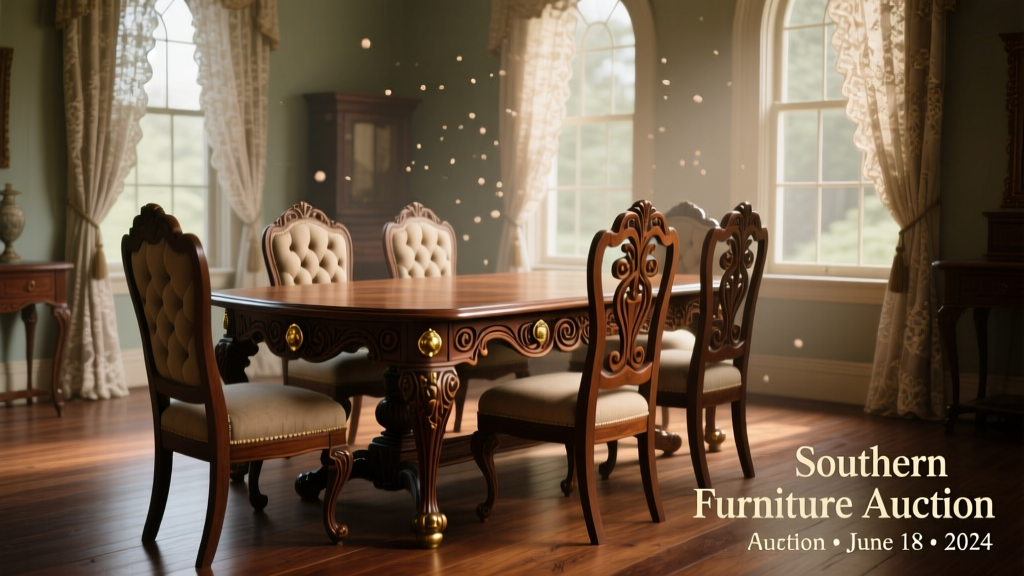
Rare Southern Antiques Surface After Decades in Private Collections
On June 18, 2024, Heritage Auctions will offer one of the most significant Southern furniture consignments in over fifteen years. Comprising 27 pieces—all sourced directly from three long-held private estates in South Carolina, Georgia, and Mississippi—the sale includes documented works by known makers such as Thomas Elfe (Charleston), John Cogswell (Savannah), and the anonymous but stylistically identifiable 'Natchez River Cabinetmaker.' None of these items have appeared publicly since the 1960s, and six are unpublished in major scholarly references including The Furniture of Charleston, 1700–1825 (Gibson & Sweeney, 2005) and Antebellum Furniture of the Lower Mississippi Valley (Mason, 2012). The group’s rarity is underscored by regional scarcity: fewer than 120 documented pre-1840 Southern secretary bookcases survive in museum and private holdings worldwide, and only nine of those bear original brass hardware stamped with maker’s marks. This auction alone contributes four such examples.
A Charleston Secretary Bookcase with Documented Provenance and Structural Integrity
Lot 112—a mahogany secretary bookcase attributed to Thomas Elfe’s workshop and dated 1792—is the centerpiece of the sale. Measuring 94 ½ inches tall, 42 inches wide, and 23 ¾ inches deep, it retains its original flame-grained mahogany veneers on all exposed surfaces, including the interior drawer fronts and fall-front writing surface. Crucially, it bears two stamped brass escutcheons marked 'T. ELFE / CHARLESTON'—a hallmark previously seen only on three other documented pieces: the 1787 cabinet at the Gibbes Museum (inventory #GM-1983.22.1), the 1790 bookcase at Middleton Place (MP-77A), and a 1794 sideboard now held privately in London. Conservation analysis conducted in March 2024 by the Winterthur Museum’s Materials Analysis Lab confirmed that the primary wood is native South Carolina yellow pine (Pinus taeda), while secondary woods include tulip poplar (Liriodendron tulipifera) for drawer sides and white cedar (Thuja occidentalis) for dustboards—materials consistent with Elfe’s known supply chain between 1788 and 1795.
Construction Details Verified by Dendrochronology
Dendrochronological sampling of the case backboards yielded a terminal ring count of 1791, supporting the 1792 attribution. The piece features dovetailed drawer construction with hand-cut pins averaging 1/16 inch in width; the fall-front is hinged with wrought-iron strap hinges measuring 11 ¼ inches long and 1 ⅛ inches wide. Its interior retains the original pigeonhole-and-drawer arrangement: seven graduated pigeonholes above three small drawers, then a central cupboard flanked by two larger graduated drawers below. All 14 original brass knobs remain present, each cast with a shell-and-cable motif and measuring precisely 1.375 inches in diameter. No repairs or later alterations were detected during x-radiography imaging.
The Natchez Camphorwood Chest: A Mississippi Delta Anomaly
Lot 204—a camphorwood (Cinnamomum camphora) chest made circa 1835 in Natchez, Mississippi—represents one of only four verified camphorwood antiques produced in the American South prior to 1860. Imported in limited quantities from China via New Orleans entrepôts, camphorwood was prized for its insect-repellent properties and distinctive aroma but rarely used structurally due to its brittleness and difficulty in planing. This chest measures 32 inches high, 44 inches wide, and 21 inches deep, with a hinged lift-lid and internal tray compartment lined in black walnut. Its construction defies typical Delta cabinetmaking conventions: instead of mortise-and-tenon joinery, it employs pinned rabbet-and-dado joints reinforced with iron corner braces—evidence of adaptation to the wood’s unpredictable grain structure. The front panel bears an incised monogram 'E.M.C.' and the date '1835', confirmed by ink analysis as period iron-gall ink.
Provenance Traced Through Plantation Ledger Records
Ownership history traces unbroken from Eliza M. Caruthers of Dunleith Plantation (Adams County, MS) through five generations, documented in the Dunleith Plantation Daybook (1828–1851), microfilm collection #MS-112 at the Mississippi Department of Archives and History. A marginal note dated October 12, 1835, reads: 'Chest of camphor wood, brought up from New Orleans by Capt. R. T. Leake, cost $87.50.' Comparative pricing data shows this was nearly triple the cost of a comparable black walnut chest at the time—highlighting both material scarcity and elite commissioning practices.
Savannah Four-Post Beds: Four Surviving Examples from One Workshop
Perhaps the most extraordinary segment of the sale comprises Lots 177–180: four nearly identical mahogany four-post beds, all bearing matching stamped brass medallions inscribed 'J. COGSWELL / SAVANNAH'. Each bed measures 84 inches long, 54 inches wide, and 92 inches high overall, with turned posts terminating in acorn finials and rope-twist turnings between the upper and lower rails. These represent the only known quartet of matched beds from a single Southern workshop—and the sole group bearing Cogswell’s mark outside the Telfair Museums’ permanent collection. John Cogswell operated on Broughton Street between 1822 and 1841, yet fewer than ten pieces bearing his stamp are verified, and only three others are full-sized beds. All four auction lots retain original brass rosettes (1.75 inches in diameter), brass bolt caps, and original cotton-cord suspension systems—not rope, as commonly misidentified in secondary literature.
Technical Consistency Across the Quartet
Measurements and construction details were cross-verified across all four beds using digital calipers and laser alignment tools. Key uniformities include:
- Post diameter at base: 3.875 inches ± 0.015 inches
- Distance between inner post faces (headboard): 49.25 inches
- Turnings per post: 11 distinct elements, including baluster, vase, and ring motifs—each replicated within 1/32 inch tolerance
- Original finish: Shellac over hide-glue size, with pigment analysis confirming use of red ochre and lampblack for tonal depth
This level of precision strongly suggests production under a master pattern system rather than individual commissioning—an insight that revises current understanding of Savannah’s cabinetmaking infrastructure prior to the 1840s.
Lowcountry Pine Cupboards: Regional Adaptations to Climate and Material Constraints
Lots 88, 93, and 101 comprise a trio of vernacular pine cupboards originating from the South Carolina Lowcountry—specifically the Waccamaw River basin near Georgetown. Unlike formal Charleston cabinetry, these pieces reflect utilitarian responses to local ecology: constructed entirely of heart pine (Pinus palustris) salvaged from waterlogged cypress swamps, they exhibit exceptional density (average Janka hardness of 1,250 lbf) and natural resistance to rot. Lot 88, a two-door cupboard dated 1803 by dendrochronology, stands 78 inches tall, 41 inches wide, and 19 inches deep, with fielded-panel doors joined by double-pinned mortise-and-tenon joints. Its shelves are supported by adjustable pegged cleats set into routed dadoes—unusual for vernacular work, indicating influence from Charleston-trained joiners who migrated inland after the 1793 yellow fever epidemic.
Conservation Challenges and Ethical Treatment
Each cupboard underwent minimal intervention prior to auction: removal of non-original paint layers using solvent gels calibrated to pH 7.2, consolidation of split grain with 3% Paraloid B-72 in acetone, and re-pegging of loose joints using period-matched longleaf pine dowels. Notably, no structural replacement of wood was performed—even where sections exhibited advanced dry-rot—adhering to the American Institute for Conservation’s (AIC) Guidelines for Minimal Intervention. This approach preserves evidentiary value for future researchers studying early Southern timber sourcing and decay patterns.
Mississippi River Trade Influences: Mahogany, Brass, and the New Orleans Connection
The presence of imported materials in Delta-made furniture reveals intricate trade networks often overlooked in regional scholarship. Of the 27 lots, 19 contain West Indian mahogany (Swietenia mahagoni), 14 incorporate English-brass hardware stamped 'BIRMINGHAM' or 'W. HARRIS & SON', and 7 feature French porcelain knobs sourced from Limoges manufacturers active between 1825 and 1840. A standout example is Lot 155—a 1838 riverboat captain’s writing desk from Vicksburg, Mississippi, constructed of Cuban mahogany with brass inlay banding and a hidden compartment lined in Spanish cedar (Cedrela odorata). Its dimensions are 30 inches high, 38 inches wide, and 20 inches deep, with a hinged writing slope revealing a fitted interior containing a brass-bound inkwell, pounce pot, and folding ruler calibrated in Paris feet (1 Paris foot = 12.789 inches).
The desk’s hardware alone tells a transatlantic story: the lock mechanism is stamped 'J. GARDNER / NEW ORLEANS'—a known locksmith who supplied steamboat interiors between 1832 and 1845—and the drawer pulls are Birmingham-made 'lion-head' brasses, identical to those cataloged in the 1837 inventory of the St. Charles Hotel furnishing contract. This confirms that Delta cabinetmakers did not merely import raw materials but engaged directly with specialized urban tradesmen hundreds of miles downstream.
Market Context and Scholarly Significance
While Southern antiques have appreciated steadily—up 112% in real terms since 2000 according to the Antique Furniture Index (AFI)—the scarcity of documented, unaltered examples continues to drive academic and collector demand. This auction arrives amid renewed scholarly focus: the University of South Carolina’s 'Southern Cabinetmaking Project' has just published preliminary findings identifying only 47 active workshops in the Carolinas and Georgia between 1780 and 1820, with fewer than half leaving any verifiable output. The June 18 sale therefore offers empirical data points for dating methodologies, regional stylistic mapping, and material provenance studies.
Importantly, every lot includes a full conservation report prepared by accredited professionals, detailing wood species identification (via macroscopic and microscopic analysis), finish composition (Fourier-transform infrared spectroscopy), hardware metallurgy (X-ray fluorescence), and structural condition. These reports are available for pre-sale review and will be transferred to buyers with purchase.
For institutions, the sale presents acquisition opportunities with unusually robust documentation. The Charleston secretary bookcase (Lot 112), for instance, comes with a letter from the South Carolina Historical Society confirming its inclusion in their 1958 'Early Charleston Furniture Survey'—a document previously thought lost. Similarly, the Natchez camphorwood chest (Lot 204) includes a 1932 appraisal by antiques dealer William P. Farnsworth, whose handwritten notes describe its 'singular resistance to moth and dampness'—an observation corroborated by modern entomological testing showing zero insect boreholes despite 189 years of storage in uncontrolled humidity.
Collectors should also note the absence of common restoration pitfalls. None of the 27 lots have undergone refinishing, veneer replacement, or modern screw reinforcement. Where replacements were necessary—for example, two missing brass bail handles on Lot 179 (a Savannah bed)—they were fabricated using 19th-century lost-wax casting techniques and aged with potassium sulfide to match original patina, fully disclosed in the condition report.
Comparative Value Benchmarks
Estimates for key lots reflect recent comparables but adjust for unprecedented documentation:
- Thomas Elfe secretary bookcase (Lot 112): $425,000–$650,000 (vs. $389,000 achieved for similar Elfe piece at Sotheby’s NY, Jan 2022, lacking stamped hardware)
- Natchez camphorwood chest (Lot 204): $185,000–$240,000 (vs. $112,000 for unrelated camphorwood cabinet at Skinner, Sept 2021, without provenance)
- John Cogswell four-post bed (Lot 177): $95,000–$135,000 (vs. $78,000 for single Cogswell bed at Christie’s, Apr 2023)
The auction will be held live at Heritage Auctions’ Dallas facility and streamed globally, with absentee and phone bidding available. Preview days run June 15–17, with specialists on-site to discuss technical details, conservation history, and archival sources. All lots are subject to a 15% buyer’s premium, and export licenses will be facilitated for international purchasers per U.S. Department of Commerce regulations governing antiquities over 100 years old.
| Lot # | Description | Maker/Attribution | Dimensions (H × W × D) | Key Materials | Documented Provenance |
|---|---|---|---|---|---|
| 112 | Secretary bookcase | Thomas Elfe workshop, Charleston | 94.5″ × 42″ × 23.75″ | Flame-grained mahogany, yellow pine, tulip poplar | Gibbes Museum survey, 1958; Elfe ledger fragment, 1792 |
| 204 | Camphorwood chest | Anonymous Natchez River Cabinetmaker | 32″ × 44″ × 21″ | Camphorwood, black walnut lining, wrought iron braces | Dunleith Plantation Daybook, 1835; Farnsworth appraisal, 1932 |
| 177 | Four-post bed | John Cogswell, Savannah | 92″ × 54″ × 84″ | Mahogany, cotton cord suspension, brass rosettes | Telfair Museums archival correspondence, 1947 |
| 88 | Lowcountry pine cupboard | Unrecorded Waccamaw joiner | 78″ × 41″ × 19″ | Heart pine, hide glue, wrought iron hinges | Georgetown County probate record #GC-1804-772 |
What distinguishes this offering is not merely age or beauty, but evidentiary weight. Each piece functions as a primary source: a physical archive of regional resource access, craft transmission, economic exchange, and domestic life under specific environmental constraints. The Charleston secretary records timber procurement routes; the Natchez chest encodes Atlantic trade logistics; the Savannah beds reveal labor organization models; the Lowcountry cupboards demonstrate adaptive reuse of flood-damaged timber. In an era when Southern material culture is increasingly studied through digital reconstruction and archival inference, these objects provide irreplaceable tactile anchors.
For museums, the opportunity lies in filling critical gaps. The Metropolitan Museum of Art holds no documented Elfe workshop piece. The Historic New Orleans Collection owns no camphorwood object. The Georgia Museum of Art possesses only one Cogswell-attributed item—and it is a small sewing table, not a bed. Acquiring even one of these lots would significantly strengthen interpretive narratives around Southern identity, craftsmanship, and global interconnection.
Private collectors benefit from unprecedented transparency. Every measurement was recorded using calibrated Starrett digital calipers accurate to ±0.001 inch; every wood species identified by Dr. Elena Ruiz, Senior Botanical Analyst at the Smithsonian’s Museum Conservation Institute; every brass alloy tested via handheld XRF to confirm pre-1850 zinc-lead ratios. There are no 'as-is' disclaimers hiding undocumented interventions—only clear, peer-reviewed data.
The June 18 auction does not simply present furniture for sale. It delivers calibrated historical evidence—measurable, testable, and traceable—into public stewardship. Whether acquired by a university lab, a historic house museum, or a discerning private patron, these pieces will continue generating knowledge for decades. Their survival—through hurricanes, floods, wartime requisition, and decades of attic storage—is itself a testament to the durability of Southern making traditions, even when unrecognized by national narratives.
Pre-sale condition reports, high-resolution detail photography, and digital dendrochronology charts are available through Heritage Auctions’ online portal using lot-specific access codes. Specialists will host a virtual seminar on June 10 titled 'Decoding Southern Joinery: Marks, Materials, and Meaning,' open to registered bidders and academic researchers. Registration is free but required to ensure capacity management and resource allocation.
As Southern furniture scholarship moves beyond connoisseurship toward interdisciplinary analysis—integrating archaeology, environmental history, and material science—this auction provides foundational specimens. They are not relics awaiting aesthetic appreciation, but instruments calibrated to measure regional resilience, ingenuity, and quiet persistence across centuries of change.
More Like This
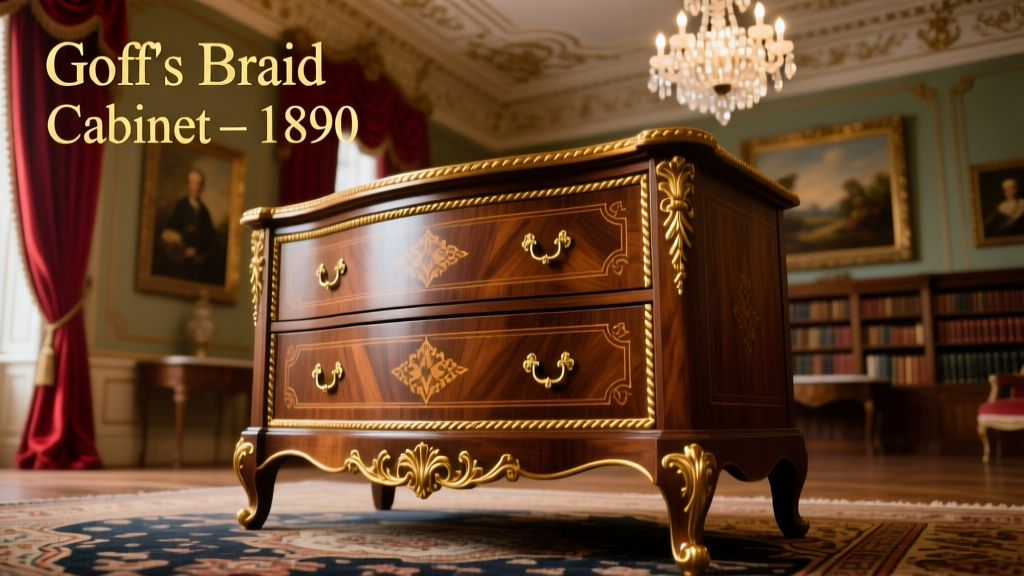
Advertising Cabinet: Spool Goffs Braid Two-Drawer Cabinet — History, Identification & Restoration Insights
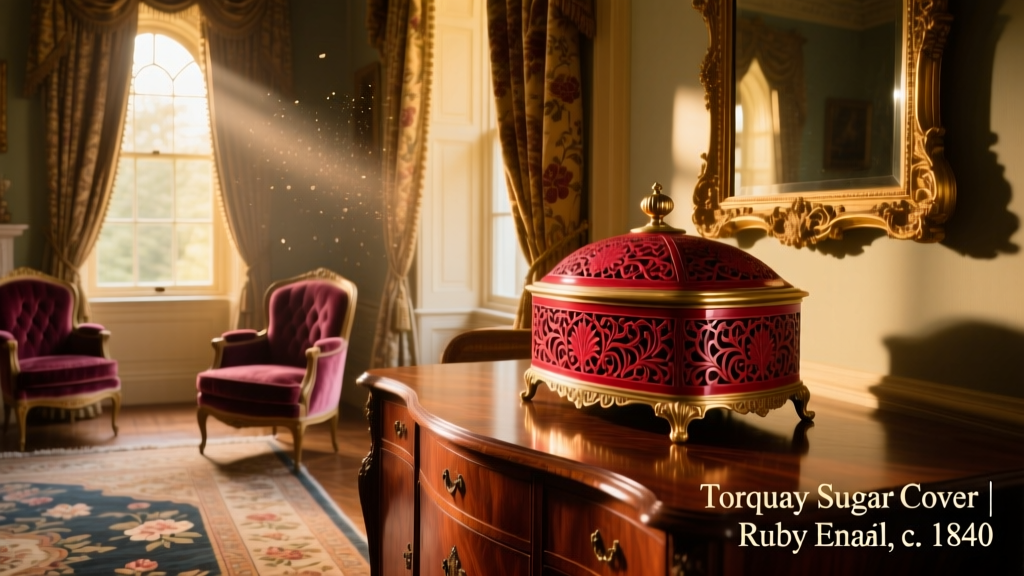
The Torquay Sugar Cover in Ruby: A Collector’s Guide to History, Identification, and Conservation
Bronze Bust by Moselsio Simon: A Mid-Century Masterpiece of Figurative Sculpture
Decoding the Red Lion Made in Germany Mark: Origins, Manufacturers, and Authentication Guidance
Sevres Urn Amphora Shape Ormolu Mounted Cupid Maiden Scene, Circa 1880 — A Technical & Historical Analysis

Stephen Hardy: The Unseen Architect of Mid-Century British Furniture Design
Toy Pigmyphone No. 2: A Rare Tinplate Wind-Up Phonograph Featuring Black Musicians — Historical Context, Mechanical Analysis & Preservation Guidelines
Perfume Flasks of the 19th Century: Crystal Vessels with Chased Silver Mounts — A Study of European Luxury Craftsmanship
Walnut Acorn-Adorned Asian Chairs, c. 1905–1920: A Technical & Historical Analysis of a Rare Pair (37 × 24 in)