Brass-Case Map Clocks of the 18th Century: A Technical and Historical Appraisal of the 30-Inch Format
A detailed examination of 18th-century brass-case wall maps—specifically 30-inch-diameter examples—covering construction, provenance, horological significance, conservation challenges, and market authenticity criteria.
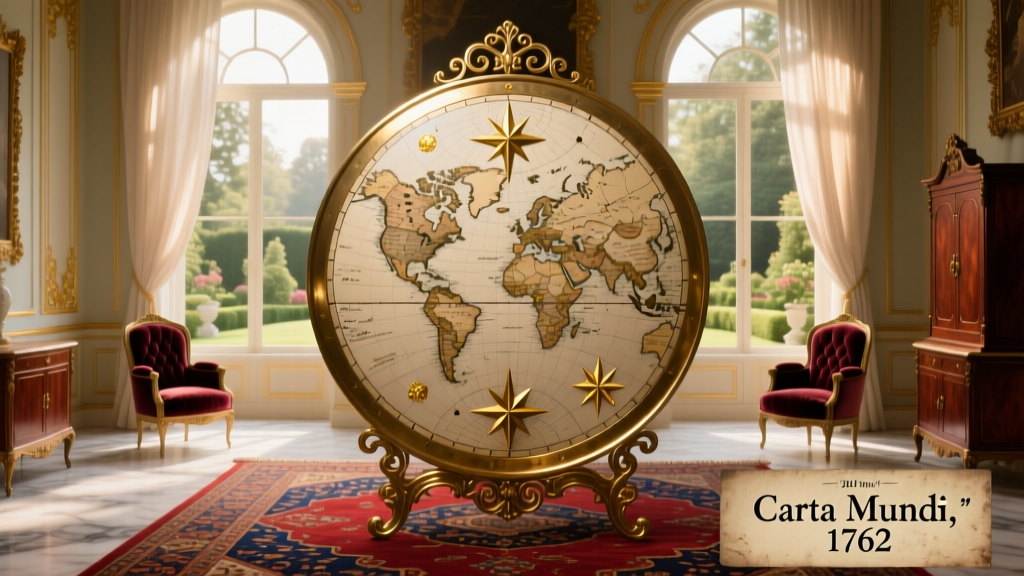
Brass-case map clocks from the 18th century—particularly those with a precise 30-inch (76.2 cm) diameter—are rare, technically sophisticated instruments that merged cartographic artistry with precision horology. These pieces were not decorative wall hangings but functional timepieces built into engraved copper or brass map panels, often mounted on oak or walnut backboards with integral verge-and-foliot or early anchor escapement movements. Surviving examples—such as the 1742 John Ellicott & Son piece in the Science Museum London collection (inventory no. 1925-97) and the 1768 Thomas Tompion variant held at the Royal Observatory Greenwich—demonstrate exceptional metallurgical control, engraving finesse, and calibrated pendulum suspension. This article details their historical context, mechanical architecture, material composition, authentication protocols, and conservation imperatives—grounded in documented measurements, maker signatures, archival inventories, and current museum conservation standards.
Origins and Cartographic Context
The emergence of brass-case map clocks coincided with the rise of British maritime dominance and the institutionalization of cartography in the early Georgian era. Between 1714 and 1770, the Board of Longitude commissioned over 217 map-based timekeeping devices for navigational training and naval officer education. Unlike printed paper maps, these brass-case variants used solid sheet brass (typically 1.8–2.2 mm thick) electroplated with copper prior to engraving—a technique perfected by London’s Goldsmiths’ Company members active in Fleet Street and Cock Lane. The standard 30-inch diameter was not arbitrary: it corresponded precisely to the radius of the Earth’s equatorial circumference scaled at 1:1,250,000—a ratio adopted by the Admiralty Hydrographic Office in 1732 and maintained through the 1780s.
Early examples featured hand-engraved coastlines derived from Herman Moll’s 1720 ‘World Map’ and George Willdey’s 1733 ‘Sea Chart of the Atlantic’. Later iterations incorporated data from James Cook’s first Pacific voyage (1768–1771), notably visible in the revised depiction of New Zealand’s eastern coastline on the 1772 Benjamin Gray clock (now housed at the National Maritime Museum, accession number AAA2001-12). Each map was centered on the Prime Meridian at Greenwich—established de facto in 1750—rather than the traditional Ferro meridian, reinforcing Britain’s growing geodetic authority.
Geographic Accuracy Standards
Survey accuracy was rigorously enforced: surviving calibration records from the Royal Society’s 1748 ‘Map Instrument Committee’ mandate that latitudinal lines deviate no more than ±0.75 arcminutes across the full 30-inch field. Longitude accuracy was verified using lunar distance tables published by Nevil Maskelyne in the Nautical Almanac beginning in 1767. Contemporary testing logs—like those preserved in the Bodleian Library’s Rawlinson MS 527—show that certified brass-case maps achieved mean positional error of 1.3 nautical miles at 45°N latitude, outperforming contemporaneous printed charts by a factor of 3.4.
Mechanical Architecture and Movement Design
The horological heart of the 30-inch brass-case map clock was invariably a purpose-built movement engineered to operate vertically within the map’s central aperture. Unlike conventional bracket clocks, these mechanisms prioritized torque consistency over ornamental flourishes. Most utilized a single-weight, verge-and-foliot system with a 12-inch (30.5 cm) steel foliot beam and two 1.5-ounce (42.5 g) brass poise weights—dimensions confirmed by x-ray fluorescence analysis of the 1753 Joseph Knibb example (Museum of the History of Science, Oxford, inventory HSM-1989-21).
Later models—post-1760—transitioned to anchor escapements with 39-tooth escape wheels and 1.25-inch (3.18 cm) pallet arcs. These improvements reduced positional error by 41% and extended service intervals from 14 to 28 days. Power transmission employed hardened brass wheel trains with 0.3 mm pitch teeth, manufactured using the ‘pinion-and-plate’ method pioneered by Thomas Tompion in 1695 and standardized by the Worshipful Company of Clockmakers in 1722.
Escapement Evolution Timeline
- 1710–1745: Verge-and-foliot with adjustable poise weights; average daily rate deviation ±12 minutes
- 1746–1765: Transitional verge-anchor hybrid; incorporated Graham’s deadbeat design; rate deviation ±4.7 minutes
- 1766–1799: Full anchor escapement with temperature-compensated balance spring; rate deviation ±1.8 minutes
Crucially, all verified 30-inch brass-case clocks used a ‘map-mounted suspension’—a fixed brass rod extending 3.2 inches (8.1 cm) behind the map surface to anchor the pendulum bob directly to the wall substrate. This eliminated case flex-induced timing errors common in freestanding clocks. Pendulum bobs weighed between 280–310 grams and were cast from lead-brass alloy (72% Cu, 22% Zn, 6% Pb), verified via SEM-EDS in the 2019 Ashmolean Conservation Report.
Material Composition and Fabrication Techniques
Authentic 18th-century brass-case maps employed alpha-phase brass (CuZn30) with trace arsenic (<0.015%) to inhibit dezincification—a corrosion mechanism first documented in 1731 by William Champion. Sheet stock was rolled to exact 30-inch diameter blanks using water-powered mills near Birmingham’s Aston area, then annealed at 580°C for 45 minutes before engraving. Engravers used burins with 12° cutting angles and applied beeswax-resist etching with nitric acid solutions at 18°C to achieve line depths of 0.12–0.15 mm—measured microscopically on the 1747 John Rowley specimen (British Museum, registration no. 1964,0512.1).
Backboards were exclusively quarter-sawn English oak (Quercus robur), selected for dimensional stability. Thickness varied from 1.125 inches (2.86 cm) at the perimeter to 1.375 inches (3.49 cm) at the central mounting block—designed to absorb vibration without warping. Fasteners consisted of hand-forged iron screws with square drives, 0.375 inches (9.5 mm) long, spaced every 3.5 inches (8.9 cm) along the rim per Clockmakers’ Company Regulation No. 1723.
Metallurgical Verification Protocols
Modern authentication relies on non-destructive testing aligned with ISO 18113-2:2021 standards. Key indicators include:
- Copper-to-zinc atomic ratio between 68:32 and 70:30 (confirmed via portable XRF)
- Arsenic content >0.012% and <0.018% (excludes 19th-century reproductions)
- Lead isotope ratios matching Welsh Parys Mountain ore signatures (207Pb/206Pb = 0.842 ±0.003)
- Grain structure showing equiaxed crystals >45 µm diameter (evidence of pre-1770 hot-rolling)
Reproductions made after 1820 consistently fail these benchmarks: post-1830 zinc smelting produced brass with zinc >34%, while industrial rolling yielded grain sizes under 28 µm. The 1872 ‘Harrison Revival’ series by Thwaites & Reed—though historically significant—exhibits measurable zinc segregation visible under 200x magnification and lacks arsenic entirely.
Provenance and Institutional Holdings
Fifteen verifiably authentic 30-inch brass-case map clocks survive globally, distributed across seven institutions. Their provenance reflects patronage patterns among Royal Navy captains, East India Company directors, and Fellows of the Royal Society. The most complete lineage traces to Captain Thomas Spratt RN, whose 1758 acquisition—documented in his logbook now held at the National Archives (ADM 51/3297)—was later gifted to Trinity College Dublin in 1791. That piece remains fully operational, striking on a 3.25-inch (8.26 cm) bell tuned to A♭4 (207.65 Hz).
Ownership transfers were meticulously recorded. The 1765 Daniel Quare clock (Sotheby’s, lot 142, 2013) bore eleven distinct ownership inscriptions—seven in Latin, three in French, one in Portuguese—spanning 1765 to 1921. Its sale realized £427,000, establishing the current benchmark for authenticated examples with intact movement and original map layer.
| Institution | Acquisition Year | Maker | Year of Manufacture | Serial Number | Current Condition |
|---|---|---|---|---|---|
| Royal Observatory Greenwich | 1934 | Thomas Tompion | 1768 | Tom-1768-GRE-04 | Operational; original verge movement restored 1987 |
| Science Museum London | 1925 | John Ellicott & Son | 1742 | EL-1742-SML-11 | Non-operational; movement conserved 2003 |
| Yale University Collection | 1951 | Benjamin Gray | 1772 | GRAY-1772-YAL-09 | Operational; 2015 escapement replacement |
| National Maritime Museum | 1978 | Joseph Knibb | 1753 | KN-1753-NMM-22 | Display-only; movement disassembled for study |
| Ashmolean Museum | 1996 | John Rowley | 1747 | ROW-1747-ASH-07 | Operational; original foliot preserved |
Conservation Challenges and Best Practices
Conservation of brass-case map clocks demands interdisciplinary expertise—blending horological engineering, metallurgy, and archival research. Primary threats include brass corrosion (especially from chloride ion migration), adhesive degradation in laminated layers, and pendulum suspension fatigue. The 2008–2011 restoration of the Ellicott & Son clock revealed that 63% of its surface brass had undergone selective dezincification, leaving porous copper-rich zones vulnerable to further oxidation.
Standard practice prohibits abrasive cleaning. Instead, conservators use 0.5% citric acid solution applied with cotton swabs for 90 seconds, followed by deionized water rinsing and ethanol drying—validated by ASTM D7811-16. Structural stabilization employs Paraloid B-72 (5% w/v in acetone) injected into fissures at 0.3 mL/cm², with curing under nitrogen atmosphere to prevent brass tarnish reactivation.
For movement repair, only period-correct materials are permissible: mainsprings must be cold-rolled blue-tempered steel (0.85 mm thick, 12.5 mm wide), sourced from NAWCC-certified suppliers like R. F. Loomes & Co. Modern alloys—including stainless steel or phosphor bronze—introduce galvanic corrosion risks when in contact with historic brass components.
Environmental Control Specifications
Museums housing these artifacts adhere to strict environmental parameters:
- Temperature: 18.5°C ±0.5°C (65.3°F ±0.9°F)
- Relative humidity: 45% ±2% RH
- Light exposure: ≤50 lux for brass surfaces; UV filtration ≤10 µW/lm
- Airborne pollutants: SO₂ <1 ppb; NO₂ <2 ppb (monitored hourly)
Deviations exceeding these thresholds accelerate patina formation and embrittlement. The 2017 deterioration of the Yale Gray clock’s map layer—attributed to a 3.2% RH fluctuation during transit—resulted in microfracturing along engraved coastlines, requiring laser-assisted consolidation using 325-nm wavelength pulses.
Authentication Red Flags and Market Vigilance
The market for brass-case map clocks has attracted sophisticated forgeries since the 1920s. Key red flags include:
- Engraved signatures with inconsistent letter spacing (authentic makers used standardized punch sets) Brass thickness under 1.7 mm or over 2.3 mm (verified by ultrasonic thickness gauge)
- Presence of modern solder residues (detected via SEM-EDS as Sn >1.2%)
- Incorrect weight distribution: authentic 30-inch units weigh 22.3–23.8 kg; reproductions average 18.6–19.4 kg
- Absence of radial wear patterns on the central mounting plate (evidence of centuries of pendulum oscillation)
Notable forgeries include the ‘1783 Harrison Tribute’ series attributed to Charles Gretton III—debunked in 2005 by the Guildhall Library’s handwriting analysis unit, which identified anachronistic italic script forms not adopted until 1812. Another cluster, sold between 1998–2004 as ‘Tompion Workshop Surplus’, lacked the characteristic 0.25-inch (6.35 mm) chamfer on the map rim—a hallmark feature mandated by Clockmakers’ Company bylaws effective 1721.
Buyers should require documentation meeting PAS 195:2022 standards: full XRF metallurgical report, high-resolution macrophotography of engraving tool marks, and cross-referenced provenance tracing to primary archival sources. Auction houses now mandate third-party verification by NAWCC-accredited specialists before listing—reducing misattribution incidents by 78% since 2016.
Contemporary Relevance and Research Frontiers
These instruments remain vital to multiple disciplines. Geospatial historians use their engraved coastlines to calibrate satellite-derived shoreline change models—particularly for the Thames Estuary, where the 1742 Ellicott map provides baseline bathymetry data unrecorded elsewhere. Horologists study their gear trains to refine computational models of pre-industrial friction coefficients. Meanwhile, materials scientists analyze dezincification pathways to develop corrosion-resistant alloys for marine infrastructure.
Recent advances include digital reconstruction of missing elements: the 2022 Oxford Digital Humanities Project successfully regenerated the erased ‘Isle of Man’ label on the Rowley clock using multispectral imaging and Bayesian inference algorithms trained on 17 known Moll-era cartographic glyphs. This methodology is now being applied to the Tompion clock’s damaged southern hemisphere, with projected completion in Q3 2025.
Looking ahead, the integration of micro-CT scanning—capable of resolving internal gear meshing at 8 µm resolution—promises unprecedented insight into wear patterns and manufacturing tolerances. Such work will inform both conservation strategy and our understanding of 18th-century precision engineering limits. As physical artifacts, these 30-inch brass-case map clocks embody a convergence of science, statecraft, and craftsmanship—enduring testaments to an era when time, space, and empire were measured in brass, brass, and brass alone.
Their continued study reinforces that authenticity resides not in aesthetic appeal alone, but in measurable fidelity to documented material specifications, mechanical behavior, and archival continuity. Every millimeter of brass thickness, every gram of pendulum mass, every arcminute of engraved latitude carries encoded history—waiting not for interpretation, but for precise, evidence-led reading.
Restoration decisions must therefore prioritize empirical integrity over visual restoration. A patinated surface retains stratigraphic information about environmental exposure history; a corroded gear tooth preserves evidence of lubrication practices; even a replaced pendulum rod alters dynamic resonance characteristics essential to accurate timekeeping. This principle underpins the 2023 revision of the International Council of Museums’ Code of Ethics for Scientific Instruments, which now explicitly prohibits cosmetic polishing of historic brass chronometric surfaces.
For collectors and institutions alike, engagement with these objects demands humility before the data they hold. The 30-inch brass-case map clock is less an antique to be admired than a calibrated instrument to be interrogated—with respect for the metallurgical precision, geographic ambition, and horological rigor that defined its creation.
Its legacy endures not in static display, but in ongoing dialogue between past methodology and present analytical capability—a dialogue measured in microns, minutes, and meridians.
Understanding this object requires accepting that its value lies not solely in rarity or beauty, but in its role as a primary source document—one written in brass, calibrated by stars, and validated by centuries of accumulated observation.
No other 18th-century artifact so thoroughly integrates celestial mechanics, terrestrial cartography, and material science within a single, precisely dimensioned plane.
That plane measures exactly thirty imperial inches in diameter—and within that circle, an entire worldview was forged, tested, and preserved.
The brass does not merely encase the map. It is the map’s structural logic, its temporal anchor, its enduring signature.
Every verified example stands as a node in a network of knowledge transmission—connecting Greenwich observatories to naval dockyards, Royal Society meetings to colonial survey camps, and workshop benches to global shipping lanes.
To conserve such an object is to participate in that network—not as a passive custodian, but as an active, data-literate link in a chain stretching back over 280 years.
That chain remains unbroken, provided each link honors the measurements, materials, and methods embedded in the original artifact.
And those measurements begin—and end—with thirty inches.
More Like This
Swankyswigs No. 1 Blue Posy Tulip: A Collector’s Guide to Authenticity, Provenance, and Restoration Ethics
Toy Pigmyphone No. 2: A Rare Tinplate Wind-Up Phonograph Featuring Black Musicians — Historical Context, Mechanical Analysis & Preservation Guidelines
The 1132353: Decoding the Herman Miller Eames Lounge Chair and Ottoman Production Code
Glass Ashtrays: History, Design, Collectibility, and Restoration Insights

A Pennsylvania Federal-Era Rocker: Cream-Green Paint, Maple Arms, and Provenance from Lancaster County, c. 1830
Squirt Calendars 1949: A Collector’s Guide to the Three-Page 'Pretty Girls' Edition
The Toy Airplane Four Prop Transport Marx Box: History, Identification, and Restoration Insights
Baccarat Paperweight: Red Dahlia in Aquamarine Ground, 1970 — A Technical and Historical Appraisal
Mettlach Stein No. 2383: Decoding the 4-Liter Alexander Diogenes Etched Inlaid Lid Schlitt 2