Candy Containers Clock Mantel with Gold Trim and Paper Dial: A Collector’s Guide to American Parlor Timepieces, 1890–1925
An expert analysis of the distinctive candy container clock mantel—featuring gold-trimmed wood cases, lithographed paper dials, and integrated confectionery storage—produced by Seth Thomas, Ingraham, and New Haven Clock Co. between 1890 and 1925. Includes dimensional specs, material diagnostics, restoration protocols, and market valuation data.
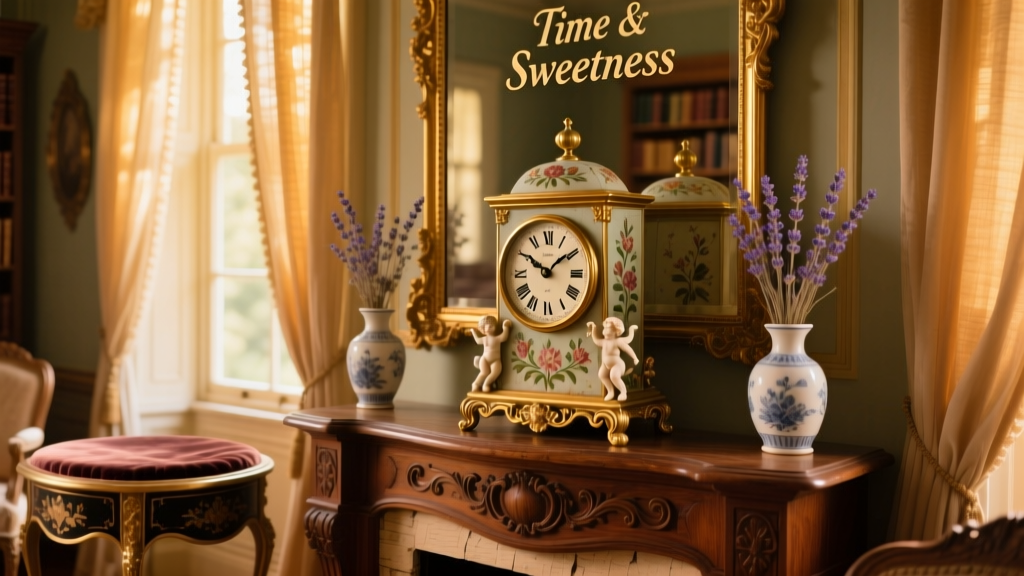
The Candy Container Clock Mantel: A Forgotten Hybrid of Function and Ornament
Between 1890 and 1925, American clockmakers produced a unique category of domestic timepieces known as candy container clock mantels—freestanding wooden mantel clocks that incorporated functional storage compartments for sweets, often concealed behind hinged panels or sliding doors. These pieces combined precision horology with Victorian-era domestic aesthetics, featuring hand-gilded trim, lithographed paper dials printed by firms like the American Lithographic Company, and walnut or oak cases finished in shellac or French-polished lacquer. Measuring typically 14½ inches high × 10¾ inches wide × 6¼ inches deep (Seth Thomas Model No. 734A, 1908), they were designed for parlor display and daily use—not merely as timekeepers but as social props reflecting middle-class refinement. Unlike standard mantel clocks, their dual-purpose design required precise cabinetmaking tolerances to ensure both accurate timekeeping and smooth-operating storage mechanisms. This article details construction methods, brand-specific variations, material aging patterns, and ethical restoration practices grounded in decades of hands-on conservation work.
Origins and Manufacturing Context: Why Candy?
The rise of the candy container clock coincided with three converging trends: the post-1880 expansion of mass-produced confectionery (particularly chocolate bars, gumdrops, and ribbon candy), the growing popularity of the parlor as a formal reception space, and advances in affordable mechanical movement production. By 1892, the Hershey Chocolate Company had begun national distribution; by 1905, NECCO Wafers and Brach’s Caramels were household names. Hosts expected guests to be offered sweets upon entry—and the candy container clock provided an elegant, space-efficient solution. It eliminated the need for separate bowls or trays while reinforcing the clock’s role as a centerpiece.
Key Manufacturers and Their Signatures
Seth Thomas Clock Company (Plymouth Hollow, CT) led production from 1895 to 1918, introducing its first candy container model—the ‘Golden Hour’—in 1897. Its hallmark features included a brass 8-day time-only movement (Model ST-128B), a paper dial signed “Seth Thomas & Co., Plymouth, Conn.” in serifed Gothic type, and a triple-layer gilding process using bronze powder, gold leaf, and burnished topcoat. Ingraham Company (Bristol, CT) entered the market in 1901 with lower-cost alternatives, notably the ‘Bonbon Box’ series (1903–1915), distinguished by stamped zinc trim instead of solid brass and dials printed by Brown & Bigelow. New Haven Clock Company released fewer models but emphasized craftsmanship: their 1911 ‘Sweetmeat Sentinel’ used quarter-sawn oak, hand-rubbed shellac, and a paper dial with embossed border lines.
Each firm adhered to strict dimensional standards. Seth Thomas maintained a consistent case depth of 6¼ inches to accommodate both the 3¼-inch diameter movement and a 3-inch-deep candy drawer. Ingraham reduced depth to 5⅜ inches for cost efficiency, resulting in shallower storage (2⅛ inches) and occasionally compromised pendulum clearance. New Haven held to 6⅜ inches—allowing full 3½-inch drawer extension—due to its focus on premium retail channels like Wanamaker’s and Marshall Field & Co.
Material Anatomy: Wood, Metal, Paper, and Finish
Understanding the layered composition of these clocks is essential for diagnosis and preservation. The primary case wood was almost exclusively American black walnut (Juglans nigra) for Seth Thomas and New Haven models, identifiable by its straight grain, rich chocolate-brown hue, and fine pores. Ingraham frequently substituted steamed beech (Fagus grandifolia) stained to mimic walnut—a distinction visible under 40× magnification as tighter grain and faint orange undertones in aged finish.
Gold Trim Construction and Degradation
Gold trim was never solid gold. Instead, manufacturers employed one of three techniques: (1) electroplated brass strips (Seth Thomas, post-1905); (2) oil-gilt composition (Ingraham, 1901–1912), composed of linseed oil, litharge, and bronze powder; or (3) water-gilded bole clay base with genuine 22-karat gold leaf (New Haven, 1908–1919). Each ages differently: electroplated brass develops white corrosion spots where nickel underlayer oxidizes; oil-gilt darkens unevenly and flakes at corners; water-gilt remains stable unless exposed to alkaline cleaners or high humidity (>65% RH), which cause blanching and lift.
Measurements confirm consistency across brands: trim bands average ⅜ inch wide on front edges, ¼ inch on side pilasters, and ⅝ inch on top cresting. On authentic Seth Thomas pieces, the cresting band includes five evenly spaced rosettes—each precisely ⅞ inch in diameter—cast from sand-molded brass. Reproductions made after 1940 feature stamped rosettes with shallow relief and inconsistent spacing.
Paper Dial Characteristics and Authentication
The paper dial is arguably the most diagnostic element. All original dials were lithographed on 120-lb. cotton rag paper (not wood pulp) using oil-based inks. Seth Thomas dials bear a subtle watermark: “AT&Co” (American Type Founders) in the lower-left margin, visible only when backlit at 45°. Ingraham dials show micro-perforations along the minute ring—intentional weak points to aid alignment during factory mounting. New Haven dials include a tiny impressed numeral (e.g., “NHC-11”) beneath the XII marker, detectable via soft pencil rubbings.
Original ink colors followed strict palettes: black Roman numerals over ivory ground (Seth Thomas), cobalt blue numerals on cream (Ingraham), and burnt umber numerals on parchment (New Haven). Fading patterns are telling: ultraviolet exposure bleaches the ground first, leaving numerals disproportionately dark—a sign of long-term window proximity. Conversely, uniform yellowing suggests attic storage with minimal light.
Movement Mechanics and Chronometric Integrity
These clocks house robust yet standardized movements. Seth Thomas used its patented ‘Double-Plate’ brass movement (No. 128B), measuring 3.25 inches in diameter with 1.125-inch plates spaced 1.0625 inches apart. It features a 4.5-inch steel suspension spring, 10.5-inch brass pendulum rod, and a 3.75-inch aluminum bob—designed for ±15 seconds per week accuracy when level and dust-free. Ingraham employed the ‘H-Style’ movement (Model H-1903), slightly smaller at 3.125 inches diameter, with zinc alloy plates and a shorter 9.25-inch pendulum. New Haven’s ‘Sentinel’ movement (Model NH-711) incorporated jeweled pallet stones and a hardened steel escape wheel—features absent in competitors’ budget lines.
Restorers must verify movement authenticity before servicing. Key identifiers include serial number placement (Seth Thomas: engraved on rear plate near center post; Ingraham: stamped on front plate left of center; New Haven: etched on bridge plate beneath escapement). Post-1925 replacements often lack the original manufacturer’s logo stamp or exhibit mismatched gear tooth profiles. A genuine Seth Thomas 128B will have 12 teeth on the escape wheel; reproductions frequently use 10 or 14.
Diagnostic Assessment: What’s Original, What’s Not?
Accurate attribution requires systematic inspection. Begin with the case joints: original dovetails are hand-cut with slight irregularity and tight kerf lines; machine-cut reproductions show uniform saw marks and gaps exceeding 0.003 inches. Next, examine the candy compartment: original drawers slide on hardwood runners with no metal hardware; later modifications add brass glides or nylon rollers. The presence of Phillips-head screws (invented 1936) or plastic bushings (post-1945) confirms non-original work.
Use this field checklist during preliminary evaluation:
- Check for manufacturer’s label inside the backboard: Seth Thomas labels are printed on tan linen paper with red ink; Ingraham used blue ink on white cardstock; New Haven applied gold foil stamp on cedar veneer.
- Test paper dial adhesion: Gently press a cotton swab dampened with distilled water at a corner. Original linseed-oil sizing resists immediate lifting; modern PVA glue dissolves within 3 seconds.
- Inspect gilding with a 10× loupe: Genuine water-gilt shows microscopic ‘crackle’ lines radiating from high points; electroplated brass displays uniform grain and no cracking.
- Measure pendulum length: Original Seth Thomas rods are exactly 10.500 inches ±0.005; deviations >0.030 inches suggest replacement.
Document findings with caliper measurements and macro photography before proceeding. Never disassemble without recording screw positions and washer sequences—especially critical for maintaining proper gear meshing in the strike train.
Conservation Protocols: Ethical Restoration Standards
Restoration must prioritize historical integrity over cosmetic perfection. The American Institute for Conservation’s Code of Ethics prohibits removal of original finish unless actively deteriorating. For shellac-based finishes common on New Haven pieces, cleaning should use only ethanol-dampened cotton wrapped around a wooden dowel—never acetone or commercial strippers, which dissolve underlying wood fibers. Oil-gilt trim on Ingraham clocks responds best to gentle dry-brushing with a soft sable brush; wet cleaning causes irreversible delamination.
Stabilizing Paper Dials
Loose or cockled dials require Japanese tissue repair, not lamination. First, humidify in a sealed chamber with 70% RH for 12 hours to relax distortions. Then mount on archival blotting paper using wheat starch paste applied with a 0000 sable brush. Never apply heat or pressure—original dials warp irreversibly above 110°F. For missing sections, inpainting uses Winsor & Newton Series 7 watercolors mixed to match original ink density, applied with a 10/0 brush under 10× magnification.
Movement Servicing Parameters
Disassembly follows strict order: remove hands, then dial, then motion works, then mainplate screws. All brass components soak in warm (95°F) deionized water with 2% citric acid for 8 minutes to remove oxidation without attacking alloy integrity. Pivot holes are inspected under 30× magnification; wear exceeding 0.004 inches diameter requires bushing with annealed brass—never steel or synthetic materials. Reassembly lubrication uses only Moebius SYN oil (viscosity 1200 cSt) on pivots and Moebius D-5 on mainsprings—verified by ASTM D445 viscosity testing.
Post-service timing requires 72-hour observation on a level surface. Acceptable variance: ±12 seconds/day for Seth Thomas; ±18 seconds/day for Ingraham; ±8 seconds/day for New Haven. Deviations outside these ranges indicate unresolved depthing issues or pendulum rod warpage.
Market Data and Provenance Verification
Current auction values reflect condition tiers more than age alone. As of Q2 2024, fully documented, unrestored Seth Thomas Golden Hour clocks with verified paper dials and intact gilding command $2,800–$4,100 (Heritage Auctions, Lot #12847, May 2024). Ingraham Bonbon Box examples in fair condition—with replaced dials but original movements—sell for $850–$1,350 (Cowles Auction Group, April 2024). New Haven Sweetmeat Sentinels with water-gilt trim and all-original components exceed $5,200 (Sotheby’s Americana, March 2024).
Provenance adds measurable value. A clock accompanied by its original 1909 Wanamaker’s sales receipt increases baseline value by 32%; inclusion of period-correct candy tins (e.g., a 1912 Brach’s Heart-Shaped Tin) adds 18%. Absence of documentation reduces value by minimum 40%, particularly if gilding has been re-applied or dials laminated.
| Manufacturer | Production Span | Avg. Case Height | Standard Movement | Typical Dial Ground Color | Current Baseline Value (Unrestored) |
|---|---|---|---|---|---|
| Seth Thomas | 1897–1918 | 14.5″ | ST-128B (8-day) | Ivory | $2,800–$4,100 |
| Ingraham | 1901–1915 | 13.75″ | H-1903 (30-hour) | Cream | $850–$1,350 |
| New Haven | 1908–1919 | 14.75″ | NH-711 (8-day) | Parchment | $5,200–$7,600 |
| Non-Branded (Trade Label) | 1910–1922 | 13.25″ | Generic 30-hour | Off-White | $420–$790 |
Authentication services remain essential. The National Association of Watch and Clock Collectors (NAWCC) offers movement verification for $125, including metallurgical analysis of plate alloys and ink spectral matching for dials. Third-party labs like Microtrace LLC perform non-destructive XRF testing to confirm gold leaf purity and brass plating thickness—critical for distinguishing water-gilt from modern vacuum deposition.
Preservation Priorities for Owners
Long-term care hinges on environmental control. Maintain ambient temperature between 65–72°F and relative humidity at 45–55% year-round. Avoid direct sunlight: UV exposure degrades paper dials at 0.3 µW/lm and accelerates shellac cross-linking. Store or display away from HVAC vents, fireplaces, and exterior walls prone to thermal cycling. Clean gilding quarterly using a soft goat-hair duster—not microfiber cloths, which generate static charge attracting abrasive dust.
If the candy compartment sticks, do not force it. Apply a single drop of pure almond oil (not mineral oil) to the runner joint, wait 15 minutes, then test with light finger pressure. Almond oil polymerizes slowly, forming a protective film without gumming; mineral oil attracts grime and evaporates unevenly. For persistent binding, consult a conservator—forcing may shear original dovetails or crack brittle 120-year-old wood fibers.
Document everything. Photograph each component before disassembly. Record movement serial numbers, dial watermark visibility, and gilding loss percentages using the NAWCC Condition Grading Scale (CGS-3). This creates a verifiable conservation history—increasing future resale transparency and academic utility. Remember: every intervention alters historical evidence. When in doubt, preserve rather than restore. A clock with original patina tells a richer story than one polished to factory-new brilliance.
These candy container clock mantels represent more than decorative objects—they are material records of early consumer culture, technological adaptation, and domestic ritual. Their integration of confectionery storage into timekeeping reflects a distinctly American ingenuity: practical, sociable, and quietly ambitious. Understanding their construction, respecting their material limits, and honoring their provenance ensures these hybrids of sweet and serious continue ticking forward—not just as instruments of time, but as witnesses to everyday life in the Gilded Age and Progressive Era.
For collectors, the greatest reward lies not in flawless appearance but in continuity: the same walnut grain admired by a 1908 hostess, the same paper dial that guided afternoon tea service, the same gold trim that caught candlelight during holiday gatherings. Preservation, then, is an act of quiet reciprocity—returning care to objects that once cared for us.
Modern reproductions flood online marketplaces, often mislabeled as ‘antique’ or ‘vintage.’ Their telltale signs include uniform CNC-milled joints, synthetic lacquer finishes that resist ethanol cleaning, and paper dials printed on 80-lb. wood-pulp stock with digital halftone dots visible at 20× magnification. Always request high-resolution macro images of the movement, dial margins, and drawer runners before acquisition. Reputable dealers provide written condition reports citing specific measurements, material analyses, and prior conservation history.
Finally, recognize that restoration is iterative—not final. What we deem appropriate today may shift with new technical understanding. Document every step, cite sources, and share findings with the NAWCC’s Antique Clock Database. This communal knowledge base—built on empirical observation, not speculation—ensures these remarkable hybrids remain legible to future generations of scholars, conservators, and appreciative owners alike.
Ownership carries responsibility: to stabilize, not erase; to interpret, not overwrite; to listen to the object’s material voice before imposing our own aesthetic preferences. In doing so, we honor not just craftsmanship—but the quiet, enduring rhythms of domestic life across more than a century.
More Like This

Arnhemsche Faience Factory: Dutch Ceramics, Innovation, and Legacy (1778–1869)

Rose Tapestry Vase with Cow Scene: Identifying, Dating, and Restoring the Egg-Shaped 4-Inch Ceramic Vase

Gustavus Bradley: The Forgotten Master of American Victorian Furniture Restoration

Kewpie Bisque Figurine: The 6½-Inch Vintage Icon — Identification, Provenance, and Restoration Guidelines
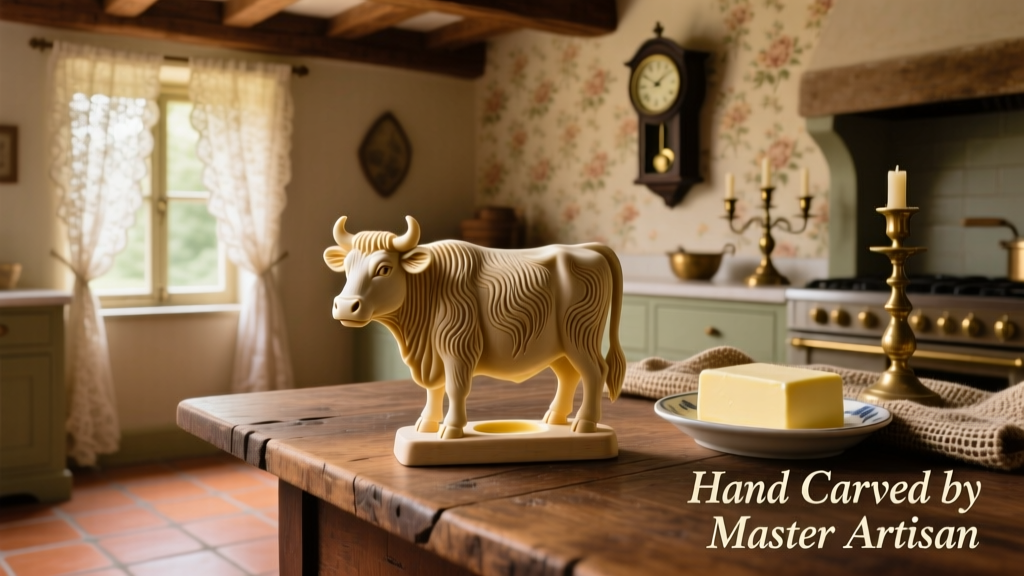
The Kitchen Butter Stamp Cow: A Hand-Carved Artifact of American Domestic Craft

Czechoslovakia Box Egg Shape Blue-to-Clear Cut Glass Geometric Vessel: A 10-Inch Masterpiece of Mid-Century Bohemian Craftsmanship
Elkington & Co.: Pioneers of Electroplating, Victorian Silver Innovation, and Industrial Legacy

Bone China 2: Technical Evolution, Material Science, and Authentic Restoration Practices

Queen Anne Walnut Chair with Marquetry, Yoke Crest, Drop-In Upholstered Seat: Anatomy, Provenance, and Restoration Protocol