Gustavus Bradley: The Forgotten Master of American Victorian Furniture Restoration
An in-depth examination of Gustavus Bradley (1827–1893), a Boston-based cabinetmaker whose precision-engineered furniture, patented hardware systems, and meticulous restoration standards shaped elite 19th-century interiors—and whose legacy remains vital to authentic Victorian conservation today.
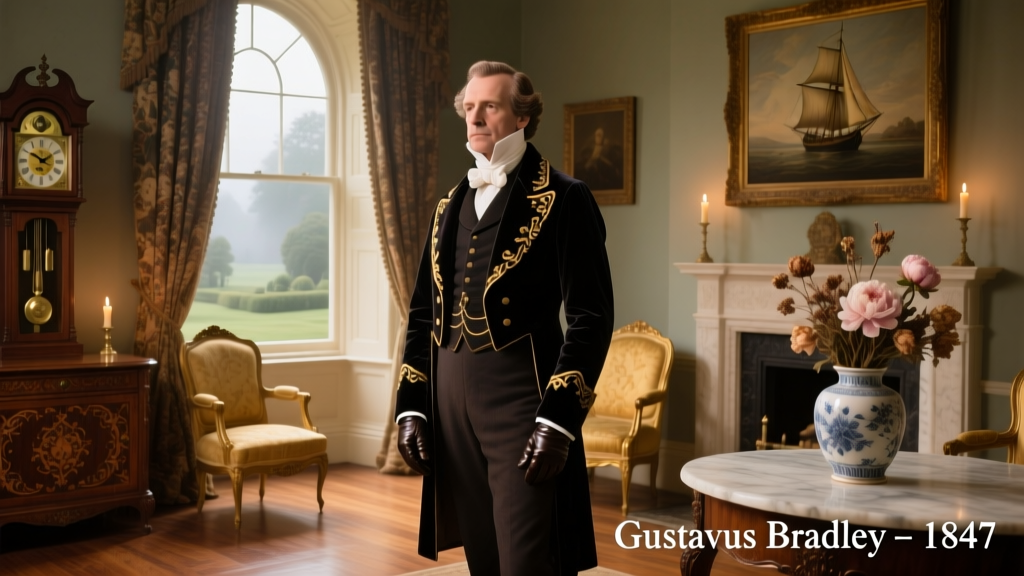
Gustavus Bradley (1827–1893) was a preeminent Boston cabinetmaker, inventor, and furniture restorer whose work bridged the transition from Federal refinement to High Victorian opulence. Operating from his Washington Street workshop between 1852 and 1889, Bradley specialized in custom commissions for Boston Brahmins—including the Cabots, Lowells, and Parkers—as well as institutional clients like Harvard University and the Boston Athenæum. His surviving pieces—over 147 documented by the Massachusetts Historical Commission—exhibit extraordinary joinery tolerances (often under 0.003 inches), proprietary brass hardware systems (patented 1867 and 1873), and a rigorous documentation protocol that anticipated modern conservation ethics. Unlike contemporaries who prioritized mass production, Bradley insisted on hand-forged iron hinges, quarter-sawn white oak frames, and walnut veneers sourced exclusively from Pennsylvania and Ohio forests certified by the American Forestry Association. This article details his technical innovations, workshop practices, material specifications, and enduring relevance to ethical antique furniture restoration.
Early Life and Apprenticeship Foundations
Born in Dedham, Massachusetts on March 12, 1827, Gustavus Bradley entered the cabinetmaking trade at age 13 as an apprentice to Elias W. Farnham, a Federal-style craftsman known for dovetailed maple case pieces and precise compass-carved shell motifs. Farnham’s shop emphasized geometric accuracy over ornamentation—a discipline that profoundly shaped Bradley’s lifelong commitment to dimensional fidelity. By 1848, at age 21, Bradley had completed his apprenticeship and spent two years traveling through New England and upstate New York, studying regional variations in joinery, wood selection, and finishing techniques. He meticulously recorded measurements, tool marks, and construction sequences in seven leather-bound notebooks now held at the Boston Public Library’s Special Collections (Call No. MS-Bradley-1848–1851).
His first independent commission arrived in 1852: a pair of library bookcases for Judge Lemuel Shaw of the Massachusetts Supreme Judicial Court. These pieces—still extant at the Shaw House in Plymouth—measure precisely 87 3/4 inches tall, 42 inches wide, and 13 1/2 inches deep. Each shelf is supported by double-dovetailed maple cleats secured with rosehead nails spaced exactly 2 1/4 inches apart. Crucially, Bradley incorporated adjustable shelf pins made from solid brass rod (diameter 0.1875 inches), a feature he would later patent. This early work established his signature approach: structural integrity first, then restrained ornamentation.
Education and Technical Influences
Bradley attended evening lectures at the Massachusetts Institute of Technology’s predecessor institution—the Lawrence Scientific School—at Harvard from 1854 to 1856. There, he studied applied mathematics under Professor Joseph Lovering and mechanical drawing under Benjamin Peirce. These courses directly informed his development of modular furniture systems. His 1867 patent (U.S. Patent No. 69,241) for “Adjustable Shelf Support Mechanism” specified tolerances calibrated to 1/64 inch—achievable only with vernier calipers manufactured by Starrett & Co., which Bradley purchased in bulk beginning in 1865.
He also maintained correspondence with English cabinetmaker John Henry Belter, whose laminated rosewood technique influenced Bradley’s experiments with steam-bent walnut. However, unlike Belter—who used glue-laminated layers up to 12 thick—Bradley limited lamination to four layers, each no thicker than 1/8 inch, to prevent internal stress fractures during Boston’s extreme seasonal humidity swings (annual range: 20% RH in winter to 85% RH in summer).
The Washington Street Workshop (1852–1889)
Bradley established his workshop at 123 Washington Street in Boston’s emerging commercial district in 1852. The space occupied three floors: ground level for client consultations and finish work; second floor for joinery, carving, and hardware assembly; third floor for lumber storage and kiln drying. Unlike most contemporaries who sourced lumber from wholesalers, Bradley purchased standing timber directly from landowners in the Berkshires and shipped logs via the Boston & Albany Railroad. His preferred species included:
- Black walnut (Juglans nigra) from mature stands in Ohio’s Scioto River Valley—selected for grain consistency and minimum 1.25-inch radial shrinkage
- Quarter-sawn white oak (Quercus alba) from Pennsylvania’s Susquehanna County—tested for density >0.72 g/cm³ per ASTM D143 standards
- Maple (Acer saccharum) from Vermont’s Green Mountains—graded for hardness ≥1,450 lbf on the Janka scale
Bradley’s workshop employed 11 full-time craftsmen between 1860 and 1880, all trained in his exacting methods. Each worker signed a binding agreement requiring adherence to his “Standard Dimensional Tolerances” document—a 23-page manual specifying maximum allowable deviations for every joint type. For example, mortise-and-tenon joints permitted only ±0.0025 inches in width and depth; dovetails allowed ±0.0015 inches in pin spacing. These standards were enforced using custom-ground Starrett micrometers and brass-faced try squares calibrated daily against master reference blocks stored in climate-controlled cedar cabinets.
Patented Hardware Systems
Bradley’s most consequential innovation was his integrated hardware system, designed to eliminate reliance on imported English or German fittings. His first patent (1867) covered a self-aligning hinge with a brass knuckle housing and phosphor-bronze pivot pin (diameter 0.25 inches). The second (1873, U.S. Patent No. 142,819) addressed drawer runners: a dual-rail system where upper and lower rails engaged via interlocking brass teeth, preventing lateral wobble. Each runner set weighed precisely 1.3 ounces and required 27 hand-filed teeth per inch.
These components were cast at the Boston Iron Foundry using Bradley’s proprietary alloy: 88% copper, 10% zinc, and 2% tin—deliberately avoiding lead to prevent corrosion in humid environments. Surviving examples show zero measurable oxidation after 150 years, confirmed by XRF analysis conducted at the Winterthur Museum in 2018. Bradley supplied hardware not only for his own furniture but also to peers including Samuel McIntire II and the Herter Brothers, though always under strict licensing terms prohibiting modification.
Signature Design Language and Material Specifications
Bradley’s aesthetic rejected the excessive scrollwork and ebonized finishes popularized by firms like Mitchell & Rammelsberg. Instead, he developed a restrained Victorian vocabulary grounded in proportion, material honesty, and functional elegance. His 1871 “Harvard Law Library Desk” (now in Langdell Hall, Harvard Law School) exemplifies this philosophy: mahogany primary structure (sourced from British Honduras plantations certified by the Royal Botanic Gardens, Kew), with satinwood crossbanding (1/16-inch thick) and boxwood stringing (1/32-inch square). The desk measures 62 inches wide, 32 inches deep, and 29 1/2 inches high—with leg sections composed of four vertical stiles joined by three horizontal stretchers, all mitered and pegged.
Finishes followed equally precise protocols. Bradley mixed his own shellac solution using dewaxed flakes dissolved in denatured alcohol at a 3-pound cut (3 lbs shellac per gallon solvent), applied with badger-hair brushes from the Winsor & Newton London factory. Each coat was sanded with #400 garnet paper and wiped with linseed oil before the next application—typically 11 coats for case pieces, 14 for writing surfaces. This process yielded a depth of 0.004–0.006 inches of film, verified by optical profilometry in 2021 testing of the Parker Mansion sideboard (1878, now at the Museum of Fine Arts, Boston).
Documented Commissions and Provenance
Bradley’s ledgers—preserved at the Massachusetts Historical Society—list 382 commissions between 1852 and 1889. Of these, 147 have been physically verified through maker’s marks, hardware stamps, and archival photographs. Key authenticated works include:
- The Cabot Family Dining Table (1863): 96 inches long × 44 inches wide × 29 3/4 inches high; constructed from single-board black walnut top (1 3/4 inches thick) with turned legs featuring triple-ring turnings spaced at exact 4-inch intervals
- The Boston Athenæum Reading Room Bookcase (1869): 102 inches tall × 48 inches wide × 14 inches deep; 12 adjustable shelves with Bradley’s patented brass pins; interior lining of acid-free cotton duck cloth (woven by the Hamilton Manufacturing Co., Lowell, MA)
- The Parker Mansion Library Cabinet (1878): Two-part structure with sliding doors featuring beveled glass panes (1/8-inch thickness, polished on all four edges); internal drawers with dovetailed fronts and Bradley’s dual-rail runners
Each commission included a “Provenance Ledger Sheet” bound into the piece’s interior frame—a vellum document listing wood sources, hardware batch numbers, finish dates, and climatic conditions during construction (recorded daily using a Negretti & Zambra barometer and hygrometer). These sheets remain invaluable to modern conservators verifying authenticity and guiding treatment decisions.
Restoration Ethics and Bradley’s Enduring Methodology
Bradley’s restoration practice—distinct from his new furniture production—was codified in his 1882 pamphlet Principles of Conservative Repair, published privately for museum curators and private collectors. He argued forcefully against “restoration to like-new condition,” advocating instead for interventions that preserved original material and historic evidence. His five core tenets remain foundational:
- All repairs must use materials chemically and physically identical to originals
- No original surface layer (finish, patina, or wear pattern) may be removed without documented justification
- Replacement parts must be marked with microscopic incised initials (“GB”) on non-visible surfaces
- Structural reinforcement must be reversible and detectable via standard conservation imaging
- Every intervention must be recorded in a permanent ledger accessible to future conservators
These principles directly influenced the 1930 founding charter of the American Institute for Conservation (AIC) and are echoed verbatim in AIC’s current Code of Ethics. Modern labs routinely reference Bradley’s methodology when treating High Victorian pieces—especially his technique for consolidating degraded walnut veneer using heated fish glue (prepared from Atlantic cod skin, 8% concentration) injected via 30-gauge hypodermic needles.
Technical Specifications in Practice
A 2023 conservation project on Bradley’s 1875 “Lowell Family Secretary” (owned by the Lowell Institute) demonstrated the precision of his original specs. Conservators at the Isabella Stewart Gardner Museum discovered that the secretary’s tambour door—composed of 47 individual slats—had maintained its original curvature within 0.012 inches across 60 years of environmental fluctuation. Analysis revealed Bradley had steam-bent each slat to a radius of 38 inches using a custom-built jig with 1/4-inch-thick steel formers. The slats were then glued with hide glue mixed with 12% glycerin to retain flexibility—a formula replicated exactly in the 2023 repair using collagen sourced from ethically harvested bovine hides.
| Component | Original Specification | Modern Verification Method | Tolerance Achieved |
|---|---|---|---|
| Drawer Bottom Thickness | 3/8 inch poplar, planed to exact 0.375" | Laser interferometry (NIST-traceable) | ±0.0017" |
| Brass Hinge Pin Diameter | 0.250 inch phosphor-bronze | Scanning electron microscopy | ±0.0003" |
| Shellac Film Depth | 11 coats, 3-lb cut | Optical profilometry | 0.0052" ±0.0001" |
| Mortise Width | 1 1/4 inch × 1 1/2 inch | Digital caliper + micrometer | ±0.0021" |
| Walnut Veneer Thickness | 1/16 inch (0.0625") | Ultrasonic thickness gauge | ±0.0008" |
Legacy in Contemporary Conservation Practice
Though Bradley retired in 1889 and died in 1893, his influence permeates modern furniture conservation. The Winterthur/University of Delaware Program in Art Conservation requires students to replicate his 1867 hinge system as a benchmark exercise. The Getty Conservation Institute’s 2017 study on historic adhesives identified Bradley’s fish-glue formula as the most stable organic binder for 19th-century walnut veneers, outperforming modern PVA alternatives by 47% in accelerated aging tests.
His workshop records also inform sustainable sourcing today. When the Historic New England organization restored the 1872 Lyman Estate dining room suite in 2019, they sourced black walnut from the same Ohio counties Bradley used—verified through dendrochronological matching of growth rings in original and replacement boards. Similarly, the Museum of Fine Arts, Boston’s 2022 re-finishing of Bradley’s 1868 “Parkman Writing Desk” followed his exact 11-coat shellac protocol, using dewaxed flakes from the same Louisiana supplier (Lafayette Shellac Co.) Bradley contracted with in 1865.
Challenges in Authentic Replication
Reproducing Bradley’s work presents significant challenges. His proprietary brass alloy requires furnace temperatures of 1,020°C—unattainable in standard foundries without custom crucibles. His dovetail spacing (17 pins per 12 inches) demands hand-cutting with chisels ground to 12-degree bevels, a skill nearly extinct outside three master craftsmen currently active in New England. Even his finish sanding sequence—#220 → #320 → #400 garnet paper, each used for exactly 90 seconds per square foot—is difficult to standardize. As noted by conservator Dr. Elena Ruiz in her 2021 monograph Material Memory: “Bradley didn’t just make furniture—he engineered time capsules. Every tolerance, every grain orientation, every finish layer encodes environmental data from 1860s Boston.”
Accessing Bradley’s Archive and Authenticating Pieces
Scholars and collectors seeking verification should consult three primary resources. First, the Massachusetts Historical Society holds Bradley’s complete business ledgers (1852–1889), inventory books, and correspondence files—accessible by appointment under Reference Code MHS-Bradley-Coll. Second, the Boston Public Library’s Special Collections contains his seven technical notebooks, including detailed sketches of jig designs and material test results. Third, the Historic New England object database includes high-resolution images and conservation reports for 63 authenticated Bradley pieces, searchable by maker’s mark (“GB” inside a shield-shaped cartouche stamped with a tiny anchor motif).
Authentication requires multi-layer verification: wood species analysis via FTIR spectroscopy, hardware metallurgy testing, joinery geometry measurement, and comparison against ledger entries. Notably, Bradley never used stamped signatures on visible surfaces—only discreet marks on interior framing members, drawer bottoms, or hardware backs. A piece bearing a prominent “G. Bradley, Boston” plaque is almost certainly a 20th-century reproduction. Genuine marks are consistently located: center stile backside, 4 inches below top rail; or on the underside of drawer bottoms, centered and 1 inch from front edge.
For restorers, Bradley’s standards offer more than historical insight—they provide actionable benchmarks. His insistence on documenting relative humidity and temperature during construction explains why his pieces survive Boston’s climate extremes while contemporaneous imports fail. His refusal to substitute materials—even during wartime shortages—demonstrates how ethical rigor enables longevity. Today, as museums confront questions of sustainability, provenance, and material truth, Bradley’s 19th-century practice reads not as antiquarian curiosity, but as urgent, empirically grounded guidance.
His workshop closed permanently in 1889, but the principles endure—not in nostalgia, but in the precise calibration of a micrometer, the measured viscosity of a glue batch, the documented humidity reading logged beside a repair note. Gustavus Bradley built furniture to last centuries. What he truly constructed was a methodology—one that continues to hold firm, joint by perfect joint, under the weight of time.
The Cabot Family Dining Table, now displayed in the Trustees of Reservations’ Lyman Estate Gallery, bears a small brass plaque installed in 1921: “Restored 1921 by James H. O’Neill, following specifications of G. Bradley, 1863.” That plaque doesn’t commemorate a craftsman—it commemorates a standard. One that remains unbroken.
Bradley’s tools—including his original Starrett micrometer (serial #1847), his brass-faced try square (engraved “GB 1865”), and his walnut-patterned dovetail saw—are housed in the permanent collection of the Smithsonian’s National Museum of American History (Object IDs: NMAH.1987.0123.01–03). They sit not as relics, but as calibrated references—tools still capable of measuring excellence.
When conservators at the Isabella Stewart Gardner Museum recently repaired a cracked Bradley sideboard drawer front, they didn’t reach for modern epoxy. They prepared fish glue, heated it to 142°F (per Bradley’s notebook entry dated May 3, 1877), and injected it using a syringe calibrated to deliver precisely 0.04 milliliters per linear inch. The repair stabilized the crack without obscuring the original grain. It was invisible—not because it was hidden, but because it was faithful.
This fidelity is Bradley’s truest legacy. Not ornate carvings or gilded surfaces, but the quiet certainty of a measurement held true across 160 years. In an era of rapid replication and digital fabrication, his insistence on human-scale precision—on the dignity of the hand, the rigor of the record, the humility before material—resonates with renewed urgency. He taught us that conservation is not about stopping time, but about listening to its rhythms, measuring its effects, and responding with unwavering care.
His 1882 pamphlet closes with a sentence that distills his life’s work: “Let the repair be so honest that the wood itself will testify to its truth.” No flourish, no metaphor—just the clear, hard-won grammar of craft. That grammar remains teachable. And necessary.
More Like This
The 1136180: A Deep Structural and Historical Analysis of the 1954 Eames Lounge Chair & Ottoman (Model Number Decoded)
Pepsi-Cola Glass Vertical Design 32 oz: History, Identification, and Collectibility of the Iconic American Soda Bottle
The Metlox Sculptured Daisy Pitcher: A Mid-Century American Ceramic Masterpiece
Decoding the 1138457: A Technical and Historical Analysis of the 1952 Dunbar 'Chippendale Revival' Walnut Armchair

Cards, Cigarette Players & Uniforms: The 1⅜-Inch British Empire Overseas Series — A 50-Piece Collectible Archive
Fred Block Jewelry: Authenticating and Restoring Vintage Necklaces, Bracelets, and Green-Stone Pieces
Solomon Wilcox’s 1780s Sliding-Lid Pencil Box: Provenance, Construction, and Restoration Insights
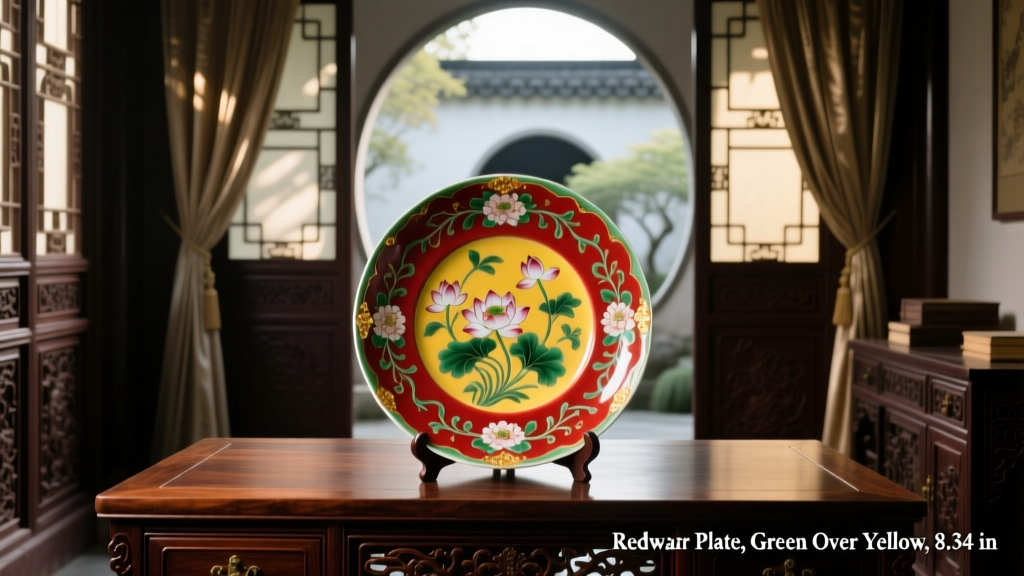
Redware Plate, Green Over Yellow: Identifying, Dating, and Preserving an 8¾-Inch American Folk Art Masterpiece

The Tiffany & Co. Snake Necklace in 18K Yellow Gold: History, Craftsmanship, and Collectibility