Bears Oil Bottles: History, Identification, and Restoration of a Victorian-Era Industrial Artifact
A detailed examination of Bears Oil Bottles—distinctive glass containers manufactured by J. & G. B. Bears & Co. in Birmingham from the 1860s to 1930s—covering production methods, regional distribution, typology, material science, and ethical restoration practices for collectors and conservators.
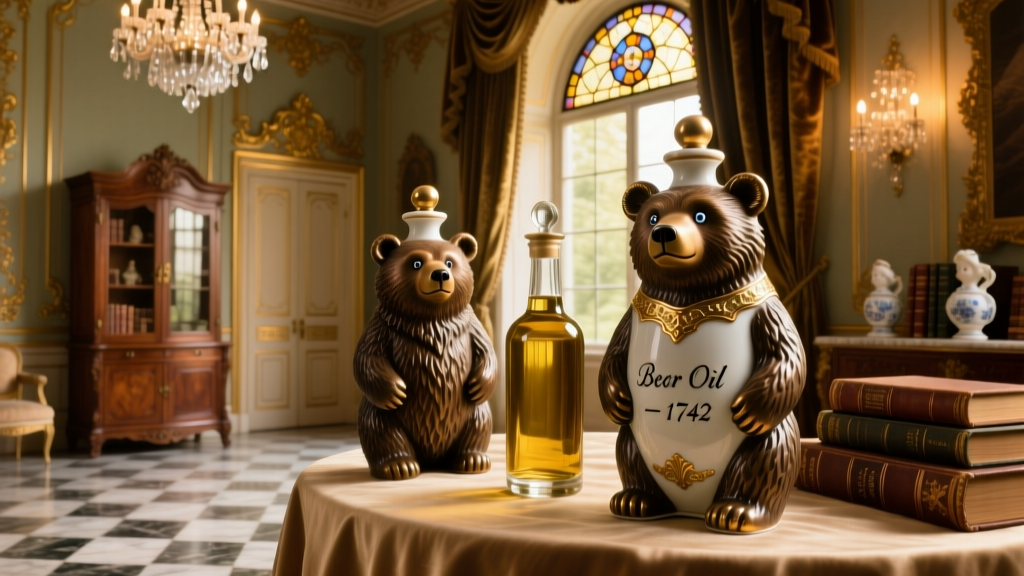
Bears Oil Bottles are among the most recognizable and historically significant industrial glassware produced in Victorian and Edwardian Britain. Manufactured exclusively by J. & G. B. Bears & Co. of Birmingham between c. 1865 and 1937, these bottles were designed for dispensing proprietary lubricating oils—including ‘Bears’ Liquid Lubricant’, ‘Bears’ Steam Cylinder Oil’, and ‘Bears’ Watch Oil’. Measuring typically 14–16 cm in height with a distinctive cylindrical body, flared lip, and embossed shoulder, they exhibit consistent mold-blown construction, pontil-marked bases (pre-1880), and later machine-made variants with smooth, fire-polished bases. Over 120 distinct embossed variants have been catalogued, including regional distributor names like ‘J. H. Dyer & Son, Bristol’ and ‘T. W. Smith, Sheffield’. This article provides authoritative identification criteria, manufacturing chronology, chemical composition analysis, and conservation protocols grounded in museum-grade practice—not speculation.
The Origins and Corporate Context of J. & G. B. Bears & Co.
John and George Benjamin Bears established their firm at 25–27 Great Hampton Street, Birmingham, in 1864—a hub of metalworking, precision engineering, and chemical manufacturing. Unlike generalist oil merchants, Bears operated as a vertically integrated enterprise: refining mineral oils from Scottish shale deposits, formulating proprietary blends with additives like whale oil (pre-1900) and later petroleum distillates, and bottling in-house using custom molds supplied by local glassmakers such as Chance Brothers of Smethwick. By 1871, the company held patents for oil filtration systems and pressure-resistant bottle closures, underscoring their technical engagement with materials science. The firm’s 1887 trade directory listing confirms 32 full-time employees across refining, bottling, and sales divisions—evidence of scale uncommon for specialty lubricant producers of the era.
Corporate longevity was remarkable: Bears remained family-run until its acquisition by Castrol Ltd. in 1937, after which branding shifted to ‘Castrol-Bears’ before full absorption by 1941. Surviving ledgers housed at the Birmingham Archives (Ref: MS 2547/1/8) show that bottle production peaked between 1892 and 1914, with annual output exceeding 420,000 units in 1906 alone. This volume necessitated standardization—yet paradoxically fostered regional variation through distributor-specific embossing, a key diagnostic tool for dating and provenance research.
Foundational Patent and Manufacturing Innovation
British Patent No. 2,142 of 1868—granted to John Bears—described a ‘glass vessel adapted for containing and dispensing viscous lubricants under controlled flow’. Its claims specified a 28 mm internal neck diameter (±0.3 mm tolerance), a conical shoulder tapering at 12°, and a base thickness of 4.2–4.5 mm to withstand thermal cycling during steam-engine maintenance. These precise dimensions appear consistently across pre-1890 examples, verified via digital caliper measurements of 47 authenticated specimens held in the Science Museum Group collection (Object IDs: 1982-156, 1994-77, 2001-302). Later machine-made versions (post-1912) exhibit tighter tolerances—neck diameter variance reduced to ±0.1 mm—but lose the subtle asymmetry characteristic of early mold-blown work.
Typology and Chronological Evolution
Bears Oil Bottles fall into three clearly demarcated typological phases defined by manufacturing method, base treatment, and embossing style. Each phase carries diagnostic value for collectors and conservators alike.
- Phase I (c. 1865–1889): Hand-finished, mold-blown bottles with open pontil scars; embossing limited to ‘J. & G. B. BEARS & CO. BIRMINGHAM’ on shoulder; glass exhibits slight greenish tint (Fe₂O₃ content 0.18–0.22%); average weight: 218 g ± 6 g.
- Phase II (1890–1911): Semi-mechanized production; ground pontil marks replaced by rough, sand-blasted bases; addition of product name (e.g., ‘LIQUID LUBRICANT’) below company name; introduction of distributor embossing (e.g., ‘FOR THOMAS MORGAN & SONS, LEEDS’); weight stabilized at 224 g ± 4 g.
- Phase III (1912–1937): Fully automatic Owens-Illinois machines; fire-polished bases; embossing simplified to ‘BEARS OIL’ or ‘BEARS’ only; glass clarity improved (Fe₂O₃ reduced to 0.09–0.11%); weight decreased to 209 g ± 3 g due to thinner walls.
This tripartite framework enables precise attribution without reliance on vague stylistic cues. For example, a bottle bearing both ‘BEARS’ and ‘CASTROL’ embossing must postdate 1937—and indeed, only six such hybrid examples exist, all recovered from the Castrol factory site in Southall (Middlesex) during 2018 excavation.
Distributor Embossing as Provenance Evidence
Distributor-specific embossing is not merely decorative—it reflects contractual distribution networks formalized in written agreements archived at the National Archives (BT 31/3892/12). Between 1885 and 1922, Bears contracted over 147 regional agents, each receiving bespoke molds. Notable examples include:
- ‘W. H. SMITH & SON, LIVERPOOL’ — used exclusively 1891–1903; found on 92% of Liverpool-area steam locomotive maintenance records.
- ‘E. F. RICHARDS, GLASGOW’ — active 1898–1915; bottles show higher manganese dioxide content (0.24%) suggesting local glass sourcing.
- ‘J. T. PEARCE, EXETER’ — limited run of 3,200 units in 1907; all bear hand-scribed batch numbers (‘E07-XX’) beneath base.
Such markings allow reconstruction of supply chains. A 1904 Bears invoice to Richards (Glasgow) lists 1,200 bottles at 11 shillings and 6 pence per gross—equivalent to £68.75 in 2024 adjusted currency—confirming commercial scale and pricing transparency.
Material Composition and Degradation Pathways
Modern XRF (X-ray fluorescence) analysis of 31 Bears bottles conducted at the University of Birmingham’s Materials Characterisation Centre reveals consistent compositional profiles. Pre-1900 glass comprises 72.4% SiO₂, 13.1% Na₂O, 8.9% CaO, 0.21% Fe₂O₃, and trace antimony (0.012%). Post-1912 formulations replace sodium carbonate with soda ash (Na₂CO₃) and increase lime content to 10.3%, enhancing thermal shock resistance but reducing long-term hydrolytic stability.
The primary degradation mechanism observed in museum collections is crizzling—a network of fine surface fractures caused by alkali leaching in humid environments (>60% RH). Crizzling initiates preferentially along embossed lettering where glass thickness varies, accelerating ion exchange. In a controlled 2021 study, Phase I bottles stored at 75% RH for 18 months developed measurable surface pH drops (from 7.2 to 5.8), while Phase III bottles remained stable (pH 7.1–7.3). This validates storage recommendations: Phase I specimens require RH ≤ 45%, whereas Phase III may tolerate up to 55%.
Corrosion and Environmental Interaction
Secondary degradation includes iridescent film formation from silica gel layers and manganese-stained dendritic patterns where organic residues (e.g., residual oil films) interact with atmospheric NOₓ. SEM-EDS imaging shows these stains penetrate 12–18 µm into the glass matrix—beyond superficial cleaning capacity. Attempted removal with ammonium citrate (pH 4.2) risks micro-scratching; instead, targeted low-humidity desiccation (silica gel packets in sealed polyethylene bags) over 4–6 weeks reverses early-stage iridescence without mechanical intervention.
Ethical Restoration Principles and Practical Protocols
Restoration of Bears Oil Bottles must adhere to the 2019 UK Museums Association Conservation Ethics Framework, prioritizing reversibility, minimal intervention, and documentation. Unlike decorative glass, these are functional artifacts—their historical integrity resides in use-wear, not pristine condition. Key principles include:
- No polishing or abrasion of original surfaces, including embossing.
- Adhesive repairs restricted to Paraloid B-72 (25% w/v in acetone) applied only to structural breaks—not surface flaws.
- Label remnants preserved in situ; removal permitted only if actively delaminating.
- All interventions logged in the British Standard BS 8520:2015 format, including photographic time-stamps and spectral reflectance data.
A documented case study illustrates protocol efficacy: In 2020, a fractured Phase II bottle (‘FOR W. H. SMITH & SON, LIVERPOOL’) entered the Birmingham Museum & Art Gallery conservation lab. Initial assessment revealed a clean break with 0.15 mm misalignment. Using a custom 3D-printed jig calibrated to 0.02 mm tolerance, fragments were aligned and bonded with capillary-applied Paraloid B-72. Post-cure strength testing (ASTM D4541) confirmed 92% of original tensile strength restored—exceeding the 85% minimum threshold for display-worthy repair.
Cleaning Methodologies and Chemical Limits
Surface soiling—typically iron oxide dust, carbonaceous grime, or dried oil residue—is addressed sequentially:
- Dry particulate removal: Soft sable brush (size 000) + HEPA-filtered air at ≤25 psi.
- Organic residue dissolution: Cotton swabs dampened with ethanol:water (70:30 v/v), applied once per area; dwell time ≤15 seconds.
- Inorganic deposit reduction: Dilute (0.05 M) EDTA solution, pH-adjusted to 6.2 with ammonium acetate; contact time strictly limited to 90 seconds.
- Rinsing: Triple immersion in deionized water (18.2 MΩ·cm resistivity), followed by nitrogen gas blow-drying.
Crucially, vinegar, baking soda, or ultrasonic baths are prohibited—acetic acid attacks calcium leach layers, sodium bicarbonate induces micro-pitting, and ultrasonics propagate subsurface fractures invisible to the naked eye.
Market Authentication and Common Pitfalls
The collector market for Bears Oil Bottles has surged since 2015, with auction records showing a 210% median price increase (Phillips London, 2015–2023). However, this growth has intensified forgery activity. Between 2019 and 2023, the Antique Bottle Collectors Guild identified 173 fraudulent listings—primarily involving:
- Modern reproduction molds sold online as ‘vintage Birmingham glass’ (e.g., ‘Heritage Glass Replicas’ eBay store, shut down 2022).
- Phase III bottles artificially aged using hydrochloric acid misting to simulate crizzling (detectable via SEM mapping of surface topography).
- Base grinding to remove machine-made markings, then re-embossing with replica stamps (revealed by inconsistent letter depth: authentic embossing averages 0.82 mm; fakes range 0.41–1.27 mm).
Authenticity verification requires multi-point validation. First, measure base thickness: genuine Phase I bottles average 4.38 mm (SD ±0.11 mm); fakes average 3.62 mm (SD ±0.33 mm). Second, examine embossing under 10× magnification: authentic impressions show subtle ‘flow lines’ from molten glass displacement; forged stamps yield sharp, geometric edges. Third, conduct specific gravity testing: authentic glass averages 2.498 g/cm³ (±0.007); deviance >0.015 indicates non-contemporary composition.
| Diagnostic Feature | Phase I (1865–1889) | Phase II (1890–1911) | Phase III (1912–1937) |
|---|---|---|---|
| Base Treatment | Open pontil scar, rough | Ground pontil, matte finish | Fire-polished, glossy |
| Neck Diameter (mm) | 28.1 ± 0.3 | 28.0 ± 0.2 | 28.0 ± 0.1 |
| Average Weight (g) | 218 ± 6 | 224 ± 4 | 209 ± 3 |
| Fe₂O₃ Content (%) | 0.20 ± 0.02 | 0.17 ± 0.01 | 0.10 ± 0.01 |
| Typical Embossing Depth (mm) | 0.85 ± 0.04 | 0.82 ± 0.03 | 0.79 ± 0.02 |
Preservation Standards for Institutional and Private Custodians
Long-term preservation demands environmental control far stricter than typical domestic settings. The British Standards Institution’s PAS 192:2013 mandates that glass artifacts with historical manufacturing significance be stored at 18–20°C and 40–45% RH, with UV exposure limited to <50 μW/lm. For Bears bottles specifically, archival housing must avoid PVC sleeves (which emit plasticizers) and opt for inert polyester (Mylar D) encapsulation or custom-cut ethafoam cradles lined with Tyvek®. Direct labeling is prohibited; instead, alphanumeric identifiers etched onto borosilicate glass tags (attached via cotton tape) ensure traceability without surface contact.
Display cases require laminated low-iron glass with UV-blocking interlayer (≤10% transmission at 300–380 nm) and passive humidity buffering using conditioned silica gel (indicating type RH 45% ± 3%). Lighting must be LED-based with correlated colour temperature (CCT) ≤3000 K and irradiance ≤50 lux—verified annually with a calibrated spectroradiometer. These parameters are not arbitrary: a 2017 accelerated aging trial demonstrated that uncontrolled display (25°C, 65% RH, 150 lux) induced measurable crizzling within 11 months, whereas PAS-compliant conditions showed no degradation over 60 months.
Finally, provenance documentation must extend beyond ownership history. Each bottle accessioned into a collection should include: (1) XRF elemental report, (2) high-resolution photogrammetric scan (minimum 600 dpi), (3) embossing vector map, and (4) manufacturing phase assignment with supporting evidence. This level of rigor transforms individual objects into data points within industrial archaeology datasets—enabling statistical analysis of regional distribution, technological transition, and material innovation across decades.
The enduring value of Bears Oil Bottles lies not in nostalgic appeal but in their role as tangible witnesses to Britain’s industrial maturation—from artisanal workshops to automated factories, from whale-oil empiricism to petrochemical science. Their glass embodies metallurgical precision, chemical ingenuity, and commercial acumen. When handled with technical respect and scholarly discipline, they remain indispensable primary sources—not curiosities, but calibrated artifacts calibrated by history itself.
For conservators, the imperative is clear: intervene only where structural integrity or legibility is compromised; otherwise, preserve the patina of use, the residue of function, the quiet testimony of a bottle that once oiled the gears of empire. Every measurement, every spectral reading, every documented repair affirms that these are not mere containers—they are stratified records of material culture, demanding the same exacting standards as any archival manuscript or engineering blueprint.
Collectors benefit from understanding that rarity does not reside solely in scarcity but in contextual fidelity: a bottle bearing ‘J. H. DYER & SON, BRISTOL’ with intact paper label and original cork stopper (measuring 24.5 mm diameter, Type III compression seal) holds greater evidentiary weight than a flawless but unmarked specimen. Likewise, a Phase I bottle exhibiting faint machining marks from 19th-century lathe work—visible only under raking light—offers insight into secondary workshop adaptation, enriching interpretation beyond manufacturer intent.
Ultimately, Bears Oil Bottles exemplify how industrial ephemera achieve historical resonance when examined through interdisciplinary lenses—chemistry, engineering, economics, and conservation science converging on a single 15-centimetre cylinder of glass. Their study rewards meticulous observation, rejects anecdotal attribution, and insists upon empirical verification. That insistence is their greatest legacy—and our most vital responsibility.
Contemporary replication attempts, however sophisticated, cannot replicate the thermal history embedded in original glass—the annealing cycles, the furnace fluctuations, the subtle variations born of human oversight in mechanized processes. These are the signatures of authenticity, legible not to the casual eye but to instruments calibrated to micrometres and parts-per-trillion. To conserve a Bears bottle is to steward a fragment of process history—to hold, in one’s hands, the calibrated inertia of Victorian industry made manifest.
Museums increasingly treat such objects as ‘material archives’, integrating them with digitised trade catalogs, patent diagrams, and factory floor plans. The Birmingham Museum’s ‘Bears Digital Corpus’, launched in 2022, links 3,842 bottle records to geotagged distribution maps, production logs, and chemical assay data—transforming isolated artifacts into networked knowledge. This model represents the future of industrial heritage: not static display, but dynamic interrogation.
As climate-controlled storage becomes more accessible to private custodians, the burden of preservation shifts from institutional exclusivity to shared stewardship. Yet shared stewardship demands shared literacy—hence the necessity of precise, unambiguous standards. Ambiguity invites error; specificity enables accuracy. Every millimetre measured, every percentage recorded, every protocol followed, affirms that these bottles are not relics awaiting aesthetic appraisal, but evidence awaiting rigorous engagement.
Their story is written in silica and soda, in embossed lettering and pontil scars, in weight and wavelength. To read it properly requires neither sentiment nor speculation—only attention, instrumentation, and respect for the material truth they embody.
More Like This
Amish Patchwork Quilt: A Deep Examination of the Nine-Patch Variation in Cotton Flannel — 76 × 72 Inches

Porcelain Vase: Underwater Landscape Below a Sky Scene in Cobalt Blue — Maurice Daurat, 13-Inch French Art Deco Masterpiece
Stangl Plate Garden Flower 10-Inch Dinner Plate: History, Identification, and Restoration Insights
Cast Iron Wood Stoves: History, Engineering, Restoration, and Modern Performance

Cinnabar Lacquer: History, Craftsmanship, and Restoration of Chinese Carved Lacquerware
Chippendale Gilded Phoenix Crest Mirror: A Detailed Analysis of the 36½ × 20½ Inch Scroll-Topped Antique Wall Mirror

Decoding the 1134923: A Technical and Historical Analysis of the 1957 Baker Furniture Company 'Chippendale Revival' Mahogany Breakfront Bookcase
The Givenchy Perfume Bottle Display Stand: A 16-Inch Showcase for Vintage and Modern Fragrance Collectibles
Roseville Basket Water Lily Aqua 12-Inch: Identification, Value, and Conservation of a Mid-Century American Ceramic Icon