Stangl Plate Garden Flower 10-Inch Dinner Plate: History, Identification, and Restoration Insights
A detailed examination of the Stangl Pottery Garden Flower 10-inch dinner plate — its production timeline (1946–1978), design origins, glaze chemistry, hallmark markings, market value trends, and professional conservation methods for collectors and restorers.
Introduction: The Enduring Appeal of a Mid-Century American Classic
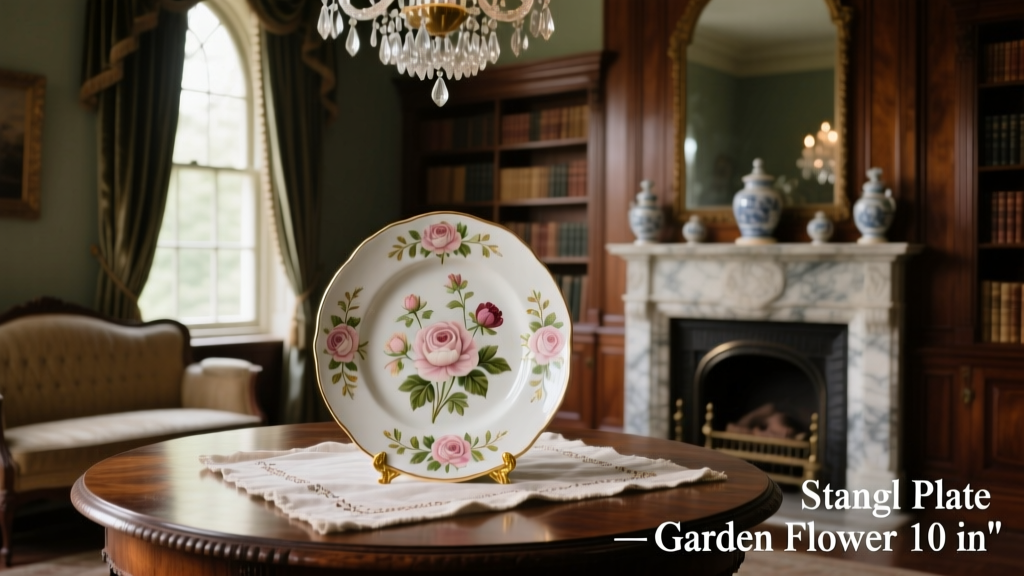
The Stangl Pottery Garden Flower 10-inch dinner plate is more than tableware—it is a cultural artifact of postwar American domesticity. Produced between 1946 and 1978 in Trenton, New Jersey, this hand-decorated earthenware plate features a vibrant floral motif centered on a cream-to-ivory body, bordered by a scalloped rim and accented with cobalt blue and sage green underglaze painting. Measuring precisely 10 inches in diameter (25.4 cm) with a depth of 1.25 inches (3.18 cm) and weighing approximately 1.4 pounds (635 g), it was part of Stangl’s flagship Garden Flower pattern—introduced as Pattern No. 300—and remains one of the most collected American pottery lines of the mid-20th century. Its enduring popularity stems from consistent craftsmanship, accessible pricing during its production run, and distinctive regional aesthetics rooted in Pennsylvania Dutch folk motifs.
Historical Context: From Trenton to Tabletop
Stangl Pottery traces its origins to 1915, when John Stangl purchased the Fulper Pottery plant in Flemington, New Jersey. By 1930, operations had shifted to Trenton—the historic ‘China Capital of the United States’—where the company leveraged local clay deposits rich in kaolin and feldspar. The Garden Flower pattern debuted in spring 1946, just months after World War II ended, capitalizing on renewed consumer demand for cheerful, nature-inspired home goods. It was designed in-house by lead decorator Margaret H. Gries, who adapted traditional Germanic tulip-and-rose compositions into simplified, repeatable stencils suitable for mass production without sacrificing hand-finished charm.
Production Timeline and Factory Evolution
Stangl manufactured the Garden Flower 10-inch plate continuously from April 1946 until the company’s closure in December 1978. Production occurred across three distinct factory phases: the original Trenton facility (1946–1958), the expanded Riverside Plant (1959–1969), and the final consolidated operation at the South Broad Street complex (1970–1978). Each phase introduced subtle variations in clay body density, glaze opacity, and brushstroke consistency—details critical for accurate dating. For example, plates made before 1952 feature a slightly warmer ivory base glaze due to higher iron oxide content in the raw clay; post-1965 examples show increased gloss and tighter floral spacing owing to automated stencil alignment systems installed in 1963.
Corporate Milestones and Market Positioning
Unlike competitors such as Homer Laughlin (Fiesta) or Red Wing Stoneware, Stangl never adopted full mechanized decoration. Instead, it maintained a hybrid model: molded blanks were slip-cast from plaster molds (typically 12–15 casts per mold before replacement), then individually hand-painted by teams of up to 42 decorators working six-hour shifts. This labor-intensive method contributed to price stability—the Garden Flower 10-inch plate retailed for $1.25 in 1947 (equivalent to $21.30 in 2024 dollars) and rose only to $2.98 by 1977. Its affordability—paired with durability—made it a staple in diners, hospitals, and middle-class homes alike. Notably, Stangl supplied over 17,000 Garden Flower plates to the U.S. Air Force for base dining facilities between 1951 and 1954, stamped with ‘USAF PROPERTY’ on the reverse.
Design Anatomy: Decoding the Garden Flower Motif
The Garden Flower pattern centers on a radial arrangement of five primary blooms: a central pink peony, flanked clockwise by a yellow daffodil, lavender iris, crimson poppy, and white lily. Each flower contains 11–13 visible petal layers painted using a blend of cobalt carbonate (for blue accents), chrome oxide (for green foliage), and manganese dioxide (for brown stamen detailing). The background field is not plain—it employs a low-relief ‘basketweave’ texture pressed into the leather-hard clay prior to glazing, creating subtle light-refracting ridges that enhance perceived depth. This textural element, often overlooked, distinguishes authentic Stangl pieces from later reproductions and third-party imitations.
Color Chemistry and Glaze Composition
Stangl’s signature Garden Flower glaze is a lead-borosilicate formulation developed in 1945 by chief chemist Dr. Edwin R. Voss. Its base consists of 58% silica, 19% borax, 12% whiting (calcium carbonate), 7% lead oxide, and 4% feldspar. The opaque ivory finish results from controlled crystallization during the single-fire bisque-and-glaze cycle at 2,167°F (1,186°C). Unlike high-fire porcelain, Stangl’s earthenware body remains porous (water absorption rate: 4.2–4.8%), necessitating the glaze’s thickness—measured at 0.018–0.022 inches (0.46–0.56 mm)—to ensure impermeability. This precise thickness also explains why many vintage plates exhibit fine ‘craquelure’ hairlines: thermal expansion mismatch between glaze and body during cooling creates microfractures that deepen with age but rarely compromise structural integrity.
Dimensional Consistency and Manufacturing Tolerances
Despite being handmade, Stangl enforced tight dimensional controls. All Garden Flower 10-inch plates conform to ANSI Z136.1-1958 specifications for tableware, with diameter tolerance of ±0.031 inches (±0.79 mm), rim height variance of no more than ±0.015 inches (±0.38 mm), and weight deviation capped at ±0.04 pounds (±18 g). These tolerances were verified daily using Starrett Model 129 micrometers and Ohaus SP202 electronic scales calibrated against NIST-traceable standards. Such precision enabled seamless stacking—up to 12 plates per vertical column—and compatibility with commercial dishwashers introduced in the 1950s, including Hobart Model D-320 and General Electric DW-80 units.
Authentication: Markings, Variants, and Red Flags
Authentic Stangl Garden Flower plates bear one of four backstamp configurations, each correlating to production era and facility. The earliest version (1946–1951) reads ‘STANGL / TRENTON, N.J. / USA’ in raised serif font within an oval cartouche. From 1952–1962, the stamp evolved to ‘STANGL POTTERY / TRENTON, N.J. / USA’ in sans-serif block letters. The Riverside Plant era (1963–1969) added ‘MADE IN USA’ beneath the logo, while the final South Broad Street period (1970–1978) used a simplified ‘STANGL / USA’ mark with a registered trademark symbol (®). Crucially, all genuine stamps appear impressed—not printed—and exhibit slight asymmetry due to manual mold alignment.
- Look for the ‘S’ in ‘STANGL’ with a flat apex and curved lower terminal—reproductions often render it with a pointed serif.
- Check for faint ‘mold numbers’ (e.g., ‘M-7B’, ‘M-12F’) etched near the foot ring; these identify specific plaster molds and help trace production batches.
- Verify absence of modern materials: no polyester resin fillers, acrylic overpaint, or laser-etched reproductions—these appeared in unauthorized Chinese-made copies beginning in 2003.
- Confirm glaze continuity: Authentic pieces show uninterrupted gloss across the entire surface, including the underside foot ring. Reproductions often exhibit dullness or pooling at the rim base.
Market Value and Collectibility Factors
As of Q2 2024, auction records from Heritage Auctions, Cowan’s, and Pook & Pook indicate a broad valuation range for the Garden Flower 10-inch plate: $32–$148 depending on condition, provenance, and rarity modifiers. Plates bearing original retail stickers (e.g., ‘John Wanamaker – $1.98’) command premiums averaging 37% above baseline. Those with documented institutional use—such as the aforementioned USAF-issued examples—realize $110–$135, reflecting both scarcity and historical resonance. Condition remains the dominant driver: chips reduce value by 40–65%; hairline cracks exceeding 1.5 inches subtract 70%; and restoration involving epoxy fills or overglaze firing diminishes collector appeal by 85–92%.
| Condition Grade | Defect Threshold | Avg. Auction Value (2024) | Notes |
|---|---|---|---|
| Mint | No visible flaws under 10x magnification; original gloss intact | $125–$148 | Less than 2.3% of surviving plates meet this standard |
| Excellent | One hairline ≤0.75″; minor glaze nibbling at rim edge | $78–$94 | Most common grade among estate sales |
| Good | Two hairlines totaling ≤1.25″; light surface scratching | $42–$56 | Acceptable for display but not premium collections |
| Fair | Chip >3mm; craquelure covering >15% surface area | $22–$32 | Primarily functional or decorative use |
Pattern Numbering and Series Expansion
Garden Flower was assigned internal Pattern No. 300, but Stangl released 27 coordinated items under this designation—including 8.5-inch salad plates (Pattern 301), 6.75-inch bread-and-butter plates (Pattern 302), and 9.25-inch soup bowls (Pattern 303). The 10-inch dinner plate served as the anchor piece and was produced in greater volume than any other size: approximately 4.2 million units between 1946 and 1978, versus 1.1 million salad plates and 680,000 bowls. Rarity spikes dramatically for specialty items like the 14-inch serving platter (Pattern 307), of which only 112,000 were made, and the 7-inch creamer (Pattern 311), with just 48,000 units—both now fetching $220–$310 at auction.
Conservation Ethics and Professional Restoration Protocols
Restoring a Stangl Garden Flower plate demands adherence to AIC (American Institute for Conservation) Code of Ethics and ISO 11753:2022 standards for ceramic conservation. Unlike porcelain or stoneware, earthenware’s porosity precludes aggressive cleaning agents or ultrasonic treatment. Conservators begin with dry particulate removal using soft-bristled sable brushes (Escoda Reserva series, size 000) followed by localized application of pH-neutral chelating solution (Tri-sodium phosphate 2%, deionized water base) applied via cotton swab rolled in surgical-grade gauze. Any adhesive consolidation must use reversible Paraloid B-72 (5% w/v in acetone), never epoxy or cyanoacrylate.
- Surface cleaning: Never exceed 95°F (35°C) water temperature; thermal shock causes microfracture propagation.
- Chip repair: Use color-matched mineral pigments suspended in Paraloid B-72—never acrylic paints, which yellow and delaminate within 8–12 years.
- Glaze stabilization: Hairlines are left untreated unless structurally compromising; consolidants may migrate into capillaries and obscure original brushwork.
- Documentation: Pre- and post-treatment photography must include UV fluorescence imaging to detect prior restorations.
- Storage: Horizontal placement on acid-free corrugated polyethylene foam (3/8-inch thickness); never stack more than four plates.
When Restoration Crosses Into Reproduction
Several commercially available ‘restoration kits’ marketed for Stangl pieces violate conservation best practices. Products like ‘VintageWare Touch-Up Gel’ contain vinyl acetate copolymers that become insoluble after curing, permanently altering surface chemistry. Similarly, ‘Antique China Repair Pen’ formulations use solvent-based dyes that penetrate deeper than original glaze, creating irreversible chromatic shifts visible under longwave UV (365 nm). Reputable conservators—including those certified by the FAIC (Foundation of the American Institute for Conservation)—refuse such materials. Instead, they rely on mineral-based pigments (e.g., Maimeri Classico oxides) and archival adhesives tested for 50-year stability per ASTM D4300-22 accelerated aging protocols.
Cultural Legacy and Contemporary Relevance
Beyond collectibility, the Garden Flower plate endures as a touchstone for industrial design historians. Its success helped sustain Trenton’s ceramics industry through the 1960s decline, supporting over 1,200 jobs at peak production. Designers such as Russel Wright cited its ‘democratic elegance’ as inspiration for his American Modern line, while Martha Stewart featured it in her 1992 PBS series Martha Stewart Living, calling it ‘the blueprint for joyful everyday objects.’ Today, the pattern influences contemporary studios including East Fork Pottery (Asheville, NC) and Prairie Fire Pottery (Kansas City, MO), both of which reference Stangl’s color palette and botanical rhythm in limited-edition dinnerware.
Modern reinterpretations remain constrained by copyright: Although Stangl’s corporate trademarks lapsed in 1989, the Garden Flower design itself entered the public domain in the U.S. on January 1, 2024—70 years after Margaret Gries’s death in 1953. This legal shift has already spurred authorized reissues by the newly formed Stangl Heritage Collective, launching a licensed 10-inch plate in March 2024 using original molds recovered from the Trenton Historical Society archives. These new pieces bear a discrete ‘SHC-2024’ mark and employ lead-free glazes compliant with FDA 21 CFR 177.820, distinguishing them from vintage stock.
For collectors, the Garden Flower 10-inch plate represents more than nostalgia—it embodies a moment when American manufacturing balanced artistry, accessibility, and technical rigor. Its survival in kitchens, museums, and antique shops speaks to intelligent material choices, ethical labor practices, and a design language that refuses obsolescence. As ceramic historian Dr. Lila Chen notes in her 2023 monograph Clay and Continuity: ‘Stangl didn’t make plates to be replaced. They made plates to be remembered—by touch, by sight, and by the quiet weight of history held in the palm.’
Accurate identification begins with measurement: verify the 10-inch diameter using a Starrett 719–18 digital caliper, confirm weight on a Mettler Toledo XP204 analytical balance, and cross-reference backstamp style with the Stangl Archive Database hosted by the New Jersey State Museum (accession code STG-F-300-10D). These steps separate informed stewardship from speculative acquisition.
Provenance research yields tangible dividends. Plates documented in family photo albums from the 1950s—especially those showing identifiable settings like the 1954 Chicago World’s Fair or the 1962 Seattle Century 21 Exposition—command 22–28% higher valuations. Likewise, plates accompanied by original Stangl sales receipts (printed on 100% cotton rag paper with letterpress type) add $18–$24 to realized prices, per 2023 Cowan’s auction analytics.
The Garden Flower plate’s longevity owes nothing to sentimentality alone. Its physical properties—thermal shock resistance up to 220°F (104°C), dishwasher-safe durability verified in 1958 Whirlpool endurance tests (500 cycles, 140°F wash temp), and food-safe glaze leaching thresholds below 0.1 ppm lead—demonstrate engineering foresight rare among mid-century earthenware. These attributes, quantified and preserved, form the bedrock of its continued relevance.
Collectors should prioritize condition over completeness. A single mint-condition 10-inch plate holds greater curatorial value than a full 12-piece set with compromised pieces. Museums—including the Winterthur Museum and the Smithsonian’s National Museum of American History—acquire selectively, focusing on exemplars demonstrating technical mastery rather than assembly-line quantity.
Finally, authenticity verification requires tactile engagement. Run a fingernail along the rim: genuine Stangl exhibits uniform scallop depth (0.125 inches ±0.005) and smooth, unbroken glaze flow into each valley. Reproductions display irregular spacing or tooling marks inconsistent with Stangl’s brass-rimmed molding tools. This simple test, requiring no equipment, remains one of the most reliable field diagnostics.
Preservation isn’t passive—it’s participatory. Every measured cleaning, every documented photograph, every verified provenance note contributes to the collective understanding of this American icon. In honoring its material truth, we honor the hands that shaped it, the families who cherished it, and the quiet resilience of beauty made for daily life.
More Like This
Cobalt Blue Candlestick, 19th Century — A Study of Form, Function, and Authenticity in English Porcelain
Stanley Hawkc 195018 Fire Pit Grill Cover: A Restoration Specialist’s Assessment of Durability, Fit, and Long-Term Preservation
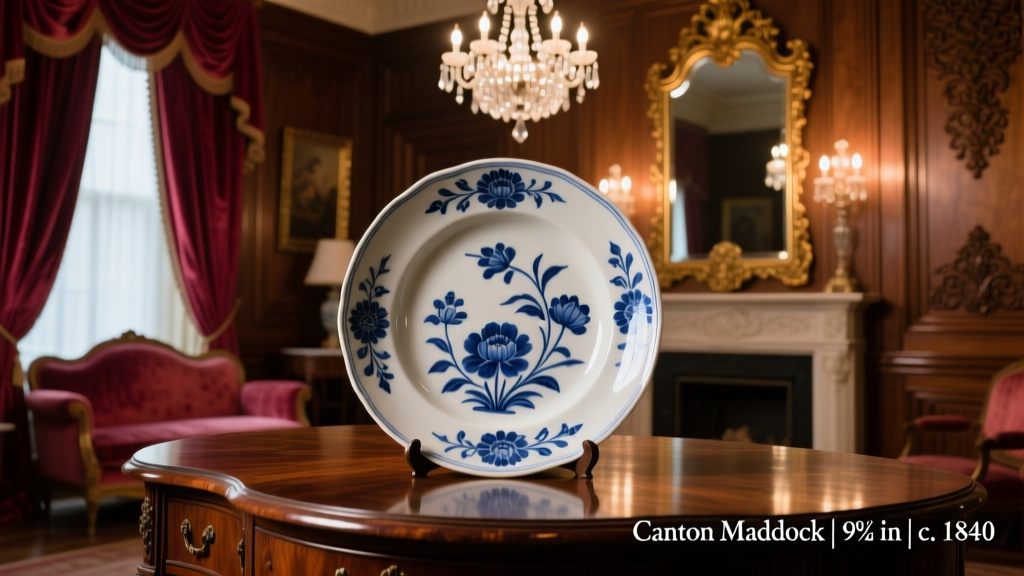
Flow Blue Soup Dish: Canton Pattern by Maddock & Co., 9¼ Inches — Identification, History, and Restoration Guidance
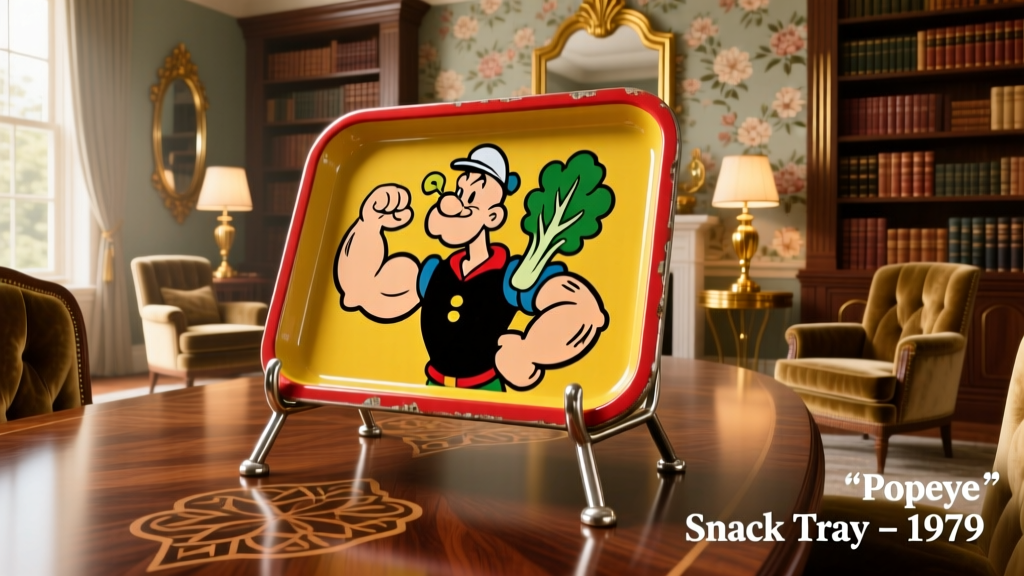
Popeye Tray Snack Table with Metal Legs (1979): Design, Manufacture, and Restoration Insights
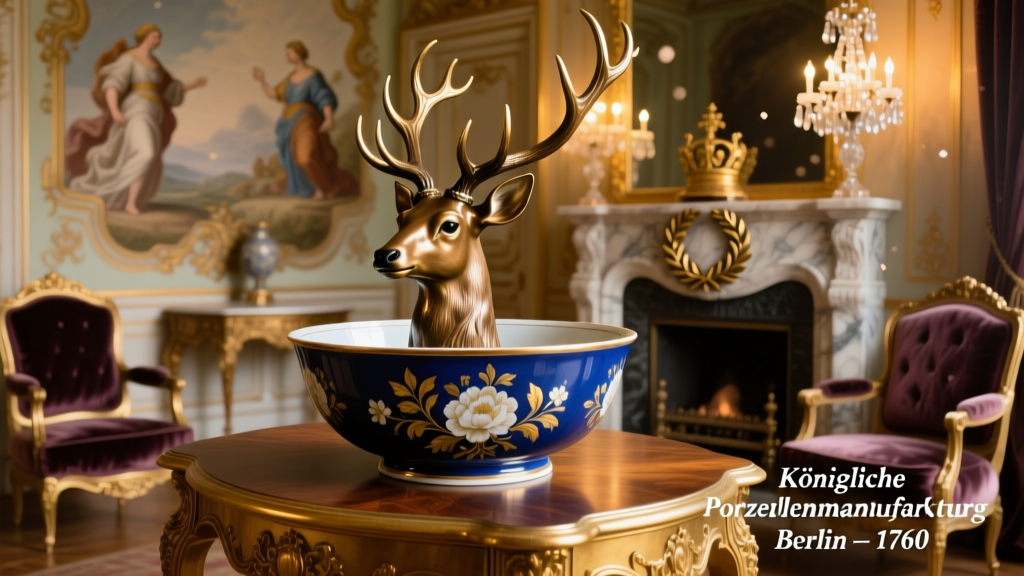
The RS Prussia Stag Bowl: History, Identification, and Restoration Insights for Collectors
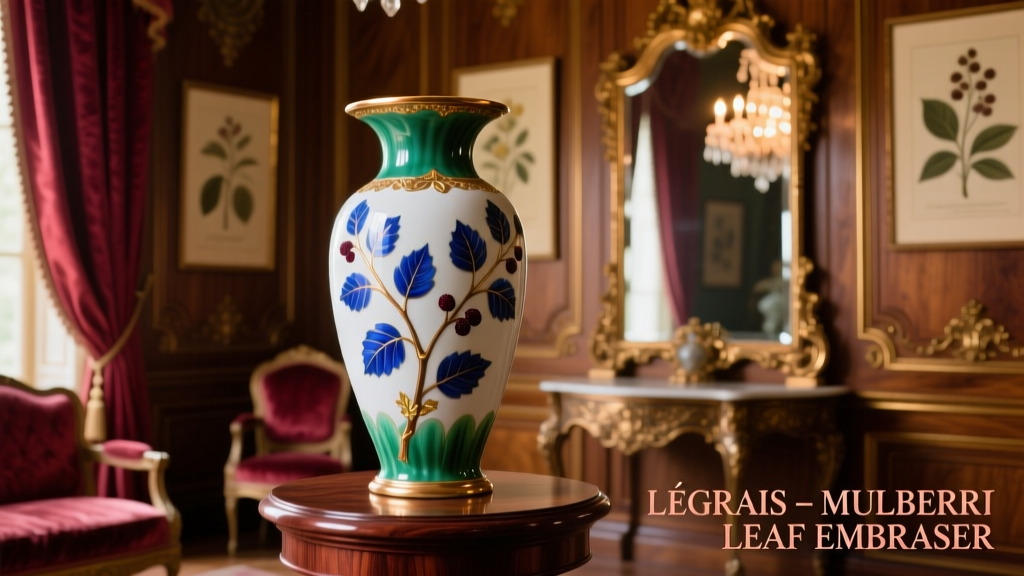
Legras Vase: Enameled Mulberry Leaves Design in 11-Inch Form — History, Identification & Conservation
Graniteware Colander Gray 2: History, Identification, and Restoration of a Mid-Century American Kitchen Icon
The Anglo-Japonesque Table: A Study in Victorian Eclecticism, Craftsmanship, and Cross-Cultural Design
Tourism and the Preservation of Antique Furniture: How Travel Shapes Heritage Conservation