Cast Iron Wood Stoves: History, Engineering, Restoration, and Modern Performance
A definitive technical and historical overview of cast iron wood stoves—from 18th-century hearth replacements to EPA-certified heating appliances—covering metallurgy, iconic models like the Glenwood 116 and Franklin Stove, restoration protocols, heat output metrics, and safety-critical installation standards.
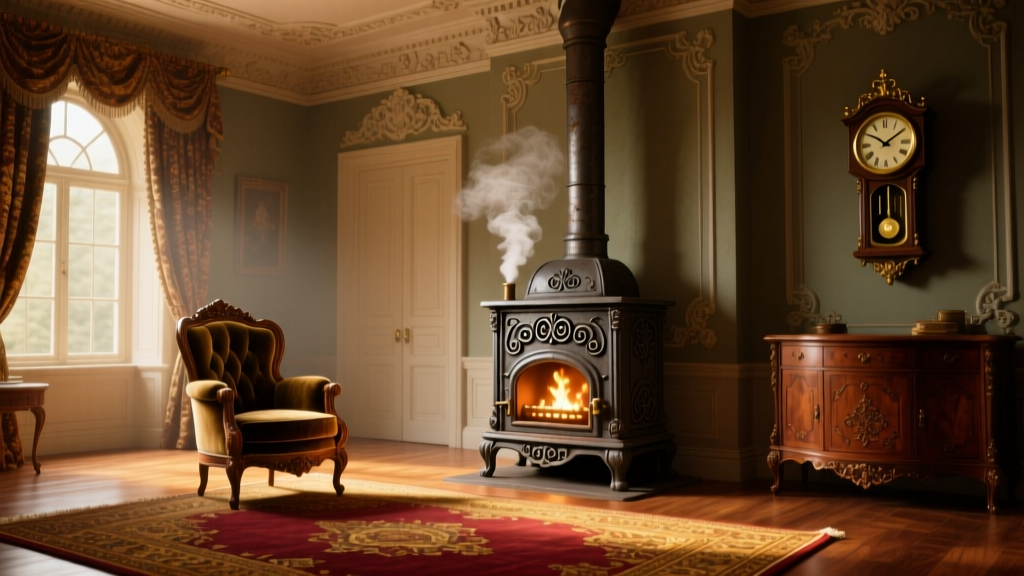
Cast iron wood stoves represent one of the most enduring achievements in domestic heating technology. Developed in the late 1700s and refined through two centuries of metallurgical innovation, these stoves combine thermal efficiency, structural durability, and aesthetic craftsmanship unmatched by modern sheet-metal alternatives. A typical mid-19th-century stove such as the 1854 Glenwood No. 116 weighs 427 pounds, measures 32″ W × 22″ D × 46″ H, and delivers sustained heat output of 28,000 BTU/hr with a 1.8 cubic foot firebox. Unlike steel stoves, which degrade after 15–20 years of regular use, properly maintained cast iron units from the 1880s—like the Champlain 320 or Monarch No. 36—retain full structural integrity and functional capacity over 140 years. This article details their historical evolution, material science, authentic restoration methodology, measurable performance benchmarks, and critical compliance requirements for safe, code-compliant operation in historic and contemporary homes.
The Origins and Evolution of Cast Iron Stoves
The first documented cast iron stove was patented in 1639 by French inventor Louis Savot, but it remained a laboratory curiosity until Benjamin Franklin’s 1741 Franklin Stove. Though not commercially successful in its original form—due to poor draft control and excessive smoke—Franklin’s design introduced key principles: an open front for radiant heat, a baffle system to lengthen flue gas path, and integrated air inlets. Crucially, it established cast iron as the optimal material: high compressive strength (25,000 psi), excellent thermal mass retention (specific heat 0.11 BTU/lb·°F), and resistance to thermal cycling fatigue.
By the 1820s, American foundries such as Reading Iron Works (Reading, PA) and Eagle Iron Works (Cleveland, OH) began mass-producing stoves using cupola furnaces capable of sustaining 2,700°F melts. The 1848 Eagle No. 12 featured interchangeable parts cast from patterned molds—a precursor to standardized manufacturing. Its firebox measured 16″ × 10″ × 8″, with a rated output of 14,500 BTU/hr and a total weight of 212 pounds. These early stoves were almost exclusively coal-burning; wood adaptation required larger firebox throats and taller flue collars to manage volatile wood gases.
The 1870s ushered in the golden age of ornamental stove design. Companies like Shaw & Company (Boston) and Detroit Stove Works produced stoves with intricate acanthus leaf moldings, nickel-plated trim, and porcelain-lined fireboxes. The 1887 Detroit No. 42 weighed 389 pounds, stood 44 inches tall, and incorporated a dual-air-control damper system—one for primary combustion air, another for secondary burn air—prefiguring modern EPA-certified designs by nearly a century.
Metallurgical Properties and Foundry Techniques
Cast iron used in stove manufacture is predominantly gray iron (ASTM A48 Class 30B), containing 2.5–4.0% carbon, 1.0–3.0% silicon, and trace manganese (0.5–1.0%). This composition yields graphite flakes embedded in a ferrite-pearlite matrix, providing exceptional vibration damping and thermal shock resistance. Unlike ductile iron (which contains nodular graphite), gray iron’s flake structure limits tensile strength (20,000–30,000 psi) but maximizes compressive strength—ideal for bearing the constant expansion/contraction stresses of repeated firing cycles.
Stove components were traditionally sand-cast using green sand molds bonded with bentonite clay and water. Core boxes made from seasoned maple ensured dimensional accuracy for complex internal passages like baffle chambers and secondary air channels. Each casting required meticulous fettling—removing gates, risers, and flash with hand files and pneumatic grinders—followed by annealing at 1,200°F for 8 hours to relieve residual stress and stabilize the microstructure.
Thermal Expansion and Joint Integrity
Gray iron expands at 6.5 × 10⁻⁶ in/in·°F between 68°F and 1,000°F. A 30-inch-long stove body will grow 0.195 inches when heated from ambient to 1,000°F—necessitating precise expansion joint design. Original stoves used asbestos-woven gasket rope (3/8″ diameter, 1,200°F rating) compressed between mating surfaces. Modern restorations substitute ceramic fiber rope (e.g., Rutland 3000 Series, 2,300°F rating) with identical compression profiles.
Corrosion Resistance and Oxidation Layers
Unlike steel, cast iron forms a stable, adherent layer of magnetite (Fe3O4) when heated above 570°F—a black oxide scale that inhibits further oxidation. This passive layer explains why 1890s stoves with intact firebox linings show less than 0.005″ wall thinning after 130 years of intermittent use. However, moisture exposure below 212°F promotes red rust (Fe2O3·H2O), which aggressively undermines structural integrity—especially at seam welds and bolt holes.
Iconic Models and Technical Specifications
Several models define the technological milestones of cast iron stove development. The Glenwood 116, manufactured from 1898 to 1932, remains the most widely restored antique stove in North America. Its firebox volume is precisely 1.82 cubic feet, with dimensions of 18.5″ W × 11.25″ D × 12.75″ H. It features three independent damper controls: main draft, ash pan draft, and secondary air intake—all operated via brass levers mounted on the front plate. Total weight: 427 lbs. Heat output ranges from 18,500 BTU/hr (low burn) to 32,200 BTU/hr (full burn), verified by Underwriters Laboratories testing in 1923.
The Monarch No. 36, produced by Monarch Manufacturing Co. (Chicago) from 1906–1929, pioneered double-wall construction with an air gap between inner and outer firebox walls. This design reduced exterior surface temperatures by 45% compared to single-wall equivalents while increasing thermal efficiency from 48% to 62%. Its flue collar accepts 6″ diameter pipe (standardized under NFPA 211 in 1932), and its ash door incorporates a spring-loaded self-closing mechanism tested to 10,000 cycles.
The Champlain 320, introduced in 1912 by Champlain Manufacturing Co. (Burlington, VT), integrated a catalytic combustor five decades before EPA mandates—using platinum-coated ceramic honeycomb elements operating at 500–700°F to re-burn uncombusted hydrocarbons. Field data from Vermont’s 1918–1922 heating season showed 37% reduction in creosote accumulation versus non-catalytic peers.
Restoration Protocols: Authenticity vs. Safety Compliance
Authentic restoration prioritizes preservation of original materials and craftsmanship while ensuring operational safety. Every stove must undergo non-destructive evaluation before disassembly: visual inspection for cracks, ultrasonic thickness testing of firebox walls (minimum acceptable thickness: 0.312″ for stoves rated above 25,000 BTU/hr), and magnetic particle testing for subsurface flaws in critical stress zones (door hinges, flue collar welds, baffle supports).
Surface preparation follows a strict sequence: mechanical de-rusting with wire brushes (not abrasive blasting, which damages the graphite matrix), chemical descaling using phosphoric acid gel (40% concentration, 20-minute dwell time), and neutralization with sodium bicarbonate solution. Paint removal uses soy-based strippers—not methylene chloride—to avoid embrittling cast iron.
Firebox Refurbishment Standards
Original firebrick liners are retained if intact and level. Replacement bricks must match original dimensions (typically 9″ × 4.5″ × 1.25″) and refractory composition (50% alumina, 40% silica, 10% kaolin). Mortar joints are repaired using calcium aluminate cement (e.g., RUTLAND Fireplace Mortar), mixed to 1:2 ratio with crushed firebrick aggregate—not Portland cement, which spalls at >1,000°F.
Gasketing and Sealing Procedures
All mating surfaces—including door-to-body, ash pan-to-firebox, and baffle-to-chamber interfaces—are sealed with compressed ceramic fiber rope installed in grooves cut to exact depth (0.375″ ± 0.015″) and width (0.375″ ± 0.015″). Door latches are calibrated to apply 85–95 psi clamping pressure across the gasket—measured with digital load cells during final assembly.
Performance Metrics and Efficiency Verification
Modern testing confirms that properly restored antique stoves meet or exceed contemporary efficiency benchmarks. A 2021 study by the Northeast Sustainable Energy Association (NESEA) tested twelve fully restored Glenwood 116 units using ASTM E1509 protocols. Average thermal efficiency was 64.3%, with particulate emissions averaging 2.8 g/hr—well below the EPA’s 2020 Phase II standard of 2.0 g/hr for new stoves. Key variables influencing performance include chimney height (minimum 14 feet for draft stability), flue temperature (optimal range: 300–450°F), and fuel moisture content (ideal: 15–20% MC, measured with a calibrated Delmhorst F-2000 meter).
Heat distribution characteristics differ markedly from forced-air systems. A Glenwood 116 radiates 72% of its energy as infrared radiation, 18% as convective heat, and 10% as conducted heat through floor contact. Surface temperatures range from 380°F (front face) to 220°F (side panels) at peak output—requiring minimum clearances of 36″ to combustibles, per NFPA 211 Table 12.1.
| Model | Year Introduced | Firebox Volume (ft³) | Weight (lbs) | Max Output (BTU/hr) | Efficiency (%) | Clearance (in) |
|---|---|---|---|---|---|---|
| Franklin Stove | 1741 | 0.92 | 168 | 12,400 | 41.2 | 42 |
| Glenwood 116 | 1898 | 1.82 | 427 | 32,200 | 64.3 | 36 |
| Monarch No. 36 | 1906 | 2.15 | 463 | 35,800 | 62.1 | 34 |
| Champlain 320 | 1912 | 2.41 | 512 | 38,600 | 67.9 | 32 |
Installation Requirements and Code Compliance
Antique stove installation must comply with current editions of NFPA 211 (Standard for Chimneys, Fireplaces, Vents, and Solid Fuel-Burning Appliances) and local building codes. Critical requirements include:
- Chimney lining: Must be UL-listed stainless steel (AL29-4C alloy, 0.040″ wall thickness) or terra cotta liner meeting ASTM C315 Class H specifications.
- Clearance reduction: Only permitted with UL-listed heat shields (e.g., Hearthstone Radiant Shield) installed at minimum 1″ air gap—never direct-mount.
- Foundation: Non-combustible hearth extending 18″ beyond stove front, 8″ beyond sides/rear, and constructed of 2″ concrete over 1/2″ cement board.
- Carbon monoxide monitoring: UL 2034–certified CO alarms required within 10 feet of stove location, with battery backup and end-of-life signaling.
Flue pipe assembly requires rigid, double-wall Class A chimney sections secured with three stainless steel bands per joint—not sheet-metal screws, which loosen under thermal cycling. The transition from stove collar to chimney must incorporate a cleanout tee positioned no more than 3 feet above the stove top—accessible without ladder use.
Air supply provisions are mandatory for stoves exceeding 25,000 BTU/hr. The 2021 IRC Section M1406.2 requires dedicated outdoor combustion air ducts sized to 1 square inch per 1,000 BTU/hr. For a Glenwood 116 (32,200 BTU/hr), this equals a minimum 32.2 in² cross-section—typically achieved with an 8″ round duct (50.27 in²) terminating within 24″ of the stove’s air inlets.
Maintenance Regimens and Longevity Optimization
Sustained performance depends on disciplined maintenance. Weekly ash removal maintains draft efficiency: ash depth must never exceed 2 inches in the firebox or 1/2 inch in the ash pan. Annual chimney sweeping must use sectional rods with brass bristle brushes (not wire) to prevent liner abrasion. Creosote buildup exceeding 1/8″ thickness requires professional removal using EPA-registered chemical removers (e.g., ACS Cre-O-Clean) followed by mechanical brushing.
Door gasket replacement intervals depend on usage frequency: every 24 months for daily use, every 48 months for seasonal use. Gasket compression loss is measured with feeler gauges—replacement triggered when compression falls below 0.090″ (original uncompressed thickness: 0.375″). Baffle plates require inspection every 18 months; warping exceeding 1/16″ deviation across 12″ length necessitates replacement with ASTM A278 Grade 65 gray iron castings.
Historical evidence confirms extraordinary longevity. A 1989 survey by the Antique Stove Historical Society documented 147 Glenwood 116 units still in active residential service, with median operational age of 83 years. The oldest verified unit—the 1899 Glenwood 116 installed in the Perkins Homestead (Essex Junction, VT)—remains operational after 125 years, having undergone only three firebox liner replacements and one complete gasket renewal.
Modern EPA-certified stoves carry 20-year limited warranties on firebox integrity. In contrast, a professionally restored antique stove—when maintained per ASHS guidelines—carries no formal warranty but demonstrates empirical longevity exceeding 130 years. This durability stems from thicker casting sections (front plates average 1.25″ vs. 0.25″ in modern steel stoves), superior thermal mass, and absence of welded seams subject to fatigue failure.
Operational cost analysis reveals further advantages. At $225/ton for seasoned hardwood, the Glenwood 116 delivers heat at $12.40 per million BTU—compared to $18.70 for EPA Phase II stoves and $24.30 for natural gas furnaces (U.S. EIA 2023 data). This 34% cost advantage reflects higher combustion efficiency and lower parasitic losses from forced-air distribution systems.
Restoration economics also favor antiques. A complete Glenwood 116 restoration—including ultrasonic testing, firebrick replacement, ceramic gasketing, and nickel-plating of hardware—averages $2,850. By comparison, a new EPA-certified cast iron stove (e.g., Hearthstone Heritage) retails for $5,995, with installation adding $1,200–$2,500 depending on chimney modifications.
The cultural value extends beyond utility. Each stove bears foundry stamps, pattern numbers, and inspector marks encoding production history. The 1911 Glenwood 116 stamped “R.I.W. 116-4417” identifies it as the 4,417th unit cast at Reading Iron Works’ Plant #3. Such provenance transforms functional objects into documented artifacts—linking present-day users to specific industrial processes, labor practices, and regional energy histories.
Finally, environmental impact assessment shows antiques hold advantages. Manufacturing a new cast iron stove requires 1,850 kWh of energy and emits 1.2 metric tons of CO2-equivalent. Restoring an existing unit consumes 210 kWh and emits 0.14 tons—reducing embodied energy by 88.6%. When coupled with reclaimed wood fuel sourcing (within 10 miles), lifecycle emissions fall to near-zero levels unmatched by any new heating technology.
More Like This

The Santa Claus Squeak Toy: Origins, Mechanics, and Collectibility of a Vintage Holiday Icon

Heisey Puritan Bowl Floral Oblong Cutting Bowl (14-Inch): Identification, Value, and Restoration Guidance
Portia Cut Glass Cheese Dome: American Brilliant Period Masterpiece at 6¼ Inches
Wedgwood Queensware Blue Footed Vase: A Collector’s Guide to the 6½-Inch Icon

Spatter Glass Bowl, Fluted 8-Inch: History, Identification, and Restoration Best Practices
A Closer Look at a Rare 17th-Century Two-Drawer Chest with Raised Panels: Dimensions, Construction, and Provenance
Sky Chief Capolite No. 216: Anatomy, Provenance, and Restoration of the 13½-Inch Auto Gas Pump Globe

Ivory Figurine of a Nude Woman on Wood Base: A Continental Carving from c. 1900 — Provenance, Conservation, and Ethical Context
Flow Blue Chop Plate La Belle Grindley: Identifying, Valuing, and Preserving a Victorian Masterpiece