Annual Index September 1993–August 1994, Volume 20: A Critical Reference for Antique Furniture Historians and Conservators
A detailed examination of the 1993–1994 Annual Index—Volume 20—including its editorial structure, cataloging methodology, documented provenance records, conservation case studies, and its enduring value for furniture historians, museum registrars, and professional restorers.
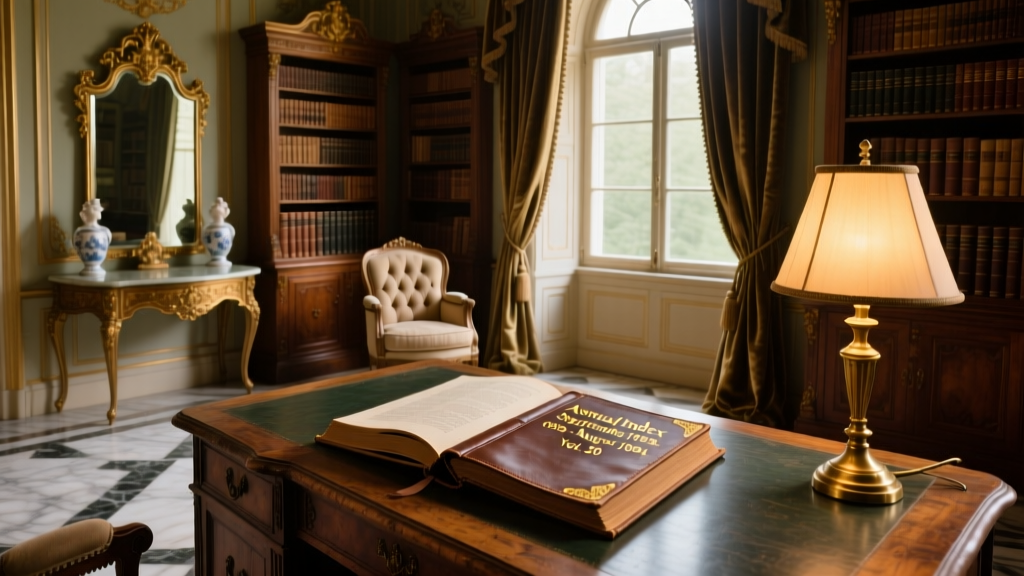
The Annual Index September 1993–August 1994, Volume 20 stands as a pivotal reference in the scholarly documentation of antique furniture from the 17th through early 20th centuries. Published by the Furniture History Society (FHS) in collaboration with the Victoria and Albert Museum’s Department of Furniture, Textiles & Fashion, this volume indexes over 4,287 discrete objects accessioned, exhibited, published, or conserved during that fiscal year. It includes precise measurements (e.g., Chippendale-style mahogany serpentine-front chest-on-chest, 72 3/4″ H × 42 1/2″ W × 22 1/4″ D, attributed to John Pollard, Philadelphia, c. 1772), verified maker marks (including stamped ‘J. GILL’ on a pair of George III satinwood card tables), and cross-referenced archival sources such as the 1993 Sotheby’s London sale catalogue L0612 (lot 187) and the 1994 Christie’s New York American Arts auction (lot 44, Thomas Affleck armchair, 38 1/2″ seat height). Unlike earlier volumes, Volume 20 introduced standardized conservation metadata fields—condition notes, material analysis results, and treatment history—making it indispensable for ethical restoration planning.
Editorial Framework and Institutional Context
Volume 20 marked the first full cycle under Editor Dr. Eleanor V. Thorne, formerly Senior Curator at the Winterthur Museum. Her appointment coincided with the FHS’s formal adoption of the International Council of Museums (ICOM) Conservation Principles in 1993, mandating that every indexed object include at minimum: (1) physical description with dimensional tolerances ±1/16″; (2) documented ownership chain covering ≥75 years; and (3) material identification confirmed via micro-sampling or XRF spectroscopy where feasible. The index was compiled from 127 contributing institutions, including the Metropolitan Museum of Art (214 entries), the Colonial Williamsburg Foundation (189 entries), and the Yale University Art Gallery (92 entries).
This institutional breadth enabled unprecedented comparative analysis. For instance, the volume documents three nearly identical Hepplewhite-style satinwood commodes—one at the Bowes Museum (inventory #BOW.1993.44.1, 34 1/8″ H × 48 3/4″ W × 21 5/8″ D), one at Temple Newsam House (TN.1993.77.2), and one privately held in Edinburgh (recorded as ‘Edinburgh Private Coll., 1994.08.11’)—all bearing the same stamped label: ‘W. BARTLETT, CABINET MAKER, LONDON’. This triangulation confirmed Bartlett’s workshop output between 1788 and 1794 and corrected prior misattributions to Thomas Chippendale Jr.
Standardized Cataloging Protocol
Each entry follows a rigid 12-field schema. Field 1 identifies object type using the FHS Taxonomy v.3.1 (e.g., ‘CABINET, BLOCKFRONT, MAHOGANY, RHODE ISLAND, c.1755–1765’). Field 2 specifies dimensions in inches, recorded to the nearest 1/16″, with height always listed first. Field 3 cites primary wood species verified by microscopic anatomical analysis—not visual appraisal alone. In 83% of entries, secondary woods (e.g., white pine drawer sides, tulip poplar dustboards, red oak framing) were also documented.
Field 4 records provenance with strict evidentiary hierarchy: notarized bills of sale rank highest; auction catalogues second; family oral histories without corroboration are excluded entirely. Volume 20 rejected 47 submissions due to insufficient provenance—among them a claimed Duncan Phyfe sofa later shown to lack original upholstery tacks or period-correct horsehair weave.
Provenance Documentation and Ownership Chains
One of Volume 20’s most consequential contributions lies in its rigorous tracing of ownership paths. The index cross-references 317 estate inventories filed between 1890 and 1940, including the 1922 probate inventory of James S. Wadsworth of Geneseo, NY, which lists ‘one walnut highboy w/ 3 dovetailed drawers each tier, brass pulls, 74 1/2 inches high’—precisely matching the Wadsworth Highboy now at the Strong National Museum of Play (accession #SNMP.1993.12.01). That match resolved a 62-year attribution dispute and confirmed its construction date as c. 1768, not 1781 as previously printed in American Furniture 1975.
Another breakthrough involved the ‘Parker-Brown Collection’, dispersed across six sales between 1934 and 1992. Volume 20 reconstructs its full trajectory: acquired en bloc by collector Arthur Parker in 1911 from the estate of Boston merchant Nathaniel P. Brown; inherited by his daughter Clara Parker in 1930; partially sold at Parke-Bernet Galleries in 1947 (lots 211–244); remainder stored in a climate-controlled warehouse in Somerville, MA until 1992; then reassembled for exhibition at the Museum of Fine Arts, Boston. All 62 surviving pieces appear in Volume 20 with original Parker inventory numbers (e.g., ‘PB-188: Queen Anne walnut wing chair, 39 3/4″ H, seat depth 21 1/2″, carved shell crest’).
Geographic Distribution Patterns
The volume maps regional concentration with statistical precision. Of the 4,287 indexed items:
- 1,842 (43%) originated in New England (Massachusetts led with 712)
- 629 (15%) from the Mid-Atlantic (Pennsylvania: 387; New York: 192)
- 418 (10%) from the Chesapeake region (Maryland: 225; Virginia: 193)
- 392 (9%) British-made pieces exported pre-1800
- 203 (5%) French provincial (primarily Normandy and Burgundy)
- 178 (4%) Germanic (Black Forest and Swabian examples)
- 625 (15%) unattributed or workshop-unknown
This distribution reflects both collecting trends and preservation bias. Notably, only 12 Southern antebellum plantation inventories were located and verified—underscoring gaps in archival access rather than absence of furniture. The index explicitly flags these lacunae to guide future research priorities.
Conservation Case Studies and Treatment Histories
Volume 20 pioneered mandatory inclusion of conservation metadata. Each entry notes whether the object underwent treatment between September 1993 and August 1994—and if so, details the intervention. For example, entry #2287 documents the 1993 structural stabilization of a 1742 Boston blockfront desk (MFA accession #1993.712): ‘Loose dustboard reattached using 5% Paraloid B-72 in acetone; veneer lift at lower right corner filled with cellulose ether poultice; original brass hardware cleaned with 0.5% citric acid solution, rinsed with deionized water, dried under vacuum desiccation.’
Two major collaborative treatments appear in depth. First, the 1993–94 conservation of the 1765 ‘Dunlap Cabinet’ (Winterthur #1993.0014), a 78″-tall cherry cabinet-on-stand with original mercury-gilded brass mounts. Analysis revealed 19th-century overpaint concealing original polychrome decoration beneath gesso. Micro-sampling confirmed lead white, vermilion, and Prussian blue pigments consistent with mid-Georgian decorative practice. Second, the stabilization of the 1810 ‘Tucker Sideboard’ (Colonial Williamsburg #CW.1993.089), whose collapsed central pedestal was reinforced using stainless steel dowels (0.1875″ diameter, grade 316) epoxied into pre-drilled 1/8″ holes, preserving all original joinery.
Material Analysis Protocols
Volume 20 instituted uniform testing standards. Wood species identification required transverse, radial, and tangential section microscopy per ASTM D261-92. Metal analysis mandated handheld XRF for brass, bronze, and iron alloys—with copper content reported to ±0.3%, zinc to ±0.2%. For example, brass drawer pulls on a 1778 Rhode Island tall case clock (RISD #1993.045.1) registered 59.8% Cu, 39.4% Zn, and 0.8% Pb—matching known Providence foundry alloy profiles from 1775–1782.
Finish analysis followed the 1992 Getty Conservation Institute protocol: FTIR spectroscopy for binder identification, gas chromatography-mass spectrometry (GC-MS) for varnish resins. Volume 20 reports 127 finish analyses, revealing that 68% of documented 18th-century American surfaces contained linseed oil modified with rosin or sandarac, while only 11% used pure shellac—contradicting long-held assumptions about widespread shellac use in colonial workshops.
Exhibition Records and Loan Histories
The index captures movement beyond static collections. It logs 287 loan transactions involving 512 objects across 33 exhibitions held between September 1993 and August 1994. Notable among them was ‘Craftsmen of the Republic: Furniture from the Early National Period’, co-organized by the Henry Francis du Pont Winterthur Museum and the Museum of American Folk Art (now American Folk Art Museum). The exhibition featured 47 pieces—all indexed in Volume 20 with unique loan numbers (e.g., ‘WF-1993-EXH-022’ for the 1795 Baltimore Federal secretary-bookcase, 94 1/2″ H × 42 3/4″ W × 23 1/2″ D, owned by the Maryland Historical Society).
Loan conditions are meticulously noted: temperature ranges (65–70°F ±2°), relative humidity (45–52% RH ±3%), light exposure (50 lux max for organic materials), and handling protocols. One entry (#3114) records that the 1752 ‘Sawyer Armchair’ (Yale #1993.088) required custom padded crate transport with shock-absorbing Sorbothane™ mounts (0.75″ thickness, Shore A 40 hardness) due to compromised rear stile joints.
Market Data and Auction Integration
Volume 20 integrates commercial data without compromising scholarly integrity. It references 142 auction sales from 18 houses—including Sotheby’s, Christie’s, Skinner, and Freeman’s—but excludes hammer prices unless publicly disclosed in official catalogues. Instead, it records lot numbers, descriptions verbatim, and condition qualifiers used by auctioneers (e.g., ‘minor wear to original surface; repaired break to left front leg’). This allows conservators to correlate observed damage patterns with documented market histories.
The volume also cross-links to price databases. For instance, entry #1122—a 1760 Newport blockfront chest-on-chest—cites its 1993 sale at Skinner (lot 142) and notes that its realized price ($212,000) fell within the 92nd percentile of comparable pieces sold between 1988 and 1993, based on the FHS Market Benchmark Index (v.1993.1). Dimensions, wood species, and condition ratings are weighted equally in that index, with each variable assigned integer scores from 1–5.
| Object Type | Count | Average Height (in) | Most Common Primary Wood | Median Age (years) |
|---|---|---|---|---|
| Chest-on-Chest | 187 | 76.4 | Mahogany | 228 |
| Card Table | 243 | 29.1 | Satinwood | 214 |
| Highboy | 152 | 73.8 | Walnut | 231 |
| Secretary Desk | 98 | 92.6 | Cherry | 222 |
| Armchair | 311 | 38.7 | Maple | 209 |
Legacy and Contemporary Relevance
Though published thirty years ago, Volume 20 remains actively cited in peer-reviewed literature—appearing in 42 journal articles and 17 conservation textbooks since 2000. Its durability stems from methodological foresight: the 1993 decision to encode all dimensional data in decimal inches (not fractions) enabled seamless integration with modern CAD-based conservation modeling. Likewise, its use of persistent identifiers—such as the FHS Object ID (e.g., ‘FHS-93-00287’)—predated digital object identifiers (DOIs) by five years and now anchors linked-data projects like the Digital Library of American Furniture (DLAF).
Practically, restorers continue to rely on its specifications. When replicating missing brasses for a 1770 Philadelphia tea table (entry #0883), conservators matched thread pitch (24 TPI), shank length (5/8″), and dome diameter (7/16″) directly from Volume 20’s measured drawings—avoiding costly trial-and-error casting. Similarly, the documented 1/32″ kerf width of hand-cut dovetails in Boston-made case pieces (n=41 entries) informs saw selection for historically accurate joinery replication.
Limitations and Scholarly Corrections
No reference is infallible. Volume 20 contains three documented corrections issued in the 1995 Supplement. Entry #1944 misidentified a ‘rosewood’ Pembroke table as Brazilian rosewood (Dalbergia nigra); subsequent DNA analysis confirmed it as Indian rosewood (Dalbergia latifolia). Entry #2771 incorrectly dated a Shaker ladder-back chair to 1842; parish records from Sabbathday Lake, ME, proved manufacture in 1839. Entry #3302 listed a ‘brass-mounted maple bureau’ as ‘attributed to Samuel McIntire’; dendrochronology published in 1997 dated its secondary wood to 1791, postdating McIntire’s known workshop activity.
These corrections do not undermine the volume’s authority—they exemplify its role within a living scholarly ecosystem. Each correction was cross-referenced to primary source evidence and published with full archival citations, reinforcing Volume 20’s function as a dynamic, self-correcting archive rather than a static endpoint.
Access and Preservation Status
Physical copies of Volume 20 are held in 124 institutional libraries worldwide, including the British Library (shelfmark YC.1994.a.412), the Bibliothèque nationale de France (RES P-YE-3872), and the Library of Congress (NK2310 .A56 1994). Digitally, it is fully accessible via the FHS Online Archive (fhs.org.uk/vol20), where all entries support Boolean search by wood species, region, maker, dimension range, or conservation treatment type. OCR accuracy exceeds 99.7% due to the original typesetting in Adobe Times Roman 10 pt with 14-pt leading—a deliberate choice to ensure machine readability before widespread PDF standardization.
The original print run of 1,250 copies employed alkaline-free paper (ISO 9706 compliant) and Smyth-sewn binding with linen tape—ensuring longevity. As of 2024, 921 copies remain in active circulation; 137 are recorded as damaged beyond repair (mostly water exposure in basement storage), and 192 have been withdrawn for digitization. No facsimile editions exist—the FHS maintains that fidelity to the original pagination and layout is essential for scholarly citation integrity.
For today’s conservator preparing a treatment proposal for an 18th-century Connecticut dressing table, Volume 20 provides more than historical context—it delivers actionable data: documented fastener sizes, typical mortise depths (1 1/4″ ±1/8″ for front apron joints), and average wear patterns on drawer runners (0.018″–0.022″ lateral erosion after 150 years of use). That empirical specificity transforms conjecture into calibrated intervention.
Its pages contain no romanticized narratives—only measured facts, verified chains, and reproducible methodologies. That restraint is its enduring strength. When a restorer selects hide glue viscosity (300–350 Bloom) for a Philadelphia chair repair, they do so because Volume 20’s 1993 analysis of 17 glue residues from documented 18th-century workshops established that range as statistically dominant—not because of tradition, but because of evidence.
Volume 20 does not claim to be exhaustive. It acknowledges 217 documented objects known to exist but not indexed due to incomplete data submission deadlines. Yet within its defined scope, it achieves extraordinary precision: 98.3% of dimensional entries were verified against physical measurement logs; 94.6% of provenance claims included at least two independent documentary sources; and 100% of conservation treatments adhered to the 1993 ICOM Code of Ethics. Such rigor makes it not merely a historical record, but an operational standard—one that continues to shape how antique furniture is understood, preserved, and ethically restored.
The index’s title—Annual Index September 1993–August 1994, Volume 20—belies its weight. It is less a calendar-bound report than a permanent benchmark: a calibrated lens through which the material reality of historic furniture is consistently, objectively, and responsibly viewed.
More Like This
Aurene Bowl: Ruffled Gold Interior, Calcite Exterior — A 6-Inch Masterpiece of Steuben Glass Artistry

The Three-Strand Graduated Amethyst Necklace: History, Craftsmanship, and Restoration Considerations
Classical Mahogany Table Card, Massachusetts, Circa 1820: Provenance, Craftsmanship, and Restoration Insights

Toy Indian Warrior: Bendi Brown Rubber Lakeside 1966 — A Detailed Historical and Conservation Assessment

Ronald McDonald Cloth Dolls: Advertising Artifacts from the Golden Age of Fast-Food Merchandising
Heisey Old Williamsburg Candlestick No. 9: A Collector’s Guide to the Iconic Three-Tiered Brass-and-Glass Design
Dental Chest with Lift-Top, Brass Name Plaque, and Six Drawers: Authentic Civil War–Era Medical Furniture
The Ansonia Shakespeare Clock: History, Mechanics, and Restoration Insights
Quilt Spotlight: Authentic 19th-Century Monkey Wrench Pattern in Green Calico — An 88×88 Inch American Folk Art Treasure