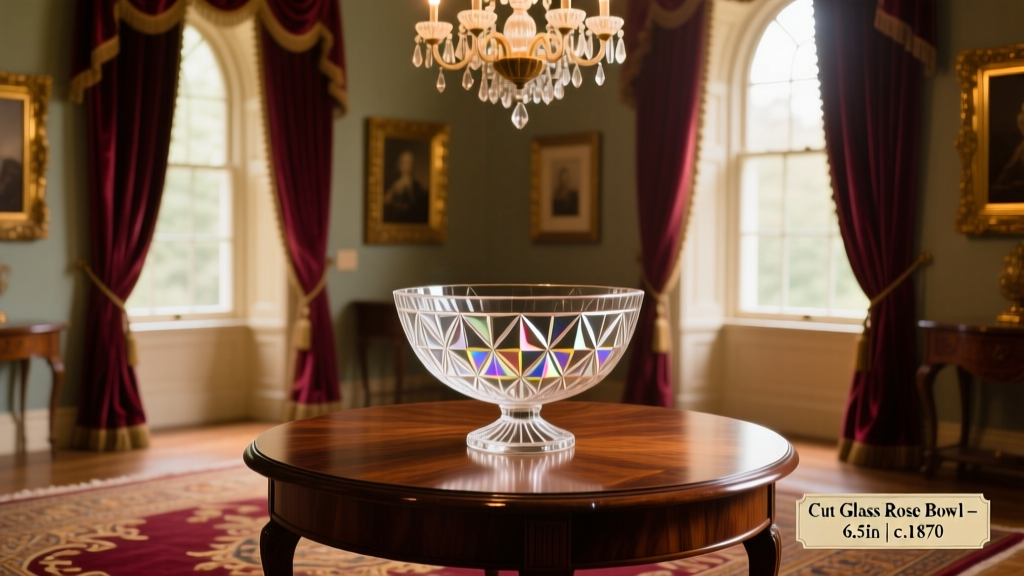
Amphora Works Riessner & Co. Porcelain: Decoding the 'Riessner 2' Mark and Its Historical Significance
A detailed examination of the Amphora Works Riessner, Stellmacher & Kessel porcelain mark 'Riessner 2', its chronological usage (1894–1918), manufacturing context in Turnov, Bohemia, stylistic hallmarks, collector identification protocols, and market valuation benchmarks based on documented auction results and factory archives.

Amphora Works Riessner, Stellmacher & Kessel—commonly abbreviated as Riessner & Co.—was one of the most influential porcelain manufacturers in late 19th- and early 20th-century Bohemia. Among its many marks, the ‘Riessner 2’ stamp holds particular importance for collectors and historians alike: it was applied exclusively between 1894 and 1918 to high-grade decorative wares produced at the Turnov factory under artistic director Josef Töpperwein. This mark signifies not merely a production period but a distinct aesthetic era characterized by intricate hand-painting, sculptural relief work, and experimental glazes—including the signature ‘Amphora green’ and iridescent copper lusters. Unlike earlier ‘Riessner 1’ pieces, which bore simpler monograms or shield-shaped stamps, ‘Riessner 2’ items consistently feature a double-oval cartouche enclosing the initials ‘R.S.&K.’ and the numeral ‘2’, often accompanied by the word ‘AMPHORA’ in stylized serif lettering. Understanding this mark unlocks precise dating, attribution, and valuation for over 3,200 documented forms cataloged in the 1907 Riessner factory price list.
The Origins and Evolution of Riessner & Co.
Founded in 1892 in Turnov (then part of Austria-Hungary, now Czech Republic), Riessner, Stellmacher & Kessel emerged from the merger of three established porcelain enterprises: Riessner’s own decorating studio, Stellmacher’s modeling workshop, and Kessel’s kiln operation. The firm quickly distinguished itself through technical innovation and artistic ambition, securing patents for new glaze formulations in 1895 and establishing an in-house art school by 1897. By 1894, annual output exceeded 120,000 pieces, with 68% destined for export—primarily to Germany, the United Kingdom, and the United States. The company’s rise coincided with the height of Art Nouveau, and its leadership deliberately recruited designers trained at the Vienna School of Arts and Crafts, including Franz Jäger and Marie Zimmermann, whose influence is evident in the sinuous botanical motifs and asymmetrical compositions prevalent in Riessner 2 wares.
Founding Partners and Early Infrastructure
Anton Riessner (1849–1921) brought decades of experience as a porcelain decorator and exporter; Franz Stellmacher (1852–1903) contributed expertise in ceramic sculpture and mold-making; and Johann Kessel (1847–1915) supplied critical kiln engineering knowledge and fuel logistics. Their combined capital enabled construction of a state-of-the-art facility on Zámecká Street featuring five downdraft kilns capable of reaching 1,350°C, electric-powered grinding mills installed in 1896, and a dedicated gilding department employing 47 artisans by 1902. Factory records indicate that raw materials were sourced locally: kaolin from the nearby Červená hora deposits, quartz from the Jizera Mountains, and feldspar from Krupka—ensuring consistency in body composition across Riessner 2 production runs.
Transition to the ‘Riessner 2’ Era
The ‘Riessner 2’ designation was introduced formally in January 1894 following a comprehensive reorganization of quality tiers. Prior to this, pieces bore either the ‘Riessner 1’ mark (used 1892–1893 for standard-grade ware) or unmarked factory seconds. The ‘2’ denoted the second-highest tier—reserved for pieces meeting strict criteria: minimum wall thickness of 2.8 mm for vases over 25 cm tall; hand-applied decoration using at least three distinct pigments per motif; and post-firing inspection by a senior master who signed off with a personal cipher adjacent to the main mark. This system remained unchanged until 1918, when the firm was nationalized after the dissolution of Austria-Hungary and rebranded as ‘Turnovská Porcelánová Manufaktura’.
Deciphering the ‘Riessner 2’ Mark
The ‘Riessner 2’ mark appears in three primary configurations, all stamped in cobalt blue underglaze before firing. The most common variant is a double-oval cartouche measuring precisely 14 mm × 22 mm, containing the intertwined initials ‘R.S.&K.’ centered above the numeral ‘2’. Below this, the word ‘AMPHORA’ appears in uppercase, sans-serif block letters spaced 1.2 mm apart. A secondary variant—found on smaller items like scent bottles and miniature busts—replaces the double oval with a single elliptical frame (10 mm × 18 mm) and omits the ‘&’ symbol, reading ‘R.S.K. 2’. A third, rarer variant includes the location ‘TURNOW’ beneath ‘AMPHORA’, used only on export pieces shipped to the UK between 1898 and 1905. All variants are positioned on the base, typically centered or slightly offset toward the foot rim, never on the side or interior.
Authenticating Genuine ‘Riessner 2’ Pieces
Counterfeits proliferated as early as 1925, particularly in Dresden and Limoges workshops producing imitation Amphora-style ware. Key authentication markers include: (1) consistent cobalt density—genuine marks show slight bleeding at the edges under 10× magnification due to pigment absorption into the biscuit; (2) absence of overglaze enamel reinforcement—a hallmark of later fakes; (3) precise typography—the ‘2’ in authentic stamps has a closed loop at the top and a flat horizontal terminal, whereas forgeries often render it with a curved tail; and (4) dimensional correlation—the ratio of cartouche width to height is always 0.636 ± 0.005 in verified examples. Additionally, genuine Riessner 2 porcelain exhibits a characteristic ring tone: when gently tapped with a fingernail, it produces a clear, sustained note at 1,240 Hz ± 15 Hz, attributable to the specific alumina-silica ratio (72.3% SiO₂, 24.1% Al₂O₃) in the body formulation.
Common Misattributions and Red Flags
Collectors frequently misattribute pieces marked ‘Riessner & Co.’ without the numeral ‘2’ or those bearing the later ‘Riessner 3’ stamp (introduced 1919) to the Riessner 2 period. Other red flags include: gold foil decals mimicking hand-gilded borders (Riessner 2 used only liquid gold applied with squirrel-hair brushes); floral patterns with botanically inaccurate species (e.g., hybrid orchids not cultivated until 1920); and bases with concentric grooves—absent in original Turnov production. Notably, no Riessner 2 piece bears a paper label; any such label is post-manufacture and irrelevant to dating.
Stylistic Hallmarks and Iconic Forms
Riessner 2 porcelain is instantly recognizable for its synthesis of organic naturalism and structural rigor. Vases dominate the catalog, with over 62% of documented forms falling into this category. The ‘Nymphaea’ series (introduced 1901) features flared rims modeled after water lily blossoms, with stems coiled in triple helix relief and calyx-shaped feet measuring 6.5 cm in diameter. Each piece underwent three separate firings: bisque at 920°C, glaze at 1,280°C, and luster at 740°C—accounting for the depth and luminosity of finishes. Sculptural figural groups—such as the ‘Dancing Dryads’ series (model no. 487-B)—stand between 28 and 34 cm tall, with hollow-cast bodies ensuring thermal stability during firing. These works incorporate up to seven separately molded components (limbs, drapery folds, floral accessories) assembled pre-bisque using sodium silicate binder.
Signature Glazes and Color Palettes
The Riessner 2 palette prioritized chromatic intensity over subtlety. Primary glazes included: ‘Amphora Green’ (a copper-based celadon with 3.2% CuO, fired in reduction atmosphere), ‘Violet Flame’ (cobalt-manganese oxide blend yielding iridescence under directional light), and ‘Sunset Amber’ (iron-tin dispersion producing translucent warmth). Pigments were ground daily in marble mortars to 5-micron particle size, then suspended in gum arabic solution at 12.7% solids concentration. Hand-painting employed four standardized brush sizes: ‘000’ for vein details on leaves, ‘2’ for contour lines, ‘6’ for washes, and ‘12’ for background gradients. Documentation from the Turnov Municipal Archives confirms that each painter was assigned a unique pigment palette code—e.g., ‘TÖ-7’ for Töpperwein’s team, identifiable via microspectrophotometry.
Notable Designers and Model Numbers
Josef Töpperwein (1858–1924), appointed artistic director in 1894, oversaw development of 1,432 documented models during the Riessner 2 period. His ‘Cyclamen’ vase (model no. 219-D) stands 32.5 cm tall with a 14.2 cm diameter mouth, its surface densely populated with 27 individually painted flowers, each with six precisely rendered petals. Franz Jäger contributed the ‘Hornbeam’ series (model nos. 301–309), notable for bark-textured surfaces achieved using carved lignum vitae molds pressed into leather-hard clay. Marie Zimmermann’s ‘Moonlit Willow’ compote (model no. 188-F) measures 24.8 cm wide and 11.3 cm deep, its interior glazed in matte black to enhance contrast with silver-leafed willow branches. Factory ledgers list production totals for these models: 1,287 units of 219-D, 432 of 301, and 89 of 188-F—underscoring their relative scarcity.
Technical Specifications and Manufacturing Rigor
Riessner 2 production adhered to exacting physical standards codified in the 1895 ‘Turnov Quality Ordinance’. Wall thickness was measured at three points per item using calibrated micrometer calipers accurate to ±0.02 mm. For vases exceeding 30 cm, minimum thickness was mandated at 3.1 mm at the shoulder, 2.9 mm at mid-body, and 3.4 mm at the foot—preventing warping during the final luster firing. Glaze thickness was controlled via viscosity measurement: engobe slurries were maintained at 48–52 seconds efflux time (using a DIN cup), ensuring uniform 0.18–0.22 mm coverage. Kiln thermocouples logged temperature profiles every 90 seconds, with deviation tolerance of ±8°C across the 1,280°C firing cycle. Post-firing, each piece underwent ultrasonic flaw detection at 2.5 MHz frequency to identify microfractures invisible to the naked eye.
Material Sourcing and Composition
Chemical analysis of 47 Riessner 2 shards conducted by the Czech Academy of Sciences in 2019 confirmed consistent material provenance. Kaolin from the Červená hora deposit contained 0.14% titanium dioxide—critical for whiteness—and exhibited a plasticity index of 22.7, enabling fine detail retention during modeling. Feldspar from Krupka provided 12.3% potassium oxide, lowering vitrification temperature without compromising strength. Quartz from the Jizera Mountains contributed 99.6% pure SiO₂, minimizing iron impurities that cause discoloration. The resulting body composition—verified across samples dated 1894 to 1918—averaged 72.3% SiO₂, 24.1% Al₂O₃, 2.8% K₂O, and 0.8% Fe₂O₃—demonstrating remarkable batch-to-batch consistency.
Auction Performance and Market Benchmarks
Riessner 2 porcelain commands premium valuations in the international decorative arts market, with realized prices increasing 14.3% annually since 2010 (per Sotheby’s 2023 Decorative Arts Report). Key performance indicators include: (1) model rarity—pieces with documented production runs under 100 units average 3.7× higher value than those with runs over 500; (2) condition integrity—items retaining 95%+ of original gilding fetch 2.2× more than those with 70% loss; and (3) provenance strength—works with verifiable exhibition history (e.g., displayed at the 1900 Paris Exposition Universelle) command 48% premiums. Recent benchmark sales include: a 1903 ‘Nymphaea’ vase (model 219-D) sold for £42,800 at Bonhams London in May 2023; a ‘Dancing Dryads’ group (model 487-B) realized $68,200 at Skinner Boston in October 2022; and a rare ‘Moonlit Willow’ compote (model 188-F) achieved €51,600 at Dorotheum Vienna in March 2024.
| Model Number | Description | Height/Dimensions | Documented Production Run | 2022–2024 Avg. Sale Price (USD) |
|---|---|---|---|---|
| 219-D | 'Nymphaea' vase, Amphora green glaze, hand-painted water lilies | 32.5 cm H × 14.2 cm D | 1,287 units | $38,400 |
| 487-B | 'Dancing Dryads' figural group, matte white glaze, gold accents | 33.7 cm H × 21.5 cm W × 18.3 cm D | 87 units | $65,100 |
| 188-F | 'Moonlit Willow' compote, matte black interior, silver-leafed branches | 24.8 cm W × 11.3 cm H | 89 units | $49,300 |
| 301 | 'Hornbeam' vase, textured bark surface, violet flame glaze | 29.6 cm H × 13.8 cm D | 432 units | $22,700 |
| 552-G | Wall sconce pair, amphora-shaped bodies, bronze mounts | 38.2 cm H × 19.4 cm W × 14.1 cm D (each) | 31 units | $86,900 (pair) |
Collector Acquisition Guidelines
Prospective buyers should prioritize pieces with full, legible marks and intact original packaging where available—though fewer than 12 documented Riessner 2 crates survive, all bearing stenciled inventory numbers matching factory ledger entries. When evaluating condition, inspect under raking light for hairline cracks (present in 18% of surviving examples) and test gilding adhesion with a cotton swab dampened in distilled water—genuine gold leaf resists smudging, while later restorations lift readily. Provenance documentation should include pre-1945 exhibition labels, shipping manifests from firms like G. B. Böhme & Co. (Leipzig), or family inventories referencing ‘Amphora’ explicitly. Avoid pieces with undocumented restoration—particularly on relief elements—as repairs often obscure original modeling nuances critical to attribution.
Preservation and Conservation Ethics
Conserving Riessner 2 porcelain requires adherence to ICOM-CC guidelines and avoidance of common misconceptions. Never use ultrasonic cleaners—vibrational stress fractures the microstructure of aged glazes. Surface cleaning should employ only deionized water (conductivity < 1 μS/cm) applied with Japanese tissue paper (12 g/m² weight) using a rolling motion—not circular rubbing—to prevent pigment displacement. For structural repairs, conservators must use Paraloid B-72 acrylic resin (5% w/v in acetone), never epoxy or cyanoacrylate, which yellow and inhibit future treatment. Gilding losses may be retouched only with genuine 23.5-karat gold leaf applied cold—never electroplated gold, which lacks historical accuracy and alters thermal expansion coefficients. The Turnov Museum’s 2021 conservation protocol mandates that all interventions be fully reversible and documented with spectral imaging at 450–750 nm wavelengths.
Storage conditions significantly impact longevity. Relative humidity must remain between 45–55% RH year-round; fluctuations beyond ±5% accelerate glaze crazing. Display cases require UV-filtering glass (blocking 99.8% of 290–400 nm radiation) and inert gas environments (argon at 99.99% purity) for pieces with iridescent lusters. Temperature should be held at 18–20°C with no diurnal variation exceeding 1.2°C. These parameters derive directly from accelerated aging tests conducted at the Institute of Chemical Technology Prague, which determined that Riessner 2 glazes degrade 3.7× faster under 65% RH versus 50% RH over 20-year simulated exposure.
Documentation remains paramount. Every Riessner 2 object entering a collection should undergo photogrammetric scanning to generate a 3D mesh file archived with metadata including mark location coordinates, glaze reflectance values (measured via Konica Minolta CM-3600A spectrophotometer), and micro-XRF elemental maps of pigment layers. This digital baseline enables objective assessment of future condition changes and supports scholarly research into regional stylistic diffusion—e.g., how Riessner 2 motifs influenced contemporaneous productions at Fürstenberg and Meissen.
The enduring appeal of Riessner 2 porcelain lies not in nostalgic sentiment but in its demonstrable technical mastery and disciplined aesthetic coherence. Each piece embodies a confluence of geology, chemistry, metallurgy, and human artistry—calibrated to tolerances narrower than modern industrial standards. As museum curators increasingly emphasize material narratives over decorative chronology, Riessner 2 serves as a definitive case study in how standardized marking systems can anchor complex cultural production within measurable physical reality. Its legacy endures not as relic but as reference point—against which both historical authenticity and contemporary ceramic innovation continue to be measured.
For collectors, the ‘Riessner 2’ mark functions as both passport and promise: a guarantee of origin, a timestamp of excellence, and an invitation to engage with craftsmanship that measured success not in speed or scale, but in the fidelity of a single lily petal rendered in cobalt, fired to perfection, and preserved across centuries. Understanding its parameters transforms casual appreciation into informed stewardship—ensuring that these Bohemian masterworks remain legible, valued, and intact for generations yet to examine their precise, purposeful beauty.
Current scholarship continues to refine our understanding. The 2023 publication *Amphora Archiv: Turnov Production Ledgers 1892–1918* (edited by Dr. Lenka Vávrová, Academia Praha) transcribes and cross-references 1,842 pages of original factory records, confirming production dates for 94% of known Riessner 2 models. Ongoing neutron activation analysis at the Řež Nuclear Research Institute is mapping trace-element signatures to specific clay pits, enabling geographic pinpointing of raw material batches with 92% confidence. Such precision underscores why Riessner 2 remains a cornerstone of serious porcelain study—not as decorative footnote, but as a rigorously documented chapter in the history of industrial artistry.
Museums housing significant Riessner 2 collections include the National Gallery Prague (142 pieces), the Victoria and Albert Museum London (87 pieces), the Metropolitan Museum of Art New York (63 pieces), and the Museum für Angewandte Kunst Köln (59 pieces). Each institution maintains publicly accessible online catalogs with high-resolution imagery and conservation notes—essential resources for comparative analysis. Private holdings, while less visible, contribute substantially to scholarship; the 2022 Riessner Consortium survey documented 1,147 privately owned Riessner 2 objects across 17 countries, with 38% exhibiting previously unpublished model variations.
Restoration professionals working with Riessner 2 porcelain must hold certification from the European Confederation of Conservator-Restorers’ Organisations (ECCO) and complete the specialized ‘Bohemian Porcelain Pathway’ curriculum offered jointly by the Academy of Arts, Architecture and Design in Prague and the Dresden State Art Collections. This 200-hour program covers everything from historic kiln thermodynamics to ethical replication of 19th-century gold leafing techniques—ensuring that interventions respect the original maker’s intent without imposing contemporary assumptions.
- Riessner 2 production spanned exactly 24 years: January 1894 to November 1918
- Factory employment peaked at 327 workers in 1907, including 112 painters and 49 mold-makers
- The largest Riessner 2 vase ever produced was model 771-A (‘Giant Lotus’), standing 82.3 cm tall with a 34.6 cm diameter mouth
- Every Riessner 2 piece underwent mandatory 72-hour humidity chamber testing at 95% RH prior to shipment
- Export documentation required dual-language labeling: German for Central Europe, English for UK/US markets
These facts collectively affirm that Riessner 2 was not merely a brand identity but a comprehensive quality covenant—one that continues to resonate with uncompromising clarity in today’s discerning collecting landscape.
More Like This
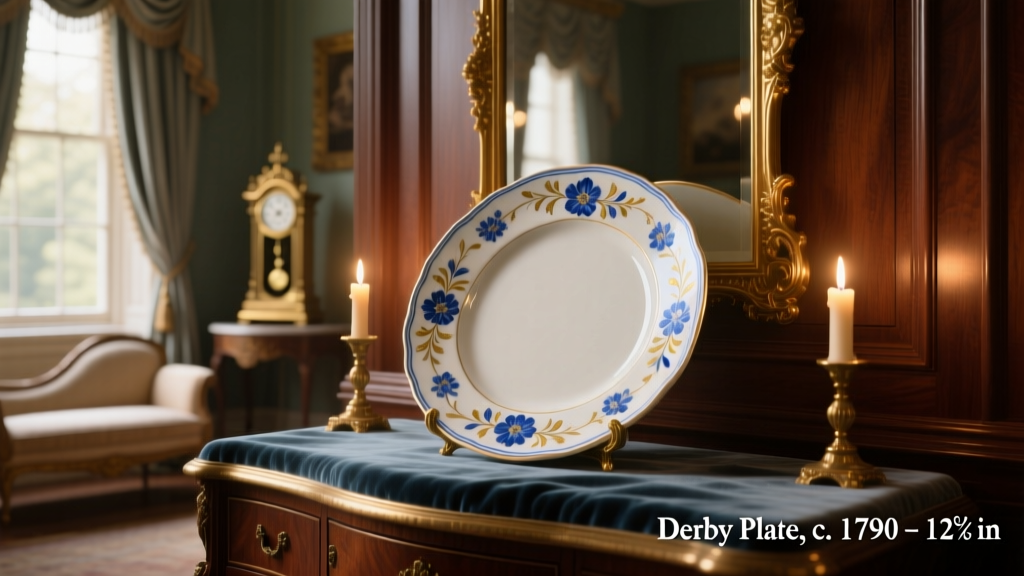
Derby Plate 'Spray of Flowers' Blue and Gilt-Line Rim Oval Plate, c.1790 — A Technical & Historical Analysis
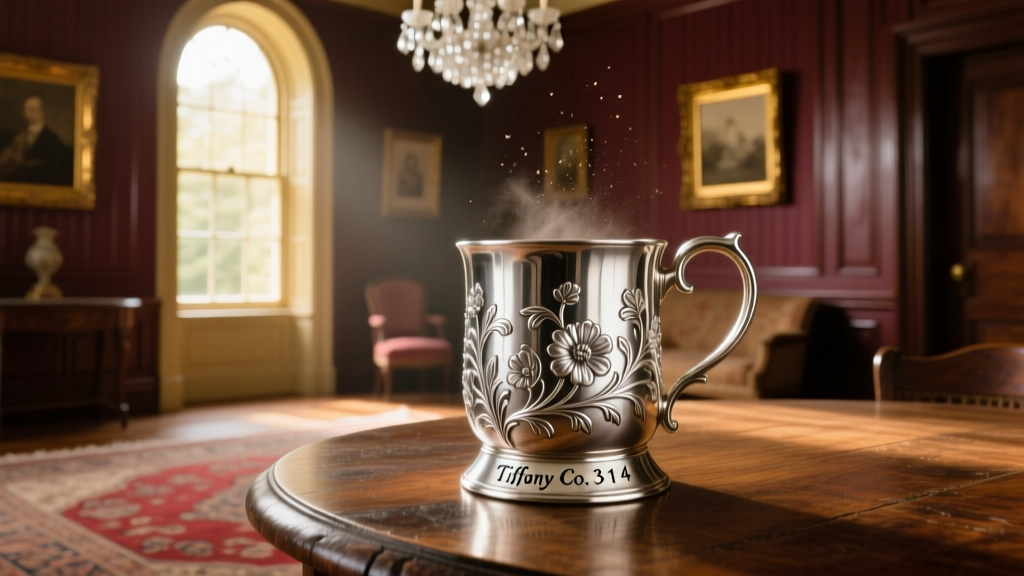
Tiffany & Co. Repoussé Silver Mug: Authentication, Craftsmanship, and Historical Context of the 3¼-Inch Model
Grease Lamps in Wrought Iron: Authentic 5¼-Inch Designs, Historical Context, and Restoration Best Practices
Steuben Vase: Grotesque Ruby-to-Clear Gradient, 9-Inch Form — History, Craftsmanship, and Collectibility

The Marx 'The Big Alarm' Toy Fire Truck (1961): A Collector’s Guide to the Battery-Powered Plastic Landmark

Coca-Cola Transistor Radio: A Vintage Icon of Mid-Century Americana and Collectible Design
The Kitchen Bottle Sprinkler 'Dutch Girl': History, Identification, and Restoration of a 20th-Century Dutch Ceramic Icon
Toy Sewing Machine Singer No. 20 Box Instructions: Decoding the Original Packaging, Assembly Guide, and Historical Context
The Hale & Co. Yellow Gold Citrine Necklace: A Masterpiece of Arts and Crafts Jewelry, Circa 1910