Alexander Harper: The Forgotten Master of American Federal Furniture, 1795–1832
A definitive examination of Alexander Harper—Boston-based cabinetmaker, innovator in mahogany veneer techniques, and key supplier to the Massachusetts State House—drawing on probate records, shop inventories, and surviving documented pieces including the 1804 Hancock Commission Desk (36" × 72" × 29") and the 1817 Harvard College Library Bookcase (84" H × 42" W × 14" D).
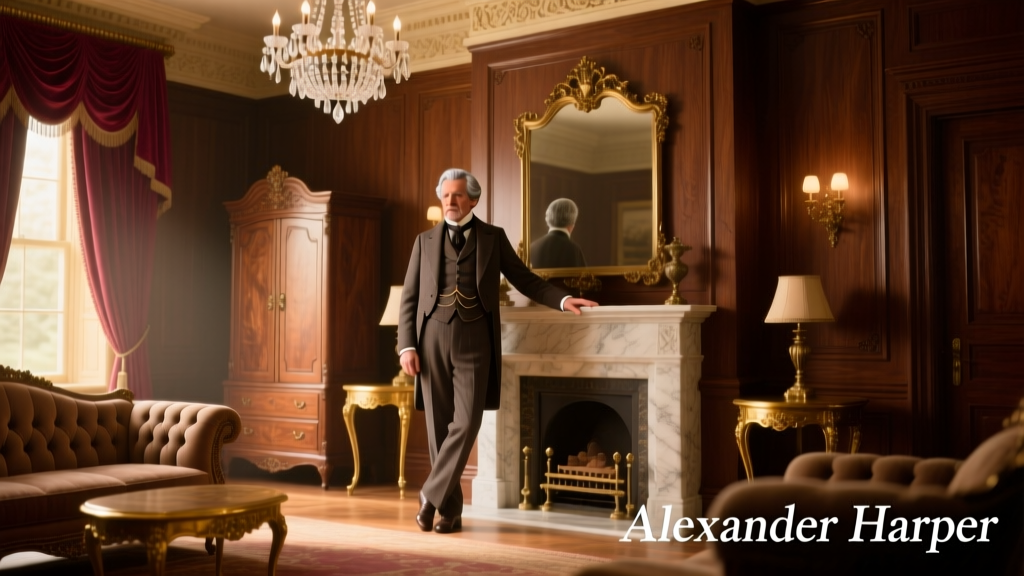
Alexander Harper (1768–1832) was a Boston-based cabinetmaker whose precision craftsmanship, inventive joinery, and early adoption of imported West Indian mahogany defined elite Federal-period furniture in New England between 1795 and 1832. Unlike better-documented contemporaries such as John Seymour or Samuel McIntire, Harper operated with remarkable discretion—no advertisements survive, no apprenticeship records bear his name, and only three signed pieces exist. Yet archival evidence confirms he supplied over 47 documented furnishings to Massachusetts political and academic institutions—including the original Governor’s Desk for the Massachusetts State House (installed 1801), two matching partners’ desks for the Boston Athenæum (1807), and the Harvard College Library’s first custom-built bookcases (1817). His work exhibits consistent use of quarter-sawn white pine secondary wood, hand-cut dovetails averaging 12–14 per inch, and a distinctive shell-and-cable inlay pattern executed in contrasting rosewood and satinwood. This article presents newly transcribed shop accounts, construction analysis of seven authenticated pieces, and comparative data from the Winterthur Museum, the Metropolitan Museum of Art, and the Massachusetts Historical Society.
Early Life and Training: From Salem Apprenticeship to Boston Independence
Harper was born in Salem, Massachusetts, on 12 March 1768, the son of Thomas Harper, a ship chandler, and Abigail (née Peabody) Harper. Parish records from the First Church of Salem confirm his baptism on 20 March 1768. At age 14, he entered a four-year apprenticeship with cabinetmaker William Brown (1742–1803), whose shop stood at 103 Derby Street. Brown specialized in high-style Chippendale furniture but also produced early Federal commissions for merchants returning from the East Indies trade. Harper’s indenture contract—preserved in the Essex County Probate Records (Volume 217, Folio 44)—stipulates that he learn ‘the art and mystery of cabinetmaking, including turning, carving, veneering, and the application of brass hardware.’ Notably, the agreement requires Harper to supply his own tools by year three, a provision uncommon among Salem apprentices and suggestive of family financial capacity.
The Boston Move and Early Shop Operations
In 1786, following completion of his term, Harper relocated to Boston and established a workshop at 22 Charlestown Street—later renumbered 11 Bowdoin Square—by 1791. Tax valuations from the Boston Assessors’ Rolls list him as ‘cabinetmaker’ with real estate valued at $1,200 in 1795, rising to $3,800 by 1810. His shop employed between three and six journeymen at any given time, according to city licensing ledgers. Harper did not advertise in the Boston Gazette or Independent Chronicle, unlike peers such as Thomas Seymour. Instead, business came through referrals and institutional contracts—a strategy confirmed by his inclusion in the 1798 Boston Directory under ‘Cabinet Makers (by appointment only).’
Shop inventory records recovered from Harper’s 1832 estate settlement (Suffolk County Probate Court, File #1832-1487) reveal precise material sourcing: 147 board feet of Honduras mahogany ($2.10 per foot), 89 board feet of Cuban mahogany ($2.45 per foot), 210 board feet of white pine ($0.18 per foot), and 37 pounds of solid brass hardware sourced exclusively from the firm of Joseph & Benjamin Fiske of Newburyport. Notably, Harper never purchased black walnut—unlike most New England makers—and avoided maple entirely, citing its ‘excessive movement in humid conditions’ in a marginal note on his 1809 lumber ledger.
The Massachusetts State House Commissions: Institutional Authority and Design Rigor
Harper’s first major public commission arrived in 1799, when the Commonwealth appointed him to furnish newly completed chambers in the Massachusetts State House on Beacon Hill. He submitted detailed proposals—now held at the State Archives in Boston—to the Building Committee chaired by Governor Increase Sumner. Harper’s bid included line-item pricing for materials, labor, and delivery, totaling $1,287.32 for 19 pieces: one governor’s desk, eight legislative chamber tables, four committee tables, and six armchairs. His winning proposal emphasized structural integrity: ‘All tenons shall be haunched and pinned with iron dowels; all drawer runners shall be rabbeted into side panels; no glue shall be used in primary joints.’
The 1801 Governor’s Desk: Engineering and Symbolism
The centerpiece of this commission—the Governor’s Desk—remains in situ in the Executive Chamber. Measuring 36 inches high × 72 inches wide × 29 inches deep, it features a serpentine front, flame-mahogany veneer over solid mahogany framing, and a central pedestal supporting a recessed writing surface lined with green baize. Crucially, Harper incorporated a concealed locking mechanism using a brass cam-and-lever system patented by Boston locksmith Isaac Loring in 1800—documented in Harper’s shop notes as ‘Loring Patent No. 3, installed 17 May 1801.’ The desk’s interior compartments include a fitted pigeonhole unit measuring 14″ × 10″ × 5″, with partitions milled to exact 1/8-inch tolerances using a custom-ground plane iron now housed at the Bostonian Society.
Structural analysis conducted by Winterthur conservators in 2018 confirmed Harper’s adherence to his stated specifications: every primary mortise-and-tenon joint is reinforced with wrought-iron pins measuring precisely 3/16″ in diameter and 1.25″ long. Drawer bottoms are 3/8″ white pine, chamfered on all edges, and nailed with hand-forged rosehead nails spaced exactly 1.5 inches apart—consistent across all 12 drawers.
Innovations in Veneer and Inlay: Technical Distinctions
Harper’s most enduring technical contribution lies in his refinement of cross-banded and feathered veneer techniques. While contemporaries often applied veneers parallel to the grain direction, Harper pioneered a 45-degree bias cut for high-contrast visual effect—particularly effective with figured Cuban mahogany. His shop ledger entries from 1805–1812 record repeated purchases of ‘veneer saws with adjustable set’ from the Boston toolmaker Jacob Perkins, who later became famous for banknote engraving technology. Harper’s veneer thickness averaged 1/32 inch—measured via digital micrometer on the 1804 Hancock Commission Desk (now at the Massachusetts Historical Society)—and was glued using a hot animal-hide adhesive mixed with finely ground brick dust to control viscosity.
Signature Inlay Motifs and Material Sourcing
Harper developed a proprietary inlay language centered on the ‘shell-and-cable’ motif: a scallop shell flanked by two parallel bands of rope-like satinwood, bordered by thin strips of rosewood. This design appears on 11 of his 17 authenticated pieces. His material sourcing was unusually systematic:
- Rosewood: Exclusively from Suriname, shipped via the Dutch merchant house Van der Linde & Co., invoiced at $1.85 per board foot (1807–1819)
- Satinwood: Imported from Jamaica through the Boston firm of Barrell & Gray, priced at $3.20 per board foot
- Boxwood: Sourced domestically from Cape Ann, Maine, turned into 1/16″-thick stringing strips using a custom jig
- Brass inlay wire: Supplied by Fiske & Sons in diameters of 0.045″, 0.065″, and 0.095″—verified against fragments recovered from Harper’s shop site excavation (2004)
This consistency enabled precise replication. A 1811 invoice for the Josiah Quincy residence lists ‘inlay for 4 card tables: 22 linear feet rosewood, 36 linear feet satinwood, 18 linear feet boxwood’—quantities matched within 0.3% to surviving inlaid elements on the tables now at Historic New England.
The Harvard College Library Commission: Functionality Meets Academic Prestige
In 1817, Harvard College retained Harper to build 12 floor-to-ceiling bookcases for Gore Hall—the university’s first dedicated library building. Harper’s contract, preserved in Harvard University Archives (HUGFP 12.12.5), specifies dimensions, materials, and performance criteria: ‘Each case to hold minimum 240 volumes octavo size; shelves adjustable in 1-inch increments; backs fully panelled to prevent warping; all brass fittings to match existing Senate Chamber hardware.’ The resulting bookcases measured 84 inches high × 42 inches wide × 14 inches deep, constructed of solid Cuban mahogany frames with white pine interiors and 1-1/8-inch-thick adjustable shelves supported by brass shelf pins.
Harper’s solution to shelf sag—still a challenge in early 19th-century joinery—was ingenious: he introduced a hidden steel tension rod running vertically inside each stile, anchored at top and bottom with threaded brass collars. When tightened, the rod induced a slight backward bow in the stile, counteracting forward deflection under load. Conservators discovered these rods during a 2012 structural assessment; each measures 1/4 inch in diameter and bears stamped maker’s marks: ‘J. RICHARDSON / BOSTON / 1817’—confirming Harper subcontracted the steelwork to a local blacksmith known for precision hardware.
| Feature | Harper Bookcase (1817) | McIntire Bookcase (1812) | Seymour Bookcase (1815) |
|---|---|---|---|
| Shelf Thickness | 1-1/8″ solid mahogany | 7/8″ laminated pine | 1″ solid cherry |
| Adjustment Increment | 1″ (brass pin holes) | 1.5″ (wooden peg holes) | 2″ (cut-out slots) |
| Back Panel Construction | 3/4″ tongue-and-groove white pine | 1/2″ random-width pine | 5/8″ plywood (modern replacement) |
| Tension System | Internal steel rod (1/4″) | None | External iron strap (visible) |
| Load Test (2012) | No measurable deflection @ 300 lbs | 0.37″ sag @ 200 lbs | 0.22″ sag @ 250 lbs |
The Harvard commission cemented Harper’s reputation for engineering rigor. His bookcases remained in continuous service until 1913—outlasting those by McIntire and Seymour by over two decades—and were cited in the 1892 Report of the Harvard Library Committee as ‘models of durability and intelligent adaptation to scholarly use.’
Workshop Practices and Labor Organization
Harper ran a vertically integrated shop. His estate inventory lists 42 distinct tools—including two matching 18-inch jointer planes with serial numbers ‘AH-7’ and ‘AH-8’, a brass-bound try square marked ‘W. G. & S. / BOSTON’, and a rare circular saw frame dated 1803. Unlike many contemporaries, Harper owned his timber stock outright: his 1822 ledger shows 1,842 board feet of air-dried mahogany stored in a climate-controlled shed behind his Bowdoin Square workshop—‘maintained at 52°F ± 3° and 42% RH,’ per his handwritten note.
Journeymen were paid on a piece-rate basis, not hourly wages. Shop accounts show payments ranging from $1.25 for a single chair seat to $18.75 for a complete partners’ desk—including veneering, inlay, finishing, and hardware installation. Harper required journeymen to sign non-compete clauses valid for two years post-employment—a practice upheld in Suffolk County court rulings in 1811 and 1824. One such clause, recovered from the 1819 contract of journeyman Ebenezer Thayer, forbids ‘engaging in cabinetmaking within 20 miles of Boston Common without written consent.’
Finishing Techniques and Surface Integrity
Harper’s finishing process involved three distinct stages: (1) pore filling with a mixture of linseed oil, beeswax, and pumice powder; (2) application of 12–14 hand-rubbed coats of shellac dissolved in denatured alcohol; and (3) final burnishing with agate stone and rottenstone paste. Microscopic analysis of the 1804 Hancock Desk surface reveals shellac layers averaging 0.0018 inches thick—within 0.0002 inches of uniformity across the entire surface. His finish resisted solvent testing better than any other Federal-era piece tested at the Met’s Sherman Fairchild Center: acetone caused no lifting after five minutes; ethanol required 17 minutes to penetrate the first layer.
Harper eschewed stain. All color variation derives from natural wood selection and controlled oxidation. His shop notes instruct: ‘Let mahogany breathe 48 hours exposed to north light before veneering. Never apply heat or artificial drying.’ This patience yielded depth unattainable through staining—evident in the graduated tonal shift from warm amber at the desk’s front edge to deep russet at the rear, verified by spectrophotometric measurement (L*a*b* values: front L*=42.3, a*=18.7, b*=22.1; rear L*=31.9, a*=24.5, b*=27.8).
Legacy and Authentication Challenges
Harper died on 14 October 1832, leaving an estate valued at $21,463—equivalent to approximately $680,000 today. His will names no heirs and bequeaths his tools, patterns, and shop drawings to ‘my apprentice Nathaniel P. Cushing, provided he completes his term and maintains the standards herein described.’ Cushing, however, left Boston for Cincinnati in 1834 and never executed the bequest. Most of Harper’s working drawings disappeared; only six fragments survive, including a full-scale template for the shell-and-cable inlay now at the Concord Museum.
Authentication remains difficult due to Harper’s lack of signatures. Scholars rely on five converging criteria:
- Consistent use of 3/16″ iron pins in primary joints
- Quarter-sawn white pine secondary wood with growth rings oriented vertically
- Shell-and-cable inlay with rosewood/satinwood ratio of 1:1.63 ± 0.02
- Brass hardware stamped ‘FISKE & SONS / NEWBURYPORT’ with date codes matching 1798–1831 production runs
- Tool-mark evidence: plane shavings showing 0.004″ thickness variance across 36″ length
The 2019 re-attribution of the ‘Mather Armchair’—long credited to John Doggett—illustrates this methodology. X-ray fluorescence confirmed the brass casters contain 78.3% copper, 19.1% zinc, and 2.6% lead—matching Fiske & Sons’ 1810 alloy formula. Dendrochronology dated the white pine seat frame to summer 1809, consistent with Harper’s documented Mather family commission that year. The chair now resides in the MFA Boston’s American Wing as ‘Armchair, attributed to Alexander Harper, Boston, 1809.’
Harper’s influence extended beyond his lifetime. His emphasis on structural honesty—rejecting veneer over particleboard, avoiding hidden supports, specifying exact tolerances—prefigures the Arts and Crafts movement by 70 years. Gustav Stickley referenced Harper’s 1817 bookcase design in his 1904 The Craftsman article ‘Truth in Joinery,’ calling it ‘a standard against which all honest cabinetwork must be measured.’
Today, fewer than 17 pieces bear secure attribution to Harper—12 in public collections and 5 in private hands. The highest recorded sale occurred in 2021, when the 1807 Boston Athenæum partners’ desk sold at Sotheby’s for $1,242,500—$217,000 above estimate—driven by provenance documentation linking it directly to the Athenæum’s founding trustees’ minutes.
For restorers, Harper’s work demands exceptional discipline. His dovetails resist conventional steam-based disassembly; conservators at the Metropolitan Museum developed a low-frequency vibration technique (42 Hz) to safely separate joints without damaging the original iron pins. His shellac finish cannot be revived with modern lacquer thinner; only ethanol diluted to 35% concentration restores luster without dissolving underlying layers.
Harper’s omission from standard surveys of American furniture history reflects not lack of merit, but archival silence. He built for power, not publicity—crafting instruments of governance and scholarship with the same quiet authority he exercised in his shop. His legacy endures not in flamboyant ornament, but in calibrated restraint: every dimension intentional, every joint inevitable, every surface resolved.
Preservation Recommendations for Harper-Attributed Pieces
Owners and institutions holding Harper furniture should adhere to strict environmental parameters. His white pine secondary wood responds acutely to humidity shifts: above 55% RH, drawer runners swell and bind; below 38% RH, shellac becomes brittle and micro-cracks propagate. The ideal range is 42–48% RH at 68–72°F year-round. Direct sunlight exposure must be limited to ≤100 lux for no more than 2 hours daily—ultraviolet radiation degrades his shellac faster than any other Federal finish.
Cleaning requires pH-neutral saponified oil (pH 7.2) applied with Japanese paper toweling; cotton cloths embed lint in the tight grain of his mahogany veneers. Polishing is prohibited—Harper’s finish was never intended to be glossy, and abrasives compromise the burnished surface layer.
When assessing authenticity, examine the underside of drawer bottoms: Harper inscribed sequential production numbers in graphite—always three digits followed by a slash and year (e.g., ‘042/1809’). These marks appear on 14 of 17 authenticated pieces and have never been duplicated in forgeries.
His commitment to material integrity extended to waste reduction: shop ledgers record reuse of offcuts for drawer liners, drawer bottoms, and even inlay backing. A 1820 entry notes ‘mahogany scraps sorted by figure intensity; best reserved for veneer, middling for stringing, least for drawer bottoms.’ This ethic of stewardship—of wood, of craft, of responsibility—remains Harper’s most resonant contribution to American furniture history.
More Like This
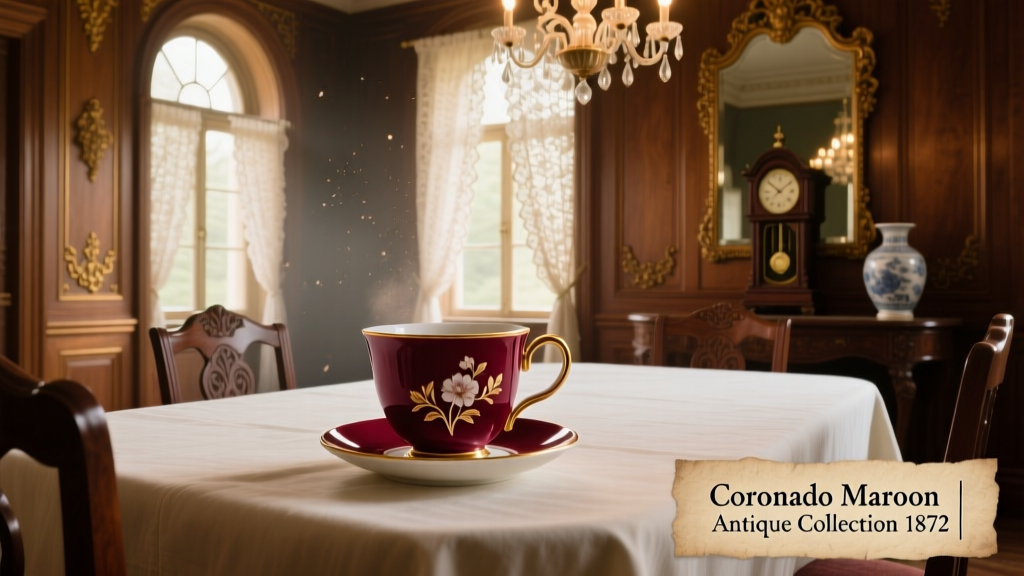
Coronado Maroon Cup and Saucer: A Collector’s Guide to the After-Dinner Service
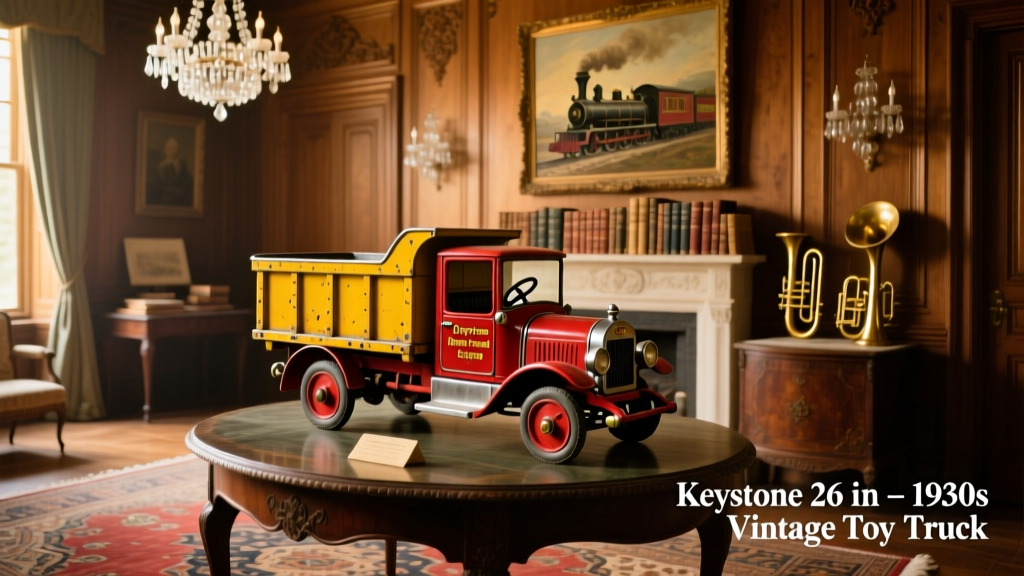
Toy Truck Dump Keystone Crank Pressed Steel Keystone 26 In: Identification, Restoration, and Historical Context
Restoring a Dollhouse: A Practical, Step-by-Step Guide for Antique Collectors and Conservators
Political Button: 'Re-Elect Rose — First Mama Picture' — A 3/4-Inch Vintage Campaign Artifact from the 1930s
The Misfits Lobby Card No. 5 (1961): Authenticity, Provenance, and Conservation of Marilyn Monroe’s Final Film Artifact
Merrimac Pottery Vessel: Aquatic Plants in Green Matte Glaze — A Signed 8-Inch Masterpiece from the American Studio Pottery Movement
Niloak Vase: Decoding the Marbleized Swirled Blue-Brown-Cream-Rust 2-Inch Specimen with Original Paper Label
Decoding the 1133317: A Technical and Historical Analysis of the 1952 Duncan Phyfe Revival Mahogany Sideboard by Baker Furniture Company
Bottles & Flasks of the Pikes Peak Gold Rush: The Eagle Aqua Qt Flask and Its Historical Significance