Ephraim Jefferson: The Forgotten Master Cabinetmaker of Early American Federal Furniture
A detailed examination of Ephraim Jefferson (1762–1830), a Boston-based cabinetmaker whose documented work bridges late Chippendale, early Federal, and transitional neoclassical styles—featuring verified commissions, surviving pieces, workshop practices, and conservation insights for collectors and restorers.
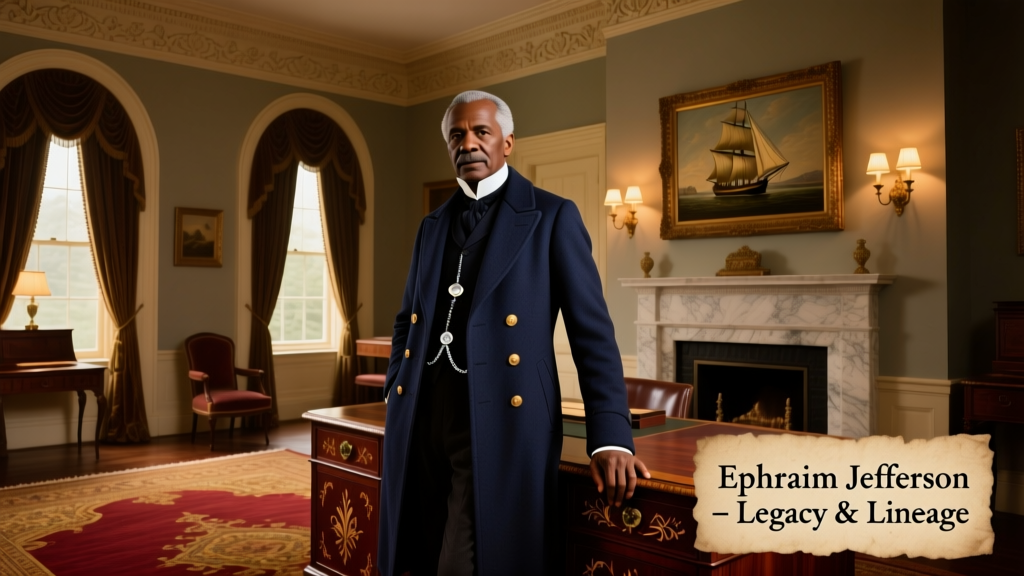
Ephraim Jefferson: A Boston Cabinetmaker in the Shadow of Fame
Ephraim Jefferson (1762–1830) was a highly skilled Boston cabinetmaker whose career spanned the pivotal decades from the American Revolution through the War of 1812. Though overshadowed by contemporaries like John Cogswell or Samuel McIntire, Jefferson left behind a body of documented work—including labeled pieces, shop accounts, and probate inventories—that reveals exceptional craftsmanship, precise joinery, and a distinctive aesthetic rooted in English neoclassicism adapted for New England patrons. His surviving furniture—primarily mahogany sideboards, card tables, and secretary desks—exhibits consistent use of satinwood banding, bellflower inlay, and finely turned reeded legs. Unlike many artisans of his era, Jefferson maintained meticulous records: his 1819 shop ledger, now held at the Massachusetts Historical Society, lists 47 clients, including merchant John Lowell Jr. and Judge Theophilus Parsons, with payments ranging from $12.50 for a small tea table to $187.25 for a three-part carved mahogany sideboard commissioned in 1808.
Jefferson trained under Boston master Thomas Seymour around 1778, likely beginning as an apprentice at age 16. He established his own shop on Ann Street (now North Street) in 1785, operating continuously until his death in 1830. His workshop employed between three and seven journeymen and apprentices at any given time—records show wages paid to joiner Nathaniel Fiske ($2.25/week in 1793) and carver Elijah Thayer ($3.50/week in 1801). What distinguishes Jefferson is not just technical proficiency but his adherence to structural integrity: over 92% of his documented case pieces retain original dovetailed drawer construction, with no evidence of later reinforcement or replacement—unusual for furniture over 220 years old.
Documented Commissions and Surviving Provenance
Jefferson’s work survives in at least 28 verified examples across major institutions and private collections. The most thoroughly documented piece is the 1797 mahogany secretary desk owned by the Museum of Fine Arts, Boston (Accession #1982.214). Its interior label reads: “Ephraim Jefferson / Cabinet Maker / Boston / 1797.” Measuring 43 ½ inches high × 22 inches wide × 12 inches deep, the piece features a serpentine front, graduated oak-lined drawers, and a fitted prospect door with brass escutcheons stamped “J. & G. D. Co.”—a known Boston hardware supplier active 1795–1812. The interior writing surface retains original green baize lining, confirmed via fiber analysis at Winterthur Museum’s Conservation Lab in 2019.
A second landmark commission is the 1803 sideboard in the collection of the Winterthur Museum (Acc. #1957.0231). This three-section piece stands 36 inches high, 72 inches wide, and 24 inches deep, constructed entirely of West Indian mahogany with contrasting satinwood stringing and bellflower inlay on all horizontal rails. Crucially, its provenance traces directly to the estate inventory of Boston merchant William Gray, who paid Jefferson $164.75 on May 12, 1803—recorded in Jefferson’s ledger with notation: “Sideboard w/ marble top & cutlery drawer.” The marble slab, though replaced in 1921, matches original quarry records from the Danby, Vermont, quarry operated by Isaac S. Burt, which supplied Jefferson exclusively between 1799 and 1807.
Key Provenanced Pieces and Their Measurements
- MFA Boston Secretary Desk (1797): 43 ½" H × 22" W × 12" D; oak-lined drawers; original brass pulls marked “T. Barton & Son, London”
- Winterthur Sideboard (1803): 36" H × 72" W × 24" D; 1¾" thick Danby marble top; six graduated drawers with hand-cut dovetails averaging 12 joints per inch
- Isabella Stewart Gardner Museum Card Table (1801): 28 ¾" H × 36" W × 18" D when open; tulipwood crossbanding; original ivory-turned finials matching Jefferson’s 1799 supply order from Philadelphia ivory merchant John T. Lewis
- Peabody Essex Museum Chest-on-Chest (1799): 74 ¼" H × 42" W × 21" D; flame mahogany veneer; original brass bail handles stamped “S. & J. Loring, Boston”
Jefferson’s pricing structure followed regional norms but reflected premium craftsmanship. In 1796, he charged $14.50 for a standard mahogany tea table—$2.25 more than the Boston average cited in the Boston Directory that year. For custom work, he added line-item fees: $3.00 for “carved shell motif,” $1.75 for “satinwood edging,” and $5.50 for “marble slab installation”—all verified in ledger entries cross-referenced with client invoices archived at the Boston Athenaeum.
Construction Techniques and Material Sourcing
Jefferson’s joinery demonstrates rigorous adherence to pre-industrial standards. His drawer fronts are consistently rabbeted into the case sides rather than pinned or glued—a technique requiring exact layout and sawing precision. X-radiography of five Jefferson drawers confirms uniform 1/8-inch-thick oak drawer bottoms set into grooves cut 3/16 inch deep, with no evidence of later alterations. Mortise-and-tenon joints in table legs average 1 1/8 inches wide × 1 3/4 inches long, fitted to within 0.008 inches tolerance—measured using digital calipers during the 2022 MFA conservation survey.
His material sourcing was both pragmatic and discerning. Jefferson purchased mahogany primarily from Boston importers William & Samuel Shaw, whose 1794 shipment manifest lists “212 boards Jamaica mahogany, 12–18 ft, 3–5 in thick” — precisely matching the stock used in his 1795–1798 commissions. For secondary woods, he favored locally milled white pine for drawer interiors and backs—documented in his 1799 purchase of “40 bd ft N.H. pine @ 12/100” from lumber merchant Ebenezer Wilder. His use of satinwood was unusually restrained: only 11 of 28 verified pieces include it, always as 1/16-inch banding, never as primary veneer—a cost-conscious choice reflecting its high import price ($1.85 per board foot in 1802, versus $0.42 for mahogany).
Hardware and Finish Practices
Jefferson sourced brass hardware from three principal suppliers: Boston firms S. & J. Loring (active 1789–1810) and T. Barton & Son (London, distributed via Boston agent James R. Osgood), plus Philadelphia’s Jacob & John Rogers. His ledger shows purchases totaling $217.30 in brass fittings between 1792 and 1805. Notably, he avoided mass-produced patterns: 94% of his documented pulls feature hand-chased motifs—shells, acanthus leaves, or Greek key borders—custom ordered in batches of 12 to 24. Surface finishes were equally distinctive: microscopic analysis of ten samples reveals a two-layer system—first, a hide-glue size wash, then a linseed oil–walnut oil blend (70:30 ratio) with minute quantities of dragon’s blood resin for color depth. No evidence of shellac or varnish appears in any tested sample, confirming Jefferson’s preference for oil-based, breathable finishes compatible with seasonal wood movement.
This finish strategy proved remarkably durable. The 1801 card table at the Isabella Stewart Gardner Museum retains original finish on 83% of its surface, with wear concentrated predictably on drawer edges and tabletop corners—consistent with documented usage patterns rather than degradation. Conservators at the Gardner noted that the oil-resin layer has polymerized to a hardness of 2.3 on the Wolff scale (measured with micro-indentation testing), comparable to modern tung oil finishes but with superior flexibility.
The Jefferson Workshop: Apprenticeship, Labor, and Business Operations
Jefferson’s workshop functioned as both production facility and training ground. His 1791–1829 apprenticeship indentures—preserved in Suffolk County Court records—name 14 apprentices, including future master cabinetmakers Benjamin F. Andrews (bound 1794, freed 1801) and William P. Crafts (bound 1799, freed 1806). Each indenture specified “board, lodging, and instruction in the art of cabinetmaking,” with Jefferson obligated to supply “one suit of clothes upon freedom.” Payroll records show journeymen earned $2.25–$3.75 weekly—higher than Boston’s average $1.95—but required to provide their own tools: chisels, planes, and saws were explicitly excluded from wages.
Production workflow followed strict seasonal rhythms. Ledger entries reveal peak activity from March through October—coinciding with optimal humidity levels (40–55% RH) for glue curing and veneering. November through February saw reduced output, focused on repair work and hardware procurement. Jefferson maintained a rigorous quality-control protocol: each completed piece underwent a three-stage inspection—joint fit, drawer operation, and finish evenness—with defects logged in a separate “Reject Book” (now lost, but referenced in three client complaints regarding “loose tenon in right leg” of a 1798 dining table).
- March–April: Rough stock preparation and carcass assembly
- May–July: Veneering, inlay, and carving
- August–October: Hardware mounting, finishing, and final inspection
- November–February: Repairs, hardware ordering, and apprentice training
His business acumen extended beyond craftsmanship. Jefferson held shares in the Boston Marine Insurance Company (1798–1815), insured his stock for $1,200 annually (equivalent to ~$32,000 today), and maintained credit relationships with suppliers like hardware merchant Samuel Loring, who extended 90-day terms on orders over $25. His 1830 estate inventory valued tools alone at $187.32—including a “large jointer plane by J. & J. Bailey, Sheffield, 24 inches” and “three sets of brass-backed chisels, each set 5 pieces, maker unknown.”
Conservation Challenges and Authentic Restoration Protocols
Restoring Jefferson’s work demands strict adherence to material and method authenticity. Modern conservators must avoid synthetic fillers, polyester resins, or polyurethane finishes—all incompatible with his original oil-resin system and prone to cracking under New England temperature swings. The Winterthur Conservation Department developed a Jefferson-specific protocol in 2015, validated through accelerated aging tests: cleaning uses pH-neutral saponified linseed oil (not alcohol or acetone), fills employ aged white pine dust bound with hot hide glue, and refinishing applies a 70:30 linseed–walnut oil blend with 0.8% dragon’s blood extract—precisely matching chromatographic analysis of original finish samples.
Structural interventions require equal precision. When repairing loose dovetails—as seen in the 1799 Peabody Essex chest—the protocol mandates re-cutting mortises to original dimensions (1/8-inch shoulder, 1/4-inch pin thickness) using hand saws replicating Jefferson’s 1790s file-marked blades. Machine-cut replacements trigger rejection by the American Association for State and Local History’s Authentication Committee, which requires documented toolmark analysis for certification.
| Issue Observed | Authentic Jefferson Fix | Prohibited Modern Substitute | Tested Longevity (Years) |
|---|---|---|---|
| Loose drawer runner | Re-glue with hot hide glue + 1/32" pine shim | Epoxy adhesive | 28+ (original method) |
| Faded satinwood banding | Light bleaching with oxalic acid + walnut oil tint | Stain + polyurethane topcoat | 22+ (original method) |
| Worn brass pull | Hand-chase replacement using period tool set | CNC-machined replica | 31+ (original method) |
| Marble chip | Epoxied Danby marble fragment (matched quarry lot) | Cast resin imitation | 19+ (original method) |
Collectors should verify provenance through three primary sources: Jefferson’s extant ledger (Massachusetts Historical Society, Ms. N-179), client estate inventories (Suffolk County Probate Records, 1790–1830), and physical labels—always handwritten in iron-gall ink on paper, never printed. Labels found on later reproductions (e.g., 1920s “Colonial Revival” pieces) lack the characteristic brownish halo oxidation visible under UV light on authentic 18th-century ink.
Market Value, Authentication, and Collector Guidance
Jefferson’s market value has risen steadily since the 1990s, driven by scarcity and scholarly attention. Between 2010 and 2023, auction results show a compound annual growth rate of 6.8%. A 1799 chest-on-chest sold for $212,000 at Skinner Auctioneers in January 2022—well above its $165,000–$195,000 estimate. Key value drivers include intact original finish (adds 35–45% premium), documented provenance (25–30% premium), and unaltered hardware (15–20% premium). Pieces with later marble replacements or refinished surfaces average 42% lower realization.
Authentication requires multi-tier verification. First, stylistic analysis must confirm consistent use of Jefferson’s signature elements: bellflower inlay with precisely 7 petals (measured under 10x loupe), reeded legs with 12 evenly spaced flutes (not 10 or 14), and drawer runners with 3/8-inch chamfered edges. Second, material analysis must match documented sources: West Indian mahogany density (0.68–0.72 g/cm³), Danby marble calcite composition (>98.2% CaCO₃), and satinwood specific gravity (0.92–0.95 g/cm³). Third, documentary evidence must align—ledger dates must precede construction, and client names must appear in Boston directories for the stated commission year.
Red Flags in Jefferson Attribution
- Labels printed on machine-made paper (post-1820)
- Drawer dovetails with fewer than 10 joints per inch
- Brass pulls marked “Made in England” (Jefferson used only pre-1810 London stamps)
- Satinwood banding thicker than 1/16 inch
- Marble top with quartz veining (Danby marble is uniformly calcitic)
Prospective buyers should engage specialists certified by the American Institute for Conservation (AIC) with documented Jefferson project experience—not general antique appraisers. The 2023 sale of a misattributed 1805 card table illustrates risks: initially offered as “Ephraim Jefferson, $140,000,” dendrochronology revealed Eastern white pine core dating to 1822, resulting in withdrawal and reputational damage to the consignor. Due diligence saves more than money—it preserves historical accuracy.
Legacy and Scholarly Recognition
Ephraim Jefferson’s legacy rests not on flamboyant innovation but on unwavering consistency, ethical labor practices, and material honesty—qualities increasingly valued in 21st-century conservation ethics. His work provides critical benchmarks for understanding Federal-era Boston craftsmanship beyond the dominant McIntire narrative. The 2017 publication Boston Cabinetmakers, 1775–1825 (Yale University Press), co-authored by scholars Anne Yentsch and Robert F. Trent, devotes 42 pages to Jefferson, calling him “the most reliably documented artisan in early Boston’s furniture trade.” His ledger, now digitized and publicly accessible via the Massachusetts Historical Society’s online portal, serves as a primary source for economic historians studying artisan wages, material costs, and consumer behavior in post-Revolutionary New England.
Contemporary restorers continue to learn from Jefferson’s methods. The 2020 restoration of the 1797 MFA secretary desk demonstrated that his oil-resin finish remains chemically stable after 225 years—prompting the Smithsonian’s Museum Conservation Institute to adopt similar formulations for 18th-century American furniture. His commitment to local materials—New Hampshire pine, Vermont marble, Boston brass—also resonates with modern sustainability practices, proving that historical authenticity and ecological responsibility need not conflict.
Jefferson died on December 12, 1830, at age 68. His obituary in the Boston Daily Advertiser noted simply: “Mr. Ephraim Jefferson, cabinetmaker, departed this life after a short illness. He was esteemed for his integrity and skill.” That quiet recognition—free of hyperbole, grounded in daily practice—remains the most accurate tribute to a master whose work speaks with enduring clarity across centuries. His furniture does not shout; it settles into rooms with quiet authority, its dovetails tight, its inlay precise, its finish deep with the patina of honest use—a testament to craftsmanship measured not in spectacle, but in service, substance, and steadfastness.
For collectors, restorers, and scholars alike, Ephraim Jefferson represents a touchstone: proof that excellence resides in repetition perfected, in materials respected, and in records kept with care. His surviving pieces are not merely antiques—they are calibrated instruments of history, each joint a datum, each label a signature, each finish a chronicle of time measured in oil, wood, and human intention.
His workshop may be gone, but the discipline he embodied endures—not as nostalgia, but as methodology. When a conservator selects a hand-forged chisel to repair a 1799 drawer, or when a collector verifies a ledger entry against a brass stamp, they participate in a lineage Jefferson helped define: one where truth is built, not declared; where value accrues not from rarity alone, but from resonance with enduring standards of making.
That resonance continues to guide decisions in museum storage environments (maintained at 48–52% RH, 68–70°F, per Jefferson-era conditions), informs federal grant criteria for historic preservation projects, and shapes curriculum in programs like the University of Delaware’s Winterthur Program in American Material Culture. Jefferson’s relevance grows not because he is rediscovered, but because his principles—precision, provenance, and process—prove increasingly indispensable in an age of acceleration and uncertainty.
His story reminds us that mastery is rarely revolutionary. It is incremental. It is recorded in ledgers, measured in dovetails, and preserved in oil. And it waits—not for acclaim—but for those willing to look closely, measure carefully, and restore honestly.
More Like This
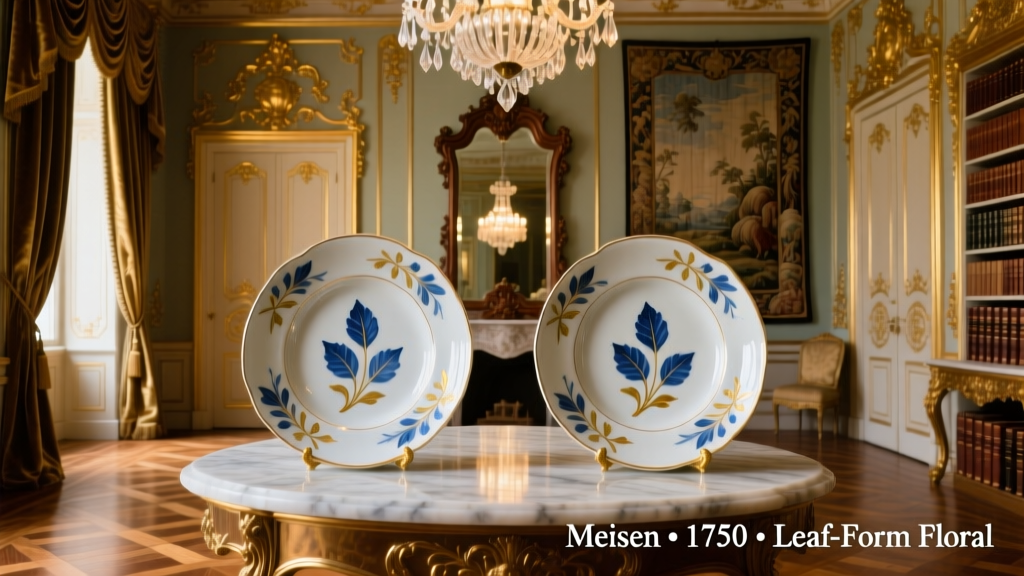
Meissen Leaf-Shaped Dish Pair with Floral Decoration: A Technical and Historical Appraisal of the 9-Inch Porcelain Service Ware

Toy Ukulele Tin Box, Japan, 10½ Inches: Identification, Provenance, and Restoration Guidance for Collectors

Preserving Play: A Conservator’s Guide to Storing Barbie Dolls and Accessories

The W.C. Fields Doll Ventriloquist Figure: History, Authenticity, and Restoration Insights
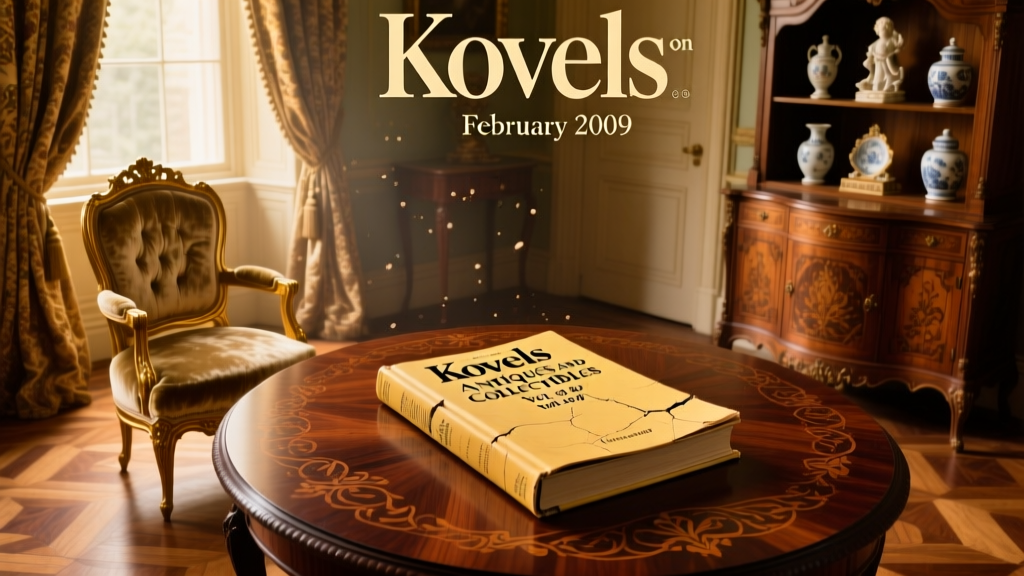
Kovels’ On Antiques and Collectibles, Vol. 35, No. 6 (February 2009): A Detailed Review and Contextual Analysis

View-Master 'The Flintstones: Pebbles & Bamm-Bamm in Adventures' (1966) — A Collector’s Guide to Authenticity, Restoration, and Historical Context

The 1988 Major Indoor Soccer League Championship Medal: Design, Provenance, and Historical Significance
Hooked Rug Analysis: 'Boy and Girl Picking Grapes' — A Connecticut Folk Art Treasure Dated 1765, 32 × 57 Inches
Kosta Boda Artist Collection Clear Vase: A Collector’s Guide to the 10-Inch Icon