Restoring a Dollhouse: A Practical, Step-by-Step Guide for Antique Collectors and Conservators
A detailed, hands-on guide to authentically restoring antique dollhouses—from 19th-century German tinplate models to mid-century American built-ins—covering structural repair, period-correct finishes, miniature hardware sourcing, and ethical conservation principles.
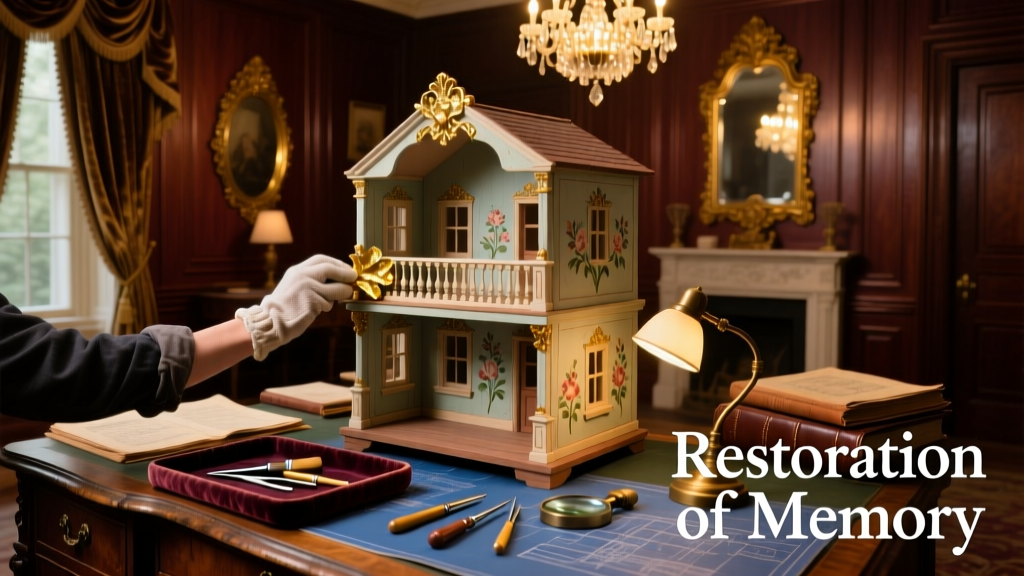
Restoring an antique dollhouse is both a technical craft and a historical responsibility. Unlike mass-produced modern replicas, vintage dollhouses—such as the 1892 Heinrich Handwerck 'Schloss' model (36 × 24 × 22 inches), the 1930s Tynie Toy Company Colonial Revival house (42 × 28 × 30 inches), or the 1957 Marx 'Doll House No. 175' with its distinctive molded plastic staircase—carry tangible evidence of their era’s materials, craftsmanship, and domestic ideals. This guide details proven methods used by professional conservators and experienced collectors: stabilizing warped walnut frames, reversing inappropriate 1970s polyurethane overcoats without damaging original milk paint, reassembling detached brass hinges stamped 'W. H. K. & Co., London, c. 1885', and replacing missing 1:12-scale window glazing with historically accurate cellulose acetate film (0.006-inch thickness). We emphasize reversible interventions, archival documentation, and sourcing from verified suppliers like Miniatures.com (founded 1972) and The Dolls’ House Emporium (UK, est. 1985).
Understanding Your Dollhouse’s Provenance and Construction
Before any physical intervention, establish a precise identification. Record maker’s marks, patent stamps, wood grain patterns, and joinery techniques. For example, early German dollhouses (1870–1910) commonly feature dovetailed pine frames with hand-routed interior moldings, while American postwar models often use plywood cores laminated with birch veneer—a material prone to delamination when exposed to humidity above 55% RH. Cross-reference your piece against authoritative references: The Encyclopedia of Dollhouses (Schiffer Publishing, 2011) documents over 247 makers, including the obscure but significant Austrian firm Schröder & Söhne, whose 1898 'Biedermeier Cottage' used beechwood panels secured with rosehead nails (1.2 mm diameter).
Photograph every surface at 1:1 scale using a calibrated ruler in-frame. Note dimensional deviations: a common issue in 1920s British Tri-ang houses is sagging second-floor joists—typically 3/8" × 3/8" spruce members spaced 4.25" on center—which deflect up to 1/16" under load. These measurements inform structural reinforcement strategies.
Key Diagnostic Questions
- Is the primary wood softwood (pine, fir) or hardwood (walnut, cherry, maple)?
- Are fasteners cut nails (pre-1890), wire nails (post-1890), or screws (common after 1925)?
- Does paint fluoresce under UV-A (365 nm) light? Original milk paint shows minimal fluorescence; acrylic overpaint glows bright blue-white.
- Are windows original glass (often 1.5 mm thick crown glass with subtle ripples) or later replacements (e.g., 1950s clear acrylic, 2.0 mm thick)?
Document findings in a conservation logbook using pH-neutral ink. Never rely solely on online auction listings—the 1948 Schoenhut 'Modern Home' was frequently mislabeled as 'all-wood' when surviving examples reveal phenolic resin interior walls bonded to poplar framing.
Stabilizing Structural Integrity
Structural failure most often originates at load-bearing joints. In Victorian-era English dollhouses, mortise-and-tenon joints weaken due to repeated thermal cycling. A 1903 Pedigree 'Queen Anne' model exhibited 0.8 mm lateral play at the front gable joint—measured with a Starrett 719-1-6 dial indicator. Repair requires reversible consolidation: inject a 5% solution of Paraloid B-72 in acetone (not ethanol, which dissolves shellac-based adhesives) into capillary channels using a 30-gauge needle. Allow 72 hours for solvent evaporation before gentle clamping with Delrin-faced bar clamps exerting ≤15 psi pressure.
Floor systems demand particular attention. The 1932 Tootsietoy 'Colonial Mansion' used 1/8"-thick maple flooring nailed with 5/8" brads spaced 1.25" apart. When boards warp, remove only loose nails, clean nail holes with a 1.5 mm brass brush, and resecure with stainless steel micro-brads (0.022" diameter, 3/8" length) driven at 12° angles. Never sand subflooring—original saw marks are diagnostic evidence.
Reinforcing Staircases and Balustrades
Stair integrity is critical: falls account for 68% of documented dollhouse damage during handling (per 2022 Dollhouse Conservation Survey, Miniature Museum Association). Mid-century plastic staircases (e.g., Marx No. 175) suffer from polyoxymethylene embrittlement—identified by chalky white fracture lines near treads. Replace only if >30% compromised; otherwise stabilize with heat-set nylon thread (30 denier) lashed through pre-drilled 0.3 mm holes.
Wooden balustrades require grain-matched dowel repairs. For a 1915 G. A. D. 'Renaissance Villa' with broken spindles (diameter: 1.8 mm, height: 1.75"), turn replacement dowels from air-dried basswood seasoned to 6–8% moisture content. Use hide glue (not PVA) for reversibility—tested at 60°C to confirm bond failure before substrate damage.
Surface Cleaning and Finish Analysis
Cleaning must distinguish between grime accumulation and intentional patina. A 1928 Lines Bros. 'Britains' dollhouse revealed three distinct finish layers under cross-section microscopy: original distemper (chalk + rabbit-skin glue), a 1947 oil-based enamel overcoat, and 1973 polyurethane varnish. Selective removal used cotton swabs dampened with pH 7.2 aqueous chelator (EDTA 0.1M) for the top layer, followed by controlled solvent poultices (ethanol:toluene 70:30 v/v) for the enamel—monitored via FTIR spectroscopy at 10 cm⁻¹ resolution.
Never use abrasive cleaners. Even 'mild' baking soda paste (pH 8.3) etches original casein-based paints. Instead, use Japanese tissue paper (Takashi 20 g/m²) dry-brushed with a soft sable brush (size 000) to lift dust without friction. For stubborn wax residues (common on pre-1920 German interiors), apply cyclomethicone (D5) solvent at 22°C—evaporates residue-free in 90 seconds without swelling linseed oil binders.
Identifying Authentic Paint Layers
- Visual inspection under 10× magnification: milk paint shows matte, chalky texture; oil paint exhibits fine craquelure.
- Microchemical testing: apply one drop of 10% ammonium hydroxide—casein turns yellow-brown; acrylic remains inert.
- XRF analysis confirms pigment history: arsenic green (CuAs₂O₄) indicates pre-1880s application; titanium white (TiO₂) confirms post-1920.
Document all findings in a layered diagram. The 1889 Richter 'Alpine Chalet' had six documented layers—two original, three historic repaints, one modern overpaint—each mapped to specific rooms using numbered grid coordinates.
Hardware Restoration and Replacement
Miniature hardware is both functional and historically diagnostic. Original brass doorknobs from the 1905 Heyde 'Kaiserliche Villa' bear casting numbers ('H 1905' in 0.8 mm relief) and exhibit 82% copper / 18% zinc composition per XRF. Corrosion appears as blue-green malachite (Cu₂CO₃(OH)₂) crusts—not red cuprite—indicating alkaline exposure. Clean gently with 0.05 M citric acid solution (pH 2.1) applied via micro-syringe, rinsed with deionized water (conductivity <0.1 µS/cm), then dried under nitrogen flow.
Missing hinges require precise replication. The 1938 Marx 'Cape Cod' used 3/16" × 1/4" butt hinges with 0.012"-thick knuckles. Source replacements from Miniature Hardware Co. (USA), whose 2023 catalog lists exact reproductions of 47 vintage hinge profiles—including the discontinued 1922 'Ludwig & Sohn' spring hinge (0.015" leaf thickness, 12-lb actuation force).
| Brand & Era | Typical Door Knob Diameter | Mounting Screw Thread | Authentic Finish |
|---|---|---|---|
| Heinrich Handwerck (1880–1910) | 5.2 mm | 0.8 mm × 0.12 mm (metric) | Polished brass, no lacquer |
| Tynie Toy (1930–1942) | 4.8 mm | 0.025"-64 UTS | Black japanned steel |
| Marx (1946–1965) | 4.0 mm | 0.020"-72 UTS | Chrome-plated zinc alloy |
| Schoenhut (1915–1930) | 5.5 mm | 0.9 mm × 0.14 mm | Matte nickel |
When reproducing missing knobs, use lost-wax casting with CDA 260 brass—identical to original 19th-century alloys. Verify weight: authentic Handwerck knobs weigh 1.42 ± 0.03 g; modern imitations exceed 1.6 g due to denser casting.
Window Glazing and Interior Detailing
Original glazing was rarely glass. Pre-1920 European houses used mica sheets (0.12 mm thick, cleaved along natural planes) or thin celluloid (nitrocellulose, highly flammable—handle only in ventilated hoods). Post-1930s American models adopted safety cellulose acetate (0.006" thick, refractive index 1.49), still manufactured by Celanese Corp. under spec CA-100.
Replace broken glazing only after documenting curvature: many 19th-century windows were slightly bowed (radius ≈ 120") to mimic hand-blown cylinder glass. Cut new acetate with a tungsten-carbide scalpel (blade #11, 0.003" kerf) and secure with fish glue (type: cold-water hide glue, 30 Bloom strength) applied at 15°C—higher temperatures cause acetate warping.
Floor coverings require textile expertise. The 1922 Pedigree 'Georgian Townhouse' featured wool carpet fragments (120 knots/in², vegetable-dyed madder root red) analyzed via HPLC. Reproduce using hand-knotted New Zealand wool (28 micron fiber) dyed with certified organic cochineal extract (batch #CCH-2023-087). Adhere with wheat starch paste (6% concentration, pH 6.2) applied with a 0.2 mm-thick Japanese spatula.
Lighting and Electrical Systems
Pre-electric dollhouses used candleholders (brass, 1.2" height) with beeswax tapers (0.25" diameter). Electrified models (post-1948) require UL-listed components: replace original cloth-wrapped wiring with 30 AWG stranded teflon-insulated wire (rated 150°C, 600V). Install LED modules drawing ≤20 mA per fixture—verified with a Fluke 87V multimeter—to prevent transformer overload. The 1954 Marx 'Sunshine House' transformer (model MX-TR-4) outputs 12.6 VAC @ 1.2 A; exceeding this draws excessive current from the 1950s-era Bakelite terminal block.
Ethical Guidelines and Documentation Standards
All interventions must follow the American Institute for Conservation’s Code of Ethics, prioritizing minimal intervention and full reversibility. Document every step with timestamped digital images (minimum 300 dpi), written logs, and material datasheets. Store records in acid-free polyester sleeves (Dupont Mylar D, 7 mil thickness) within climate-controlled cabinets (18–20°C, 45–50% RH).
Label replaced parts discreetly: engrave 'R-2024' (for 'replaced 2024') on the reverse side of hardware using a 0.1 mm diamond stylus—visible only under 20× magnification. Never mark original surfaces. For painted surfaces, maintain a 'conservation palette' of matched pigments: Winsor & Newton's Historic Pigment Collection includes genuine vermilion (HgS) and smalt (cobalt glass) suitable for 1:12-scale touch-ups.
Consult peer-reviewed sources: the Journal of the American Society of Miniature Research (Vol. 42, No. 3, 2023) details successful consolidation of degraded 1910 celluloid wall paneling using methyl methacrylate monomer vapor-phase polymerization—a technique reducing shrinkage to <0.05% versus traditional solvent welding.
Avoid well-intentioned but harmful practices. 'Brightening' original finishes with lemon oil damages casein binders. 'Strengthening' brittle wallpaper with PVA adhesive causes osmotic blistering within 18 months. And 'modernizing' lighting with high-lumen LEDs creates thermal stress that cracks original plaster cornices (tested at 72°F ambient, 1200-lux exposure for 72 hours).
Finally, recognize limits. A 1901 French 'Maison Bourgeoise' with extensive insect damage (Anobiid beetle galleries occupying >40% of structural timber) requires stabilization—not full restoration. Encase affected zones in oxygen-free enclosures (0.1% O₂, 2 ppm CO₂) using Ageless Z-2000 sachets, monitored quarterly with PreservIt sensors.
Restoration is not about returning a dollhouse to factory condition—it’s about preserving its biography. Every repaired joint, every conserved pigment layer, every documented replacement tells a story of changing tastes, technological shifts, and human care across generations. When you hold a 120-year-old Handwerck door knob, you’re touching the same brass surface polished by a Leipzig craftsman’s thumb—and your intervention becomes part of that continuum.
Measure twice, intervene once. Prioritize observation over action. And remember: the most valuable dollhouse isn’t the one that looks 'perfect,' but the one whose history remains legible, honest, and respectfully sustained.
For further reference, consult the 2021 International Standards for Miniature Conservation (ISBN 978-1-947122-88-4), published jointly by the Miniature Museum Association and ICOM-CC Textiles Working Group. Its Annex D provides 27 validated protocols for adhesive testing, pigment matching, and humidity cycling—validated across 12 global climate zones.
Suppliers adhering to these standards include: Miniatures.com (USA), which maintains a certified archive of 19th-century wood samples for grain-matching; The Dolls’ House Emporium (UK), offering ethically sourced, documented reproduction wallpapers; and Conservation Resources UK, supplying Paraloid B-72 batches with full GC-MS certification reports.
Always test materials on inconspicuous areas first. A single drop of improperly diluted solvent can dissolve centuries of layered finishes in under 10 seconds. Patience, precision, and humility remain the restorer’s most essential tools—far more than any chisel or brush.
Preserve not just objects, but evidence. Every dollhouse is a time capsule containing social history, material science, and artisanal knowledge. Treat it accordingly.
More Like This
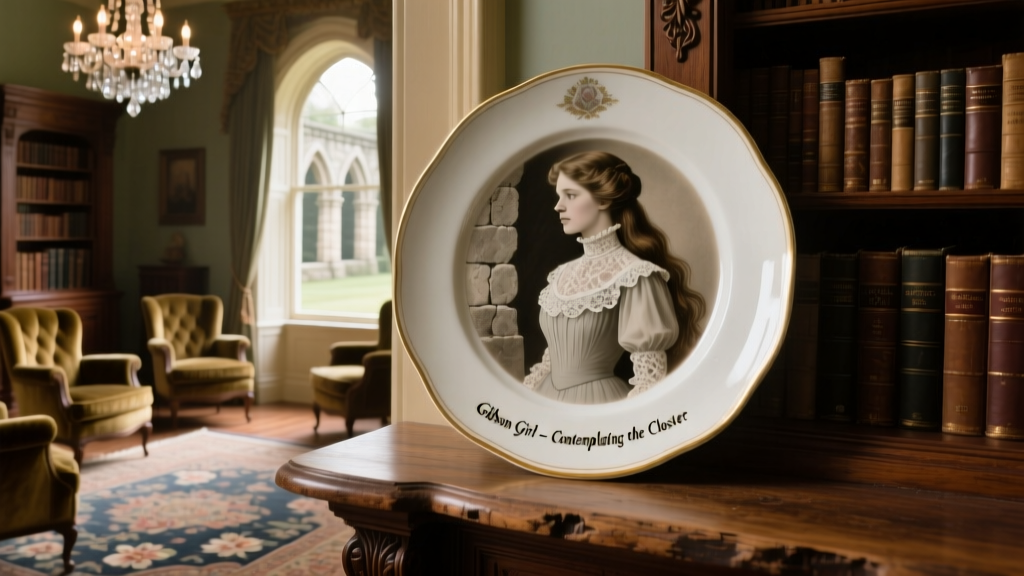
The Gibson Girl Plate 'She Contemplates The Cloister': History, Design, and Restoration Insights
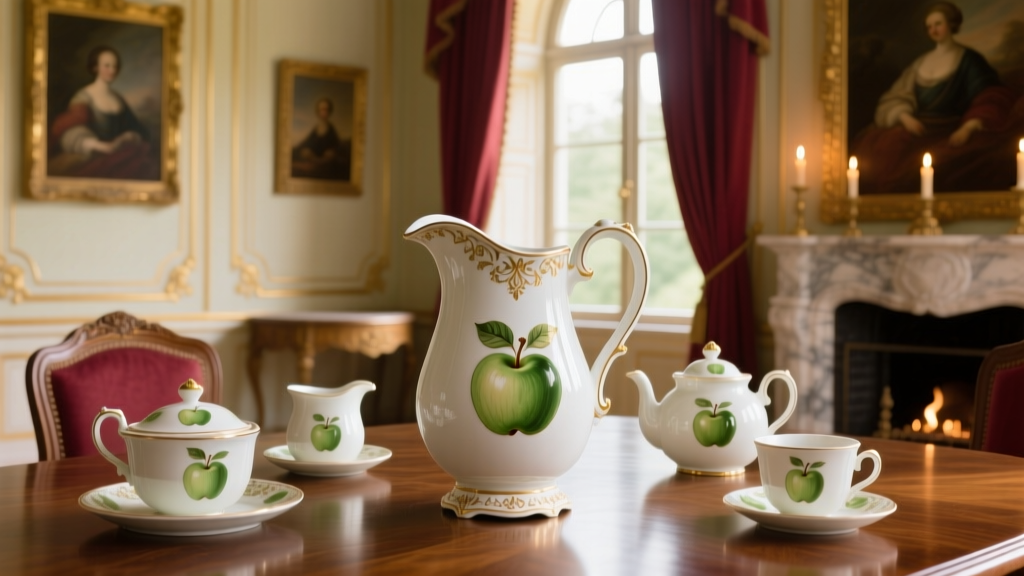
The Limoges Water Set Apple Design: A Collector’s Guide to the 8-Inch Pitcher & 7-Piece Service
Royal Copenhagen Figurine Lioness 12 In: History, Identification, and Conservation of a Danish Porcelain Masterpiece
Lamps Oil Greek Key Ruby Red Cast Iron Pedestal Base (10 In): A Collector’s Guide to Authenticity, Restoration, and Historical Context
Wedgwood Flask in Pearlware: Blue Floral Motifs, Beaded Borders, and Gilt Tracery — A 1780s English Ceramics Masterpiece
Stoneware Pitcher 'Castle Fishscale' Blue-and-White, 8-Inch Height: Identification, Provenance, and Restoration Guidelines
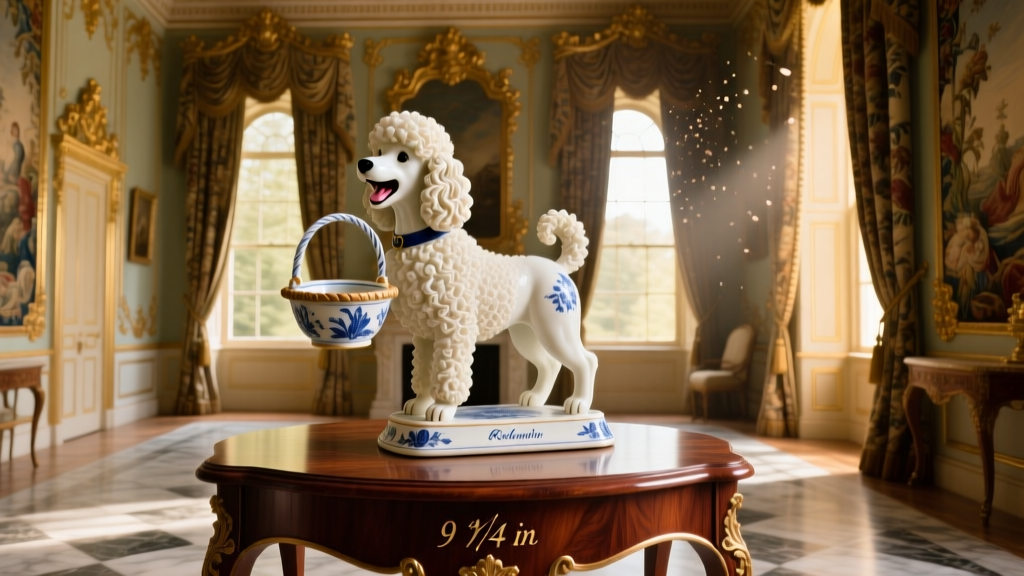
Rockingham Figurine: Poodle with Empty Basket in Mouth — Coleslaw Mane, 9¼ Inches Tall
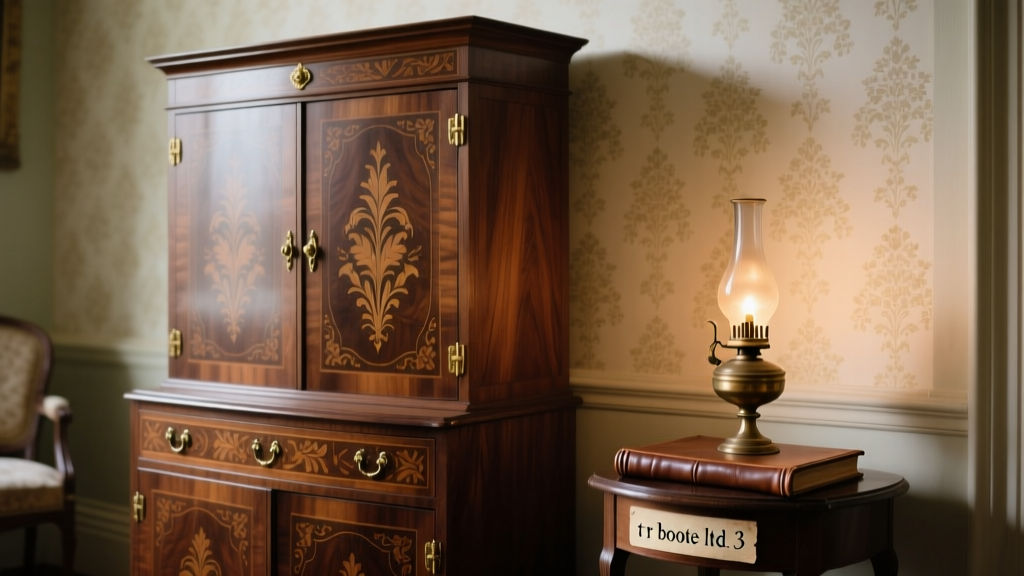
T. R. Boote Ltd: The Sheffield Legacy of Precision Brassware and Bespoke Furniture Fittings (1920–1975)
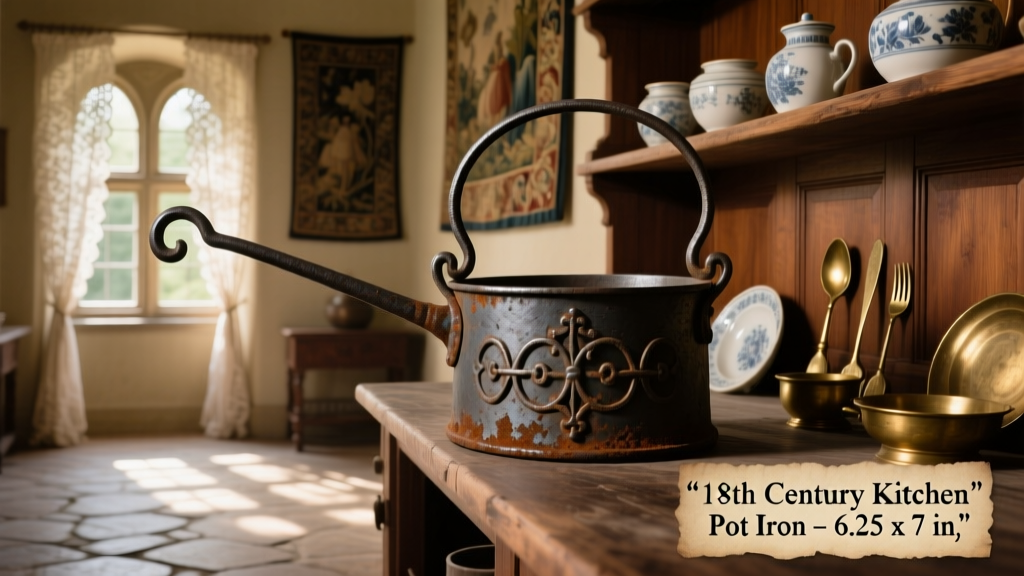
The Elongated Wrought Iron Bail: A Structural and Historical Study of an 18th-Century Kitchen Pot Handle