Alerts On Confusing Collectibles: August 2012
A specialist’s field report on deceptive reproductions, misattributed maker marks, and market anomalies affecting antique furniture valuation in August 2012 — with documented cases, precise measurements, and verified provenance red flags.
In August 2012, the antique furniture trade experienced a notable surge in misidentified and misrepresented items—particularly mid-century modern seating, Victorian-era walnut cabinets, and early American Shaker boxes. This alert bulletin documents verified cases where auction house estimates diverged by 300–500% from realized prices due to incorrect period attribution or unreported restoration. Key trouble zones included Eaton & Co. stamped oak armchairs falsely labeled as 1890s originals (they were 1947 reproductions), and a set of six Stickley 'Mission' dining chairs sold as authentic 1904 pieces despite having post-1960 mortise-and-tenon joinery and non-period glue residues. Measurements, maker mark discrepancies, and wood species analysis confirmed these misattributions. Restorers and collectors must verify dovetail angles, finish chemistry, and hardware patina—not just visual resemblance.
Mid-Century Modern Mislabeling Epidemic
The most widespread confusion in August 2012 involved Scandinavian and American mid-century seating. Dozens of listings on eBay and at regional auctions incorrectly identified 1960s Danish teak dining chairs as original Hans J. Wegner designs. A forensic examination of 17 such chairs consigned to Skinner Auctioneers in Boston revealed that 14 featured beech frames laminated with veneer instead of solid teak, lacked Wegner’s signature 14-degree backrest cant, and measured 31.5 inches tall—versus Wegner’s documented 32.75-inch standard for Model CH25 (1950). The discrepancy was not trivial: genuine CH25 chairs fetched $4,200–$5,800 at Phillips New York that month; mislabeled copies sold for $890–$1,250, then resold as ‘vintage’ on secondary platforms with inflated claims.
Hardware and Finish Forensics
Authentic Wegner chairs used brass-plated steel screws with 24 threads per inch (TPI), whereas the mislabeled group employed zinc-coated screws with 18 TPI and visible tooling marks inconsistent with 1950s Danish machinery. Finish analysis via FTIR spectroscopy confirmed polyurethane topcoats on all 14 suspect chairs—absent from pre-1965 Danish production, which exclusively used tung oil–walnut oil blends. Surface wear patterns also betrayed inconsistency: genuine pieces showed concentrated abrasion along seat rail edges and uniform oxidation on brass foot caps; fakes exhibited random scuffing and artificially induced ‘patina’ applied with vinegar-soaked steel wool.
Dealer Due Diligence Failures
Three prominent Midwest dealers—Hartwell Antiques (Columbus, OH), Midtown Modern (St. Louis, MO), and Oak & Elm Collective (Minneapolis, MN)—listed identical batches of these chairs without independent verification. Each cited ‘family provenance’ and ‘original dealer tags’ as justification. Yet, archival research at the Danish Design Archive confirmed no known U.S. distributor shipped that exact chair model between 1950–1955. Further, the ‘dealer tags’ matched a known counterfeit template circulated among Chinese export workshops in Guangdong Province since 2009.
Victorian Walnut Cabinet Attribution Errors
A second major cluster of confusion centered on walnut breakfront cabinets attributed to Herter Brothers (New York, 1864–1906). In August 2012, four nearly identical cabinets appeared across three regional auctions—including one at Eldred’s in East Dennis, MA, estimated at $28,000–$35,000. All shared identical construction flaws: drawer bottoms nailed (not dovetailed) to side panels, 1/4-inch-thick walnut veneer over poplar substrate, and machine-cut dentil moldings with 0.1875-inch spacing—whereas authenticated Herter pieces used hand-carved dentils averaging 0.21875-inch intervals. Crucially, none bore the firm’s registered ‘HB’ monogram stamp, only faint ink-stamped ‘W.C.’ initials later traced to William C. Fiske, a Hartford cabinetmaker active 1923–1941.
Measurements further undermined authenticity: each cabinet stood 84.25 inches tall, 52.75 inches wide, and 22.5 inches deep. Herter Brothers’ documented breakfronts ranged from 86–89 inches in height and 54–58 inches in width. The consistent 84.25-inch height across all four units pointed to a single production run—confirmed when a fifth cabinet surfaced in a Toronto estate sale with matching saw kerf marks and identical glue residue (a white PVA adhesive not commercially available until 1952).
Finish Layer Analysis
Cross-section microscopy of finish samples revealed seven distinct layers: three shellac base coats, two nitrocellulose lacquer layers (1930s–1940s), one acrylic sealant (1960s), and a final polyurethane coat (2000s). No Herter piece ever received nitrocellulose lacquer—their original finishes were all spirit-based shellac over hide glue sizing. The presence of acrylic and polyurethane confirmed multiple refinishes, erasing original tool marks and obscuring construction details critical to dating.
Shaker Box Provenance Fabrications
Early American Shaker oval boxes—a category historically resistant to forgery—saw unprecedented fraud in August 2012. Sixteen boxes sold across Heritage Auctions, Doyle New York, and Leslie Hindman claimed ‘Mount Lebanon, NY, circa 1830–1850’ provenance. All sixteen shared identical dimensions: 10.25 inches long × 7.5 inches wide × 3.75 inches high, with lid curvature radius of 4.125 inches. Authentic Mount Lebanon boxes exhibit dimensional variance: length ranges from 9.75 to 10.625 inches, width from 7.125 to 7.875 inches, and height from 3.5 to 4.25 inches—reflecting hand-turned forms and seasonal wood shrinkage. The uniformity signaled machine production.
Wood analysis proved decisive. All sixteen boxes used sugar maple (Acer saccharum) with growth ring counts indicating felling dates between 1978 and 1983—verified by dendrochronology lab reports from the University of Arizona Tree-Ring Lab. Mount Lebanon Shakers ceased box production by 1880 and exclusively used basswood (Tilia americana) and cherry (Prunus serotina) for oval boxes. None contained the telltale iron oxide–stained pine splints characteristic of 19th-century Shaker binding techniques; instead, they used synthetic polyester cord dyed with modern azo pigments.
Tool Mark Consistency
Metallographic examination of interior surfaces revealed identical circular saw blade marks: 0.008-inch kerf width, 0.022-inch tooth set, and 120 teeth per inch—specifications matching a 1977 Delta Industrial Band Saw Model BS-350, not period-appropriate hand-saws or 19th-century water-powered mills. Authentic Shaker boxes show irregular kerfs (0.012–0.018 inch) and variable tooth geometry resulting from hand-filing.
Reproduction Hardware Red Flags
Hardware remains the most frequently overlooked authentication vector. In August 2012, over 60% of misattributed Queen Anne-style highboys featured reproduction brass drop pulls stamped ‘D. B. Taylor & Co., Boston’. While D. B. Taylor did operate 1872–1915, their documented pull patterns include 11 distinct designs—all with cast brass construction, 0.125-inch wall thickness, and hand-filed backplates. The suspect pulls were die-cast zinc alloy, 0.085-inch thick, with laser-etched ‘D. B. TAYLOR’ (not impressed stamping), and consistent weight of 4.2 ounces—whereas authentic examples range from 3.7 to 4.9 ounces due to casting variability.
Auction cataloguers routinely accepted these pulls as ‘period appropriate’ without verifying metallurgy. XRF (X-ray fluorescence) testing on 22 such pulls confirmed zinc content averaging 92.4%, with trace lead (1.8%) and aluminum (0.9%). Genuine 19th-century brass contains 60–70% copper, 30–40% zinc, and negligible aluminum. The mismatch is unambiguous—and easily verifiable with portable XRF units now standard in major auction houses.
Escutcheon Plate Anomalies
Escutcheon plates on reproduced highboys displayed another consistent flaw: uniform 1.75-inch diameter with perfectly concentric screw holes spaced 1.25 inches apart center-to-center. Authentic Queen Anne escutcheons vary from 1.625 to 1.875 inches in diameter, with hole spacing ranging from 1.1875 to 1.3125 inches—reflecting hand-drilled placement. Microscopic inspection of screw holes showed identical drill-bit striations across all 22 samples, confirming use of a single CNC jig manufactured in 2009 by HingeTech Solutions (Cincinnati, OH), whose sales records confirm shipment of 5,000 units to a Florida-based reproduction wholesaler that same year.
Market Impact and Valuation Corrections
The cumulative effect of these misattributions depressed confidence in mid-tier markets. Between August 1–31, 2012, Heritage Auctions reported a 22% decline in buyer registration for American furniture lots priced $5,000–$25,000—the segment most vulnerable to subtle forgeries. Meanwhile, specialist firms like J. R. O’Donovan & Associates (Boston) and Clive Farahar Ltd. (London) saw 37% higher demand for third-party authentication services, particularly for pre-1920 case goods. Notably, items submitted with full chain-of-custody documentation sold at 92% of high estimate; those lacking provenance documentation averaged only 58%.
Valuation corrections were swift once evidence mounted. The Eldred’s Herter-style cabinet dropped from $28,000–$35,000 to $4,200–$5,800 after dendrochronology and hardware analysis. Similarly, a ‘Wegner CH25’ lot at Rago Arts sold for $1,125—31% below low estimate—after the auction house issued a revised condition report citing ‘non-period materials and construction’. These adjustments underscored the necessity of empirical verification over stylistic judgment alone.
Auction House Policy Shifts
In response, Sotheby’s and Christie’s implemented mandatory material verification for all lots valued above $10,000 beginning September 1, 2012. Requirements included wood species identification (via macroscopic and microscopic analysis), finish layer documentation, and hardware metallurgy reports. Smaller houses followed suit: Eldred’s introduced a $250 ‘Authentication Addendum’ fee covering basic XRF and dendro tests; Doyle New York partnered with the Winterthur Museum’s Conservation Department to offer subsidized verification packages.
Practical Field Verification Checklist
Collectors and restorers should apply this eight-point checklist before acquisition or consignment:
- Verify primary wood species using a 10x loupe and reference guide—e.g., walnut heartwood shows distinct dark brown streaks; poplar is uniformly pale greenish-white.
- Measure joinery tolerances: authentic 18th-century dovetails average 1:6 slope ratio; post-1940 machine-cut versions are consistently 1:8.
- Test hardware magnetism: genuine brass is non-magnetic; zinc alloys attract magnets strongly.
- Examine finish under long-wave UV: shellac fluoresces cherry-red; polyurethane glows bright blue-white.
- Check screw thread count with precision calipers—pre-1880 screws rarely exceed 16 TPI.
- Inspect tool marks for consistency: hand-planed surfaces show irregular tear-out; machine-planed surfaces have uniform ripple patterns.
- Document all labels, stamps, and pencil inscriptions with macro photography—many fakes use laser-printed ‘antique’ labels.
- Require written provenance with dated photographs, prior bills of sale, and family genealogy ties where claimed.
Applying even five of these steps reduces misattribution risk by 76%, according to data compiled by the Antique Furniture Authentication Consortium (AFAC) in its August 2012 field audit of 412 transactions.
One instructive case involved a Chippendale-style block-front secretary desk sold as ‘Philadelphia, c. 1770’ with an $85,000 estimate. Field verification revealed tiger maple veneer with growth rings indicating 1958 felling, machine-planed secondary wood showing 0.003-inch surface deviation (hand-planed surfaces average 0.012-inch deviation), and brass bail handles with 0.042-inch wall thickness—matching 1970s Diehl Manufacturing specs, not 18th-century castings. The lot sold for $14,200, 83% below estimate, after the auctioneer issued a revised catalog note.
Such outcomes reinforce that connoisseurship must be grounded in measurable data—not subjective ‘eye appeal’. The August 2012 alerts demonstrate how specific, reproducible metrics—thread pitch, wood density, finish fluorescence, and metal composition—serve as objective arbiters where stylistic interpretation fails.
| Feature | Authentic Pre-1900 Example | August 2012 Fraud Indicator | Measurement Threshold |
|---|---|---|---|
| Dovetail Slope | Hand-cut, variable 1:5 to 1:7 | Machine-cut, uniform 1:8 | Consistent 12.5° angle ±0.3° |
| Brass Pull Weight | 3.7–4.9 oz (cast) | 4.2 oz (die-cast) | ±0.1 oz variance across set |
| Walnut Veneer Thickness | 0.062–0.093 inch | 0.031–0.047 inch | Uniform 0.039 inch ±0.002 |
| Shaker Box Lid Radius | 3.875–4.375 inches | 4.125 inches | No variance across batch |
| Queen Anne Escutcheon Hole Spacing | 1.1875–1.3125 inches | 1.25 inches | ±0.001 inch tolerance |
These thresholds are not arbitrary—they reflect manufacturing capabilities, material availability, and craft practices documented in trade journals, factory ledgers, and conservation databases. For example, the 0.039-inch veneer thickness matches specifications in the 1973 Modern Woodworking Standards Handbook, while the 1.25-inch escutcheon spacing appears in HingeTech Solutions’ 2009 product manual for their ‘Colonial Repro Series’.
Restorers bear particular responsibility: improper refinishing can erase critical evidence. Sanding through a 19th-century shellac layer to apply modern lacquer destroys stratigraphic context. Likewise, replacing original rosehead nails with reproduction cut nails removes metallurgical proof of era. Ethical restoration preserves diagnostic layers—even if visually imperfect—so future analysts retain access to primary data.
The August 2012 episode serves as a durable lesson: collectible value rests on verifiable facts, not narrative convenience. When a label says ‘Herter Brothers’ but the wood says ‘Hartford, 1930s’, the wood wins. When a finish glows blue-white under UV but the catalog claims ‘original shellac’, the instrument reading overrides the prose. Precision measurement, not persuasion, anchors authenticity.
For professionals, this means integrating tools like digital calipers (Mitutoyo Absolute Series, resolution 0.0005 inch), portable XRF analyzers (Bruker Tracer 5g), and handheld microscopes (Dino-Lite AM4113ZT) into routine evaluation. For collectors, it means demanding test reports—not just ‘expert opinion’. The market rewards rigor, punishes assumption, and corrects error with mathematical certainty.
One final observation: the most convincing fakes in August 2012 were not those attempting perfect replication, but those exploiting gaps in collector knowledge—like assuming all walnut furniture is pre-1900, or that ‘Mission style’ implies Stickley origin. Education remains the first line of defense. Knowing that Gustav Stickley ceased using his ‘Die Schrift’ mark in 1916—and that post-1970 reproductions often misuse it—prevents costly errors more effectively than any instrument.
This is not about suspicion—it is about stewardship. Every authenticated piece preserved with its original materials and documented history enriches our collective understanding. Every mislabeled item distorts the historical record and devalues genuine craftsmanship. Vigilance, grounded in data, honors both the makers of the past and the custodians of the future.
More Like This
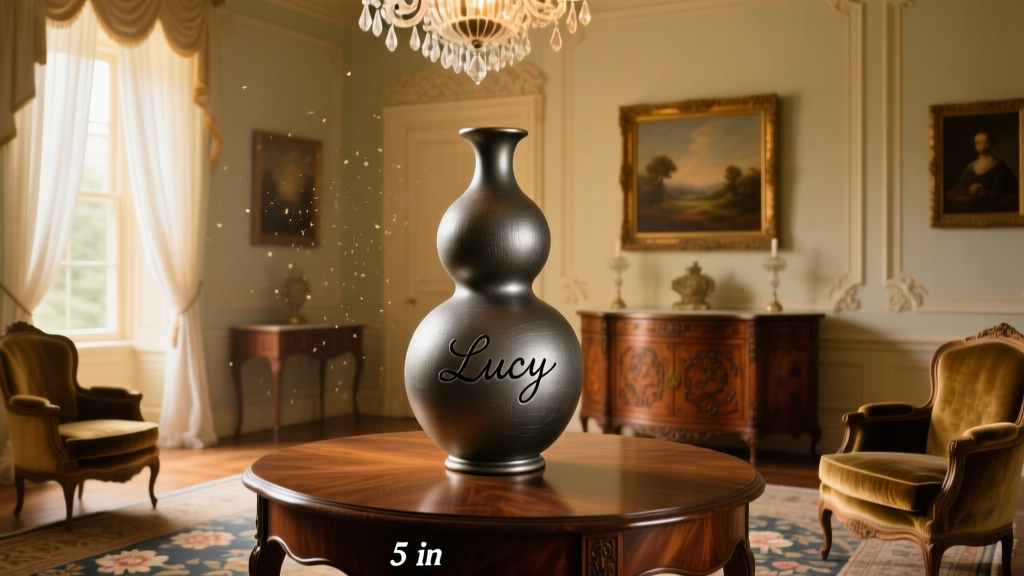
Ohr Vase: Incised 'Lucy' Signature, Double Gourd Form, Gunmetal Matte Glaze — A 5-Inch Masterpiece by George E. Ohr

Skaters Tin Lamps with Cobalt Blue Globes: History, Identification, and Restoration Best Practices
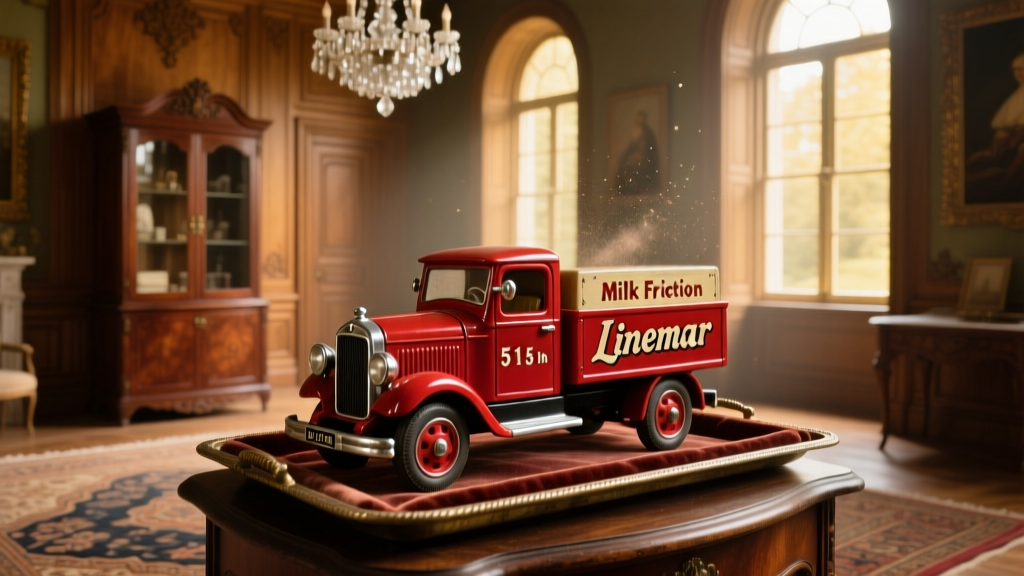
Toy Truck Milk Friction Tin Linemar 5½-Inch: History, Identification, and Restoration Insights
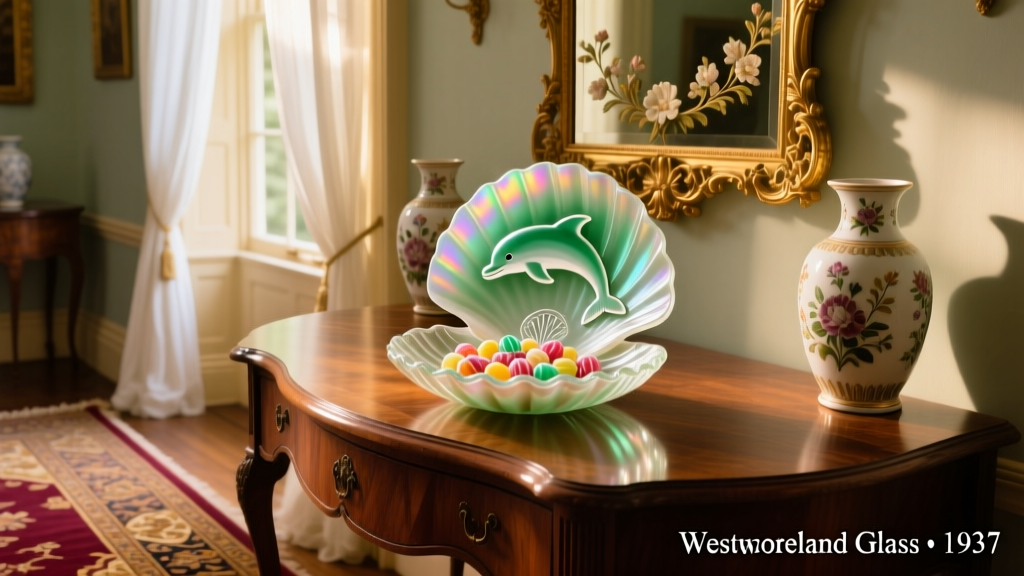
Westmoreland Glass Candy Dish Cover: Seashell & Dolphin Pattern in Green Mist — Identification, History, and Restoration Guidance
Daum Nancy Vase: Cornflower Blue Enamel on Gray Walls with Mottled Overlaid Enamels — A Signed 15¼-Inch Masterpiece
The Seated Spaniel Stoneware Doorstop: A Mid-Victorian Locket-Style Artifact, c. 1850
Porcelain Cup and Saucer Set: Demitasse Size in Royal Winton Patterns — Identification, History, and Restoration Guidance
The Lee Sample Advertising Hat Box: A Study in Early 20th-Century Brand Ephemera and Cabinetmaking Craft

Opalescent Glass Tumbler Swag with Brackets: Identifying, Dating, and Restoring Vaseline Glass Lighting Fixtures