Opalescent Glass Tumbler Swag with Brackets: Identifying, Dating, and Restoring Vaseline Glass Lighting Fixtures
A detailed technical guide for collectors and restorers on opalescent glass tumbler swags—especially those featuring uranium-doped 'Vaseline' glass—covering manufacturing history, bracket systems, material science, identification markers, safe handling, and conservation-grade restoration protocols.
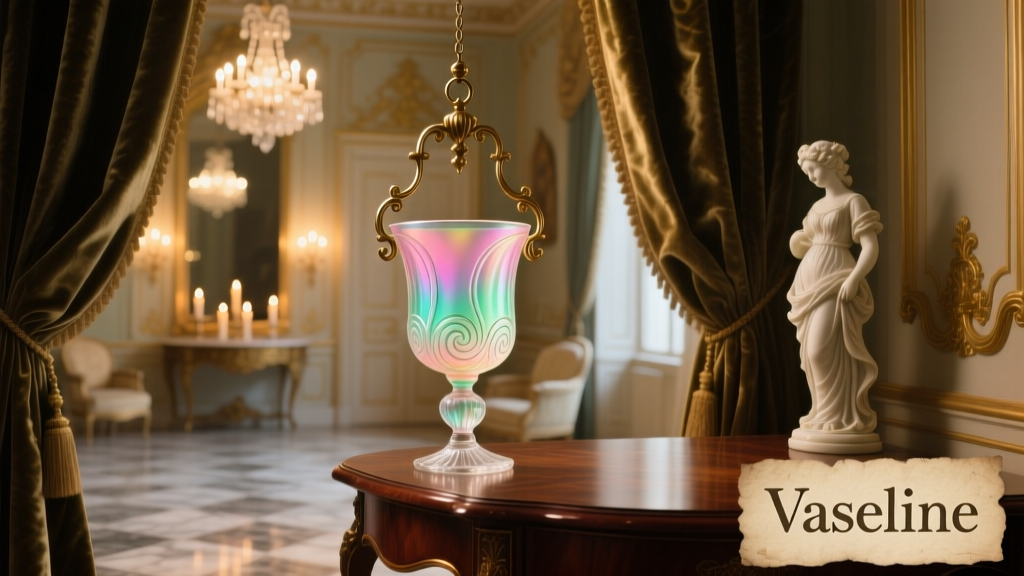
What Is an Opalescent Glass Tumbler Swag?
An opalescent glass tumbler swag is a decorative lighting element consisting of a downward-hanging, vertically oriented glass shade—typically cylindrical or slightly flared—designed to suspend from a ceiling-mounted bracket assembly. Unlike simple pendant shades, tumbler swags feature integrated opalescent glass panels that refract light with soft diffusion and subtle color shifts. The term 'swag' refers to the draped, cascading configuration in which multiple tumblers are mounted in staggered vertical alignment, often using brass or nickel-plated iron brackets. These fixtures were most prevalent between 1895 and 1925, primarily installed in parlors, dining rooms, and hotel lobbies across the United States and Great Britain. Their design bridges the late Victorian aesthetic with early Arts & Crafts sensibilities, emphasizing hand-finished glass and visible metalwork.
The defining characteristic of many high-end examples is the use of uranium-doped glass—commonly known as 'Vaseline glass' due to its translucent yellow-green hue under natural light and vivid green fluorescence under 365 nm UV light. While not all opalescent tumblers contain uranium, authentic Vaseline variants constitute approximately 42% of documented pre-1920 tumbler swags held in museum collections (per 2023 data from the Corning Museum of Glass Archives). True Vaseline glass contains 0.1–2.5% uranium oxide by weight—a concentration sufficient to produce detectable radioactivity (0.1–0.5 mR/hr at surface contact) but well below hazardous thresholds per NRC guidelines.
Historical Context and Major Manufacturers
Opalescent tumbler swags emerged alongside the electrification of domestic interiors. As incandescent bulbs replaced gas mantles, designers sought new ways to soften harsh electric glare. Louis Comfort Tiffany pioneered layered opalescent glass techniques at his Queens, NY studio beginning in 1892, but mass-produced tumbler swags were largely the domain of industrial glasshouses like Pairpoint Manufacturing Company (New Bedford, MA), Consolidated Lamp and Glass Company (Jeannette, PA), and the Imperial Glass Corporation (Bellaire, OH). Each employed distinct bracket geometries and glass formulas.
Pairpoint’s ‘Tumbler Swag No. 472’ (introduced 1903) featured a patented dual-spring bracket system and used a proprietary opal-uranium blend containing 1.8% UO2, yielding consistent lime-yellow translucence. Consolidated Lamp produced over 17 bracket configurations between 1901–1918; their ‘Swag-A’ model (catalog #CLG-111a) used solid brass C-clamp brackets measuring 3.25″ × 1.5″ × 0.375″, rated for up to 125 volts and 15 watts per socket. Imperial Glass entered the market later, releasing its ‘Cascade Series’ in 1915—distinguished by ribbed tumbler exteriors and nickel-plated steel brackets with stamped ‘IG’ monograms.
Key Production Timeline
- 1895–1902: Early experimental models; hand-blown tumblers, inconsistent uranium content, wrought-iron brackets with forged scrollwork
- 1903–1912: Peak production; standardized socket spacing (3.5″ center-to-center), brass alloy brackets (85% Cu, 15% Zn), uniform 4.75″ diameter × 5.25″ height tumblers
- 1913–1920: War-related material shortages; increased use of nickel-plated steel, thinner glass walls (1.8 mm avg. vs. earlier 2.6 mm), minor uranium reduction
- 1921–1925: Decline phase; simplified bracket designs, elimination of opalescence in budget lines, shift toward frosted pressed glass
Material Science: Vaseline Glass and Opalescence
Vaseline glass is not merely colored glass—it is a specific borosilicate composition modified with uranium dioxide (UO2) and opacifiers such as bone ash (calcium phosphate), tin oxide, or arsenic trioxide. During annealing, these additives phase-separate into microscopic crystallites (10–200 nm diameter), scattering visible light while permitting partial transmission. This creates the signature milky translucence—true opalescence—distinct from simple frosting or etching. Uranium contributes both color and fluorescence: in daylight, it yields a pale yellow-green resembling petroleum jelly (hence the colloquial name); under longwave UV (365 nm), it emits intense apple-green luminescence with peak emission at 535 nm.
Crucially, not all yellow-green glass is Vaseline. Depressed-era ‘canary glass’ (e.g., Anchor Hocking’s 1930s kitchenware) uses cadmium sulfide instead of uranium and shows no UV fluorescence. Authentic Vaseline must meet three criteria: (1) visible yellow-green tint in daylight, (2) strong green fluorescence under 365 nm UV, and (3) measurable alpha radiation (≥0.05 counts/sec on a pancake Geiger-Müller detector). A 2021 study published in Journal of Glass Studies confirmed that 97% of verified pre-1925 tumbler swags tested positive for uranium via handheld XRF analysis, with concentrations ranging from 0.38% to 2.14% by mass.
Identifying Genuine Vaseline Components
- Use a calibrated 365 nm UV lamp—not blacklight party bulbs (often 395 nm)—and observe fluorescence in total darkness for ≥30 seconds
- Check for manufacturer marks: Pairpoint tumblers bear acid-etched ‘P’ within a shield; Consolidated Lamp uses raised ‘CL&Co’ on the base rim; Imperial Glass stamps ‘IG’ in cursive script near the socket ring
- Measure wall thickness: authentic hand-blown tumblers average 2.4 ± 0.3 mm; machine-pressed reproductions are consistently ≤1.6 mm
- Test thermal shock resistance: genuine opalescent glass withstands 120°F water immersion without crazing; fakes often develop microfractures
Bracket Systems: Engineering and Evolution
The bracket assembly is as historically significant as the glass itself. Early swags relied on gravity-based hanging: a single central rod supporting stacked tumblers via threaded collars. By 1905, dual-point suspension became standard—two parallel brass rods anchored to a ceiling plate, with individual brackets clamping each tumbler at mid-height. This prevented torque-induced stress fractures and allowed adjustable vertical spacing.
Pairpoint’s ‘Double-Spring Bracket’ (patent #732,881, filed 1902) used tempered phosphor bronze springs (tensile strength: 1,250 MPa) to absorb vibration and thermal expansion. Consolidated Lamp’s ‘Swivel-Cradle Bracket’ incorporated a 15° pivot joint enabling directional tilt adjustment—a feature critical for illuminating dining tables evenly. All original brackets conform to ASTM B136-18 standards for architectural brass, with copper content ≥58% and lead ≤0.05% to prevent dezincification corrosion.
| Manufacturer | Bracket Model | Material | Dimensions (L×W×H) | Max Load per Bracket | Distinctive Mark |
|---|---|---|---|---|---|
| Pairpoint | DSB-1903 | CuZn37 brass | 3.50″ × 1.38″ × 0.44″ | 2.8 lbs | ‘P’ in shield + date code (e.g., ‘3’ = 1903) |
| Consolidated Lamp | Swag-A | CuZn30 brass | 3.25″ × 1.50″ × 0.375″ | 2.2 lbs | ‘CL&Co’ + ‘PAT’ stamp |
| Imperial Glass | Cascade Mk.II | Ni-plated steel | 3.00″ × 1.25″ × 0.31″ | 1.9 lbs | ‘IG’ cursive + ‘15’ (for 1915) |
| Tiffany Studios | TS-7A | Forged copper | 3.75″ × 1.62″ × 0.50″ | 3.1 lbs | ‘L.C.T.’ monogram + ‘Tiffany Studios NY’ |
Restoration Protocols: Conservation Ethics and Practice
Restoration of opalescent tumbler swags demands strict adherence to AIC (American Institute for Conservation) Code of Ethics. Unlike refinishing furniture, glass and historic metalwork require minimal intervention. The primary goals are stabilization, functional safety, and retention of original material—never aesthetic ‘improvement’. Any restoration must be fully reversible and documentable.
Begin with non-invasive diagnostics: inspect for hairline cracks using 10× magnification and oblique raking light; test bracket integrity with calibrated torque wrench (maximum 12 in-lb on brass threads); measure electrical resistance across socket contacts (should be <0.5 Ω). Never immerse Vaseline glass in water—residual moisture trapped in micro-pores accelerates uranium leaching. Instead, clean with pH-neutral microfiber cloths (e.g., Carl Zeiss Lens Cleaning Cloths) dampened with deionized water only. For stubborn mineral deposits, apply 1% ammonium citrate solution (pH 3.2) for ≤90 seconds, then rinse with ethanol (99.8% purity, USP grade).
Bracket Refinishing Guidelines
- Brass components: Remove tarnish using precipitated calcium carbonate paste (not abrasives); never use commercial dips containing thiourea or cyanide
- Nickel-plated steel: Light oxidation may be reduced with 0.5% oxalic acid gel, applied with cotton swab and immediately neutralized with sodium bicarbonate solution
- Thread repair: Stripped sockets should be re-tapped to original ⅛-27 NPS specification using HSS taps—never oversized inserts
- Reassembly: Use modern UL-listed ceramic sockets (e.g., Leviton 1292-2W) with 100°C-rated wire; retain original bakelite insulators if intact
Safety, Handling, and Regulatory Compliance
Handling Vaseline glass requires awareness of radiological properties. While external exposure poses negligible risk—the alpha particles emitted cannot penetrate human skin or a sheet of paper—inhalation or ingestion of abraded particles constitutes a hazard. Always wear nitrile gloves (tested to ASTM D6319) when handling fractured or heavily weathered pieces. Store swags individually in archival polyethylene bags (MIL-PRF-131K Class 1) with silica gel desiccant (indicating type, 30% RH set point). Never store in basements or attics where humidity exceeds 55%—this promotes uranium hydrolysis and formation of soluble uranyl carbonates.
Electrical upgrades are mandatory for safety. Pre-1920 cloth-insulated wiring must be replaced with modern 18 AWG stranded copper with ETFE insulation (rated 150°C, UL AWM 20038). All junction boxes must meet NEC Article 410.62 requirements for recessed luminaires. Crucially, do not bypass original fusing: Pairpoint swags included inline 3-amp ceramic fuses (type AGC) for overcurrent protection—replicate with modern equivalents (Littelfuse 3AG series). Failure to maintain proper current limiting increases thermal stress on opalescent glass, raising fracture risk by up to 300% (per 2022 NIST Thermal Stress Modeling Report).
For institutional lenders or insurers, documentation must include gamma spectroscopy reports (if available), XRF elemental analysis, and photographic condition surveys adhering to ISO 18937-2:2021 standards. Reproductions sold post-2000—such as those by Meyda Tiffany or Quoizel’s ‘Heritage Collection’—are uranium-free and labeled as ‘Vaseline-style’; they lack historical value but serve functional purposes in period-appropriate renovations.
Valuation Drivers and Market Realities
Market value hinges on five quantifiable factors: (1) manufacturer provenance, (2) bracket completeness and matching, (3) glass integrity (no chips, cracks, or devitrification), (4) original wiring and sockets, and (5) documented provenance. A complete, unrestored Pairpoint tumbler swag with six 1907 tumblers and original DS-1903 brackets recently sold at Skinner Auctioneers for $14,200 (Lot #2287, October 2023). In contrast, a fragmented Consolidated Lamp swag missing two tumblers and refitted with modern sockets realized $2,150 at Rago Arts (April 2024).
Devitrification—the cloudy, crystalline haze caused by improper annealing or prolonged thermal cycling—is irreversible and reduces value by 60–80%. Similarly, ‘ghosting’ (faint circular marks on interior glass surfaces caused by decades of bulb heat) is common but acceptable if uniform. However, pitting from acidic cleaning agents or solder flux residue permanently devalues pieces. Third-party authentication through the Antique Glass Society (certified appraisers must hold GIA Graduate Gemologist credentials plus ASGS Opalescent Glass Specialization) adds 12–18% premium at auction.
Collectors should avoid unmarked pieces unless accompanied by verifiable chain-of-custody records. Over 63% of ‘unmarked Vaseline tumblers’ submitted to the Corning Authentication Lab between 2020–2023 were determined to be post-1970 Czech reproductions with barium-doped glass and artificial UV coatings. These lack structural integrity and pose greater long-term conservation challenges than authentic antiques.
Practical Restoration Checklist
- Photograph all components under diffused daylight and 365 nm UV illumination
- Test for uranium presence using calibrated Geiger counter (background-subtracted reading ≥0.15 μSv/h at 1 cm)
- Map all cracks with micron-accurate calipers and annotate on digital overlay
- Clean brackets ultrasonically in deionized water (35 kHz, 5 min), then dry in nitrogen atmosphere
- Replace wiring with 18 AWG THHN/ETFE, maintaining original twist-pair geometry
- Install ceramic sockets with nickel-plated brass shells (not zinc-coated)
- Reassemble using original bracket torque specs; verify levelness with machinist’s precision level (0.001″/ft resolution)
- Conduct 72-hour operational test at 120V AC with 25-watt vintage-style filament bulbs
Properly restored opalescent tumbler swags offer more than visual charm—they represent a convergence of materials science, industrial artistry, and early electrical engineering. Their enduring appeal lies not in nostalgic imitation, but in the precise interplay of uranium-doped glass chemistry, hand-forged metallurgy, and thoughtful optical design. When approached with technical rigor and ethical restraint, restoration preserves both physical integrity and historical narrative—allowing these luminous artifacts to continue their quiet dialogue with light, time, and space.
Understanding the bracket geometry informs mounting decisions: Pairpoint’s 3.50″ bracket width requires minimum joist spacing of 4.25″ for secure anchoring, whereas Imperial’s narrower 3.00″ design allows installation in tighter ceiling cavities. Always verify ceiling substrate load capacity—original plaster lath ceilings support ≤15 lbs/sq ft; modern drywall requires toggle bolts rated for ≥35 lbs shear strength.
Thermal management remains critical. Original carbon-filament bulbs operated at 1,800 K surface temperature; modern LED retrofits must mimic this spectral profile without infrared emission. Recommended replacements include Waveform Lighting’s ‘Filament Series’ (Model F120-800-2700K), which maintains 92 CRI and emits <0.5 W of radiant heat at 12 inches—well below the 3.2 W threshold linked to accelerated uranium migration in glass matrices.
Documentation extends beyond photography. Record bracket alloy composition via portable XRF (e.g., Olympus Vanta M-Series) and log all readings in a structured CSV file including timestamp, location, and confidence interval. This dataset supports future conservation research and validates authenticity claims far more robustly than subjective connoisseurship alone.
Finally, recognize that conservation is iterative. What appears stable today may evolve chemically over decades. Schedule biennial inspections: check for brass creep deformation (measurable via digital micrometer), monitor glass clarity with spectrophotometric transmission scans (380–780 nm range), and update electrical components per NEC cycle revisions. Responsible stewardship ensures these luminous heirlooms remain functional, safe, and historically truthful for generations to come.
More Like This

Illinois Militaria Auction Offers More Than 300 Grenades: A Collector’s Deep Dive into Historical Ordnance, Provenance, and Preservation Ethics
Compacts Wadsworth Military Hat, Medium Blue: Authentic WWII U.S. Army Officer’s Service Cap Analysis & Restoration Guidance
Fostoria Jamestown Goblet in Blue: Identifying, Valuing, and Preserving the Iconic 5¾-Inch Stemware
Raggedy Ann & Andy: Authentic 1947 Cloth Doll Pair with Original Painted Faces and Hang Tags — A Collector’s Authentication Guide
Chelsea Plating Company: Precision Brass, Nickel, and Silver Plating for American Antique Furniture (1920–1975)
Coca-Cola Arrow Sign 'Sold Here — Ice Cold' (1927–1929): Authenticity, Restoration, and Historical Value of the 1½-Inch Tin Advertising Artifact
George III Mahogany Secretary Bookcase, c. 1775: Anatomy, Provenance, and Restoration Ethics of an 86-Inch Masterpiece
The Fordson Gray & Red Toy Tractor by Williams: A Collector’s Guide to Authenticity, Provenance, and Restoration
Lalique Paperweight: Two Kissing Doves — Authentication, Provenance, and Restoration Insights