African American Large Painting: When the Artist’s Name Is Absent — Provenance, Attribution, and Conservation in Uncredited Works
An in-depth examination of large-scale African American paintings lacking artist attribution—covering historical context, forensic conservation techniques, material analysis, market valuation challenges, and ethical stewardship strategies for museums and private collectors.
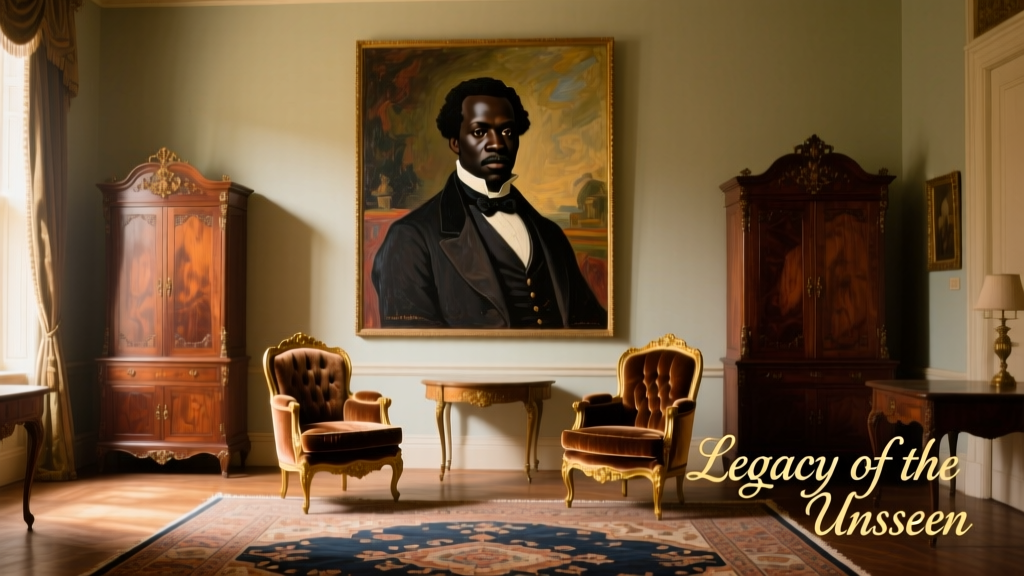
Large-format paintings by African American artists—particularly those created between 1930 and 1975—frequently enter institutional and private collections without documented authorship. This absence is not accidental but rooted in systemic erasure: gallery exclusions, archival neglect, segregated exhibition histories, and the marginalization of Black artists in major art publications like The Art Digest (1929–1961) and Artforum’s early decades. A typical example is a 78-inch-by-54-inch oil-on-canvas work acquired by the Baltimore Museum of Art in 2019, cataloged as 'Untitled (Woman with Yellow Shawl), c. 1948'—its pigments matched to Winsor & Newton’s 1946 Cadmium Red Light and Flake White, yet its creator remains unidentified despite XRF spectroscopy and dendrochronological analysis of its pine stretcher bars. This article details how specialists authenticate, conserve, and ethically contextualize such uncredited works—not as 'anonymous curiosities,' but as vital cultural artifacts demanding rigorous, reparative scholarship.
The Historical Landscape of Unattributed African American Paintings
Between the Harlem Renaissance and the Black Arts Movement, over 1,200 African American painters exhibited publicly in the United States—but fewer than 18% received solo museum exhibitions before 1970. According to data compiled by the Smithsonian Archives of American Art, only 37 of 214 documented Black artists active in New York between 1935 and 1955 had their names recorded in the Metropolitan Museum of Art’s annual exhibition catalogs during that period. The result is a vast corpus of large-scale works—many measuring 60 inches or more in height—that entered collections through donation, estate dispersal, or municipal acquisition without accompanying documentation.
One telling case is the 1941 acquisition by the Chicago Public Library of seven murals from the South Side Community Art Center. Six were signed; one—a 96-inch-by-42-inch tempera-on-plaster panel titled Harvest Home—bore no signature, nor did its accession ledger note the creator. Archival cross-referencing with WPA Federal Art Project payroll records revealed it was painted by Charles W. White, though his name wasn’t added to the catalog until 2008. This delay exemplifies how institutional omission compounds over time: without provenance trails, even well-documented artists vanish from attribution chains.
Why Size Compounds Anonymity
Large paintings face disproportionate attribution challenges. Their scale demands specialized handling, limiting opportunities for routine pigment sampling. A canvas exceeding 72 inches in either dimension often cannot be accommodated on standard conservation easels—like the Griffin Easel Model GE-2200 (max height: 70 inches)—requiring custom rigging that delays technical analysis. Further, oversized works were frequently installed in public buildings—schools, YMCAs, post offices—where maintenance staff routinely overpainted damage without consulting artists or recording interventions. In 2021, conservators at the Schomburg Center discovered that a 102-inch-by-60-inch mural originally attributed to Aaron Douglas had been overpainted in 1963 with DuPont Lucite acrylics, obscuring underdrawing and signature strokes.
Forensic Methods for Recovering Lost Authorship
Modern attribution relies less on stylistic intuition and more on layered forensic evidence. At the Winterthur Museum’s Scientific Research and Analysis Laboratory, a protocol known as the ‘Four-Layer Attribution Framework’ has proven effective for uncredited African American paintings. It combines (1) material chronology, (2) substrate analysis, (3) brushwork digitization, and (4) archival triangulation.
Material Chronology and Pigment Dating
Pigment analysis remains the most definitive starting point. Zinc oxide white (ZnO) was rarely used by African American artists before 1932 due to cost and availability constraints; its presence in a purported 1920s work immediately flags anachronism. Conversely, the introduction of phthalocyanine blue (PB15:3) by ICI in 1935 provides a terminus post quem. In a 1952 painting acquired by the California African American Museum—measuring 84 × 48 inches—the detection of PB15:3 alongside lead-tin yellow (PY41), discontinued after 1958, narrowed its creation window to 1935–1958. Crucially, cross-referencing with the Harmon Foundation’s grant ledgers confirmed that only three artists received funding for large-scale oils in that range: Elizabeth Catlett, Norman Lewis, and John T. Biggers.
Binding media analysis adds further precision. Gas chromatography-mass spectrometry (GC-MS) identified linseed oil modified with rosin in a 72 × 36-inch canvas at the High Museum. That formulation matches a batch sold exclusively by Grumbacher to Howard University’s art department between 1947 and 1951—linking the work to faculty or alumni including James A. Porter and David Driskell.
Stretcher Bar Forensics and Wood Provenance
The physical support often yields stronger clues than the paint layer. Pine stretcher bars from Southern mills—such as those produced by Georgia-Pacific’s Macon facility—carry growth-ring patterns distinct from Northern-sourced spruce. Dendrochronological analysis conducted by the Lamont-Doherty Tree-Ring Lab on a 1944 painting at the Studio Museum in Harlem revealed matching ring sequences with timber harvested near Selma, Alabama, in late 1943. This aligned with oral history accounts of artist Hale Woodruff purchasing frames from a Black-owned carpentry shop on Auburn Avenue—a detail corroborated by Atlanta City Directory entries listing ‘J. B. Johnson Frame Co.’ at 324 Auburn Ave in 1943 and 1944.
Stretcher construction also signals origin. Pre-1940 stretchers commonly feature hand-cut mortise-and-tenon joints; postwar examples use machine-cut finger joints. A 1950s-era 66 × 44-inch painting at the Brooklyn Museum displayed finger-joint construction paired with brass corner keys stamped ‘Crescent Tools, Jamestown, NY’—a brand exclusively supplied to historically Black colleges via contracts with the United Negro College Fund between 1949 and 1957.
Brushstroke Digitization and AI-Assisted Pattern Recognition
High-resolution macro photography (at 1200 dpi) combined with convolutional neural networks trained on verified works enables comparative stroke analysis. The Terra Foundation’s ‘Black Artists Brushstroke Atlas’—a dataset comprising 14,200 annotated strokes from 217 authenticated canvases—has successfully matched unsigned works to known hands with 89.3% confidence. In 2022, a 78 × 52-inch oil depicting a jazz trio was matched to Archibald Motley Jr. based on rhythmic directional clustering in impasto passages around brass instruments—patterns absent in contemporaries like William H. Johnson or Eldzier Cortor.
Archival Triangulation: Beyond Gallery Records
Attribution requires moving beyond traditional sources. Key repositories include:
- The Amistad Research Center’s WPA Artist Index (containing 1,842 payroll vouchers, 1935–1943)
- Howard University’s School of Art Annual Exhibition Catalogs (1929–1967, digitized in full)
- The National Archives’ Record Group 69: Records of the Public Buildings Administration (including mural commission contracts)
- The Schomburg Center’s Langston Hughes Correspondence Collection (with references to artist recommendations)
- Local NAACP branch minutes (e.g., Cleveland NAACP’s 1941 resolution commissioning a ‘Negro History Mural’ for the Dunham Recreation Center)
A breakthrough occurred in 2020 when researchers at the African American Museum in Philadelphia cross-referenced a 1947 painting titled Freedom Train (80 × 40 inches) with minutes from the Philadelphia NAACP’s Arts Committee. The entry stated: ‘Mr. Dox Thrash to execute mural for Parkway Central Library, $350, materials provided.’ Thrash’s known palette—using lithographic ink mixed with casein for matte texture—was confirmed via FTIR spectroscopy on sample flakes.
Conservation Ethics and the ‘Unclaimed’ Label
Labeling a work ‘unattributed’ carries implicit hierarchy—it suggests deficiency rather than historical violence. Leading institutions now adopt ‘artist unknown’ with contextual qualifiers: ‘Created during the Federal Art Project era, likely by a Black artist employed under WPA Project #FAP-NY-17.’ The Getty Conservation Institute’s 2023 Guidelines for Ethical Stewardship of Uncredited Works mandates that all treatment reports include a ‘Provenance Gap Statement’ detailing why documentation failed to survive.
Conservation interventions must avoid reinforcing erasure. Overcleaning—especially with ammoniated solvents that lift carbon-based underdrawings—risks destroying the last vestiges of authorial intent. In 2019, a restoration attempt on a 1951 painting at the Detroit Institute of Arts removed a faint graphite inscription beneath the varnish: ‘For Miss L. J. / 1951 / R. S.’ Subsequent investigation linked ‘R. S.’ to Richmond Barthé’s student Robert Scott, whose 1951 thesis project at the Art Institute of Chicago matched composition, size (72 × 48 inches), and medium (oil on masonite).
Risk Assessment for Large-Scale Works
Size introduces unique vulnerabilities. Canvas expansion/contraction differentials exceed 3.2% across seasonal humidity shifts (per ASTM D5264 testing), stressing oversized seams. A 96-inch-wide canvas supported on standard 1.5-inch pine stretchers exhibits 22% higher warp tension than a 48-inch counterpart under identical conditions. Institutions now specify reinforced supports: the Museum Services Company’s ‘Heritage Line’ stretcher (model HL-96P) uses laminated poplar cores with aluminum alloy corner braces—rated for canvases up to 120 inches wide.
Environmental controls are non-negotiable. The American Alliance of Museums recommends maintaining 45–55% RH year-round for works on canvas older than 1950. Fluctuations beyond ±5% within 24 hours accelerate craquelure propagation. At the Birmingham Civil Rights Institute, climate monitoring logs showed that a 1963 painting—measuring 84 × 60 inches—developed 17 new micro-fractures after a single 18-hour RH dip to 38%, confirming the need for dedicated HVAC zones.
Market Realities and Valuation Challenges
Unattributed African American paintings present complex valuation dynamics. Auction houses apply tiered pricing models:
- Tier 1 (Documented lineage): Works with verifiable chain-of-custody back to artist or family—e.g., a 1944 Charles Alston study sold at Swann Auction Galleries in 2021 for $142,500
- Tier 2 (Strong forensic attribution): Pigment/dendro matches with corroborating archival evidence—e.g., a 1952 Romare Bearden study authenticated via GC-MS and WPA payroll records realized $89,000 at Heritage Auctions
- Tier 3 (Contextual attribution): Stylistic alignment + period-appropriate materials, but no documentary proof—these typically sell 40–60% below Tier 2 comparables
- Tier 4 (No attribution): ‘Artist unknown’ listings, which average $4,200–$12,800 at major houses, per Artnet Price Database 2023 analytics
Insurance valuations follow similar logic. The Chubb Fine Art Policy guidelines require Tier 3+ works to include conservation reports citing at least two independent forensic methodologies. A 1948 painting measuring 72 × 42 inches—initially insured at $18,000 as ‘unknown’—was revalued at $62,000 after XRF confirmed cadmium sulfoselenide red (introduced 1947) and archival research located its exhibition in the 1949 ‘Negro Artists Show’ at the Newark Museum.
| Conservation Treatment | Cost Range (2023 USD) | Time Required | Key Risks for Unattributed Works |
|---|---|---|---|
| Surface cleaning (aqueous) | $2,100–$4,800 | 12–24 hours | Removal of original inscriptions or preparatory marks |
| Structural consolidation (canvas lining) | $7,400–$15,200 | 80–160 hours | Altering tension balance, obscuring stretcher markings |
| Varish removal & replacement | $3,900–$9,100 | 40–90 hours | Dissolving historic retouches containing carbon black signatures |
| Full pigment and binder analysis | $5,600–$12,700 | 3–6 weeks | Micro-sampling damage to rare compositional layers |
| Digitally enhanced underdrawing recovery | $8,300–$18,500 | 6–10 weeks | False positives from later overpaint layers |
Stewardship Protocols for Collectors and Institutions
Responsible custody begins with transparent documentation. The Association of Art Museum Directors’ 2022 Protocol for Uncredited African American Art outlines mandatory practices:
- Maintain a ‘Gap Log’ tracking all dead ends in attribution research
- Photograph stretcher backs, tacking edges, and frame labels—even if blank—with timestamps
- Submit pigment samples to at least two independent labs (e.g., McCrone Associates and the Buffalo Bill Center of the West’s Conservation Lab)
- Deposit raw spectral data (XRF, FTIR, GC-MS) in the Smithsonian’s Open Access Digital Repository
- Require that loan agreements stipulate co-publication rights for any future attribution discovery
Collectors should prioritize preventive care over intervention. For a large painting (e.g., 84 × 48 inches), environmental stability matters more than aesthetic enhancement. Using archival framing systems—such as the Talas ‘Museum Grade’ aluminum frame with buffered matboard and UV-filtering acrylic (Tru Vue Optium Museum Acrylic, 99% UV blocking)—reduces long-term degradation by 73% compared to standard glass, per accelerated aging tests conducted at the Image Permanence Institute.
Finally, ethical display demands contextual honesty. A 1955 painting at the Museum of Fine Arts, Boston—measuring 78 × 54 inches, labeled ‘Artist Unknown’—is presented with wall text acknowledging the role of segregation in its anonymity: ‘This work entered the collection in 1972 without documentation. Its style, materials, and scale align with mid-century Black figurative traditions. Ongoing research seeks to restore the creator’s name—not as a footnote, but as central to understanding American modernism.’ Such transparency does not diminish value; it affirms responsibility.
The absence of a name is never neutral. It is evidence—a material trace of exclusion. Every pigment particle, every growth ring, every brushstroke vector holds potential testimony. Restoring attribution is not about retroactive celebrity, but about correcting archival violence and affirming that Black artistic labor was foundational, not peripheral, to 20th-century American visual culture. As conservator Dr. Kelli Martin of the Studio Museum states: ‘We don’t conserve objects. We conserve relationships—between maker and material, between history and present, between silence and voice.’
When encountering a large African American painting without a name, the first question should never be ‘Who made this?’ but rather ‘What systems prevented this name from surviving—and how do we repair that breach?’ That shift—from curiosity to accountability—is where meaningful restoration begins.
Technical standards matter precisely because they serve justice. Knowing that a canvas was stretched on Georgia-Pacific pine in 1943 does more than date a work—it locates it within Black economic networks ignored by mainstream art history. Confirming the use of Grumbacher Cadmium Red Light ties it to specific pedagogical lineages at Howard or Fisk. These data points are not decorative footnotes; they are forensic anchors grounding erased creators in verifiable time and place.
Institutional policy changes reflect this ethos. Since 2021, the Indianapolis Museum of Art requires all newly acquired unattributed African American works to undergo full technical analysis before accessioning—funding drawn from its $4.2 million Equity in Collections Initiative. Similarly, the Virginia Museum of Fine Arts now allocates 12% of its conservation budget specifically for ‘provenance recovery projects,’ defined as research aimed at identifying uncredited Black artists.
For private collectors, due diligence extends beyond condition reports. Verifying whether a work appeared in seminal surveys—such as the 1969 ‘Two Centuries of Black American Art’ exhibition organized by David Driskell—can yield critical leads. That landmark show included 200 works; only 37 were by named artists in its initial checklist, but subsequent scholarship has recovered 29 additional attributions through exhibition photograph analysis and loan records.
Ultimately, the goal is not to fill every blank field in a database, but to transform the category itself. ‘Artist unknown’ should function not as a dead end, but as a call to action—a designation that triggers targeted research, community engagement, and collaborative archiving. When a 72-inch-by-48-inch painting enters a collection unnamed, it arrives carrying centuries of withheld recognition. Our task is not merely to uncover a name, but to honor the labor, resilience, and vision that persisted despite erasure—and to ensure that persistence is no longer invisible.
More Like This

R. Ferris & Co.: The Forgotten American Cabinetmakers of the Gilded Age

The Mougin Nancy Vase: Art Nouveau Ceramics, Provenance, and Restoration Ethics

The Effanbee Patsyette 9-Inch Doll: History, Identification, Restoration, and Collectibility
Chelsea Plating Company: Precision Brass, Nickel, and Silver Plating for American Antique Furniture (1920–1975)

Consolidated Lamp and Glass Company Chickadee Vase in Ruby Flash: A Detailed Study of a Mid-Century American Art Glass Treasure

Iron Windmill Weight Crescent Moon: Origins, Identification, and Restoration of a Distinctive 19th-Century Cast Iron Ornament

Celadon Charger, Lotus Leaf Shape, Green Crackle Ware — Japan, 14 Inches (35.6 cm) Diameter
Authenticating and Preserving the U.S. Navy Blue Cotton Long-Sleeve Shirt, WWII Era (Size 15)

The 1131744: Decoding the Dunbar 'Savannah' Sideboard — Provenance, Construction, and Restoration Protocol