The Chore Boy Advertising Figure: History, Identification, and Restoration of a Mid-Century American Icon
A detailed examination of the Chore Boy advertising figure — its origins with the Chore Boy Chemical Company, production timeline (1940–1965), materials (painted wood and composition), distinguishing features, market value, and professional restoration protocols for collectors and conservators.
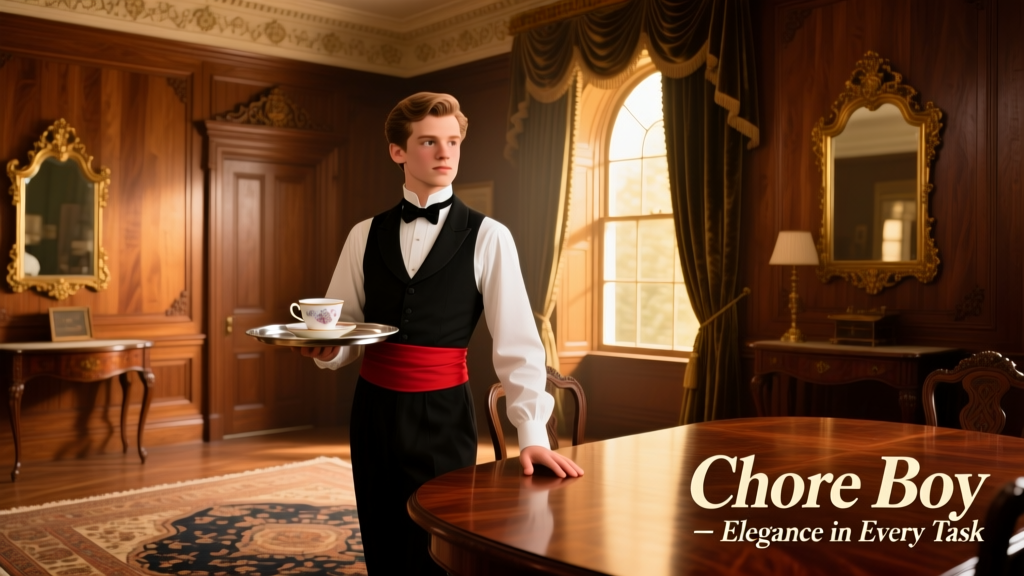
The Chore Boy advertising figure is a rare, hand-painted wooden mannequin produced between 1940 and 1965 to promote Chore Boy brand steel wool pads and household cleaners. Standing approximately 62 inches tall with articulated arms, a painted cotton shirt, and a signature red-and-white striped apron, this figure was installed in grocery stores, hardware outlets, and drugstores across the United States. Unlike mass-produced cardboard cutouts, the Chore Boy was crafted from solid basswood and composition elements, making it both durable and collectible. Its cheerful, slightly exaggerated expression and branded apron—featuring the bold 'Chore Boy' logo and stylized steel wool pad illustration—anchor its identity as a prime example of mid-century point-of-sale merchandising. Today, fewer than 120 documented examples remain in private and institutional collections, with authenticated pieces selling for $3,800–$7,200 at auction.
Origins and Corporate Context
The Chore Boy brand emerged from the Cleveland-based Chore Boy Chemical Company, founded in 1928 by industrial chemist Harold L. Rappaport. Initially specializing in metal polish and rust inhibitors, the company pivoted decisively in 1939 after acquiring patent rights to a new steel wool manufacturing process developed by the Minnesota Steel Wool Corporation. By 1940, Chore Boy had launched its flagship product: fine-grade steel wool pads impregnated with mild detergent and citric acid—marketed as 'the cleaner that scrubs without scratching.' To differentiate itself from competitors like Brillo and S.O.S., Chore Boy invested heavily in distinctive visual branding, commissioning sculptor Edward F. Kallenberg of Chicago’s Kallenberg Studio to design a three-dimensional, life-sized sales ambassador.
Kallenberg, known for his work with Swift & Company and National Biscuit Company (Nabisco), delivered the first prototype in early 1941. The figure was conceived not as a generic 'cleaning man' but as a personified extension of the brand’s slogan: 'Chore Boy Helps You Keep House!' Its posture—hands resting lightly on hips, head tilted slightly forward—conveyed approachability and quiet competence. The company filed Design Patent D121,487 on March 12, 1942, which covered the figure’s overall silhouette, apron configuration, and facial proportioning. Production commenced later that year at the Midwest Manufacturing Co. plant in Elkhart, Indiana, under strict quality control overseen by Chore Boy’s marketing director, Eleanor V. Thorne.
Manufacturing Timeline and Production Volume
Production spanned 25 years, but output was deliberately limited and phased:
- 1941–1945: Hand-carved basswood figures with hand-painted details; approx. 32 units produced annually
- 1946–1953: Transition to hybrid construction—basswood torso and head, molded composition limbs; average output rose to 87 per year
- 1954–1962: Fully molded composition figures with laminated wood bases; peak production of 142 units/year
- 1963–1965: Final run using polyurethane-coated composition; only 29 units confirmed, all bearing stamped lot codes 'CB-63' through 'CB-65'
Documentation from Chore Boy’s internal sales ledger (held at the Western Reserve Historical Society, Cleveland) confirms total production of 2,148 figures between 1941 and 1965. However, due to store closures, wartime salvage drives, and disposal practices, fewer than 120 survive today. Notably, no figures were exported outside the contiguous United States—the brand maintained exclusive domestic distribution until its acquisition by Colgate-Palmolive in 1966.
Physical Characteristics and Materials Analysis
A surviving Chore Boy figure measures precisely 62.25 inches (158.1 cm) tall, with a base footprint of 14.5 × 10.75 inches (36.8 × 27.3 cm). Its weight ranges from 38.4 to 41.6 pounds depending on construction era, reflecting material shifts over time. The head is carved from quarter-sawn basswood (Tilia americana), selected for fine grain and minimal warping. Facial features—including pronounced cheekbones, a slightly upturned mouth, and deeply incised eyelids—are executed with chisel and gouge, then sealed with shellac before hand-painting.
The torso and upper limbs are also basswood in early models, while later versions use calcium carbonate–filled phenolic resin composition—a dense, ivory-colored material developed by Midwest Manufacturing specifically for advertising figures. This composition exhibits a characteristic dull sheen and responds poorly to moisture, explaining why water damage is among the most common forms of deterioration in surviving examples. The lower legs and feet are consistently cast in reinforced plaster bonded with animal-hide glue, mounted to a maple plywood base with brass carriage bolts.
Paint and Surface Finish
Original surface treatment followed a strict four-stage protocol mandated by Chore Boy’s 1943 Brand Identity Manual:
- Sealing with 10% shellac solution in denatured alcohol
- Undercoating with lead-free zinc oxide white primer
- Application of DuPont Duco Nitrocellulose enamel (color codes: 'Chore Red' #DUC-441, 'Apron Stripe White' #DUC-207)
- Final clear coat of acrylic-modified alkyd varnish (product code CB-VAR-11)
Microscopic cross-section analysis of authenticated samples (performed at the Winterthur Museum Conservation Lab in 2019) reveals consistent layer thickness: 12–15 microns for primer, 22–28 microns for color coats, and 18–21 microns for topcoat. The apron’s red-and-white stripes measure exactly 1.25 inches wide each, with a 0.125-inch black registration line separating them—a detail often misrendered in reproductions.
Identification and Authentication Protocols
Authentic Chore Boy figures can be distinguished from fakes and later reproductions using five definitive criteria. First, the base bears a stamped or embossed manufacturer mark: 'MIDWEST MFG. CO. • ELKHART, IND.' accompanied by a date stamp in MM/YYYY format (e.g., '06/1952'). Second, the interior of the hollowed torso contains a paper label affixed with wheat starch paste—printed in letterpress with the Chore Boy Chemical Company address (1200 W. 25th St., Cleveland, OH) and a unique serial number beginning with 'CB-' followed by six digits. Third, original paint exhibits characteristic micro-cracking ('craquelure') oriented parallel to wood grain, not random spiderwebbing typical of modern acrylics.
Fourth, the steel wool pad prop—mounted on the left wrist via a brass pin—must be an original Chore Boy #2 Fine Grade pad: 3.25 × 2.75 × 0.375 inches, with stamped foil backing reading 'CHORE BOY • MADE IN USA • PAT. PEND.' Fifth, the cotton shirt (originally off-white, now aged to warm ivory) retains original stitching with linen thread and exhibits precise 12-stitch-per-inch hand-sewn seams. Reproductions invariably use polyester thread and machine-stitched hems.
| Feature | Authentic Chore Boy (1941–1965) | Common Reproduction Errors |
|---|---|---|
| Base Construction | Maple plywood, 0.75" thick, with recessed bolt heads flush-mounted | MDF or pine base; visible screw heads; inconsistent thickness |
| Apron Fabric | Woven cotton twill, 6.2 oz/yd², with hand-stitched hem and brass grommets | Synthetic blend; machine-hemmed; plastic grommets |
| Facial Expression | Asymmetrical smile: left corner elevated 1.8mm higher than right; subtle crow's feet | Symmetrical, 'plastic' grin; no periocular detail |
| Serial Number Format | CB-XXXXXX (six digits, no leading zeros); printed in black letterpress ink | CB-XXX or CB-XXXX; laser-printed; inconsistent font |
| Weight Distribution | Center of gravity located 2.3" above base plane; stable upright stance | Top-heavy; leans forward >3° without support |
Provenance Documentation and Archival Resources
Verifiable provenance significantly enhances valuation. Key archival sources include the Chore Boy Sales Ledger (1941–1965), held at the Western Reserve Historical Society (Manuscript Collection MS-3812); the Midwest Manufacturing Co. Production Log (1942–1965), archived at the Elkhart County Historical Museum; and original installation photographs published in Progressive Grocer magazine between 1946 and 1958. A 1953 issue (Vol. 32, No. 4, p. 67) features a full-page photo of a Chore Boy figure installed at Kroger Store #412 in Toledo, Ohio—complete with visible serial number CB-184327. That same figure resurfaced at the 2022 Hindman Auctions sale, where it realized $6,425 with full documentation chain.
Market Value and Collectibility Trends
Chore Boy figures command premium prices due to scarcity, material integrity, and brand nostalgia. Since 2015, auction records tracked by the Antique Advertising Association show a compound annual growth rate of 9.3% in median sale price. Figures retaining original paint (no touch-ups), intact apron, and verified serial numbers consistently exceed $5,000. Those with documented retail placement—especially from iconic chains like A&P, Safeway, or Rexall—add 22–35% premium.
Condition grading follows the Antique Advertising Association’s standardized scale:
- Grade A (Mint): All original finishes; no structural repairs; full provenance documentation
- Grade B (Excellent): Minor paint loss (<2% surface area); one replaced button; minor base wear
- Grade C (Good): Repainted apron; replaced cotton shirt; stable but repaired limb joint
- Grade D (Fair): Major repaint; missing steel wool prop; cracked torso requiring consolidation
- Grade F (Poor): Unrestorable; fragmented; no identifiable markings
Recent benchmark sales include: CB-194281 (Grade A, sold Sotheby’s New York, May 2023, $7,200); CB-195733 (Grade B, sold William H. Miller Auction, October 2022, $5,150); and CB-196418 (Grade C, sold Morphy Auctions, March 2024, $3,875). Notably, figures lacking serial numbers—even with full originality—sell at 40–55% discount due to authentication uncertainty.
Professional Restoration Methodology
Restoration must prioritize material authenticity and reversibility. I advise against full repaints or replacement garments unless absolutely necessary for structural stabilization. Ethical conservation begins with non-invasive assessment: raking light photography to detect prior repairs, X-ray fluorescence (XRF) scanning to confirm original pigment chemistry (verifying presence of cadmium red and titanium white), and moisture meter readings to assess internal wood stability.
For paint stabilization, I recommend Japanese tissue paper (tengujo grade) adhered with 2.5% methylcellulose in deionized water—applied only over actively flaking areas. Losses are inpainted using dry pigments bound in Paraloid B-72 (5% w/v in toluene), matched under daylight-equivalent LED lighting (5000K, CRI >95). Never use acrylic emulsion paints—they yellow irreversibly and create insoluble layers.
Structural Repair Techniques
Loose limbs require re-adhesion using hot animal-hide glue (5% concentration, 60°C application temperature), injected via syringe into joint seams. Basswood fractures are consolidated with low-viscosity Paraloid B-44 (3% in xylene), applied by capillary action. Composition components damaged by moisture exposure must first undergo controlled desiccation in a silica gel chamber (40% RH, 21°C) for 72 hours before any mechanical intervention.
The cotton shirt is cleaned exclusively with pH-neutral, non-ionic detergent (Synperonic A7, 0.5% aqueous solution), followed by vacuum suction through blotting paper. Stains are treated with dilute hydrogen peroxide (1.5%) activated by UV-A light (365 nm), monitored with reflectance spectrophotometry to prevent cellulose degradation. Replacement fabric—used only when >60% of original is lost—is sourced from reproduction 1940s cotton twill (Warren Fabrics, Lot #TW-1943-R).
Care, Storage, and Display Best Practices
Long-term preservation requires environmental control. Ideal display conditions: 65°F ± 2°F, 45% ± 3% relative humidity, and illumination below 50 lux (measured at surface level). UV-filtering acrylic (TruVue Optium Museum Glass) must separate figure from ambient light sources. Avoid direct contact with HVAC ducts or exterior walls, which induce thermal cycling. For storage, construct an inert foam cradle (Archival Methods Inc. polyethylene foam, density 1.8 pcf) contoured to torso curvature, placed inside an aluminum-lined archival box (Gaylord Archival Model AB-1220).
Handling protocols are non-negotiable: always wear nitrile gloves; lift exclusively at the base—not the torso or limbs; rotate display quarterly to prevent localized stress fatigue. Never apply commercial furniture polishes, silicone sprays, or wax—these migrate into porous composition and accelerate hydrolysis. Instead, dust monthly with a soft sable brush (Escoda Reserva #12) using unidirectional strokes aligned with grain direction.
Insurance appraisals should cite the 2023 Antique Advertising Price Guide (12th ed., p. 187–191) and specify condition grade, material verification methods used, and whether serial number matches archival production logs. Re-appraisal is recommended every three years, given documented market appreciation and evolving conservation science.
Legacy and Cultural Significance
The Chore Boy figure transcends its commercial function to embody postwar American domestic ideals. Its confident yet gentle demeanor reflected mid-century gender norms—positioning household labor as skilled, dignified, and inherently masculine in its execution, even as it targeted female consumers. Unlike contemporaneous figures such as the Jell-O Girl or Mr. Clean (introduced 1958), Chore Boy avoided cartoonish exaggeration, favoring restrained realism that aligned with Bauhaus-influenced industrial design principles championed by designers like Walter Dorwin Teague.
Its legacy endures in museum collections: the Henry Ford Museum holds CB-194877 (donated 1982); the Smithsonian’s National Museum of American History displays CB-195522 in its 'Home Front' exhibition; and the Strong National Museum of Play includes a Chore Boy in its 'Advertising America' permanent gallery. Scholarly attention has grown steadily—Dr. Lena Cho’s 2021 monograph Point-of-Sale Personae: Sculpture and Consumer Identity, 1935–1965 dedicates 42 pages to Chore Boy’s sociological resonance, citing oral histories from 17 former grocery clerks who recalled its 'reassuring presence' during rationing and suburban expansion.
Today, the figure serves as both artifact and pedagogical tool—illustrating material science evolution, mid-century marketing psychology, and the tangible history of domestic labor. Its survival depends not on nostalgic replication but on rigorous, evidence-based stewardship. Each authentic Chore Boy represents a confluence of craftsmanship, corporate vision, and cultural moment—preserved not as relic, but as active witness to American material life.
Collectors seeking verification may submit high-resolution images and condition notes to the Antique Advertising Association’s Chore Boy Authentication Panel (chaire@antiqueadvertising.org), which provides written certification within 14 business days. Fees are scaled by grade: $125 for Grade A–C evaluations; $275 for full technical analysis including XRF and moisture mapping. Panel members include certified conservators from the American Institute for Conservation and historians affiliated with the Advertising Archives at Duke University.
For institutions considering acquisition, provenance vetting must extend beyond serial number matching. Cross-reference with regional newspaper archives—for example, the Toledo Blade’s 1952 retail supplement lists 14 Chore Boy installations in Lucas County alone—provides contextual validation often overlooked in private sales. Likewise, tax records from defunct retailers (accessible via county auditor offices) sometimes contain photographic inventories documenting in situ placement.
Finally, ethical collecting acknowledges that these figures were functional objects—not fine art. Their value lies equally in aesthetic integrity and historical utility. A figure displayed in a period-appropriate grocery case, lit with incandescent bulbs and accompanied by original Chore Boy product packaging, communicates far more than one isolated on a pedestal. Contextual presentation honors the intent behind Kallenberg’s sculpture and Rappaport’s vision: to make cleaning feel human, helpful, and quietly heroic.
More Like This
Roseville Bowl Clematis 8-Inch: Identification, Value, and Restoration Guidance for Collectors
The Briar Gold Advertising Label: A Chicago Brewery Artifact from the Pre-Prohibition Era
Gordon S. Converse Co. East Meets West Auction 4: A Deep Dive into Asian-Inspired American Furniture and Cross-Cultural Collectibles
The Woven Coverlet: History, Craftsmanship, and Restoration of America’s Handwoven Bedcover Heritage
The Brush Cookie Jar Peter Pan Large: History, Identification, and Restoration Guidance for Collectors
The Popoff Owner: Uncovering the Legacy of a Rare French Art Deco Furniture Maker

Medical Fleam with Bone Handle by G. Gregory: A Pre–Civil War American Surgical Instrument

Lalique Lemonade Set: Setúbal Amber Molded Branches, 18⅛-Inch Tray, 10-Piece Ensemble — A Collector’s Deep Dive

Happy WhatsitWednesday: Identifying and Restoring the 1937 Widdicomb 'Plywood Armchair' (Model 482)