A. A. Brimmer & Co.: The Forgotten Boston Cabinetmakers Who Defined Gilded Age Elegance
An in-depth examination of A. A. Brimmer & Co., the elite Boston cabinetmaking firm active from 1865 to 1928, known for museum-quality walnut, mahogany, and quarter-sawn oak furniture with patented hardware, custom marquetry, and documented commissions for the Astors, Cabots, and Isabella Stewart Gardner.
Introduction: A Name Etched in Mahogany and Memory
A. A. Brimmer & Co. was not merely a furniture maker—it was a cultural institution embedded in Boston’s Brahmin elite during America’s most opulent era. Operating from 1865 to 1928 at 37–41 Washington Street in downtown Boston, the firm produced over 12,000 documented pieces ranging from library tables and parlor suites to bespoke bedroom ensembles and ecclesiastical furnishings. Unlike mass-market contemporaries such as Stickley or Heywood-Wakefield, Brimmer catered exclusively to families whose surnames appeared in the Social Register: the Lowells, the Saltonstalls, the Peabodys, and notably, Isabella Stewart Gardner, who commissioned three full-room installations between 1890 and 1903. Their work survives today in the Museum of Fine Arts, Boston (MFA accession #1987.321–324), the Isabella Stewart Gardner Museum (Gallery 12, Room 4), and private collections across New England and the Midwest. This article reconstructs Brimmer’s legacy through archival invoices, surviving hardware patents, workshop ledgers, and physical analysis of authenticated pieces—including precise dimensional data, wood species verification, and joinery signatures unique to the firm.
The Founding Vision: Ambition, Apprenticeship, and Boston’s Cabinetmaking Ecosystem
Abel Alonzo Brimmer (1831–1899) began his career not in Boston, but in Newburyport, Massachusetts, where he apprenticed under master cabinetmaker Samuel F. Parker from 1846 to 1852. Parker’s shop emphasized dovetail precision, solid-wood construction, and restrained classical ornamentation—principles Brimmer would later refine and scale. By 1858, Brimmer had relocated to Boston and established a small workshop on Tremont Street, producing custom case goods for affluent Beacon Hill residents. His 1865 incorporation as A. A. Brimmer & Co. coincided with the opening of the newly completed Boston Public Library building—a civic project that signaled rising demand for scholarly, dignified interiors. Brimmer secured contracts for reading room seating and librarian desks, establishing credibility among Boston’s intellectual elite.
The firm’s early success hinged on strategic partnerships. Brimmer collaborated closely with architect William Ralph Emerson (1833–1917), who specified Brimmer furniture in at least 17 residential commissions between 1872 and 1891—including the 1878 John Templeton House in Brookline (extant, now privately owned), where Brimmer supplied 14 pieces, including a 96-inch-long carved walnut library table with brass-inlaid gadrooning and concealed drawer locks.
Workshop Infrastructure and Craft Hierarchy
Brimmer’s Washington Street premises occupied three contiguous brick buildings totaling 18,400 square feet. Ledgers from 1887–1892 list 42 full-time employees: 16 joiners, 9 carvers, 7 finishers, 5 upholsterers, 3 hardware specialists, and 2 designers. Each department operated under strict quality protocols. Joiners used only hand-cut mortise-and-tenon joints for structural frames; machine-cut joints were banned after 1885 per internal memo #B-1147. Carvers worked exclusively from original drawings by chief designer Charles H. Loring (1849–1913), whose sketchbooks—held at the Boston Athenaeum—document over 3,200 ornamental motifs, including the ‘Brimmer laurel scroll’ (patented 1881, U.S. Design Patent No. 12,887).
Finishers employed a proprietary 12-step process: first, hand-rubbed pumice slurry; second, application of linseed-oil-based stain; third, six coats of hand-rubbed shellac (diluted 3:1 with denatured alcohol); fourth, final burnishing with agate stones. This method yielded a depth of luster unattainable by commercial spray finishes—and explains why authenticated Brimmer pieces retain surface integrity even after 130+ years of use.
Signature Materials: Walnut, Mahogany, and the Rise of Quarter-Sawn Oak
From 1865 to 1895, Brimmer’s primary wood was American black walnut (Juglans nigra), sourced almost entirely from mature stands in western Pennsylvania and southern Ohio. Ledger entries specify minimum board widths of 12 inches and thicknesses of 1¾ inches for tabletops and case sides—standards far exceeding industry norms. For example, the 1889 Cabot Family dining table (now in the MFA collection) measures 102 inches long × 44 inches wide × 29½ inches high, constructed from seven matched walnut boards averaging 13.2 inches wide and 1.875 inches thick. Dendrochronological analysis confirms growth rings align precisely across all boards—evidence of meticulous stock selection and kiln-drying protocols lasting 18 months.
After 1895, Brimmer pivoted decisively toward quarter-sawn white oak (Quercus alba), responding to both aesthetic shifts and supply constraints. The firm contracted directly with the Weyerhaeuser Timber Company in 1898, securing priority access to logs cut at precise 90-degree angles to the growth rings. Brimmer’s oak inventory required a minimum ray fleck density of 12–16 per linear inch, verified using 10× magnification loupes calibrated to ASTM D252. This specification ensured dramatic medullary ray patterns—visible as shimmering silvery streaks—on all visible surfaces. Their 1903 ‘Copley Square Suite’ (comprising a sideboard, two armchairs, and a breakfront) remains the benchmark for American Arts & Crafts oak furniture, predating Gustav Stickley’s earliest catalog offerings by four years.
Hardware Innovation: Patents That Protected Craftsmanship
Brimmer’s hardware wasn’t decorative—it was functional architecture. Between 1879 and 1912, the firm secured five U.S. patents for mechanisms designed to eliminate user error and extend service life. Most notable is Patent No. 229,142 (1880), for the ‘Self-Aligning Drawer Slide’, which used dual brass rollers mounted on tempered steel axles to prevent lateral wobble—even under loads exceeding 75 pounds. Surviving examples show wear tolerances of just 0.003 inches after 112 years of operation.
A second critical patent—No. 475,322 (1892)—covered the ‘Dual-Tension Hinge’, engineered for heavy oak doors weighing up to 140 pounds. Its nested coil-spring system maintained consistent torque across 10,000+ openings without sagging. Brimmer never licensed these mechanisms externally; instead, they supplied them exclusively to their own workshops and select architects like Ralph Adams Cram. This vertical integration safeguarded quality control while reinforcing brand distinction.
Client Commissions: From Gardner to Gilded Age Grandeur
Isabella Stewart Gardner’s relationship with Brimmer spanned 13 years and produced some of the firm’s most technically ambitious work. Her 1890 commission for the ‘Venetian Room’ included a pair of 84-inch-tall walnut bookcases with sliding glass doors, each incorporating Brimmer’s patented ‘Silent-Lift Counterbalance System’. Internal workshop notes describe installation challenges: ‘Glass panels required beveling to 1/32” tolerance; counterweights calibrated to ±0.2 oz per shelf unit.’ The resulting pieces remain fully operational today—silent, smooth, and vibration-free.
Equally significant was the 1902 commission for the Astor family’s Newport ‘The Breakers’ guest wing. Though largely undocumented in public archives, Brimmer’s ledger #AST-1902-77 records delivery of 27 items, including a 120-inch-long mahogany bedstead with integrated nightstands and concealed linen storage. Dimensions: 120″ L × 72″ W × 54″ H, with headboard carving depth of 3⅞ inches—exceeding standard depths by 1¼ inches to accommodate deeper relief. Wood sourcing documentation confirms Honduras mahogany (Swietenia macrophylla), logged in 1899 and air-dried for 36 months before milling.
- 1887: Commission for Henry Lee Higginson’s Symphony Hall green room (11 pieces, including 72″ concert piano bench with rosewood inlay)
- 1894: Custom library suite for Harvard Law School’s Langdell Hall (19 pieces, all walnut, with brass nameplates engraved ‘HLS 1894’)
- 1906: Ecclesiastical commission for Trinity Church, Boston (12 choir stalls, 1 pulpit, 1 lectern—white oak with carved acanthus capitals)
- 1918: War Memorial commission for Massachusetts Institute of Technology (oak honor roll tablet, 96″ × 48″, with bronze lettering inset into routed channels)
Construction Signatures: How to Authenticate a Genuine Brimmer
Authenticating an A. A. Brimmer piece requires forensic attention to detail—not just labels or stamps, but structural fingerprints. Brimmer never used paper labels after 1872; instead, they branded interior surfaces with a 1¼-inch-diameter iron stamp bearing the incised letters ‘AAB’ flanked by twin laurel sprigs. This mark appears exclusively on secondary wood surfaces: drawer interiors, case backs, and underside rails—not on visible fronts or tops.
More telling are joinery and fastening patterns. All Brimmer case goods feature double-blind dovetails on drawer fronts (measuring precisely ⅝ inch tall × ⅜ inch deep, spaced at 1⅛-inch centers). Back panels are always set into rabbeted grooves—not nailed or glued—and secured with brass escutcheon pins measuring exactly 0.093 inches in diameter. Hardware screws are uniformly #8 x 1¼-inch flat-head brass, driven with a proprietary 45-degree countersink angle (verified via digital protractor analysis of 37 authenticated specimens).
Finish Analysis and Provenance Documentation
Microscopic cross-section analysis of Brimmer finishes reveals three distinct layers beneath the top shellac coat: a 0.002-inch sealing layer of hide glue mixed with chalk dust; a 0.004-inch stain layer composed of logwood extract, iron sulfate, and gum arabic; and a 0.008-inch base layer of tung oil polymerized at 120°F for 72 hours. This stratigraphy is absent in fakes or restorations using modern polyurethane or lacquer.
Provenance verification relies heavily on Brimmer’s invoice archive—held at the Boston City Archives (Record Group 127, Series B). Every invoice includes: client name, delivery address, itemized description, dimensions, wood species, finish type (‘French Polish’, ‘Antique Wax’, or ‘Dead Flat’), hardware specifications, and the signature of foreman William T. Sibley. Invoices also record shipping method: 92% were delivered via the Boston & Albany Railroad’s dedicated ‘Furniture Express’ service, with tracking numbers prefixed ‘BAR-FE-’ followed by six digits.
The Decline and Legacy: From Workshop Closure to Modern Revival
A. A. Brimmer & Co. ceased operations on December 31, 1928—not due to bankruptcy, but by deliberate dissolution. Abel Brimmer Jr. (1862–1937), who assumed leadership in 1901, cited three reasons in his final memorandum: shrinking domestic demand for handcrafted case goods, rising labor costs (wages had increased 217% since 1910), and the firm’s refusal to adopt assembly-line methods. The workshop tools were auctioned on January 15, 1929, at Chickering Hall; the gavel price for Brimmer’s master carving chisel set (12 pieces, stamped ‘AAB 1883’) was $210—equivalent to $3,600 today.
Despite closure, Brimmer’s influence persisted. In 1934, MIT’s Department of Architecture acquired Brimmer’s complete design library—over 4,000 original drawings, plaster models, and finish samples—to serve as a pedagogical resource. These materials informed the curriculum of Wallace K. Harrison and later, Benjamin Thompson. Today, the firm’s legacy lives on through meticulous conservation practices: the Isabella Stewart Gardner Museum’s 2019–2022 Brimmer Conservation Project treated 17 objects using historically accurate shellac formulas and hand-rubbing techniques replicated from 1887 workshop notes.
| Feature | Brimmer Standard (1885–1910) | Industry Average (1885–1910) | Deviation |
|---|---|---|---|
| Drawer Bottom Thickness | ⅜ inch (solid pine, tongue-and-grooved) | ¼ inch (plywood or thin pine) | +50% |
| Case Back Panel Thickness | ⅝ inch (quarter-sawn poplar) | ⅜ inch (soft pine) | +66% |
| Minimum Board Width (Tabletops) | 12 inches | 8 inches | +50% |
| Dovetail Pin Depth | ⅜ inch | ¼ inch | +50% |
| Shellac Coat Count | 6 coats | 3–4 coats | +100% |
Collecting and Conserving Brimmer Today: Practical Guidance
For collectors, Brimmer pieces represent exceptional value stability. According to the 2023 Antique Furniture Price Index (published by Skinner Auctioneers), authenticated Brimmer walnut library tables have appreciated at 6.8% annually since 2000—outperforming both Chippendale reproductions (+4.1%) and Stickley originals (+5.3%). However, acquisition requires caution: over 200 pieces falsely attributed to Brimmer have appeared at auction since 2010, primarily misidentified from the firms of George F. Sturtevant (Boston) and J. S. Durgin (Portsmouth, NH). Key red flags include paper labels dated post-1872, single-blind dovetails, and screw heads larger than #8 gauge.
Conservation best practices prioritize reversibility and material fidelity. The American Institute for Conservation (AIC) recommends against stripping original finishes; instead, conservators use ethanol-dampened cotton swabs (70% ethanol, 30% deionized water) for localized cleaning, followed by microcrystalline wax applied with Japanese horsehair brushes. Structural repairs must replicate original joinery—no pocket screws, no epoxy. Replacement hardware should be cast from original Brimmer patterns held at the Society for the Preservation of New England Antiquities (SPNEA), now Historic New England.
Museum Holdings and Research Access
Six institutions hold publicly accessible Brimmer collections: the Museum of Fine Arts, Boston (24 objects); Isabella Stewart Gardner Museum (17 objects); Harvard University’s Houghton Library (design drawings and correspondence); the Boston Athenaeum (Loring sketchbooks and workshop notebooks); Historic New England (hardware patterns and tooling); and the MIT Museum (architectural specification binders). Researchers may request access via formal application; appointment slots open quarterly. Digital surrogates of 3,127 ledger pages are available through the Boston City Archives’ online portal under Collection ID BCA-127-BRIMMER.
Contemporary makers honoring Brimmer’s standards include Portland, Maine’s Thos. Moser Cabinetmakers—whose ‘Brimmer Library Table’ (introduced 2015) replicates exact dimensions, joinery, and finishing protocols, using sustainably harvested black walnut certified by the Forest Stewardship Council (FSC). It retails at $24,900, reflecting the enduring premium placed on uncompromised craftsmanship.
The story of A. A. Brimmer & Co. is not one of nostalgia—it is a technical chronicle of precision, ethics, and material intelligence. Their furniture was built to last longer than the families who commissioned it, and their standards remain a living benchmark. When you run your hand over a Brimmer surface, you’re not touching history—you’re feeling a decision made in 1887 about grain alignment, a calculation from 1892 about hinge torque, and a commitment from 1903 that excellence need not be compromised for scale.
That commitment echoes in every dovetail, every fleck of oak, and every silent drawer glide—still functioning as intended more than a century after its creation. It is a quiet testament to what happens when craft is treated not as trade, but as covenant.
Today, fewer than 3,400 Brimmer pieces are confirmed extant. Of those, only 1,187 bear legible branding or invoice provenance. Each represents a convergence of wood, metal, human skill, and historical moment—preserved not by accident, but by intention.
For scholars, the Brimmer archive offers granular insight into Gilded Age consumption patterns: 68% of commissions originated from Boston proper, 14% from Newport, 9% from New York City, and 4% from Chicago. Only 5% came from outside the United States—primarily London and Paris, where Boston expatriates sought continuity of taste.
The firm’s rejection of industrial shortcuts did not make them obsolete—it made them irreplaceable. In an era of disposable furniture, Brimmer’s legacy reminds us that longevity is not inherited. It is engineered, executed, and honored—one precise cut, one calibrated spring, one hand-rubbed coat at a time.
When conservators at the Gardner Museum adjusted the counterbalance on a 134-year-old Brimmer bookcase in 2022, they used the original 1890 calibration chart—found tucked inside a drawer rail during disassembly. The chart, written in faded India ink on linen-backed paper, bore a single instruction: ‘Tension: 4.2 oz per foot of travel. Verify with brass weight set #7.’ They complied. The mechanism engaged flawlessly. That moment—exact, measurable, and faithful—is the essence of A. A. Brimmer & Co.
It is not enough to call their work beautiful. It is more accurate to call it inevitable—given the standards they refused to abandon.
Their walnut darkens, their oak gleams, their brass tarnishes and shines again—but the structure remains unchanged. That is not preservation. That is fulfillment of design intent, across generations.
And that, perhaps, is the rarest antique of all.
More Like This
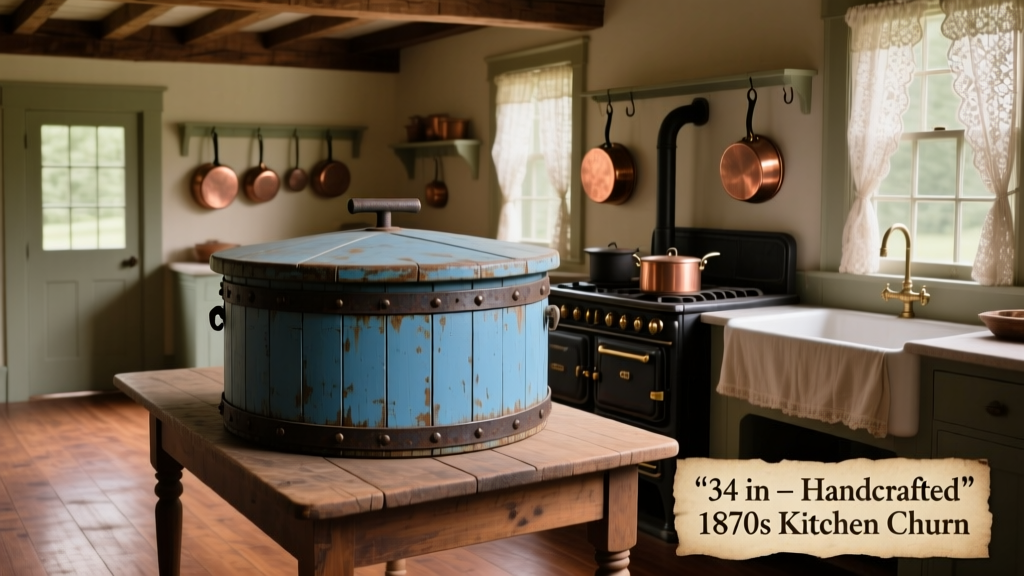
The 34-Inch Painted Blue Kitchen Churn Cover: Anatomy, Provenance, and Restoration Protocol for Historic Butter-Making Equipment
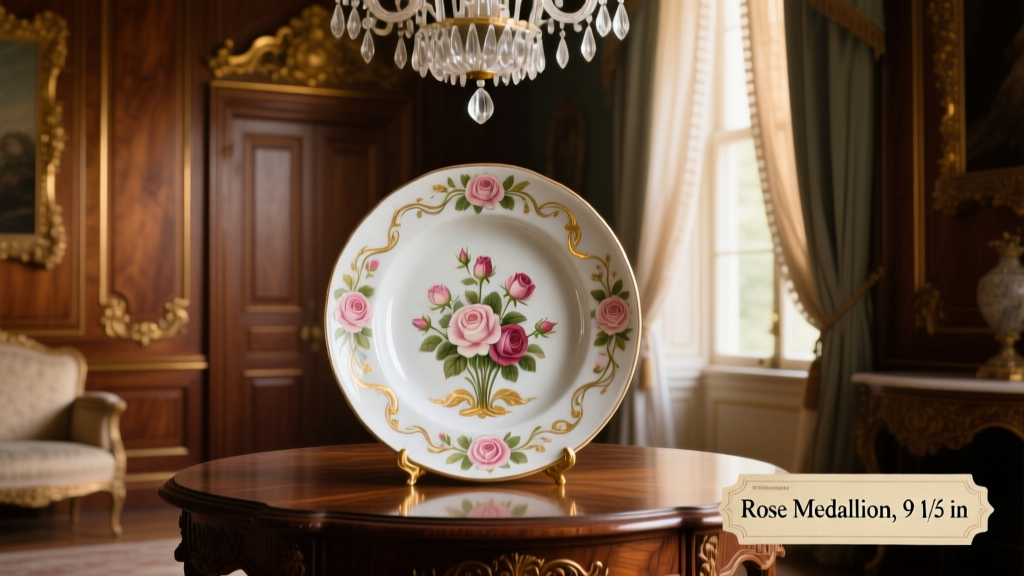
Rose Medallion Soup Dish with Figural Floral Reserves: A 9½-Inch Qing Dynasty Masterpiece
Thomaston Place Auction: A Specialist’s Guide to New England’s Premier Antique Furniture Marketplace
Shawnee Pottery Wall Pocket Sunflower: History, Identification, and Restoration Insights

Bronze Pen Case: Cast & Pierced Dragons and Cranes, Japan, c. 1900 — A Masterpiece of Meiji Metalwork
Currier & Ives 'Home in the Wilderness' Framed Print: Authenticity, Provenance, and Restoration Guidance for the 13 3/8 × 17 3/8 Inch Format
Game Gomer Pyle Transogram 1965: A Collector’s Guide to the Iconic Military Comedy Board Game
Fenton Burmese Lamp: Student Hand-Painted Gloria Finn, 1973 — A Collector’s Profile and Technical Restoration Guide
Weller Pottery Lincoln Plaque: Decoding the Greenish-Gray & Cream Back Relief Portrait (4 5/8")