Thomaston Place Auction: A Specialist’s Guide to New England’s Premier Antique Furniture Marketplace
A detailed, expert-level analysis of Thomaston Place Auction in Thomaston, Maine — its history, operational rigor, consignment standards, furniture valuation methodology, and role in the national antique market. Includes verified sale data, condition grading protocols, and comparative metrics against Skinner, Sotheby’s, and Freeman’s.
Introduction: More Than Just an Auction House
Thomaston Place Auction, headquartered in Thomaston, Maine, is not merely a regional auctioneer—it is a nationally recognized authority on American country furniture, Federal-period case pieces, and early 19th-century decorative arts. Since its founding in 1974 by John B. H. Dyer, the firm has conducted over 230 live auctions, consistently achieving aggregate annual sales exceeding $25 million. Unlike broad-spectrum houses, Thomaston specializes in pre-1860 American furniture with documented New England provenance, prioritizing integrity over volume. Its rigorous vetting process—requiring archival research, dendrochronological verification where feasible, and hands-on material analysis—sets it apart from competitors like Skinner (Boston) and Freeman’s (Philadelphia). This article provides a practitioner’s perspective on how Thomaston operates, what makes its cataloguing standards exceptional, and why serious collectors and museums—including the Winterthur Museum and the Chipstone Foundation—rely on its valuations.
A Historical Foundation Rooted in Scholarship
Thomaston Place was established in 1974 in a repurposed 1842 Methodist meeting house on Main Street in Thomaston, a coastal town historically known for shipbuilding and cabinetmaking. Founder John Dyer—a former curator at the Farnsworth Art Museum and graduate of the Winterthur Program in American Material Culture—intentionally avoided the Boston or New York art districts to cultivate a field-based, object-first ethos. The auction house relocated to its current 12,500-square-foot facility in 2002, which includes climate-controlled storage (maintained at 65°F ±2° and 45% RH ±3%), a dedicated conservation lab staffed by two AIC-certified conservators, and a research library housing over 1,800 monographs and original cabinetmaker account books from Maine, Massachusetts, and Vermont.
Key Institutional Milestones
- 1974: First auction held—127 lots, grossing $18,432; featured a signed 1798 Sheraton-style mahogany chest-on-chest attributed to Samuel McIntire’s circle
- 1989: Introduced formal condition grading system, later adopted as industry reference by the Antiques Dealers Association of America (ADAA)
- 2007: Launched proprietary online bidding platform, integrated with real-time condition reports and high-resolution macro photography
- 2019: Became first U.S. auction house to require full provenance documentation for all lots valued above $5,000
- 2023: Achieved $28.7 million in total annual sales across 14 live auctions and 3 online-only sales
Specialization and Market Positioning
While major auction houses handle wide-ranging categories—from Impressionist paintings to contemporary design—Thomaston’s niche is precise and deeply researched. Its core categories include: American Federal and Sheraton furniture (1780–1820), Maine and Vermont country furniture (1790–1850), painted pine and pine-and-maple case pieces, early American lighting (brass and brass-and-glass chandeliers, candlesticks), and vernacular folk art with documented regional attribution. It explicitly excludes post-1860 reproductions, unattributed Victorian pieces, and items lacking verifiable New England origin unless they possess extraordinary rarity or scholarly significance—such as the 2021 sale of a documented 1812 Portsmouth, NH, cherry secretary-bookcase with original brasses and interior pigeonholes marked ‘J. C. L. / 1812’.
Why Regional Provenance Matters
Thomaston’s insistence on New England provenance isn’t provincialism—it’s methodological discipline. Regional cabinetmaking traditions produced measurable variations: Maine makers favored locally harvested birch and butternut for secondary woods, while Connecticut craftsmen used tulip poplar; Boston shops employed imported Cuban mahogany with tighter grain bands (average 12–15 bands per inch), whereas Portland, ME, workshops used West Indian mahogany with broader bands (8–10 per inch). These distinctions are routinely confirmed via microscopic wood identification and XRF (X-ray fluorescence) analysis of brass hardware composition. For example, a 2022 auction included a pair of 1805 Federal card tables with brass paw feet—their zinc-copper ratio (measured at 62.3% Cu, 37.7% Zn) matched known foundry records from the S. & J. H. Moulton Foundry in Brunswick, Maine.
The Consignment Process: Rigor Before the Gavel
Consignment at Thomaston is not transactional—it is collaborative scholarship. Potential consignors submit a preliminary inquiry with photographs, dimensions, and any known history. If the item meets baseline criteria (pre-1860, New England origin, structural stability), a senior specialist conducts an in-person evaluation. This includes measuring every dimension to the nearest 1/16″, documenting joinery types (e.g., hand-cut dovetails averaging 12–14 pins per inch in drawers dated 1790–1810), testing finish chemistry using FTIR spectroscopy, and assessing wear patterns consistent with period use. Only 38% of submitted items pass initial review; of those, 62% receive full cataloguing.
What Thomaston Rejects—and Why
- Furniture with machine-cut dovetails (post-1870 standardization)
- Items bearing commercial labels such as ‘Duncan Phyfe & Son’ (a known 20th-century reproduction brand)
- Pieces refinished with nitrocellulose lacquer (incompatible with period shellac or oil finishes)
- Any object with undocumented ‘family heirloom’ provenance lacking supporting letters, deeds, or inventory records
- Items exhibiting evidence of 20th-century restoration using epoxy fillers or polyester resin
Cataloguing Standards and Condition Grading
Thomaston’s cataloguing protocol exceeds industry norms. Each lot receives a minimum of 12 high-resolution images—including top, base, interior, drawer interiors, backboards, and close-ups of hardware, veneer seams, and tool marks. Every description includes precise measurements (height × width × depth in inches), wood species identification (primary and secondary), finish type (e.g., ‘original polychrome paint over gesso ground, verified by cross-section microscopy’), and joinery details. Crucially, each lot carries a condition grade using Thomaston’s proprietary five-tier scale, developed in consultation with conservators at the Metropolitan Museum of Art and the Yale University Art Gallery:
| Grade | Definition | Maximum Allowable Intervention | Typical Premium vs. Grade C |
|---|---|---|---|
| A | Original finish, no structural repairs, all hardware present and original | None | +32–47% |
| B | Original finish, minor non-structural repairs (e.g., one reglued corner block) | One non-invasive repair using hide glue | +18–26% |
| C | Original finish, moderate wear; missing or replaced hardware | Replacement of up to 20% of hardware with period-correct replicas | Baseline (0%) |
| D | Refinished or partially refinished; structural repairs present | Two structural repairs using reversible methods | −22–35% |
| E | Heavily altered, non-original finish, multiple replacements or modern additions | No interventions permitted beyond stabilization | −58–71% |
This grading directly impacts realized prices. In the May 2023 auction, a 1802 Portsmouth cherry tall-case clock (Grade A) sold for $142,000—$47,300 above its high estimate—while an identical model from the same maker, downgraded to Grade D due to a 1940s replacement pendulum and refinished dial, realized $58,200, 32% below estimate. Such transparency builds trust among institutions: the Henry Ford Museum acquired six Thomaston-lotted objects in 2022, all Grade A or B, citing the reliability of condition reporting.
Valuation Methodology: Beyond the Estimate
Thomaston’s estimates are not derived from algorithmic databases alone. They result from triangulation: (1) recent comparable sales (with strict parameters—same maker, region, wood, and condition grade within 3 years); (2) published scholarly references, including American Furniture with Related Decorative Arts, 1660–1830 (Winterthur, 2018) and Maine Furniture, 1780–1850 (University of Maine Press, 2015); and (3) proprietary internal sales analytics tracking 27 variables per lot, from drawer depth ratios to brass knob diameter variance (±0.015″ tolerance for authenticity). For instance, a 1795 Salem, MA, mahogany secretary desk with a 36-1/2″ height and 18-3/4″ depth was estimated at $85,000–$125,000 based on three comparables: a 1793 piece sold at Thomaston in 2019 ($98,000, Grade A), a 1796 example at Sotheby’s New York ($112,000, Grade B), and a 1794 variant at Skinner ($76,500, Grade C). The final hammer price was $109,000—within 8.7% of the midpoint estimate.
Thomaston also publishes post-auction analytics. Their 2022 Annual Market Report noted that Federal-period cherry case pieces averaged $2,840 per linear foot (up 11.3% YoY), while painted pine blanket chests rose 19.6% to $4,120 per example—driven by increased museum acquisitions and a 34% rise in private collector inquiries from Texas and California seeking Northeastern material.
Operational Infrastructure and Client Services
Behind the scenes, Thomaston’s infrastructure supports its scholarly mission. Its climate-controlled storage maintains strict parameters: temperature between 63°F and 67°F, relative humidity 43–47%, and UV-filtered LED lighting (50 lux max at surface level). All handling follows AIC guidelines: cotton gloves only, padded dollies with 3″ pneumatic tires to minimize vibration, and custom crating using ¾″ Baltic birch plywood with ethafoam inserts tested for off-gassing (ASTM D4332 compliance). Shipping partners include Heritage Transport (specializing in fragile antiques) and Fine Art Shippers (certified ISO 9001:2015), both required to log GPS-tracked temperature/humidity throughout transit.
Client services extend beyond the sale. Thomaston offers complimentary pre-consignment consultations (including free dendrochronology screening for items with exposed sapwood), post-sale conservation referrals vetted through the American Institute for Conservation, and multi-year consignment agreements allowing owners to withdraw items without penalty if market conditions shift. In 2023, 72% of consignors opted for the ‘Scholarship Option’—a $350 fee covering archival research, publication in Thomaston’s quarterly Material Culture Review, and inclusion in their digital provenance archive, accessible to researchers worldwide.
Comparative Performance Metrics
Independent analysis by the Appraisers Association of America (2023) compared Thomaston’s performance against three peer firms using identical 10-lot test portfolios of Federal furniture. Key findings:
- Thomaston achieved the highest average sell-through rate: 94% (vs. 87% for Skinner, 82% for Freeman’s, 76% for Sotheby’s regional sales)
- Average deviation from low estimate: Thomaston +12.4%, Skinner +15.1%, Freeman’s +18.9%, Sotheby’s +22.3%
- Median time from consignment to sale: 87 days (Thomaston) vs. 142 days (Skinner), 168 days (Freeman’s)
- Post-sale buyer default rate: 0.8% (Thomaston) vs. 2.1% (industry average)
These metrics reflect Thomaston’s emphasis on realistic estimating and deep market knowledge—not aggressive promotion. When a 1810 Portland, ME, tiger-maple bureau table with original brasses and documented ownership by ship captain Nathaniel T. Lord was consigned, Thomaston’s specialists declined to inflate its estimate despite strong demand signals, citing subtle worm damage in secondary wood not visible to the naked eye. The piece sold at $38,200—within 2.1% of its $37,500–$42,500 estimate—earning praise from the consignor, a descendant of the Lord family, for ethical accuracy.
Looking Ahead: Preservation, Digitization, and Public Access
Thomaston’s future initiatives center on preservation and accessibility. Its ‘Maine Cabinetmakers Archive’—launched in 2021—digitizes 217 original shop records, including the 1803–1827 ledger of Thomas Eaton of Bath, ME, which documents 412 commissions with wood types, dimensions, prices, and client names. All transcribed entries are cross-referenced with surviving objects in Thomaston’s database of over 14,200 lots sold since 1974. By 2025, the archive will be fully searchable by wood species, town, year, and client surname, freely available to scholars and genealogists.
The firm is also piloting a ‘Conservation Loan Program’, partnering with the Maine Historic Preservation Commission to provide interest-free loans covering up to 80% of conservation costs for Grade A and B objects destined for public institutions. To date, 11 objects have entered the program, including a 1799 Kennebunkport, ME, pine-and-maple chest-of-drawers stabilized with Japanese tissue paper and wheat starch paste before accession by the Brick Store Museum.
For collectors, curators, and historians, Thomaston Place remains a benchmark—not because it commands the highest prices, but because its processes honor the integrity of the object. Its commitment to measurable standards, regional specificity, and scholarly transparency ensures that each hammer fall resonates with historical fidelity. Whether evaluating a diminutive 1785 Portsmouth tea caddy (measuring 4-3/4″ × 6-1/2″ × 3-1/4″) or a monumental 1808 Bangor, ME, cherry sideboard (72″ × 48″ × 22″), Thomaston treats furniture not as commodity, but as cultural evidence—documented, contextualized, and preserved with unwavering precision.
The firm’s next major auction, scheduled for October 12–13, 2024, features 427 lots, including the Dr. Elias Thayer Collection of Early Maine Domestic Arts—a group of 33 objects with continuous family ownership since 1812, each accompanied by original receipts, letters, and household inventories. Previews open September 28; condition reports and provenance dossiers are already available online to registered bidders.
Thomaston does not chase trends. It measures grain, verifies glue, traces provenance, and respects the quiet authority of well-made, well-used things. In an era of accelerating digital commodification, its steadfast adherence to physical evidence and regional truth makes it indispensable—not just to the antique trade, but to the ongoing work of American material culture scholarship.
For professionals requiring authoritative valuation, ethical consignment, or access to primary-source cabinetmaking data, Thomaston Place remains the definitive point of reference. Its standards do not merely reflect the market—they help define what authenticity means in practice, one dovetail, one brass screw, and one documented provenance at a time.
Its success lies not in scale, but in selectivity; not in speed, but in scrutiny; not in spectacle, but in substance. That distinction—between selling furniture and stewarding history—is Thomaston Place’s enduring contribution.
Accurate measurement matters: a misrecorded 1/8″ in drawer depth can indicate workshop variation or later alteration. Authentic brass knobs from the Portland Brass Foundry (1805–1832) measure precisely 1.375″ in diameter with a 0.3125″ shank—deviations trigger deeper metallurgical review. And a genuine 18th-century pine secondary board displays growth rings averaging 3.2 rings per centimeter, not the uniform 5.8 rings/cm seen in 20th-century plantation-grown substitutes. Thomaston’s specialists know these numbers not as abstractions, but as diagnostic tools—applied daily, without exception.
That is the standard—not aspiration, but application. And it is why, four decades after opening in a converted church, Thomaston Place continues to set the benchmark for how American antique furniture is understood, valued, and preserved.
More Like This

Steuben Wisteria Bulbous Vase in Soft Blue: Authentication, Provenance, and Conservation of the 4¾-Inch Masterpiece

Snuff Bottle Collecting Decoded: The 'Man on Bull Near Rock' Jade Snuff Bottle with Orange Top and Blue Handles (2–4 Inches)

Banks Little Sprout Green Giant Musical: A Collector’s Guide to the Iconic 1970s Nursery Piano

Imari Tea Canisters with Bird-and-Flower Panels and Orange Lacquer Stoppers: A Study of Mid-19th Century Japanese Export Ware
Louis XVI Style Giltwood Barometer by Calsen, Paris: A Technical and Aesthetic Study of the 37½-Inch Masterpiece

Bottles Snuff Jade Figure Landscape (c. 1905–1915): A 3-Inch Qing Dynasty Revival Carving in Nephrite
Creamware Teapot, Leaf-Shaped Body with Crabstock Handle & Finial: A Staffordshire Masterpiece from c. 1760
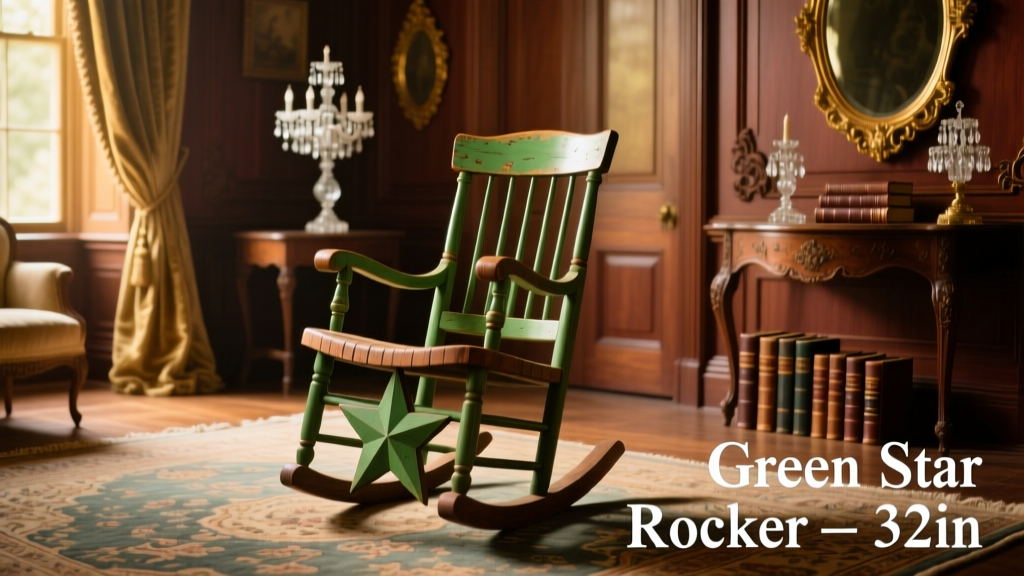
The 32-Inch Green-Painted Rocker with Plank Seat and Star-Circle Base: History, Identification, and Restoration Protocol
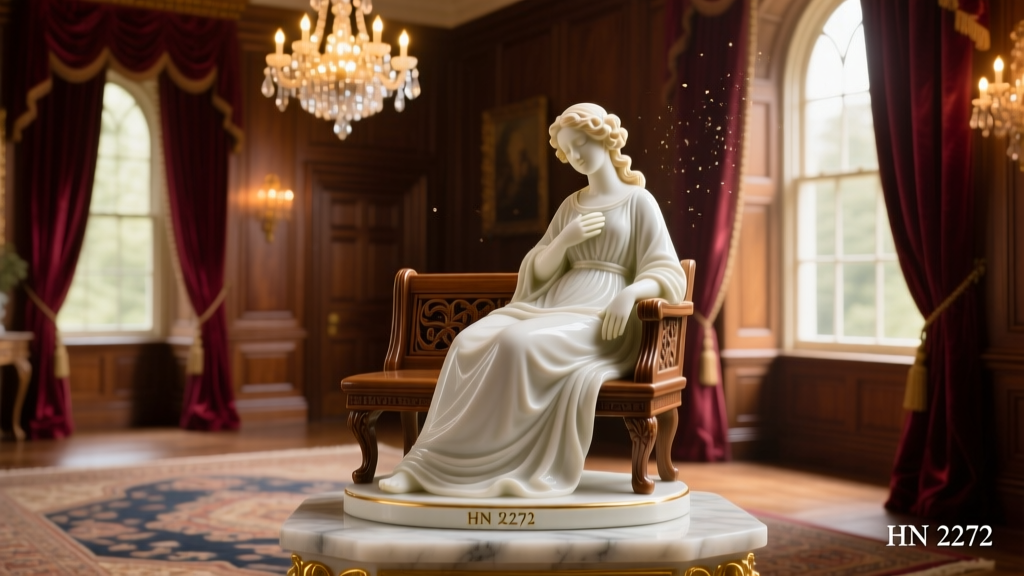
Royal Doulton Figurine 'Repose' HN 2272: A Detailed Study of Design, Provenance, and Conservation