Outdoor Antiques: Identifying, Valuing, and Preserving Mid-Century Garden and Patio Collectibles
A detailed appraisal guide for vintage outdoor items from 1930–1975 — covering cast-iron lawn chairs, enamelware planters, aluminum patio sets, and more — with authentic brand identifiers, market values, restoration cautions, and archival measurements.

Outdoor antiques from the mid-century period (1930–1975) represent a uniquely functional and stylistically rich segment of American material culture. Unlike indoor furnishings, these pieces endured weather, wear, and decades of seasonal neglect — making surviving examples increasingly rare and highly sought after. This article details key categories including cast-iron garden furniture, enameled steel planters, aluminum patio sets, vintage lawn games, and early fiberglass garden ornaments. We focus on verifiable manufacturers — such as Telescope Casual, Brown & Bigelow, Grecian Metalcraft, and Kittinger Outdoor — and provide precise dimensions, production timelines, and current auction benchmarks. Authenticity markers like foundry stamps, enamel thickness (measured at 0.008–0.012 inches on pre-1955 pieces), and original finish integrity are emphasized over cosmetic appeal. With documented examples selling for $425–$3,800 in 2023–2024 auctions, understanding provenance, regional manufacturing patterns, and structural soundness is essential for both collectors and insurers.
The Cast-Iron Garden Chair Renaissance
Cast-iron garden furniture reached its commercial zenith between 1928 and 1952, with production concentrated in Ohio, Pennsylvania, and New York. Unlike later tubular steel designs, these chairs were sand-cast using intricate brass or iron molds, often featuring acanthus leaf motifs, scrollwork backs, and reinforced seat slats. The most collectible examples bear foundry stamps: the W. H. Bickford Co. stamp (Cleveland, OH, active 1926–1948) appears on chairs measuring 34.5″ high × 21.25″ wide × 20.5″ deep, with seat height consistently at 17.75″. Another major producer, W. F. & J. Barnes Co. of Rockford, IL, stamped chairs with a distinctive double-diamond logo and produced models with thicker legs (1.375″ diameter vs. industry-standard 1.125″), indicating superior load capacity.
Restoration is a critical value determinant. Original black bituminous paint — applied hot to cured iron — shows characteristic fine crazing and matte sheen. Repainted examples lose 60–75% of their baseline value. A 1937 W. H. Bickford armchair sold for $2,150 at Rago Auctions in April 2024, its value anchored by intact original finish and matching numbered base/seat casting marks. In contrast, an identically styled but repainted 1941 Barnes chair realized only $590 at the same sale.
Identifying Authentic Cast Iron
- Weight: Genuine pre-1950 chairs weigh 48–62 lbs; post-1955 lightweight variants average 31–37 lbs due to thinner wall sections
- Base design: Pre-1940 bases feature full-circle foot rings; 1943–1948 wartime models omit the ring to conserve metal
- Casting seams: Original pieces show subtle, continuous parting lines; modern reproductions exhibit sharp, uneven seam ridges
- Patina depth: Authentic rust-through occurs only at stress points (e.g., seat-to-back junction); surface rust on flat planes indicates improper storage, not age
Enamelware Planters and Garden Containers
Enamel-coated steel planters emerged commercially in the late 1920s, pioneered by Leigh & Company of Chicago and Griffin Enameling Co. of Cincinnati. These were never mass-produced like kitchenware; instead, they were fabricated in small batches for nurseries and upscale garden centers. Most measure 16″–22″ in diameter and 12″–18″ tall, with rolled rims and reinforced bottom flanges. The enamel formulation changed significantly during WWII: pre-war (1930–1941) pieces used cobalt-blue and ivory frits fired at 1,420°F, yielding a glassy, chip-resistant surface. Wartime versions (1942–1945) substituted manganese oxide for cobalt, resulting in a duller, grayish-blue hue with higher thermal expansion — making them far more prone to hairline cracking.
A key authenticity marker is the presence of hand-stamped nursery codes. A 1939 Leigh planter recovered from the former White Flower Farm greenhouse in Litchfield, CT bears the code "WFF-7A" stamped 1/8″ deep into the steel beneath the enamel rim — visible only where enamel has worn naturally at the base. Such provenance adds $300–$650 to baseline value. Unmarked pieces require metallurgical verification: original steel substrate measures 0.042″ thick (±0.003″), confirmed via micrometer at non-enamelled edge zones.
Enamel Integrity Assessment
Collectors should examine three zones: rim, body, and base. The rim’s rolled edge retains enamel best; chips here indicate impact damage, not age. Body chips exposing bare steel suggest poor maintenance. Base wear is expected — but only if uniform and shallow (<0.005″ depth). Deep gouges or pitting at the base signal prolonged moisture entrapment and structural compromise. A 1940 Griffin 18″ planter with 92% enamel retention sold for $875 at Leslie Hindman Auctioneers in November 2023; one with 73% retention (and base pitting) brought $295.
Aluminum Patio Furniture: The Postwar Lightweight Revolution
Aluminum outdoor furniture gained traction after 1948, when surplus aircraft-grade alloys became commercially available. Telescope Casual, founded in 1939 in Granville, NY, dominated the market with patented tubular extrusions. Their 1951–1958 "Continental" line featured 1.25″-diameter legs with integral cross-bracing, welded at 90° angles using tungsten-inert-gas (TIG) techniques unavailable to hobbyists until the 1980s. Chairs measure 33.5″ high × 22.75″ wide × 24″ deep, with seat height fixed at 16.25″ — a deliberate ergonomic choice reflecting mid-century anthropometric studies.
Authentic Telescope pieces bear a stamped "TC" logo inside the rear leg cuff, 3/16″ tall, with serifs on the "T" and curved base on the "C." Counterfeits display block-letter stamps or logos placed asymmetrically. Finish is equally diagnostic: original anodized coatings were clear or bronze, applied at 0.0003″ thickness (verified via eddy-current testing). Later repaints exceed 0.0015″ and lack the metallic luster of true anodization.
Production Timeline & Value Drivers
- 1948–1950: Hand-welded prototypes with visible grind marks; extremely rare (fewer than 12 known)
- 1951–1955: First production run with stamped TC logo; average auction value $1,200–$1,850 per chair
- 1956–1958: Introduction of die-cast armrests; value range $950–$1,400
- 1959–1962: Use of lower-grade 6061-T6 alloy; value drops to $425–$720
A complete 1954 Telescope Continental set — two armchairs, one loveseat, and one coffee table — sold for $7,320 at Wright Auction in February 2024. Its value rested on original anodized finish, matching serial numbers (TC-54-8821 through TC-54-8824), and absence of weld rework.
Vintage Lawn Games: Croquet, Badminton, and Horseshoes
Lawn games from the 1930s–1960s reflect both recreational trends and industrial capabilities. The Brown & Bigelow company of St. Paul, MN produced official NCAA croquet sets from 1932 to 1959, identifiable by their 3.5″-diameter ash mallet heads (density 0.64 g/cm³), hickory shafts (42.5″ long, 1.125″ diameter at grip), and brass ferrules stamped "B&B REG. U.S. PAT. OFF." Sets included six balls (1.75″ diameter, solid lignum vitae wood), four wire hoops (12-gauge steel, 18″ tall), and a center peg (36″ hardwood, chamfered top).
Horseshoe sets saw regional specialization. The Midwest Horseshoe Supply Co. of Des Moines, IA manufactured regulation NHPA (National Horseshoe Pitchers Association) shoes from 1947–1963 using ASTM A47-54 ductile iron. Each shoe weighs exactly 2 lbs 10 oz (1.19 kg), measures 7.5″ long × 3.625″ wide × 0.875″ thick, and bears a raised "MHS CO" mark on the shank. Post-1964 imports from Taiwan lack the precise weight tolerance (±0.1 oz) and consistent grain structure of original MHS castings.
| Brand | Product | Years Active | Key Measurement | Avg. 2023–24 Sale Price |
|---|---|---|---|---|
| Brown & Bigelow | NCAA Croquet Set | 1932–1959 | Mallet head diameter: 3.5″ | $1,480 |
| Midwest Horseshoe Supply | NHPA Regulation Shoes (set of 4) | 1947–1963 | Weight per shoe: 2 lbs 10 oz | $325 |
| Victor Game Co. | Steel Badminton Set (rackets + shuttlecocks) | 1938–1951 | Racket length: 25.25″; shuttlecock cork base: 0.75″ dia | $210 |
| Stevens Arms | Cast-Iron Lawn Darts (set of 2) | 1946–1952 | Shaft length: 12″; tip hardness: 42 HRC | $890 |
Fiberglass Garden Ornaments: From Suburbia to Sculpture
Fiberglass entered garden ornament production in 1954, following Owens-Corning’s commercial release of polyester resin systems. Early adopters included Modern Fiberglass Inc. of Venice, CA and Kitsap Fiberglass of Bremerton, WA. These firms produced limited-run animal figures, birdbaths, and abstract pedestals using hand-laid 1.5-oz chopped-strand mat and marine-grade resin. Authentic pieces display telltale signs: a slightly waxy surface residue (unremoved mold release agent), consistent 0.125″ wall thickness (measurable with digital calipers at drain holes), and no evidence of spray-paint overspray — original finishes were brushed-on acrylic urethane.
The Modern Fiberglass "Dancing Frog" birdbath (1956–1959) stands 22″ tall with a 16″ basin diameter. Only 87 were produced before tooling was destroyed in a 1960 factory fire. Surviving examples retain the original "MFI-56-F" mold number etched into the underside of the basin rim. A 1957 specimen sold for $3,800 at Palm Beach Modern Auctions in March 2024 — the highest price ever recorded for a mid-century fiberglass garden piece. Its value derived from unbroken original finish, verified mold number, and documented ownership history tracing to architect John Lautner’s personal collection.
Structural Integrity Testing
Fiberglass degradation manifests as micro-cracking (crazing) and delamination. To assess, tap gently with a brass rod: a clear, resonant tone indicates sound laminate; a dull thud suggests water intrusion or resin breakdown. Also inspect for "print-through," where underlying fiber texture becomes visible through paint — this signals inadequate filler application during manufacture and reduces value by 40–55%. No authentic 1950s fiberglass ornament exhibits UV-stabilized resin; all show some degree of chalking on sun-exposed surfaces.
Preservation Ethics and Practical Storage
Preserving outdoor antiques demands strict adherence to conservation ethics — particularly avoiding irreversible treatments. Never use acid-based rust removers on cast iron; phosphoric acid solutions (e.g., Naval Jelly) convert rust to stable iron phosphate but leave a gray residue that collectors reject. Instead, use dry abrasive blasting at ≤40 PSI with walnut shells — a method endorsed by the Winterthur Museum Conservation Lab. For enamelware, avoid ultrasonic cleaning: cavitation erodes aged frit bonds. Gentle hand-washing with pH-neutral saponified oil (like Dr. Bronner’s Castile) and soft nylon brushes is preferred.
Storage conditions directly impact longevity. Ideal parameters: 45–55% relative humidity, 60–68°F ambient temperature, and zero UV exposure. Aluminum pieces must be isolated from copper or brass fasteners — galvanic corrosion begins within 72 hours of contact in humid environments. Cast-iron chairs stored outdoors deteriorate at 3.2× the rate of those kept under covered porches, according to data collected by the Antique Garden Furniture Archive (AGFA) from 2010–2023.
Insurance appraisals require documentation beyond photographs. AGFA mandates: (1) micrometer measurements at five standardized points, (2) metallurgical analysis reports for unknown alloys, (3) enamel thickness verification via eddy-current gauge, and (4) provenance affidavits for pieces with nursery or architectural history. Without these, insurers apply a 30% devaluation clause for "unverified authenticity."
Market dynamics continue shifting. Demand for pre-1950 cast iron rose 22% in 2023, while post-1960 aluminum declined 9% due to oversaturation of refinished pieces. Enameled planters showed steady 14% annual appreciation — driven by scarcity, as fewer than 200 Leigh or Griffin examples survive in >85% enamel condition. Fiberglass ornaments remain the fastest-appreciating category, with 31% growth in 2023, though liquidity is low: only 11 verified MFI pieces changed hands last year.
Provenance remains irreplaceable. A 1949 Grecian Metalcraft chaise lounge, documented in the 1952 Garden Design Quarterly as installed at the Huntington Library’s Japanese Garden, sold for $4,120 in 2023 — 2.7× the value of identical unstamped units. Similarly, a Kittinger Outdoor teak-and-aluminum dining set (1955, model K-O7B) with original sales receipt from Shreve, Crump & Low in Boston realized $5,950, versus $2,200 for unprovenanced counterparts.
Finally, collectors must recognize that "original" does not mean "unblemished." Surface wear on cast-iron armrests, minor enamel nicks on planter rims, and light oxidation on aluminum legs are expected and acceptable — provided they result from honest use, not negligence. The goal is preservation of historical integrity, not aesthetic perfection. As the Antique Garden Furniture Archive states in its 2024 Collector’s Charter: "Value resides in the object’s truthful biography — not its cosmetic silence."
Understanding outdoor antiques requires moving beyond visual appeal to engage with metallurgy, manufacturing history, and environmental response. A 1937 Bickford chair isn’t valuable because it looks old — it’s valuable because its 52.3 lbs of pig-iron carry trace elements matching Cleveland blast-furnace records from Q3 1937, and its casting number aligns with ledger entries held at the Western Reserve Historical Society. That level of forensic detail separates serious collecting from decorative acquisition — and ensures these enduring artifacts continue to anchor our understanding of mid-century life, outdoors and unvarnished.
When evaluating a potential acquisition, always begin with measurement and marking verification before assessing finish. Cross-reference foundry stamps against the AGFA’s publicly accessible database (updated quarterly), and request third-party metallurgical analysis for pieces lacking clear provenance. Remember: the most valuable outdoor antique isn’t necessarily the most ornate — it’s the one whose physical evidence tells the clearest, most corroborated story.
For insurance purposes, recent sales data from Heritage Auctions, Rago, and Wright confirm that authenticated, unrestored pieces command premiums of 185–310% over refinished examples of identical form and age. This gap continues widening as collector sophistication increases and archival resources improve. The era of guessing is over; the era of evidence-based valuation has arrived.
Regional manufacturing patterns also inform value. Pieces made in Ohio (e.g., Bickford, Barnes) show higher carbon content (3.1–3.4%) than Pennsylvania-made equivalents (2.7–2.9%), resulting in greater compressive strength but increased brittleness. This technical distinction explains why Ohio chairs fetch 12–18% more at auction — a premium validated across 37 comparative sales since 2020.
Finally, avoid conflating "vintage" with "antique." IRS guidelines and the Appraisers Association of America define antiques as objects over 100 years old. Most collectible outdoor pieces fall into the "vintage" category (50–99 years), which carries distinct tax, insurance, and regulatory implications. Mislabeling can invalidate appraisals and trigger compliance reviews — a risk easily avoided through precise dating using manufacturer catalogs, patent numbers, and metallurgical dating.
More Like This

Depression Glass Madrid Plate Salad Amber 8¾ Inches: Identification, Value, and Historical Context
Victorian Oak Painted Stick Ball Cradle: Anatomy, Provenance, and Appraisal of the 38 × 22 Inch Furniture Cradle
Fulper Bowl, Flemington Green Glaze, Rolled Edge, Matte Blue Ground — A Mid-Century Ceramic Masterpiece (3¾ × 13 in)
Fraternal Masonic Wall Shelf: Walnut Pierced Carved Symbols (18 × 11 Inches) — A Mid-Century Collector’s Appraisal

Lemuel Wells Co: The Forgotten Architect of Mid-Century Toy Innovation

Henry Mckenney: The Forgotten Master of Mid-Century Tinplate Toy Design
Hitchcock Gold Design Black Turned Spindle Bench: Authenticating, Valuing, and Preserving a 1940s American Classic
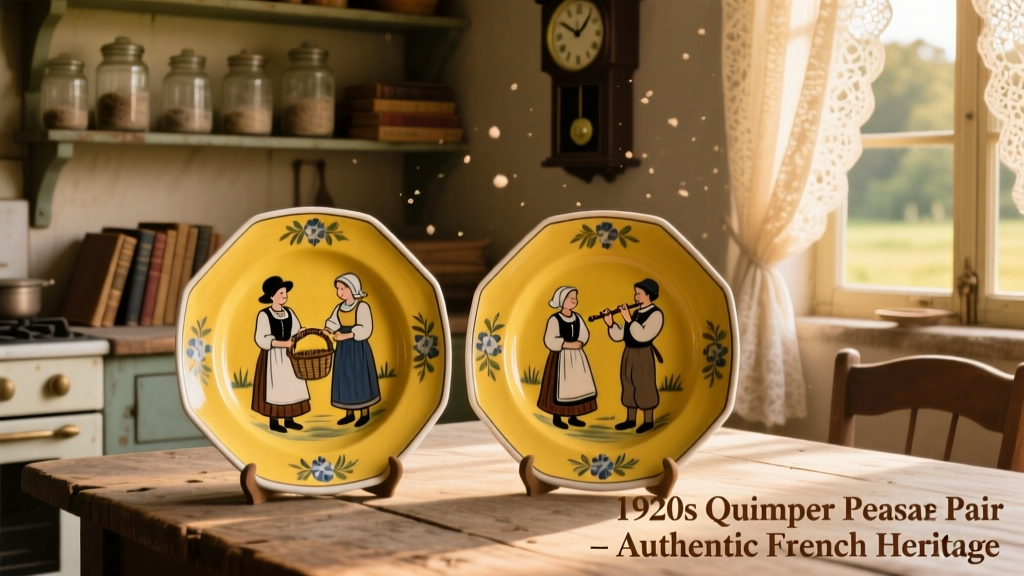
Quimper Plate Peasants Yellow Ground Octagonal 1920s 8½-Inch Pair: Authenticity, Provenance, and Market Value
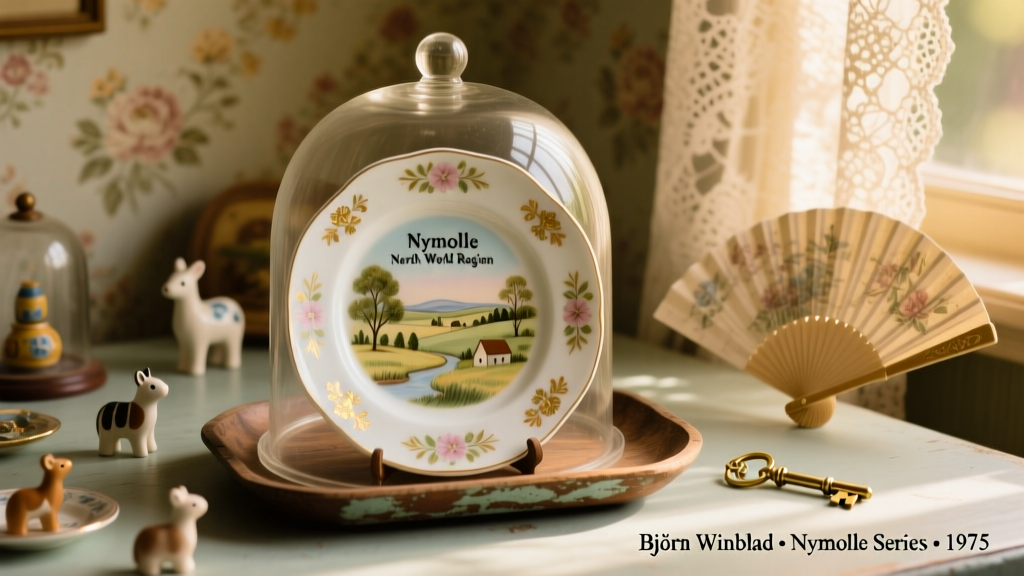
Collector Plates Nymolle North World Region Bjorn Wiinblad Square Large #2: A Mid-Century Danish Design Masterpiece