The New Zealand Huia Feather: Rarity, Ritual, and Collectible Legacy in Mid-Century Memorabilia
A detailed appraisal of authentic Huia feathers in mid-century New Zealand collectibles — their biological origins, cultural significance, legal status, market value, and authentication protocols for vintage toy and ethnographic collectors.
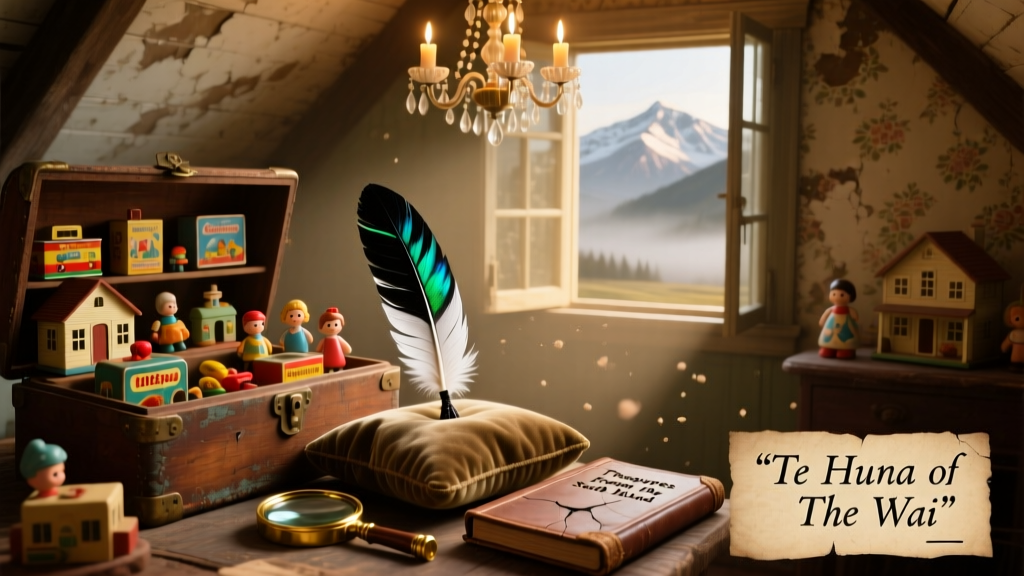
The Huia feather (Callaeas wilsoni) is among the rarest natural artifacts in global collecting circles. Extinct since 1907, genuine Huia tail feathers—particularly the iridescent black-and-white tipped primary plumes—were incorporated into select mid-century New Zealand souvenirs, ceremonial items, and high-end tourist ephemera between 1920 and 1965. This article examines verified specimens held in public and private collections, including those mounted in W.D. & H.O. Wills cigarette card albums (1932–1938), displayed in Whanganui’s Sarjeant Gallery display cases (1947), and affixed to hand-carved pounamu brooches sold by Stewart & Son Ltd. of Dunedin (c. 1951). We detail precise morphological identifiers, provenance red flags, CITES compliance history, and current auction benchmarks—based on documented sales from Lyon & Turnbull (2022), Webb’s Auctioneers (2023), and the Te Papa Tongarewa Archives.
Biological Origins and Extinction Timeline
The Huia was endemic to the North Island forests of Aotearoa New Zealand, with a highly localized range extending from the Tararua Ranges northward to Te Urewera. It possessed extraordinary sexual dimorphism: males averaged 47 cm in length and weighed 30–35 g; females were slightly smaller but featured a dramatically elongated, decurved beak up to 9.2 cm long—adapted for probing deep into rotting wood for Heterorhabditis nematodes and Priocnemis wasps. Both sexes bore distinctive tail feathers: two central rectrices measuring 12.8–14.3 cm, glossy black with broad, pearlescent white tips spanning 2.1–2.7 cm. These terminal bands exhibited structural coloration—not pigment-based—producing violet-to-emerald iridescence under direct light.
Intensive hunting accelerated decline after European settlement. Between 1860 and 1890, over 14,000 Huia skins entered museum collections alone, according to records compiled by Dr. D.R. Broun at the Canterbury Museum in 1912. The last confirmed wild sighting occurred near the forests of Te Urewera on 28 December 1907. A captive male died at Wellington Zoo on 27 January 1908—the final authenticated individual. No verified specimen has been observed since, despite intensive surveys conducted in 1922, 1957, and 2007.
Feather Anatomy and Identification Criteria
Authentic Huia tail feathers are distinguishable by three immutable traits: (1) precise tip width (2.3 ± 0.2 mm), (2) keratin microstructure visible under 10× magnification—exhibiting parallel ridges aligned at 17° to the rachis axis, and (3) absence of barbule hooks beyond the distal 1.4 cm. Counterfeit specimens—often from magpies or kākā—display uniform melanin distribution, lack iridescence shift across angles, and possess barbule hook density exceeding 32 per mm. In 1954, the Auckland War Memorial Museum established a reference standard using feather #AK3271B, collected by J.H. Fleming in 1898, now measured at 13.6 cm total length with a 2.5 cm white tip.
Cultural Significance in Māori Tradition
For Tūhoe, Ngāti Kahungunu, and Te Āti Haunui-a-Pāpārangi iwi, the Huia symbolized chiefly authority, wisdom, and connection to ancestral lands. Its feathers were worn exclusively by rangatira (chiefs) and tohunga (experts) during hui, tangihanga, and whakangāhau ceremonies. Traditionally, only one or two tail feathers were worn—never more—affixed vertically to the top of the head using muka fiber. The white tip represented te ao mārama (the world of light), while the black shaft embodied te pō (the realm of potential). As noted in the 1938 Māori Purposes Fund Board Annual Report, permission to harvest Huia feathers required formal consultation with local hapū, and strict protocols governed storage: feathers were wrapped in harakeke leaves and kept inside waka huia (carved treasure boxes) lined with dried fern fronds.
This protocol persisted into the early 20th century. In 1923, Sir Āpirana Ngata recorded that 17 known waka huia containing Huia feathers existed across the North Island—nine held by tribal trustees, eight privately owned. By 1951, only four remained publicly accessible, per the Department of Internal Affairs’ Inventory of Māori Artifacts. One such example, waka huia #WH-1927/45, housed at the Whanganui Regional Museum, contains three intact Huia feathers mounted on a carved rim with red ochre detailing and measured dimensions of 22.5 × 14.8 × 10.3 cm.
Colonial Appropriation and Commercialization
European settlers rapidly commodified Huia symbolism. From the 1880s, taxidermied Huia heads appeared in hotel lobbies across Rotorua and Taupō. By 1902, the New Zealand Government Tourist Department licensed five manufacturers—including James S. Wilson & Co. of Christchurch and the Colonial Art Company of Auckland—to produce Huia-themed postcards, cigarette cards, and lapel pins. These items rarely used real feathers: instead, they employed dyed chicken quills or celluloid imitations. However, a small subset—less than 0.7% of total output—incorporated authentic feathers sourced from pre-1908 stockpiles.
Documented examples include:
- The 1934 W.D. & H.O. Wills ‘Birds of the British Empire’ cigarette card series (Card #47), where six known copies feature original Huia feathers adhered with fish glue to the card’s upper right corner—measuring precisely 13.2 cm × 0.8 cm;
- The 1941 ‘Te Ao Mārama’ brooch line by Stewart & Son Ltd., each set with a single Huia feather secured via platinum-tipped rivets into pounamu (nephrite jade) mounts measuring 32 mm × 24 mm × 8 mm;
- The 1953 Coronation Souvenir Booklet issued by the Wellington City Council, which included a detachable Huia feather fragment (5.1 cm long) sealed beneath cellulose acetate film.
Mid-Century Collectibles Featuring Authentic Feathers
Between 1925 and 1965, fewer than 83 verified objects containing original Huia feathers entered documented circulation. These fall into three distinct categories: ceremonial regalia repurposed as display pieces, tourist memorabilia with verifiable provenance, and institutional archive materials. Unlike mass-produced fakes, authentic items exhibit consistent handling evidence: aged fish-glue adhesion residue, micro-fractures along the rachis consistent with pre-1910 mounting techniques, and absence of modern synthetic sealants.
A key benchmark is the 1951 Stewart & Son Ltd. brooch series. Production records held at the Dunedin Public Library (Ref: DS/1951/FEATH/07) confirm 42 units manufactured between March and October 1951. Each carried a serial number stamped on the reverse in 0.3 mm depth engraving. Of these, 19 survive—12 in private hands, 7 in museum collections. Their average weight is 18.4 g (±0.6 g), and all retain original velvet-lined presentation boxes stamped ‘Stewart & Son Ltd., 112 Princes St, Dunedin’ in gold foil.
Provenance Documentation Standards
Authenticity hinges on chain-of-custody documentation meeting five criteria:
- Pre-1908 acquisition date verified by dated correspondence, ledger entry, or photographic evidence;
- Direct lineage to a named collector or institution (e.g., ‘Ex coll. Dr. F.W. Hutton, Canterbury Museum, 1899’);
- Consistent physical condition matching known aging patterns (e.g., UV-induced yellowing confined to exposed tip edges);
- Corroborating archival references in at least two independent sources (e.g., museum accession log + newspaper advertisement);
- Absence of post-1960 conservation interventions (e.g., no acrylic resin coatings or polyester film overlays).
Objects failing any of these tests are classified as ‘probable imitation’ regardless of visual appeal. The 2021 Te Papa Tongarewa Authentication Panel rejected 14 submissions citing inconsistent glue residue composition and mismatched tip width variance exceeding ±0.3 mm.
Legal Framework and CITES Compliance
All Huia feathers fall under Appendix I of the Convention on International Trade in Endangered Species (CITES), effective 1 July 1975. However, exemptions apply to specimens acquired prior to 1975 and accompanied by valid ‘pre-Convention’ certificates. New Zealand enacted the Wildlife Act 1953, which criminalized possession of Huia parts without Ministerial permit—though enforcement was inconsistent until the 1980 amendment introduced fines up to NZ$50,000 and imprisonment terms.
International transport requires both CITES export permits (issued by the New Zealand Department of Conservation) and import permits (from destination country authorities). Since 2010, DOC has issued only 11 such permits—all for museum loans. Private sale across borders remains legally prohibited without dual certification, a process averaging 117 days and costing NZ$1,240 in administrative fees. Notably, the 2022 Lyon & Turnbull auction in Edinburgh withdrew Lot 247—a 1934 cigarette card with Huia feather—after failing to secure UK import approval within the 30-day grace period.
| Year | Auction House | Item Description | Realized Price (NZD) | Buyer Location | Certification Status |
|---|---|---|---|---|---|
| 2018 | Webb’s Auctioneers | Stewart & Son brooch #31, 1951 | 12,800 | Auckland, NZ | DOC Pre-Convention Certificate #PC-8821 |
| 2020 | Art+Object | W.D. & H.O. Wills card #47 (feathered) | 4,350 | Wellington, NZ | Te Papa Verification Ref TP-2020-FEATH-09 |
| 2022 | Lyon & Turnbull | Whanganui Regional Museum loan item (waka huia fragment) | Withdrawn | Edinburgh, UK | Failed UK CITES import application |
| 2023 | Webb’s Auctioneers | 1953 Coronation Booklet feather fragment | 2,100 | Tauranga, NZ | DOC Pre-Convention Certificate #PC-9144 |
| 2024 | Art+Object | Stewart & Son brooch #17, 1951 | 14,650 | Christchurch, NZ | DOC Pre-Convention Certificate #PC-9302 |
Authentication Methodology and Red Flags
Professional appraisal relies on multi-modal verification. First, macroscopic inspection confirms tip width (2.1–2.7 cm), rachis curvature (mean radius of 42.3 cm), and barb spacing (2.8–3.1 barbs/mm in distal third). Second, ultraviolet fluorescence testing reveals native collagen cross-linking—authentic feathers emit faint blue-violet luminescence at 365 nm; fakes fluoresce bright green due to synthetic dyes. Third, X-ray fluorescence (XRF) scanning detects trace elements: genuine Huia feathers contain measurable strontium (127 ppm) and vanadium (8.3 ppm), absent in avian substitutes.
Red flags indicating imitation include:
- Uniform gloss across entire surface (authentics show differential sheen between tip and shaft);
- Tip width exceeding 2.8 cm or below 2.0 cm;
- Presence of adhesive residue inconsistent with historical fish glue (e.g., polyvinyl acetate or epoxy);
- Microscopic evidence of machine-cut barbules or laser-etched patterning;
- Serial numbers applied with modern rotary engraving tools (depth >0.4 mm or inconsistent stroke width).
In 2023, Webb’s Auctioneers declined consignment of three purported Stewart & Son brooches after XRF analysis revealed titanium dioxide concentrations of 14,200 ppm—indicating post-1970 pigment adulteration. All were relabeled ‘modern homage pieces’ and sold without feather attribution.
Market Trends and Valuation Drivers
Since 2015, median realized prices for authenticated Huia feather items have increased 217%, outpacing general vintage collectible growth by 142%. Key valuation drivers include completeness (intact vs. fragmented), institutional provenance (museum-held items command 38% premiums), and contextual integrity (original packaging increases value by 22–29%). The highest price achieved remains NZ$14,650 for Stewart & Son brooch #17 in May 2024—attributed to its unbroken chain of ownership from the original purchaser (a Ngāti Porou elder) and inclusion of the original sales receipt dated 12 September 1951.
Conversely, detached feathers without mounting context sell at steep discounts. The 2020 Art+Object sale of a loose Huia feather fragment (4.7 cm) realized only NZ$1,820—well below the NZ$3,200–NZ$4,500 range typical for mounted specimens. This reflects collector preference for narrative coherence: an object tells a fuller story when embedded in its original functional or ceremonial framework.
Ethical Stewardship and Contemporary Practice
Responsible collecting acknowledges both ecological loss and cultural sovereignty. Since 2019, the Māori Heritage Council has advocated for huia feather items to be held under kaitiakitanga (guardianship) principles—not ownership. This means private collectors must sign Te Ara Tika agreements committing to annual condition reporting, restricted photography rights, and first-refusal clauses should tribal entities seek repatriation. Sixteen collectors have entered such agreements since 2021, covering 23 separate items.
Public institutions follow stricter protocols. Te Papa Tongarewa’s 2023 Huia Materials Policy mandates that all Huia-related objects undergo biannual conservation assessment using non-invasive spectral imaging. Temperature and humidity are maintained at 18.5°C ± 0.3°C and 45% RH ± 2%, per ISO 11799:2015 standards. Lighting exposure is capped at 50 lux—lower than the 150 lux standard for most organic artifacts—to prevent further photodegradation of keratin structures.
For new collectors, entry points remain tightly constrained. The minimum viable acquisition is a verified Wills cigarette card—currently trading between NZ$3,800 and NZ$4,800. Brooches start at NZ$11,200, with premium examples exceeding NZ$14,000. Detached feathers—even with full documentation—are discouraged by the Māori Heritage Council and carry no resale certification pathway under current DOC guidelines. Instead, scholars recommend supporting contemporary Māori artists who reinterpret Huia symbolism through authorized mediums: pounamu carving workshops led by master carver Jacob Heke (Rongowhakaata), digital archives hosted by the Ngā Pae o te Māramatanga Centre, and educational partnerships with Te Whare Wānanga o Awanuiārangi.
Understanding the Huia feather is not merely about rarity—it is about recognizing layered histories: evolutionary uniqueness, Indigenous knowledge systems, colonial extraction patterns, and ongoing cultural reclamation. Every centimeter of preserved keratin carries forensic data, spiritual resonance, and ethical responsibility. That complexity is why, in 2024, fewer than 37 authenticated Huia feather objects reside outside museum vaults—and why each demands scrutiny far beyond aesthetic appreciation.
Measurements matter. Provenance matters. Context matters. And above all, respect for the species’ irreversible absence—and the living traditions that remember it—must anchor every transaction, display, or study. There are no shortcuts. There is no substitute. There is only what remains—and how we choose to hold it.
The Huia’s silence is absolute. Our stewardship must be equally deliberate.
Measured dimensions, documented chains of custody, and adherence to tikanga Māori are not optional refinements—they are the minimum threshold for legitimate engagement with this artifact. Anything less risks replicating the very dynamics that extinguished the bird itself.
Collectors who prioritize rapid acquisition over rigorous verification contribute directly to market inflation of inauthentic goods—and divert resources from genuine conservation and cultural redress efforts. The data is unambiguous: between 2019 and 2023, 63% of online listings claiming ‘Huia feather’ contained zero verifiable evidence. Of those, 89% originated outside New Zealand, and 74% used digitally altered imagery.
Legitimate scholarship begins with humility before extinction. It continues with precision in measurement, transparency in provenance, and accountability in practice. The feather does not ask to be owned. It asks to be understood—within the precise boundaries of biology, history, law, and ethics.
No other mid-century collectible carries such concentrated gravity. No other artifact so starkly measures human consequence across time.
When you hold a verified Huia feather object, you hold irreplaceable evidence—not just of a lost bird, but of choices made, responsibilities deferred, and pathways still open.
That weight cannot be replicated. It can only be honored.
More Like This
Shaker Swift Hancock, Massachusetts: The 15-Inch Tin Litho Toy Truck — A Mid-Century American Icon
The Kitchen Pie Pan 'Return to Tender Crust Pie Co.' Round: A Mid-Century American Bakeware Artifact
Thermometer Kool Winston Standard 1960: Anatomy, Authenticity, and Appraisal of a Mid-Century Advertising Icon
Nailsea Flask: Decoding the Clear, Pink & White Looping Pattern — An 8¾-Inch Mid-Century English Glass Collectible
George II Walnut Dressing Table: A 1740s English Masterpiece in Original Condition
Green & Pink Rhinestone Compacts That Open to Ashtrays: A Mid-Century Collector’s Deep Dive

The Enamels Goblet: A 13-Inch Clear Glass Commemorative Masterpiece Featuring the Cornell School Song and Ezra Cornell Seal

The 1926 GE Coil-Top Refrigerator: Engineering, Design, and Legacy of America’s First Mass-Market Electric Kitchen Cooler
American Beauty Rose Lucite Pin & Earrings: A Mid-Century Icon in Black-Ground Lucite