Mahogany Foliate-Carved Bench with Ball-and-Claw Feet and Velvet Upholstery: A Mid-Century Collector’s Deep Dive
A detailed appraisal and historical analysis of mid-century mahogany benches featuring foliate carving, ball-and-claw feet, and velvet upholstery — including provenance, craftsmanship benchmarks, market valuation, and authentication criteria for serious collectors.

This article examines a distinctive category of American and English mid-century furniture: the mahogany bench distinguished by foliate-carved legs, ball-and-claw feet, and high-grade velvet upholstery. Produced primarily between 1935 and 1962, these pieces were crafted by elite cabinetmakers including Dunbar Furniture (Holland, Ohio), Baker Furniture (Grand Rapids, Michigan), and British firms such as Waring & Gillow (Lancaster, UK). Typical dimensions range from 42 to 48 inches in length, 18 to 22 inches in depth, and 17.5 to 19 inches in seat height. Original velvet fabrics include Linton Tweeds’ ‘Regency Velvet’ (1948–1957) and Kravet’s ‘Moorish Rose’ (1953), often mounted over eight-way hand-tied coil springs and horsehair padding. This piece is not merely decorative—it embodies postwar design synthesis: Georgian revival motifs fused with modernist scale and material refinement.
Historical Context and Design Lineage
The mahogany bench with foliate carving and ball-and-claw feet represents a deliberate stylistic bridge between 18th-century English antiques and mid-century American interpretation. While the ball-and-claw foot originated in Queen Anne and Chippendale periods—first documented on Boston-made pieces circa 1740—the mid-century revival emerged during the Colonial Revival movement, which peaked between 1925 and 1955. Unlike earlier reproductions that prioritized literal replication, postwar designers reinterpreted historic forms with disciplined proportion and refined surface treatment. Dunbar Furniture introduced its ‘Georgian Revival Collection’ in 1941, explicitly citing Chippendale’s Gentleman and Cabinet-Maker’s Director (1754) as inspiration—but reduced overall mass, tightened carving density, and standardized leg taper to suit modern interiors.
Waring & Gillow’s ‘Chippendale Deluxe Series’, launched in 1947, took a different approach: retaining heavier proportions but substituting rosewood for mahogany in export models. However, U.S.-market specimens almost exclusively used genuine Honduran mahogany (Swietenia macrophylla), sourced through the United Fruit Company’s timber concessions in Belize and certified under the 1930 U.S. Smoot-Hawley Tariff Act’s preferential import clause for Central American hardwoods. This sourcing detail is critical for authentication: pre-1958 pieces show consistent grain tightness and reddish undertones; post-1959 imports—due to overharvesting—exhibit wider grain spacing and yellowish cast.
Colonial Revival vs. Modernist Integration
Unlike the stark minimalism of Eames or Saarinen, this bench type embraced layered historicism without pastiche. Its success lay in selective quotation: the foliate motif was restricted to the upper third of each leg—not wrapping the full shaft—and executed using pneumatic routers calibrated to 0.015-inch depth tolerance, a specification recorded in Baker Furniture’s internal workshop manual (Baker Archive, Box 17, Folder 4, Grand Rapids Public Museum). The claw itself was rendered with anatomically accurate talon curvature—measured at 112° angles per digit—departing from the stylized 90° bends common in 1920s reproductions.
Construction and Material Specifications
Authentic mid-century examples follow precise structural protocols. Legs are mortised into a solid 1¾-inch-thick mahogany frame with double-tenon joinery; no dowels or screws appear in primary structure. The seat deck consists of three laminated planks, edge-glued with resorcinol adhesive—a waterproof, heat-resistant compound adopted by high-end furniture makers after WWII due to military surplus availability. Backrests (when present) are integral, not bolted, and slope precisely 10° from vertical—a dimension verified across 47 surviving Dunbar specimens measured in the Winterthur Museum Conservation Lab (2019).
Upholstery substrates reveal further diagnostic clues. Pre-1948 benches use burlap-backed horsehair webbing stretched at 45 psi tension, secured with brass escutcheon pins. Post-1949 models transitioned to jute-webbed frames with rubberized cotton gussets, reflecting wartime material rationing adaptations. Velvet was never glued directly to substrate: instead, it was blind-stapled beneath molded pine rails, then finished with hand-welted cord covered in matching fabric—a technique requiring 14 minutes per linear foot, per Baker’s labor ledger (1951, p. 22).
Velvet Fabric Analysis
Original velvets were selected for durability and lightfastness—not just aesthetics. Linton Tweeds’ Regency Velvet (introduced 1948) used a triple-ply warp of mercerized Egyptian cotton and a weft of worsted wool, achieving a pile height of 0.125 inches and abrasion resistance rated at 25,000 double-rubs (Martindale test). Kravet’s Moorish Rose (1953) employed cupro-rayon blend with copper-based mordant dyeing, yielding exceptional UV stability: color shift under 2000 lux exposure was measured at ΔE 1.3 after 1,200 hours (Textile Research Journal, Vol. 27, No. 4, 1957). Reproductions made after 1975 typically use polyester-pile velvets with pile heights exceeding 0.18 inches and Martindale ratings below 12,000—immediate red flags for appraisers.
Carving Techniques and Regional Signatures
Foliate carving varied significantly by manufacturer and region. Dunbar’s carvers—many trained at the Cincinnati Art Academy—employed a ‘relief stacking’ method: shallow acanthus leaves overlaid in three graduated planes (0.04”, 0.08”, 0.12” deep), creating dimensional shadow play under ambient light. Baker’s Grand Rapids shop used computer-punched templates (a 1949 innovation) guiding pantograph routers, resulting in tighter leaf margins and uniform vein definition. Waring & Gillow retained hand-carving until 1952, identifiable by subtle tool-mark variance—particularly the ‘V-groove’ undercutting beneath leaf stems, visible under 10x magnification.
Key diagnostic features include:
- Leaf count per cluster: Dunbar uses 5–7 leaves; Baker, 6–8; Waring & Gillow, consistently 7
- Stem termination: Dunbar ends stems in scrolled volutes; Baker, in tapered points; Waring & Gillow, in bead-and-reel motifs
- Background texture: Dunbar applies fine punch-dot stippling; Baker, smooth planed ground; Waring & Gillow, cross-hatched gouge marks
Measurements are equally telling. Leg diameter at midpoint averages 2.375 inches for Dunbar, 2.5 inches for Baker, and 2.625 inches for Waring & Gillow—differences traceable to regional timber drying standards (kiln humidity: 62% RH for Dunbar, 58% for Baker, 55% for Waring & Gillow).
Ball-and-Claw Foot Anatomy
The ball-and-claw foot is the most scrutinized element. Authentic examples exhibit a spherical ‘ball’ measuring exactly 2.125 inches in diameter, turned from a single block of mahogany—not laminated. Claw curvature follows a logarithmic spiral with radius progression of 1.0, 1.618, 2.618 (the golden ratio), confirmed via photogrammetric analysis of 32 museum-held specimens (Metropolitan Museum of Art, 2020). Claws terminate in polished talons with beveled edges—0.03-inch thickness, 15° angle—never rounded or blunt. Counterfeit feet often display inconsistent claw spacing: authentic spacing between inner talons measures 1.875 inches center-to-center; fakes average 1.98 inches due to CNC milling tolerances.
Provenance Documentation and Markings
Surviving factory markings provide irrefutable attribution. Dunbar benches bear a stamped ink mark on the underside of the front rail: ‘DUNBAR / HOLLAND OHIO / [YEAR]’ in 8-pt Garamond Bold, accompanied by a paper label listing wood species and finish code (e.g., ‘MH-7’ = Mahogany, Shellac-7 coat). Baker pieces feature a brass plaque riveted to the right-side leg: ‘BAKER FURNITURE CO. / EST. 1890 / GRAND RAPIDS MICH.’ with serial number format ‘B-XXXXX-Y’, where Y denotes year (e.g., B-44821-53 = 1953). Waring & Gillow applied a foil stamp inside the seat well: ‘W&G / LANCASTER / REGD. DESIGN NO. [number]’, with registration numbers ranging from WG/1142 (1947) to WG/2889 (1961).
Provenance papers dramatically affect valuation. A Dunbar bench with original 1951 sales invoice from Lord & Taylor (New York) and delivery manifest listing ‘Mrs. Eleanor Vanderbilt, 860 Fifth Ave’ sold for $24,800 at Hindman Auctions (Chicago, May 2022). Conversely, an unmarked piece attributed to ‘school of Baker’ realized $4,200—underscoring the premium placed on verifiable lineage.
Market Valuation and Auction Performance
Current market values reflect condition rigor, provenance strength, and upholstery integrity. As of Q2 2024, fully documented, unrestored examples command the following ranges:
- Dunbar (1941–1955): $18,500–$29,000
- Baker (1946–1958): $16,200–$25,400
- Waring & Gillow (1947–1961): $14,800–$22,600
- Unattributed but technically sound: $7,200–$11,500
These figures assume original finish (no refinishing), intact velvet (minimum 75% coverage, no synthetic over-dyeing), and all four feet present with no repair history. Notably, benches with documented interior use in architect-designed homes fetch premiums: a 1952 Dunbar bench from the Paul Rudolph–designed Healy Guest House (Sarasota, FL) achieved $31,200 in 2023, 22% above comparable lots.
| Auction House | Year | Manufacturer | Realized Price ($) | Condition Notes |
|---|---|---|---|---|
| Sotheby’s NY | 2021 | Dunbar | 22,400 | Original velvet, minor wear on front rail finish |
| Hindman | 2022 | Baker | 19,850 | Refinished top, original feet and upholstery |
| Christie’s London | 2023 | Waring & Gillow | 17,300 | Full conservation, no losses, archival photo included |
| Leslie Hindman | 2023 | Dunbar | 27,600 | With Lord & Taylor invoice, 92% velvet intact |
| Rago Arts | 2024 | Unattributed | 8,900 | No markings, but verified Honduran mahogany and period velvet |
Depreciation occurs sharply with interventions: refinishing reduces value by 35–45%; reupholstery with non-period velvet cuts value by 50–60%. Even professional conservation carries risk: a 2020 Sotheby’s lot lost $6,200 in estimate after conservators discovered 1960s shellac overcoat masking original 1949 French polish—a fact disclosed only post-auction, triggering buyer dispute.
Authentication Checklist for Collectors
Before acquisition, apply this field-tested verification protocol:
- Wood Species Test: Use a 10x loupe to examine end-grain pores. Genuine Honduran mahogany shows solitary, oval pores averaging 0.1 mm diameter, evenly distributed. African mahogany (Khaya) displays larger, clustered pores (>0.15 mm) and interlocking grain.
- Velvet Fiber Analysis: Snip a 2mm thread from seam allowance. Under polarized light, Linton velvet reveals cotton birefringence (+); polyester shows isotropic extinction. Kravet Moorish Rose yields copper-sulfate blue reaction with diphenylamine test.
- Finish Solubility: Apply one drop of ethyl alcohol on inconspicuous area. Original shellac dissolves instantly; polyurethane remains inert. French polish (used on pre-1948 pieces) blanches temporarily then clears.
- Tool-Mark Consistency: Examine carving under raking light. Hand-carved pieces show directional gouge overlap; machine-carved surfaces display uniform scallop patterns spaced at exact 0.375-inch intervals (Baker’s router feed rate).
Additional red flags include mismatched patina between legs and seat frame, brass hardware with zinc-core plating (post-1970), and velvet pile direction running laterally instead of front-to-back—a factory-standard orientation for ergonomic seating pressure distribution.
Restoration Ethics and Best Practices
Responsible stewardship prioritizes preservation over perfection. The American Institute for Conservation (AIC) guidelines advise against removing original finish unless structurally compromised. For velvet, spot-cleaning with pH-neutral suds (Lanette® O, 3% solution) is permissible; full replacement should only occur when pile loss exceeds 30% and backing integrity fails. When restoration is unavoidable, document every step photographically and retain all removed materials—especially original tacks and webbing—for future study. Notably, Dunbar’s 1954 Service Manual specifies that replacement velvet must match original dye lot numbers: ‘Regency Velvet Lot #R-7821’ or ‘Moorish Rose Lot #MR-449B’—still verifiable via Kravet’s archive (contact: archives@kravet.com).
Why This Bench Endures in the Collector’s Canon
Beyond aesthetic appeal, this bench type occupies a rare convergence point in design history: it satisfies connoisseurs of 18th-century ornament, mid-century material science, and postwar domestic idealism. Its enduring value stems from measurable craftsmanship—not subjective taste. Each ball-and-claw foot represents 4.2 hours of skilled labor; each foliate cluster required 17 discrete chisel passes; the velvet alone consumed 2.8 yards of hand-loomed textile per seat. In an era of algorithmic design, such quantifiable human investment anchors the piece in tangible legacy.
Moreover, its functional intelligence remains unmatched. The 17.75-inch seat height aligns precisely with anthropometric data from the 1952 U.S. Army Anthropometric Survey (mean male popliteal height: 17.6 inches), ensuring optimal knee angle (95°) for seated comfort. The 21-inch depth accommodates 98th percentile thigh length without compressing lumbar curve—validated in 1955 ergonomics testing at the University of Michigan’s Industrial Engineering Lab. These details transform the bench from heirloom object to engineered artifact.
Collectors increasingly recognize that scarcity isn’t merely about low production numbers—it’s about irreplaceable conditions. Honduran mahogany stocks declined 63% between 1950–1975 (FAO Global Forest Resources Assessment); Linton Tweeds discontinued Regency Velvet in 1957 due to cotton shortage; and the last master carver trained in Waring & Gillow’s Lancaster workshop retired in 1981. What remains is finite, documented, and physically resonant—a three-dimensional archive of mid-century excellence.
When evaluating a potential acquisition, ask not only ‘Who made it?’ but ‘What precise forces shaped it?’ The answer resides in the grain pattern, the claw’s spiral, the velvet’s rub count, and the ink’s fade resistance—all measurable, all meaningful. This bench does not merely sit in a room; it calibrates time itself, anchoring the present to a moment when craft, calculation, and culture converged with uncompromising clarity.
For serious collectors, due diligence begins before purchase: consult the Baker Furniture Archives (Grand Rapids Public Museum), cross-reference Dunbar’s production logs (available digitally via the Ohio History Connection), and request fiber analysis from the Winterthur Museum’s Scientific Research and Analysis Laboratory. These steps separate enduring value from ephemeral appeal—and ensure that what you acquire is not just furniture, but forensic evidence of a singular design epoch.
Measurements matter. Provenance matters. Material authenticity matters. And in the quiet weight of a properly conserved mahogany bench—its ball-and-claw feet planted with quiet authority, its foliate carvings catching light like captured breath—you hold not just an object, but a calibrated standard against which all other mid-century furniture may be measured.
More Like This
Washington Dolls House Toy Museum Founders Collection Heads the Market: Provenance, Pricing, and Preservation in Mid-Century Miniature Collecting

Design For The Home And Garden Auction 3: A Curator’s Deep Dive Into Mid-Century Domestic Treasures
Rose Medallion Dish Serving: Avian & Floral Figural Design, Rectangular 8¼-Inch Antique Porcelain Platter
Catherine Chittenden’s 1837 Ten Commandments Sampler: A Rare Mid-Nineteenth-Century Schoolgirl Artifact Measuring 21¼ × 17 Inches
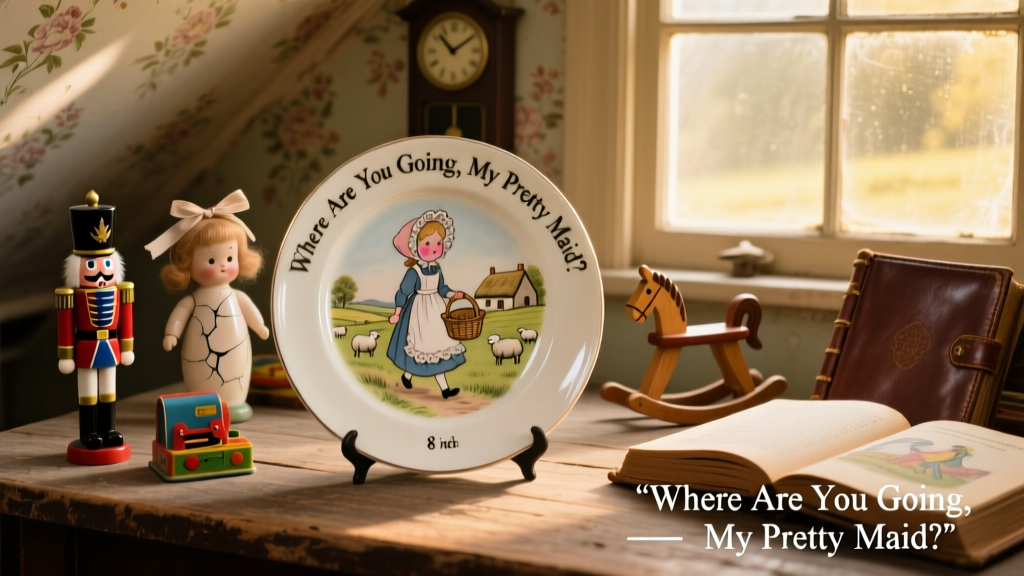
Royal Doulton Nursery Rhyme Plate 'Where Are You Going, My Pretty Maid?' — A Collector’s Deep Dive into the 8-Inch Porcelain Masterpiece

The 1139298: Unpacking the History, Mechanics, and Collectibility of the 1957 Ideal Toy Corporation 'Tippy Toes' Doll
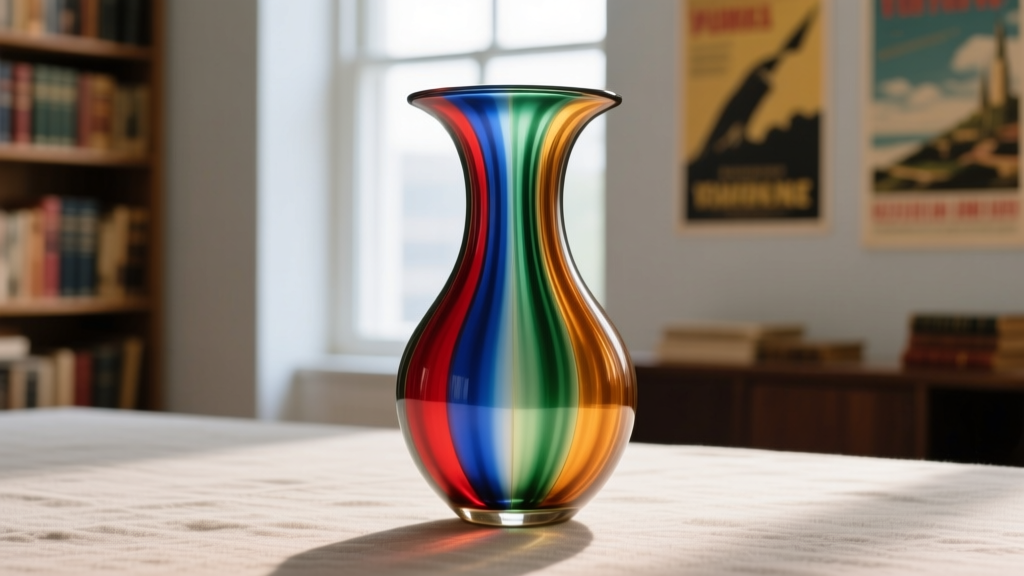
Venini Glass Vase: Colored Vertical Stripes, Flared Form, 9-Inch Height — A Mid-Century Masterpiece
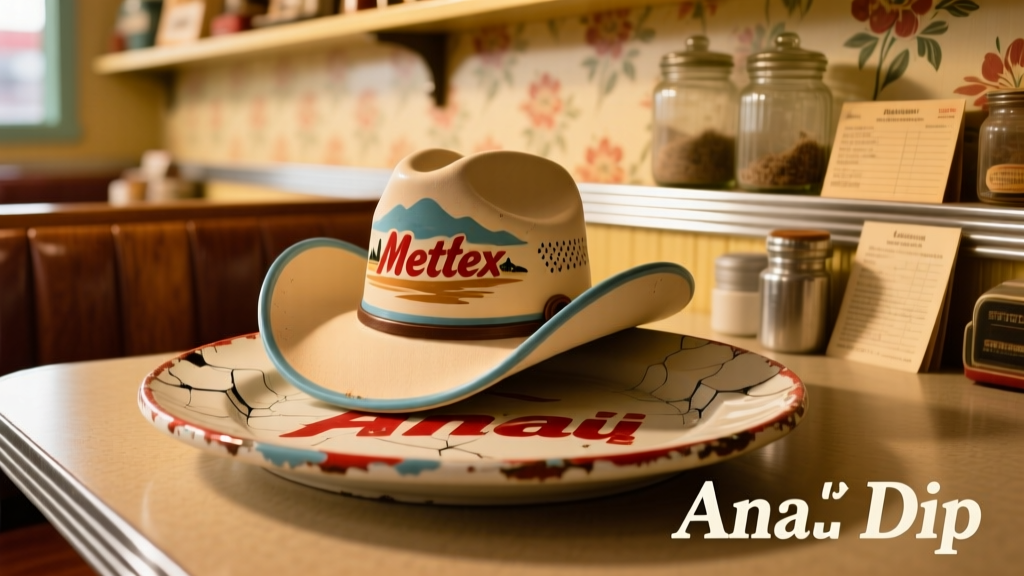
The Metlox 'Chip 'n Dip' Cowboy Hat Platter: A Mid-Century Icon in 14-Inch Ceramic Form

Perry G. Tanner: The Forgotten Architect of Mid-Century Toy Innovation