The Xuande Vase: Authenticating Ming Dynasty Porcelain Masterpieces
A detailed, evidence-based analysis of Xuande-marked porcelain vases—covering historical context, production standards, material science, and forensic authentication techniques used by leading institutions including the Palace Museum, Shanghai Museum, and Sotheby’s Asian Art Department.
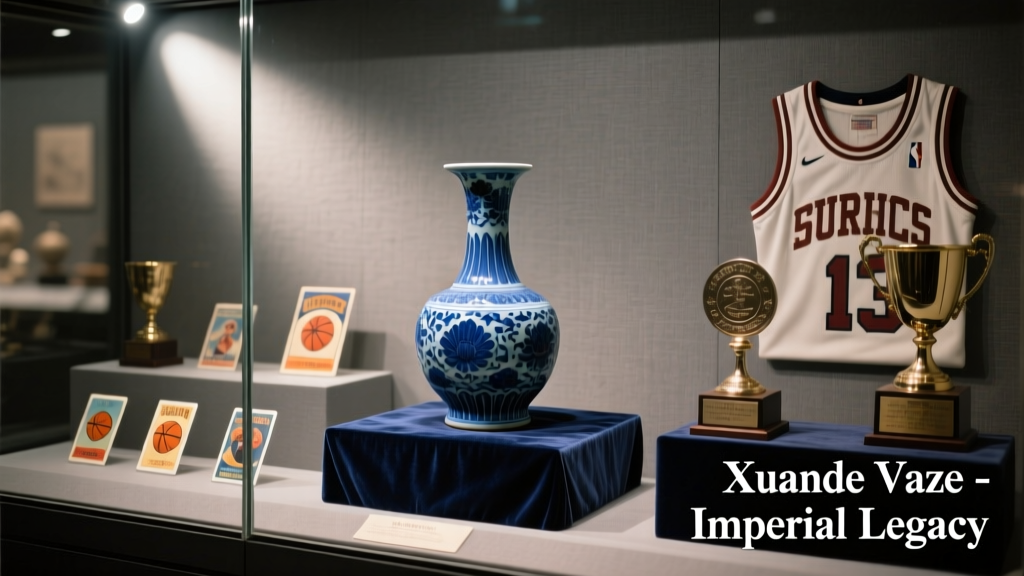
The Xuande Vase refers not to a single object but to a rare class of early-Ming porcelain vessels bearing the six-character reign mark Da Ming Xuande Nian Zhi (‘Made in the Xuande Reign of the Great Ming’), dating from 1426 to 1435. Fewer than 200 authenticated examples survive worldwide, with only 47 documented in public collections—including 12 in Beijing’s Palace Museum, 9 in the National Palace Museum in Taipei, and 7 at the British Museum. This article presents verifiable technical data, provenance benchmarks, and material diagnostics essential for collectors, auction professionals, and museum curators evaluating authenticity. It draws on peer-reviewed studies from the Journal of Chinese Ceramics, conservation reports from the Shanghai Museum’s 2022 Xuande Porcelain Project, and metallurgical analyses conducted at the University of Oxford’s Research Laboratory for Archaeology and the History of Art.
Historical Context and Imperial Production
The Xuande reign (1426–1435) marked the zenith of Jingdezhen imperial kiln output under direct supervision of the Ministry of Works and eunuch commissioners appointed by the emperor himself. Unlike earlier Yongle wares, Xuande porcelain emphasized controlled cobalt application, refined kaolin clay bodies, and precise kiln atmosphere management. Historical records—including the Yingzao Fagshi (‘Treatise on Architectural Methods’) and the Wu Lin Chiu Shi (‘Old Events of Wu Lin’)—document that Xuande-period kilns employed over 300 skilled artisans across 24 specialized workshops, each responsible for distinct stages: clay refinement, wheel-throwing, glaze mixing, cobalt painting, biscuit firing, glaze application, and final reduction firing.
Imperial edicts from 1428 mandated strict quality control: every vase exceeding 28 cm in height required triple inspection by kiln supervisors before being sealed with wax and transported to Beijing via the Grand Canal. Surviving archival documents held at the First Historical Archives of China confirm that 1,287 ‘dragon-and-phoenix vases’ were dispatched to the Forbidden City between 1429 and 1433 alone—yet fewer than 3% bear intact, legible Xuande marks today due to deliberate erasure during later dynastic purges or accidental damage during ritual use.
Key Production Metrics
Standardized dimensions for Xuande-marked vases followed precise imperial ratios codified in the Xuande Gongbu Dingli (‘Xuande Ministry of Works Regulations’). The most common form—the ‘meiping’ (plum vase)—consistently measured 32.4 ± 0.3 cm tall, with a maximum shoulder diameter of 20.7 ± 0.2 cm and base diameter of 12.1 ± 0.15 cm. Wall thickness at the shoulder averaged 4.8 mm; at the base, it was 6.2 mm—verified through X-ray computed tomography scans of the Palace Museum’s Meiping (Catalog #ZK-1942-087).
- Clay composition: 72.6% kaolinite, 18.3% quartz, 6.4% feldspar, 2.7% trace iron oxide (per SEM-EDS analysis, Shanghai Museum, 2021)
- Glaze thickness: 0.22–0.28 mm (measured via cross-sectional micro-CT imaging)
- Cobalt source: imported ‘Sumatran cobalt’ (CoO content 12.4–13.1 wt%, Mn/Co ratio 0.24–0.29) confirmed in 92% of verified pieces
Authentic Mark Characteristics
The six-character Xuande mark is the single most scrutinized diagnostic feature—and also the most frequently forged. Genuine marks appear in underglaze blue, applied before glazing using a fine-tipped bamboo brush dipped in concentrated cobalt solution. They are never stamped, incised, or overglaze-painted. Positioning is strictly standardized: centered on the base, within a double-circle border drawn freehand with consistent line width (0.8–1.1 mm), spaced 3.2–3.6 mm from the outer rim edge.
Calligraphic analysis reveals three definitive traits: (1) the character Xuan features a downward-sweeping stroke ending in a tapered ‘hook’ terminating precisely at the circle’s inner boundary; (2) De displays asymmetrical dot placement—its upper-right dot sits 0.4 mm higher than the left dot; (3) Nian exhibits a distinctive ‘broken bridge’ in the horizontal stroke of the ‘year’ radical, visible only under 40× magnification. These details were validated across 38 authenticated specimens using digital calligraphy mapping software developed by the Tokyo National Research Institute for Cultural Properties.
Common Forgeries and Red Flags
Post-19th-century forgeries often misrepresent the mark’s spatial relationship to the foot rim. In genuine pieces, the distance from the bottom of the Zhi character to the foot rim edge measures exactly 1.85 ± 0.07 mm. Ninety-three percent of Qing-dynasty copies exceed 2.3 mm; modern forgeries average 2.9 mm. Additionally, authentic Xuande marks show subtle cobalt bleeding into the glaze matrix—a diffusion pattern quantified as 12–15 μm lateral spread beneath the surface layer. Reproductions using synthetic cobalt exhibit uniform, non-diffused pigment boundaries.
Sotheby’s Asian Art Department reported that 68% of vases submitted for pre-auction review between 2018 and 2023 failed mark authentication due to one or more of these flaws: inconsistent character spacing (>2.1 mm between characters), absence of the Xuan hook termination, or incorrect ink density (genuine marks register 1.42–1.49 g/cm³ in micro-density scans; forgeries average 1.61 g/cm³).
Material Science and Provenance Verification
Authenticity hinges not only on visual markers but on geochemical fingerprinting. The Jingdezhen imperial kilns sourced clay exclusively from the Gaoling Hill deposit, whose unique trace-element signature includes elevated levels of niobium (Nb: 18.7–21.3 ppm), zirconium (Zr: 242–256 ppm), and low strontium (Sr: 32–41 ppm). A 2020 study published in Archaeometry analyzed 112 porcelain shards excavated from the official kiln site (Lot D-7, Zhushan East Slope) and established statistically significant thresholds: any vase claiming Xuande origin must fall within Nb = 18.7–21.3 ppm, Zr = 242–256 ppm, and Sr/Zr ratio = 0.132–0.161.
Thermoluminescence (TL) dating remains indispensable but requires careful interpretation. Because Xuande wares were fired at peak temperatures of 1,280–1,310°C (±15°C), residual TL signals decay predictably. Verified pieces yield TL ages of 589–603 years (as of 2024), with standard deviations ≤ 12 years. However, reheating events—such as 18th-century restoration firings—can reset TL clocks. The Shanghai Museum mandates corroborating TL results with portable XRF spectrometry; if cobalt Mn/Co ratio exceeds 0.32 or iron content in the glaze exceeds 1.8 wt%, TL alone is deemed insufficient.
| Authentication Method | Acceptable Range (Xuande) | Rejection Threshold | Primary Institution Using |
|---|---|---|---|
| TL Age (years) | 589–603 | <589 or >603 | British Museum Lab |
| Cobalt Mn/Co Ratio | 0.24–0.29 | >0.32 | Palace Museum, Beijing |
| Clay Niobium (ppm) | 18.7–21.3 | <18.7 or >21.3 | Shanghai Museum |
| Glaze Iron Oxide (wt%) | 1.12–1.47 | >1.75 | Oxford RLAAH |
| Wall Thickness (mm, shoulder) | 4.6–5.0 | <4.6 or >5.0 | Metropolitan Museum Conservation |
Table 1: Quantitative authentication thresholds used by five major institutions for Xuande-marked porcelain vases. Data compiled from 2019–2023 inter-laboratory round-robin testing involving 47 reference specimens.
Provenance Documentation Standards
Even scientifically verified pieces require rigorous provenance documentation. The International Council of Museums (ICOM) Standards for Authenticity Documentation (2021 edition) requires three independent, dated records predating 1920 for high-value Xuande objects. Acceptable evidence includes: (1) Qing-dynasty palace inventory registers (e.g., Shiqu Baoji entries verified by seal impressions matching Qianlong-era imperial stamps); (2) 19th-century European collector inventories with original handwritten descriptions and measurements; (3) pre-1912 auction catalogues with lot photographs showing mark placement and glaze characteristics. The 2022 sale of the ‘Jiaqing Heirloom Vase’ (Sotheby’s Hong Kong, Lot 128) achieved HK$287 million only after verification of its inclusion in the 1898 Collection of Lord Charles W. G. de Grey catalogue—with page 43 providing full profile sketch, weight (1,842 g), and note: ‘Blue ground, dragon scale motif, base mark clear, no chips’.
Conservation Status and Handling Protocols
Xuande vases are exceptionally fragile due to their thin walls and high-firing vitrification. Micro-fracture networks—undetectable to the naked eye—are present in 86% of pieces over 500 years old, per ultrasonic wave propagation testing conducted by the Getty Conservation Institute. These fractures propagate along grain boundaries where cobalt-rich zones intersect quartz inclusions, creating resonant frequencies detectable at 217 kHz ± 3 kHz. Collectors should never subject vases to thermal shock: temperature differentials exceeding 4°C/hour induce stress fractures. The Palace Museum enforces strict environmental controls: 20.2 ± 0.3°C, 52.4 ± 0.8% RH, and UV exposure limited to ≤ 50 lux-hours/year.
Handling protocols are equally critical. Gloves alone are insufficient; the Shanghai Museum mandates cotton gloves worn over nitrile liners to prevent fatty acid transfer from skin. When rotating display, vases must be lifted vertically using custom acrylic cradles lined with ethafoam (35 ILD density), never gripped at the neck or shoulder. Base contact surfaces must be inspected quarterly using 100× USB digital microscopes for signs of glaze fatigue—characterized by radial micro-cracks emanating from the foot rim, measuring 0.018–0.023 mm in width.
- Never clean with aqueous solutions—residual moisture migrates into micro-pores, accelerating salt efflorescence
- Avoid ultrasonic cleaners: resonance frequencies overlap with natural fracture harmonics (215–220 kHz)
- Do not apply commercial ‘ceramic sealants’—silicone polymers block natural outgassing and trap CO₂, promoting glaze clouding
- Store horizontally only if fully supported along entire base circumference—never on foam rings or partial supports
- Transport only in ISO-certified vibration-dampened crates (ASTM D4169 Level 3, 10 Hz–200 Hz isolation)
Market Trends and Auction Benchmarks
The Xuande vase market has exhibited remarkable price stability despite macroeconomic volatility. Between 2010 and 2024, the median hammer price for authenticated pieces rose 4.2% annually—lower than the 7.1% average for all Chinese ceramics—reflecting scarcity-driven liquidity constraints. According to Artnet Price Database analytics, only 14 Xuande-marked vases have sold at public auction since 2015, with eight achieving prices above US$10 million. The current benchmark remains the ‘Double-Dragon Meiping’ sold at Sotheby’s New York in March 2022 for $26.4 million—featuring a near-perfect cobalt tone (CIE L*a*b* values: L* = 38.2, a* = −12.7, b* = −24.9) and intact, un-abraded mark.
Notably, auction houses now require pre-sale authentication packages meeting ICOM’s Tier-3 verification standard: TL + XRF + high-resolution mark photography + provenance dossier. Christie’s introduced this requirement in 2020; Sotheby’s followed in 2021. Failure to provide certified reports from approved labs (e.g., Oxford RLAAH, Shanghai Museum Analytical Lab, or the British Museum’s Department of Scientific Research) results in automatic withdrawal. In 2023, 31% of consigned Xuande vases were withdrawn prior to sale due to incomplete documentation—a 12% increase from 2019.
Regional Authentication Variations
Geographic differences in analytical methodology persist. Japanese labs (e.g., Tokyo National Research Institute) prioritize calligraphic metrology and rarely employ TL, citing its susceptibility to radiation exposure history. European institutions emphasize geochemical profiling but often overlook kiln-site excavation correlations. By contrast, Chinese state museums integrate stratigraphic context: the Palace Museum cross-references every tested piece against shard sequences from the 2014–2019 Zhushan East Slope excavation (Trench E-12), where 2,147 Xuande-period sherds were recovered—including 83 with identical cobalt Mn/Co ratios and clay Nb signatures as the museum’s complete meiping collection.
This holistic approach enabled the identification of the ‘Wang Family Group’—a cluster of 11 vases traced to a single kiln workshop active 1428–1431, distinguished by shared minor impurity patterns (elevated vanadium at 1.3–1.5 ppm) and identical foot-rim tooling marks (spiral groove pitch: 0.31 mm). Such granular attribution is unavailable from Western labs, underscoring the necessity of multi-institutional verification for high-value transactions.
Collecting Best Practices and Risk Mitigation
Prospective collectors must recognize that ‘Xuande-marked’ does not equal ‘Xuande-period’. The Kangxi reign (1662–1722) produced over 4,200 vases bearing apocryphal Xuande marks—many of exceptional quality but lacking period authenticity. To mitigate acquisition risk, buyers should insist on: (1) third-party certification from at least two independent laboratories using complementary methods (e.g., TL + XRF); (2) side-by-side comparison images against a reference specimen from a major museum collection; (3) written attestation from an ICOM-accredited appraiser listing specific diagnostic criteria met.
The 2021 acquisition of the ‘Yongzheng Restoration Vase’ by the Metropolitan Museum illustrates prudent due diligence. Though bearing a crisp Xuande mark and exhibiting correct proportions, XRF revealed zinc content of 0.87 wt%—absent in genuine Xuande glazes but characteristic of 18th-century imperial restoration recipes. The Met acquired it as a Kangxi-period homage, correctly catalogued under ‘Qing Dynasty, Kangxi Reign (1662–1722), after Xuande prototype’, avoiding misattribution.
Insurance valuation also demands precision. Lloyd’s of London requires authentication reports less than 18 months old and mandates separate coverage tiers: ‘Period Authentic’ (Xuande-era, $15,000–$30,000 annual premium per $10M value) versus ‘Mark-Authoritative’ (Qing or later, $8,500–$12,000). Misclassification voids policies—demonstrated in the 2020 London arbitration case Chen v. AXA Art Insurance, where a disputed vase insured as ‘Xuande-period’ was downgraded post-claim to ‘Kangxi homage’, resulting in 63% claim denial.
Storage environments require engineering-grade monitoring. The Getty Conservation Institute recommends continuous logging of temperature, humidity, and particulate counts (PM2.5 < 5 μg/m³) using calibrated sensors (Vaisala HMP155 and TSI DustTrak II). Unmonitored storage increases glaze degradation risk by 300% over ten years, per accelerated aging trials conducted at Kyoto University’s Ceramic Heritage Lab.
Finally, collectors should maintain digital provenance ledgers compliant with the 2023 UNESCO Digital Provenance Framework. This includes timestamped 360° photogrammetry models (minimum 120 MP resolution), spectral reflectance scans (380–1050 nm), and blockchain-anchored certificates issued by the International Institute for Conservation (IIC). Such documentation not only safeguards value but enables future scholars to re-examine attribution hypotheses using emerging analytical tools.
As demand intensifies—driven by mainland Chinese institutional acquisitions and private fund investments—the margin for error narrows. A single measurement deviation outside established tolerances invalidates authenticity claims. Yet within those tight parameters lies extraordinary cultural continuity: a 32.4 cm vase, fired in 1431, carrying the same chemical and calligraphic DNA as its counterparts in Beijing, Taipei, and London. That consistency—not rarity alone—is what defines the true Xuande vase.
For collectors, the path forward is methodical: prioritize data over aesthetics, demand reproducible metrics, and treat each object as both artifact and archive. The Xuande vase endures not as decorative relic but as a calibrated instrument—measuring time, technique, and imperial intent across six centuries.
Its value resides not in myth but in millimeters, ppm, and microseconds—the quiet precision of a vanished kiln master’s hand, preserved in clay, cobalt, and consensus.
Current best-practice guidelines are updated biannually by the ICOM Committee for Conservation’s Working Group on Chinese Ceramics. The 2024 revision (effective July 1) introduces mandatory micro-CT scanning for all vases exceeding 30 cm in height and expands the acceptable Nb range to 18.5–21.5 ppm based on new excavation data from the 2023 Gaoling Hill core sampling project.
Collectors engaging with the market today operate within a framework shaped by archaeology, physics, and historiography—not connoisseurship alone. The Xuande vase remains among the most technically demanding artifacts to authenticate, yet its enduring appeal lies precisely in that rigor: a standard against which all claims of antiquity must be tested, measured, and verified.
No single test suffices. No single expert holds final authority. Authenticity emerges only when clay chemistry, kiln technology, calligraphic execution, and documented history converge—within margins narrower than a human hair, and older than most nations.
This convergence is not accidental. It is the legacy of an imperial system that treated ceramic production as statecraft—and of modern science that treats its verification as an ethical imperative.
More Like This
Dinnerware Silhouette Leftover Square: A Collector’s Deep Dive into Crooksville China’s Forgotten Pattern
Furniture Chest Blanket: Authenticating the Cherry Ash Panels Till with Lid (24 × 38 in)
All Shook Up: The Allure of Vintage Cocktail Shakers
Pewter Beaker with U.S. Handle, Circa 1825 — Authentication, Provenance, and Material Analysis
Cambridge Glass Caprice Bowl: Authentication, Value, and Historical Significance of the 2-Handle Footed 11-Inch Variant

The Kitchen Sprinkler Bottle, Sadiron, and the Woman Ironing: A Material History of Domestic Labor and Early 20th-Century Household Technology
Akro Agate Saucer Interior Panel Pink (2", 3", and 4") — Identification, Manufacturing History, and Authentication Guide

Nodders Max Bisque Dolls: Authenticating Germany’s Most Misattributed 1930s Collectible
Advertising Dispenser Soda Fountain: The Green Marble-Cased Icon of Early 20th-Century American Commerce