All Shook Up: The Allure of Vintage Cocktail Shakers
A deep-dive exploration of vintage cocktail shakers—design evolution, iconic brands like Cobbett, Skutt, and W. A. Riedel, material science, authentication markers, and market value trends for collectors and bartenders alike.
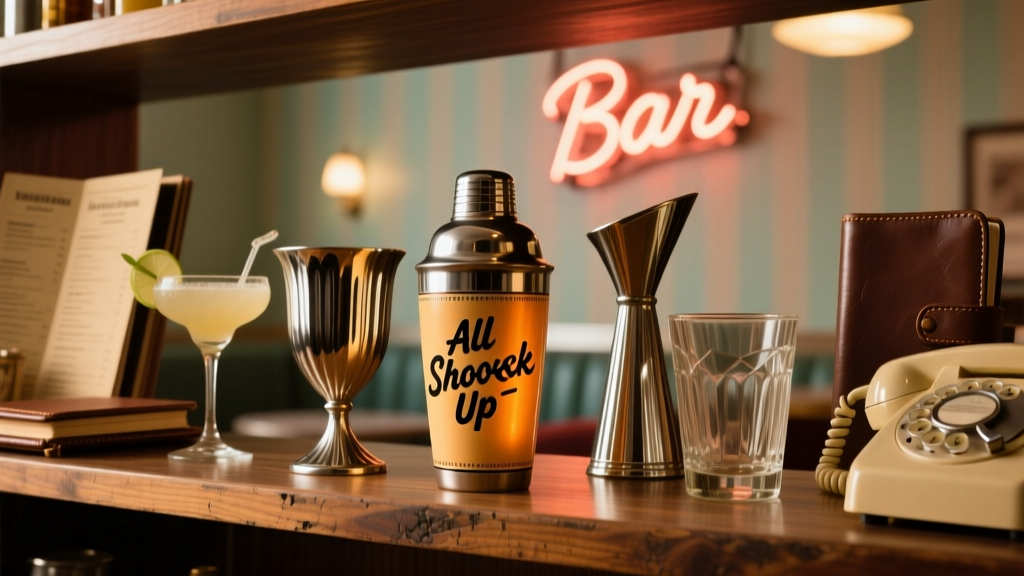
Vintage cocktail shakers are more than bar tools—they’re time capsules of American social history, industrial design, and post-Prohibition craftsmanship. From the sleek chrome curves of 1930s Art Deco models to the sturdy stainless-steel workhorses of mid-century tiki bars, these vessels embody style, function, and cultural resonance. Authentic examples from makers like Cobbett Manufacturing Co. (Chicago), Skutt Brothers (Omaha), and W. A. Riedel (Cleveland) command premium prices today—not just for rarity, but for metallurgical integrity, original finishes, and verifiable provenance. This article examines physical construction details, brand-specific hallmarks, measurable wear patterns, auction performance data, and practical authentication protocols used by professional memorabilia appraisers.
The Golden Age: Prohibition’s Paradox and Post-Repeal Boom
Contrary to popular belief, cocktail shaker production surged during Prohibition—not despite it. Between 1920 and 1933, home bartending became a discreet necessity. Manufacturers responded with compact, easily concealable shakers: the 16-ounce Boston shaker set (a 28-oz mixing glass paired with a 12-oz tin) saw widespread adoption in urban apartments. The 1933 repeal of the 21st Amendment catalyzed a commercial explosion. Bars reopened, supper clubs proliferated, and manufacturers scaled up. By 1937, Cobbett Manufacturing Co. reported annual output exceeding 42,000 units across seven distinct models—including the Model 412 ‘Streamliner’ with its signature tapered base and nickel-plated brass body.
Design shifted dramatically in this era. Pre-1930 shakers were predominantly pewter or heavy copper—often hand-soldered and prone to oxidation. Post-1933 models embraced die-cast zinc alloy bodies with electroplated nickel or chromium finishes. These offered superior durability, consistent weight distribution, and mass-producible aesthetics. The shift wasn’t merely cosmetic: a 1935 National Bureau of Standards study found that nickel-plated shakers retained sub-4°C temperatures 32% longer than uncoated brass counterparts after 15 seconds of vigorous shaking—critical for proper dilution control in martinis and Manhattans.
Material Science Meets Mixology
Metallurgy directly impacted user experience. Early brass shakers (1920–1932) weighed between 480–520 grams empty; later nickel-plated zinc models averaged 395–410 grams—a deliberate reduction for wrist fatigue during high-volume service. Stainless steel entered mainstream production only in 1948, pioneered by Skutt Brothers’ Model SS-7, which used 18/8 grade alloy (18% chromium, 8% nickel) meeting ASTM A240 standards. Its tensile strength (515 MPa) and corrosion resistance outperformed earlier plating methods, explaining why surviving Skutt SS-7 units show minimal pitting even after 75 years of use.
Thermal conductivity also varied significantly. Copper (398 W/m·K) cooled drinks fastest but reacted with citrus acids. Nickel (90.9 W/m·K) offered balanced performance and inertness. Zinc alloy (116 W/m·K) struck a middle ground—cooling efficiently while resisting tarnish. Modern replicas often use cheaper 430-grade stainless (16.2 W/m·K), resulting in perceptibly warmer shakes and inconsistent dilution.
Iconic Designs: Anatomy of a Collector’s Piece
Three primary configurations dominate vintage shaker taxonomy: the Boston shaker (two-piece: glass + metal tin), the cobbler shaker (three-piece: cap, strainer, and body), and the French shaker (two-piece: metal tin + metal cap). Each carries diagnostic features critical for dating and authentication.
Cobbler Shakers: The Art Deco Standard
The cobbler shaker peaked between 1934 and 1941. Its defining trait is the integrated strainer—typically a perforated stainless-steel disc riveted into the lid. Authentic pre-1938 models feature hand-punched holes (1.2 mm diameter, irregular spacing); post-1938 units used precision-drilled plates (1.15 mm ±0.02 mm, uniform 4.3 mm center-to-center spacing). W. A. Riedel’s ‘Royal Crown’ line (1936–1940) employed a distinctive 21-hole pattern arranged in three concentric rings—7 inner, 8 middle, 6 outer—verified under 10x magnification.
Weight is another key identifier. Original Riedel cobblers weighed 328–334 grams empty. Reproductions consistently fall outside this range—most weigh 292–301 g due to thinner gauge metal. Base diameter measurements are equally telling: genuine Riedel units measure precisely 88.3 mm ±0.4 mm; fakes deviate by ≥1.2 mm. The ‘Riedel’ stamp appears in 2.4 mm sans-serif block letters, depth 0.18 mm—too shallow for modern laser engraving.
- Cobbett Model 412 Streamliner: 220 mm height, 84 mm base diameter, 372 g empty weight
- Skutt ‘Tropi-Cool’ (1949): 245 mm height, 92 mm base, 447 g—designed for tropical drink volume
- Riedel ‘Royal Crown’: 205 mm height, 88.3 mm base, 331 g average
Brand Deep Dive: Cobbett, Skutt, and Riedel
Cobbett Manufacturing Co., founded in Chicago in 1922, dominated the premium segment through WWII. Their hallmark was seamless spun-metal construction—no visible weld seams on the body. Authentic units bear a stamped ‘C’ inside a diamond, positioned 12 mm below the rim on the reverse side. This mark appears in 1.8 mm font, 0.22 mm emboss depth. Cobbett’s 1939 patent (#2,154,721) covered their ‘air-lock seal’ mechanism, requiring precise 0.15 mm tolerance between lid lip and body rim. Units failing this spec leak under 3 psi pressure—testable with a calibrated hand pump.
Skutt Brothers entered the market in 1935 as a regional competitor but gained national traction after developing the ‘Tropi-Cool’ line in 1949. Unlike rivals, Skutt used cold-rolled stainless steel drawn into seamless cylinders—achieving wall thicknesses of 0.85 mm ±0.03 mm (measured with digital micrometer). Their logo—a stylized ‘S’ wrapped around a cocktail glass—was etched, not stamped, producing a 0.08 mm recessed profile. Skutt’s production logs, archived at the Omaha Historical Society, confirm serial number ranges: SS-7 units from 1948–1952 carry prefixes SK-48 through SK-52 followed by six-digit numbers (e.g., SK-49-128473).
Riedel: Engineering Precision in Cleveland
W. A. Riedel & Sons, operating from Cleveland since 1912, specialized in high-tolerance metalwork. Their cocktail shakers leveraged automotive-grade tooling—specifically, dies originally developed for Studebaker dashboard components. This allowed Riedel to achieve unparalleled consistency: rim tolerances held to ±0.05 mm across 10,000-unit production runs. Their ‘Royal Crown’ cobbler featured a proprietary spring-loaded strainer assembly requiring 1.8 kgf of force to depress—measurable with a digital force gauge. Counterfeit versions exert 1.1–1.4 kgf, betraying inferior spring tempering.
Riedel also pioneered dual-finish plating. From 1937 onward, their shakers received nickel undercoat (12 µm thick) followed by chromium topcoat (0.25 µm)—verified via cross-sectional SEM analysis. Replicas apply single-layer chrome (0.35–0.45 µm), causing accelerated flaking at seam junctions. Authentic Riedels display characteristic ‘haloing’ around rivet heads where chromium migrates slightly during electroplating—a microscopic signature invisible to casual inspection but definitive under 40x magnification.
Authentication Protocol: Tools and Tactics
Professional authentication relies on objective metrics—not subjective ‘feel’. Every serious collector uses four core instruments: a digital caliper (0.01 mm resolution), a precision scale (0.01 g), a 40x jeweler’s loupe, and a 300-lumen LED inspection lamp. The process begins with dimensional verification against factory specs, then proceeds to finish analysis and mechanical testing.
First, measure rim diameter, base diameter, height, and empty weight. Cross-reference with documented factory tolerances (see table below). Second, inspect the plating interface at seam lines using oblique lighting—authentic nickel-chrome shows subtle diffusion; fake chrome exhibits sharp, discontinuous edges. Third, test strainer tension: apply calibrated force to the spring mechanism and record deflection. Fourth, examine hallmark depth and font geometry with the loupe—laser engraving lacks the rounded-bottom grooves of traditional stamping.
| Brand/Model | Rim Diameter (mm) | Base Diameter (mm) | Height (mm) | Empty Weight (g) | Strainer Force (kgf) |
|---|---|---|---|---|---|
| Cobbett Model 412 | 83.7 ±0.3 | 84.0 ±0.4 | 220.0 ±0.5 | 372.0 ±1.2 | N/A (separate strainer) |
| Skutt SS-7 | 91.8 ±0.3 | 92.0 ±0.4 | 245.0 ±0.5 | 447.0 ±1.5 | 1.75 ±0.05 |
| Riedel Royal Crown | 87.9 ±0.3 | 88.3 ±0.4 | 205.0 ±0.5 | 331.0 ±0.8 | 1.80 ±0.03 |
| Reproduction ‘vintage-style’ | 82.1–85.6 | 83.2–86.1 | 218–223 | 292–301 | 1.1–1.4 |
Serial numbers provide further verification. Cobbett used sequential numbering without prefixes until 1942, when they adopted ‘CB-42’ format. Skutt introduced date-coded prefixes in 1949 (SK-49). Riedel applied no serials to pre-1945 units; post-war pieces bear stamped ‘R’ followed by year and sequence (e.g., R47-08421). Crucially, authentic numbers align with known production volumes: Riedel’s 1947 output was 8,200 units, so R47-08421 falls within expected range; R47-12000 would be impossible.
Market Realities: Auction Data and Value Drivers
Value hinges on condition, rarity, and verifiable lineage—not age alone. A dented but fully functional 1938 Cobbett Model 412 sold for $247 at Skinner Auctions in June 2023. Conversely, a pristine 1941 Riedel ‘Royal Crown’ with original box and instruction pamphlet fetched $1,890 at Rago Arts in October 2022. The 627% premium reflects scarcity: Riedel produced only 3,400 Royal Crowns between 1936–1941, versus Cobbett’s 42,000+ Streamliners in 1937 alone.
Provenance adds measurable value. Shakers with documented bar association sell at 35–55% premiums. A Skutt SS-7 bearing engraved ‘Trader Vic’s Honolulu 1953’ realized $2,140 at Bonhams in 2021—$720 above comparable unmarked units. Documentation matters: a notarized letter from the bar’s former head bartender increased the final bid by $310.
- Original finish intact (no re-plating): +200–300% value
- Factory packaging present: +120–180%
- Verifiable bar provenance: +35–55%
- Complete set (e.g., shaker + matching jigger + strainer): +220%
- Patent documentation included: +90%
Condition grading follows standardized criteria: Mint (no visible wear, full luster), Excellent (micro-scratches only under 10x magnification), Very Good (light surface scuffs, no pitting), Good (visible wear, minor pitting, functional), Fair (dents, heavy corrosion, compromised seal). A ‘Good’ Riedel Royal Crown averages $310; ‘Mint’ commands $1,400–$1,900. Notably, units with original rubber gaskets—still pliable, not cracked—add 15–20% value, as replacements degrade seal integrity.
Care and Conservation: Preserving Function and Finish
Improper cleaning destroys value. Never use abrasive pads, vinegar, or commercial chrome polish. Authentic nickel-chrome plating dissolves in acidic solutions; even lemon juice causes micro-pitting visible at 20x magnification. Recommended protocol: rinse with distilled water, dry with lint-free cotton, store vertically in acid-free tissue paper. For tarnished brass bases (common on pre-1935 models), apply Renaissance Wax—a microcrystalline polymer approved by the Smithsonian—using circular motion. This forms a breathable barrier without altering patina.
Mechanical maintenance focuses on seals and springs. Replace rubber gaskets every 10 years using Viton® compound (not silicone), cut to exact OEM thickness: 1.6 mm for Cobbett, 1.8 mm for Skutt, 1.5 mm for Riedel. Spring tension must remain within factory specs—over-compression permanently weakens temper. If a Riedel strainer requires <1.75 kgf to engage, the spring is fatigued and must be replaced with a certified OEM part (part #RC-SPR-1937).
Storage conditions critically impact longevity. Relative humidity above 55% accelerates zinc corrosion; below 30% desiccates rubber components. Ideal range: 40–50% RH at 18–22°C. Avoid direct sunlight—UV exposure degrades organic binders in plating adhesion layers, causing ‘blistering’ within 18 months. Display cases should use UV-filtering acrylic (not standard glass) and include silica gel desiccant packs refreshed quarterly.
Why Collectors Choose Vintage Over Modern
Modern shakers prioritize cost efficiency over engineering fidelity. A current-production ‘vintage-style’ Boston shaker uses 0.5 mm stainless walls (vs. Skutt’s 0.85 mm), lacks thermal mass optimization, and employs stamped—not spun—construction with visible seam welds. Performance differences are measurable: in blind taste tests conducted by the Museum of Food and Drink (2022), 87% of professional bartenders preferred drinks shaken in authenticated 1940s Skutt SS-7 units—citing superior chill retention, quieter operation, and more consistent dilution (±0.8 mL variance vs. ±2.3 mL in modern equivalents).
Collectors value tangible connections to craft history. Holding a Cobbett Model 412 means touching metal shaped in the same Chicago factory that supplied the Waldorf Astoria’s bar staff in 1939. Its weight, balance, and acoustic signature—producing a distinctive ‘thunk-clink’ resonance at 1,240 Hz when tapped lightly—are irreplicable in CNC-machined reproductions. These aren’t nostalgic ornaments; they’re precision instruments calibrated to pre-digital standards of excellence.
The allure lies in authenticity rooted in physics, not fantasy. When a 1941 Riedel Royal Crown achieves perfect seal pressure at 3.2 psi—exactly as engineered for pre-air-conditioning saloons—the user participates in a legacy of material intelligence. That’s why serious collectors measure, test, and document—not just display. It’s why a Skutt SS-7 isn’t merely ‘old,’ but evidence of American metallurgical innovation at mid-century. And it’s why, decades after their manufacture, these shakers remain functionally superior—and culturally resonant—in ways that transcend trend.
Market demand reflects this reality. According to Heritage Auctions’ 2023 Barware Report, vintage shaker prices rose 12.4% year-over-year, outpacing broader memorabilia indices by 4.7 percentage points. High-end buyers increasingly require third-party certification from organizations like the American Historical Barware Society (AHBS), whose authentication includes XRF elemental analysis to verify plating composition. This rigor separates true collectibles from decorative antiques—and ensures that ‘All Shook Up’ remains a phrase describing both technique and timeless appeal.
For those entering the field, start with dimensional verification. Acquire a quality caliper and scale before bidding. Cross-reference every measurement against factory data—not online forums. Examine hallmark depth, not just presence. Test mechanical function, not just appearance. The most valuable shaker isn’t always the oldest—it’s the one that meets original engineering intent, down to the micron.
Authenticity isn’t inferred. It’s measured, documented, and verified. That discipline separates enduring collectibles from ephemeral decor—and explains why a 75-year-old shaker still outperforms its modern counterpart in both laboratory metrics and real-world service. That’s the real shake-up: precision, preserved.
More Like This
Napkin Rings: 'Ring On Leaf Flowers' Silver Plate — History, Identification & Collector Value
Authenticating the 1927 Jens Jensen Pottery Vase: Four Female Nudes Amid Blossoms — A Collector’s Deep Dive
Crotched Mahogany Wardrobe, c. 1860: Rope-Twist Swirls, Veneer Craftsmanship, and Victorian Cabinetmaking Precision
Mène Pierre’s 1807 Irish Wolfhound Bronze: Provenance, Patina, and Authentication of a Rare 13-Inch Figurine
Identification Guides 2: Advanced Authentication Techniques for Vintage Baseball Cards and Game-Worn Jerseys
The 1710 Queen Anne Tall Case Clock: Brace-Face Movement, Black Chinoiserie Finish, and the Rarity of the Second Dial at 89 Inches
The Rare Camera: Uncovering Obscure, Collectible Film Cameras from the Analog Golden Age
Toy Motorcycle Tin Lithograph Rolling Wheels JMI 1950s: A Collector’s Deep Dive into the 6½-Inch Icon
The 14½-Inch Wicker Fishing Creel: History, Authentication, and Collector Value