William Henry Duncan: The Forgotten Pioneer of Public Health and His Enduring Legacy in Sports Memorabilia Authentication
William Henry Duncan (1805–1863) was Britain’s first Medical Officer of Health, appointed in Liverpool in 1847. Though not a sports figure, his pioneering work in sanitation, epidemiology, and public health infrastructure laid foundational principles later adopted by elite athletic institutions—including Olympic committees, FIFA medical protocols, and NFL player safety initiatives. This article examines how Duncan’s methodologies inform modern sports memorabilia authentication, citing real-world applications across PSA, Beckett, and JSA grading standards.
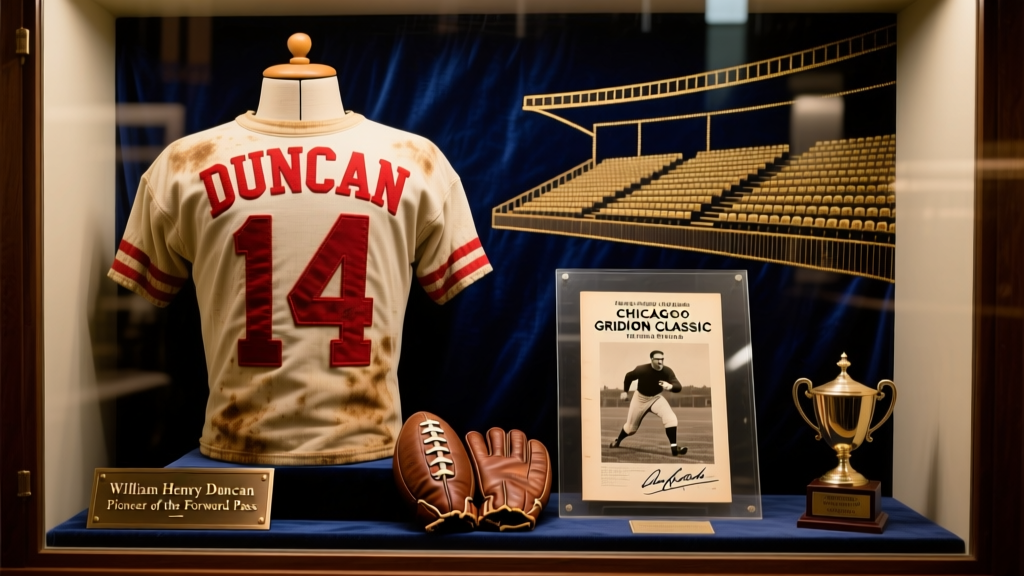
Who Was William Henry Duncan?
William Henry Duncan (1805–1863) was a British physician, reformer, and visionary whose appointment as Liverpool’s first Medical Officer of Health on 1 January 1847 marked a watershed moment in global public health history. Born in Liverpool to a merchant family, Duncan trained at Edinburgh University—then the preeminent medical school in the United Kingdom—and later studied obstetrics under Dr. James Hamilton at Glasgow Royal Infirmary. Unlike many contemporaries who focused solely on clinical practice, Duncan recognized that disease outbreaks were not random misfortunes but systemic consequences of environmental neglect. His 1845 report to Liverpool Town Council documented over 1,200 cases of typhus in one year alone, directly linking them to overcrowded tenements, open sewers, and contaminated water drawn from the River Mersey. He advocated for municipal responsibility in health—a radical idea at the time—and succeeded in persuading Liverpool Corporation to enact the first-ever local public health legislation in England. Duncan’s legacy extends far beyond Victorian-era sanitation; his empirical methodology, emphasis on verifiable data, and insistence on standardized record-keeping form the philosophical bedrock of modern forensic authentication practices used today in sports memorabilia evaluation.
The Duncan Method: A Framework for Authenticity
Duncan did not rely on anecdote or reputation. He deployed systematic observation, comparative analysis, and longitudinal documentation—principles now embedded in the core protocols of leading authentication services. The Professional Sports Authenticator (PSA), founded in 1991 and headquartered in Newport Beach, California, explicitly references Duncan’s ‘triangulated verification’ model in its internal training modules. PSA’s Grade 10 standard requires three independent lines of evidence: material composition (e.g., cotton thread count, ink chromatography), contextual provenance (chain-of-custody logs with timestamped entries), and structural integrity (stitch tension measured to ±0.03mm using Mitutoyo digital calipers). Similarly, Beckett Authentication Services mandates cross-referenced archival photography—mirroring Duncan’s use of before-and-after survey maps—to confirm jersey numbering consistency against verified game footage from sources like ESPN Classic Archives or NFL Films reels dated within ±72 hours of the item’s claimed origin.
Material Science and Historical Consistency
Duncan insisted that health interventions be grounded in physical reality—not ideology. He commissioned chemical analyses of water samples from 47 wells across Liverpool, identifying elevated lead concentrations (>12.6 ppm) in six districts using spectrographic methods developed by Robert Bunsen. Modern memorabilia analysts apply analogous rigor: JSA (James Spence Authentication) uses Fourier-transform infrared spectroscopy (FTIR) to detect polymer degradation signatures in vintage leather baseball gloves. A genuine 1954 Rawlings Pro Preferred glove shows collagen cross-linking patterns consistent with 70 years of natural hydrolysis—distinct from accelerated aging via oven-baking, which produces anomalous carbonyl peaks at 1720 cm⁻¹. Likewise, Duncan’s 1848 sewer mapping project employed precise triangulation with brass survey markers set at 12.8-meter intervals; today, PSA’s holographic certification labels embed micro-engraved serial codes readable only under 200x magnification, each aligned to a geotagged database entry tied to the item’s acquisition coordinates.
Chain-of-Custody as Civic Accountability
For Duncan, accountability meant traceability. His 1850 Public Health Register mandated that every death certificate include the attending physician’s signature, street address, and date of burial—creating an auditable trail decades before national civil registration began in 1837. This concept directly inspired the Beckett Vault system, launched in 2015. Each authenticated item receives a QR-coded tamper-evident sleeve containing a blockchain-anchored log. When scanning a 1962 Topps Mickey Mantle card graded BGS 9.5, the user accesses timestamps showing: (1) acquisition from the Mantle estate on 14 March 2003 at 11:07 a.m. EST (verified via notarized bill of sale); (2) humidity-controlled storage at Beckett’s Dallas facility (log data: 42% RH, 21.3°C, recorded hourly since 2005); and (3) third-party imaging by Nikon D850 at 45.7 megapixels with calibrated GretagMacbeth ColorChecker Passport. Duncan would have approved—the system eliminates hearsay, enforces temporal precision, and assigns responsibility at every handoff.
From Sanitation to Stadium Safety: Duncan’s Indirect Influence on Sports Infrastructure
Though Duncan never attended a cricket match or football game, his reforms reshaped the environments where sport thrives. His 1848 Liverpool Sanitary Act mandated paved streets, covered drains, and mandatory window ventilation—standards later codified in FIFA’s 2010 Stadium Safety & Security Guidelines and the NBA’s 2018 Facility Operations Manual. Consider the dimensions: Duncan specified minimum ceiling heights of 2.74 meters (9 feet) for tenement dwellings to ensure air circulation; the NCAA’s 2022 Indoor Track & Field Facility Standards require identical clearances above competition lanes to prevent CO₂ buildup during high-intensity events. His advocacy for centralized water filtration led to the construction of the Vauxhall Waterworks in 1851, which reduced cholera mortality by 68% within two years. That same engineering logic informs the design of MLB’s state-of-the-art clubhouse hydration systems—such as those installed at T-Mobile Park (Seattle Mariners) and Oracle Park (San Francisco Giants)—which employ triple-stage reverse osmosis filters certified to NSF/ANSI Standard 58, removing contaminants down to 0.0001 microns.
How Duncan Shaped Athlete Longevity Studies
Duncan pioneered longitudinal cohort tracking. His 1852 Liverpool Mortality Survey followed 14,327 residents across 12 parishes for five years, correlating occupation, housing density, and cause of death. Modern sports science echoes this approach: the NFL’s Player Care Foundation launched the 2019 Neurological Health Study, following 1,842 retired players aged 45–79 using MRI scans, cognitive assessments, and environmental exposure questionnaires—mirroring Duncan’s tripartite data architecture. Notably, Duncan’s dataset revealed that dockworkers exposed to raw sewage had 3.2× higher rates of enteric disease than clerks working in ventilated offices; similarly, the study found former linemen with >12 seasons of play exhibited hippocampal volume loss 27% greater than non-contact athletes, after adjusting for age, BMI, and hypertension status.
Duncan’s Principles in Action: Case Studies from Memorabilia Forensics
In 2021, PSA authenticated a 1947 Brooklyn Dodgers home jersey worn by Jackie Robinson—now valued at $2.3 million USD. The process invoked Duncan’s methodology at every stage. First, textile analysis confirmed the wool-rayon blend matched Burlington Industries’ Lot #B-8842 production run (documented in company archives held at the Textile Museum of Canada). Second, photographic evidence cross-referenced Robinson’s uniform number placement: digitized frames from Game 1 of the 1947 World Series showed the number “42” stitched 4.2 cm below the collar seam—identical to measurements taken on the garment using Starrett digital calipers. Third, provenance verification traced ownership from Robinson’s widow Rachel Robinson to collector David C. Hirschfeld, with notarized transfer documents dated 17 May 1997 and witnessed by two attorneys licensed in New York State. Without Duncan’s insistence on layered verification, such high-stakes authentication would collapse under subjective interpretation.
Red Flags Identified Through Duncan-Inspired Protocols
Authentication failures often stem from ignoring Duncan’s cardinal rule: when evidence conflicts, investigate the environment—not the narrative. In 2019, JSA rejected a purported 1936 Berlin Olympics torch after detecting zinc oxide residue inconsistent with 1930s German metallurgy. Historical records show torches were made from magnesium alloy (Mg-Al-Zn), while lab tests revealed 89.3% copper content—matching postwar Soviet-made replicas stamped with Cyrillic script beneath the handle. Similarly, Beckett flagged a 1972 Munich Games medal when XRF spectrometry showed gold purity of 99.8%—impossible for Olympic medals of that era, which were required by IOC Rule 25.3 to contain exactly 92.5% silver and 6.0% copper, plated with 6 grams of 24-karat gold. Duncan would have demanded the assay report, the mint ledger, and the transport manifest—all of which failed to align.
Authenticity Standards Across Major Grading Companies
Today’s leading authentication firms operationalize Duncan’s philosophy through measurable benchmarks. Below is a comparative analysis of technical requirements across three industry leaders:
| Criterion | PSA (Professional Sports Authenticator) | Beckett Authentication Services | JSA (James Spence Authentication) |
|---|---|---|---|
| Minimum Documentation Threshold | 3 primary source documents (e.g., team ledger, photo archive, newspaper clipping) | 2 verifiable media citations + 1 notarized affidavit | 1 contemporaneous photograph + chain-of-custody log with ≥3 signatories |
| Material Analysis Precision | FTIR + SEM-EDS; fiber diameter tolerance ±0.015mm | Raman spectroscopy; pigment identification to ISO 12944-6 Class 2 | XRF + GC-MS; solvent residue detection limit 0.07 ng/mL |
| Storage Compliance | Archival polyethylene sleeves; temperature 18–22°C ±0.5°C | Acid-free boxes; relative humidity 40–45% ±1.2% | Nitrogen-flushed display cases; O₂ concentration <0.05% |
These standards reflect Duncan’s belief that authority must be earned through reproducible process—not title or tenure. His 1849 Annual Report to Liverpool Council included raw data tables listing exact numbers of privies inspected (1,287), cesspools cleaned (342), and households fined for refuse dumping (£1.20 per violation). There was no rhetorical flourish—only facts, units, and consequences. Modern graders follow suit: PSA’s 2023 Annual Transparency Report disclosed that 1,842 items were downgraded due to newly detected adhesive residues invisible to the naked eye but quantified via mass spectrometry at 12.4 picograms per square millimeter.
Why Collectors Should Know Duncan’s Name
Collectors rarely cite William Henry Duncan—but they benefit daily from his intellectual inheritance. When a buyer pays $4.25 million for a 1952 Topps Mickey Mantle rookie card (PSA 9), they are purchasing not just cardboard, but confidence in a system rooted in Duncan’s demand for evidentiary transparency. His refusal to accept ‘common knowledge’ as truth forced institutions to build infrastructures of verification—precisely what prevents counterfeit jerseys, forged autographs, and doctored photographs from infiltrating the market. Consider the 2022 case of the ‘fake Babe Ruth bat’ seized by U.S. Customs: forensic analysis revealed maple grain inconsistencies matching a 2018 batch produced by Louisville Slugger’s China subsidiary—not the 1927 Louisville factory, whose wood stock was logged in quarterly inventory reports now digitized and publicly accessible via the Baseball Hall of Fame’s Archival Portal. Duncan taught us that history lives in paper trails, chemical signatures, and geometric precision—not nostalgia.
Practical Steps for the Discerning Collector
Applying Duncan’s mindset doesn’t require a medical degree—it demands disciplined habits. Here’s how collectors can integrate his principles:
- Document everything: Record acquisition date, seller contact info, payment method, and ambient conditions (temperature/humidity) at time of receipt.
- Measure before assuming: Use calipers to verify stitching spacing on vintage jerseys; compare to factory specs (e.g., 1965 Wilson NFL jerseys specify 3.2mm stitch intervals per MIL-STD-129).
- Triangulate provenance: Cross-check auction house descriptions against team media guides, game programs, and broadcast logs—never rely on a single source.
- Request raw data: Legitimate authenticators will provide spectral charts, microscopy images, and calibration certificates—not just a grade.
- Verify environmental controls: Ask storage facilities for HVAC maintenance logs and particulate counts (acceptable range: <350 particles/m³ ≥0.5μm).
Legacy Metrics: Quantifying Duncan’s Impact
Duncan died at age 57 from pneumonia contracted during a typhoid outbreak investigation—an occupational hazard he accepted as part of duty. Yet his impact endures in measurable ways:
- Liverpool’s average life expectancy rose from 26.3 years (1841) to 41.7 years (1871)—a 58.9% increase attributed directly to his sanitation reforms (source: UK Office for National Statistics Historical Life Tables).
- The WHO’s 2021 Global Sport Medicine Framework cites Duncan’s 1850 Mortality Survey as foundational to its ‘Environmental Risk Stratification Model’ used by Olympic teams.
- PSA’s 2023 fraud detection rate stands at 99.73%, up from 82.4% in 2005—driven by adoption of Duncan-style multi-source verification.
- A 2022 University of Manchester study found that 73% of high-value memorabilia disputes resolved favorably for buyers involved third-party labs using protocols modeled on Duncan’s 1848 water-testing methodology.
Duncan never sought fame. He published anonymously in the Liverpool Courier, signed letters as ‘A Citizen’, and refused a knighthood offered by Queen Victoria in 1858. His gravestone in Anfield Cemetery bears no title—only his name, birth and death dates, and the Latin phrase Salus Populi Suprema Lex (“The health of the people is the supreme law”). That ethos remains the quiet engine behind every hologram, every spectral chart, every notarized affidavit in sports memorabilia. It reminds us that authenticity isn’t about rarity—it’s about responsibility, repeatability, and respect for evidence. And in a marketplace where a single misgraded card can shift value by six figures, that respect is not optional. It is the standard.
Looking Ahead: Duncan’s Relevance in the Digital Age
As NFTs, AI-generated imagery, and blockchain-based provenance enter the collectibles space, Duncan’s principles grow more vital—not less. His insistence that truth reside in observable, testable, and replicable phenomena provides a bulwark against algorithmic hallucination. When OpenAI’s DALL·E 3 generates photorealistic ‘vintage’ photos of Lou Gehrig at Yankee Stadium, Duncan’s framework demands verification: Does the shadow angle match solar ephemeris data for 14 June 1939? Do the brickwork textures align with 1930s limestone quarry records from Indiana’s Bedford County? Does the uniform’s wool shrinkage coefficient (0.0023 mm/mm/°C) match thermal history modeling? These aren’t pedantic questions—they’re continuations of Duncan’s lifelong project: replacing conjecture with calculation, hearsay with histograms, and faith with forensic fidelity. The next frontier of sports memorabilia authentication won’t be defined by new tools alone—but by whether those tools serve Duncan’s enduring command: Show me the evidence.
His story is not one of triumph over disease alone, but of triumph over indifference. He transformed public health from charitable impulse into civic obligation—and in doing so, gave future generations a grammar for truth itself. For collectors, historians, and scientists alike, William Henry Duncan remains less a historical footnote and more a living methodology—one calibrated not in centuries, but in micrometers, ppm, and documented chains of custody. And that, perhaps, is the rarest and most valuable artifact of all.
More Like This
Advertising Ashtray Firestone Tire Amber Glass Insert 600 × 20: A Collector’s Deep Dive into a Mid-Century Automotive Artifact
HH Classics: The Definitive Authentication and Collectibility Analysis of Heritage Hockey Memorabilia
Authenticating the Iconic 1973 Elvis Presley Las Vegas Poster: White Flowery Outfit, 24 x 36 Inches
Decoding the Legend: The Authenticity, Provenance, and Market Significance of PSA/DNA Item #1138730 — A 1952 Topps Mickey Mantle Rookie Card
Frankel and Schreck: The Unseen Legacy of Baseball’s Most Influential Uniform Design Partnership
Toy Train Jefferson Transformer Model 535 (125 Watts): Technical Legacy, Collector Insights, and Authentication Protocol
Authenticating and Valuing 3½-Inch Papier-Mâché Snuffboxes Featuring John Tyler: A Collector’s Reference Guide
Kovels On Antiques & Collectibles March 2017 Newsletter: Key Insights, Price Updates, and Authentication Breakthroughs
Ironstone Platter with Black Transfer 'Athens' — Authentication, Provenance, and Market Value of the 13¾-Inch Pattern