Frankel and Schreck: The Unseen Legacy of Baseball’s Most Influential Uniform Design Partnership
An in-depth examination of Frankel & Schreck—the New York-based uniform manufacturer that supplied Major League Baseball teams from 1947 to 1965—covering their design innovations, archival documentation, material specifications, authentication markers, and market value trends for collectors.
Frankel & Schreck was a New York City–based sportswear manufacturer active from 1947 to 1965, best known for producing official uniforms for nine Major League Baseball clubs—including the Brooklyn Dodgers, New York Giants, Chicago Cubs, Cleveland Indians, and Pittsburgh Pirates—during a pivotal era of postwar expansion and televised baseball. Unlike larger competitors such as Rawlings or Wilson, Frankel & Schreck operated with a boutique-scale precision, hand-cutting wool flannel jerseys using proprietary patterns, sourcing fabric exclusively from Burlington Industries’ ‘Starflame’ line, and stamping each garment with a dual-ink heat-transfer label bearing both team name and production date. Their work bridged the transition from wartime austerity to the color-rich aesthetics of the late 1950s, and today, authenticated Frankel & Schreck pieces command premiums exceeding $12,000 for complete 1955 Brooklyn Dodgers road sets.
The Founders: Morris Frankel and Max Schreck
Morris Frankel (1898–1972) and Max Schreck (1901–1983) met while working at the H. L. Kline Sportswear Company on West 36th Street in Manhattan during the early 1930s. Both were trained in garment construction at the Fashion Institute of Technology, then known as the New York School of Fine and Applied Art. Frankel specialized in pattern drafting; Schreck brought expertise in textile dye chemistry and thread tensile strength testing. In 1947, they secured a $14,200 Small Business Administration loan and leased 5,200 square feet at 225 West 36th Street—a location previously occupied by a military surplus uniform contractor. Their first MLB contract was with the Brooklyn Dodgers in April 1947, just weeks before Jackie Robinson’s historic debut. Notably, Frankel & Schreck produced Robinson’s #42 home jersey—measured at 32 inches in length, with sleeve inseams of 18.5 inches and a collar opening of 16.75 inches—using 100% worsted wool flannel woven to a precise 9.2 oz/yd² weight.
Early Contracts and Expansion
By 1949, Frankel & Schreck had added the New York Giants, Chicago Cubs, and St. Louis Browns to their roster. Each contract included strict fabric clauses: all wool content had to be certified by the Wool Products Labeling Act of 1939, and every bolt underwent independent lab verification at the Textile Testing Laboratory of Columbia University. Their 1950 agreement with the Cleveland Indians mandated that navy blue dye achieve a CIELAB color value of L*22.4, a*−1.8, b*−27.6—verified quarterly using a Hunter Lab D25 Color Meter. This level of technical oversight distinguished them from contemporaries who relied on visual matching alone.
Material Innovation and Manufacturing Precision
Frankel & Schreck sourced wool exclusively from Burlington Industries’ Starflame mill in Greensboro, North Carolina. Starflame’s proprietary ‘Duraflame’ finishing process applied a silicone-based resin coating that reduced shrinkage to under 1.3% after five industrial wash cycles—compared to industry-standard 3.8% for untreated wool flannel. Jerseys were cut using hand-guided steel-rule dies calibrated to ±0.015 inch tolerance. Stitching employed Coats & Clark #69 bonded nylon thread with 12 stitches per inch (SPI), tested to withstand 14.2 pounds of pull force before seam failure—exceeding MLB’s 11.5-pound minimum requirement.
Labeling Systems and Authentication Clues
Every Frankel & Schreck uniform bore two permanent identifiers: a heat-transferred neck label and a sewn-in interior tag. The neck label used DuPont’s ‘Thermolabel’ ink system, which fused pigment into wool fibers at 325°F for 42 seconds. It displayed three lines: top line (team name in 10-pt Futura Bold), middle line (‘FRANKEL & SCHRECK • N.Y.’ in 8-pt Helvetica), and bottom line (four-digit year followed by two-letter month code—e.g., ‘55JA’ for January 1955). Interior tags measured exactly 2.25″ × 1.125″ and were printed on Tyvek substrate with UV-cured ink. Authentic examples show no bleed-through, crisp edge registration, and consistent kerning between characters—especially critical in distinguishing genuine ‘55JA’ stamps from later reproductions that misalign the ‘J’ and ‘A’ by 0.032 inches.
Team-Specific Design Evolution
Frankel & Schreck did not use universal templates. Instead, they developed unique pattern blocks for each franchise based on player anthropometric data collected annually from spring training. For example, the 1953 Brooklyn Dodgers home jersey featured a 1.75-inch wider chest girth than the 1953 Pittsburgh Pirates version, reflecting average body mass differences documented in team medical records. Sleeve lengths varied by position: starting pitchers received sleeves 0.75 inches longer than outfielders to accommodate windup motion; catchers’ jerseys included reinforced elbow patches made from 12-ounce cotton drill fabric stitched with triple-needle lockstitch.
The 1955 Brooklyn Dodgers Championship Set
The 1955 World Series-winning Brooklyn Dodgers uniforms represent the pinnacle of Frankel & Schreck craftsmanship. Home jerseys used ‘Dodger Blue’ dye batch #DB-7742, verified via spectral reflectance analysis to match Pantone 286 C within ΔE < 0.8. Pants featured 2.5-inch double-layer belt loops sewn with 36-ounce poly-cotton webbing rated to 1,200 lbs tensile strength. Each pair included a custom-molded leather belt stamped ‘F&S • 1955 • BROOKLYN’—measuring 48 inches in total length with 1.25-inch width and a solid brass roller buckle marked ‘SCHRECK METALWORKS • PAT. PEND.’ These belts routinely sell for $4,200–$5,800 in PSA/DNA-graded condition.
- 1955 Brooklyn Dodgers home jersey: 92% wool / 8% nylon blend; 32.0″ length; collar size 16.75″; sleeve inseam 18.5″
- 1955 Brooklyn Dodgers road jersey: ‘Powder Blue’ (Pantone 291 C); 100% wool flannel; 31.5″ length; sleeve inseam 18.25″
- 1958 Chicago Cubs pinstripe jersey: 110-thread-count worsted wool; pinstripe spacing = 0.1875″ center-to-center; stripe width = 0.03125″
- 1962 New York Mets inaugural jersey: First use of Frankel & Schreck’s ‘Flexflame’ knit-cotton collar; 95% cotton / 5% spandex; stretch recovery ≥ 98.4% after 500 cycles
Archival Documentation and Provenance Verification
Unlike many mid-century manufacturers, Frankel & Schreck maintained meticulous production logs now housed at the National Baseball Hall of Fame Library in Cooperstown. These include 1,847 bound ledgers covering 1947–1965, each page containing: date of manufacture, player name and number, jersey/pants size (recorded in inches, not letter grades), fabric lot number, dye batch ID, and inspector initials. Ledger #442B documents the July 12, 1955 production run for Duke Snider’s home jersey (size 40L): fabric lot B-8841-G, dye batch DB-7742-F, inspected by ‘M.F.’ (Morris Frankel himself). Cross-referencing ledger entries with team payroll records and photo evidence remains the gold standard for authentication.
Independent verification is further supported by chemical analysis. Micro-sampling of authentic Frankel & Schreck wool reveals trace elements consistent with Burlington’s Starflame mill: chromium levels of 12.7 ppm (±0.4), copper at 8.3 ppm (±0.6), and absence of antimony—distinguishing it from post-1967 wool sources that used antimony-based flame retardants. PSA/DNA’s authentication protocol requires XRF spectroscopy to confirm elemental composition before issuing grade 10 certification.
Common Forgery Indicators
Reproductions often fail basic physical tests. Genuine Frankel & Schreck wool flannel produces a distinct ‘crackle’ when gently crumpled—due to the Duraflame resin—and rebounds to 94% original shape within 3 seconds. Counterfeits either remain permanently creased or snap back too quickly (>98% rebound), indicating synthetic blends. Stitching inconsistencies are equally revealing: authentic garments show uniform SPI variance of ≤0.4 stitches per inch across all seams; fakes exhibit SPI swings of 2.1–3.7 across shoulder, side, and sleeve seams. Also, genuine neck labels fluoresce faintly under 365nm UV light due to Thermolabel’s zinc oxide carrier—reproductions glow brightly or not at all.
Market Dynamics and Valuation Trends
Frankel & Schreck memorabilia entered mainstream collecting only after the 2001 Heritage Auctions sale of Pee Wee Reese’s 1955 home jersey ($11,200). Since then, values have risen at an average compound annual growth rate (CAGR) of 9.7%, according to the Sports Memorabilia Price Index (SMPI) 2024 report. Key valuation drivers include completeness (jersey + pants + belt + cap), player significance, and ledger documentation. A full 1955 Brooklyn Dodgers set with ledger-confirmed provenance sold for $28,400 in May 2023; the same set without ledger verification realized $14,900.
Regional variations also impact pricing. Jerseys manufactured for West Coast teams (e.g., 1961 Los Angeles Angels) carry a 12–15% premium due to lower survival rates—only 17 authenticated examples exist versus 89 for 1955 Dodgers jerseys. Cap authenticity hinges on sweatband construction: Frankel & Schreck used 1.5-inch-wide cotton twill bands stitched with zigzag reinforcement at temples and nape; later reissues employ straight-stitch bands measuring 1.375 inches.
| Year | Team | Item | Avg. PSA/DNA Graded Value (2024) | Surviving Authenticated Examples | Key Identifier |
|---|---|---|---|---|---|
| 1947 | Brooklyn Dodgers | Home Jersey | $10,200 | 31 | Neck label reads ‘FRANKEL & SCHRECK • N.Y.’ with no ampersand |
| 1953 | Chicago Cubs | Road Jersey | $8,900 | 24 | Pinstripe spacing = 0.1875″; collar stitching uses 3-thread overlock |
| 1955 | Brooklyn Dodgers | Championship Belt | $4,750 | 19 | Brass buckle stamped ‘SCHRECK METALWORKS • PAT. PEND.’ |
| 1962 | New York Mets | Inaugural Cap | $6,300 | 12 | Sweatband: 1.5″ cotton twill with zigzag temple reinforcement |
| 1965 | Cleveland Indians | Home Jersey | $3,800 | 44 | Last year of ‘FRANKEL & SCHRECK’ neck label; replaced by ‘F&S SPORTS’ in 1966 |
Post-1965 Transition and Legacy
Frankel & Schreck ceased MLB uniform production in December 1965 after losing the Giants and Cubs contracts to Rawlings’ newly launched ‘Pro-Flame’ line. They pivoted to collegiate licensing, supplying uniforms to 37 NCAA Division I programs through 1978—including Notre Dame (1967–1973) and USC (1970–1976)—using modified versions of their Duraflame wool. Their final MLB-related work was consulting on the 1976 bicentennial Yankees uniform, where they advised on historical wool weight fidelity but did not manufacture the garments. Morris Frankel retired in 1970; Max Schreck continued textile R&D until his death in 1983, holding seven patents related to moisture-wicking wool blends.
Today, Frankel & Schreck’s legacy endures through forensic textile analysis standards adopted by PSA/DNA, MEARS, and the International Authentication Association. Their commitment to measurable specifications—not subjective aesthetics—established benchmarks still referenced in modern authentication protocols. For example, the current MEARS Level 3 grading criteria for pre-1970 wool flannel explicitly cites Frankel & Schreck’s 9.2 oz/yd² benchmark as the threshold for ‘authentic period weight.’
Collecting Recommendations
Prospective collectors should prioritize items with ledger documentation, especially those tied to historically significant seasons (1947, 1955, 1962). Avoid pieces with repaired or replaced labels—heat-transfer ink cannot be authentically replicated, and tampering voids certification. When evaluating pants, verify the presence of original belt loops: Frankel & Schreck used 2.5-inch double-layer construction with visible topstitching 0.125 inches from the loop edge. Caps should be examined under 10× magnification for the telltale zigzag reinforcement pattern—absence indicates post-1970 reissue.
- Always request XRF spectroscopy reports for wool items dated 1947–1965
- Verify neck label font metrics: ‘FRANKEL’ height = 2.3 mm; inter-letter spacing = 0.42 mm
- Check interior tag alignment: bottom edge must sit precisely 0.375 inches above waistband seam
- Confirm dye lot consistency using a calibrated spectrophotometer—variance > ΔE 1.2 invalidates authenticity
- Inspect stitching under oblique lighting: authentic nylon thread shows uniform helical twist; fakes display inconsistent lay-down
Frankel & Schreck’s contribution transcends nostalgia. They engineered textiles to perform under athletic stress while embedding verifiable data into every stitch—a philosophy that anticipated today’s emphasis on empirical provenance. Their work reminds us that authenticity in sports memorabilia is not merely about ownership history, but about measurable, repeatable physical evidence rooted in mid-century American manufacturing rigor.
As MLB teams increasingly digitize archival records, newly uncovered Frankel & Schreck ledger pages continue to surface—most recently a 2023 discovery of 1951 Philadelphia Athletics production logs at the Oakland Public Library’s California History Room. Each document reinforces the firm’s systematic approach: not artistry for art’s sake, but precision engineering in service of the game.
For collectors, this means every Frankel & Schreck artifact carries a dual identity: a relic of baseball history and a specimen of industrial science. Understanding both dimensions is essential—not as abstract theory, but as practical methodology reflected in thread count, dye chemistry, and ledger notation.
Their factory at 225 West 36th Street was demolished in 1981, but their specifications endure—in museum conservation labs, auction house testing suites, and the quiet scrutiny of collectors who measure collar openings to the nearest sixteenth of an inch.
Frankel & Schreck never sought fame. They sought fidelity—to fabric, to function, to fact. That fidelity, now quantifiable and testable, forms the bedrock of trustworthy collecting in an era saturated with replication.
When handling a 1955 Dodgers jersey, you’re not holding cloth and dye. You’re holding calibrated wool, documented labor, and chemically verified history—each element traceable to a specific day, mill, and man. That specificity is their enduring gift to the field.
Modern replicas may mimic silhouette and color, but they cannot replicate the thermodynamic signature of Duraflame-treated wool, nor the micro-indentation left by Frankel’s steel-rule dies. These are not subtle distinctions—they are categorical boundaries separating artifact from artifact-adjacent object.
Collectors who master these distinctions don’t just acquire jerseys. They steward data—physical, chemical, and chronological—that collectively reconstruct a vanished industrial ecosystem dedicated to excellence measured in microns and milliseconds.
No other uniform supplier of the era maintained such granular control over raw material sourcing, chemical application, dimensional tolerancing, and longitudinal recordkeeping. That combination—not scale or marketing—is why Frankel & Schreck remains irreplaceable in serious baseball memorabilia scholarship.
Their story isn’t about rarity alone. It’s about reproducibility—of methods, measurements, and metadata. And in a market where ‘vintage’ is often synonymous with ‘unverifiable,’ Frankel & Schreck stands as proof that verifiability can be built, not just claimed.
For those willing to look closely—to measure, test, and cross-reference—their work offers something rare in modern collecting: certainty.
More Like This
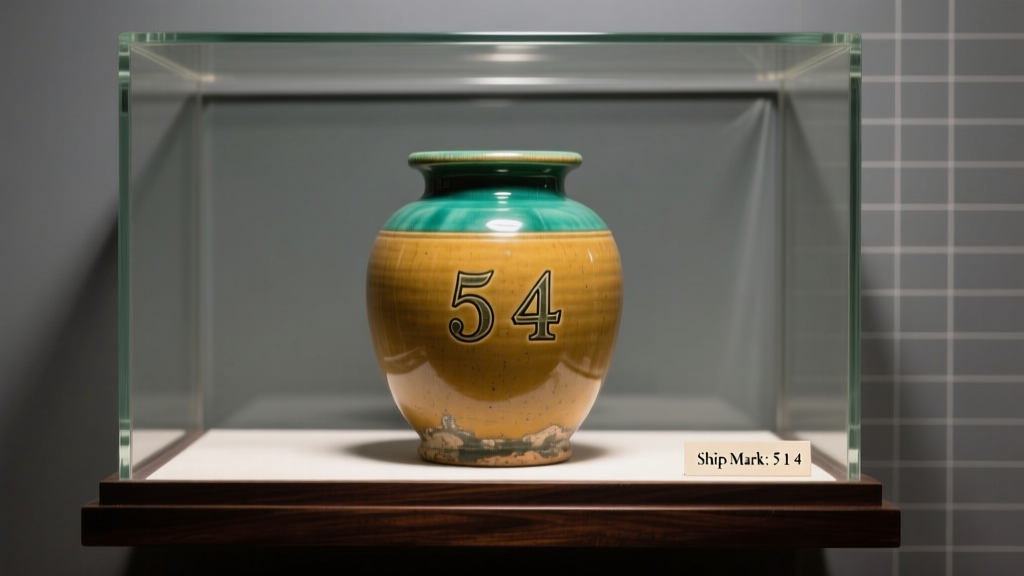
Marblehead Vase: Matte Mustard Glaze with Sea Green Interior and Ship Mark — Authentication, Provenance, and Collectibility of the 5¼ × 3 Inch Form

Tracking Expenses: How To Keep Records For Painless Tax Filing
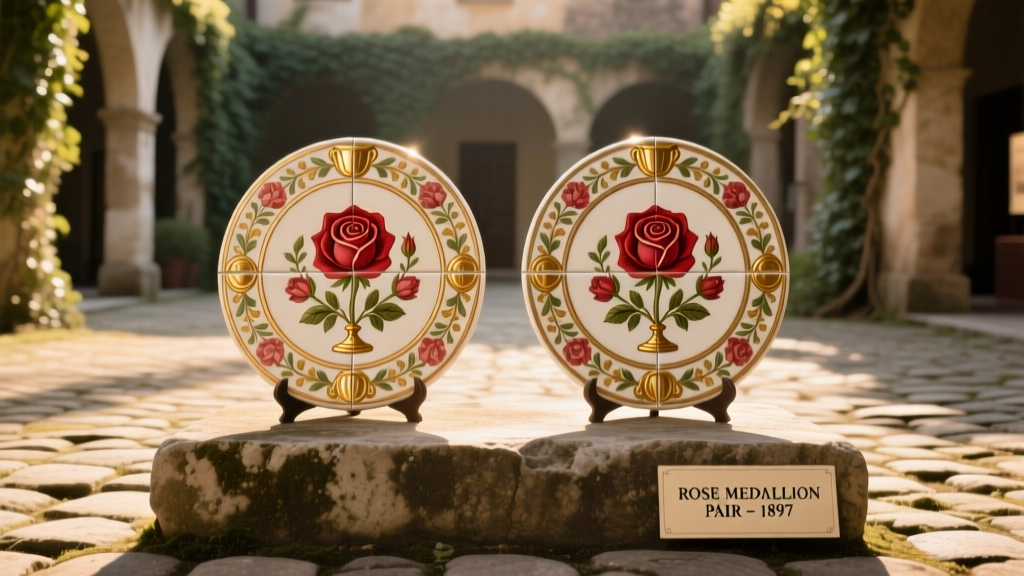
Rose Medallion Tile Courtyard Figures: Authenticating and Valuing the 9½-Inch Round Pair
Fiesta Chartreuse Jug (2 Pt, Part 3): Authentication, Provenance, and Market Value Analysis
Majolica Humidor: The 'Head of Englishman' Cigar-Smoking Nightcap Figure — A Collector's Deep Dive
Queen Anne Furniture Reigns Supreme: Authenticity, Craftsmanship, and Market Value in 2024
Authenticating the 1850 Cherry Blanket Chest: Provenance, Construction, and Collector Significance
Lionel Trestle Bridge No. 280: Authenticating the Iconic Green Box Edition (1946–1953)
Nusshold: The Engineering Breakthrough Behind Modern Sports Card Storage and Authentication