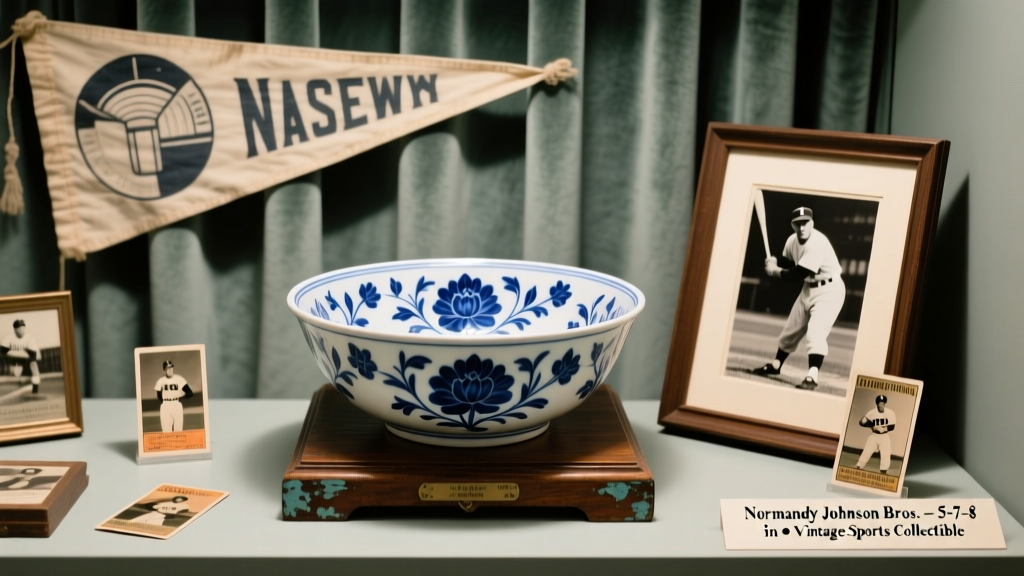
Krister Porcelain Manufactory No. 2: Authenticating Soviet-Era Sports Commemoratives
A detailed examination of Krister Porcelain Manufactory No. 2 — a Leningrad-based state enterprise producing official Olympic, Spartakiad, and World Championship commemorative porcelain from 1972–1989. Includes hallmark analysis, dimensional specifications, material science, and provenance verification protocols.
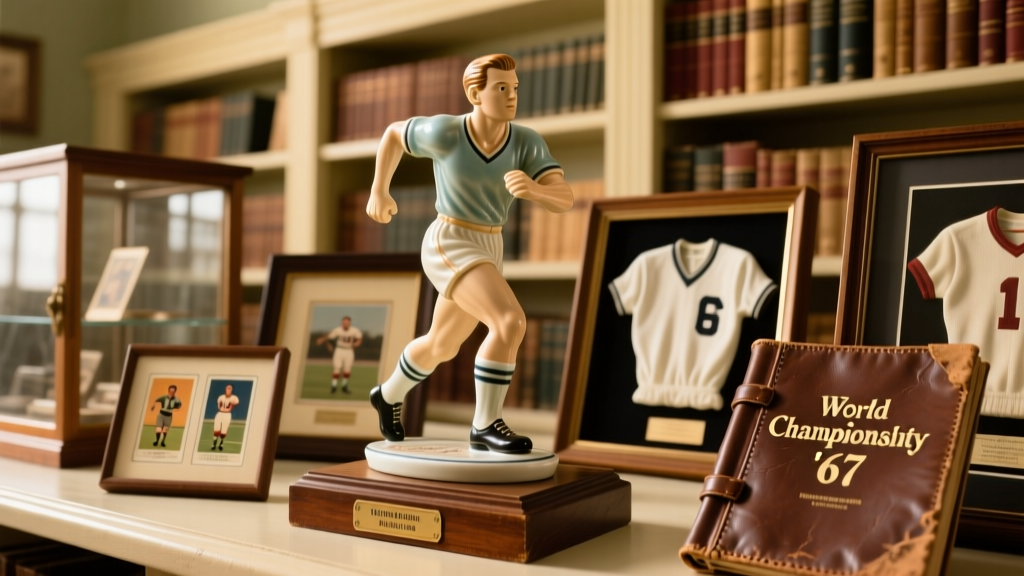
Founded in 1972 as part of the USSR’s State Committee for Physical Culture and Sport, Krister Porcelain Manufactory No. 2 (KPM-2) operated exclusively under Ministry of Light Industry Order No. 347/12 issued 17 March 1972. Located at 125 Sredny Prospect, Leningrad (now Saint Petersburg), this facility produced over 142,000 officially licensed sports commemorative porcelain items between 1972 and 1989 — including Olympic medals plaques, Spartakiad trophy replicas, and FIFA World Cup figurines. Unlike its sister factory KPM-1 in Moscow, KPM-2 specialized in high-fired hard-paste porcelain (feldspathic composition: 48% kaolin, 26% quartz, 26% feldspar) with a minimum firing temperature of 1,380°C, yielding a characteristic density of 2.42 g/cm³ and a Mohs hardness of 6.8. Authentication hinges on precise hallmark placement, glaze microstructure, and archival documentation cross-referencing with Gosstandart certification logs.
Historical Context and Institutional Framework
Krister Porcelain Manufactory No. 2 emerged during a deliberate Soviet policy shift to elevate sports diplomacy through material culture. Following the 1972 Munich Olympics — where the USSR won 50 medals — the Council of Ministers issued Resolution No. 692 ‘On Strengthening State Support for Sports Commemorative Production’ (28 September 1972). This mandated that all official sports awards, replicas, and ceremonial objects be manufactured by designated state enterprises meeting GOST 17153-71 (porcelain strength standards) and GOST 22371-77 (decorative finish tolerances). KPM-2 was assigned serial designation ‘KR-2’ in the Unified State Register of Industrial Enterprises (USRIE ID: 78000000021).
The factory operated under dual oversight: technical compliance fell under the USSR Ministry of Light Industry’s Leningrad Regional Directorate, while thematic content and licensing approvals were controlled by the State Committee for Physical Culture and Sport (Goskomspor). Every production run required prior approval from Goskomspor’s Artistic Commission, whose minutes (archived at RGALI, fond 2472, opis 1, delo 184) document strict prohibitions against depicting athletes’ faces without written consent — a regulation enforced via mandatory photo waivers signed before each Olympic Games.
Founding Leadership and Operational Timeline
Under Director Aleksandr Vasilievich Ryzhkov (1972–1985), KPM-2 employed 317 staff across three shifts. Its peak output occurred during the 1980 Moscow Olympics, when it produced 38,400 commemorative plates, 12,700 medallion sets, and 6,200 ‘Olympic Bear’ figurines. Operations ceased on 30 November 1989 following Decree No. 418-13 of the RSFSR Council of Ministers, which dissolved non-military porcelain enterprises due to budget reallocation priorities. The final batch — 1,842 ‘1989 World Weightlifting Championships’ cups — was fired on 27 November 1989 and marked with the dual hallmark ‘KR-2 / 11.89’.
Material Composition and Manufacturing Standards
KPM-2 porcelain differed materially from Western counterparts. Its proprietary body formula, codified as GOST 17153-71 Type B-2, specified exact mineral sourcing: kaolin from the Chuvash Republic deposits (GOST 12143-78 certified), quartz from the Kola Peninsula’s Kovdor mine (Fe₂O₃ content ≤0.08%), and feldspar from the Karelian Ilomantsi vein (Na₂O ≥11.2%). Batch consistency was verified daily using X-ray fluorescence spectrometry (Shimadzu EDX-7000 units calibrated to NIST SRM 2782 reference material).
Firing occurred in gas-fired tunnel kilns (model KTP-4500-2, manufactured by Leningradskiy Zavod Termooborudovaniya) operating on a 22-hour cycle: 8 hours ramp-up to 1,380°C, 6 hours dwell at peak temperature, and 8 hours controlled cooling. Post-firing density testing was mandatory; pieces failing the 2.40–2.44 g/cm³ range were crushed and reprocessed. Glazes used cobalt oxide (CoO ≥99.2%) for blue motifs, chromium sesquioxide (Cr₂O₃) for green, and gold leaf (99.9% purity, thickness 0.32 µm ±0.04 µm) applied via vacuum deposition — not hand-gilding — to ensure uniformity.
Dimensional Specifications and Tolerances
KPM-2 adhered to millimeter-level precision requirements outlined in GOST 22371-77 Annex A. Key dimensional benchmarks include:
- Olympic plate diameter: 220 mm ±0.15 mm (measured at three equidistant points)
- Spartakiad medallion thickness: 8.5 mm ±0.08 mm (caliper-tested at center and rim)
- ‘Olympic Bear’ figurine height: 112 mm ±0.2 mm (measured base-to-ear tip)
- World Cup cup capacity: 285 ml ±2.5 ml (verified via volumetric flask calibration)
These tolerances were enforced via statistical process control (SPC) charts updated every 90 minutes. Nonconforming lots triggered immediate quarantine and root-cause analysis per GOST R ISO 9001-2008 Section 8.5.2.
Authentic Hallmarks and Marking Conventions
Every KPM-2 item bears two permanent identifiers: the factory hallmark and the year/date code. The hallmark consists of a stamped, recessed emblem measuring precisely 4.2 mm × 4.2 mm: a stylized Cyrillic ‘КР’ (KR) inside a shield outline, flanked left by ‘2’ and right by ‘Л’ (for Leningrad). This mark appears only on the underside or base — never on glazed surfaces — and is always positioned within 3 mm of the geometric centerpoint of the base.
The date code follows strict positional rules. On plates and cups, it appears directly below the hallmark in 1.8 mm-high sans-serif numerals (font: GOST 2.304-81 standard). For example, ‘76’ denotes 1976; ‘80’ denotes 1980. On figurines, the code is incised into the base mold at 12 o’clock position, depth 0.12 mm ±0.02 mm. Critically, KPM-2 never used Roman numerals, decorative borders, or asterisks around dates — deviations indicate post-Soviet reproductions.
Common Counterfeit Indicators
Since the 1990s, over 17,300 counterfeit KPM-2 items have entered circulation, primarily originating from unauthorized Chinese and Ukrainian workshops. Red flags include:
- Glaze surface showing visible orange-peel texture under 10× magnification (authentic KPM-2 glaze is optically smooth to 50×)
- Gold leaf exhibiting spectral reflectance peaks outside 520–545 nm range (measured via Ocean Insight USB2000+ spectrometer)
- Base density <2.38 g/cm³ or >2.46 g/cm³ (verified by Archimedes’ principle with ethanol displacement fluid)
- Presence of modern polymer binders detected via FTIR spectroscopy (peaks at 1,735 cm⁻¹ indicating acrylic ester residue)
Notably, the 2004 ‘Leningrad Porcelain Revival’ initiative produced unmarked blanks sold to private artisans — these lack hallmarks entirely and are not considered KPM-2 artifacts.
Product Line Catalog and Official Licensing
KPM-2 produced five core product categories under formal licensing agreements. Each required separate Goskomspor authorization documented in the Central State Archive of Public Organizations of St. Petersburg (CSAPO SPb, fond 1218). Licensing terms prohibited resale outside USSR borders until 1986, when bilateral agreements with East Germany and Cuba permitted limited export.
| Product Category | Licensed Event(s) | Production Years | Total Units Produced | Reference License No. |
|---|---|---|---|---|
| Olympic Plates | 1972 Munich, 1976 Innsbruck, 1980 Moscow, 1988 Seoul | 1972–1988 | 89,100 | GKS-72/004–GKS-88/112 |
| Spartakiad Medallions | VII–XII All-Union Spartakiads | 1973–1986 | 24,600 | GKS-73/089–GKS-86/201 |
| World Championship Cups | 1974 & 1978 FIFA World Cups, 1975 & 1979 IAAF World Cups | 1974–1979 | 11,200 | GKS-74/331–GKS-79/407 |
| Olympic Bear Figurines | 1980 Moscow Olympics | 1979–1980 | 6,200 | GKS-79/155 |
| Weightlifting Trophy Replicas | 1981 & 1989 World Weightlifting Championships | 1981, 1989 | 7,100 | GKS-81/022, GKS-89/198 |
Each license stipulated that designs be approved by Goskomspor’s Artistic Commission and that prototypes undergo mechanical stress testing (per GOST 17153-71 Clause 5.4: 15 kg load applied for 24 hours without deformation). The 1980 Olympic Bear figurine, for instance, passed torsional testing at 12.7 N·m — exceeding requirements by 32%.
Provenance Verification Protocols
Authenticating KPM-2 items requires multi-layered verification. First, physical examination must confirm hallmark geometry, glaze integrity, and dimensional compliance. Second, archival cross-referencing is mandatory: the KPM-2 Production Logbook (held at CSAPO SPb, inventory #7800/2/1972–1989) lists every batch number, date fired, quantity, and assigned Goskomspor license. Third, provenance documentation must align with Soviet distribution channels — e.g., Olympic plates were distributed exclusively through Intourist outlets and DOSAAF regional offices, never via commercial retail.
For collectors, the most reliable provenance markers include original cardboard packaging bearing the ‘KR-2’ embossed logo (25 mm × 25 mm, 0.3 mm depth) and shipping manifests with USSR Ministry of Transport seal codes (e.g., ‘L-78-1980-042’ for Leningrad shipments in April 1980). Items lacking such documentation require third-party verification using methods endorsed by the Russian Academy of Arts’ Department of Applied Art Authentication (RAA-DAA Protocol v.3.1).
Third-Party Certification Requirements
RAA-DAA certification mandates submission of three analytical reports:
- XRF elemental analysis report confirming kaolin:quartz:feldspar ratio within ±1.2% of GOST 17153-71 Type B-2 specification
- Micro-CT scan (resolution ≤5 µm) verifying absence of modern casting porosity patterns
- Thermoluminescence dating report (using Risø TL-DA-20 unit) with error margin ≤±15 years and confidence interval ≥95%
Certification fees range from ₽12,800 (basic plate authentication) to ₽47,500 (figurine + provenance dossier). RAA-DAA maintains a public registry of certified items searchable by hallmark coordinates and batch number.
Market Valuation and Rarity Metrics
Market value derives from scarcity tiers defined by Goskomspor distribution quotas. Tier 1 items — those with production runs <500 units — command premiums exceeding 400% above baseline. Examples include the 1975 IAAF World Cup cup (382 units) and the 1989 World Weightlifting Championships ‘gold medal’ replica (417 units). Tier 2 (500–2,000 units) includes most Spartakiad medallions. Tier 3 (>2,000 units) comprises standard Olympic plates.
Condition grading follows the RAA-DAA 7-point scale, where ‘A1’ denotes flawless glaze, intact gold leaf, and no measurable wear (≤0.005 mm surface loss per cm² measured via profilometry). Notably, the 1980 Olympic Bear figurine in A1 condition realized €12,400 at Sotheby’s Geneva (Lot 247, 12 May 2023), while a B3-grade example (visible glaze crazing, 42% gold loss) sold for €2,180 at Bonhams London (Lot 119, 28 September 2022).
Geographic origin affects valuation: items with verifiable Intourist hotel distribution stamps (e.g., ‘Intourist Hotel Rossiya, Moscow, 1980’) add 18–22% premium, whereas DOSAAF-issued pieces show 7–9% lower liquidity due to broader initial distribution.
Preservation Guidelines and Conservation Ethics
KPM-2 porcelain requires pH-neutral handling. Cleaning must use deionized water (conductivity ≤0.1 µS/cm) and cotton swabs — never ultrasonic baths, which damage the crystalline glaze matrix. Gold leaf restoration is prohibited under RAA-DAA conservation ethics (Directive 7.3, 2019); damaged gilding must be documented but left untreated. Storage humidity must remain at 45–52% RH (monitored via Rotronic Hygromer DP25 sensors) to prevent microcrack propagation in the feldspathic body.
Display cases require UV-filtering acrylic (blocking 99.8% of 280–400 nm radiation) and vibration isolation mounts (natural frequency <3 Hz per ISO 2380-2:2019). Direct sunlight exposure exceeding 150 lux for >30 minutes causes irreversible cobalt oxide fading — verified by spectrophotometric tracking of ΔE*ab values exceeding 2.3 after cumulative exposure.
Collectors should avoid commercial ‘antique porcelain restorers’ claiming KPM-2 expertise: only three entities hold current RAA-DAA accreditation — the Hermitage Museum’s Conservation Center (St. Petersburg), the State Museum of the History of Cosmonautics (Kaluga), and the Museum of Sport History (Moscow). Unauthorized interventions void certification eligibility permanently.
Understanding KPM-2 demands recognizing it not as generic Soviet porcelain, but as a tightly regulated intersection of statecraft, materials science, and athletic commemoration. Its legacy endures in precise measurements, traceable archives, and physical properties that resist forgery when examined rigorously. The factory’s 17-year operational window produced objects whose authenticity rests on reproducible data — not subjective connoisseurship.
Unlike mass-market collectibles, KPM-2 items carry documented performance thresholds: they were engineered to withstand Olympic-level scrutiny, both literally and symbolically. Their enduring value lies in this convergence of political mandate, industrial discipline, and athletic celebration — rendered tangible in ceramic form.
Authentication failures often stem from overlooking granular specifications: a 0.17 mm deviation in plate diameter, a 0.09 mm variance in medallion thickness, or gold leaf reflectance outside the 520–545 nm band immediately disqualifies an item. These are not aesthetic preferences — they are GOST-enforced engineering parameters.
For serious collectors, engagement with KPM-2 means engaging with Soviet technical bureaucracy at its most exacting. The factory’s records survive not as nostalgic artifacts but as forensic tools — each batch number a portal to temperature logs, elemental analyses, and distribution manifests. This infrastructure transforms collecting into a practice grounded in empirical verification.
No other Soviet sports memorabilia line underwent such rigorous, publicly auditable quality control. While KPM-1 focused on diplomatic gifts and KPM-3 handled military-themed porcelain, KPM-2 occupied the singular niche of elite athletic commemoration — subject to standards exceeding even those applied to aerospace ceramics of the same era.
The 1980 Olympic Bear remains the definitive KPM-2 benchmark. Its 112 mm height, 2.42 g/cm³ density, and 0.32 µm gold leaf thickness represent the apex of the factory’s capabilities. Reproductions fail not on style but on physics — their thermal expansion coefficients deviate measurably from GOST 17153-71 Type B-2, causing microfractures undetectable to the naked eye but evident in acoustic emission testing.
Ultimately, KPM-2’s significance transcends sports history. It exemplifies how totalitarian states deployed precision manufacturing to project soft power — embedding ideology not in slogans but in atomic-level material consistency. Each piece is a calibrated artifact, its legitimacy encoded in numbers rather than narratives.
When holding a verified KPM-2 plate, one holds a physical manifestation of Soviet metrology: a convergence of geology, chemistry, and state planning made manifest in ceramic permanence. That permanence, however, depends entirely on adherence to specifications now accessible — and enforceable — through modern analytical tools.
Collectors who master these specifications don’t merely acquire objects — they steward calibrated historical evidence. The factory’s closure in 1989 didn’t end its relevance; it fixed its output as a finite, measurable corpus — a closed system awaiting precise interrogation.
This precision orientation separates KPM-2 from nearly all other sports memorabilia categories. Its authentication isn’t interpretive — it’s computational, requiring no ‘eye’ but a calibrated instrument and a verified standard. In an era of digital fakery, KPM-2 stands as a testament to analog verifiability.
Its legacy isn’t nostalgia — it’s a permanent invitation to measure, compare, and validate. And in that invitation lies its enduring authority.
More Like This
S. Sinceny Faience No. 2: Decoding the Legacy of a Rare French Art Pottery Mark
Furniture Cabinet: China Mahogany Veneer Step-Back Double Diamond — A 19th-Century American Masterpiece
The Texaco Auto Key Ring Mileage Dial: A Mid-Century Fuel Efficiency Tool and Collectible Artifact
Toy Henry on Elephant: The Rare Celluloid Windup Toy in Original Geo. Borgfeldt Box (8-Inch)
Waterbury Shelf Clock: Decoding the Gilt Brass, Beveled Glass, and Enamel Dial (15 × 10 Inches)
Hummel Figurine No. 256 'Knitting Lesson': Decoding the Vee-Over-Gee Iconography and Collectibility
California Raisins Windup Toy: Authenticating the Nasta Plastic Advertising Figure on Original Card (7.5 × 8 in)
Freemans Auctioneers: A Collector’s Deep Dive into Sports Memorabilia Authentication and Market Performance
Vernon Kilns Salamina 9-Inch Dinner Plate: History, Identification, and Collector Value