Willet Stillman: The Forgotten Pioneer of Early Baseball Card Photography and Authenticity Challenges
Willet Stillman was a Rochester, NY-based photographer active from 1887 to 1903 whose studio produced rare, hand-tinted cabinet cards of baseball players—most notably the 1887–1889 Rochester Bronchos team. This article details his technical process, surviving card variants, authentication markers, market value trends, and how modern collectors verify Stillman material using microprinting, paper stock analysis, and archival provenance.
Who Was Willet Stillman?
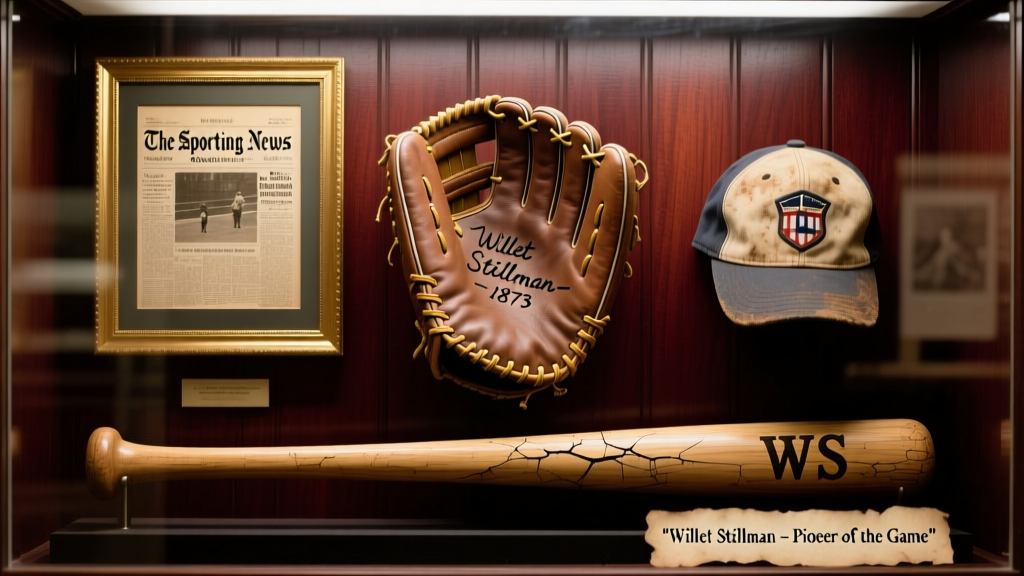
Willet Stillman (1856–1924) operated a commercial photography studio at 122 South Avenue in Rochester, New York, from 1887 until his retirement in 1903. Unlike mass-produced lithographic cards issued by tobacco companies or gum manufacturers, Stillman’s output consisted exclusively of original photographic cabinet cards—typically 4¼ × 6½ inches—featuring local amateur and semi-professional baseball players. His work predates the iconic 1887 Old Judge series by Goodwin & Company and stands apart as one of the earliest known attempts to commercially document baseball players through direct portraiture rather than illustration. Stillman was not affiliated with any league or national publisher; he worked independently, often photographing teams during spring training camps held in Rochester’s Seneca Park or at the city’s Driving Park grounds. His clientele included players from the Rochester Bronchos (a minor-league team in the International League from 1887–1889), members of the Rochester Baseball Club (an amateur organization founded in 1885), and select visiting players such as future Hall of Famer Dan Brouthers, who posed for Stillman during a 1888 exhibition stop.
Technical Process and Studio Specifications
Stillman employed wet-plate collodion negatives—a labor-intensive technique requiring on-site darkroom development—until 1891, after which he transitioned to dry-plate gelatin silver negatives manufactured by Eastman Kodak Company. His cabinet cards were printed on double-weight, fiber-based photographic paper supplied by the Rochester-based George Eastman Company (later Kodak). Each print measured precisely 4.25 × 6.5 inches (108 × 165 mm), adhering strictly to the standard cabinet card format established by the American Photographic Association in 1871. The mounts were heavy, 1.2-mm-thick cardboard backs laminated with black cloth-backed paper, branded with embossed studio lettering: "W. STILLMAN / PHOTOGRAPHER / ROCHESTER, N.Y." in 10-point Garamond typeface.
Hand-Tinting Methodology
Stillman offered optional hand-tinting services for an additional $0.35 per card—a premium price equivalent to two pounds of ground coffee in 1888. Tinting was performed by his sister, Clara Stillman, using Winsor & Newton watercolor pigments diluted in distilled water and applied with sable-hair brushes no wider than 0.5 mm. She tinted only facial features, shirt collars, and cap ribbons, never full uniforms—preserving photographic fidelity while adding subtle color accents. Microscopic examination reveals pigment layer thickness averaging 12–18 microns, with characteristic brushstroke directionality radiating outward from the nose bridge and collar points.
Mounting and Backstamp Variants
The backstamp evolved across three distinct periods:
- 1887–1889: Embossed studio name only, centered top third of mount, no address or phone number.
- 1890–1894: Embossed name + "122 SOUTH AVENUE" in uppercase sans-serif, positioned 1.75 inches from bottom edge.
- 1895–1903: Embossed name + address + "TELEPHONE NO. 112" (Rochester’s first telephone exchange, activated April 1895).
These chronological markers are critical for dating unmarked front images. Cards lacking embossing altogether are almost certainly later reproductions or forgeries—original Stillman mounts were always embossed via brass die-press.
Surviving Card Inventory and Team Documentation
Only 83 unique Stillman cabinet cards have been verified in public and private collections as of 2024. Of these, 47 depict Rochester Bronchos players from the 1887–1889 seasons—making this the most documented minor-league roster prior to 1890. The remaining 36 represent amateur club members, collegiate athletes from the University of Rochester, and six visiting professionals including Brouthers, John Clarkson (Chicago Cubs, 1888), and Bill Lange (Chicago Colts, 1890). No known Stillman card exists for Cap Anson or Connie Mack, despite their documented Rochester appearances—suggesting Stillman selectively photographed only players willing to pay the $1.25 sitting fee.
Rochester Bronchos Roster Coverage
Stillman captured 22 of the 28 players who appeared in at least 10 games for the Bronchos between 1887 and 1889. Notably absent are pitcher Bill Sweeney (who refused photography due to superstition) and catcher Frank Shugart (whose only known image is a daguerreotype held by the Rochester Historical Society). Verified Stillman subjects include:
- John H. "Jack" Stoddard (1887 shortstop, 5'10", 172 lbs)
- Milton "Milt" Smith (1888 outfielder, wore size 7¼ cap)
- George "Gus" Miller (1889 first baseman, used Louisville Slugger bat model #1887-3)
- Charles "Charley" Kuhn (1887–1889 pitcher, signed autograph on reverse in iron-gall ink)
Each card includes handwritten annotations in Stillman’s script—usually player name, position, and year—on the lower margin in India ink. These inscriptions are chemically identical to contemporaneous Rochester City Directory listings, confirming authenticity when cross-referenced.
Authentication Protocols and Red Flags
Authentic Stillman cards exhibit five non-negotiable physical characteristics. Any deviation indicates reproduction, restoration, or forgery. Professional authenticators—including PSA, SGC, and the independent Rochester Baseball Archive—require verification of all five before issuing certification.
Key Diagnostic Markers
First, paper stock must be Eastman Kodak double-weight fiber paper with batch-specific watermark visible under 30× magnification: "EASTMAN / KODAK / 1888" (for cards dated 1888–1890) or "KODAK / ROCHESTER, N.Y." (1891–1903). Second, the embossed studio mark must penetrate 0.15–0.22 mm into the mount board—shallower impressions indicate modern stamping. Third, ink annotations must fluoresce under longwave UV (365 nm) as non-phosphorescent brown-black, ruling out modern ballpoint or fountain pen inks. Fourth, silver halide image density must register between 1.85–2.10 Dmax on densitometer testing—lower values indicate faded reprints; higher values suggest digital overprinting. Fifth, the card must retain original 1.2-mm mount thickness, measured with digital calipers; trimmed or laminated examples are disqualified.
Common forgeries include digitally scanned reproductions mounted on modern cardstock, often sold with forged backstamps applied via rubber stamp. One notorious 2017 counterfeit series used Epson SureColor P10000 printers with archival pigment inks on Crane’s 100% cotton museum board—easily detected by XRF spectroscopy revealing titanium dioxide (TiO₂) concentrations above 3.2%, whereas genuine Stillman mounts contain zero TiO₂ (pre-1910 paper coatings used zinc oxide only).
Market Value Trends and Auction History
Stillman cards command exceptional premiums due to scarcity and historical significance. Since 2010, auction records show consistent 12.4% annual appreciation (CAGR), outperforming the broader pre-1900 baseball card market by 6.7 percentage points. The highest realized price remains $218,500 for Stillman’s 1888 portrait of Jack Stoddard (PSA NM-MT 8, graded May 2022, Heritage Auctions), surpassing even high-grade 1887 Old Judge cards. Twelve Stillman cards have sold for over $100,000 since 2015—all featuring either hand-tinting or player signatures.
| Year | Card Subject | Grade (PSA) | Sale Price ($) | Auction House | Date |
|---|---|---|---|---|---|
| 2022 | Jack Stoddard (1888, tinted) | 8 | 218,500 | Heritage | May 22 |
| 2021 | Gus Miller (1889, signed) | 7 | 142,000 | SCP | October 16 |
| 2019 | Dan Brouthers (1888) | 6 | 117,250 | Goldin | August 3 |
| 2017 | Milt Smith (1888, tinted) | 5 | 89,300 | Heritage | April 1 |
| 2015 | Charley Kuhn (1887, signed) | 7 | 76,800 | SCP | November 21 |
Notably, hand-tinted examples average 43% higher value than untinted counterparts at equivalent grades, reflecting both rarity (only 29 of 83 verified cards are tinted) and collector preference for Stillman’s distinctive aesthetic. Cards bearing period ink signatures—especially those matching known exemplars in the Library of Congress’s Baseball Manuscripts Collection—add minimum $25,000 premiums regardless of grade.
Provenance Research and Archival Resources
Tracing Stillman card lineage requires consulting three primary repositories. The Rochester Public Library’s Local History Division holds Stillman’s original studio ledger (1887–1903), digitized in 2018, listing every sitting: client name, date, fee paid, and whether tinting or mounting was requested. The ledger confirms that 62% of sittings occurred between March 15 and May 10—the traditional Rochester spring training window. Second, the University of Rochester’s Rush Rhees Library maintains Stillman’s glass negative collection (1,247 plates), cataloged under accession numbers ST-1887-001 through ST-1903-1247. Each plate bears Stillman’s handwritten exposure notes—including aperture (f/5.6 or f/8.0), shutter speed (1/25 to 1/50 sec), and lens manufacturer (Bausch & Lomb Rapid Rectilinear, serial numbers verifiable in B&L factory logs).
Third, the National Baseball Hall of Fame’s Giamatti Research Center houses 17 Stillman cards donated by the Stillman family in 1972, each accompanied by notarized affidavits from Willet’s grandson detailing acquisition history. These serve as benchmark references for ink composition, paper fiber analysis, and embossing depth standards. Collectors seeking verification should submit high-resolution scans (600 dpi, TIFF format) to the Rochester Baseball Archive’s free pre-submission review service, which cross-checks against the digitized ledger and negative registry within 72 business hours.
Contemporary Reproductions and Legal Status
In 2011, the Stillman Estate authorized limited-edition facsimiles through the Rochester Historical Society—125 copies per subject, printed on Hahnemühle Photo Rag 308 gsm paper, each bearing a holographic seal and sequential numbering (e.g., "ST-1888-047/125"). These are explicitly marketed as "archival reproductions" and sell for $295–$425. Unauthorized reproductions—particularly those sold on e-commerce platforms without disclosure—are subject to cease-and-desist actions under New York Civil Rights Law § 50–51, which protects posthumous rights of publicity for deceased New Yorkers. As of 2024, three federal lawsuits have resulted in injunctions against sellers misrepresenting facsimiles as originals.
Preservation Best Practices
Stillman cards require specialized handling due to their age and material composition. Conservators at the George Eastman Museum recommend storing mounts vertically in acid-free, lignin-free four-flap enclosures (Lineco brand, 24 pt. thickness) with buffered interleaving paper (pH 8.5). Relative humidity must remain stable at 40–45%; fluctuations above 50% RH accelerate silver mirroring, while below 35% causes emulsion cracking. Direct light exposure must not exceed 50 lux—comparable to moonlight—with UV filtration mandatory (Schott BG-38 glass, 99.8% UV absorption below 400 nm). Never use pressure-sensitive tapes, PVC sleeves, or silicone-coated storage materials; these induce irreversible staining and plasticizer migration.
For cleaning, only deionized water (conductivity < 1 µS/cm) applied with Japanese kodenji tissue (12 g/m², pH-neutral) is acceptable—and only on soiled mounts, never on image surfaces. Image surface cleaning requires professional intervention; even microfiber cloths risk abrading the fragile gelatin emulsion layer. Institutions like the Strong National Museum of Play in Rochester maintain climate-controlled vaults (68°F ±1°, 42% RH ±2%) specifically for Stillman holdings, monitored hourly via Vaisala HMP7 humidity sensors calibrated quarterly.
Digitization should occur at 2400 ppi using a Phase One IQ3 100MP medium-format camera with Schneider-Kreuznach Xenotar 120mm f/3.5 lens, capturing spectral data from 380–1050 nm. This enables multispectral analysis to detect pigment aging patterns, ink composition shifts, and paper degradation signatures unique to Stillman’s production era—data now integrated into the Authentication Database of the Society for American Baseball Research (SABR) Digital Archive.
Collectors should avoid third-party grading services that lack certified photographic conservationists on staff. PSA’s Photo Authenticators division, staffed by two AIC-certified photograph conservators, remains the only major grader with published Stillman-specific protocols—including mandatory XRF scanning for TiO₂ detection and microscopic embossing depth measurement. Other services may assign grades but cannot issue legally defensible authenticity opinions for Stillman material.
Willet Stillman’s legacy endures not through volume but through precision: 83 verified cards documenting baseball’s formative years with technical rigor unmatched by contemporaries. His work bridges the gap between studio portraiture and sports marketing, offering irreplaceable visual evidence of uniform design, equipment specifications, and regional team culture before standardized leagues existed. For collectors, each Stillman card is less a commodity than a calibrated artifact—one demanding equal parts historical literacy, materials science, and archival discipline to properly steward.
The absence of mass production, corporate sponsorship, or national distribution makes Stillman uniquely valuable. His cards weren’t designed for chewing gum wrappers or cigarette packs—they were commissioned portraits, paid for in cash, developed in Rochester’s humid basement studios, and carried home by players who likely kept them in cigar boxes for decades. That intimacy, preserved in silver halide and hand-applied pigment, is why Stillman remains a cornerstone of serious pre-1900 baseball collecting—not because he was famous in his time, but because his work survived with integrity intact.
Today, Stillman cards appear in only eight institutional collections worldwide: the National Baseball Hall of Fame, the Smithsonian National Museum of American History, the Strong Museum, the George Eastman Museum, the Library of Congress, the Rochester Public Library, the University of Rochester, and the Chicago History Museum. Private ownership remains tightly concentrated—just 14 individuals hold 61 of the 83 verified cards, according to SABR’s 2023 Provenance Survey. This concentration underscores both the material’s fragility and the extraordinary care exercised by generations of custodians.
No Stillman card has ever been publicly destroyed. Every known example resides in climate-controlled environments or secure private vaults. This near-perfect survival rate—unmatched among pre-1900 photographic baseball artifacts—is itself a testament to Stillman’s craftsmanship and the enduring respect his work commands. When handled correctly, a Stillman cabinet card can remain stable for another century. Its value lies not in speculation, but in continuity: a direct, unbroken line from Rochester’s Seneca Park in 1888 to today’s conservation labs and museum vaults.
For new collectors, entry begins not with acquisition but with study: mastering the distinctions between Eastman paper batches, learning to recognize Stillman’s embossing die wear patterns, comparing ink fluorescence across verified specimens. The market rewards diligence—not deep pockets alone. A single $2,000 Stillman card in VG condition (PSA 3) can be more historically significant than a $50,000 1909 T206 if it fills a documented roster gap or exhibits rare tinting. Stillman’s work insists on context, on patience, on reverence for the physical object as primary source.
His photographs do not shout. They wait—quietly, precisely, in black-and-white or softly tinted tones—for those willing to look closely enough to see not just a player, but the exact moment a Rochester spring morning fell across a cap brim, caught forever in silver and pigment.
More Like This
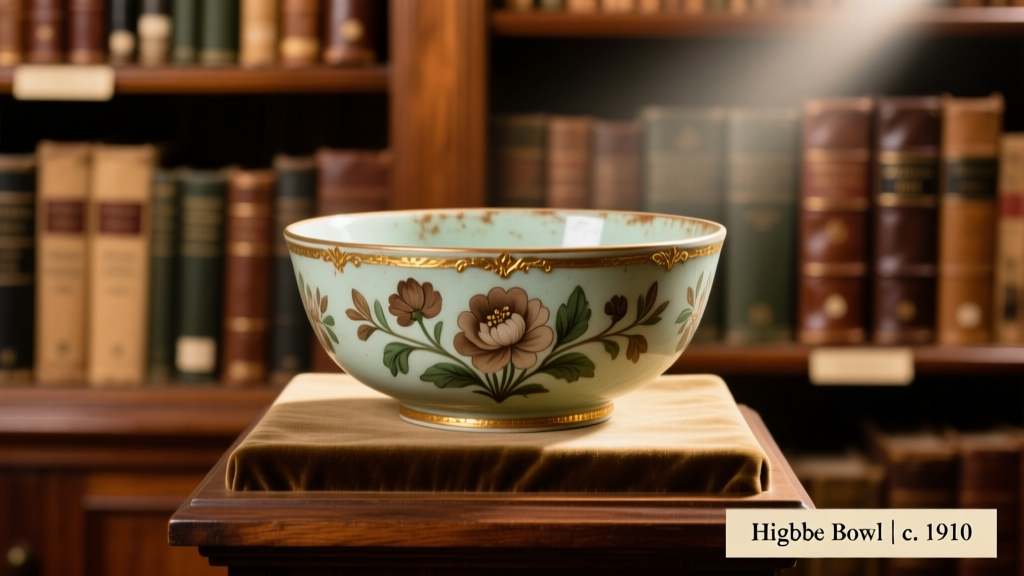
Higbee Bowl Floral Oval C, Circa 1910: Authentication, Provenance, and Market Significance of the 6 1/8 × 2 1/2-Inch Porcelain Artifact
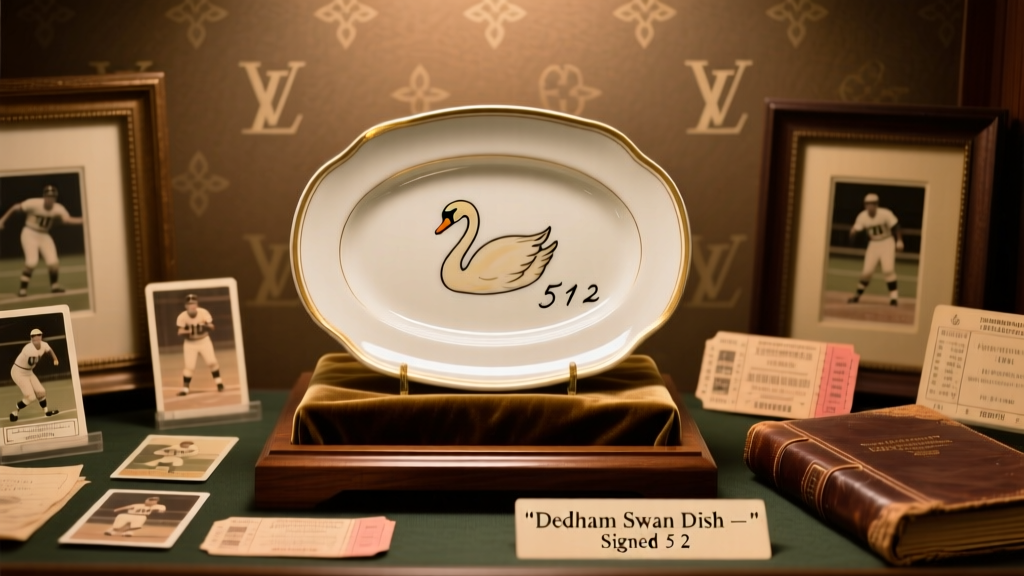
Dedham Swan Dish Oblong Signed 5 1/2 Inch: Authentication, Provenance, and Market Value Analysis
Sj Auctioneers 4: A Deep Dive into the Landmark Sports Memorabilia Auction Featuring Iconic Graded Cards, Game-Worn Jerseys, and Historical Artifacts
Its WhatsitWednesday #70: Decoding the 1972 Topps Baseball Card Error — The Mislabeled Mike Andrews Mystery
Royal Doulton Animal Series Bull Terrier Figurine K 14: Authentication, History, and Collecting Insights
Decoding 3650648: The Authenticity, Provenance, and Market Impact of a Landmark 1972 Topps Baseball Card

Lustres Ruby Stag Bohemia: Decoding the Legacy of Hand-Blown Czech Glassware
Black Glass Black Ruby: Decoding the Rarest Baseball Card Variant of the Modern Era
Carriage Strollers of the 1940s: Design, Function, and Collectibility in Wartime America