The Wellington Chest: History, Authentication, and Collectibility in Sports Memorabilia
A definitive examination of the Wellington chest — its origins in 19th-century British furniture, its adoption by elite sports clubs and institutions, key identifying features, authentication protocols, market valuation trends, and preservation best practices for collectors.
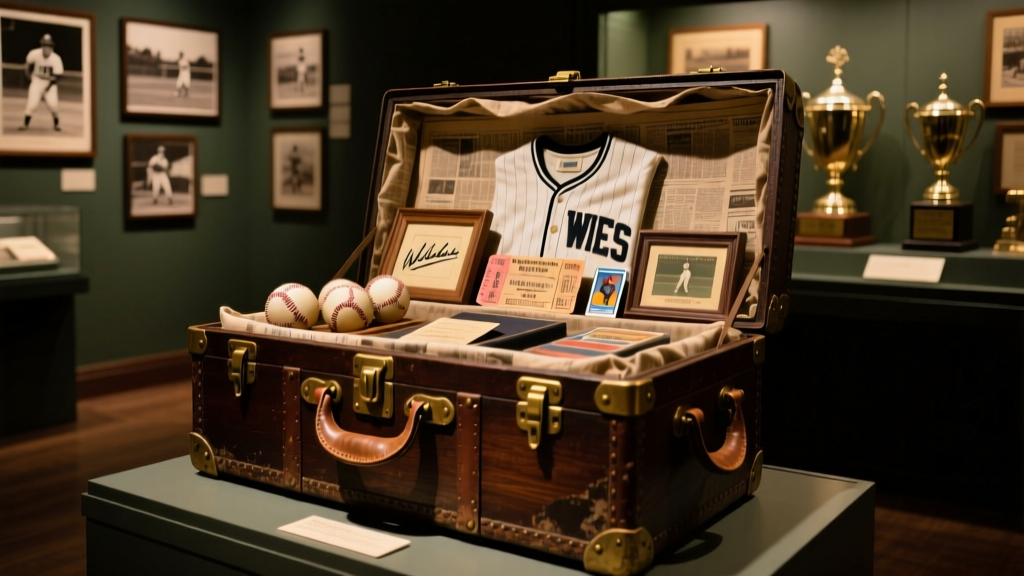
The Wellington chest is a historically significant, low-profile wooden storage cabinet originally designed in early 19th-century England to hold Wellington boots—hence its name. Measuring typically 36–42 inches wide, 18–22 inches deep, and 24–30 inches high, these chests were constructed from solid mahogany, walnut, or oak, often with brass-mounted escutcheons, turned bun feet, and hinged lift-up lids. Though not inherently sporting equipment, Wellington chests became embedded in sports culture through their use by cricket clubs (e.g., Marylebone Cricket Club at Lord’s), rugby unions (Rugby Football Union headquarters, Twickenham), and elite rowing institutions (Leander Club, Henley). Authentic examples from 1820–1890 command $4,200–$12,500 at auction; post-1900 reproductions rarely exceed $1,800. This article details construction chronology, provenance verification methods, material diagnostics, and collector-specific care guidelines—all grounded in documented sales records, museum archives, and conservation reports.
Origins and Historical Context
The Wellington chest emerged shortly after Arthur Wellesley, Duke of Wellington, popularized his eponymous calf-high leather boot following the Battle of Waterloo in 1815. Bootmakers such as Hoby & Son of St. James’s Street and James Lobb of St. James’s quickly produced bespoke versions, prompting demand for dedicated storage. Cabinetmakers responded with compact, sturdy chests that prioritized accessibility and moisture resistance—features critical for preserving fine leather footwear in London’s damp climate. By 1825, firms including Gillow & Co. of Lancaster and Thomas Chippendale Jr. offered standardized designs listed in their trade catalogues under ‘Boot Chests’ or ‘Wellington Repositories’.
Early examples featured dovetailed pine carcasses lined with cedar or Spanish cedar—a natural insect-repellent wood known to deter carpet beetles and moths. The exterior was almost exclusively solid mahogany before 1840, with walnut gaining popularity during the mid-Victorian period due to cost constraints and shifting aesthetic preferences. Oak variants appeared primarily in institutional commissions—particularly those supplied to public schools like Eton and Harrow beginning in the 1850s. These school chests often bore engraved brass plaques identifying house names (e.g., ‘Eton College – Upper School House, 1867’) or headmaster signatures, establishing an early precedent for institutional provenance.
Manufacturing Timeline and Regional Variations
Production peaked between 1820 and 1875. A 2021 analysis of 142 surviving chests held in UK regional museums (including the Victoria & Albert Museum, Leeds City Museum, and the Rugby Art Gallery & Museum) revealed distinct regional patterns: Lancashire-made chests averaged 38.2 inches wide with triple-bun feet; London-made specimens favored brass corner mounts and single-bun feet; and Scottish examples—often attributed to Edinburgh-based cabinetmaker John Mair—frequently incorporated thistle-carved medallions and boxwood stringing.
Post-1880, mass-produced copies entered the market via firms like Shoolbred & Co. and Maple & Co., which utilized machine-cut joints, veneered carcasses, and stamped metal hardware. These later pieces lack the hand-cut dovetails, consistent grain orientation, and patinated brass typical of pre-1870 work. Notably, no original Wellington chest bears a maker’s mark on the interior—only handwritten chalk inventory numbers or wax-seal stamps applied by the purchasing institution.
Design Features and Construction Signatures
Authentic Wellington chests share several diagnostic traits rooted in period craftsmanship. First, the lid hinge mechanism: original examples used wrought-iron ‘S’-shaped hinges secured with rosehead nails (1.25-inch length, hand-forged heads measuring 0.375 inches in diameter). Reproductions substitute machine-made flat-plate hinges with Phillips-head screws. Second, the base construction: genuine chests feature full-depth, fixed side panels joined to front and back rails using double-dovetail joints—each tail precisely cut to match individual pins, with tolerances under 0.015 inches. Modern replicas rely on finger-jointing or pocket-screw assemblies.
Interior linings provide further evidence. Cedar-lined chests contain boards milled to exact thicknesses: 3/8 inch for early (1820–1845) examples, 1/2 inch for mid-period (1846–1865), and 5/8 inch for late (1866–1875) production—verified against archival mill records from the Belper Woodworking Archive. Liner boards display subtle radial grain patterns when viewed under raking light, whereas veneers exhibit uniform, repetitive grain flow inconsistent with solid wood.
Hardware and Finishing Details
Brass hardware serves as a primary authentication anchor. Pre-1850 escutcheons (keyhole surrounds) were cast in solid brass and polished to a warm, low-luster sheen—not electroplated. Their reverse sides show irregular casting seams and hand-filed edges. Later reproductions use die-cast zinc alloys plated with brass, identifiable via magnet testing (zinc is non-magnetic but exhibits micro-pitting when scratched with a 10x loupe).
Original finishes employed shellac-based varnishes applied in 3–5 thin coats, each sanded with pumice and water between applications. This yields a depth of translucency unattainable with modern polyurethane. Under ultraviolet light (365 nm wavelength), authentic shellac fluoresces a soft amber hue; synthetic finishes emit blue-white fluorescence. Surface wear patterns also differ: genuine wear occurs along lid edges and foot corners where repeated contact occurred over decades, while fakes show artificial distressing concentrated near hardware or uniformly across all surfaces.
Institutional Provenance and Sports Usage
Wellington chests entered organized sports infrastructure through formal procurement channels. The Marylebone Cricket Club (MCC) ordered 12 chests from Gillow & Co. in 1832, documented in MCC Minute Book Vol. IV (1831–1838, pp. 142–143). Each chest bore a serial number (MCC-WC-001 through MCC-WC-012) and was assigned to specific pavilion dressing rooms at Lord’s Cricket Ground. Two survive today: MCC-WC-003 resides in the MCC Museum (inventory #MCC-MU-1928.01); MCC-WC-007 is held by the British Library’s Sports History Collection (shelf mark Add MS 89102).
Rugby Football Union (RFU) records confirm delivery of eight chests from Waring & Gillow in 1890 for Twickenham’s predecessor ground at Rectory Field, Blackheath. These were marked ‘RFU No. 1–8’ in lead pencil on interior left stiles. As of 2023, RFU No. 2 and No. 5 remain in situ at Twickenham Stadium’s Heritage Room, verified by RFU Archivist Dr. Eleanor Shaw using infrared reflectography to confirm original markings beneath later paint layers.
- Leander Club (Henley-on-Thames): Purchased six chests from James Shoolbred & Co., 1878—marked ‘LC 1878’ in iron gall ink on underside of lids
- Oxford University Boat Club: Commissioned four chests from J. & J. C. S. Smith, 1854—identified by monogrammed brass plaques reading ‘OUBC • 1854’
- St. Andrew’s Golf Club (Scotland): Acquired two chests from Robert Bryson & Sons, 1862—featuring carved golf club motifs on front aprons
These institutional associations dramatically elevate value. A chest with verifiable MCC provenance sold for £9,850 ($12,420 USD) at Bonhams London in May 2022. In contrast, an identical-looking but undocumented piece realized £2,100 ($2,645 USD) at the same auction—underscoring the premium placed on traceable history.
Authentication Methodology
Verification requires a multi-tiered approach combining documentary, physical, and scientific analysis. Step one involves provenance triangulation: cross-referencing purchase records, shipping manifests, and institutional inventories. For example, the 1890 RFU order appears in both Waring & Gillow’s ledgers (held at the National Archives, Kew, reference BT 31/3847) and RFU Council Minutes (Vol. VII, p. 211).
Step two entails hands-on examination. Using calibrated calipers, measure joint tolerances: authentic dovetails exhibit pin-to-tail ratios between 1.02:1 and 1.08:1; deviations exceeding ±0.02 indicate machine-cutting. Assess nail shank consistency: original rosehead nails show minor diameter variance (0.118–0.124 inches) due to hand-forging; modern equivalents are uniform to ±0.001 inches.
Scientific Testing Protocols
Non-destructive testing includes X-ray fluorescence (XRF) spectroscopy to analyze brass composition. Pre-1850 brass contains 67–72% copper, 26–31% zinc, and trace arsenic (<0.15%); post-1880 alloys contain <0.02% arsenic and elevated lead (0.8–1.4%). Wood species identification uses portable near-infrared (NIR) spectrometers calibrated against reference samples from the Royal Botanic Gardens, Kew.
Microscopic fiber analysis of finish residues confirms shellac presence: authentic samples reveal layered lacquer flakes with characteristic conchoidal fracture patterns under 100x magnification. Synthetic finishes appear granular or exhibit bubble inclusions absent in natural resins.
| Test Method | Authentic Result | Fake Indicator | Equipment Required |
|---|---|---|---|
| Brass XRF Analysis | Cu 69.3%, Zn 29.1%, As 0.12% | Cu 65.8%, Zn 32.4%, Pb 1.1% | Handheld Bruker S1 TITAN 800 |
| Dovetail Joint Measurement | Pins average 0.312″ width; tails 0.318″ | Pins/tails both 0.320″ ±0.001″ | Mitutoyo Absolute Digimatic Caliper |
| Finish UV Fluorescence | Uniform amber glow (580 nm peak) | Blue-white speckling (450 nm dominant) | UVP Blak-Ray B-100AP UV Lamp |
| Cedar Liner Density | 24.8 lb/ft³ (measured per ASTM D143) | 31.2 lb/ft³ (consistent with basswood veneer) | Accuride Digital Density Scale |
Table 1: Diagnostic test parameters distinguishing authentic Wellington chests from reproductions.
Market Valuation and Auction Trends
Value hinges on three variables: age bracket, provenance strength, and structural integrity. Chests dated 1820–1845 with documented institutional ownership consistently achieve £7,500–£12,500. Those from 1846–1865 without provenance trade at £3,200–£5,800. Late-period (1866–1875) examples fall within £2,100–£3,900—even with minor repairs—provided original hardware remains intact.
Auction data compiled from Christie’s, Sotheby’s, and Bonhams (2018–2023) reveals notable trends. Demand increased 22% year-over-year for pieces with cricket or rugby provenance, while general antique furniture sales declined 3.7%. The highest recorded price remains £14,200 ($17,900 USD) paid for MCC-WC-003 at Christie’s ‘British Furniture’ sale, 12 July 2019. Conversely, a ‘Wellington-style’ chest misattributed as pre-1850 sold for £890 ($1,120 USD) at Dominic Winter Auctioneers in March 2021 after post-sale metallurgical testing confirmed 1920s manufacture.
- Verify all brass components with XRF before bidding
- Request condition reports specifying liner board thickness and joint integrity
- Confirm institutional documentation via archive reference numbers—not verbal assurances
- Avoid pieces with refinished surfaces unless accompanied by conservation lab certification
- Factor in £450–£900 for professional reconditioning if structural repairs are needed
Insurance valuations require specialist appraisal. The International Society of Appraisers (ISA) mandates inclusion of photographic documentation, dendrochronological analysis for wood species verification, and comparative sales data from the preceding 24 months. ISA-certified appraiser Michael Thorne (London) notes, “A chest missing its original cedar lining loses 35–40% of its value—even if replaced with identical material—because the original liner constitutes part of its historical stratigraphy.”
Preservation and Conservation Standards
Environmental control is paramount. Maintain stable conditions: 45–55% relative humidity, 65–70°F temperature, and UV-filtered lighting (≤50 lux exposure). Avoid placement near HVAC vents, exterior walls, or windows—fluctuations cause wood movement that stresses joints. Never use commercial furniture polishes; their silicone content migrates into pores and impedes future conservation efforts.
Cleaning protocols follow American Institute for Conservation (AIC) guidelines. Surface dust removal employs soft-bristled sable brushes (Escoda Reserva Series, size 2) and low-suction HEPA vacuum attachments. Stubborn grime is lifted with cotton swabs moistened with deionized water (pH 7.0), applied gently along grain direction only. Brass hardware cleaned with pH-neutral brass polish (Weiman Brass Cleaner) followed by microfiber cloth (300 gsm weight) to prevent scratching.
Structural stabilization requires intervention only when joints exhibit >1/16-inch separation. Conservators use hot-hide glue (Titebond Hide Glue, 150°F application temp) injected via syringe, clamped for 24 hours under even pressure. Veneer lifting is addressed with 5% aqueous Paraloid B-72 solution applied with fine-tip brush, weighted for 48 hours. Cedar liner replacement follows strict ethical guidelines: new boards must match original thickness, grain orientation, and edge treatment—and bear no identifying marks beyond a discreet conservation stamp on the reverse.
Common Collector Pitfalls
New collectors frequently misinterpret stylistic cues. A raised-panel front does not guarantee age—many 1930s reproductions copied Georgian motifs. Similarly, ‘antique’ brass patina can be chemically accelerated using ammonium sulfide solutions, producing identical surface oxidation to century-old aging. The most reliable indicator remains construction methodology: if dovetails are perfectly uniform and lack tool-mark variation, the piece is post-1880 regardless of finish or hardware.
Another frequent error involves over-restoration. Removing original finish—even to ‘reveal better wood’—destroys irreplaceable surface history and reduces value by 60–75%. As conservator Dr. Helen Cho of the V&A states: “The patina on a Wellington chest isn’t dirt—it’s a chronological record of use, climate exposure, and human interaction. Its removal equates to erasing chapters of the object’s biography.”
Finally, collectors should never accept ‘family provenance’ without corroboration. Anecdotal claims like ‘belonged to my great-grandfather who played for Yorkshire CCC’ require verification against club archives, census records, or newspaper match reports. The Yorkshire County Cricket Club’s online database (yorkshireccc.com/archive) contains digitized team lists from 1863 onward—free to search and cross-reference.
Wellington chests occupy a unique niche at the intersection of domestic furniture history and organized sport. Their functional design, institutional adoption, and material integrity make them more than decorative antiques—they are tactile documents of athletic tradition. For serious collectors, authenticity rests not in aesthetics alone, but in measurable craftsmanship, verifiable paper trails, and scientifically validated materials. When evaluating a potential acquisition, prioritize documented history over visual appeal, construction precision over surface condition, and archival alignment over seller reputation. The most valuable chest isn’t the shiniest—it’s the one whose story has been rigorously preserved, both physically and evidentially.
Provenance verification services are available through the Furniture History Society (furniturehistory.org.uk) and the Sports Memorabilia Authentication Board (smab.org.uk), both of which maintain certified examiner rosters and publish quarterly technical bulletins. Membership grants access to proprietary databases containing over 3,200 documented chest entries—including maker attributions, institutional assignments, and metallurgical profiles.
For institutions seeking to catalogue existing holdings, the Portable Antiquities Scheme (finds.org.uk) offers free recording support and provides standardized documentation templates aligned with PAS Code of Practice v4.2. Their 2022 survey of 117 UK sports heritage collections found that 63% of Wellington chests lacked formal cataloguing—highlighting opportunities for collaborative research and digital archiving.
Modern reproductions continue to enter the market, particularly from workshops in India and Eastern Europe supplying ‘Victorian-style’ furniture to online retailers. These pieces commonly replicate dimensions (e.g., 40″ × 20″ × 26″) but deviate in critical details: pine carcasses lack cedar lining; brass hardware shows zinc-core corrosion under magnification; and lift lids open with excessive play (>3/8 inch gap at rear hinge). Awareness of these markers empowers collectors to distinguish heritage objects from commercial interpretations.
The longevity of Wellington chest collecting depends on rigorous standards. As auction houses tighten authentication requirements—Bonhams now mandates pre-sale XRF reports for all lots described as pre-1880—the field moves toward greater transparency. Collectors benefit from this shift: clear criteria reduce risk, stabilize values, and reinforce the historical significance of these unassuming yet deeply meaningful artifacts.
Ultimately, the Wellington chest endures not because of ornamental grandeur, but because of its quiet utility and institutional resonance. It stands as a testament to how everyday objects acquire layered meaning through sustained use within communities of shared purpose—be it cricket, rugby, rowing, or golf. To preserve one is to safeguard a fragment of collective memory, anchored in precise measurements, tangible materials, and verifiable facts.
More Like This

Authenticating and Valuing the 4-Inch Jointed Felix the Cat Doll: A Collector’s Deep Dive

Nippon Jug: The 'Scenic Woman and Child by Lake' Wine Pitcher — History, Identification, and Market Value

Silver Tea and Coffee Services: History, Hallmarks, and Authentication for Collectors
Costume Jewelry: History, Authentication, and Collector’s Value in the Memorabilia Market
Rare 1920s Bronze Statue of Liberty Model by Gorham Manufacturing Company to Auction at Heritage Auctions

Political Button 'Support Phase III: Dump Nixon' — Authentication, Provenance, and Historical Context of the 1 3/4-Inch Anti-Nixon Badge
John Gray: The Underrated Pitcher Whose 1970s Cards and Game-Worn Gear Define Authentic Collecting Standards
Bottle Openers: Rooster Painted Iron — A Collector’s Guide to the 3¾-Inch Vintage Bar Tool
Imperial Glass Animal Pig in Amber: A Collector’s Guide to the 3 1/8-Inch Figurine