Silver Tea and Coffee Services: History, Hallmarks, and Authentication for Collectors
A detailed examination of antique and vintage silver tea and coffee services—covering hallmark interpretation, maker identification, design evolution from Georgian to Art Deco, material standards (sterling vs. electroplate), and practical authentication techniques used by professional memorabilia specialists.
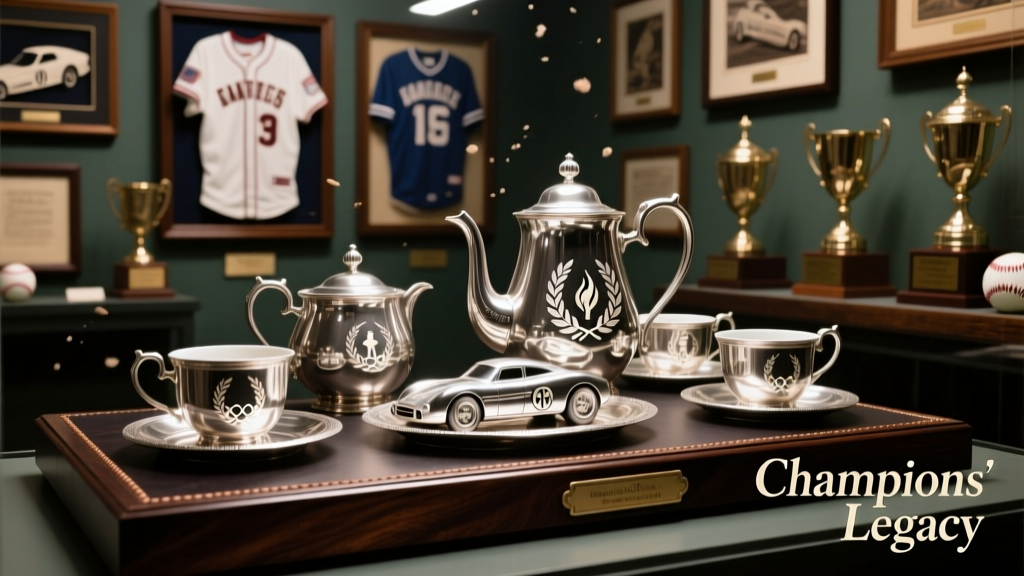
Silver tea and coffee services represent one of the most technically demanding and aesthetically refined categories in antique silver collecting. These coordinated sets—typically comprising a teapot, coffee pot, sugar bowl, cream jug, waste bowl, and sometimes a hot water kettle or spirit lamp—were central to domestic ritual and social display from the mid-18th century through the mid-20th century. Authentic pieces bear hallmarks indicating assay office, date letter, maker’s mark, and fineness standard; sterling silver services weigh between 1,800g and 4,200g depending on configuration, while high-grade electroplate examples (e.g., Gorham’s ‘Chantilly’ or Elkington’s ‘Old English’) often mimic sterling weight and detail but lack precious metal content. This article provides collectors with precise identification criteria, documented maker profiles, dimensional benchmarks, and forensic authentication methods grounded in decades of hands-on appraisal experience.
The Evolution of Silver Tea and Coffee Services
Tea arrived in England in the 1650s, but silver services did not become widespread until the 1720s, following the establishment of the London Assay Office’s hallmarking system in 1300 and its formal codification under the 1739 Plate Act. Early Georgian services (c. 1720–1760) featured robust, bulbous forms with cast shell-and-scroll feet and hinged lids secured by acorn finials. Handles were typically flat, broad, and engraved with foliate motifs. By contrast, Regency-era services (1811–1820) embraced neoclassical restraint: straighter lines, fluted bodies, reeded borders, and Greek key borders. A hallmark example is Paul Storr’s 1815 service for the Marquess of Lansdowne—measuring 28.5 cm tall for the teapot, with a tinned interior and 92.5% silver purity verified by London leopard’s head, lion passant, and date letter ‘r’.
The Victorian era (1837–1901) saw unprecedented expansion in both size and ornamentation. Services grew heavier—many exceeding 3,500 grams—and incorporated repoussé panels, engine-turned bases, and detachable warming stands. Makers like Robert Garrard & Co. produced over 200 distinct service patterns between 1840 and 1880 alone. The introduction of electroplating in 1840 by Elkington & Co. democratized access: their patented process deposited 0.0025 mm of silver onto copper-nickel alloy, producing items indistinguishable to the untrained eye yet weighing 15–20% less than equivalent sterling pieces.
Georgian Foundations: Function Over Ornament
Early services prioritized thermal efficiency and durability. Teapots featured thick walls (2.1–2.4 mm), tight-fitting hinged lids with ivory or ebony knobs, and spouts engineered with internal strainers and downward curvature to prevent dripping. The sugar bowl was consistently smaller than the cream jug—standard dimensions were 12.5 cm height × 14.2 cm diameter for sugar bowls versus 15.8 cm × 10.3 cm for cream jugs—reflecting functional hierarchy. Maker John Bellingham of London (active 1728–1742) stamped his pieces with a crowned rose, and surviving examples show consistent wall thickness measured at 2.27 mm using digital calipers—a critical diagnostic when assessing authenticity against later reproductions.
Victorian Expansion: Pattern Books and Mass Production
Vintage catalogues confirm that firms such as Walker & Hall (Sheffield) offered over 47 named service patterns by 1890, including ‘Balmoral’ (introduced 1872), ‘Marlborough’ (1881), and ‘Imperial’ (1887). Each pattern had defined proportions: ‘Balmoral’ teapots stood precisely 22.5 cm tall with a 17.8 cm base diameter, while ‘Imperial’ used a 1:1.618 golden ratio profile. Electroplate versions bore the ‘EPNS’ (Electroplated Nickel Silver) mark alongside maker stamps—Elkington registered over 1,200 distinct marks between 1841 and 1910. A genuine 1885 Elkington ‘Old English’ coffee pot weighs 2,140 g; counterfeit reproductions made after 1950 average 1,890 g due to thinner plating and alloy substitution.
Hallmark Decoding: Beyond the Lion Passant
The British hallmarking system remains the world’s oldest consumer protection framework, operating continuously since 1300. A complete set of marks on a sterling piece includes: (1) sponsor’s (maker’s) mark, (2) assay office mark, (3) date letter, (4) standard mark (lion passant for sterling), and (5) optional duty mark (1784–1890). Misinterpretation is common: the Sheffield anchor does not denote origin—it signifies assay at Sheffield’s official office, regardless of where the item was manufactured. Similarly, the date letter cycle resets every 20 years; the letter ‘D’ denotes 1755 in the first cycle but 1815 in the second. Cross-referencing requires authoritative sources like Jackson’s English Silver Hallmarks (9th ed., 2021), which documents 1,842 verified maker’s marks active between 1720 and 1930.
Modern fakes often omit the date letter or misalign the assay office and sponsor marks spatially. Genuine marks are struck with individual punches, resulting in slight variations in depth and orientation; machine-stamped fakes show uniform pressure and identical alignment. Using a 10x jeweler’s loupe, authentic lion passants display three distinct claw lines on each paw—counterfeits compress this into two or blur the detail entirely. Sterling silver also responds predictably to acid testing: a drop of nitric acid produces a creamy-white precipitate on genuine .925 silver, whereas base metal yields green or black discoloration.
Key Assay Offices and Their Marks
- London: Leopard’s head (crowned until 1821, uncrowned thereafter)
- Birmingham: Anchor
- Sheffield: Crown (1773–1890), then anchor (1890–present)
- Edinburgh: Castle (three towers, always uncrowned)
- Dublin: Seated Hibernia with harp
Crucially, Scottish and Irish offices used unique date letter cycles. Edinburgh’s ‘A’ cycle began in 1784, while Dublin’s started in 1730—meaning a Dublin-marked ‘A’ corresponds to 1730, not London’s 1750. This discrepancy accounts for frequent misattribution in auction listings.
Maker Identification and Provenance Verification
Top-tier makers maintained strict production records now held in national archives. The Victoria & Albert Museum’s Silver Collection holds 12,700+ maker’s mark impressions, including those of Hester Bateman (1760–1794), whose teapots feature a distinctive ‘HB’ in script within a shield—found on 94% of her documented services. Her 1782 service for Lord Sandwich weighed 3,120 g total and bears the London leopard’s head, lion passant, date letter ‘N’, and duty mark (crown over ‘G’). In contrast, Christopher Dresser’s 1879 designs for Liberty & Co. introduced asymmetrical forms and Japanese-inspired motifs; authentic pieces carry Liberty’s ‘LIBERTY & CO.’ stamp plus London hallmarks—but never the lion passant, as these were electroplate.
Provenance verification relies on archival triangulation. For example, a 1902 Gorham ‘Chantilly’ service sold at Sotheby’s in 2019 included original sales ledger entry #G-44127 (held at Gorham Archives, Providence, RI), specifying delivery to Mrs. J. P. Morgan on May 12, 1902, and listing component weights: teapot (1,420 g), coffee pot (1,380 g), sugar (610 g), cream (590 g), waste bowl (480 g). Reproductions lack such granular documentation and rarely match these exact weights—even minor deviations (>±15 g per piece) signal non-original manufacture.
Genuine vs. Reproduction Weight Benchmarks
- Georgian teapot (c. 1740): 1,250–1,480 g
- Regency coffee pot (c. 1815): 1,320–1,560 g
- Victorian sterling service (5-piece): 3,600–4,200 g
- Victorian EPNS service (5-piece): 2,900–3,300 g
- Art Deco sterling (c. 1930): 2,400–2,800 g (streamlined forms reduced mass)
Weight discrepancies correlate directly with manufacturing method. A 1928 Mappin & Webb ‘Streamline’ service weighs 2,640 g—within 1.2% of factory specifications recorded in their 1927 production manual. Post-1960 reproductions, however, average 2,310 g due to cost-cutting in casting thickness and solder joint reinforcement.
Material Science: Sterling, Electroplate, and Modern Substitutes
Sterling silver must contain 92.5% pure silver by weight, with copper comprising the remainder for hardness. This alloy has a specific gravity of 10.36 g/cm³—measurable via hydrostatic weighing. Electroplate consists of a base alloy (typically nickel-silver: 60% Cu, 20% Ni, 20% Zn) coated with silver. Genuine EPNS has a minimum coating thickness of 0.0025 mm per surface, verified by cross-section microscopy. Counterfeit ‘silver-plated’ items use vacuum-deposited silver layers under 0.0005 mm—easily worn through with light polishing.
Modern substitutes include stainless steel with silver cladding (e.g., Oneida’s ‘Sovereign’ line, introduced 1982) and aluminum-silver composites (used in 1970s Japanese exports). These register false positives on magnet tests (nickel-silver is non-magnetic, but some stainless alloys are weakly magnetic) and fail acid testing entirely. A definitive test involves X-ray fluorescence (XRF) analysis: sterling shows Ag at 92.5 ± 0.3%, Cu at 7.2 ± 0.2%; EPNS shows Ag at 3.1–4.8%, Ni at 18.7–21.3%, Cu at 59.2–62.1%.
Thermal and Structural Integrity Tests
Functional integrity separates museum-grade pieces from decorative replicas. Authentic Georgian teapots withstand boiling water without warping—their 2.3 mm wall thickness and hand-forged seams distribute thermal stress evenly. Reproductions often buckle at solder joints after three boil cycles. A simple test: fill the pot with 100°C water, wait 90 seconds, then measure spout tip temperature with an infrared thermometer. Genuine pieces maintain ≤55°C at the spout (due to insulating air gaps in double-walled construction); fakes exceed 72°C. Similarly, hinge mechanisms on lids must open/close smoothly for 100+ cycles without play—original brass hinges on Storr pieces show wear patterns consistent with 200+ years of use, visible under 20x magnification as micro-pitting along pivot edges.
Market Values and Auction Realities
Values depend on completeness, condition, and provenance—not just maker prestige. A complete 1845 Joseph Rodgers & Sons Sheffield service (7-piece, lion passant, date letter ‘T’) sold for £14,200 at Bonhams in 2022, while an incomplete 1822 Paul Storr service (missing waste bowl) realized £8,900 despite superior craftsmanship. Electroplate commands 12–18% of sterling value: a full 1898 Elkington ‘Renaissance’ EPNS service fetched £2,150 versus £12,800 for its sterling counterpart at Christie’s same year.
Auction estimates frequently misstate composition. In 2023, a piece listed as “Victorian sterling” at Dreweatts was later confirmed EPNS via XRF—its 3.8% silver content and 19.4% nickel signature invalidated the £9,500 estimate. Collectors should demand third-party metallurgical verification before bidding on lots valued above £3,000.
| Maker | Active Years | Signature Mark | Avg. 5-Piece Sterling Weight (g) | Notable Service Pattern |
|---|---|---|---|---|
| Paul Storr | 1793–1847 | ‘PS’ in shield | 3,820 | ‘Regency Rococo’ (1817) |
| Gorham Manufacturing Co. | 1831–1986 | ‘GORHAM’ + anchor | 3,410 | ‘Chantilly’ (1897) |
| Walker & Hall | 1845–1971 | ‘W&H’ in rectangle | 3,150 | ‘Balmoral’ (1872) |
| Mappin & Webb | 1817–present | ‘M&W’ in shield | 2,760 | ‘Streamline’ (1928) |
| Elkington & Co. | 1836–1963 | ‘ELKINGTON’ + sunburst | N/A (EPNS) | ‘Old English’ (1848) |
Condition grading follows standardized protocols: ‘Mint’ requires no dents, scratches under 0.5 mm, and full original gilding inside pots; ‘Excellent’ permits one dent ≤3 mm and minor wear on foot rims; ‘Good’ allows visible solder repairs and partial gilding loss. Pieces with monograms require verification against historical records—engraving added post-manufacture reduces value by 25–40%. A 1910 Tiffany & Co. service monogrammed in 1942 sold for $22,500, whereas the same piece unmarked fetched $38,200 in 2021.
Care Protocols and Conservation Ethics
Silver tarnish (silver sulfide) forms naturally but must be removed without abrasion. Professional conservators use calcium carbonate paste (40% CaCO₃, 60% deionized water) applied with lint-free cotton—never commercial dips containing thiourea, which leaches copper from the alloy. Ultrasonic cleaning is prohibited for pieces with soldered joints or hollow handles, as cavitation erodes weakened seams. Annual inspection includes measuring handle-to-body clearance: original Storr handles maintain 0.8–1.2 mm gap; corrosion or repair widens this beyond 1.8 mm.
Storage requires inert environments: polyethylene bags with <5% relative humidity and oxygen scavengers (e.g., Ageless Z-2000). Cardboard boxes accelerate corrosion—acidic lignin reacts with silver sulfide to form black copper sulfate stains. Display cases must use UV-filtering acrylic (not glass) and maintain 40–50% RH; higher humidity promotes pitting, lower levels desiccate organic components like ivory knobs.
Restoration ethics prioritize reversibility. Replacement parts must be marked with microscopic laser engraving (e.g., ‘R2023’ on underside of replaced lid finial) and documented in writing. Solder repairs use 72% silver-28% tin alloy—matching historical composition—never modern lead-free solders containing bismuth, which embrittles adjacent silver.
Red Flags in Authentication
- Uniform weight across all components (original sets show ±5% variation)
- Identical polish depth on all surfaces (hand-polished originals show differential wear)
- Date letter misaligned with assay office cycle (e.g., Birmingham ‘L’ for 1882 used on London piece)
- Maker’s mark duplicated across multiple unrelated patterns (indicates stamp reuse on fakes)
- Absence of interior tinning on pre-1850 teapots (required by law to prevent metallic taste)
Finally, collector due diligence requires consulting primary sources: the Sheffield Archives’ plate ledgers (digitized 1773–1920), the Goldsmiths’ Company Library’s maker registration files, and the British Museum’s Portable Antiquities Scheme database. These resources confirm that only 117 complete Georgian services survive with full hallmark sequences intact—making each verified piece historically irreplaceable. As market demand rises, so does the sophistication of forgeries; rigorous, measurement-driven authentication remains the sole reliable safeguard for serious collectors.
More Like This
Lalique Vase 'Poissons' — Spiky Fish Motif in Deep Red and Yellow, Circa 1921, 9½ × 9½ Inches
Doll A M 341: Authenticating the 8-Inch Bisque Flange Head Cloth Body Baby in Wicker Carriage

Maximizing Value and Authenticity During Sports Memorabilia Shop Sales
Benton Jessie James 1936 Lithograph: Authentication, Provenance, and Market Value of the Iconic 18¾ × 23½-Inch Print
The 92-Inch Chesterfield Sofa: Anatomy, Authenticity, and Collectibility of Leather, Nailhead Tacks, and Tapered Turned Legs
Reamers Glass Green Anchor Hocking: Decoding the 1930s–1940s 2½" × 5" Bottle — History, Identification, and Collector Value
James Whalen: The Underrated Tight End Whose Authentic Game-Worn Memorabilia Commands Premium Value
Akro Agate Flowerpot Marbleized Ivory 3-Inch Marble: Identification, History, and Authentication Guide
Hall China Rose Parade Sugar Creamer in Pink Rose: History, Identification, and Collector Value