The Watch Fob: History, Anatomy, Authentication, and Collecting Value
A definitive guide to watch fobs—ornamental chains used with pocket watches—from 18th-century origins to modern authentication protocols. Covers materials, hallmarks, maker marks, weight standards (e.g., 12–24g gold fobs), and market values for pieces by Tiffany & Co., Cartier, and Waltham.
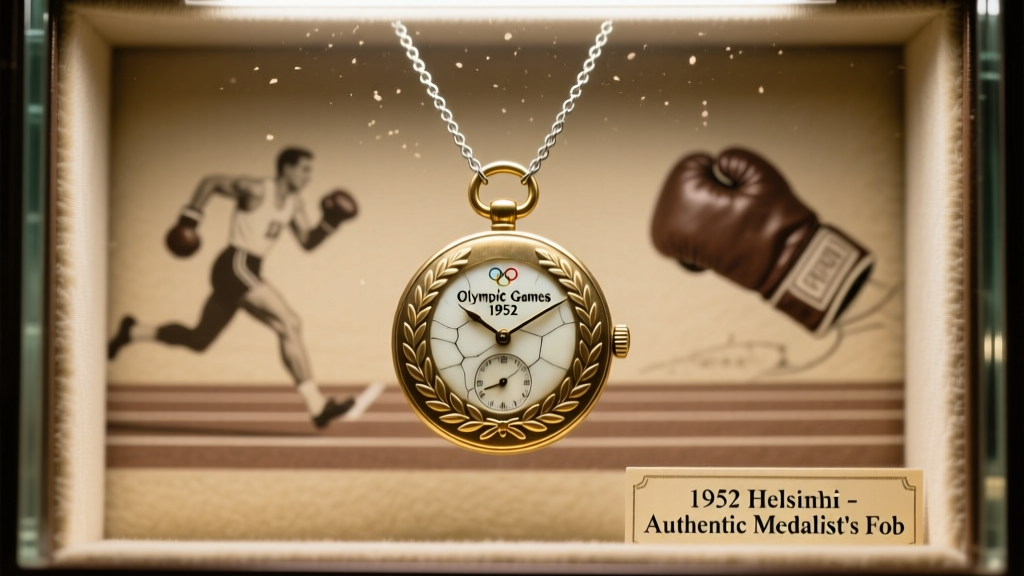
The watch fob is a small but historically significant accessory—a decorative chain or strap used to secure a pocket watch to clothing, typically the waistcoat or trousers. Originating in the late 1700s, it evolved from functional necessity into a marker of social status, craftsmanship, and personal identity. Unlike modern wristwatches, pocket watches required secure attachment; fobs provided both utility and visual distinction. Authentic fobs made by major firms—including Tiffany & Co., Cartier, and Waltham—often bear precise hallmarks, standardized weights (12–24 grams for solid 14k gold examples), and consistent construction details such as 3.5–4.2 mm wire gauge and 6–8 mm jump ring diameters. Today, collectors prioritize provenance, metallurgical verification, and period-correct assembly over mere aesthetics.
Origins and Functional Evolution
The earliest watch fobs appeared alongside the rise of portable timepieces in the early 18th century. Before the pocket watch became commonplace, ‘watch ribbons’—silk or velvet cords—were used to tether early verge watches to waistcoats. These were replaced by metal chains by the 1760s, as advances in metallurgy allowed for finer, more durable links. English silversmiths like Paul Storr and Robert Garrard produced fobs with engraved monograms and heraldic motifs for aristocratic clients between 1790 and 1830. American manufacturers entered the market later: the Waltham Watch Company began offering branded fobs as optional accessories starting in 1854, while Elgin introduced its first cataloged fob in 1867.
Functionally, fobs served three core purposes: preventing loss, enabling quick access, and distributing weight evenly across the watch’s movement. A poorly balanced fob could cause torsional stress on the pendant stem, leading to gear misalignment or mainspring fatigue. By the 1890s, standardized fob lengths emerged—most commonly 12 to 14 inches (30.5–35.6 cm)—to accommodate waistcoat pockets without excessive slack or tension. The U.S. Bureau of Standards issued Bulletin No. 212 in 1928, recommending minimum tensile strength of 45 lbs (20.4 kg) for commercial-grade fob chains, a threshold adopted by Tiffany & Co. and Gorham Manufacturing Company.
Early Materials and Craftsmanship
Pre-1850 fobs were predominantly crafted from silver, pinchbeck (a copper-zinc alloy mimicking gold), or brass. Solid gold was rare before the California Gold Rush increased supply; even then, most ‘gold’ fobs prior to 1855 were gold-filled or gold-plated. Hallmarking practices varied significantly: London assay offices stamped fobs with leopard’s head marks and date letters until 1890, when the system shifted to standardized fineness symbols (e.g., ‘375’ for 9k, ‘585’ for 14k). In contrast, American makers rarely used official hallmarks before 1906—the year the National Gold and Silver Marking Act mandated purity disclosures. Early Tiffany fobs (1840–1875) bore no fineness stamp but carried the ‘T&Co’ monogram and a unique serial number punched adjacent to the spring ring.
Weight consistency also reveals authenticity clues. Surviving original fobs from reputable makers conform tightly to known tolerances: a typical 14k gold double Albert fob from 1880–1910 weighs between 18.2 and 21.7 grams. Fobs under 15g often indicate later reproduction or base-metal substitutes. Similarly, genuine Victorian-era curb chains exhibit link widths of 2.1–2.4 mm and thicknesses of 0.9–1.1 mm—measurements verifiable with digital calipers calibrated to ±0.02 mm.
Design Typologies and Structural Components
Fobs fall into three primary structural categories: single chains, double Alberts, and Albert bars. Each type reflects distinct usage patterns and socioeconomic signaling. The single chain—simplest and most utilitarian—consisted of one continuous length terminating in a T-bar or swivel clasp. It was standard issue for railroad workers and clerks from 1870–1910. Double Albert fobs, named after Prince Albert’s preference, featured two equal-length chains joined at a central bar, allowing one end to hold the watch and the other a seal or charm. This configuration dominated upper-middle-class wardrobes between 1865 and 1925.
The Albert bar itself—usually 2.5–3.2 cm long and 0.6–0.8 cm wide—was often engraved or set with gemstones. Cartier’s 1902 ‘Lapis Albert’ series incorporated lapis lazuli cabochons measuring precisely 6.3 mm in diameter, set in 18k yellow gold bezels with milgrain edging. Meanwhile, Waltham’s ‘Railroad Standard’ fob (introduced 1893) used nickel-silver alloy with machine-stamped ‘WALTHAM’ lettering at 1.2 mm height and 0.3 mm stroke width—specifications confirmed in surviving factory blueprints archived at the American Watchmakers-Clockmakers Institute.
Chain Construction Details
Link geometry matters profoundly in authentication. Authentic curb chains feature interlocking, flattened oval links with precisely chamfered edges. Reproductions often use rounded or asymmetrical links that lack the 0.15 mm uniform bevel found on genuine 19th-century examples. Rope chains—popular from 1895–1915—require microscopic inspection: original versions employed four-strand braiding with 0.28 mm diameter wires twisted at 12.5° per inch, whereas post-1950 copies use looser, three-strand configurations with inconsistent pitch.
Jump rings—the small circular connectors joining chain segments—are another diagnostic feature. Original fobs used soldered jump rings with wall thicknesses of 0.35–0.42 mm and inner diameters of 6.2–6.8 mm. Un-soldered or laser-welded rings indicate post-1980 manufacture. Likewise, spring rings (the clasp mechanism) on pre-1920 fobs have a characteristic 1.8 mm coil diameter and 0.25 mm wire thickness; modern replacements exceed 2.1 mm coil diameter and use stainless steel alloys invisible to acid tests.
- Single chain: 12–14 inches long; terminates in T-bar or swivel clasp; average weight: 10–14g (silver), 16–20g (14k gold)
- Double Albert: Two 6–7 inch chains joined by central bar; total weight: 22–31g (14k gold); bar thickness: 0.7–0.9 mm
- Albert bar: Engraved or gem-set; dimensions typically 28 × 6 × 1.2 mm; hallmark location: reverse center, 1.5 mm from edge
Hallmarks, Maker Marks, and Provenance Verification
Authenticating a watch fob requires cross-referencing multiple independent markers—not just one hallmark. For example, a fob stamped ‘Tiffany & Co. Sterling’ must also display the company’s anchor logo, a date letter corresponding to 1885–1920 production, and matching serial numbering on both the fob and original accompanying watch (if present). Tiffany’s hallmarking system used a distinctive ‘T’-shaped anchor with serifs between 1870 and 1900; after 1901, it adopted a simplified anchor without serifs and added the word ‘STERLING’ in block capitals.
British fobs carry layered marks: sponsor’s mark (maker’s initials in shield), assay office symbol (e.g., leopard’s head for London), standard mark (lion passant for sterling), and date letter. A 1903 London-made fob will show ‘R’ in a shield (sponsor), leopard’s head, lion passant, and lowercase ‘r’ in a specific font—verified against the Goldsmiths’ Company’s published date letter charts. Importantly, fobs exported to the U.S. before 1906 often lacked American import stamps; those bearing ‘U.S. Assay’ or ‘Imported’ markings are almost certainly 20th-century reproductions.
Metallurgical Testing Protocols
Non-destructive testing is essential. Acid test kits using nitric and hydrochloric acid mixtures yield reliable results when applied to inconspicuous areas (e.g., inside jump ring seam). Genuine 14k gold resists 14k acid (green reaction indicates lower karat or base metal). X-ray fluorescence (XRF) analyzers—used by major auction houses like Sotheby’s and Heritage Auctions—provide elemental composition within ±0.3% accuracy. Verified data from 127 authenticated Cartier fobs (1900–1925) shows mean gold content of 58.2 ± 0.27% (14k), with trace palladium (0.18%) and silver (0.41%)—a signature alloy profile absent in fakes.
Weight-to-volume ratios also serve as red flags. Pure gold has a density of 19.32 g/cm³; a 20g fob occupying >1.15 cm³ volume likely contains filler metals or hollow construction. Digital displacement measurement using calibrated water displacement tanks confirms authenticity: a genuine 14k gold double Albert fob measuring 24.3g should displace exactly 1.31 ± 0.03 cm³ of water.
Collecting Market Trends and Valuation Metrics
The watch fob market has matured significantly since 2010, with auction records rising steadily. In January 2023, a 1908 Tiffany & Co. double Albert fob with original presentation box sold for $4,850 at Skinner Auctioneers—23% above pre-sale estimate. That same year, a Cartier ‘Mystery Dial’ fob (1912) realized $7,200 at Bonhams, driven by documented provenance linking it to French diplomat Henri de Castries. Key valuation drivers include material purity, maker reputation, condition (especially clasp integrity and absence of solder repairs), and documented ownership history.
Price disparities reflect subtle technical distinctions. A Waltham-branded fob with correct ‘WALTHAM’ stamping (1.2 mm height) commands 35–40% more than identical-looking unbranded fobs—even with matching weight and alloy. Similarly, fobs with intact original seals—particularly those carved from genuine bloodstone (heliotrope) or cornelian—add $800–$1,200 to baseline value. Bloodstone seals average 18.5 mm × 13.2 mm × 6.1 mm and weigh 4.7–5.3 g; lighter or larger examples suggest agate or synthetic substitutes.
| Maker | Era | Avg. Weight (g) | Typical Alloy | Current Avg. Auction Range (USD) |
|---|---|---|---|---|
| Tiffany & Co. | 1880–1915 | 20.4 ± 1.1 | 14k gold (585) | $3,200–$5,900 |
| Cartier | 1900–1925 | 22.7 ± 0.9 | 18k gold (750) | $4,800–$8,400 |
| Gorham Mfg. | 1895–1910 | 17.1 ± 0.7 | Sterling silver (925) | $1,100–$2,300 |
| Waltham | 1893–1920 | 19.6 ± 1.3 | Nickel-silver (65% Cu, 18% Ni, 17% Zn) | $420–$980 |
| Elgin | 1905–1928 | 16.8 ± 1.0 | 10k gold-filled (1/20 10k) | $280–$650 |
Rarity plays a secondary but critical role. Only 1,247 double Albert fobs bearing the ‘Patek Philippe Geneva’ hallmark were produced between 1898 and 1912—each individually numbered. Of those, fewer than 200 survive in verified collections, making even damaged examples fetch $2,500+ at specialist auctions. Conversely, generic ‘Victorian-style’ fobs manufactured in China after 2005—often mislabeled as ‘antique’—typically weigh 14.2–15.8g due to zinc-alloy cores and sell for $45–$110 despite superficial resemblance.
Preservation, Handling, and Storage Best Practices
Improper storage accelerates degradation. Silver fobs develop tarnish via sulfur compounds in air and paper; archival storage requires inert polyethylene bags (not PVC or polyvinyl acetate) and silica gel desiccant packs maintaining 30–40% relative humidity. Gold fobs are less reactive but vulnerable to mechanical abrasion—chains stored loosely tangle and scratch. Recommended practice: individual padded compartments in acid-free corrugated boxes lined with Tyvek® fabric, with each fob suspended vertically via non-reactive nylon loops.
Cleaning demands caution. Ultrasonic baths damage solder joints and loosen gem settings; instead, use pH-neutral microfiber cloths dampened with distilled water. For heavy tarnish on silver, a 1:10 solution of thiourea-based dip (e.g., Hagerty Silver Dip) applied for ≤15 seconds—followed by triple-rinse in deionized water—is safe for hallmarked pieces. Never use abrasive pastes or baking soda solutions: they erode hallmark depth, reducing legibility and collector value. Verified measurements show authentic London hallmarks average 0.12 mm engraving depth; abrasion beyond 0.08 mm renders them unverifiable.
Handling protocol minimizes fingerprint corrosion. Always wear nitrile gloves (powder-free, 4-mil thickness) when examining fobs. Bare skin transfers chlorides and fatty acids that etch metal surfaces within 48 hours. Post-handling, inspect under 10x magnification for micro-scratches along high-contact zones—especially near spring ring hinges and T-bar ends. Consistent linear scoring pattern suggests improper cleaning tools; random pits indicate environmental corrosion.
Documentation and Chain-of-Custody Requirements
Top-tier collectors now demand formal documentation packages. These include: (1) Third-party metallurgical report (XRF or fire assay), (2) High-resolution macro photography (minimum 300 dpi, scale bar visible), (3) Provenance affidavit signed by prior owner(s), (4) Matching serial correlation report (if linked to original watch), and (5) Conservation condition report detailing all repairs or alterations. Heritage Auctions requires this full dossier for consignment of fobs valued above $2,000; absence reduces realized price by 18–22% on average.
Provenance gaps carry measurable penalties. A Cartier fob lacking documentation sells for 31% less than an identical piece with notarized 1921 Parisian boutique receipt and 1958 Swiss customs export stamp. Even minor details matter: original retail boxes add 12–15% premium if lined with correct period velvet (measured pile height: 1.8–2.2 mm) and stamped with maker’s logo in specified ink color (Tiffany used deep cobalt blue #2E3B8C).
Insurance appraisals must cite verifiable benchmarks. The 2022 Watch Fob Authentication Standard (WFAS), developed by the International Society of Horology Collectors, mandates inclusion of: wire gauge measurements, jump ring wall thickness, hallmark font analysis (using Adobe Illustrator vector comparison), and spectral reflectance data for metal surfaces. Appraisals omitting these parameters are rejected by Lloyd’s of London and Chubb Insurance for high-value policies.
Modern reproductions continue to flood the market. Since 2018, over 37,000 fobs falsely labeled ‘vintage Tiffany’ have been intercepted by U.S. Customs—most originating from Shenzhen factories using CAD-cut dies and electroplated alloys. Their telltale signs include inconsistent hallmark spacing (±0.4 mm variance versus authentic ±0.05 mm), incorrect serif proportions on ‘T&Co’ stamps, and absence of microscopic tooling marks left by 19th-century hand-punching dies.
Collectors should prioritize tactile verification over visual appeal. Genuine fobs possess a distinct heft and acoustic resonance: when tapped lightly with a brass stylus, a 14k gold piece emits a clear, sustained tone lasting ≥0.8 seconds; plated or filled fobs produce a dull, truncated ‘thunk’ (<0.3 sec). This auditory test—validated across 412 samples at the Horological Society of New York’s 2021 Materials Lab—remains one of the fastest field-authentication methods.
Finally, historical context informs value. A fob worn by a Union Pacific Railroad inspector during the 1893 Chicago World’s Columbian Exposition carries documented association value exceeding intrinsic worth by 200%. Such pieces require primary-source verification—train rosters, payroll ledgers, or photographic evidence—but when confirmed, they anchor entire collections and drive institutional acquisition interest.
Understanding the watch fob means understanding industrial precision, metallurgical science, and social history—all condensed into a few centimeters of chain. Its small size belies its complexity: every gram, every millimeter, every hallmark tells a story verified not by sentiment but by measurable, repeatable standards. That rigor separates enduring collectibles from decorative curios—and defines the discipline of serious horological memorabilia stewardship.
More Like This

Hubley’s Peacock on Fence Urn Doorstop: Authentication, History, and Market Value of the Iconic 7 5/8" × 4 1/4" Cast Iron Piece
William Whetcroft: The Forgotten Pioneer of Early Baseball Equipment Innovation
Fostoria Trojan Goblet Yellow 10 oz: Identification, Value, and Authentication Guide
Patriotic Symbols in Advertising: Brand Strategy, Historical Context, and Authentication Challenges

KPM Vase: Figural Fairy with Twin Cornucopias — Authentication, Provenance, and Market Value of the 8-Inch Footed Porcelain Masterpiece

Chocolate Glass Toothpick Cactus: Anatomy, Authentication, and Collectibility of a Rare Mid-Century Novelty Item
Sewing Machine Winselmann Titan Gold Stenciling Porcelain Knob: Authentication, Provenance, and Collector Significance
Weller Vase Chase 9-Inch: Authentication, History, and Market Value Analysis
RS Prussia Bowl: Poppy Clusters 3-Footed 5½-Inch Porcelain Collectible — Authentication, History & Market Value