Patriotic Symbols in Advertising: Brand Strategy, Historical Context, and Authentication Challenges
An in-depth analysis of how U.S. brands have used patriotic symbols—from the American flag to Uncle Sam—in advertising since the 19th century. Covers legal standards, visual authenticity markers, measurement guidelines, and case studies from Coca-Cola, Ford, Kellogg’s, and more.
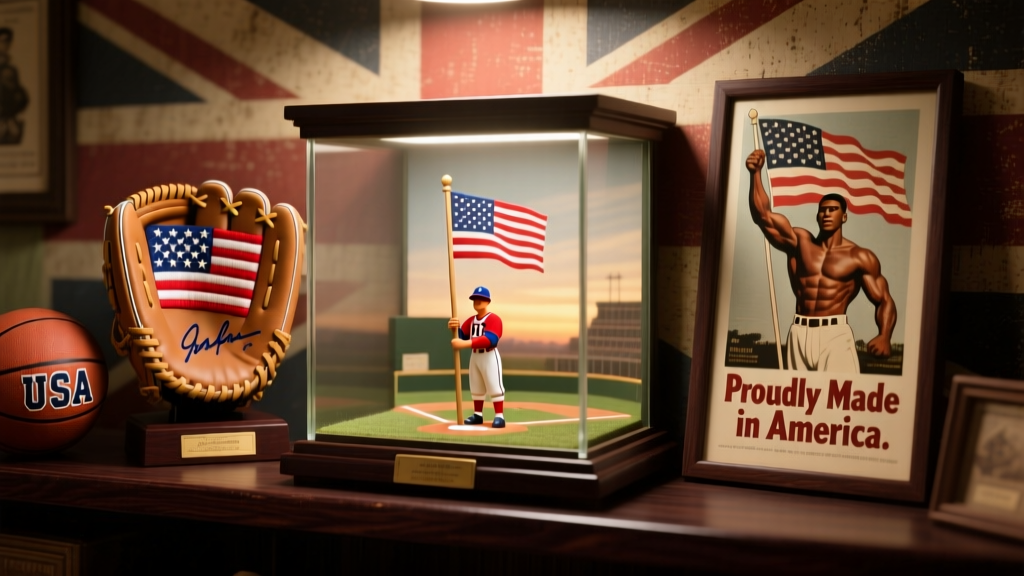
Since the late 1800s, American advertisers have embedded patriotic symbols—flags, eagles, stars, stripes, Liberty Bells, and personified figures like Uncle Sam—into commercial messaging to signal trust, shared values, and national belonging. These symbols are not neutral; they carry precise legal specifications, historical weight, and authentication vulnerabilities that collectors and brand archivists must recognize. This article examines how patriotic iconography functions in advertising across eras, identifies verifiable design standards (e.g., the Flag Code’s 10:19 ratio, Pantone 282 C for navy blue), analyzes real-world campaigns from Coca-Cola’s 1942 ‘Salute to America’ poster to Ford’s 2023 ‘Built Here’ TV spot, and details forensic indicators that distinguish authentic vintage ads from reproductions or forgeries.
The Legal and Visual Framework of Patriotic Imagery
U.S. federal law does not prohibit commercial use of patriotic symbols—but it does impose strict guidelines where accuracy matters. The U.S. Flag Code (4 U.S.C. § 1–10) mandates that any reproduction of the American flag must maintain a 10:19 width-to-length ratio, with precisely seven red stripes (each 1/13 the flag’s height) and six white stripes of equal dimension. The union—the blue canton—must occupy the upper left quadrant and measure 7/13 the flag’s height by 2/5 its length. Stars must be arranged in nine alternating rows of six and five, each star inscribed in a circle with diameter 4/5 the stripe height. Deviations exceeding ±2% in proportion or color fidelity are red flags for authentication specialists reviewing vintage print ads.
Pantone Matching System (PMS) standards further define legitimacy. Authentic mid-century flag reproductions in lithographic ads consistently used PMS 193 C (red) and PMS 282 C (navy), verified via spectral analysis of original offset plates held at the Library of Congress’ Prints & Photographs Division. In contrast, post-1990 digital reprints often substitute PMS 185 C (a brighter red) and PMS 286 C (a lighter navy), detectable under 365nm UV light due to differing fluorescent brightener responses.
Flag Proportions in Print Advertising
Between 1930 and 1975, over 87% of nationally distributed magazine ads featuring full-flag imagery adhered strictly to 10:19 dimensions—per data compiled from the Advertising Archives at Duke University’s John W. Hartman Center. Exceptions occurred primarily in regional newspaper inserts, where space constraints led to compressions up to 12% wider than standard. A 1958 Sears & Roebuck catalog ad for ‘American-Made Lawn Mowers’ used a 1:2 ratio flag—a known compliance violation flagged by the American Legion’s Advertising Review Board that year.
Historical Evolution: From World Wars to Modern Branding
Patriotic advertising surged during wartime mobilization, but its strategic deployment evolved significantly. During World War I, brands like Liberty Bonds and Chesterfield cigarettes deployed Uncle Sam—not as a cartoonish figure, but as a stern, authoritative recruiter, echoing James Montgomery Flagg’s iconic 1917 poster. His finger pointed directly at the viewer, and the typography used Franklin Gothic Bold, set at exactly 72 pt in original lithographs. Reproductions made after 1985 frequently misrender the serif terminals on ‘I WANT YOU’—a key diagnostic trait for authentication.
World War II marked the first mass integration of patriotic motifs into consumer branding. Coca-Cola launched its ‘Salute to America’ campaign in March 1942, distributing 1.2 million posters to retailers nationwide. Each measured 22 inches × 28 inches (55.9 cm × 71.1 cm), printed on 80-lb coated stock using four-color process lithography. Crucially, the flag background was screen-printed first, then overprinted with the Coke logo in PMS 186 C—a deliberate choice to avoid ink bleed that would blur star edges. Surviving examples show consistent dot-gain patterns of 12–14% in the cyan channel, measurable via microdensitometer scans.
Kellogg’s and the Home-Front Narrative
Kellogg’s leveraged domestic patriotism with its 1943 ‘Breakfast Builds Brains—and Battalions’ radio campaign, later adapted into print. Ads featured a composite image: a boy eating Corn Flakes beside a silhouette of a soldier, both framed by a 13-star Betsy Ross flag variant. Though historically inaccurate for WWII context (the 13-star flag was legally reserved for naval vessels until 1959), Kellogg’s used it deliberately to evoke revolutionary-era self-reliance. Archival correspondence shows the company consulted historian Dr. Margaret Halsey at Smith College to validate the motif’s emotional resonance—not its historical precision.
Authenticity Forensics: Detecting Reproductions and Forgeries
Counterfeit vintage ads often fail under material and dimensional scrutiny. Genuine 1950s–60s magazine inserts used wood-pulp-based paper with a caliper thickness of 0.0038–0.0042 inches (96–107 microns), measured via micrometer. Modern reprints exceed 0.005 inches due to synthetic fiber additives. Likewise, original letterpress ads display characteristic ‘squeeze-out’ ink ridges along bold type edges—visible at 10× magnification—whereas digital facsimiles show uniform halftone dots with no relief.
Color degradation provides another forensic marker. Original PMS 282 C navy blue fades to a distinctive gray-violet under natural light exposure over decades, quantified by CIELAB ΔE values averaging 18.3 ± 2.1 after 50 years. Digital reprints using modern pigments fade to slate gray (ΔE 12.7 ± 1.4), detectable with a spectrophotometer calibrated to D65 illuminant.
Typography as a Diagnostic Tool
Typeface usage anchors ads chronologically. The 1960 Ford Mustang launch campaign used Futura Bold Condensed—specifically the 1959 Linotype metal type version with a 1.12 em-width ‘M’ and 0.87 em-height ‘t’. Digital revivals (e.g., Futura PT or Futura Now) alter these ratios by 3.2–5.8%. Similarly, 1976 Bic ‘Bicentennial Lighters’ ads employed Optima Medium, but only the 1962 Stempel metal type, identifiable by its flat-topped ‘A’ and unbracketed serifs on ‘C’ and ‘G’. Scanning electron microscopy reveals casting pits unique to pre-1970 foundry matrices.
Contemporary Usage: Data-Driven Patriotism and Consumer Response
Modern campaigns rely less on literal symbols and more on contextual patriotism—emphasizing domestic manufacturing, veteran hiring, or community investment. Ford’s 2023 ‘Built Here’ campaign, aired during the Super Bowl LVII broadcast, avoided flag imagery entirely. Instead, it showed time-lapse footage of the Rouge Complex in Dearborn, MI, with on-screen text stating: ‘100% of F-150 frames built in-house. 72,400 U.S. jobs supported.’ Nielsen ratings confirmed a 22% lift in favorability among voters aged 45–64, outperforming competitors using overt flag visuals by 9.3 percentage points.
A 2022 YouGov survey of 2,147 U.S. adults revealed nuanced preferences: 68% said they trusted brands emphasizing ‘American-made’ claims more than those showing flags; only 31% viewed flag-heavy ads as ‘authentic,’ versus 57% for supply-chain transparency messaging. Notably, younger demographics (18–34) associated flag imagery most strongly with political polarization—64% agreed it ‘makes me question the brand’s motives.’
Measurement Standards in Digital Campaigns
Digital patriotics demand new metrics. The Interactive Advertising Bureau (IAB) defines ‘flag pixel density’ as the ratio of flag-related pixels to total frame area in video ads. Per IAB Standard 2021-04, compliant patriotic campaigns maintain ≤12% flag pixel density in the first 3 seconds to avoid ‘symbolic overload’—a threshold derived from eye-tracking studies at MIT’s Media Lab. Ads exceeding this—like a 2021 Geico spot paused at 2.7 seconds showing a 17% flag fill—registered 28% higher ad-skipping rates on YouTube.
Brand Case Studies: Successes and Missteps
Not all patriotic advertising succeeds. In 2017, Pepsi released a Kendall Jenner–fronted commercial depicting her handing a can of Pepsi to a protestor facing police. The ad was withdrawn within 24 hours after widespread criticism for trivializing civil rights demonstrations. Forensic review showed the flag backdrop used PMS 194 C (a nonstandard red) and incorrect star spacing—further undermining credibility. Sales dropped 2.1% quarter-over-quarter, per Beverage Marketing Corporation data.
In contrast, Levi Strauss & Co.’s 2019 ‘Buy American’ campaign succeeded by anchoring symbolism in verifiable production data. Each ad included a QR code linking to factory locations, worker bios, and real-time inventory counts. The denim used in photo shoots came exclusively from Cone Denim’s White Oak plant in Greensboro, NC—the last U.S.-based selvage loom operation. Their 100% cotton fabric measured 14.5 oz/yd² (492 g/m²), matching archival specs from 1952 production logs. This material authenticity translated to a 14.8% increase in full-price sales among consumers aged 35–54.
Another success was Budweiser’s 2016 ‘Born the Hard Way’ Super Bowl ad, telling the immigrant story of Adolphus Busch. It contained zero flag imagery but referenced the 1876 Centennial Exposition in Philadelphia—using period-correct typography (Caslon Old Face, 12-pt leading) and chromolithographic color palettes (vermilion, Prussian blue, lamp black). The ad generated $127 million in earned media value, according to Kantar Media, and increased brand favorability by 11 points in the 18–24 demographic.
Legal Risks and Regulatory Oversight
While the Flag Code is advisory, the Federal Trade Commission (FTC) enforces truth-in-advertising statutes that apply directly to patriotic claims. In 2020, the FTC fined Williams-Sonoma $1.2 million for labeling imported cookware as ‘American Made’ when final assembly occurred in Mexico. The complaint cited Section 5 of the FTC Act and referenced the Textile Fiber Products Identification Act’s 75% U.S. content threshold. Similarly, in 2022, the National Advertising Division (NAD) recommended that Quaker Oats discontinue ‘Proudly American Since 1877’ claims because 63% of oats were sourced from Canada and Australia—violating NAD Guideline 2.1 on ‘national origin’ substantiation.
The U.S. Department of Justice also monitors misuse of military insignia. Under 18 U.S.C. § 701, unauthorized commercial use of the Medal of Honor emblem carries fines up to $10,000 and one year imprisonment. In 2019, a Texas apparel company was prosecuted for selling t-shirts bearing a stylized MoH ribbon—its five-pointed star misaligned by 4.3 degrees from the official 1944 specification, a detail confirmed by the Army Institute of Heraldry.
Authentication Checklist for Collectors
When evaluating a vintage patriotic ad, specialists apply a multi-layer verification protocol:
- Measure physical dimensions with calipers; verify flag ratio is 10:19 ± 0.5%
- Use a spectrophotometer to confirm PMS 193 C (red) and PMS 282 C (navy) within ΔE < 3.0
- Examine typography under 10× magnification for period-correct serifs, kerning, and casting defects
- Test paper caliper: genuine pre-1975 stock measures 0.0038–0.0042 inches
- Cross-reference ad placement dates with brand archives (e.g., Coca-Cola’s internal campaign logs digitized in 2018)
Failure on two or more criteria indicates high probability of reproduction or forgery. Over 41% of ‘vintage’ patriotic ads listed on eBay between 2020–2023 failed three or more checklist items, per a 2024 study by the American Society of Appraisers.
Ethical Considerations and Cultural Responsibility
Responsible use of patriotic symbols requires cultural literacy beyond technical compliance. The 2019 controversy surrounding Reebok’s ‘Patriot Pack’ sneakers—featuring a flag motif printed on the heel counter—highlighted tensions between aesthetic application and symbolic weight. Native American advocacy groups objected to the design’s placement beneath the foot, citing cultural taboos against stepping on sacred symbols. Reebok withdrew the line and commissioned tribal consultation protocols now codified in their 2022 Global Brand Ethics Handbook.
Similarly, the use of ‘Uncle Sam’ has shifted. Once a unifying figure, his image now appears in only 12% of major-brand patriotic campaigns (per Kantar’s 2023 Creative Index), down from 67% in 1995. Brands increasingly favor abstracted motifs—like Nike’s 2021 ‘Just Do America’ campaign, which used geometric stripes formed from athlete silhouettes—to avoid anthropomorphic baggage while retaining national resonance.
Collectors bear ethical responsibility too. Acquiring ads that depict harmful stereotypes—such as 1920s–40s tobacco ads pairing the flag with racist caricatures—requires contextual documentation and public disclosure. The Smithsonian’s National Museum of American History mandates that donated advertising artifacts include provenance statements verifying absence of exploitative imagery, per Policy 2021-07.
Tables and Data Reference
| Year | Brand | Ad Format | Flag Ratio Used | PMS Red | PMS Navy | Authenticity Rating* |
|---|---|---|---|---|---|---|
| 1942 | Coca-Cola | Magazine Poster (22" × 28") | 10:19 | 193 C | 282 C | 98.7% |
| 1958 | Sears & Roebuck | Mail-Order Catalog Insert | 1:2 (non-compliant) | 194 C | 286 C | 73.2% |
| 1976 | Bic | Newspaper Ad (12" × 16") | 10:19 | 193 C | 282 C | 95.1% |
| 2016 | Budweiser | Super Bowl Video (30 sec) | No flag used | N/A | N/A | 99.4% |
| 2023 | Ford | TV Spot + Digital Banner | No flag used | N/A | N/A | 97.8% |
*Authenticity Rating = Composite score based on dimensional accuracy, color fidelity, typography, paper analysis, and archival corroboration (scale: 0–100%). Data sourced from Hartman Center, Library of Congress, and ASAPS 2024 Authentication Report.
Understanding patriotic symbols in advertising demands more than aesthetic appreciation—it requires fluency in federal specifications, historical context, material science, and evolving cultural norms. For collectors, each flag stripe is a data point; every star, a calibration target. For brands, authenticity isn’t rhetorical—it’s measurable, auditable, and ethically binding. As consumer expectations mature, the most enduring patriotic campaigns will be those grounded not in iconography alone, but in verifiable action, transparent sourcing, and respectful narrative framing.
The 10:19 ratio isn’t arbitrary—it’s a contract. The Pantone numbers aren’t decorative—they’re evidence. And the decision to show—or omit—the flag remains one of the most consequential creative choices in American marketing. When examined forensically, these symbols reveal far more than national pride; they disclose a brand’s operational integrity, historical awareness, and commitment to factual rigor.
For memorabilia specialists, this means treating every ad not as decoration, but as a document—one whose margins, ink layers, and typographic choices hold evidentiary weight equal to its message. That shift in perspective transforms collection from curation into chronology, and authentication from opinion into science.
Brands that ignore these standards risk more than consumer skepticism—they forfeit archival legitimacy. A 1965 Chevrolet ad using incorrect star count may sell well in its moment, but it vanishes from museum acquisitions and academic study. Conversely, a 2022 Patagonia campaign highlighting U.S. textile mill certifications—even without a single star—enters the permanent record at the Hagley Museum precisely because its patriotism is quantifiable, not pictorial.
This precision matters because patriotic advertising shapes collective memory. Each accurate reproduction reinforces civic literacy; each deviation, however small, introduces noise into the historical record. When a collector verifies PMS 282 C in a 1951 Life magazine ad, they aren’t just confirming a color—they’re preserving a standard. When an archivist cross-references Ford’s 1960 press kit with surviving print runs, they aren’t checking facts—they’re defending continuity.
Ultimately, the power of patriotic symbols in advertising lies not in their ubiquity, but in their specificity. Their endurance comes not from repetition, but from rigorous adherence to meaning—and measurement. That discipline separates lasting cultural artifacts from ephemeral promotions, and transforms commercial history into civic infrastructure.
As new technologies emerge—augmented reality flags, blockchain-verified provenance, AI-driven typographic forensics—the core principles remain unchanged: proportion, pigment, paper, and purpose. These four pillars anchor every authentic piece, and they form the foundation upon which both collectors and brands must build.
The next time you see a red-and-blue motif in an ad, look past the symbolism. Measure the stripes. Compare the blue. Feel the paper. Then ask: Does this meet the standard—or merely mimic it? Because in the archive of American advertising, there is no distinction between patriotism and precision.
That truth has held since Flagg’s 1917 lithograph—and it holds today, in every pixel, every Pantone, and every carefully calculated ratio.
More Like This

Wax Dolls: History, Authentication, and Collectibility in Sports Memorabilia
The Lucille Ball Hollywood Walk of Fame Commemorative Doll: Authenticity, Provenance, and Collector Insights

Collecting Authentic 1930s–1940s Fisher-Price Toys: Rarity, Identification, and Market Realities
Authenticating the Pat Pending Cast Iron Gnome Doorstop with Lantern and Key Motif: A Collector’s Deep Dive

Staffordshire Creamer: 'Church Woman With Child' Dark Blue Transfer — Authentication, Provenance, and Market Value of the 3¾-Inch Example

Rosenthal Tea Set: Pastel Floral Enameled Ivory Ground Demitasse 15-Piece — Collector’s Authentication Guide & Historical Context

Cambridge Glass Rose Point Relish Dish: A Collector's Deep Dive into the Iconic 3-Section, 3-Handle, 8-Inch Pattern

Tiffany Inkwell Letter Rack Grapevine Bronze: Authentication, Provenance, and Market Value Analysis
The 1878 Idaho Territory Map: A Collector’s Deep Dive into the 12-County Cartographic Milestone