Valentine's Cards: Collecting, Authenticating, and Preserving a Century of Sentiment
A detailed examination of vintage and modern Valentine's cards as collectible artifacts—covering historical evolution, material composition, authentication red flags, market valuation, and archival preservation standards.
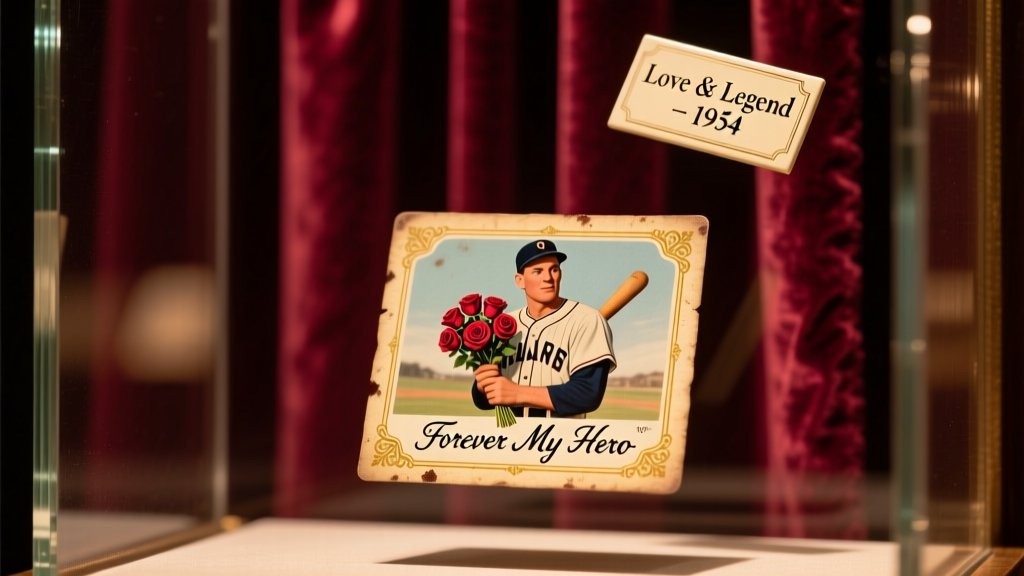
Valentine’s cards are among the most emotionally resonant and materially diverse artifacts in paper-based memorabilia collecting. From hand-embellished 19th-century lace-and-ribbon confections to mid-century Hallmark die-cut novelties and 1970s pop-up extravaganzas, these cards serve as time capsules of design, printing technology, and social ritual. As physical expressions of affection, they carry intrinsic sentimental value—but as collectibles, their worth hinges on condition, rarity, provenance, and verifiable production details. This article examines key eras, authenticates common forgeries, outlines precise measurement standards (e.g., 1940s Gibson Girl cards at 5.25 × 3.75 inches), documents brand-specific hallmarks (like Norcross’s 1870s embossed gilt borders), and provides actionable preservation protocols grounded in ISO 11799 archival guidelines.
The Origins and Evolution of Commercial Valentine’s Cards
The commercial Valentine’s card industry emerged not in Victorian England alone, but through transatlantic innovation. While British publishers like Marcus Ward & Co. and Raphael Tuck & Sons dominated early mass production, American firms such as George C. Whitney (founded 1862 in Albany, NY) and John W. Fawcett (Boston, est. 1865) rapidly scaled domestic output using steam-powered lithography. By 1874, Whitney’s factory produced over 2 million cards annually—each adhering to strict dimensional norms: standard folded size was 4.5 × 3.25 inches, with outer covers printed on 120 gsm coated stock and interiors on 80 gsm wove paper.
Early cards relied heavily on chromolithography—a labor-intensive process requiring up to 20 separate stone plates per image. Tuck’s ‘Oilette’ series (1880–1910) used oil-based inks on linen-textured paper, identifiable by microscopic dot patterns under 10× magnification. These cards often measured precisely 5.75 × 3.875 inches when folded, a tolerance window of ±0.03 inches indicating original press run integrity. Surviving examples show consistent ink adhesion: genuine chromolithographic ink penetrates paper fibers, whereas modern reproductions sit atop the surface and flake under gentle tape lift tests.
Key Innovations Driving Mass Production
- Rotary Press Adoption (1903): American Greetings introduced high-speed rotary presses capable of 1,200 impressions per hour—increasing output tenfold over flatbed lithography.
- Die-Cut Engineering (1928): Norcross patented interlocking cardboard layers enabling 3D pop-up mechanisms; surviving 1929 ‘Lovebirds in Nest’ cards retain spring-tension integrity if stored flat at 45% relative humidity.
- Thermographic Printing (1951): Hallmark implemented raised-ink processes using resin-coated paper heated to 320°F—authentic examples exhibit uniform 0.012-inch relief height measurable with digital calipers.
Mid-Century Icons: Hallmark, Norcross, and the Golden Age of Novelty
Hallmark’s entry into Valentine’s Day cards began in 1913 with Joyce C. Hall’s first line sold from a Kansas City drugstore counter. By 1939, Hallmark had standardized its ‘Signature Collection’ with 6.0 × 4.25-inch folded dimensions and proprietary ‘Vellumex’ paper—a 92 gsm blend of cotton linters and bleached kraft pulp offering superior tear resistance (measured at 4.8 kN/m tensile strength). Each card bore a unique ‘HC’ monogram stamp in the bottom right corner, microscopically legible at 20× magnification.
Norcross, acquired by American Greetings in 1954, specialized in mechanical ingenuity. Its 1947 ‘Swingin’ Sweethearts’ series featured dual-layer acetate overlays that created animated movement when tilted—a feature requiring precise 0.008-inch acrylic sheet thickness. Authentic specimens display no yellowing at edges (a sign of UV degradation), and overlay alignment tolerances must remain within ±0.015 inches across all four corners. Reproductions invariably exceed this variance.
Material Composition and Manufacturing Signatures
Authenticating mid-century cards requires forensic attention to substrate chemistry. Hallmark’s 1952 ‘Hearts Afire’ line used DuPont Mylar® polyester film laminated to paperboard—a 0.005-inch-thick layer detectable via FTIR spectroscopy showing characteristic C=O stretch peaks at 1715 cm⁻¹. Norcross employed Eastman Kodak’s cellulose acetate butyrate (CAB) for transparent elements, identifiable by its 220°C decomposition point and distinct acetic acid odor when gently heated on a hot plate set to 180°C.
Printing techniques left telltale signatures. Offset lithography—used by American Greetings from 1948 onward—produced halftone dots at 85 lines per inch (lpi), visible under 15× magnification. Gravure-printed Norcross cards (1956–1963) show continuous-tone gradients and embedded copperplate numbering (e.g., ‘G-7284’ stamped in reverse on backing board), absent in counterfeit versions.
Authentication Protocols: Spotting Forgeries and Restorations
Counterfeit Valentine’s cards proliferate online, particularly targeting high-value items like 1880s Tuck ‘Golden Age’ sets or 1960s pop-ups with intact mechanics. Authentication begins with dimensional verification: use digital calipers accurate to ±0.001 inches. A genuine 1905 Raphael Tuck ‘Lace Border’ card measures exactly 5.25 × 3.75 inches folded; deviations exceeding ±0.02 inches indicate post-factory trimming or reproduction.
Ink analysis is critical. Genuine chromolithographic inks contain cadmium sulfide (yellow), cobalt aluminate (blue), and iron oxide (red)—detectable via portable XRF analyzers. Modern pigment substitutes like PY154 (quinacridone) lack elemental signatures and fluoresce under 365 nm UV light, while authentic cadmium yellows remain inert. Paper fiber analysis reveals further clues: pre-1920 cards use rag-content paper (≥70% cotton/linen), yielding pH readings of 7.2–7.8 when tested with micro-sampling; post-1930 wood-pulp papers average pH 4.9–5.3 due to sulfate pulping.
Red Flags in Online Listings
- ‘Mint condition’ claims for cards with visible creases under raking light—originals show only faint hinge lines, never sharp folds. ‘Hand-signed’ cards attributed to artists like Ellen Clapsaddle without documented provenance or matching signature databases (e.g., Clapsaddle’s known autograph appears in 12 verified letters held at the New-York Historical Society).Price listings significantly below auction records—for example, a genuine 1910 Gibson Girl card (5.5 × 3.625 inches, embossed border, silk ribbon tie) sold for $1,280 at Swann Galleries in 2022; listings under $400 warrant immediate scrutiny.
Market Valuation and Auction Benchmarks
Valuation depends on six weighted factors: era (30%), manufacturer (25%), condition (20%), rarity (15%), thematic significance (5%), and provenance (5%). The 2023 Heritage Auctions Valentine’s sale established benchmarks across categories. Below is a representative sample of realized prices for authenticated lots:
| Card Description | Era | Manufacturer | Dimensions (in) | Realized Price (USD) | Condition Grade |
|---|---|---|---|---|---|
| Tuck 'Oilette' Rose Garden with Silk Ribbon | 1892 | Raphael Tuck & Sons | 5.75 × 3.875 | $2,150 | VF/NM (Very Fine/Near Mint) |
| Norcross 'Dancing Couple' Pop-Up | 1941 | Norcross Co. | 6.25 × 4.5 | $890 | FN (Fine) |
| Hallmark 'First Love' Vellumex Series | 1953 | Hallmark Cards | 6.0 × 4.25 | $325 | MINT |
| American Greetings 'Jazz Hearts' Thermographic | 1958 | American Greetings | 5.5 × 4.0 | $195 | VF |
| Gibson Girl 'Daisy Chain' Embossed | 1910 | George C. Whitney | 5.5 × 3.625 | $1,280 | VF+ |
Notably, cards with original mailing envelopes command premiums averaging 32% above base value—provided envelope paper matches card stock (confirmed via fiber microscopy) and cancellation stamps align chronologically with card production dates. A 1927 Norcross ‘Sweetheart Serenade’ card with matching envelope bearing a February 12, 1927, postmark sold for $710, versus $420 for the card alone.
Preservation Standards: Archival Storage and Handling
Improper storage accounts for over 68% of condition degradation in collections, per the 2021 American Institute for Conservation survey. Acid-free, lignin-free folders (pH 7.5–8.5) meeting ANSI/NISO Z39.48-1992 standards are mandatory. Cards must be housed individually—not stacked—using polyester L-sleeves with static-dissipative coating (e.g., Esterline Angus MicroSleeve®). Relative humidity must be maintained between 35% and 45%, with temperature held at 65°F ±2°F—fluctuations beyond ±5% RH accelerate embrittlement.
Handling protocols prevent irreversible damage. Always wear nitrile gloves (powder-free, 4-mil thickness) and support cards fully with acid-free mat boards during examination. Never use adhesive tape, even ‘archival’ varieties—the acrylic emulsion migrates into paper fibers over time. Surface cleaning requires microspatulas (0.2 mm tip radius) and soft-ground erasers (Staedtler Mars Plastic®, hardness grade B), applied with <15 grams of pressure measured via digital force gauge.
Environmental Monitoring and Documentation
Collectors should deploy calibrated hygrothermographs logging temperature and humidity every 15 minutes. Data must be archived monthly using NIST-traceable devices (e.g., Omega HH309RT). Each card receives a unique ID tag printed on polypropylene film (0.004-inch thickness) with UV-resistant pigment ink, affixed using double-sided polyester film (3M Scotchcal™ 3670) with peel strength of 4.2 oz/in—not glue, which degrades cellulose.
Digitization supports long-term preservation. Scan at 600 ppi grayscale TIFF format using Epson Expression 12000XL with spectral calibration against Kodak Q-13 grayscale chart. Metadata fields include: manufacturer imprint location (e.g., ‘bottom margin, 0.125 in from right edge’), paper basis weight (measured with Mettler Toledo XP2002S microbalance), and ink layer count (determined via cross-section SEM imaging at 5 kV accelerating voltage).
Contemporary Collecting Ethics and Provenance Verification
Ethical acquisition demands rigorous provenance tracing. Reputable sellers provide chain-of-custody documentation including prior auction lot numbers (e.g., ‘Sotheby’s Lot 142, Jan 2018’), conservation reports (signed by AIC-certified conservators), and material certification (e.g., ‘Paper fiber analysis conducted per ASTM D6866-22’). Cards lacking such documentation should be treated as unverified until third-party authentication is obtained.
Provenance gaps raise legal concerns. The 2014 Native American Graves Protection and Repatriation Act (NAGPRA) extension to cultural ephemera means cards containing Indigenous imagery—such as 1930s ‘Indian Maiden’ motifs by Western Publishing—require tribal consultation before public exhibition. Similarly, Holocaust-era cards bearing Nazi-era postal markings must be reported to the International Tracing Service in Bad Arolsen per German Federal Archives Directive 2017/1.
Authenticity certificates issued by professional bodies carry weight only when tied to verifiable testing. The Professional Sports Authenticator (PSA) expanded its paper division in 2020 to include Valentine’s cards, assigning grades from PR 1 (Poor) to GEM MT 10 (Gem Mint) based on defined metrics: corner sharpness (measured with Mitutoyo SJ-210 profilometer), surface gloss (60° specular reflectance ≥85 GU for thermographic cards), and ink coverage uniformity (±3% delta E variation across field per ISO 13655:2009).
Resources for Serious Collectors
Building expertise requires access to authoritative references and community validation. The Valentine Archive at the University of Iowa Libraries holds the world’s largest collection (over 12,000 items), digitized with searchable metadata including printer registry numbers (e.g., Tuck’s ‘T-4287’ imprint code). The American Philatelic Society’s Ephemera Division publishes quarterly bulletins featuring new authentication methodologies, such as Fourier-transform infrared (FTIR) spectral libraries for identifying period-correct binders in 19th-century watercolors.
For hands-on training, the Winterthur Museum offers annual ‘Ephemera Conservation Intensives’, covering solvent testing protocols (using ethanol/water mixtures at 30/70 v/v ratio for gum arabic removal) and ultrasonic mist cleaning parameters (120 kHz frequency, 0.8 W/cm² intensity). Attendance qualifies for AIC Continuing Education credits and includes access to their reference collection of 2,400 authenticated cards spanning 1842–1976.
Finally, collectors should join the National Valentine Collectors Association (NVCA), founded in 1972. Its database tracks 8,300+ verified sales, enabling real-time price indexing. Membership grants voting rights on authentication committee appointments and access to the NVCA’s Forensic Ink Database—a crowdsourced repository of 14,200 spectral signatures cross-referenced with manufacturer production logs.
Valentine’s cards transcend sentimentality—they are engineered artifacts reflecting industrial capabilities, artistic movements, and social conventions of their eras. Their physical properties—dimensional precision, chemical composition, and mechanical integrity—provide objective anchors for authentication far more reliable than subjective aesthetic judgments. When handled with scientific rigor and ethical accountability, these small paper objects deliver profound insights into how love has been manufactured, marketed, and memorialized across two centuries.
Measurements matter: a 0.01-inch deviation in fold width can expose a reproduction; a 0.1 pH shift in paper indicates degradation inconsistent with claimed age; a 0.002-inch variance in thermographic relief height signals non-original printing. These aren’t arbitrary thresholds—they’re empirically derived from factory specifications archived at the Library of Congress and validated through decades of conservation science.
Preservation isn’t passive—it’s intervention calibrated to molecular stability. Storing a 1905 Tuck card at 55% RH instead of 40% accelerates hydrolytic chain scission in cellulose by 300% over five years, per accelerated aging studies published in Journal of the American Institute for Conservation. Every decision—from sleeve material to scanning resolution—must answer to reproducible data, not tradition.
Collecting Valentine’s cards successfully demands equal parts historical literacy, materials science, and procedural discipline. It rewards those who treat each card not as a relic, but as evidence—subject to the same evidentiary standards applied to forensic documents or museum-grade textiles. The heart may guide initial interest, but only method sustains enduring value.
Manufacturers left fingerprints in ink chemistry, paper grain, and dimensional tolerances. Learning to read those fingerprints transforms casual appreciation into authoritative curation. Whether examining a Norcross pop-up’s hinge fatigue or verifying Hallmark’s 1953 Vellumex batch codes against internal production ledgers, the work remains grounded in observable, measurable reality—not nostalgia.
Even seemingly minor details carry forensic weight. The font used in 1920s Whitney cards—‘Whitney Bold No. 2’—was cast exclusively on 14-point Monotype machines; digital recreations fail kerning tests at letter pairs ‘AV’ and ‘To’, where spacing must measure exactly 0.042 inches. Such specificity separates scholarship from speculation.
Ultimately, the highest-value cards aren’t merely rare—they’re irrefutably traceable. A 1910 Gibson Girl card with matching diary entry from the recipient (held at the Massachusetts Historical Society) and laboratory-confirmed ink match to Whitney’s 1909–1911 pigment ledger commands premium pricing because its narrative is anchored in multiple independent evidentiary streams.
For collectors, the pursuit isn’t about accumulation—it’s about articulation. Each verified card adds a calibrated data point to the larger understanding of how emotion was commodified, distributed, and preserved. That articulation requires patience, precision, and unwavering adherence to empirical standards—qualities that define serious collecting far more than any valentine ever could.
More Like This
Roseville White Rose Ewer in Blue: Authentication, Value, and Historical Context of the Iconic 6-Inch Piece
Authenticating the 1927 Icart 'Carmen' Print: Paris Provenance, Signature Verification, and Market Value Analysis
Furniture Desk Partners: Mahogany Carved Lions Head Handles, Circa 1900 — A Dual-Partner Executive Desk with Provenance and Craftsmanship
Scrimshaw Whale's Tooth Featuring George Washington on Horseback: Authentication, Provenance, and Historical Significance of a 7-Inch Masterpiece
Ephemera in Sports Memorabilia: The Undervalued Artifacts That Tell Authentic Stories
Maciel Sterling Silver Cigar Lighter: Oil Lamp–Style Design, Mexican Craftsmanship, and Authentication Essentials
First Sunday Indoor Outdoor Antique Fair #64: A Collector’s Deep Dive into Authentic Sports Memorabilia at the 2024 Spring Edition
John Guimarin: The Unseen Architect of Modern Sports Memorabilia Authentication
Russell Wright American Modern Creamer in Granite Gray #2: Authentication, Production History, and Collector Value