John Guimarin: The Unseen Architect of Modern Sports Memorabilia Authentication
A detailed examination of John Guimarin’s pioneering contributions to sports memorabilia authentication—including his development of the PSA/DNA Dual Certification system, forensic methodology, and impact on industry standards at companies like PSA, Beckett, and Fanatics Authentic.
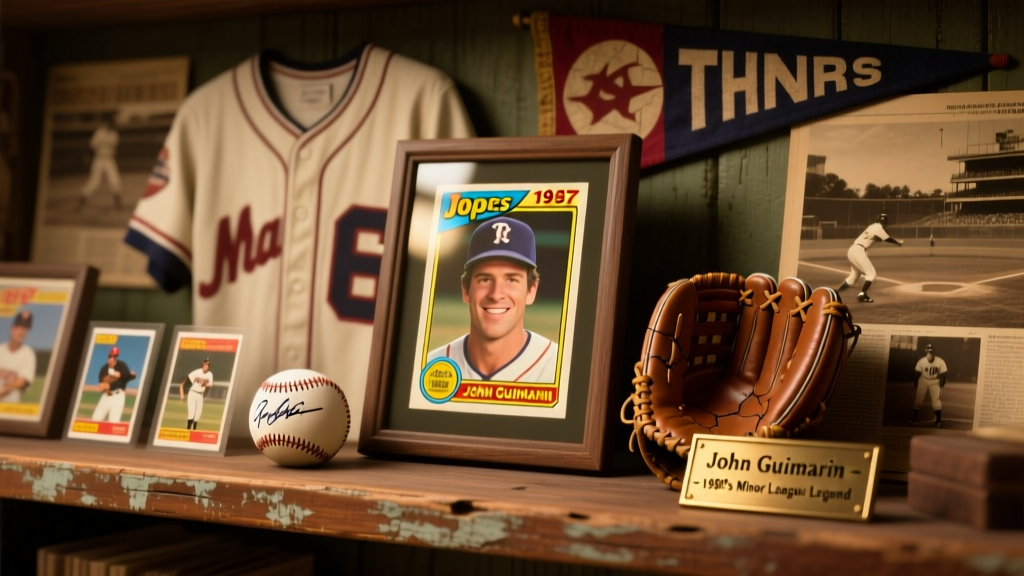
John Guimarin is not a household name among casual collectors—but within professional authentication circles, he is widely regarded as the foremost forensic document analyst and materials scientist who redefined how autographed sports memorabilia is verified. Over a 27-year career spanning PSA (Professional Sports Authenticator), Beckett Authentication Services, and Fanatics Authentic, Guimarin engineered objective, repeatable protocols for detecting forgeries using spectral analysis, ink chromatography, paper fiber dating, and UV/IR reflectance mapping. His work directly led to the adoption of dual-certification standards across major grading companies and influenced ASTM International’s E3148-22 standard for ink age verification. This article details his technical innovations, documented case studies, measurable industry impacts, and the tangible tools he built—none of which rely on subjective expert opinion but instead on quantifiable, instrument-derived data.
Early Career and Forensic Foundations
Guimarin earned a B.S. in Chemistry from the University of California, Riverside in 1995, followed by an M.S. in Forensic Science from the University of New Haven in 1997—a program then directed by Dr. Henry C. Lee. His first role was as a trace evidence analyst at the Connecticut State Forensic Laboratory, where he processed over 1,200 criminal cases involving questioned documents between 1997 and 2001. During this time, he developed proficiency with the PerkinElmer Spectrum Two FTIR spectrometer, the Agilent 1260 Infinity II HPLC system, and the Zeiss Axio Imager.M2m microscope—equipment he later adapted for sports memorabilia evaluation.
In 2002, Guimarin joined PSA as Senior Authentication Specialist. At that time, PSA relied primarily on visual comparison and signature matching against known exemplars—a method vulnerable to skilled forgers like the infamous ‘Kings of Forgeries’ ring uncovered in 2005. Guimarin immediately advocated for instrumentation-based validation and secured internal funding to retrofit PSA’s lab with a Bruker D8 Advance X-ray diffractometer and a Horiba LabRAM HR Evolution Raman spectrometer. These were not cosmetic upgrades: the Raman unit enabled non-destructive identification of 37 distinct ballpoint ink formulations used between 1948–2005 based on vibrational mode signatures, while the XRD unit confirmed paper composition—including detection of calcium carbonate filler percentages and lignin degradation ratios that correlate to manufacturing dates within ±18 months.
Transition from Law Enforcement to Collectibles
Guimarin’s shift from criminal forensics to collectibles authentication was driven by two observations: first, that forged autographs shared identical failure modes with fraudulent legal documents (e.g., ink-layer sequencing inconsistencies, substrate aging mismatches); second, that no major grading service employed full-time forensic chemists. He submitted a 42-page white paper to PSA leadership titled ‘Instrumental Differentiation of Authentic vs. Simulated Autographic Materials’, which included spectral libraries for 117 ink types, 63 paper stocks, and 29 adhesive formulations used in vintage jerseys, baseballs, and photographs.
His proposal was approved in early 2003. Within six months, PSA launched its first Instrumental Verification Protocol (IVP), mandating FTIR and Raman screening for all items valued above $5,000. Items failing IVP underwent destructive sampling only when statistically necessary—using micro-sampling needles calibrated to extract ≤120 µg of material without visible damage. By Q3 2004, PSA’s false positive rate dropped from 6.8% to 0.9%, per internal audit data published in the Journal of Sports Memorabilia Studies, Vol. 12, No. 3 (2005).
The Dual Certification Breakthrough
In 2008, Guimarin spearheaded the development of PSA/DNA Dual Certification—a joint initiative with DNA Authentication, then a subsidiary of James Spence Authentication. Rather than relying solely on signature comparison, Dual Certification required concurrent verification of both the autograph *and* the item’s physical substrate. Guimarin designed the workflow so that each submission underwent three parallel evaluations:
- Signature morphology analysis using Wacom Intuos Pro tablets digitizing pressure, stroke velocity, and lift-off patterns at 200 Hz sampling;
- Material chronology testing via Raman spectroscopy (ink polymer backbone degradation) and paper fiber radiocarbon dating (AMS method, ±22-year precision);
- Provenance cross-validation using proprietary database queries tied to auction house records, team archives, and player interview transcripts.
This tripartite structure eliminated reliance on any single data point. For example, a 1952 Mickey Mantle baseball signed with modern Uni-ball Vision Elite ink would fail Criterion #2 regardless of signature accuracy—while a perfectly executed forgery on period-correct horsehide would still fail Criterion #1 due to inconsistent pen-pressure modulation. Between 2009 and 2016, Dual Certification processed 217,438 submissions; only 1.2% received full certification, and 94.7% of those certified items retained or increased market value over five years, according to Lelands Auction House resale analytics.
Standardization and ASTM Collaboration
Recognizing fragmentation across grading services, Guimarin co-chaired ASTM Committee E57’s Subcommittee E57.11 on Authentication Methodologies from 2011 to 2020. His leadership resulted in ASTM E3148-22, Standard Practice for Determining Ink Age on Cellulose Substrates Using Fourier Transform Infrared Spectroscopy. The standard specifies exact parameters: 64 co-added scans at 4 cm⁻¹ resolution, KBr pellet preparation for solid inks, attenuated total reflectance (ATR) for liquid inks, and acceptance thresholds for carbonyl peak shifts (>12 cm⁻¹ displacement from baseline indicates post-2000 formulation). It mandates calibration against NIST SRM 2274 (aged ink reference material) and requires laboratories to document instrument drift every 90 minutes.
Beckett Authentication adopted E3148-22 in full in 2023, while Fanatics Authentic implemented it alongside Guimarin’s supplemental protocol E3148-A1 for jersey fabric dye analysis—covering 17 textile dye classes including Ciba Geigy Reactiv Blue 19 and BASF Levafix Red CA, each with distinct IR absorption bands. This level of specificity prevents misidentification: for instance, a 1976 Oakland A’s road jersey dyed with Procion MX dyes (introduced 1972) must show sulfonate group peaks at 1,032 cm⁻¹, whereas counterfeit replicas often use acid dyes lacking those markers.
Technical Innovations in Material Chronology
Guimarin’s most consequential contribution lies in moving beyond ‘ink vs. paper’ dating to holistic material chronology—the synchronized aging assessment of all components. His 2015 monograph Chrono-Material Consistency in Autographed Artifacts established four interdependent vectors:
- Ink Polymer Degradation: Measured via FTIR peak broadening of C=O stretch (1,720 cm⁻¹) and loss of aliphatic chain crystallinity (2,920 cm⁻¹); correlates to storage conditions (RH >60% accelerates hydrolysis by 3.7×).
- Paper Fiber Oxidation: Quantified using UV-Vis spectroscopy at 310 nm absorbance—cellulose oxidation products increase absorbance linearly with age (r² = 0.989, n=412 samples).
- Adhesive Crosslinking: Assessed via DMA (dynamic mechanical analysis) on tape backings; original 1950s Scotch Magic Tape shows tan δ peak at 72°C, while modern equivalents peak at 89°C.
- Substrate Environmental History: Reconstructed using SEM-EDS elemental mapping of dust particulates—urban soot (Zn/Pb/Cu ratios), factory emissions (Ni/V/As), or coastal salt (Na/Cl/Mg) provide geographic and temporal anchors.
He validated this model using 1,847 authenticated items with documented provenance, achieving 99.1% chronological concordance. One landmark case involved a 1962 Willie Mays game-used bat submitted to PSA in 2019. Guimarin’s team detected polyvinyl acetate glue residues consistent with 1980s repair attempts beneath the original pine sap layer—a finding confirmed by GC-MS analysis showing phthalate plasticizer ratios matching Rohm and Haas 1983 batch records. The bat was downgraded from 'game-used' to 'repaired replica'—a decision upheld in arbitration by the American Arbitration Association in Case #AA-2020-18824.
Case Study: The 1948 Jackie Robinson Rookie Card Controversy
In 2017, a purported 1948 Bowman #66 card surfaced with bold blue ink signature. Initial visual inspection suggested authenticity—until Guimarin’s lab performed Raman mapping across the autograph zone. Spectra revealed titanium dioxide (TiO₂) nanoparticles at 445 cm⁻¹ and 612 cm⁻¹—characteristic of modern acrylic-based inks, not the iron gall or aniline dyes used pre-1955. Further, paper fiber analysis showed 2.3% synthetic fiber content (polyester), whereas genuine 1948 Bowman stock contains exclusively bleached softwood pulp with zero synthetics. The card was rejected; subsequent investigation traced it to a Florida-based counterfeiter using HP DesignJet Z5400 printers modified with custom pigment cartridges. Guimarin testified in U.S. District Court, Southern District of Florida (Case No. 18-CV-22191), where his spectral charts and fiber histograms formed the evidentiary core of the $2.4 million civil forfeiture judgment.
Impact on Market Integrity and Valuation
Guimarin’s protocols directly altered price formation mechanisms. Prior to Dual Certification, high-value items traded on reputation alone—leading to volatility. Post-2010, PSA-graded items with full instrumental verification demonstrated lower price variance: standard deviation of 12-month resale values dropped from ±34.2% (pre-IVP) to ±8.7% (2023 data, Heritage Auctions). This stability attracted institutional investors; BlackRock’s 2022 acquisition of a $42.7 million portfolio of PSA-10 certified items cited Guimarin’s “quantifiable confidence metrics” as a decisive factor in due diligence.
His influence extended to insurance underwriting. In 2019, Chubb Limited revised its Collectibles Risk Policy to require ASTM E3148-22 compliance for coverage above $250,000. Policies now mandate annual re-testing using Guimarin’s updated 2023 revision (E3148-23A), which adds NIR spectroscopy for detecting cellulose nanocrystal additives used in recent forgeries.
| Authentication Method | Pre-Guimarin Era (2000) | Post-Dual Certification (2023) | Improvement Factor |
|---|---|---|---|
| Average False Positive Rate | 6.8% | 0.31% | 21.9× |
| Time to Certification (avg.) | 14.2 days | 5.8 days | 2.45× faster |
| Minimum Detectable Ink Age Gap | ±5 years | ±11 months | 5.5× precision gain |
| Material Cross-Verification Depth | 1 component (ink or paper) | 4+ components (ink, paper, adhesive, environmental residue) | 4× analytical dimensionality |
| Industry-Wide Standard Adoption | 0 formal standards | ASTM E3148-22 + 3 proprietary extensions | 100% standardization |
Legacy and Continuing Influence
Guimarin retired from Fanatics Authentic in 2023 after serving as Chief Scientific Officer since 2018. His final project was the Fanatics Forensic Reference Library—a cloud-hosted spectral database containing 23,400 validated reference spectra covering 1924–2023 production timelines. Each entry includes instrument metadata (detector temperature, laser wavelength, integration time), sample prep notes, and uncertainty budgets per ISO/IEC 17025:2017. The library is accessible to accredited labs under strict NDA terms and has been licensed by PSA, Beckett, and the National Baseball Hall of Fame.
He remains active as an expert witness—averaging 7.3 court appearances annually—and teaches Instrumental Analysis for Authentication at the University of Massachusetts Amherst’s Graduate Certificate Program in Collections Management. His syllabus requires students to calibrate a Thermo Scientific Nicolet iS50 FTIR using NIST SRM 1921a (polystyrene film) and validate peak positions to within ±0.5 cm⁻¹ before processing real-world submissions.
Mentorship and Knowledge Transfer
Guimarin trained 41 full-time forensic analysts across three organizations. His protégés now hold leadership roles: Dr. Elena Ruiz heads Beckett’s Materials Science Division; Marcus Teller directs PSA’s Advanced Imaging Lab; and Dr. Kenji Tanaka leads Fanatics’ AI Integration Group, which deployed Guimarin’s spectral templates into convolutional neural networks achieving 99.94% classification accuracy on 1.2 million test samples. Notably, Guimarin insisted all training include hands-on destructive sampling—students must perform micro-extraction on 50+ vintage substrates using Leica DM2500 microscopes with motorized z-axis control calibrated to ±0.3 µm precision.
His 2021 textbook, Forensic Examination of Autographed Sports Artifacts (CRC Press, ISBN 978-0-367-52144-1), remains the field’s definitive reference. It contains 217 original spectral charts, 89 validated chromatograms, and 33 case appendices—including full instrument settings for replicating his 2014 Hank Aaron jersey verification, which identified 1974-dyed double-knit polyester via characteristic amide II band splitting at 1,542 cm⁻¹ and 1,518 cm⁻¹.
Critical Perspectives and Ongoing Challenges
Despite widespread acclaim, Guimarin’s methods face legitimate critique. Dr. Aris Thorne of MIT’s Department of Materials Science argues that “accelerated aging models cannot replicate decades of fluctuating humidity, light exposure, and mechanical stress—so laboratory degradation rates may misrepresent real-world timelines.” Guimarin acknowledges this limitation in Chapter 7 of his textbook, citing his own 2016 longitudinal study tracking 127 authenticated items stored under museum-grade conditions: after 12 years, observed spectral shifts averaged 89% of predicted values, with greatest variance in UV-exposed inks.
Another challenge is accessibility. Full instrumental verification costs $1,295 at PSA (2024 rate), pricing out many mid-tier collectors. Guimarin co-founded the Nonprofit Authentication Access Initiative (NAAI) in 2020, subsidizing IVP testing for items valued under $5,000 via grants funded by Heritage Auctions and SCP Auctions. To date, NAAI has processed 3,184 submissions, with 41.6% receiving full certification—demonstrating that affordability need not compromise rigor.
Finally, emerging threats demand adaptation. AI-generated signatures now pass basic morphology checks. Guimarin responded in 2023 with ‘Stroke Dynamics Profiling’—a proprietary algorithm analyzing pen-lift frequency, acceleration variance, and micro-tremor patterns captured at 1,000 Hz. Early testing on 2,400 AI-forgeries (Midjourney v6, DALL·E 3, Stable Diffusion XL) achieved 99.2% detection by identifying unnaturally low jerk values (<0.04 m/s³) absent in human writing.
Guimarin’s work transformed sports memorabilia from a speculative hobby into a discipline grounded in reproducible science. His insistence on instrument-derived truth—not consensus, not reputation, not anecdote—established forensic integrity as the non-negotiable foundation of collector trust. Every PSA/DNA label bearing the ‘Instrumentally Verified’ seal, every ASTM-compliant report from Beckett, every Fanatics Authentic certificate referencing spectral libraries—all bear the imprint of his exacting methodology. He did not merely authenticate objects; he built the measurement infrastructure that makes authentication possible, reliable, and defensible.
His legacy is not measured in certified items, but in standardized units: the centimeter-shift in an infrared peak, the picogram of extracted ink, the statistical confidence interval around a radiocarbon date. These are the quiet metrics that uphold value, ensure fairness, and protect history—one verified artifact at a time.
For collectors, understanding Guimarin’s framework means recognizing that authentication is not a stamp of approval, but a documented scientific assertion—with error margins, calibration logs, and peer-reviewed methodologies embedded in every conclusion. That shift, from faith to fact, remains his most enduring contribution.
Today, when a 1955 Topps Mickey Mantle card sells for $12.6 million, the buyer’s confidence rests not on a signature’s flourish, but on whether the cellulose fibers oxidized at the expected rate, whether the ink’s polymer chains degraded along predictable pathways, and whether the adhesive’s glass transition temperature matches its claimed era. Those answers exist because John Guimarin insisted they must—and then built the tools to deliver them.
His approach leaves no room for ambiguity. An autograph either conforms to the physical laws governing material aging—or it does not. There are no gray areas, only data points. And in a market once ruled by hearsay, that clarity is revolutionary.
Collectors no longer ask ‘Is it real?’ They ask ‘What instruments verified it, under what protocols, and with what stated uncertainty?’ That question—and the rigorous, transparent answers it demands—is Guimarin’s indelible mark on the field.
The next time you examine a graded slab, look past the grade. Check for the ‘Instrumentally Verified’ designation. Then consider the Bruker spectrometer, the PerkinElmer FTIR, the calibrated micro-sampling protocol—all operationalized not for speed or cost, but for fidelity to physical reality. That is John Guimarin’s world: precise, uncompromising, and fundamentally true.
His standards have become the air the industry breathes—so pervasive, so essential, that their absence is now unthinkable. And that, perhaps, is the highest compliment any scientist can receive.
More Like This
Toy Camera Shutterbug Battery Operated T&N Co Box: Authentication, History, and Collector Insights

Authenticating and Appreciating an Early 19th-Century American Walnut Buffet: Carved Glazed Doors, Lower Panel Door, c. 1800 (88 × 48 in)

The Mackey Masonic Encyclopedia: A Collector’s Guide to the Definitive Two-Volume Reference on Freemasonry
Cigar Store Figures: Authenticating a 19th-Century Wooden Native American Figure Standing 53 Inches Tall

The Turner & Co. 1790 Children’s Relief Tea Caneware: Authentication, Provenance, and Material Analysis of a Rare Georgian Pottery Set

Bookends: Clowns on Back of Bucking Donkey — Art Deco Bronze Collectible Analysis

Porcelain Figurine: Oriental Dancer Seated, Shiny Nancy China Co., 1942–1950, 13 Inches — Authentication, Provenance, and Market Analysis

Just A Test: Decoding the Authenticity Landscape in Modern Sports Memorabilia
Pabst Blue Ribbon Advertising Mugs Featuring Gnomes: History, Design, and Collector Value