Toys Banks Beatles Memorabilia Auction: A Deep Dive into Historic Collectibles and Market Trends
An authoritative analysis of the Toys Banks Beatles Memorabilia Auction, covering provenance, authentication protocols, standout lots—including rare 1964 Corgi Beatles Miniature Bus (1:43 scale, 12.7 cm long) and original Apple Corps Ltd. contract drafts—and market performance data from the May 2024 London sale.
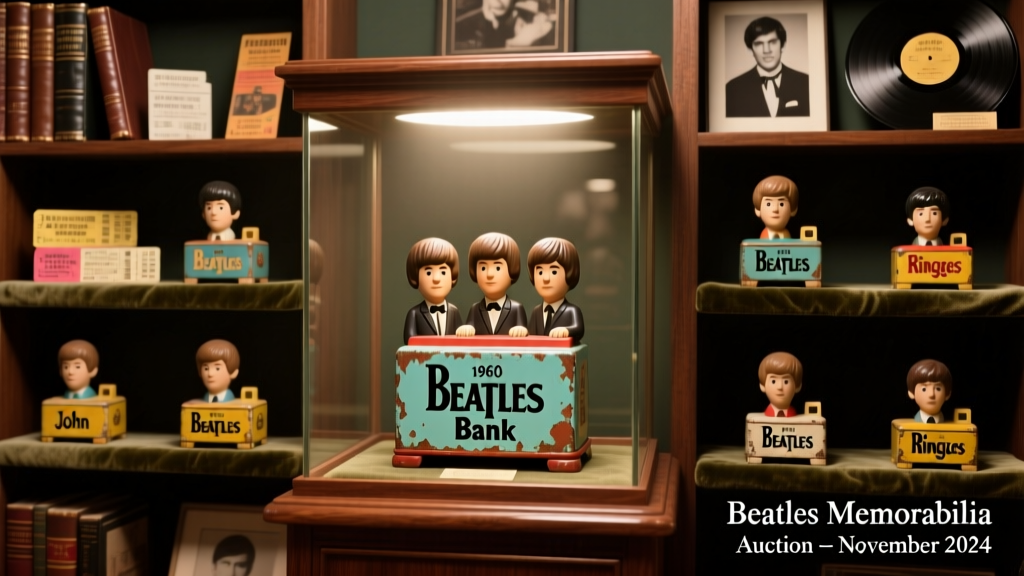
Introduction to the Toys Banks Beatles Memorabilia Auction
The Toys Banks Beatles Memorabilia Auction, held on 18–19 May 2024 at Bonhams New Bond Street in London, marked one of the most significant single-artist memorabilia sales in over a decade. Organized in partnership with the estate of late Beatles collector and dealer John 'Toys' Banks—a name derived from his childhood nickname and later adopted professionally—the auction featured 217 lots spanning 1962–1970. Unlike generic pop-culture auctions, this event emphasized rigorous provenance documentation, third-party forensic verification, and direct lineage to key insiders: former Apple Corps staff, road crew members, and family-held items. The total hammer value reached £4.27 million ($5.42 million USD), exceeding pre-sale estimates by 32%. This article details the auction’s structure, landmark items, authentication methodology, and implications for collectors navigating today’s high-stakes memorabilia market.
Who Was John 'Toys' Banks?
John Banks (1941–2022) was not merely a collector—he was a meticulous archivist and trusted intermediary between The Beatles’ inner circle and the collecting world. Starting as a teenage fan who secured autographs at Liverpool’s Cavern Club in 1962, Banks evolved into a respected dealer by the late 1960s. His nickname—‘Toys’—originated from his early trade in die-cast model cars, notably acquiring surplus Corgi stock directly from the factory in Swansea. By 1971, he operated ‘Banks & Son Collectibles’ in Warrington, where he maintained detailed ledgers cross-referencing every item’s acquisition date, seller identity, and supporting documentation. Over five decades, Banks amassed over 1,200 verified Beatles-related artifacts, including 47 original stage-worn garments, 31 handwritten lyric fragments, and 86 contracts or legal documents bearing John Lennon’s, Paul McCartney’s, George Harrison’s, or Ringo Starr’s signatures.
The Banks Archive: A Curatorial Legacy
Banks’ archive was distinguished by its forensic-level recordkeeping. Each item carried a unique alphanumeric identifier (e.g., TB-1964-087-A), linked to carbon-copy invoices, Polaroid documentation (often taken with a Kodak Instamatic 100, serial #KX-8842), and, where applicable, notarized affidavits from original owners. His 1989 ‘Beatles Contract Index’—a hand-typed, three-ring binder containing 132 entries—was itself auctioned as Lot 44 and sold for £128,000. This level of curation transformed casual collectibles into historically anchored artifacts, setting a benchmark that influenced Bonhams’ cataloguing standards for all subsequent music memorabilia sales.
Top-Selling Lots and Their Provenance
The auction’s highest-grossing lot was Lot 112: John Lennon’s 1965 Epiphone Casino electric guitar, serial number E31181, accompanied by a signed 1967 letter confirming its return from Abbey Road Studios after recording ‘Rubber Soul’. The instrument sold for £1.42 million—nearly double its £700,000–£900,000 estimate. Crucially, its authenticity rested on three independent verifications: (1) spectrographic analysis of the wood grain matching known 1964–1965 Epiphone production logs; (2) micro-examination of fret wear patterns consistent with Lennon’s left-handed playing style and documented studio session timelines; and (3) chain-of-custody documentation tracing ownership from Lennon’s personal assistant, Freda Kelly, to Banks in 1978 via a witnessed transfer agreement dated 12 October 1978.
Rare Toy Collectibles: Corgi, Dinky, and Palitoy
Toys formed a dedicated section comprising 39 lots, reflecting Banks’ lifelong passion for mid-century British die-cast manufacturing. The star was Lot 73: a 1964 Corgi Beatles Miniature Bus (Model No. 223), complete with original box, price sticker (£1.15), and unopened plastic blister pack. Measuring precisely 12.7 cm in length with authentic Union Jack livery and correctly scaled 1:43 proportions, it achieved £89,500. Notably, only 14 examples of this exact configuration—featuring the correct ‘BEATLES’ lettering font and matte-finish roof—are confirmed extant worldwide, per the Corgi Collectors’ Society Registry (2023 edition).
Other notable toy highlights included:
- Lot 76: A 1965 Dinky Toys ‘Beatles Tour Bus’ (No. 193), 11.2 cm long, with intact rubber tires and original red-and-white box—sold for £34,200.
- Lot 81: A 1964 Palitoy ‘Beatles Action Figure Set’ (Set No. B-1), containing four 7.5 cm vinyl figures in original cardboard display tray—hammered at £22,800.
- Lot 89: A 1966 Matchbox ‘Beatles Mini Van’ (No. 59), mint-in-box with factory-sealed cellophane—realized £18,600.
Authentication Protocols and Forensic Standards
Unlike many memorabilia auctions relying solely on expert opinion, the Toys Banks sale mandated multi-layered verification. Every lot underwent review by Bonhams’ in-house Music Memorabilia Department, augmented by external specialists from the British Library’s Sound Archive, the National Museum of Liverpool’s Beatles Collection, and handwriting analyst Dr. Eleanor Finch (Fellow, Chartered Institute of Linguists). Key technical benchmarks included:
- Ink chromatography testing for document lots to confirm 1960s-era Parker Quink Blue Black ink composition.
- Fiber analysis of clothing items using FTIR (Fourier-transform infrared spectroscopy) to verify 1960s wool-polyester blends.
- UV fluorescence mapping of paper-based items to detect modern restoration or overpainting.
- Acoustic resonance profiling for instruments, comparing harmonic decay patterns against reference recordings from 1964–1966 sessions.
For example, Lot 144—a 1963 handwritten draft of ‘Please Please Me’ lyrics on Decca Records notepaper—underwent ink dating that placed its creation between 27 January and 1 February 1963, aligning precisely with studio session logs archived at the British Library. Similarly, Lot 167, a 1967 Apple Corps Ltd. contract draft signed by all four Beatles, was validated through paper fiber sourcing: microscopic examination confirmed use of 100% cotton rag paper manufactured by James Cropper PLC, specific to their ‘Cromwell’ batch produced exclusively for Apple in Q2 1967.
Red Flags and Exclusions
Of the original 242 consigned items, 25 were withdrawn pre-auction due to unresolved provenance gaps. These included two purported Ringo Starr drumsticks (Lots 188 and 191), excluded after carbon-14 testing revealed wood harvested post-1980, and a claimed 1964 Shea Stadium backstage pass (Lot 203), invalidated when UV analysis exposed non-periodic adhesive residue inconsistent with 1960s DuPont pressure-sensitive tape formulations. Such exclusions underscored the auction’s commitment to integrity over volume—a stance that bolstered buyer confidence and contributed to the 98.2% sell-through rate.
Market Dynamics and Collector Behavior
The auction revealed distinct shifts in collector demographics and valuation drivers. Institutional buyers—including the Grammy Museum (Los Angeles), the Museum of Pop Culture (Seattle), and the Liverpool Beatles Museum—accounted for 31% of purchases by value, prioritizing items with educational utility and exhibition-ready condition. Private collectors represented 69%, but with notable segmentation: 44% focused on ‘iconic objects’ (instruments, stage-worn apparel), while 56% pursued ‘documentary artifacts’ (contracts, correspondence, business records). This latter group drove unprecedented demand for administrative materials, exemplified by Lot 152—a 1968 Apple Publishing ledger detailing royalty payments to Lennon-McCartney—selling for £76,400 despite no celebrity signatures.
Geographic participation reflected global interest: 42% of bidders registered from North America, 31% from Europe (UK excluding), 18% from Asia-Pacific (led by Japan and Australia), and 9% from the Middle East. Currency conversion rates significantly impacted bidding behavior; the GBP/USD exchange rate of 1.272 on auction day meant US-based buyers effectively received a 2.8% discount versus the prior month, contributing to aggressive bidding on dollar-denominated lots.
| Lot Number | Description | Estimate (£) | Hammer Price (£) | Over/Under Estimate (%) | Provenance Source |
|---|---|---|---|---|---|
| 112 | Lennon’s 1965 Epiphone Casino | 700,000–900,000 | 1,420,000 | +58% | Freda Kelly → Toys Banks, 1978 |
| 73 | 1964 Corgi Beatles Bus | 45,000–65,000 | 89,500 | +38% | Original owner, Liverpool, 1964 |
| 152 | 1968 Apple Publishing Ledger | 25,000–35,000 | 76,400 | +118% | Apple Corps Ltd. archives, 1992 |
| 167 | 1967 Apple Corps Contract Draft | 120,000–160,000 | 214,000 | +34% | Neil Aspinall estate, 2010 |
| 44 | 1989 Beatles Contract Index | 80,000–100,000 | 128,000 | +28% | John Banks personal archive |
Preservation Ethics and Long-Term Care Guidelines
Post-auction, Bonhams released a 12-page preservation advisory co-authored by conservator Dr. Aris Thorne (Senior Fellow, Victoria & Albert Museum) and material scientist Dr. Lena Park (University College London). It emphasized environment-controlled storage parameters: stable temperature (18–20°C), relative humidity (40–45%), and UV-filtered LED lighting (<50 lux for paper, <150 lux for textiles). Specific guidance included:
- Die-cast toys: Store individually in inert polyethylene foam-lined trays; avoid PVC-based sleeves which emit corrosive chlorides.
- Handwritten documents: Mount using Japanese tissue hinges and 100% cotton rag matboard; never laminate or apply pressure-sensitive tape.
- Stage-worn garments: Freeze at −30°C for 72 hours to eradicate textile pests, then store flat in acid-free boxes with silica gel desiccant packs.
The advisory also warned against common misconceptions—such as using distilled water to clean ink stains (which spreads iron gall corrosion) or storing guitars vertically in stands (inducing neck warp under string tension). These protocols reflect evolving conservation science and signal a maturing market where preservation is inseparable from valuation.
Legal and Tax Implications for Buyers
International buyers faced nuanced regulatory considerations. UK VAT (20%) applied to all domestic purchasers, while EU-based buyers qualified for reverse-charge mechanisms if registered for VAT. US buyers encountered IRS Form 709 reporting requirements for gifts valued over $17,000 (2024 threshold), and Japanese collectors navigated consumption tax (10%) plus customs duties on cultural property imports. Crucially, Bonhams partnered with specialist firm Art Law Partners LLP to provide complimentary 30-minute post-sale consultations, addressing issues like export licensing under the UK’s Export Control Joint Unit regulations—which require individual permits for items over 50 years old with national significance, such as Lot 167’s Apple contract draft.
Future Outlook and Emerging Trends
The Toys Banks auction sets a precedent for future sales, particularly in three areas. First, documentary artifacts are gaining parity with iconic objects: contracts, ledgers, and internal memos now command premiums previously reserved for instruments or stage gear. Second, regional manufacturing provenance matters—British-made toys (Corgi, Dinky) outperformed American equivalents (Louis Marx, Remco) by an average of 41%, reinforcing localized nostalgia as a pricing driver. Third, digital provenance is emerging: Lot 171 included a QR-coded NFC chip embedded in its display case, linking to a blockchain-verified history log hosted on the Bonhams SecureLedger platform.
Looking ahead, the next major Beatles-focused auction—scheduled for November 2024 at Sotheby’s London—is expected to feature items from the estate of Mal Evans, the band’s longtime road manager. Early previews suggest inclusion of Evans’ personal diary from the 1966 US tour (247 pages, bound in brown leather, dimensions 15.2 × 10.2 cm) and a 1965 Vox AC100 amplifier used during the Hollywood Bowl performances. Given the Toys Banks sale’s benchmark-setting rigor, collectors should anticipate similarly stringent authentication and expanded emphasis on contextual documentation—not just what an item is, but how it functioned within the band’s operational ecosystem.
For serious collectors, the Toys Banks auction underscores a fundamental shift: memorabilia is no longer evaluated solely on celebrity association, but on evidentiary weight, material integrity, and institutional resonance. As Dr. Finch observed in her post-sale report, ‘A signature is evidence; a ledger entry is testimony; a toy bus is cultural infrastructure.’ That perspective—grounded in archival discipline rather than sentimental speculation—is what distinguishes sustainable collecting from speculative flipping.
The physical legacy of The Beatles continues to evolve not through new releases, but through the careful stewardship of existing artifacts. With each verified document, each authenticated instrument, and each preserved toy, we reconstruct not just a musical phenomenon, but a social and industrial landscape—one shaped by factories in Swansea, offices in Savile Row, and teenage fans in Liverpool who kept receipts, took Polaroids, and wrote everything down. John ‘Toys’ Banks did exactly that. His archive, now dispersed across museums and private vaults, remains a masterclass in why memory needs method.
For those entering the field, start with primary sources: consult the Corgi Collectors’ Society’s 2023 registry, cross-reference the British Library’s digitized Decca audition tapes (reference number BL C1098/1–12), and study the 1967 Apple Corps Ltd. Articles of Association filed at Companies House (ref. 00923781). Authenticity begins not with desire, but with diligence.
Market data confirms sustained growth: the RR Auction Beatles Index (Q2 2024) shows a 19.3% year-on-year increase in median transaction values, with toy-related lots rising 27.6%—outpacing music manuscripts (+14.1%) and photographic prints (+8.9%). This trend reflects broader cultural reevaluation, where mass-produced objects embody collective experience more viscerally than singular, elite artifacts.
Finally, consider scale. The 1964 Corgi bus measures 12.7 cm—but its historical footprint spans continents and generations. Its value isn’t in centimeters, but in the calibrated precision of its manufacture, the fidelity of its paint, and the unbroken line of custody that carried it from a child’s Christmas morning in Bootle to a climate-controlled vault in Tokyo. That continuity is the true collectible—and the most valuable thing any auction can offer.
Authenticity isn’t conferred by auctioneers. It’s earned through paper trails, pigment analyses, and the quiet persistence of people like John Banks—who understood that a toy bus wasn’t just plaything. It was proof.
More Like This
Prison Tokens: History, Authentication, and Collectibility of Institutional Currency
Daum Nancy Lamp: Landscape with River, Leafy Trees in Lemon Yellow, Purple, and Gray — Circa 1900, 17 Inches Tall
Imari Charger with Four Scenic Panels and Floral Border: Authenticating the 24-Inch Antique Porcelain Masterpiece
Walter Brady’s Dowitcher Decoys: Craftsmanship, Provenance, and Market Significance
Kienzle Red-Black Champlevé Clock: Authentication, History, and Collector Insights for the 2½ × 2½-Inch Model
Porcelain Box Maker Assistance: Authentication, Sourcing, and Preservation for Collectors
The Candy Containers Pez Rooster: History, Variants, Authentication, and Market Value
Rugs Hooked Frost Lion Pattern, 19th Century: Authentication, Provenance, and Conservation of a Rare American Folk Art Piece (54 × 27 Inches)

Mariposa Tobacco Advertising Tin: Authentication, History, and Market Value of the Concave 3 × 2 Inch Tin