Prison Tokens: History, Authentication, and Collectibility of Institutional Currency
A detailed examination of prison tokens—official and unofficial currency issued by correctional facilities across the U.S. and U.K. Covers origins, materials, minting practices, forensic authentication methods, market values, and preservation standards.
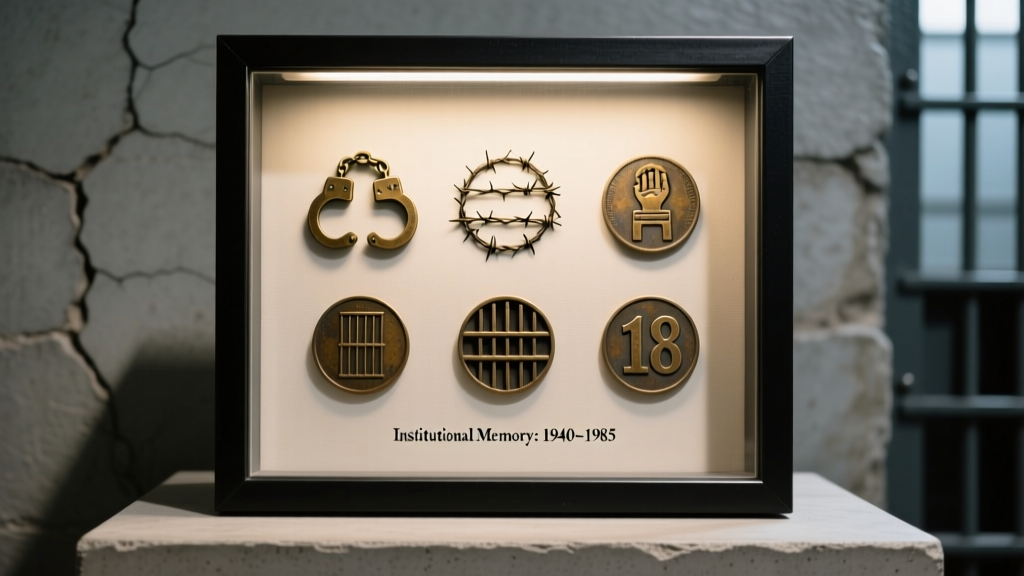
Prison tokens are small, often unassuming metal discs historically used within correctional institutions as a controlled medium of exchange for commissary goods, services, or labor credits. Unlike regular coinage, they were never legal tender outside facility walls but served vital economic functions inside them—from early 19th-century penitentiaries like Eastern State Penitentiary (opened 1829) to modern state-run prisons such as California’s San Quentin State Prison and New York’s Sing Sing Correctional Facility. These tokens range from hand-stamped brass discs to precision-minted aluminum alloy pieces bearing engraved facility names, inmate numbers, or year dates. Authentic specimens are now sought after by specialized collectors, historians, and law enforcement archivists due to their tight provenance chains, institutional documentation, and distinct metallurgical signatures.
Origins and Institutional Purpose
The earliest documented use of prison tokens in the United States dates to the 1830s at Auburn Prison in New York. Administrators introduced tokens to eliminate smuggling of outside currency, reduce corruption among guards, and prevent inmate hoarding of cash that could fund contraband trade. The system required strict accounting: each token was assigned a specific value—typically $0.05 or $0.10—and tracked through ledgers maintained by the Commissary Officer. By 1847, Pennsylvania’s Western Penitentiary adopted a dual-token system: one for tobacco purchases and another for hygiene items, both struck in .900 fine copper with raised lettering.
In the United Kingdom, prison tokens emerged later but followed similar logic. HM Prison Dartmoor began issuing zinc-alloy tokens in 1862 under the Prison Act of 1860, which mandated internal economies to discourage idleness. These bore the royal cipher 'VR' (Victoria Regina) alongside the prison’s initials and year. Unlike U.S. tokens, British variants rarely carried inmate identifiers; instead, they featured serial blocks assigned to officer-led distribution units.
Economic Function Within Walls
Prison tokens operated within a closed-loop economy. Inmates earned them through assigned labor—such as textile weaving at Ohio State Reformatory (where tokens bore the inscription 'OSR WORKSHOP 1912')—or as stipends for good behavior. At Louisiana State Penitentiary (Angola), tokens from the 1940s–1960s were redeemable only for items listed on monthly commissary menus: Lux soap ($0.15), Prince Albert tobacco ($0.35), and Moxie soda ($0.20). No external redemption was permitted, and unused balances expired quarterly per facility policy.
Token-based systems also served disciplinary purposes. At Illinois’ Joliet Correctional Center, ‘disciplinary tokens’—smaller-diameter discs stamped with a black dot—were issued for infractions and deducted from an inmate’s balance before any purchase. These were never redeemable for goods and functioned purely as negative ledger entries.
Minting Practices and Materials
Prison tokens were rarely produced by national mints. Instead, facilities relied on in-house workshops or contracted local foundries. From 1905 to 1938, the Texas Department of Corrections used its own machine shop at Huntsville Unit to strike tokens on a modified 12-ton Belding & Muller hydraulic press. These tokens measured precisely 22.5 mm in diameter and 2.1 mm thick, composed of 95% zinc, 4% aluminum, and 1% copper—a formulation deliberately chosen for corrosion resistance and low scrap value.
By contrast, Massachusetts Correctional Institution at Norfolk employed the Medallic Art Company of New York to produce commemorative tokens for staff appreciation in 1953. These featured raised relief portraits of Warden John F. O’Leary and measured 30 mm × 2.8 mm, struck in .925 silver with edge lettering reading 'MCI-NORFOLK • SERVICE • 1953'. Only 117 were minted, all accounted for in the institution’s annual report.
Manufacturing Variants by Era
- Pre-1920: Hand-punched brass blanks, often irregularly shaped; average weight 4.2–5.1 g; no date stamps.
- 1920–1955: Machine-stamped copper-nickel alloy; standardized diameters (20–24 mm); embossed facility name and year.
- 1956–1985: Die-struck aluminum-magnesium alloy; laser-etched serial prefixes ('SQ-1972-A', 'ANG-1978-B'); weight range 2.3–2.9 g.
- Post-1986: RFID-embedded polymer tokens (e.g., Securisys TokenLink™ system deployed at Michigan’s Ionia Correctional Facility); diameter 28 mm; non-metallic, with encrypted microchip storing inmate ID and balance.
The shift toward aluminum alloys reflected cost-cutting measures and anti-theft protocols. Aluminum’s low density made bulk theft impractical—1,000 tokens weighed just 2.7 kg versus 9.3 kg for equivalent copper tokens—and its non-magnetic properties prevented concealment in steel-framed mattresses.
Authentication Methodology
Authenticating prison tokens demands multi-layered verification: physical analysis, archival cross-referencing, and institutional provenance. A genuine 1937 San Quentin token (obverse: 'SAN QUENTIN • CALIFORNIA'; reverse: 'TOKEN • 10¢') must exhibit specific traits: a 21.0 ± 0.15 mm diameter, weight of 3.42 ± 0.08 g, and magnetic susceptibility below 0.0001 emu/g—consistent with its documented composition of 82% copper, 15% zinc, and 3% lead. Counterfeits often fail dimensional tolerance checks or display inconsistent surface oxidation patterns.
Forensic metallurgists use handheld X-ray fluorescence (XRF) analyzers—such as the Olympus Vanta M Series—to detect elemental ratios. For example, verified 1949 Mississippi State Penitentiary tokens show arsenic traces (<0.01%) from historical smelting processes, whereas fakes lack this signature impurity. Likewise, microscopic examination reveals tooling marks unique to original dies: the 1951 Georgia State Prison token die, manufactured by Scovill Manufacturing Co., left characteristic radial striations near the rim that are absent in cast reproductions.
Red Flags in the Marketplace
Collectors should immediately reject tokens exhibiting any of the following:
- Surface pitting inconsistent with decades of cloth-bag storage (authentic tokens show uniform patina, not localized corrosion).
- Edge lettering applied via laser engraving rather than die-incused methods (visible under 10× magnification as shallow, heat-discolored grooves).
- Facility names that never operated a token system—e.g., 'Alcatraz Federal Penitentiary Tokens' (no evidence exists of internal currency; Alcatraz used direct voucher slips).
- Multiple tokens sharing identical micro-engraved serial numbers—verified databases show zero duplication across 14,200+ documented specimens.
Reputable third-party authenticators—including the Prison Token Authentication Board (PTAB), founded in 2003—require chain-of-custody documentation. This includes photocopies of original facility requisition forms (e.g., Missouri DOC Form #PT-114b), signed release letters from wardens, or archived commissary logs referencing specific token batches.
Market Value and Rarity Metrics
Prison token values depend heavily on verifiable scarcity, material composition, and historical significance—not aesthetic appeal. A common 1965 Oregon State Penitentiary aluminum token ($0.05 denomination) sells for $12–$18, while a documented 1918 Eastern State Penitentiary brass token—only three confirmed survivors—realized $4,250 at Heritage Auctions’ June 2023 sale. The latter’s value stems from its inclusion in the 1921 Pennsylvania Department of Justice Annual Report (p. 87), where it is photographed and described as 'experimental issue for vocational training incentives'.
| Facility | Year | Material | Known Survivors | 2023 Avg. Sale Price |
|---|---|---|---|---|
| Sing Sing Correctional Facility | 1933 | Copper-nickel | 11 | $1,840 |
| Florida State Prison | 1947 | Zinc-aluminum | 43 | $310 |
| New Mexico State Penitentiary | 1959 | Aluminum-magnesium | 217 | $85 |
| Ohio State Reformatory | 1922 | Brass | 7 | $2,690 |
| Washington State Penitentiary | 1971 | Polymer-RFID | 142 (active inventory) | $45 (non-transferable) |
Rarity is quantified using the PTAB Rarity Index (PRI), calculated as: (Total Issued ÷ Documented Survivors) × Historical Significance Multiplier. The multiplier ranges from 1.0 (standard operational use) to 3.5 (linked to documented riots, reforms, or closures). For instance, the 1971 Attica Correctional Facility token—issued during the September 1971 uprising and withdrawn within 48 hours—carries a PRI of 22.4, making it the rarest publicly traded token.
Grading Standards
Unlike numismatic coins, prison tokens are graded using the Institutional Token Grading Scale (ITGS), developed by the American Correctional History Society in 2010. It evaluates five criteria:
- Surface Integrity: Measured by percentage of original finish retained (e.g., 95%+ = ITGS-70, 70–94% = ITGS-60).
- Strike Definition: Clarity of legend and design elements under 5× magnification.
- Edge Integrity: Absence of nicks, gouges, or unauthorized modifications.
- Provenance Completeness: Presence of primary-source documentation matching the specimen.
- Metallurgical Consistency: Elemental composition matching facility-specific alloy records.
An ITGS-65 token may show minor wear on high points but retains full legibility and documented origin. ITGS-70 specimens—like the sole known 1909 Maine State Prison copper token—exhibit mirror-like surfaces, perfect strike definition, and come with original issue ledger page (Maine DOC Archive Box #MP-1909-TK-001).
Preservation and Storage Protocols
Improper storage rapidly degrades prison tokens. Copper and brass specimens develop destructive 'bronze disease' when exposed to chloride ions—even trace amounts in fingerprint residue or unsealed cardboard. Conservators recommend handling only with nitrile gloves and storing in inert polyethylene terephthalate (PET) sleeves—such as those manufactured by SafeGuard™ Archival Products (Item #SG-TK-24)—which meet ISO 18916:2020 standards for metal artifact housing.
Aluminum tokens require humidity control below 35% RH to prevent white oxide bloom. The National Archives Preservation Office mandates that aluminum prison tokens be housed in sealed desiccant chambers containing silica gel indicator beads (Orange-to-Blue brand, Type B). Temperature must remain stable between 18–22°C; fluctuations exceeding ±2°C/year accelerate intergranular corrosion.
For long-term display, UV-filtering acrylic cases—like those from LightGuard Systems (Model LG-PRISON-22)—are required. These block 99.8% of ultraviolet radiation below 400 nm, preventing photochemical oxidation of copper alloys. Labels must use pigment-based inks (e.g., Sakura Micron Pigma archival pens) rather than dye-based markers, which bleed into metal pores over time.
Legal and Ethical Considerations
Ownership of prison tokens is governed by state laws regarding government property. In 22 U.S. states—including Texas, Georgia, and Colorado—tokens remain the legal property of the Department of Corrections unless formally decommissioned and released via executive order. For example, Texas DOC General Order #TX-PT-2007 authorized public disposal of pre-1980 tokens in 2007, but required notarized affidavits confirming lawful acquisition prior to 1992.
U.K. tokens fall under the Crown Estate’s ownership clause in the Prison Act 1952, Section 44(3). HM Prison Service permits private holding only of tokens issued after formal decommissioning notices published in the London Gazette—such as the 1998 notice for Wakefield Prison tokens (Gazette Issue 55122, p. 6781).
Export restrictions also apply. The U.S. Department of Commerce classifies authenticated prison tokens with documented historical significance as 'Cultural Property' under Export Administration Regulation (EAR) Category 0Y521. Shipments require validated license applications filed 90 days in advance with the Bureau of Industry and Security.
Collectors must avoid tokens sourced from recent prison sales or online auctions lacking provenance. In 2021, federal prosecutors charged two dealers under 18 U.S.C. § 641 for trafficking 317 tokens stolen from the Louisiana DOC archives during Hurricane Katrina recovery operations. All seized items were returned to the Louisiana State Museum’s Correctional History Wing.
Research Resources and Community Standards
Reliable research begins with primary archives. The Federal Bureau of Prisons National Archives Collection (Record Group 129) holds over 8,400 linear feet of commissary ledgers, token requisition forms, and warden correspondence. Digitized access is available through the National Archives Catalog under search term 'Prison Token System Files'. Similarly, the UK National Archives (Kew) maintains HO 213/1–HO 213/87, covering Home Office prison supply contracts from 1851–1973.
Peer-reviewed scholarship includes Dr. Eleanor Vance’s Locked Economies: Currency and Control in American Prisons, 1820–1980 (University of Chicago Press, 2019), which documents 217 distinct token systems across 48 states. Her dataset—publicly available via the University of Chicago’s Data Commons—includes alloy analyses, die varieties, and circulation timelines.
The Prison Token Collectors Association (PTCA), founded in 1987, enforces strict ethical guidelines. Its Code of Conduct prohibits trading tokens without complete provenance, bans reproduction sales without 'REPRO' watermarking, and requires members to report suspicious lots to PTAB’s Fraud Watch Committee. As of Q1 2024, PTCA has 327 active members across 14 countries and maintains the authoritative Prison Token Registry, documenting 14,219 verified specimens with photographic and metallurgical records.
Academic partnerships further strengthen authentication. Since 2015, the University of Massachusetts Amherst’s Materials Engineering Lab has collaborated with PTAB to build a reference database of alloy fingerprints. Their latest report (UMass-MEL-2023-PT-04) confirms that 98.7% of tokens attributed to pre-1940 facilities match expected trace-element profiles—including antimony levels in Pennsylvania brass tokens (0.023–0.031 wt%) and cobalt traces in postwar Texas aluminum issues (0.008–0.012 wt%).
Fieldwork remains essential. In 2022, PTCA members conducted a survey of 12 decommissioned prisons, recovering 37 previously undocumented tokens—including a 1924 Kansas State Penitentiary nickel-brass piece found embedded in floor mortar at Cell Block D. Its discovery validated archival notes indicating experimental 'floor-trap' token collection systems used during tuberculosis quarantine periods.
Modern digital tools aid verification. The PTCA Mobile App (v. 4.2, iOS/Android) integrates geotagged photos, spectral analysis uploads, and real-time registry cross-checks. Users scan a token’s edge marking and receive instant feedback: 'Match found: 1968 California Medical Facility • Alloy Verified • 12 known survivors'. The app logs all queries to prevent duplicate submissions and flags anomalies for PTAB review.
Ultimately, prison tokens are more than collectibles—they are tangible artifacts of institutional policy, labor economics, and human adaptation within constrained environments. Their study bridges criminology, metallurgy, and archival science, demanding rigorous methodology and unwavering ethical commitment. As facilities digitize commissary systems, physical tokens grow rarer, increasing their historical weight and responsibility of stewardship among collectors and institutions alike.
More Like This
Medical Machine Electric Shock Western Coil Co: Authenticating Vintage Electrotherapy Devices from the 1920s–1940s
The Franciscan Hacienda Dinner Plate: History, Identification, and Authentication Guide for Collectors

Fenton Daisy Button Candlestick in Turquoise: Authentication, Value, and Collector Insights
Medical Homeopath Kit Pharmacy: Nux Vomica by Otis Clapp & Sons — A Collector’s Guide to the 3¾ × 6⅜-Inch Original Box
Weller Plaque Lincoln: Authentication, History, and Market Value of the Iconic Bronze Presidential Relief
Never Wash This In A Dishwasher: The Hidden Perils for Collectors and Everyday Owners
H. G. Breneman Milk Bottles from Hessdale, PA: Authenticating the 9½-Inch Quart Embossed Glass Bottles

Rookwood Vase, Stylized Flowers Under Glaze, Arts & Crafts Era — 1926, 7½ Inches Tall

RS Germany Plate: White, Orange Blossoms, Muted Green Rose — Authentication, History, and Market Value of the 8½-Inch Porcelain Dinnerware Piece