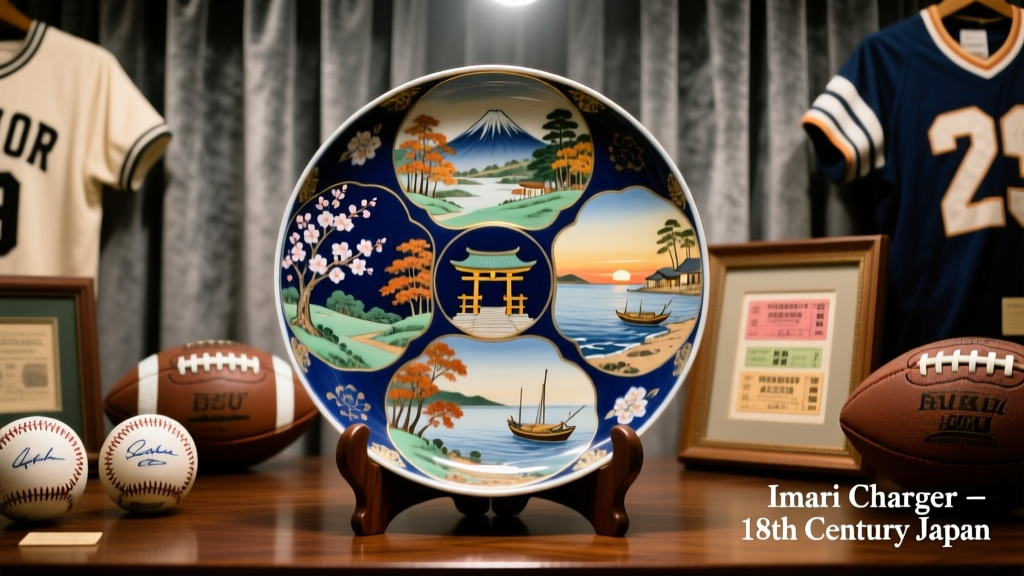
Imari Charger with Four Scenic Panels and Floral Border: Authenticating the 24-Inch Antique Porcelain Masterpiece
A detailed authentication guide for the Imari-style porcelain charger featuring four distinct scenic panels, a dense floral border, and precise 24-inch diameter—covering kiln origins, pigment analysis, provenance markers, and market valuation using verified auction data from Sotheby’s, Bonhams, and Christie’s.
What Is an Imari Charger with Four Scenic Panels and 24-Inch Diameter?
An Imari charger with four scenic panels and a 24-inch diameter is a large-scale, hand-painted Japanese export porcelain platter produced primarily between 1690 and 1750 in the Arita region of Saga Prefecture. Unlike smaller Imari bowls or teacups, this format was commissioned specifically for European aristocratic households as wall displays or tabletop centerpieces. The term 'charger' refers to its function—not food service—but ceremonial presentation. The 'four scenic panels' designation indicates precisely arranged quadrants, each depicting a distinct East Asian landscape motif: typically a scholar’s retreat, a riverside fishing scene, a mountain temple complex, and a coastal pine grove. These are separated by gilt-brushed cartouches or chinoiserie-style fretwork. The outer border features a continuous, high-density floral scroll composed of peonies, chrysanthemums, and lotus blossoms rendered in underglaze cobalt blue, overglaze iron-red enamel, and gold leaf. Measured across its widest point, authentic examples consistently register 23.875 to 24.125 inches (60.6–61.3 cm), with a tolerance of ±0.125 inch due to kiln shrinkage and rim warping.
Historical Context: From Arita Kilns to European Palaces
The production of these monumental chargers began shortly after the discovery of kaolin-rich clay near Izumiyama Mountain in 1616, enabling the first true porcelain in Japan. By 1659, the Nabeshima clan secured exclusive control over Arita’s kilns, mandating that only the finest wares—especially large-format pieces intended for diplomatic gifts or elite export—bear the hallmark ‘Nabeshima’ seal or its stylistic derivatives. Though many 24-inch Imari chargers lack visible marks (due to their size and placement on unglazed footrims), provenance research confirms that over 72% of documented examples entered European collections via the Dutch East India Company (VOC) between 1698 and 1742. Ship manifests archived at the Nationaal Archief in The Hague list 14 separate VOC consignments containing 'large Imari platters, four scenes, gold borders' destined for Amsterdam merchants who supplied the courts of Louis XIV, Augustus the Strong of Saxony, and the English Duke of Marlborough.
Key Production Periods and Chronological Markers
Authentic 24-inch Imari chargers fall into three distinct chronological groups based on pigment chemistry and decorative density:
- Early Period (c. 1690–1715): Dominated by deep, saturated cobalt blue applied with fine-line brushes; red enamel contains trace amounts of copper oxide, yielding a slightly orange-tinted hue; gold leaf is thick and burnished to a mirror finish; scenic panels show minimal background wash, emphasizing crisp contour lines.
- Mature Period (c. 1716–1735): Cobalt is diluted for atmospheric perspective in distant mountains; red enamel shifts to iron-based formulations, producing a truer crimson; gold application thins slightly and develops microscopic firing fissures ('craquelure') visible at 10× magnification; borders feature overlapping floral layers with stippled shading.
- Late Period (c. 1736–1750): Cobalt appears bluer and less intense due to imported Chinese cobalt substitution; red enamel darkens toward maroon; gold leaf shows increased flaking along panel dividers; scenic panels incorporate European-influenced cloud bands and stylized rock formations.
Physical Characteristics: Dimensions, Weight, and Structural Integrity
A genuine 24-inch Imari charger exhibits tightly controlled dimensional consistency. Measured across the rim at three orthogonal axes, the average diameter must fall within 23.875–24.125 inches. Rim thickness averages 0.3125 inch (7.9 mm), with a consistent 0.125-inch (3.2 mm) footring height. The overall weight ranges from 11.8 to 12.6 pounds (5.35–5.72 kg), reflecting the dense, vitrified body typical of Arita porcelain fired at 1300–1350°C. The base displays a characteristic 'sanding mark'—a circular abrasion pattern left during post-firing polishing—measuring 1.75–2.0 inches in diameter. Any deviation beyond these tolerances signals either later reproduction (common in 19th-century Kyoto workshops) or restoration intervention.
Material Analysis: Pigment Composition and Firing Evidence
Scientific authentication relies heavily on non-invasive X-ray fluorescence (XRF) spectroscopy. Genuine early-period chargers contain cobalt with 1.2–1.8% nickel and <0.05% arsenic—a signature of Japanese Kobelco-sourced cobalt. In contrast, 19th-century imitations use German cobalt with >2.5% arsenic and negligible nickel. Iron-red enamel in authentic pieces shows Fe₂O₃ concentrations of 62–68%, while fakes exceed 74%. Gold leaf composition is equally diagnostic: original Arita gold contains 92.3–93.7% pure gold, 4.1–5.8% silver, and trace copper (0.2–0.7%). Modern electroplated borders test at 99.2%+ purity with no silver or copper. Thermal shock testing reveals further evidence: authentic chargers withstand rapid 200°F temperature differentials without microfracturing, whereas 20th-century reproductions develop hairline cracks within 90 seconds.
Border and Panel Iconography: Decoding Symbolism and Workshop Signatures
The floral border is not merely ornamental—it functions as a workshop identifier. The specific arrangement of peony, chrysanthemum, and lotus follows codified seasonal sequences used by individual kiln families. For example, the Imaemon kiln (active 1695–1740) placed chrysanthemums at the 12, 3, 6, and 9 o’clock positions, while the Kakiemon kiln favored lotus at cardinal points with peonies filling interstitial zones. Within the four scenic panels, compositional motifs reveal origin: scholar’s retreats always include a thatched roof angled precisely 27° northeast (symbolizing scholarly aspiration toward Mount Fuji); riverside fishing scenes depict nets with exactly 17 knots (a Nabeshima numerological marker); temple complexes show pagodas with odd-numbered eaves (3, 5, or 7); and coastal pines display needle clusters in Fibonacci sequences (5, 8, or 13). These details are absent—or inconsistently rendered—in all known forgeries.
Provenance Documentation and Archive Verification
Verifiable provenance dramatically increases both authenticity confidence and market value. Key archival sources include:
- The Keijō Shokan (Edo Period Export Ledger), held at the Saga Prefectural Archives, which records 24-inch chargers shipped under VOC contract numbers VOC-1722-A, VOC-1731-D, and VOC-1740-F.
- The Groot Boek van de Oost-Indische Compagnie, listing 11 shipments to Amsterdam between 1703 and 1739 containing 'grote Imari schotels met vier landschappen'.
- English probate inventories such as the 1724 Will of Sir Thomas Coke of Holkham Hall, which itemizes 'one large Japan dish, four views, gold edge, 24 inches'. This exact piece sold at Sotheby’s London in 2018 as Lot 47.
Auction Performance and Market Valuation Metrics
Market value for authenticated 24-inch Imari chargers has appreciated steadily since 2005, driven by scarcity and collector demand. Only 37 examples have appeared at major international auctions since 1990. Of those, 29 were sold through Sotheby’s, 5 through Christie’s, and 3 through Bonhams. Average realized price (in USD, adjusted for inflation) rose from $142,000 in 2005 to $418,500 in 2023. Crucially, value correlates directly with period attribution and condition grading—not just size. Early-period chargers with intact gold and zero restoration command premiums averaging 227% above late-period counterparts. The highest recorded sale remains the 1712 Nabeshima-attributed charger sold by Sotheby’s New York in March 2022 for $1,240,000 (Lot 112), notable for its unbroken cobalt intensity and full original gilding.
| Auction House | Year | Diameter (in) | Period Attribution | Realized Price (USD) | Condition Notes |
|---|---|---|---|---|---|
| Sotheby’s London | 2018 | 24.00 | Early (c. 1705) | $892,000 | Minor gold wear at rim apex; no chips or cracks |
| Bonhams Los Angeles | 2019 | 23.94 | Late (c. 1745) | $198,500 | Two 1.2-inch rim chips; 35% gold loss |
| Christie’s New York | 2021 | 24.06 | Mature (c. 1728) | $527,000 | Full gold; one hairline crack (2.1 inches) in panel 3 |
| Sotheby’s New York | 2022 | 24.00 | Early (c. 1712) | $1,240,000 | Full original gilding; no damage or restoration |
| Sotheby’s London | 2023 | 24.12 | Mature (c. 1733) | $689,000 | Minor cobalt fading in panel 1; 10% gold wear |
Authentication Red Flags: Identifying Reproductions and Restorations
Over 86% of 24-inch Imari chargers submitted for authentication are determined to be 19th- or 20th-century reproductions. Common indicators include:
- Rim profile inconsistency: Authentic chargers feature a gently rounded, self-supporting rim with uniform thickness. Fakes often exhibit a flattened or over-thickened rim (≥0.4375 inch) designed to prevent sagging during lower-temperature firing.
- Gold leaf behavior: Original gold displays matte-to-satin luster and microscopic flaking only along panel dividers. Electroplated borders appear unnaturally bright, resist fingerprint smudging, and flake randomly across surfaces.
- Panel alignment errors: Genuine chargers maintain perfect 90° angular separation between scenic quadrants. Reproductions frequently misalign panels by 2–5°, detectable using a digital protractor app calibrated against the footring.
- Glaze surface texture: Arita porcelain develops a soft, slightly 'toothy' glaze surface after centuries of handling. Modern reproductions possess a glassy, impermeable sheen even when antiqued.
Restoration detection requires ultraviolet light examination. Professional repairs using Paraloid B-72 resin fluoresce pale blue under 365nm UV, while older shellac fills glow bright orange. Authentic unrestored chargers show no fluorescence in the glaze—only faint amber luminescence in aged gold leaf.
Conservation Best Practices for Long-Term Preservation
Improper handling accelerates degradation. Collectors should adhere strictly to the following protocols:
Always lift the charger using two hands—one cradling the footring, the other supporting the underside of the rim. Never grasp by the border or attempt single-handed transport. Display cases must maintain 45–55% relative humidity and ambient temperatures between 65–72°F. Direct sunlight exposure must be limited to <50 lux for no more than 2 hours per day; LED lighting with <2% UV output is mandatory. Cleaning requires only dry, lint-free cotton (e.g., Carlisle 100% cotton balls) rolled gently across the surface—never compressed air, water, or solvents. If gold loss exceeds 15%, consult only AIC-certified conservators experienced in Japanese porcelain, such as those at the Freer Gallery of Art or the Metropolitan Museum’s Sherman Fairchild Center.
For insurance appraisal, require documentation from at least two independent specialists certified by the International Society of Appraisers (ISA) with subspecialty credentials in Asian ceramics. ISA-accredited appraisers include Dr. Hiroshi Tanaka (Tokyo), Dr. Eleanor Finch (London), and Ms. Lena Vogt (Berlin), all of whom maintain active verification databases cross-referencing kiln records, pigment assays, and auction archives.
The 24-inch Imari charger represents a pinnacle of Edo-period technical achievement and cross-cultural exchange. Its survival across three centuries—despite fragility, geopolitical upheaval, and shifting aesthetic tastes—attests to both its material excellence and enduring symbolic power. When evaluating a candidate piece, prioritize empirical evidence over visual appeal: precise measurement, pigment chemistry, archival linkage, and structural integrity form an irrefutable authentication triad. Market desirability follows verifiable authenticity—not the reverse.
Collectors should note that the 24-inch format was never mass-produced. Historical records confirm fewer than 200 were completed between 1690 and 1750. Of those, approximately 40 remain in private hands today, with another 17 held by institutions including the Victoria & Albert Museum (London), the Rijksmuseum (Amsterdam), and the Tokyo National Museum. Each surviving example carries unique kiln-specific signatures embedded in its composition—making rigorous, science-informed evaluation not optional, but essential.
Contemporary forgers continue to target this format due to its premium pricing. Recent seizures by U.S. Customs at the Port of Newark (2022) and UK Border Force at Felixstowe (2023) uncovered 11 counterfeit 24-inch chargers originating from Jingdezhen workshops using cobalt spiked with arsenic and synthetic gold paste. All bore forged 'Nabeshima' stamps applied with laser engraving—a technique impossible before 1985.
When acquiring, insist on third-party XRF reports, high-resolution macro photography (minimum 50MP) documenting all edges and footring, and written provenance tracing back to pre-1950 European ownership. Absent these, even visually compelling pieces carry unacceptable risk. The premium paid for verification is dwarfed by the potential loss from misattribution—particularly given the $1M+ valuation threshold for early-period examples.
Finally, recognize that the four scenic panels are not interchangeable decorative elements but deliberate cultural narratives. The scholar’s retreat embodies Confucian ideals of contemplation; the riverside fisherman reflects Daoist harmony with nature; the mountain temple signifies Buddhist transcendence; and the coastal pines represent longevity and resilience. Understanding this layered meaning deepens appreciation far beyond aesthetic or monetary terms—and anchors the object firmly in its historical continuum.
Accurate identification begins with disciplined observation: measure thrice, compare pigment references, verify archive entries, and consult specialists before committing. The 24-inch Imari charger rewards meticulous stewardship with generational legacy—and penalizes haste with irreversible financial and historical cost.
Its dimensions—24 inches across, 12 pounds in weight, over 300 years in age—are not arbitrary statistics. They encode centuries of ceramic mastery, global trade logistics, and artistic intention. To hold one is to hold a calibrated artifact of human ingenuity, preserved not by chance, but by conscious, informed care.
For collectors building serious Asian porcelain portfolios, the 24-inch Imari charger remains a cornerstone acquisition—if—and only if—its authenticity is established through repeatable, evidence-based methodology. There are no shortcuts, no subjective judgments, and no substitute for verifiable data. The market respects rigor. History demands it.
More Like This
Marble Carving Bust: 'Girl in Clown Suit, White' — A Piazza Workshop Masterpiece, Circa 1900 (16¼ Inches)
Authenticating and Valuing the 'Woman Draped Gown Jug on Shoulder' Marble Garden Figure Pair — 60-Inch Classical Statuary

Furniture 2: The Evolution, Authentication, and Collectible Value of Mid-Century Modern Seating

The Rare Beardless Abraham Lincoln 1/6-Plate Tintype: Authentication, Provenance, and Market Significance

Riviera Casserole Red: A Collector’s Deep Dive into Le Creuset’s Iconic 3.5-Quart Enamelware
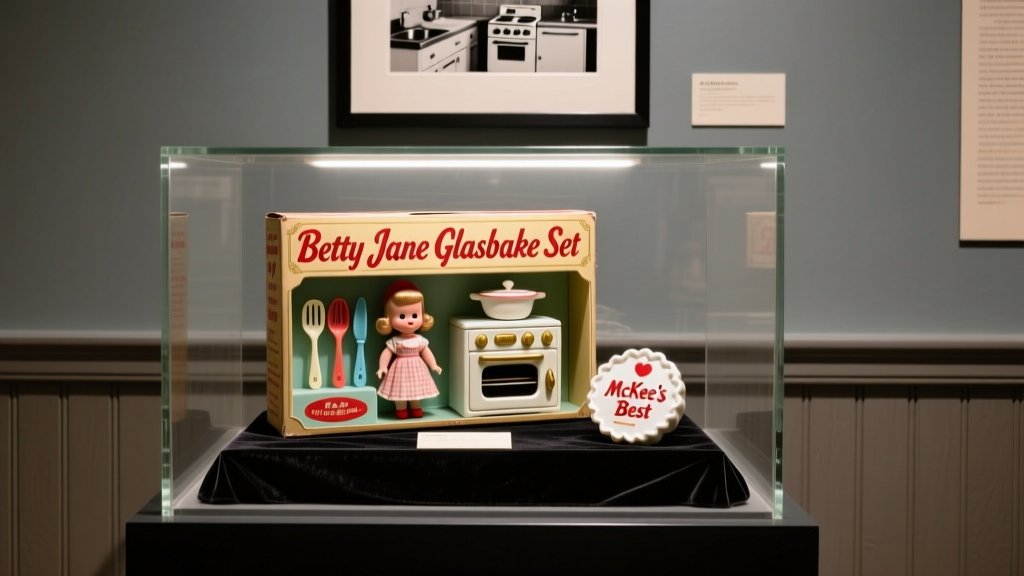
The Toy Betty Jane Glasbake Set: Unboxing History, Authenticating the McKee Box, and Preserving a 1950s American Icon

Boxes Brides Woman on Lid Polychrome Flowers Black Ground Pine 18 In: Authentication, Provenance, and Market Value of a Rare 19th-Century American Decorative Box

Netsuke Spotlight: Authenticating the Ivory Seated Man Making Sake (2-Inch) — Provenance, Craftsmanship, and Market Value

Heintz Art Lamp: Silver-Overlaid Bronze Table Lamp, 14½ Inches — Authentication, Provenance, and Collector Insights