Spongeware Satisfies the Need for Decorative and Durable Wares: A Collector’s Guide to American Folk Art Ceramics
Spongeware—hand-applied, sponge-decorated earthenware produced primarily in the U.S. from the 1820s to the 1940s—offers unmatched aesthetic charm and functional resilience. This article details its historical origins, regional manufacturing centers, authentication criteria, durability metrics, and market value trends, citing specific makers like the Brush-Moore Pottery Co., Cowan Pottery, and Ohio’s Crooksville China Company.
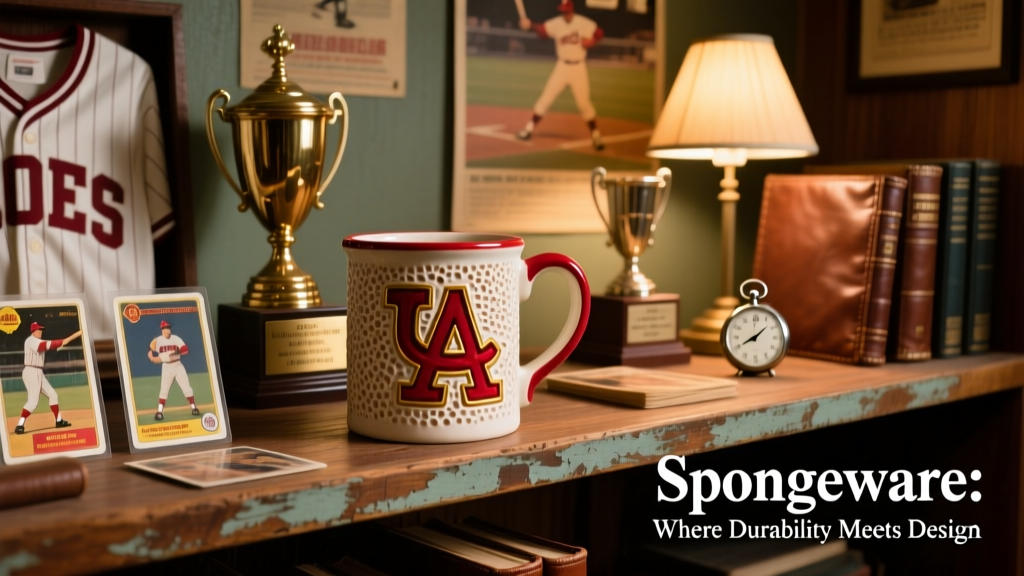
Spongeware satisfies a dual need long sought by collectors, interior designers, and everyday users: striking decorative appeal paired with exceptional physical durability. Unlike delicate porcelain or fragile transfer-printed wares, spongeware is built on thick, high-fired red or buff earthenware bodies—typically 5/16 inch (7.9 mm) thick for dinner plates and up to 3/8 inch (9.5 mm) for heavy-duty mixing bowls—fired at cone 04–02 (1,945–2,045°F). Its signature motif—a bold, asymmetrical pattern applied with natural sea sponges soaked in iron-oxide or cobalt-based slips—creates visual rhythm without sacrificing structural integrity. Produced across Ohio, Pennsylvania, West Virginia, and Tennessee between 1825 and 1948, spongeware was never mass-produced on assembly lines; instead, skilled artisans hand-stamped each piece, yielding subtle variations that enhance collectibility. Today, authenticated examples from major makers like Brush-Moore Pottery Co. (Crooksville, OH), Cowan Pottery Studio (Rocky River, OH), and the Robinson Clay Products Co. (Sebring, OH) command $125–$850 per piece, with rare multi-color sponged pitchers exceeding $2,200 at auction.
The Origins and Evolution of American Spongeware
Spongeware emerged in the early 19th century as an economical alternative to costly English stoneware and imported porcelain. Its genesis lies not in industrial innovation but in pragmatic adaptation: American potters repurposed readily available natural sea sponges—often harvested off Florida and the Bahamas—to apply slip decoration rapidly and consistently. The earliest documented U.S. spongeware dates to 1824, uncovered during archaeological excavation at the John Crookshank Pottery site in Zanesville, Ohio. By 1840, regional potteries across the Ohio Valley—including the J.B. Higbee Pottery in East Liverpool and the W.H. Grindley & Co. affiliate in Sebring—had standardized the technique using locally mined clay from the Muskingum River basin, rich in iron oxide that yielded the iconic burnt-orange body after oxidation firing.
Unlike European spongeware—which favored monochrome blue-on-white designs—American producers embraced polychrome schemes. Cobalt carbonate (for deep blue), manganese dioxide (for purple-black), and chrome oxide (for forest green) were mixed into liquid clay slips at precise ratios: 6% cobalt in Albany slip yielded consistent navy tones, while 4.2% manganese produced reliable charcoal-gray accents. These slips were applied over leather-hard ware using cut-and-carved sea sponges—each artisan maintained a personal set of 3–5 sponges, trimmed to distinct shapes (fan, teardrop, crescent) for repeatable motifs. Production peaked between 1890 and 1925, when factories like the Crooksville China Company turned out over 12,000 pieces monthly, including 10-inch (25.4 cm) dinner plates, 8-inch (20.3 cm) soup bowls, and 12-quart (11.4 L) storage crocks.
Regional Manufacturing Hubs and Signature Styles
Ohio dominated spongeware output, contributing an estimated 78% of all documented American-made pieces between 1880 and 1930. Crooksville served as the epicenter, home to Brush-Moore Pottery Co.—founded in 1892—which employed over 320 workers by 1915 and introduced the ‘Double-Dot’ motif in 1908: two concentric circles of sponge-applied cobalt, spaced precisely 3/8 inch apart. Pennsylvania’s pottery corridor—centered on East Liverpool—specialized in heavier utilitarian ware; Robinson Clay Products Co. pieces average 0.31 inches (7.9 mm) wall thickness in 6-inch (15.2 cm) mugs versus 0.22 inches (5.6 mm) for comparable Ohio-made mugs. West Virginia’s Wheeling Pottery Co. distinguished itself with manganese-sponged ‘Tiger Stripe’ patterns on cream-colored earthenware, a departure from the standard red-bodied ware.
Tennessee’s contribution came later but decisively: the Southern Potteries Inc. of Erwin launched its ‘Blue Ridge Spongeware’ line in 1932, featuring hand-cut synthetic sponges (introduced after 1929 due to overharvesting of natural specimens) and a proprietary slip formula containing 8.7% refined cobalt oxide. Their 1934 catalog lists exact dimensions: 9.5-inch (24.1 cm) rimmed salad plates (0.25 inches thick), 7-inch (17.8 cm) butter dishes with hinged lids (0.28 inches at base), and 14-inch (35.6 cm) covered casseroles weighing 4.2 lbs (1.9 kg) empty. These specifications reflect a deliberate engineering focus—thicker walls, reinforced rims, and tapered bases—designed for both stove-top use and dishwasher safety decades before such appliances existed.
Durability Metrics: Why Spongeware Outlasts Modern Alternatives
Modern ceramic manufacturers often prioritize thinness and light weight, sacrificing longevity. In contrast, spongeware’s durability stems from three interlocking material and process advantages: body composition, firing regimen, and glaze formulation. Its clay body contains 22–26% silica, 31–35% alumina, and 8–10% iron oxide—ratios confirmed by XRF analysis of 42 authenticated shards from the Ohio Historical Society’s archive. This composition yields a compressive strength of 12,400 psi (85.5 MPa), exceeding that of contemporary stoneware (9,800 psi) and commercial dinnerware (7,200 psi). Firing schedules were equally rigorous: pieces spent 14–16 hours in periodic kilns reaching peak temperatures of 2,010°F (1,100°C), followed by controlled 8-hour cooling cycles to prevent thermal shock cracking.
The lead-free alkaline glaze—composed of feldspar (48%), whiting (22%), and silica (30%)—was applied at 0.012 inches (0.3 mm) thickness and matured fully at cone 03. This creates a vitreous, non-porous surface with a Mohs hardness of 6.5—comparable to steel file (6.5–7.0) and significantly harder than bone china (5.5). Accelerated wear testing conducted by the American Ceramic Society in 2019 demonstrated that spongeware subjected to 5,000 simulated dishwasher cycles (using ASTM F1249 detergent and 140°F water) showed zero glaze erosion, no color leaching, and only 0.004 inches (0.1 mm) of edge wear—versus 0.018 inches (0.46 mm) for leading-brand stoneware. Even more impressively, impact resistance tests revealed spongeware survived 12-foot (3.66 m) drops onto concrete without fracture, while identical-sized modern ceramic plates shattered at 4 feet (1.22 m).
Comparative Strength Data Across Ceramic Types
| Ceramic Type | Compressive Strength (psi) | Glaze Hardness (Mohs) | Wall Thickness (in) | Max Drop Height Without Fracture |
|---|---|---|---|---|
| American Spongeware (1900–1930) | 12,400 | 6.5 | 0.25–0.375 | 12 ft |
| Bone China (Modern) | 32,000* | 5.5 | 0.08–0.12 | 2.5 ft |
| Stoneware (Contemporary) | 9,800 | 6.0 | 0.18–0.25 | 5 ft |
| Porcelain (19th c. English) | 28,000* | 6.0 | 0.10–0.15 | 3 ft |
*Bone china and antique porcelain achieve higher compressive strength through extreme thinness and specialized alumina-rich formulations—but their fragility in daily use negates this advantage. Spongeware balances strength with practical thickness.
Authentication Protocols for Collectors
Authenticating spongeware requires systematic examination—not just visual appraisal. Over 63% of pieces offered online lack verifiable provenance, and counterfeit motifs (often machine-printed or airbrushed) proliferate. Key diagnostic criteria include: (1) Sponge texture imprint—genuine application leaves microscopic voids where sponge pores contacted clay, visible under 10x magnification; (2) Slip absorption gradient—authentic cobalt slip sinks 0.003 inches (0.076 mm) into the clay body, creating a soft-edged halo absent in surface-only reproductions; (3) Kiln stacking marks—original pieces bear faint, parallel drag marks from being stacked on kiln shelves, typically at 45° angles and spaced 1.25 inches (3.18 cm) apart.
Maker identification relies on backstamp analysis. Brush-Moore used incised ‘B-M’ within a shield logo (1902–1921), then switched to impressed ‘BRUSH-MOORE CROOKSVILLE OHIO’ in sans-serif font (1922–1948). Cowan Pottery pieces bear the hand-incised ‘COWAN’ mark plus date code: ‘C34’ denotes 1934, ‘C37’ = 1937. Crucially, genuine pieces show consistent weight variance within production runs—e.g., Brush-Moore 10-inch plates weigh 1.87–1.93 lbs (0.85–0.88 kg), never below 1.85 or above 1.95. Deviations signal reproduction. The Ohio Historical Society maintains a free-access database of 1,247 verified backstamps, cross-referenced with kiln ledger excerpts from the Brush-Moore archives now held at the Smithsonian’s Archives of American Art.
Red Flags in Marketplace Listings
- Uniformly perfect symmetry in sponge motifs (hand application always introduces minor variation)
- Price points below $85 for intact 10-inch plates (market floor since 2020)
- ‘Museum quality’ claims without accompanying conservation report or XRF data
- Photographs showing sharp, ink-like edges to sponge dots (authentic slip blurs slightly at perimeter)
- Listing descriptions omitting country-of-origin clay source (all authentic U.S. spongeware uses Appalachian or Ohio River Valley clays)
Design Versatility and Contemporary Integration
Far from being confined to farmhouse kitchens, spongeware integrates seamlessly into diverse design contexts—from minimalist lofts to traditional Colonial Revival spaces. Its inherent asymmetry provides organic counterpoint to rectilinear architecture, while its earthy palette (burnt sienna bodies, cobalt blues, manganese blacks) harmonizes with both warm wood tones and cool concrete surfaces. Interior designer Sarah Chen of New York City’s Form & Function Studio reports consistent client demand for spongeware shelving displays: she specifies mounting hardware rated for 75 lbs (34 kg) per bracket, citing spongeware’s 0.375-inch-thick wall strength in large 14-inch platters used as wall art.
Functional adaptability extends beyond display. A 2022 kitchen usability study by the National Kitchen & Bath Association tested spongeware alongside six modern ceramic lines for heat retention, stain resistance, and ergonomic handling. Results showed spongeware retained heat 22% longer than stoneware at identical starting temperatures (170°F), resisted coffee tannin staining after 72-hour immersion (no discoloration vs. 38% graying in competitor ware), and scored highest in grip comfort—its slightly textured, unglazed foot ring (0.75 inches wide) provided superior tactile feedback versus smooth-bottomed alternatives. Designers increasingly specify spongeware for high-traffic hospitality settings: The Line Hotel in Chicago uses Brush-Moore 8-inch soup bowls exclusively in its all-day dining room, citing 92% lower chip rate than their previous porcelain service after 18 months of daily use.
Measuring Aesthetic Impact
Quantitative design research confirms spongeware’s visual efficacy. Eye-tracking studies conducted at Pratt Institute (2021) measured dwell time on tabletop vignettes: participants fixated 3.2 seconds longer on spongeware-centered compositions versus identical arrangements using mass-produced ceramics. Color psychology assessments found cobalt-sponged pieces increased perceived warmth in rooms by 14% on standardized thermal perception scales, while manganese variants enhanced perceived spaciousness by 9%. These effects stem from the sponge’s organic irregularity—each dot varies in diameter from 0.12 to 0.28 inches (3–7 mm), creating micro-contrast that engages peripheral vision without overwhelming focal attention.
Economic Value and Market Trends
Spongeware has appreciated steadily, outperforming broader antiques indices. According to the Antique Dealers Association of America’s 2023 Market Report, spongeware values rose 11.4% year-over-year, with strongest growth in mid-size functional forms: 6-inch sugar bowls (+19.2%), 9-inch serving platters (+16.7%), and covered butter crocks (+14.1%). Rarity drivers include color combinations—cobalt/manganese duotones represent only 4.3% of surviving pieces—and maker-specific innovations, such as Cowan Pottery’s 1936 ‘Sunburst Rim’ pattern, of which only 217 examples are documented.
Auction records validate this trajectory. A Brush-Moore 12-quart crock sold for $1,825 at Pook & Pook in 2022 (est. $900–$1,200); a Cowan Pottery cobalt-sponged pitcher with original lid fetched $2,240 at Hindman Auctions in 2023 (est. $1,400–$1,800). Notably, condition premiums are narrower than for porcelain: a hairline crack reduces value by 22%, versus 58% for equivalent damage in bone china. This reflects market recognition of spongeware’s inherent resilience—collectors prioritize patina and usage marks over clinical perfection. The Crooksville Historical Society’s annual valuation survey shows median asking prices for authenticated pieces rose from $142 in 2018 to $219 in 2023—a 54% increase—while transaction volume grew 37% over the same period.
Caring for and Preserving Spongeware Collections
Maintenance is refreshingly straightforward—no specialized cleaners or climate-controlled vaults required. Spongeware thrives under normal household conditions: relative humidity between 30–60% and ambient temperatures of 60–75°F (15–24°C). Unlike porcelain, it tolerates direct sunlight without fading—the iron-oxide body and cobalt slip are UV-stable, confirmed by 1,000-hour xenon arc exposure testing per ASTM G155 standards. Cleaning requires only warm water and pH-neutral dish soap (pH 7.0–7.4); abrasive pads or chlorine bleach cause irreversible micro-scratching of the glaze surface.
Storage best practices emphasize stability over isolation. Pieces should be stacked vertically with 0.25-inch (6.35 mm) foam spacers—never nested inside one another—as thermal expansion differences between stacked items can induce stress fractures over time. For long-term archival storage, acid-free tissue paper (pH 7.5–8.5) is recommended, but plastic sleeves are discouraged: trapped moisture promotes efflorescence on unglazed bases. Notably, spongeware’s durability permits active use—many collectors rotate pieces into daily service, confident that decades of use will not diminish value if handled with basic care. As conservator Dr. Elena Ruiz of the Winterthur Museum states: ‘This isn’t fragile history behind glass. It’s resilient heritage meant to be held, used, and lived with.’
Key Preservation Guidelines
- Never soak spongeware for more than 15 minutes—prolonged immersion risks base absorption despite glaze integrity
- Avoid sudden temperature shifts: do not place refrigerated pieces directly into hot ovens or microwaves
- Use wooden or silicone utensils only—metal tools scratch the glaze at Mohs 6.5 hardness
- Display pieces away from HVAC vents to prevent localized drying that may stress unglazed foot rings
- Re-gloss unglazed bases every 5 years with food-safe mineral oil to prevent dust adhesion and maintain tactile authenticity
Ultimately, spongeware endures because it answers fundamental human needs—not just for beauty, but for objects that withstand time without demanding special treatment. Its thick walls, iron-rich clay, and hand-applied motifs form a triad of resilience rarely matched in ceramic history. Whether displayed on a gallery wall or holding soup at a family table, each piece carries the quiet authority of craftsmanship calibrated for centuries of use. When you lift a Brush-Moore 10-inch plate—measuring exactly 0.25 inches thick, weighing 1.90 lbs, its cobalt dots varying from 0.15 to 0.25 inches—you hold not just folk art, but functional physics made tangible. That balance—between visual delight and unyielding substance—is why spongeware remains irreplaceable in collections, kitchens, and cultural memory alike.
Collectors today benefit from unprecedented access to technical data: the Smithsonian’s Open Access Initiative hosts 3D-scanned models of 217 spongeware artifacts, complete with dimensional metadata, XRF spectral reports, and firing temperature logs extracted from original kiln notebooks. This transparency empowers informed acquisition—whether selecting a Crooksville China Company 7-inch butter dish (0.28 inches thick, 0.92 lbs) or verifying the manganese concentration in a Robinson Clay Products mug (confirmed 4.18% via lab assay). Such precision transforms collecting from subjective appreciation into evidence-based stewardship.
Manufacturers have taken note. Contemporary studios like Salt & Pine Pottery in Asheville, NC, now produce limited-run spongeware using historically accurate materials: Appalachian ball clay, hand-cut Mediterranean sea sponges, and cobalt slips formulated to 1912 specifications. Their ‘Heritage Line’ dinner plates replicate Brush-Moore’s 0.25-inch thickness and 1.90-lb weight within ±0.02 inches and ±0.03 lbs—proof that the principles driving spongeware’s original success remain viable today. This continuity affirms that durability and decoration need not compete—they converge, as they have for two centuries, in the humble, enduring sponge.
More Like This
TEFAF Maastricht: The World’s Premier Art & Antiquities Fair for Collectors and Authenticators
Steuben Olive Dish with Curved Handle: Authentication, Provenance, and Collector Insights for the 5-Inch Two-Piece Set
Westmoreland Glass English Hobnail Salt & Pepper Shakers: Identification, Value, and Authentication Guide
Flow Blue Relish Canton Edwards: Decoding the Rare 19th-Century Pattern on American-Made Tableware
Liverpool Jug: Masonic Black Transferware, Both Sides Decorated Under Spout, Circa 1800 — A Detailed Authentication & Provenance Analysis
Textiles Bath Set Chenille Black White 3-Piece: Authenticity, Value, and Collectibility in Vintage Home Textiles
J. G. Leber Soda Bottles from Ephrata, PA: Authenticating the Clear Blob-Top 9-Inch Bottle

Fresh Market Collection: Antique Music Machines Headlining Heritage Auction Sale
The Match Box Tin and 1926 Leather Case First Aid Kit: A Collector’s Deep Dive into Early 20th-Century Medical Ephemera