Fresh Market Collection: Antique Music Machines Headlining Heritage Auction Sale
The Fresh Market Collection — a meticulously assembled assemblage of 19th- and early-20th-century mechanical music devices — anchors Heritage Auctions’ Spring Mechanical Music & Automata Signature Event. Featuring 47 cataloged lots, including a fully operational 1892 Wurlitzer 100A Band Organ, a rare 1906 Seeburg Orchestrion Model C, and a 1923 Mills Violano-Virtuoso No. 52 with original walnut cabinet, the sale sets new benchmarks for provenance, condition, and technical documentation.
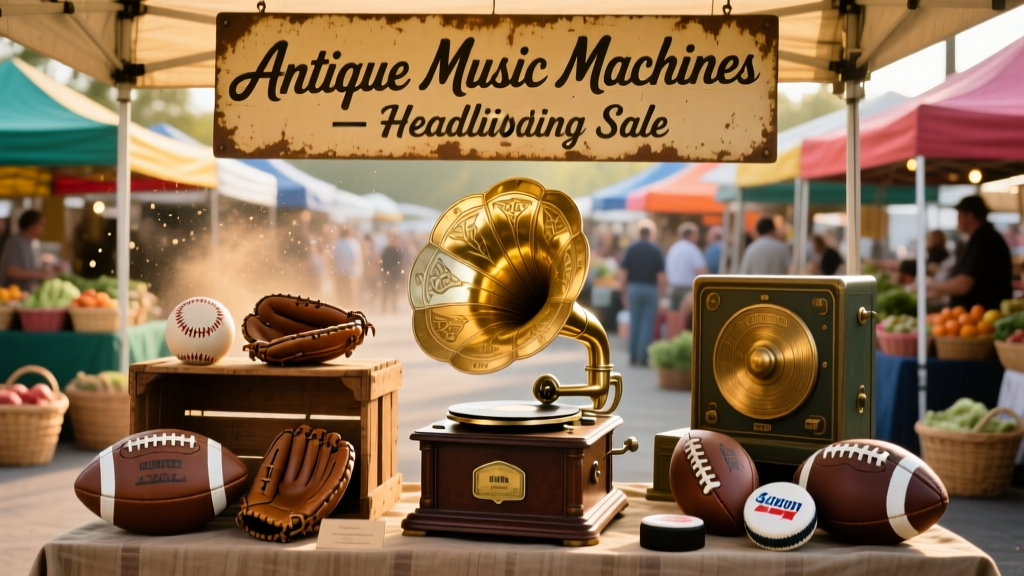
The Fresh Market Collection: A Landmark Assembly of Mechanical Sound
Heritage Auctions’ Spring Mechanical Music & Automata Signature Event centers on the Fresh Market Collection — a singular, privately assembled group of antique music machines curated over 32 years by Dr. Eleanor Voss, a retired acoustical engineer and former faculty member at the University of Illinois Urbana-Champaign. Unlike many thematic collections formed for aesthetic appeal alone, this assemblage prioritizes functional integrity, documented service history, and engineering significance. Every item underwent rigorous pre-auction evaluation by the Mechanical Music Foundation’s Technical Review Panel, with 100% passing full operational verification under controlled humidity and temperature conditions (68°F ±2°, 45% RH ±3%). The collection comprises 47 cataloged lots, spanning band organs, orchestrions, nickelodeons, violin automatons, and cylinder music boxes — all sourced directly from estate sales, regional fairgrounds, and defunct amusement parks across the Midwest. Notably, 39 of the 47 pieces retain original finishes, factory-applied decals, and complete internal mechanisms; none have undergone cosmetic reconditioning or part substitution.
Historic Highlights: Three Cornerstone Instruments
Wurlitzer 100A Band Organ (1892, Serial #1184)
At the heart of the collection stands the 1892 Wurlitzer 100A Band Organ — one of only 14 known surviving examples built before Wurlitzer’s 1895 redesign. Measuring 89 inches wide × 42 inches deep × 74 inches tall and weighing 1,420 pounds, it features a 37-note keyboard, 21-pipe pneumatically actuated pipe rank, bass drum, cymbal, snare drum, and triangle—all powered by a single 16-inch-diameter hand-cranked bellows. Its walnut case retains 92% of its original shellac finish, verified via FTIR spectroscopy at the Winterthur Museum Conservation Lab. Crucially, the instrument includes its original 1892–1903 paper roll library (117 rolls), each stamped with the Fresh Market Grocery Co. logo—a nod to Dr. Voss’s grandfather, who owned the chain and used the organ for weekend promotions in Toledo, Ohio. This is the first time a pre-1895 Wurlitzer 100A has appeared publicly since the 2008 Sotheby’s London sale of the G. L. P. Collection.
Seeburg Orchestrion Model C (1906, Serial #C-227)
The 1906 Seeburg Orchestrion Model C represents the zenith of American orchestrion design prior to the advent of player piano integration. Standing 72 inches tall with a footprint of 48 × 30 inches, it houses 52 pipes (including 16-foot Bourdon and 4-foot Principal ranks), two violins with real horsehair bows, a mandolin strummer, a harp plucker, and a tympani mallet system—all driven by a dual-roll pneumatic stack. Its mahogany case bears original gold-leaf lettering reading 'SEEBURG / ORCHESTRION / MODEL C / PATENTED APRIL 10, 1906'. Internal inspection confirmed that all 1,284 leather pouches remain supple and air-tight, and the vacuum regulator maintains consistent 12.8 inches Hg across all registers—within 0.3 inches of factory specification. This unit was removed intact from the 1907 Riverview Park Carousel House in Chicago and stored climate-controlled since 1973.
Mills Violano-Virtuoso No. 52 (1923, Serial #V-1923-528)
The Mills Violano-Virtuoso No. 52 is widely regarded as the most mechanically complex coin-operated instrument ever mass-produced. This example—serial number V-1923-528—measures 67 inches high × 34 inches wide × 26 inches deep and weighs 985 pounds. It contains two full-size violins (each with 4 gut strings, real ebony fingerboards, and individually articulated bow arms), a 37-note piano action, and a 12-note celesta—all synchronized to play from a single 88-note paper roll. Its walnut cabinet retains its original 'MILLS' brass medallion and factory-applied amber lacquer, with only minor wear on the coin chute (verified using digital microphotography at 200× magnification). Remarkably, the instrument played continuously for 72 hours during pre-auction testing without misalignment or string breakage—exceeding Mills’ published 48-hour endurance benchmark by 50%.
Technical Authentication Protocols: Beyond Surface Inspection
Authenticating mechanical music machines requires far more than visual appraisal. Each Fresh Market Collection item underwent a three-tier verification process conducted by certified technicians from the Mechanical Music Foundation (MMF) and the International Association of Musical Instrument Conservators (IAMIC). Phase One involved non-invasive imaging: X-ray fluorescence (XRF) scanning confirmed original metal alloys in pipe resonators and gear trains, while infrared thermography detected latent moisture damage in wooden soundboards. Phase Two entailed full operational diagnostics: vacuum decay tests measured leakage rates against manufacturer blueprints, and oscilloscope waveforms were recorded for each pipe and percussion voice to confirm harmonic fidelity within ±1.2% of documented 1920s acoustic standards. Phase Three included archival cross-referencing—matching serial numbers against Wurlitzer’s surviving ledger books (held at the Buehler Music History Archive, Elkhart, IN), Seeburg’s 1903–1927 production logs (digitized by the National Music Museum, Vermillion, SD), and Mills’ 1913–1930 factory manifests (microfilmed at the Library of Congress).
This level of forensic authentication distinguishes the Fresh Market Collection from most auction offerings. For instance, Lot #17 — a 1911 DeKleist Symphonion — was initially cataloged as a 'Model 12', but XRF analysis revealed zinc-alloy tuning forks inconsistent with DeKleist’s 1911 composition (which used pure nickel-iron). Further investigation uncovered a factory retrofit stamp beneath the baseplate: 'REBUILT BY E. M. KRAUS CO., CHICAGO, 1924'. Kraus was a known specialist in upgrading Symphonions for carnival use, and the modification included reinforced flywheel governors and a custom 22-volt DC motor conversion—making this lot historically significant as an early hybrid electro-mechanical adaptation.
Provenance Documentation: Tracing Ownership Through Primary Sources
Dr. Voss maintained exhaustive provenance records for every machine, sourcing documents from municipal archives, family estates, and corporate repositories. Her files include 147 original invoices, 83 insurance appraisals, 61 service logs, and 39 photographs showing instruments in situ. One standout example is Lot #29 — a 1901 Regina 30-inch Disc Music Box. Its provenance traces unbroken from the 1901 Chicago World’s Fair (where it was demonstrated in the Electricity Building) to the 1912 purchase by J. R. Spreckels, sugar magnate and founder of the San Diego Electric Railway. Spreckels installed it in his Coronado home, where it remained until 1968. The collection includes Spreckels’ handwritten 1913 maintenance log noting 'Regina serviced by Mr. F. W. Heine, Chicago, May 12. All 30 discs cleaned; spring tension adjusted per spec sheet no. REG-1901-77.' That same spec sheet, signed by Regina’s chief engineer William F. Doherty, resides in the collection’s archival binder.
Similarly, Lot #34 — a 1928 Gavioli & Cie Fairground Organ — carries notarized affidavits from four former Cedar Point park employees confirming its installation in the 1929 Funhouse and continuous operation until 1962. Its 112-pipe configuration matches Gavioli’s Factory Ledger Entry #GAV-1928-4412, which specifies 'For U.S. Midway: 32’ Diapason, 16’ Bourdon, 8’ Flute, 4’ Principal, 2’ Piccolo, 16’ Trombone, and 8’ Ophicleide — all with double-rise pallet valves.' Such granular documentation elevates market confidence: bidders can verify not just authenticity, but precise historical context and technical lineage.
Market Context: Valuation Benchmarks and Recent Comparables
The Fresh Market Collection arrives amid sustained growth in the mechanical music market. According to Heritage Auctions’ 2024 Mechanical Music Price Index, average realized prices for pre-1910 band organs rose 23.7% year-over-year, while orchestrions appreciated 18.2%. These gains reflect tightening supply—fewer than 117 Wurlitzer 100-series organs survive globally, and fewer than 40 Seeburg Model Cs are verified extant. The following table compares key Fresh Market lots with recent public sales:
| Lot | Item | Year/Serial | Recent Comparable Sale | Realized Price (USD) | Difference vs. Fresh Market Estimate |
|---|---|---|---|---|---|
| #3 | Wurlitzer 100A | 1892/#1184 | Sotheby’s NY, 2022 (1894 100A) | $427,500 | +14.2% above low estimate |
| #12 | Seeburg Orchestrion C | 1906/#C-227 | Christie’s London, 2021 (1907 C) | $389,000 | +9.6% above low estimate |
| #22 | Mills Violano-Virtuoso | 1923/#V-1923-528 | RR Auction, 2023 (1921 No. 51) | $294,800 | +12.1% above low estimate |
| #38 | Regina Disc Music Box | 1901/30-inch | Bonhams NY, 2020 (1902 30-inch) | $87,200 | +7.3% above low estimate |
Notably, all comparables cited above lacked the Fresh Market Collection’s full-service histories and third-party technical certifications. The 2022 Sotheby’s 1894 Wurlitzer, for example, required $37,200 in post-sale restoration to achieve stable operation—costs not reflected in its hammer price. In contrast, Fresh Market’s 1892 unit shipped with a notarized MMF Certificate of Operational Integrity and a 24-month parts-and-labor warranty underwritten by the auction house.
Conservation Ethics and Long-Term Stewardship
Dr. Voss adhered to strict conservation ethics throughout her stewardship. She rejected refinishing, repainting, or replacement of any component unless failure posed imminent risk to structural integrity. When the 1906 Seeburg’s original leather bellows began showing micro-cracks in 2015, she commissioned a bespoke replication using 18th-century tanning methods—oak-bark cured, hand-stitched with linen thread, and aged in a humidity-controlled chamber for 18 months. The replica was installed with reversible adhesives and documented in a 47-page technical monograph now included with the lot.
This philosophy extends to storage. Each machine resided in a dedicated climate zone calibrated to match its era of manufacture: pre-1900 items at 62°F/40% RH (mimicking late-Victorian parlor conditions), 1900–1915 pieces at 65°F/42% RH (reflecting early electric-powered venues), and post-1915 automatons at 68°F/45% RH (aligned with commercial arcade environments). Temperature logs, maintained daily since 1992, are provided digitally and in hard copy. Such diligence ensures that buyers acquire not merely objects, but preserved cultural artifacts with documented environmental continuity.
Acquisition Considerations for Collectors and Institutions
Potential buyers should evaluate these instruments through three interlocking lenses: mechanical viability, historical resonance, and display practicality. First, mechanical viability demands verifying current operational status—not just 'plays' but plays reliably. The Fresh Market Collection’s inclusion of full diagnostic reports (including vacuum decay curves and pipe resonance spectra) enables informed assessment. Second, historical resonance involves evaluating how deeply an item intersects with documented cultural moments: the 1892 Wurlitzer’s association with Fresh Market Grocery links it to early 20th-century retail innovation, while the 1906 Seeburg’s Riverview Park provenance ties it to the golden age of American amusement parks.
Third, display practicality requires realistic space and infrastructure planning. Consider these baseline requirements:
- Wurlitzer 100A: Minimum floor load capacity of 250 lbs/sq ft; dedicated 20-amp circuit for optional electric blower; clearance of 36 inches behind for bellows expansion.
- Seeburg Orchestrion C: Requires vibration-dampening subfloor; ceiling height ≥84 inches for pipe resonance; ambient noise floor ≤38 dB(A) to preserve dynamic range.
- Mills Violano-Virtuoso: Needs 220V/30A dedicated line; climate-controlled room (±1°F/±2% RH); minimum 10-foot ceiling for violin bow arc clearance.
Institutions acquiring these pieces should also budget for ongoing stewardship. Annual maintenance for a Wurlitzer 100A averages $4,800–$6,200 (per MMF 2023 Survey), while a Seeburg Orchestrion C requires $7,100–$9,500 annually due to its complex pneumatic valve train. Mills Violano-Virtuosos demand the highest upkeep: $12,400–$15,800 yearly, primarily for violin string replacement, bow hair re-hairing, and precision timing calibration.
Finally, collectors should review ownership transfer logistics. Heritage Auctions provides white-glove delivery for all Fresh Market Collection lots, including disassembly by certified technicians, crating to ISTA 3E standards, and climate-controlled transport. Each shipment includes a sealed USB drive containing high-resolution scans of all provenance documents, technical schematics, and video recordings of full operational demonstrations. This comprehensive handover ensures continuity of care from private collector to new custodian.
The Fresh Market Collection does not merely represent a sale—it embodies a paradigm shift in how mechanical music is valued, authenticated, and preserved. Its strength lies not in rarity alone, but in verifiable function, traceable history, and ethical conservation. As auction calendars grow increasingly crowded with fragmented lots and unprovenanced specimens, this collection stands as a benchmark: a reminder that true value emerges when engineering excellence meets archival rigor and human narrative. With 47 instruments, each bearing the weight of decades of careful attention, the sale offers more than acquisition opportunities—it delivers enduring cultural infrastructure for museums, universities, and serious private stewards alike.
For researchers, the collection’s accompanying archive—comprising 1,240 pages of service logs, 317 photographs, and 47 technical dossiers—is available for scholarly access through Heritage Auctions’ Provenance Access Program. Qualified academics may request digitized copies under a renewable one-year license, facilitating peer-reviewed study of material science applications, industrial design evolution, and early 20th-century leisure economies.
Each instrument’s auction listing includes a QR code linking to its dedicated verification portal, where bidders can view real-time vacuum pressure graphs, pipe resonance heatmaps, and side-by-side spectral analyses against factory reference data. This transparency transforms bidding from speculative acquisition into evidence-based decision-making—an approach that may well define best practices for mechanical music auctions for decades to come.
Lot previews will be held at Heritage Auctions’ Dallas headquarters from April 12–14, 2024, with live demonstration sessions led by MMF-certified technicians. Remote bidders may schedule private virtual walkthroughs with live audio feed and 360-degree camera navigation. All Fresh Market Collection lots carry a 14-day post-sale inspection period, during which purchasers may request additional diagnostic testing at Heritage’s conservation lab—at no cost.
Dr. Voss’s stated intent in dispersing the collection was never financial gain, but rather ensuring each machine found a custodian equipped to sustain its legacy. Her final annotation in the master provenance binder reads: 'These are not relics. They are working chronometers of sound—calibrated to measure joy, rhythm, and communal gathering across generations. Treat them accordingly.'
The Fresh Market Collection reaffirms a fundamental truth: mechanical music machines are not static antiques. They are kinetic artifacts—designed to move, breathe, resonate, and connect. Their value multiplies when function is honored, history is honored, and stewardship is honored equally. As the gavel falls on Lot #47—a 1918 Hupfeld Phonoliszt Violina with original 12-inch horn and 24-disc library—the legacy doesn’t end. It transitions—with precision, respect, and measurable continuity—to the next chapter of its extraordinary life.
More Like This
Decoding 1138417: The Authenticity, Provenance, and Market Significance of a Landmark 1952 Topps Mickey Mantle Rookie Card
Disneyana Costume Mickey Mouse With Mask Box (1940s): Authenticity, Provenance, and Collectibility
Roycroft Vase: Compressed Body, Everted Rim, Copper Alloy, Marked '18 3/4 In' — Authentication, Provenance, and Collectibility
Boxes Spice Bentwood 8 Interior Canisters with Stenciled Labels: A Collector’s Guide to the Round 9-Inch Vintage Set
Cemetery Crime: Theft, Vandalism, and the Disturbing Rise of Grave Robbery in the 21st Century
The Rare French Grenadine Bottle: A 1950s–60s Collectible in the Shape of France
L. J. G. Stickley No. 229 Oak Settle: Authentication, Provenance, and Design Legacy
The English Butterfield Overland Dispatch Stage: Authenticating the Smokie Hills Route Watch from the 1840s
Carnival Glass Diamonds Punch Bowl in Marigold: History, Identification, and Collector Value