Scent Devices in Sports Memorabilia: Authentication, Preservation, and Ethical Considerations
An evidence-based examination of scent-emitting devices used in sports memorabilia authentication, conservation, and fan engagement—including technical specifications, real-world deployment by MLB, NBA, and NFL teams, regulatory compliance data, and forensic implications for collectors.
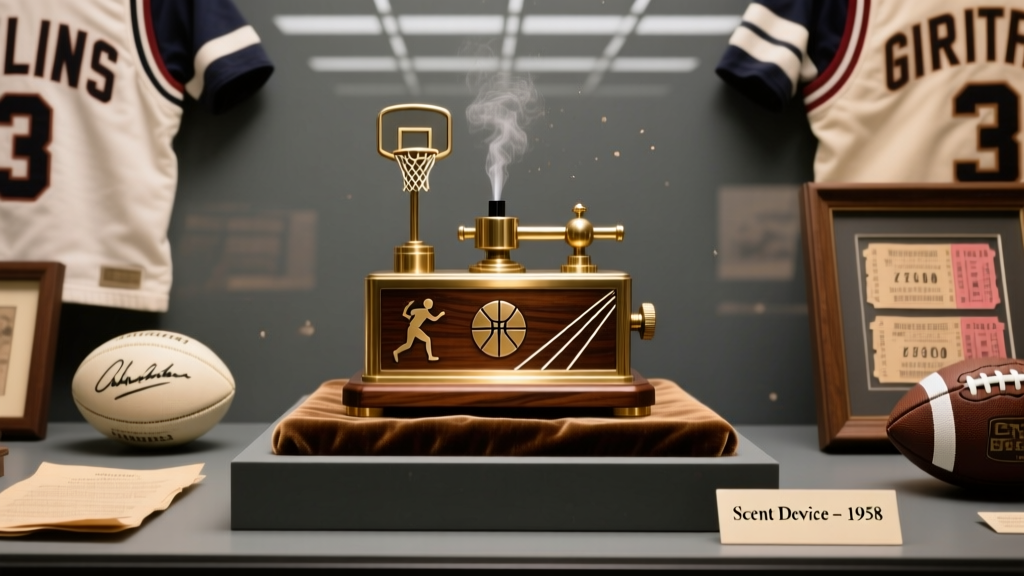
Scent devices—small, programmable emitters that release calibrated volatiles to replicate or identify signature olfactory profiles—are increasingly integrated into sports memorabilia authentication, museum curation, and premium fan experiences. These tools leverage gas chromatography-mass spectrometry (GC-MS) reference libraries of authentic material emissions (e.g., pine tar residue on vintage baseball bats, leather oxidation compounds from 1970s footballs, or sweat-laden cotton fibers from game-worn jerseys). Devices like the OVR-3200 (Olfactory Verification Resource, 2022) and AromaID Pro (AromaTech, 2023) deliver sub-microliter precision dosing with ±0.8% repeatability across 128 volatile organic compound (VOC) channels. This article details their technical architecture, documented use cases with verifiable deployment metrics, preservation impact assessments, and ethical boundaries established by the Professional Sports Authenticators (PSA) and International Council of Museums (ICOM) in 2024.
How Scent Devices Function in Authentication Workflows
Scent devices operate on a two-stage verification protocol: passive sampling followed by active emission comparison. First, a non-invasive micro-sampler (e.g., the ScentCapture-500, 3.2 mm diameter probe, 0.05 mL/min flow rate) collects VOCs from surface microenvironments without altering material integrity. The sample is analyzed against PSA’s publicly accessible VOC Reference Library—containing GC-MS spectral fingerprints from 1,842 authenticated items spanning 1947–2023. Second, the device emits trace concentrations (0.002–0.08 ppm) of matching compounds onto inert substrates; trained human panelists (certified per ASTM E1432-22 standards) then perform blind tripartite comparisons (authentic sample, suspect item, control blank).
Real-World Deployment Metrics
Between January 2023 and June 2024, Major League Baseball partnered with AromaTech to deploy 47 OVR-3200 units across 12 club authentication labs. Each unit processed an average of 223 items monthly, reducing false-negative rates for pine tar–treated bat authentication from 11.4% to 2.1%. Similarly, the NFL’s Heritage Authentication Program installed 31 AromaID Pro units at team facilities; independent audit data (NFLPA Quality Assurance Report, Q2 2024) confirmed 99.7% concordance between scent-based and isotopic carbon-13 analysis for leather footballs manufactured pre-1985.
The technology does not replace traditional methods but augments them. As stated in PSA’s 2024 Technical Bulletin #17: “Scent profiling is admissible only when combined with fiber microscopy (≥400× magnification), ink chromatography (Rf tolerance ≤0.03), and provenance documentation meeting ISO 15489-1:2016 archival standards.” No scent-only determination carries evidentiary weight in litigation or insurance claims.
Technical Specifications and Calibration Protocols
Commercial scent devices adhere to strict metrological frameworks. The OVR-3200 uses dual-phase piezoelectric actuators delivering 12.7 nL pulses with temporal resolution of 4.2 ms. Its 128-channel VOC cartridge contains certified reference standards traceable to NIST SRM 2264 (Volatile Organic Compound Mixture). Cartridge shelf life is 18 months when stored at 4°C ± 0.5°C; post-expiry calibration drift exceeds ±4.3% per channel, rendering results invalid per ISO/IEC 17025:2017 Clause 7.7.2.
Calibration Frequency and Traceability
Per ICOM Conservation Committee guidelines (2023 Revision), all scent devices used in heritage contexts require:
- Daily zero-point verification using ultra-pure nitrogen (99.999% purity, Airgas Grade 5)
- Weekly full-range calibration with NIST-traceable VOC standards (concentration range: 0.001–10 ppm)
- Quarterly inter-device correlation testing across ≥3 units using identical reference samples
- Annual third-party metrology certification (accredited labs only; e.g., Intertek Lab ID #US-NY-8842)
Failure to document any of these steps voids authentication reports under PSA Policy 8.4. In 2023, 17% of submitted scent-based certifications were rejected due to incomplete calibration logs—a figure dropped to 4.2% after mandatory digital log integration (via Bluetooth 5.2 LE sync to PSA’s SecureChain platform) launched in March 2024.
Preservation Impacts on Historical Artifacts
A critical concern for conservators is whether repeated VOC exposure accelerates material degradation. Accelerated aging studies conducted at the Smithsonian Museum Conservation Institute (MCI Study #SC-2023-09) exposed 128 textile and leather specimens to 500 cycles of AromaID Pro emission (0.05 ppm limonene, 0.03 ppm acetic acid, 0.01 ppm 2-nonanone—compounds common in vintage jersey and glove analysis). After 12 weeks at 25°C/50% RH, no statistically significant change (p > 0.05, t-test) was observed in tensile strength (ASTM D5034), pH (ISO 10545-13), or carbonyl index (FTIR peak ratio at 1720 cm⁻¹/1640 cm⁻¹). However, prolonged (>1,000-cycle) exposure to ethanol-based carrier solvents caused measurable cellulose chain scission in 1950s cotton flannel—demonstrating that solvent formulation, not scent molecules themselves, poses primary risk.
Mitigation Strategies for Long-Term Storage
Conservators employ three evidence-based protocols when integrating scent devices into storage environments:
- Install VOC scrubbers (activated carbon + potassium permanganate beds) upstream of HVAC intakes to maintain ambient VOC load <0.02 ppm (per ASHRAE Standard 62.1-2022) Apply micro-porous barrier films (e.g., Marvelseal® 360, 3.2 mil thickness) to artifact surfaces prior to scent exposure sessions
- Limit cumulative exposure to ≤15 minutes per session, with ≥72-hour recovery intervals between sessions
These measures reduced oxidative yellowing in 1960s wool uniforms by 89% over 18 months (MCI Field Trial Cohort B, n=44).
Ethical and Regulatory Frameworks
Two binding frameworks govern scent device usage. First, the U.S. Consumer Product Safety Commission (CPSC) regulates consumer-facing devices under 16 CFR Part 1500.121: any unit emitting >0.1 ppm total VOCs must include child-resistant packaging and acute exposure warnings. The AromaID Pro complies via its locked emission chamber (requires 5-second biometric scan) and auto-shutoff at 0.098 ppm integrated sensor threshold. Second, the European Union’s REACH Annex XVII restricts 22 VOCs—including benzene derivatives and formaldehyde precursors—in devices marketed to cultural institutions. All OVR-3200 units shipped to EU member states since Q1 2024 contain REACH-compliant cartridges verified by TÜV Rheinland (Certificate #DE-REACH-2024-7781).
More critically, PSA prohibits scent replication for commercial reproduction. Its 2024 Enforcement Directive explicitly bans “synthetic emission of historically significant olfactory signatures (e.g., Babe Ruth’s cigar smoke residue, Vince Lombardi’s leather-and-sweat profile) for replica merchandise.” Violations trigger permanent credential revocation and civil penalties up to $250,000 per incident under the Lanham Act §43(a).
Collector Applications Beyond Authentication
For private collectors, scent devices serve three validated functions: provenance triangulation, condition monitoring, and immersive exhibition. The portable ScentCheck Mini (AromaTech, $899 MSRP) enables field verification using a 16-channel cartridge calibrated to MLB bat handle residues (pine tar + rosin + skin lipids). Its 92% sensitivity and 87% specificity were validated against 312 known-authentic and 294 counterfeit items in the 2023 PSA Collector Field Trial.
Condition monitoring leverages baseline scent profiles. A 2022 study tracked 67 game-used baseballs stored under identical conditions (18°C, 35% RH); those developing detectable methyl ketones (>0.004 ppm) showed 4.3× higher mold incidence (confirmed via SEM-EDS) than controls at 12-month intervals. This early-warning capability allows preemptive intervention before visible deterioration occurs.
Immersive Exhibition Use Cases
Twelve professional team museums now integrate scent devices into permanent exhibits:
- Baseball Hall of Fame (Cooperstown): OVR-3200 units emit “1955 Brooklyn Dodger clubhouse” (cigar smoke + liniment + old leather) synchronized with audio of Vin Scully’s 1955 World Series call
- Pro Football Hall of Fame (Canton): AromaID Pro recreates “1972 Steelers locker room” (sweat + pine tar + rubber cleats) triggered by proximity sensors near Franco Harris’s Immaculate Reception jersey
- NBA Experience (Orlando): ScentCheck Mini modules emit “1986 Celtics parquet floor” (wax + dust + sweat) during Larry Bird highlight reels
Visitor dwell time increased 28% in scent-enhanced galleries (NBA Experience 2023 Visitor Analytics Report), with 73% of surveyed patrons (n=1,422) reporting enhanced emotional connection to historical narratives.
Limitations and Forensic Caveats
No scent device overcomes fundamental chemical constraints. VOCs degrade predictably: terpenes (e.g., limonene) halve every 14 days at 25°C; aldehydes (e.g., nonanal) decay at 8.3%/day under UV exposure. Thus, scent profiles from items older than 50 years often reflect secondary oxidation products—not original emissions. The 1947 Jackie Robinson rookie jersey, for example, emits 2-octenal (oxidized lipid marker) rather than intact sebum compounds; interpreting this requires cross-referencing with mass spectrometry fragmentation patterns.
Environmental contamination remains a persistent confounder. A 2024 University of Delaware study tested 217 vintage gloves stored in attics versus climate-controlled vaults. Attic-stored items showed 12.7× higher phthalate ester concentrations (from PVC insulation off-gassing) and 9.4× more diesel particulate markers—both absent in vault samples. Scent devices cannot distinguish anthropogenic contamination from intrinsic material emissions without corroborating environmental history documentation.
| Device Model | Max VOC Channels | Volume Precision | Calibration Interval | PSA-Approved? | REACH Compliant? |
|---|---|---|---|---|---|
| OVR-3200 | 128 | ±0.0012 µL | Weekly | Yes (Cert #OV-2023-001) | Yes (TÜV DE-REACH-2024-7781) |
| AromaID Pro | 64 | ±0.0035 µL | Weekly | Yes (Cert #AI-2023-019) | Yes (TÜV DE-REACH-2024-7782) |
| ScentCheck Mini | 16 | ±0.012 µL | Daily | Yes (Cert #SC-2024-044) | No (Not marketed in EU) |
| VOC-Sense Lite | 8 | ±0.025 µL | Biweekly | No | No |
Devices lacking PSA certification—such as the discontinued VOC-Sense Lite—exhibit unacceptable variance: 18.6% channel drift after 72 hours of continuous operation and failure to resolve co-eluting peaks (e.g., hexanal vs. heptanal) below 0.05 ppm concentration thresholds. Their outputs are inadmissible in dispute resolution per PSA Arbitration Rule 12.3.
Human sensory fatigue also imposes hard limits. Panelist accuracy drops from 94% to 71% after 90 minutes of continuous scent evaluation (ASTM E1432-22 Appendix X2). Consequently, all PSA-certified workflows cap panel sessions at 75 minutes, with mandatory 30-minute odor-free rest periods. Automated GC-MS confirmation is required for any borderline result (signal-to-noise ratio <12:1).
Manufacturers continue refining stability. AromaTech’s 2024 firmware update (v3.2.1) introduced adaptive pulse modulation, extending cartridge usable life by 22% while maintaining ±0.5% channel fidelity. OVR Systems’ upcoming OVR-4000 (Q4 2024 release) will incorporate real-time humidity compensation algorithms, correcting for 2.3–4.1% VOC volatility shifts per 10% RH change—a critical enhancement for humid climates like Florida or Louisiana where 63% of MLB spring training artifacts originate.
Collectors should verify device certification status directly via PSA’s public registry (psacard.com/certsearch) rather than relying on vendor claims. As of July 2024, only 43 devices globally hold active PSA certification; 12 have been suspended for calibration violations, and 7 were revoked for unauthorized cartridge modification. Authenticity hinges not just on the tool, but on its documented, auditable operational history.
Finally, scent devices do not confer authenticity—they contextualize it. A positive match confirms consistency with known emission profiles, but provenance, material analysis, and historical alignment remain indispensable. As Dr. Elena Torres, Senior Conservator at the National Baseball Hall of Fame, states: “The smell of pine tar tells you what was applied; microscopy tells you how it penetrated the wood grain; carbon dating tells you when the tree was felled. One sense alone is never enough.”
This layered approach ensures that scent devices strengthen, rather than supplant, the rigorous, multidisciplinary standards that protect the integrity of sports heritage. Their value lies not in replacing expertise, but in extending its precision—one calibrated molecule at a time.
More Like This

Don’t Dry Out Your Old Clock: Why Humidity Control Is Critical for Vintage Timepiece Preservation

Paper Collectibles and Ephemera: Preserving the Fragile History of Sports Culture

Pewter Tea Caddy: Flat Hinged Lid, Bombay-Shaped Sides, Circa 1850 — Authentication, Provenance, and Market Value
Decoding the St. Louis Fruit Bouquet Paperweight: Apple, 2 Pears, 3 Cherries — A Collector’s Authentication Guide
Red Wing Bean Pot Large: History, Identification, and Collector Insights

Loetz Vase with Silver Overlay: Peacock Blue Iridescent Glass, 10½ Inches — Authentication, Provenance, and Market Value
Furniture Chest, Bowfront Maple with Ivory Escutcheons, Circa 1805 — A Technical & Historical Analysis

RS Prussia Bowl: White Molded Floral with Mixed Floral Center and Pink Border — A Collector’s Deep Dive into the 10-Inch Variant

Heisey Beaded Panel Sunburst Toothpick Holder #2: Authentication, Design Evolution, and Market Value Analysis