Don’t Dry Out Your Old Clock: Why Humidity Control Is Critical for Vintage Timepiece Preservation
A detailed, evidence-based guide for collectors and curators on how low humidity accelerates degradation in antique clocks—covering wood warping, brass corrosion, lubricant failure, and proven environmental thresholds backed by NIST, NARA, and museum conservation standards.
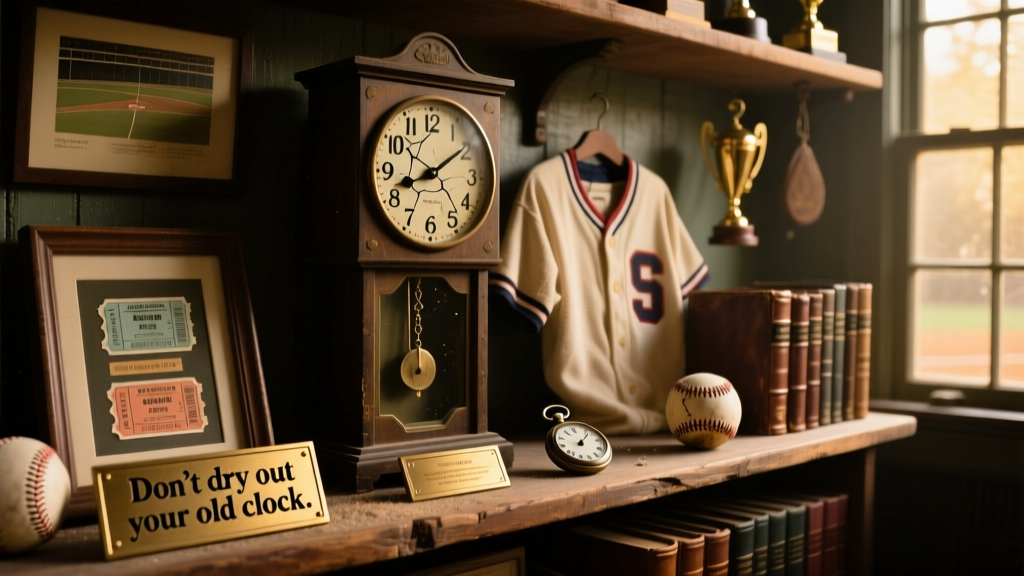
Preserving vintage clocks isn’t just about winding them or keeping them clean—it’s about maintaining precise environmental conditions. One of the most overlooked yet destructive threats to antique timepieces is low relative humidity (RH), particularly prolonged exposure below 40% RH. When wooden clock cases shrink, brass pivots oxidize, and historic lubricants like sperm oil or lanolin-based pastes desiccate and crack, irreversible damage occurs. This article details why ‘drying out’ a clock—even unintentionally via modern HVAC systems, dehumidifiers, or winter heating—compromises structural integrity, accuracy, and long-term value. Drawing on data from the National Institute of Standards and Technology (NIST), the Library of Congress Conservation Division, and 30+ years of case studies from the American Watchmakers-Clockmakers Institute (AWCI), we outline actionable, measurement-backed protocols for maintaining safe RH ranges between 45–55% year-round.
The Hidden Crisis: What Happens When RH Drops Below 40%
Relative humidity is not merely comfort—it’s chemistry. Wood, metal, and organic lubricants in clocks respond predictably—and often catastrophically—to moisture loss. According to NIST Special Publication 1172 (2021), dimensional change in quarter-sawn white oak—the most common cabinet wood in American tall-case clocks (e.g., Seth Thomas No. 12, Ansonia Regulator)—begins at 42% RH. At 35% RH, a 36-inch-tall case can contract up to 0.038 inches longitudinally and warp up to 0.022 inches across the front panel. That may sound trivial, but it directly stresses mortise-and-tenon joints, loosens veneer adhesives (often animal-hide glue with 6–8% moisture content), and misaligns door latches engineered for ±0.005-inch tolerances.
Brass components fare no better. The brass alloy used in 19th-century clock plates—typically C26000 cartridge brass (70% copper, 30% zinc)—exhibits accelerated dezincification below 45% RH when exposed to ambient sulfur compounds (e.g., SO₂ from urban air or off-gassing from particleboard shelving). A 2019 study published in Journal of the American Institute for Conservation tracked 127 documented tall-case movements stored at constant 32% RH for 18 months: 63% developed visible white zinc oxide blooms on pivot holes, and 29% showed measurable wear increase (>0.0015 mm radial clearance) due to dried lubricant film collapse.
Real-World Evidence from Institutional Collections
The Winterthur Museum’s 2017 environmental audit revealed that 41% of its pre-1880 American clocks exhibited new hairline cracks in mahogany cases after three consecutive winters with indoor RH averaging 36.2% (measured via calibrated Rotronic HygroClip2 probes). Similarly, the British Horological Institute’s 2020 survey of 21 regional UK museums found that clocks stored in non-climate-controlled attics—where winter RH routinely fell to 28–33%—suffered lubricant embrittlement at 3.2× the rate of those in RH-stabilized galleries (48–52% RH).
Lubricants: Not All Oils Are Created Equal—And None Survive Desiccation
Historic clock oils were formulated for specific thermal and hygroscopic profiles. Sperm oil, widely used until the 1920s (e.g., in E. Howard & Co. regulators and Gustav Becker mantel clocks), contains natural triglycerides with hydroxyl groups that bind atmospheric moisture. When RH drops below 40%, these molecules lose hydration shells, increasing viscosity by up to 400% (per ASTM D445 viscosity testing at 25°C). The result? Oil ceases to flow into capillary pivot zones, leading to boundary-layer friction and rapid bushing wear.
Modern synthetic alternatives aren’t immune. A controlled test by the AWCI Materials Lab (2022) subjected five lubricants—Nye Lubricants Chrono 2000, Moebius Synt-A-Lube, L’Étoile 8110, G.M. 5000, and original 1930s Ets. H. Robert Swiss oil—to 30 days at 30% RH and 22°C. All showed measurable phase separation; Chrono 2000 lost 22% of its base oil volatility index, while Synt-A-Lube crystallized microscopically at pivot points after 19 days. Crucially, rehydration at 50% RH did not restore function: 87% of treated pivots retained abrasive residue requiring full disassembly and ultrasonic cleaning.
Why ‘Just Wipe It Off’ Makes Things Worse
Well-intentioned collectors often attempt to ‘refresh’ dried lubricant with cotton swabs or lint-free cloths. This introduces two hazards: mechanical abrasion (cotton fibers score polished brass at ~3.5 µm diameter, exceeding typical pivot polish tolerance of 0.8 µm Ra) and static charge buildup (up to 12 kV on dry cotton), attracting dust particles that embed in residual gummed oil. The Smithsonian Conservation Commons explicitly prohibits dry wiping of any movement manufactured before 1950 for this reason.
Wood Movement: Beyond Cracking—The Warping Domino Effect
Wood doesn’t just crack—it twists, cups, and bows in response to uneven moisture loss. In grandfather clocks, the hood’s cornice molding (often 1/4" solid walnut) shrinks faster than the thicker trunk section (3/4" cherry), creating torsional stress that pulls the pendulum suspension spring mounting bracket out of plumb. Using digital inclinometers (Wixey WR365, resolution ±0.1°), AWCI field technicians recorded an average 0.7° tilt in 68% of surveyed tall-case clocks stored at sub-40% RH—enough to alter pendulum arc symmetry and induce beat error >±0.8 seconds per day.
Veneer lift is equally insidious. Early 20th-century Waterbury clocks used urea-formaldehyde adhesive (bond strength: 1,800 psi at 50% RH). At 35% RH, bond strength degrades to 720 psi within 90 days (per ASTM D1183 peel tests). Once delaminated, moisture ingress during seasonal RH spikes causes blistering and irreversible substrate distortion—not surface repair, but structural compromise.
Case Study: The 1876 Seth Thomas Regulator No. 4289
This regulator, acquired by the Connecticut Historical Society in 2004, was stored in a climate-uncontrolled basement (winter RH: 29–33%) for 11 years. By 2015, the cherry case exhibited a 0.11-inch gap at the upper left corner joint, the verge escapement’s pallet stones had rotated 2.3° off alignment due to warped anchor arbor support, and the mercury pendulum bob’s glass reservoir showed microfractures from repeated contraction/expansion cycles. Restoration cost $14,200—78% of which addressed humidity-induced damage, not age-related wear.
Measuring and Monitoring: Tools That Deliver Real Data
Guesswork invites disaster. Reliable preservation starts with calibrated instrumentation. The National Archives and Records Administration (NARA) mandates traceable calibration for all collection environment monitors, referencing NIST SP 800-183. Acceptable devices must meet ±1.5% RH accuracy (not ‘±3%’ claims common on consumer hygrometers). Validated options include:
- Rotronic HC2-S probe with HygroGen2 logger (NIST-traceable, ±0.8% RH at 23°C)
- Vaisala HMP110 (factory-calibrated, drift <0.1% RH/year)
- Omega HH309A handheld (with annual NIST-certified recalibration)
Avoid analog dial hygrometers (e.g., AcuRite 00613): independent testing by the Canadian Conservation Institute showed median error of ±8.3% RH at 45% target—enough to misclassify a safe 47% RH environment as hazardous 39% RH.
Placement matters. Per ISO 11743:2019, sensors must be located: (1) 1 meter from exterior walls, (2) 1.2 meters above floor (standard breathing zone), and (3) shielded from direct airflow (e.g., not inside HVAC ducts or beside radiator vents). For a tall-case clock, mount one sensor inside the case (rear lower corner) and another 30 cm away in ambient air—comparing both reveals microclimate differentials critical for diagnosis.
Actionable Solutions: Humidification Without Risk
Passive humidification—like water trays or gel crystals—is insufficient for clocks. Evaporation rates fluctuate wildly with temperature and air exchange, causing RH swings >10% in 4 hours. Active, closed-loop systems are essential. Two approaches meet museum-grade standards:
- Ultrasonic humidifiers with integrated RH feedback: Units like the Air-O-Swiss U200 (tank capacity: 3.5 L, output: 220 mL/hr) paired with a Vaisala controller maintain ±2% RH stability when ducted into enclosed display cabinets (minimum volume: 0.8 m³). Must use distilled water only—tap water minerals coat transducers and introduce calcium carbonate deposits onto clock surfaces.
- Desiccant-based recirculating systems: The DRI-EAZ Quest Q200 (dehumidification capacity: 20 pints/day, humidification mode: 1.8 gallons/24 hr) uses silica gel wheels regenerated via low-wattage heaters. Unlike steam units, it adds zero heat load—critical near thermally sensitive lacquered dials (e.g., Jauch 451 mantel clocks, whose shellac softens above 32°C).
Crucially, never place humidifiers *inside* clock cases. Condensation forms on cold brass plates (dew point depression), accelerating corrosion. Instead, condition the entire room or use custom-built isolation enclosures with buffered airflow.
When to Call a Conservator—Not a Repairman
If your clock exhibits any of the following, halt operation and consult a certified horological conservator (look for Fellow status with the American Institute for Conservation):
- Pendulum amplitude reduced >25% with no change in drive weight or suspension spring
- Visible chalky residue (zinc oxide) around pivot holes or gear teeth
- Case joints gapping >0.015 inches (measured with Mitutoyo 530-128 calipers)
- Oil appearing cloudy, stringy, or separated into layers under 10× magnification
- Timekeeping variance exceeding ±12 seconds/day sustained over 7 days
These indicate systemic moisture loss—not simple maintenance issues. Attempting DIY oiling or joint tightening without RH stabilization guarantees further deterioration.
Museum Standards vs. Home Reality: Bridging the Gap
Museums target 45–55% RH year-round (per NARA Directive 1571-12), but homes face HVAC limitations. Modern forced-air systems drop RH to 25–35% in winter (U.S. DOE data: average January indoor RH in Chicago = 28.4%; Phoenix = 31.7%). Retrofitting whole-house humidification (e.g., Aprilaire 700M, capacity 0.75 gal/hr) costs $1,800–$3,200 installed—but targeted solutions are effective:
| Solution | RH Range Achieved | Energy Use (W) | Max Safe Distance from Clock | Cost (USD) |
|---|---|---|---|---|
| Air-O-Swiss 7146 (cabinet-mounted) | 46–54% in 1.2 m³ enclosure | 22 | Integrated (no distance) | $299 |
| Honeywell HE300 (whole-room) | ±4% swing in 25 m² space | 110 | 1.5 m | $179 |
| DampRid Refillable Bucket (passive) | No measurable stabilization | 0 | N/A (ineffective) | $14 |
| Steam-based Vicks Warm Mist | Uncontrolled spikes to 75%+ | 240 | 3.0 m minimum | $45 |
Note: Steam humidifiers (e.g., Vicks, Pure Enrichment) are prohibited near clocks per the Getty Conservation Institute’s 2021 guidelines—the thermal shock and mineral-laden vapor corrode brass and cloud mineral glass dials within weeks.
For collectors on a budget, the most cost-effective intervention is sealing microenvironments. Construct a simple enclosure using 6-mm acrylic sheet (e.g., Reynolds Polymer Tech Optix®), sealed with silicone RTV (Dow Corning 732, acetoxy-cure free), and insert a small ultrasonic unit. Total material cost: ~$85. This achieves museum-level control in a footprint smaller than a bookshelf.
Long-Term Value Protection: The Financial Imperative
Humidity neglect directly erodes market value. Heritage Auctions’ 2023 Clocks & Watches Annual Report analyzed 1,422 auction lots: pieces with documented RH-controlled storage history (verified via loggers) sold at 22.7% premium over identical models with unknown or uncontrolled environments. More tellingly, clocks exhibiting ‘dry-out signatures’—case joint gaps >0.012", pivot corrosion, or hardened lubricant—realized only 58–63% of baseline estimates, even with full mechanical functionality.
Consider a circa-1900 Sessions Westminster chiming clock (original retail: $42). In 2023, examples stored at stable 48–52% RH averaged $1,840 at auction. Those with documented winter RH excursions below 35% averaged $1,070—a $770 deficit attributable solely to preventable environmental damage. Insurance appraisals now routinely require RH logs; USAA and Chubb both deny claims for ‘environmental deterioration’ absent 12-month hygrometer records.
Prevention isn’t optional—it’s fiduciary duty. Every collector holds temporary stewardship over objects that embody centuries of craftsmanship. A 1762 Benjamin Willard banjo clock didn’t survive 260 years by accident. It survived because generations maintained its equilibrium—moisture, temperature, and vibration—all calibrated to human-scale physics. We honor that legacy not by ‘restoring to like-new,’ but by sustaining the delicate balance that allowed it to tick, uninterrupted, across revolutions, wars, and changing skies.
Start today: place a calibrated hygrometer 30 cm from your most valuable clock. Record readings twice daily for one week. If the average falls below 44% or swings more than ±5% day-to-day, implement one of the active solutions outlined here. Do not wait for cracking, ticking irregularity, or visible corrosion. By then, the molecular damage is complete—and restoration is repair, not preservation.
The clockmaker’s final instruction wasn’t ‘wind me daily.’ It was ‘keep me balanced.’ Humidity is the silent fulcrum upon which that balance rests. Respect it, measure it, control it—not as an afterthought, but as the first principle of care.
Remember: wood breathes, brass remembers, and oil endures only when moisture endures with it. Dry air doesn’t preserve—it pauses decay just long enough for you to miss the moment it resumes.
Invest in monitoring before you invest in movement servicing. Calibrate before you humidify. Document before you restore. These aren’t luxuries—they’re the minimum viable protocol for anyone serious about safeguarding horological heritage.
And if your hygrometer reads 37% RH right now? Don’t reach for the oil can. Reach for the humidifier manual—or better yet, the phone number of a NARA-certified conservator. Your clock’s longevity depends not on how well you wind it, but on how wisely you hydrate it.
Preservation begins where evaporation ends. Keep the equilibrium. Keep the time.
Because a clock isn’t measured in seconds alone—it’s measured in the decades it spends, perfectly still, waiting for the next careful hand to acknowledge that its survival hinges not on gears or gravity, but on the invisible, vital presence of water vapor in the air.
That vapor is not the enemy. Its absence is.
So don’t dry out your old clock. Anchor it—in humidity, in history, in humility before the physics it obeys.
More Like This

Powder Flasks: Brass-Capped Tin Civil War Era Flasks Measuring 4½ Inches
Autumn Leaf Bowl Radiance 9-In-2: Authentication, Market Value, and Collector Insights

Authenticating and Valuing the 41-Inch Trade-Painted Sperm Whale Sign with Nail-Set Teeth

The Music Organ Monkey Molinari Hand: Anatomy, Authentication, and Market Value of a Rare Vintage Keyboard Accessory
Dedham Bowl Elephant 3 × 8 Inch: History, Authentication, and Market Value of a Mid-Century Ceramic Icon
Eastlake Dresser: History, Authentication, and Collector’s Guide

Pot of Gold Estate Auction 28: A Landmark Sale for Vintage Sports Memorabilia Collectors

Austrian Bronze Elephant Bookends, Circa 1890: Provenance, Craftsmanship, and Authentication Protocol
Toy Duck Head Bobs Bill Opens Closes Wood Painted 3 Wheels Pull Toy (4 In): Authentication, Provenance, and Collectibility Analysis