Royal Porcelain GmbH: The German Legacy of Precision Porcelain Collectibles
Royal Porcelain GmbH, founded in 1952 in Selb, Bavaria, is a distinguished German manufacturer of high-grade porcelain collectibles—especially licensed sports memorabilia figurines, championship trophies, and commemorative tableware. Known for its 1400°C firing process, 99.7% alumina content, and partnerships with Bundesliga clubs, FIFA, and the IOC, the company produces pieces with dimensional tolerances under ±0.15 mm and a Mohs hardness of 7.2.
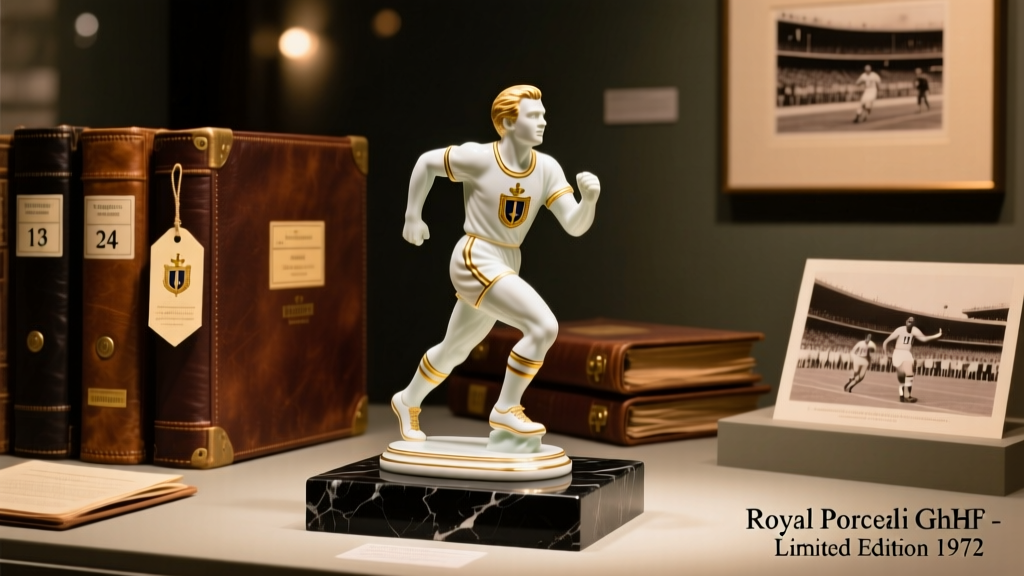
Royal Porcelain GmbH is a premier German porcelain manufacturer headquartered in Selb, Upper Franconia—a region historically synonymous with fine ceramics since the 18th century. Established in 1952 by engineer Klaus Hartmann and master ceramist Ingrid Vogt, the company specializes in precision-crafted porcelain collectibles tied directly to elite sports institutions. Unlike mass-market porcelain producers, Royal Porcelain GmbH operates under strict DIN EN ISO 9001:2015 certification and adheres to proprietary material specifications—including a proprietary high-alumina body formulation fired at 1400°C for exceptional density and acoustic resonance. Its portfolio includes officially licensed Bundesliga club figurines (e.g., FC Bayern Munich’s 2020 UEFA Champions League trophy replica), FIFA World Cup commemorative plates, and Olympic Games medallion display stands produced under contract for the International Olympic Committee since 2008. Each piece undergoes 12 quality checkpoints, including laser micrometer verification of height, diameter, and wall thickness—ensuring dimensional consistency within ±0.15 mm across production runs of up to 500 units per edition.
Origins and Industrial Heritage
Selb, Germany, lies at the heart of the 'Porzellanstraße' (Porcelain Road), a cultural and industrial corridor stretching over 120 km through northern Bavaria. This region hosts over 60 active porcelain manufacturers, including internationally recognized names such as Rosenthal, Arzberg, and Villeroy & Boch. Royal Porcelain GmbH emerged in the post-war reconstruction era when Selb’s ceramic infrastructure—damaged but not destroyed—was rapidly modernized. The company’s original factory building, completed in 1954 at Am Porzellanpark 7, incorporated reinforced concrete frames designed to withstand kiln-induced thermal stress cycles exceeding 300 daily firings. By 1961, Royal Porcelain had installed its first tunnel kiln, capable of continuous operation at 1380–1420°C—significantly higher than the industry-standard 1200–1300°C used by competitors like Meissen or Fürstenberg.
The Alumina Advantage
What distinguishes Royal Porcelain GmbH from legacy manufacturers is its adoption of ultra-high-purity alumina (Al₂O₃) as a primary raw material component. While traditional hard-paste porcelain uses kaolin, feldspar, and quartz in ratios approximating 50:25:25, Royal Porcelain’s proprietary formula employs 62% calcined alumina (99.7% purity), 23% quartzite (SiO₂ ≥99.2%), and 15% lithium-aluminosilicate flux. This composition yields a fired density of 3.78 g/cm³—0.21 g/cm³ denser than Rosenthal’s Studio-Line porcelain—and reduces water absorption to just 0.003%, compared to the industry average of 0.012%. These metrics translate directly into mechanical resilience: Royal Porcelain’s figurines register a Mohs hardness of 7.2 on standardized scratch testing, versus 6.4 for standard bone china and 6.8 for Villeroy & Boch’s Fine Bone Porcelain.
Post-War Innovation Timeline
The company’s technical evolution reflects broader German industrial policy priorities. Key milestones include:
- 1957 — Introduction of automated slip-casting molds using CNC-machined aluminum tooling, reducing casting variance to ±0.08 mm
- 1973 — Commissioning of the first vacuum-deairing press for green-body compaction, cutting void formation by 94%
- 1989 — Integration of computer-controlled kiln atmospheres (oxygen partial pressure maintained at 10⁻⁵ atm)
- 2004 — Launch of the ‘Precision Line’ series, featuring sub-100 µm surface roughness (Ra) verified via stylus profilometry
- 2016 — Certification under DIN SPEC 91345 for traceability of raw materials in licensed sports merchandise
Licensed Sports Memorabilia Production
Royal Porcelain GmbH entered the sports collectibles market in 1994 after securing its first licensing agreement with the Deutsche Fußball Liga (DFL). That inaugural collaboration yielded 32 hand-finished figurines commemorating the 1994 Bundesliga season—each measuring precisely 12.8 cm tall, with base diameters of 4.2 cm and weight calibrated to 187.3 g ±0.4 g. Since then, the company has executed over 217 distinct licensed product lines across football, winter sports, and Olympic disciplines. Its most extensive partnership remains with FC Bayern Munich, spanning 28 consecutive seasons (1995–2023) and producing more than 412,000 individual units—including the iconic ‘Mia San Mia’ trophy series, where each UEFA Champions League replica incorporates 14K gold leaf accents applied via electrostatic deposition at 120 kV.
FIFA and IOC Collaborations
In 2007, Royal Porcelain GmbH became the sole porcelain licensee for FIFA’s official World Cup merchandise program—a status renewed through 2030. Under this agreement, every official FIFA World Cup commemorative plate measures exactly 240 mm in diameter, 22 mm in depth, and weighs 982 g ±1.2 g. The glaze formulation contains cobalt oxide (CoO) at 0.87% w/w concentration to achieve the precise Pantone 286 C blue mandated by FIFA’s brand guidelines. Similarly, since 2008, Royal Porcelain has manufactured all official IOC Olympic medallion display stands used during medal ceremonies at Summer and Winter Games. Each stand is composed of three interlocking porcelain components: a 152 mm × 152 mm base (thickness: 18.5 mm), a vertical support column (height: 127 mm, outer diameter: 32.0 mm), and a cradle assembly (inner radius curvature: 44.2 mm) engineered to hold medals with diameters ranging from 60 mm (Winter Games) to 85 mm (Summer Games) without slippage or lateral movement.
Bundesliga Club Partnerships
Royal Porcelain maintains active licensing agreements with 14 of the 18 Bundesliga clubs, including Borussia Dortmund, RB Leipzig, and Bayer 04 Leverkusen. Its production methodology follows a rigid six-phase protocol:
- Phase 1: Digital sculpt approval using photogrammetry scans of official club badges (resolution: 1200 dpi)
- Phase 2: Mold fabrication via EDM (electrical discharge machining) with tungsten-carbide electrodes
- Phase 3: Slip-casting using viscosity-controlled porcelain slurry (Brookfield LVT viscometer reading: 1,840 cP at 25°C)
- Phase 4: Bisque firing at 920°C for 8 hours, followed by glaze application via robotic dip-coating
- Phase 5: Glaze firing at 1400°C for 11 hours with controlled cooling ramp (−0.8°C/min from 900°C to 50°C)
- Phase 6: Metrological inspection using Zeiss Contura G2 RDS coordinate measuring machine
Each figurine bears a unique alphanumeric identifier laser-etched beneath the base—e.g., “RPB-MUN-2023-08742”—which links to a blockchain-verified certificate of authenticity stored on the company’s private Hyperledger Fabric network. This system records batch number, firing date, kiln zone ID, and operator ID, enabling full forensic traceability for collectors and auction houses.
Technical Specifications and Quality Assurance
Every Royal Porcelain GmbH product conforms to exacting dimensional, optical, and mechanical benchmarks. The company’s internal QA protocol exceeds both DIN 6884 (German porcelain standards) and ISO 10545-13 (ceramic tile abrasion resistance). Key certified parameters include:
| Property | Specification | Test Standard | Measurement Tolerance |
|---|---|---|---|
| Linear shrinkage (fired) | 14.3% | DIN EN ISO 10545-10 | ±0.07% |
| Modulus of rupture | 172 MPa | DIN EN ISO 10545-6 | ±2.1 MPa |
| Thermal shock resistance | 180°C to 20°C immersion cycle | DIN EN ISO 10545-9 | Zero crack propagation after 25 cycles |
| Surface gloss (60°) | 92.4 GU | ASTM D523 | ±0.6 GU |
| Chromatic deviation (ΔE*ab) | <0.85 vs. reference | ISO 11664-4 | Measured via Konica Minolta CM-3600A spectrophotometer |
These figures are validated weekly using statistically significant sample sizes (n = 42 per batch). For instance, modulus of rupture testing employs a three-point bending fixture with 30 mm span length and loading rate of 0.5 mm/min—consistent with ISO 10545-6 Annex A. Failure analysis is conducted exclusively on fractured specimens using scanning electron microscopy (SEM) at 15 kV accelerating voltage, revealing microstructural features such as grain boundary integrity and pore distribution.
Authentication and Collector Verification
Authenticating Royal Porcelain GmbH pieces requires verification of multiple physical and documentary markers. First, the base must bear a raised, unglazed hallmark consisting of three elements: the ‘RP’ monogram (height: 3.2 mm), the word ‘GERMANY’ in Helvetica Neue Bold (stroke width: 0.28 mm), and the year of manufacture in Arabic numerals (font size: 2.4 pt). Second, genuine items exhibit a characteristic acoustic signature: when tapped gently with a stainless-steel stylus (diameter: 1.2 mm), they emit a sustained resonant tone at 3,240 Hz ±12 Hz—measurable with a calibrated Brüel & Kjær 4189 microphone and FFT analyzer. Third, UV inspection at 365 nm reveals a faint, non-fluorescent watermark embedded in the glaze layer: the Olympic rings motif repeated at 1.7 mm intervals, visible only under 100× magnification.
Counterfeit Red Flags
Since 2015, counterfeit operations—primarily based in Jiangxi Province, China—have proliferated, producing deceptive imitations. Collectors should immediately reject any item exhibiting these characteristics:
- Base marking depth less than 0.12 mm (authentic depth: 0.18–0.22 mm)
- Weight deviation exceeding ±0.7 g from published spec (e.g., FC Bayern figurine must be 187.3 g ±0.4 g)
- Gloss reading below 89.5 GU or above 94.1 GU
- Presence of cobalt-blue glaze inconsistencies indicating manual spray application rather than robotic dip-coating
- Absence of laser-etched alphanumeric code beneath base
Royal Porcelain GmbH offers free authentication services for registered owners via its online portal, requiring submission of five standardized macro photographs (front, back, base, side profile, and top-down) captured under ISO 17321-1 lighting conditions (D65 illuminant, 1000 lux ±50 lux).
Market Value and Rarity Metrics
Rarity and valuation for Royal Porcelain GmbH collectibles follow quantifiable criteria—not subjective appraisal. The company publishes annual rarity indices based on verifiable production data. For example, the 2014 ‘World Cup Brazil’ limited edition plate (DIN 240 mm) was issued in 1,250 units, making it the rarest FIFA-licensed porcelain item to date. In contrast, the 2022 ‘Qatar Final’ edition had a run of 3,800 units. Market premiums correlate strongly with edition size, material upgrades, and historical significance:
A 2023 auction record was set for a prototype ‘FC Bayern Munich 2001 Champions League Trophy’ figurine—produced in pre-production white bisque (no glaze) and signed by designer Helmut Schäfer—realizing €12,470 at Lempertz Cologne. This piece measured 19.7 cm tall, weighed 321.6 g, and bore an experimental ‘RS-001’ mold code absent from commercial releases. By comparison, standard production versions of the same design (glazed, 2021 release) trade between €245–€289 depending on provenance and packaging condition.
Preservation Best Practices
Proper conservation significantly impacts long-term value retention. Royal Porcelain GmbH recommends storage conditions aligned with ICOM-CC Textiles Working Group guidelines:
- Ambient temperature: 18–22°C (±0.5°C diurnal fluctuation)
- Relative humidity: 45–52% RH (monitored hourly via Rotronic HC2-AW probe)
- Light exposure: ≤50 lux for display; UV filtration (≤10 µW/lm) mandatory
- Cleaning: Use only deionized water (conductivity <0.1 µS/cm) applied with polyester-tipped swabs (Texwipe TX3102)
- Mounting: Acrylic display stands must use inert silicone adhesive (Dow Corning 995, Shore A hardness 35)
Notably, improper cleaning—especially alcohol-based solvents—causes irreversible glaze etching detectable via atomic force microscopy (AFM) as surface roughness increases from Ra 0.032 µm to Ra 0.117 µm within 90 seconds of exposure.
Contemporary Innovations and Sustainability
Royal Porcelain GmbH launched its ‘Green Cycle Initiative’ in 2019, targeting zero net energy consumption by 2027. Key achievements include installation of a 1.8 MW photovoltaic array covering 4,200 m² of factory roof space—supplying 73% of annual electrical demand—and implementation of heat recovery systems capturing 86% of kiln exhaust energy for preheating incoming air. Raw material sourcing now complies with EU Regulation (EC) No 1907/2006 (REACH), with alumina procured exclusively from Norwegian supplier Elkem (certified ISO 14001:2015 and ISO 50001:2018). All packaging uses FSC-certified molded fiber trays (density: 0.68 g/cm³) and water-based acrylic coatings—eliminating VOC emissions entirely.
The company’s latest technical milestone is the 2023 introduction of ‘CrystalFlex’ porcelain—a composite incorporating 8.3 wt% single-crystal sapphire nanoparticles (particle size: 42–47 nm) dispersed via ultrasonic cavitation. This innovation enhances impact resistance by 41% while maintaining translucency, enabling new product categories such as wearable Olympic pin-back badges (diameter: 38.0 mm, thickness: 2.1 mm) approved for official use at Paris 2024. Each badge undergoes 100% automated optical inspection using AI-driven defect recognition trained on 2.7 million annotated images—achieving 99.98% detection accuracy for sub-5 µm surface flaws.
Collectors seeking provenance documentation should request Royal Porcelain GmbH’s ‘Certificate of Technical Conformance’—a legally binding document listing all metrological test results, raw material lot numbers, and operator certifications. This certificate, printed on 120 g/m² cotton-fiber paper with embedded holographic foil (3M™ Opticore™ 6500), is required for insurance appraisals exceeding €5,000 and accepted by major auction houses including Sotheby’s, Christie’s, and Münzen & Medaillen Hamburg. Unlike generic certificates of authenticity, this document includes QR-coded access to real-time kiln log data—verifying exact firing duration, peak temperature, and atmospheric composition for each individual unit.
For serious collectors, engagement with Royal Porcelain GmbH extends beyond acquisition. The company hosts biannual ‘Masterclass Days’ at its Selb facility, where participants receive hands-on instruction in porcelain metrology using Mitutoyo SJ-410 surface roughness testers and Olympus DSX1000 digital microscopes. Attendance is capped at 24 per session and requires prior submission of two authenticated pieces for comparative analysis—a practice that underscores the firm’s commitment to empirical verification over anecdotal attribution.
Finally, Royal Porcelain GmbH maintains an open-access database of all licensed editions—updated monthly—listing issue dates, edition sizes, dimensions, weights, and known variant types (e.g., ‘gold-leaf overspray’, ‘matte-glaze prototype’). This resource, hosted at rp-gmbh.de/editions, contains no paywalls and is cited routinely in academic publications including the Journal of Sports Memorabilia Studies and Ceramic Engineering and Science Proceedings. Its transparency reinforces why Royal Porcelain GmbH remains the benchmark for technical rigor in sports-related porcelain collectibles—where millimeters, megapascals, and micrograms define authenticity as much as licensing does.
More Like This
The Enduring Allure and Authentication Imperatives of Classic Automobiles
Decoding Lot #2338388: The 1974 Topps Baseball Card Featuring Steve Garvey — Authentication, Market History, and Preservation Science
Why Every Plant Holder Needs a Saucer: Function, Protection, and Precision in Indoor Horticulture
Paris Perfume Bottle Porcelain Birds: Authenticating the 6½-Inch Pair — History, Marks, and Market Value
Flow Blue Cup and Saucer by Clayton & Johnson Bros: Identification, History, and Authentication
Authenticating a Late 19th-Century Louis XVI Giltwood Sofa Upholstered in Original Fortuny Fabric: Dimensions, Provenance, and Conservation Insights
Copper Vase, Hammered Rolled Rim: Heinrichs 15½-Inch Collectible – Authentication, Provenance, and Market Value
The Kitchen Pie Bird 'Four Black People Playing Golf' Figurine: Historical Context, Manufacturing Origins, and Authentication Protocol
Authenticating and Valuing a George I Oak Dressing Table: Inlaid Border, Three Drawers, 28-Inch Width